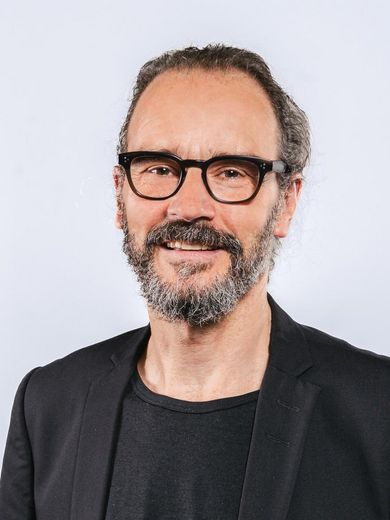
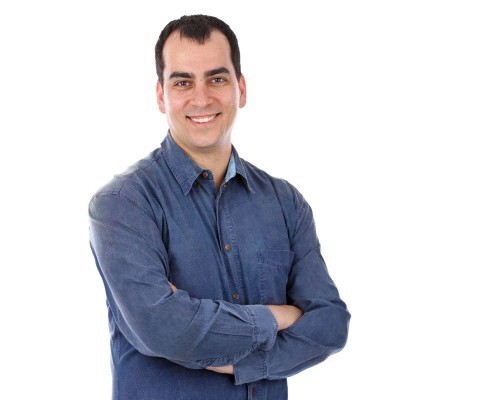
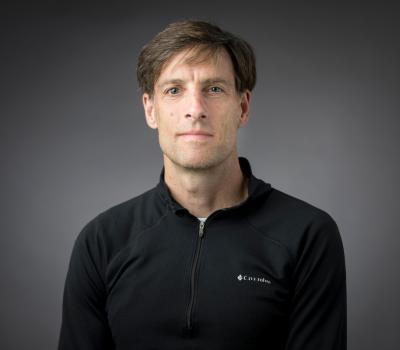
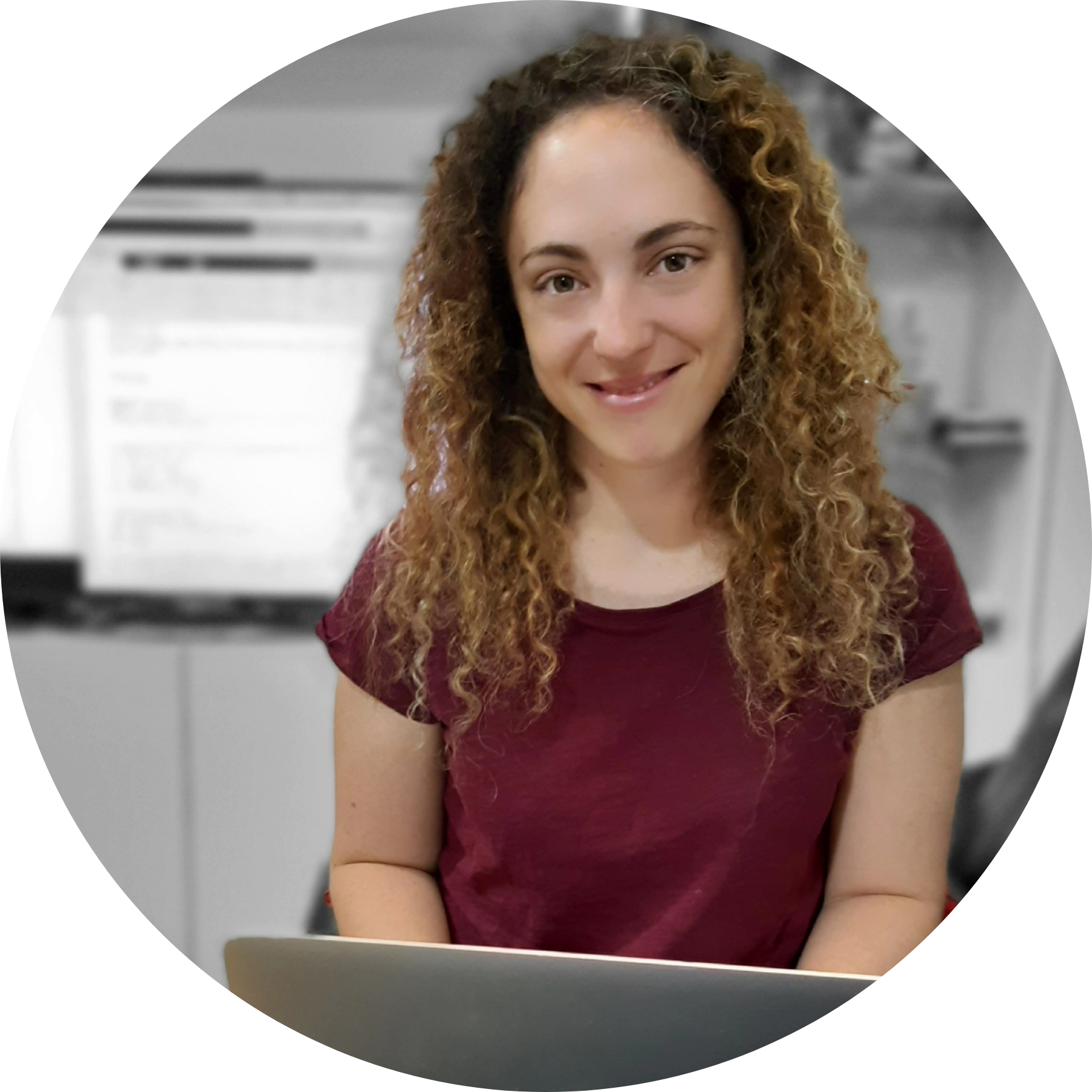
Michael Fink is a researcher at the Chair of Automatic Control Engineering , Technical University of Munich . He holds an M.Sc. in Electrical Engineering and Information Technology (2020) and a B.Eng. in the same field from Technical University Munich and University of Applied Sciences Landshut (2018), respectively. Research Interests : Model Predictive Control (MPC) with focus on stochastic and robust variants Optimal control strategies for autonomous driving and vertical farming Constraint violation probability minimization in dynamic systems Publications span topics in: Time-optimal MPC for linear systems Stochastic and robust MPC frameworks Learning-based control for greenhouse climate systems Vertical farming optimization Contact: michael.fink@tum.de
Roopsha Samanta serves as an Assistant Professor in the Department of Computer Science at Purdue University, where she leads the Purdue Formal Methods (PurForM) research group and participates in the Purdue Programming Languages (PurPL) initiative. Her academic foundation includes a PhD from the University of Texas, Austin (2013) and postdoctoral research at the Institute of Science and Technology Austria prior to joining Purdue in 2016. Education: PhD in Computer Science, University of Texas, Austin (2013) Postdoctoral Researcher, Institute of Science and Technology Austria Professor Samanta's research centers on bridging formal methods with programming languages to enhance software reliability, with core expertise in program verification, program synthesis, and concurrency. Her work uniquely targets both professional developers and non-programmers, developing techniques to ensure programs align with user intent through automated reasoning and synthesis. Recent efforts focus on distributed systems verification where traditional methods face scalability challenges. Analysis of her 2020-2024 publications reveals a dominant trajectory in distributed agreement systems, particularly advancing parameterized verification for unbounded process networks. Key innovations include bounded verification techniques for doubly-unbounded systems, explainable synthesis through specification localization, and secure multi-party computation frameworks like HACCLE. Her work consistently integrates theoretical formal methods with practical system implementation. Scientific Awards: NSF CAREER Award (2019) for “Robustness of Inductive Reasoning Engines” Amazon Research Award (2021) supporting secure computation research Her research is primarily funded through competitive grants including the NSF CAREER award and Amazon Research Award, enabling exploration of verification robustness and secure multi-party computation. While specific advising details aren't publicly documented, her leadership of the PurForM group indicates active mentorship of graduate researchers in formal methods. Current projects suggest expanding applications to privacy-preserving technologies and explainable AI-assisted programming. The PurForM research group, under her direction, develops foundational tools for program verification and synthesis with emphasis on distributed and concurrent systems. Collaborations within PurPL and industry partners like Amazon drive translational research from theoretical models to practical verification frameworks applicable to real-world distributed infrastructure.
Prof. Dr.-Ing. Jörg Müssig serves as a Professor at Bremen University of Applied Sciences within Faculty 5 (Department 2), focusing on sustainable composite materials development. His research bridges engineering and environmental science through innovation in natural fiber applications for industrial use. His primary research domains encompass natural fiber composites, biobased materials, and sustainable material systems, with specialized expertise in flax, hemp, and nettle fiber reinforcement. He investigates mechanical properties, interfacial adhesion mechanisms, flame retardancy solutions, and processing techniques like injection molding and filament winding, emphasizing sustainability metrics and biomimetic design principles. Analysis of his 2024-2025 publications reveals dominant themes in natural fiber composite optimization, particularly regenerated cellulose systems and coupling agent-free interfaces. Emerging trends include consumer perception studies of biobased materials and integration of ecological parameters into industrial design processes, reflecting expanding interdisciplinary approaches. Prof. Müssig leads extensive grant-funded projects including edible mushroom mycelium composites (2024-2026), sulfur-based flame retardants (2024-2026), natural fiber sector market analysis across Europe (2024-2025), and marine durability studies (2024-2025), demonstrating sustained research leadership with significant industry and cross-institutional collaborations. His work operates within a robust research ecosystem at Bremen University of Applied Sciences, where his project portfolio indicates leadership of a specialized team focused on sustainable material innovation, though specific lab infrastructure details remain unmentioned in source materials.
Shie Mannor is a Professor at the Technion - Israel Institute of Technology in the Department of Electrical Engineering. He also holds a visiting professorship at Cornell-Tech in New York City and is affiliated with the Technion Machine Learning Center and the Grand Technion Energy Program . Key Research Interests: Machine Learning: Theory, algorithms, and applications to high-dimensional data and dynamics modeling. Reinforcement Learning and Markov Decision Processes: Adaptive control in large stochastic systems. Learning and control under uncertainty: Robust/stochastic optimization frameworks. Game Theory: Stochastic, dynamic, and network games applied to power markets and resource allocation. Multi-agent systems: Online learning and designing economic systems with optimal equilibria. Power Grid: Data-driven reliability, pricing, and decision-making in smart grids (e.g., EU-funded GARPUR project). Applications: Communication network optimization, mobile health, LDPC codes, and large-scale optimization problems. He actively seeks postdocs, graduate, and undergraduate students with strong mathematical or programming skills for projects in mobile phone programming and complex system optimization. Contact: shie.mannor@ee.technion.ac.il | Phone: ++972-4-829-3284
Enoch Yeung is an Associate Professor in the Department of Mechanical Engineering at the University of California, Santa Barbara (UCSB). His research focuses on systems biology, control systems, machine learning, and data mining, with a particular emphasis on understanding how mechanical forces in DNA regulate gene dynamics and cell fate. He leads projects on distributed biological computing, data-driven control architectures, and synthetic biological systems design, supported by funding from DARPA, NSF, and the U.S. Army. Yeung holds a PhD in Control and Dynamical Systems from the California Institute of Technology and a BS in Mathematics from Brigham Young University. His work integrates methods from DNA biophysics, synthetic biology, microfluidics, and control theory to study genome organization and cellular decision-making. Recent projects include the DARPA Living Foundries program, the NSF Molecular Programming Project, and the AFOSR Biological Research Initiative. He has received numerous awards, including the NSF Early CAREER Award and Young Investigator Award from the U.S. Army. His lab conducts interdisciplinary research, including a 2024 Summer Synthetic Biology Workshop for high school students. Key research themes include DNA supercoiling dynamics, biophysical feedback control in cells, and scalable Koopman operator methods for analyzing complex biological systems. Lab Focus: Biological Control Lab explores DNA mechanics, synthetic biology, and data-driven modeling. Grants & Collaborations: PI on multi-institutional programs involving PNNL, DARPA, and NSF. Advisory Roles: Served on panels for DARPA, NIST, and the National Defense University.
A.A.J. (Erjen) Lefeber is an Assistant Professor in the Department of Mechanical Engineering at Eindhoven University of Technology (TU/e). His research focuses on control systems, cooperative driving, vehicle dynamics, and autonomous systems. He is affiliated with the EAISI Mobility cluster and the ICMS Core group, emphasizing interdisciplinary collaboration. Dr. Lefeber has contributed to over 150 research outputs, including peer-reviewed articles, conference contributions, and datasets. His work addresses challenges in platooning systems, model predictive control (MPC), cybersecurity in cooperative vehicles, and multi-agent systems. Research interests include cooperative adaptive cruise control (CACC), decentralized control strategies, and robust control against adversarial attacks. His projects integrate theoretical analysis with experimental validation, such as testing heterogeneous platoons with actuation delays. Dr. Lefeber has received the AVEC '24 Best Paper Award for contributions to vehicle platooning control. He teaches courses on nonlinear control, manufacturing networks, and mechanical engineering fundamentals. Collaborations span academia and industry, focusing on sustainable transportation and automation. Current efforts explore online learning for interaction dynamics in multi-agent systems and high-performance MPC for aerial robotics. His research aligns with UN Sustainable Development Goals, particularly addressing safe and efficient mobility solutions.
Vahid Shahrezaei is a Professor of Biomathematics at Imperial College London's Department of Mathematics (Faculty of Natural Sciences). He holds affiliations with the Biomathematics Group, Centre for Synthetic Biology, and Mathematics in Medicine. His research focuses on Computational Molecular Systems Biology, studying cellular robustness under stochasticity and environmental noise using computational and analytical methods. Notable contributions include methods for single-cell RNA-sequencing analysis and simulation-based inference of biochemical networks. Education: PhD in Physics from Simon Fraser University (Canada), BSc/MSc in Physics from Sharif University (Iran). Career highlights include a sabbatical at the Crick Institute (2023-2024) and roles such as Diversity Champion for the Faculty of Natural Sciences. Awards include the Imperial College President Medal for Research Supervision (2017). He has led interdisciplinary grants, including a Leverhulme-funded study on noise in gene expression with Samuel Marguerat. Research Interests: Stochastic modeling, gene expression dynamics, systems biology applications Key Projects: Development of bayNorm for single-cell data normalization, studies on mycobacterial cell size control Professional Roles: BBSRC expert panel member, co-organizer of systems biology conferences His lab integrates mathematical modeling with experimental data, addressing questions in developmental biology, cancer metabolism, and microbial systems. Recent work includes agent-based modeling of environmental policy adoption and novel visualization techniques for multi-omics data.
Alan Fern is a Professor of Computer Science and Robotics in the School of Electrical Engineering and Computer Science at Oregon State University. He leads research in artificial intelligence, focusing on reinforcement learning, planning, and robotics applications like humanoid robotics and agricultural AI. His work includes co-directing the Dynamic Robotics Lab and leading the AgAID National AI Institute for agricultural solutions. Fern holds a Ph.D. from Purdue University and has contributed to over 100 publications. His recognitions include the NSF CAREER Award and multiple best paper awards. Education: B.S., Electrical Engineering, University of Maine (1997) M.S. & Ph.D., Computer Engineering, Purdue University (2000 & 2004) Research Interests: His research spans machine learning, planning, and robotics. Key areas include: AI for humanoid robotics (e.g., bipedal locomotion on Cassie) Reinforcement learning algorithms and applications Agricultural AI for specialty crops Explainable AI and anomaly detection Awards: 2017 College of Engineering Research Collaboration Award 2013 AAAI Outstanding Paper Award 2006 NSF CAREER Award Advising & Labs: Supervised over 50 students. Key collaborations include the Dynamic Robotics Lab (with Jonathan Hurst) and AgAID. His teams address challenges like robot navigation, policy learning, and AI ethics. Labs/Teams: Dynamic Robotics Lab, AgAID National AI Institute, and contributions to computational sustainability initiatives.
Cuo Zhang is a Lecturer of Power Engineering and ARC DECRA Fellow at the University of Sydney's School of Electrical & Computer Engineering. He holds a B.E. (Hons.) from the University of Sydney (2014) and a Ph.D. in Electrical Engineering from UNSW (2018). His research focuses on smart grids, renewable energy integration, voltage control, and optimization of power systems. Key interests include distributed generation planning, energy storage systems, and demand response mechanisms. Dr. Zhang leads research on enhancing distribution network resilience through advanced control strategies and participates in the Net Zero Institute. He has secured grants such as the 2024 ARC DECRA project on renewables hosting capacity. Supervised students include Yunqing Zhang, working on robust renewables integration. His recent publications emphasize data-driven approaches, decentralized energy trading, and adaptive control for unbalanced networks. He explores machine learning applications in energy management and stochastic optimization under uncertainty. Awards include the University Medal for academic excellence. Awards: ARC DECRA Fellow Grants: 2024 Robust Renewables Hosting Capacity Enhancement Labs/Teams: Member of the Net Zero Institute
Martina Maggio is a Professor at the Department of Computer Science, Saarland University (full-time since 2020) and holds a 20% position at Lund University's Department of Automatic Control (since 2023). She serves as Coordinator of LTH's AI and Digitalization Profile Area and is a member of Lund University's Natural and Artificial Cognition initiative. Her research integrates control theory, real-time systems, and cybersecurity in cyber-physical systems. She has supervised over ten PhD students and postdoctoral researchers, contributing to advancements in resource allocation, fault-tolerant control systems, and self-aware computing. Education: PhD in Control Theory from Politecnico di Milano (with MIT visiting research), postdoctoral work at Lund University. Key affiliations: ELLIIT, Bosch Corporate Research (sabbatical 2019). Research focuses on robust control strategies under computational uncertainties, cyberattacks, and sensor misalignment. Notable work includes influential papers at the intersection of software engineering and control theory (e.g., 2015 SEAMS most influential paper). Grants and advising: Supervised 10+ students, including alumni Dr. Nils Vreman (2023) and Dr. Gautham Nayak Seetanadi (2021). Active in collaborative projects like Bosch's control system verification initiatives. Labs/Teams: Leads research groups at Saarland and Lund, focusing on real-time systems, embedded systems security, and AI-driven control architectures.
Christophe Mues is a Professor of Data Science and Information Systems at the University of Southampton's School of Management, within the Department of Decision Analytics and Risk. His research focuses on credit scoring, consumer credit risk modeling, and applications of predictive analytics, including machine learning techniques for credit risk assessment. He leads the Information Systems & Business Analytics section and supervises multiple PhD students in Business Studies and Management. His work spans advanced statistical methods for predicting Probability of Default (PD), Loss Given Default (LGD), and loan profitability. He is actively involved in the academic community, serving on the organizing committee for the Credit Scoring and Credit Control conference. His teaching includes topics in information systems and business analytics. Contact: C.Mues@soton.ac.uk. Research Interests: Credit Scoring and Consumer Credit Risk Modelling Predictive Analytics in Finance Machine Learning Applications (Deep Learning, Graph Neural Networks) Non-Traditional Data Integration Credit Model Transparency and Fairness Debt Collection Optimization PhD Supervision: Currently guiding four students in Business Studies & Mngt: Kameswara Rao Korangi, Sarthak Gurnani, Pablo Casas, and Nora Agyei-Ababio. Professional Activities: Leads research groups and contributes to international conferences. His work bridges academic research with practical financial risk solutions, emphasizing ethical AI and regulatory compliance in credit modeling. Biography: Holds a PhD in Applied Economics from KU Leuven (Belgium). Joined the University of Southampton in 2004, advancing from researcher to his current leadership role in Decision Analytics and Risk.
Ying-Cheng Lai is a Regents' Professor in the School of Electrical, Computer and Energy Engineering at Arizona State University (ASU), where he has been a full-time faculty member since 2005. He holds affiliations with the Center for Biodiversity Outcomes and the Center for Biological Physics. Previously, he served as the Sixth Century Chair in Electrical Engineering at the University of Aberdeen (2009–2017) and returned to ASU as the ISS Endowed Professor (2014–present). His academic journey includes a BS and MS in Optical Engineering from Zhejiang University (1982–1985), followed by MS and PhD in Physics from the University of Maryland, College Park (1989–1992). He completed a postdoctoral fellowship in Biomedical Engineering at Johns Hopkins University School of Medicine (1992–1994). His research focuses on Nonlinear Dynamics and Chaos , Machine Learning applied to complex systems, Relativistic Quantum Chaos , Complex Networks , Mathematical Biology , and Theoretical Ecology . He explores topics such as quantum scars in Dirac materials, synchronization control in networks, and early warning signals for ecological tipping points. His work integrates data analysis techniques with interdisciplinary applications in healthcare, climate science, and cybersecurity. His recent publications highlight advancements in machine learning-driven predictions for critical transitions, quantum transport modeling in graphene, and cybersecurity strategies for power grids. These trends reflect his commitment to bridging theoretical physics with applied engineering solutions. Awards: Regents Professor (ASU's highest faculty honor, 2021) Vannevar Bush Faculty Fellowship (DoD, 2016) Corresponding Fellow of the Royal Society of Edinburgh (2018) Foreign Member of Academia Europaea (2020) Fellow of AAAS (2020) Fellow of the American Physical Society (1999) Ying-Cheng Lai has advised 24 PhD and 20 MS students, supported 15 postdocs, and secured funding from agencies like DOD (AFOSR, ARO, Navy-ONR), NSF, and the National Academies. His grants include projects on quantum billiard systems, sensor applications, and network resilience in multilayer ecological frameworks. He runs a research group focused on advanced topics in electrical engineering and interdisciplinary physics.
Peiyi Wang is an Assistant Professor at Peking University's School of Electronics Engineering and Computer Science, Institute for Artificial Intelligence. With strong research output spanning both natural language processing and robotics, Wang maintains significant collaborations with Southern University of Science and Technology and National University of Singapore, particularly in soft robotics research with Professor Cecilia Laschi. Additionally, Wang is actively involved with DeepSeek-AI, contributing to several major language model initiatives including DeepSeek-R1 and DeepSeek-V2. Peking University, School of EECS, Institute for Artificial Intelligence (Primary) Southern University of Science and Technology (Collaborative) National University of Singapore (Collaborative) DeepSeek-AI Research Organization Dr. Wang's research spans two primary domains with significant intersection points. In natural language processing, Wang focuses on large language model reasoning capabilities, mathematical verification, uncertainty estimation, and preference alignment. The robotics work centers on soft robotics, particularly origami-inspired designs, strain-based modeling, and control systems for continuum manipulators. These domains converge in Wang's work on vision-language models, embodied AI, and multimodal reasoning systems. Recent work demonstrates particular innovation in mathematical reasoning verification (Math-Shepherd), soft robotic control systems, and red teaming frameworks for language model safety. Wang's publication record shows remarkable productivity, with over 40 publications between 2021-2025 across top-tier venues including ACL, EMNLP, CVPR, and IEEE Transactions on Robotics. The work demonstrates consistent progression from foundational NLP tasks to increasingly sophisticated multimodal and reasoning systems. The most recent publications (2024-2025) show particular emphasis on mathematical reasoning verification, soft robotics control, and language model safety evaluation. While specific awards aren't documented in the provided materials, Wang's work has clearly gained significant recognition through acceptance at top-tier conferences and collaborations with leading researchers in both NLP and robotics fields. Wang's research demonstrates strong interdisciplinary connections, bridging theoretical NLP work with practical robotics applications. The work with DeepSeek-AI suggests active industry collaboration while maintaining strong academic research output. Current research directions appear focused on improving language model reasoning reliability while developing novel soft robotic systems that can interact safely and effectively with complex environments.
Peide Ye is the Richard J. and Mary Jo Schwartz Professor of Electrical and Computer Engineering at Purdue University's College of Engineering. His research focuses on semiconductor devices, oxide electronics, and advanced transistor technologies, particularly in 2D materials, ferroelectric semiconductors, and monolithic 3D integration. He leads investigations into thin-film transistors (TFTs), atomic layer deposition (ALD) processes, and device reliability under extreme conditions. His work bridges quantum phenomena with practical applications in nanoelectronics. Research Interests: Dr. Ye specializes in nanoelectronics, including novel semiconductor materials (e.g., In2O3, tellurene), ferroelectric field-effect transistors (Fe-FETs), and low-voltage/high-performance device designs. His group addresses challenges in scaling transistors to atomic dimensions, optimizing contact engineering, and mitigating defects in oxide semiconductors. Articles Trends: His recent publications (2024-2025) emphasize ultrathin oxide transistors with record performance metrics (e.g., 36 GHz fT), BEOL-compatible fabrication, and quantum effects in 2D materials. Key themes include low-power operation, defect-tolerant designs, and integration of logic/memory systems. Labs/Teams: While specific lab names aren't listed here, his work is closely tied to Purdue's nanoelectronics research infrastructure, collaborating with semiconductor industry leaders to advance next-generation transistor technologies.
Keenan Crane is the Michael B. Donohue Associate Professor of Computer Science and Robotics at Carnegie Mellon University , with membership in the Center for Nonlinear Analysis and mentorship in the Geometry Collective . His research bridges differential geometry and computer science to develop fundamental algorithms for geometric data processing. Education : BS from University of Illinois at Urbana-Champaign, PhD from Caltech Fellowships : Google PhD Fellow, NSF Mathematical Sciences Postdoctoral Fellow Research focuses on Discrete Differential Geometry , addressing PDE solutions, mesh processing, and geometric modeling through methods like: Walk on Spheres for PDEs Intrinsic Triangulations for robust geometry Repulsive Energy formulations for collision avoidance Recent publications span 2025–2021 , emphasizing grid-free algorithms , anisotropic mesh generation , and differentiable systems . Scientific accolades include Packard Fellowship and NSF CAREER Award . Students include Nicole Feng , Olga Gutan , and Zoë Marschner . During his 2024 sabbatical at Roblox , he does not accept new researchers. Key software contributions include Penrose (math diagram generation) and I♥Mesh (domain-specific language for mesh algorithms).