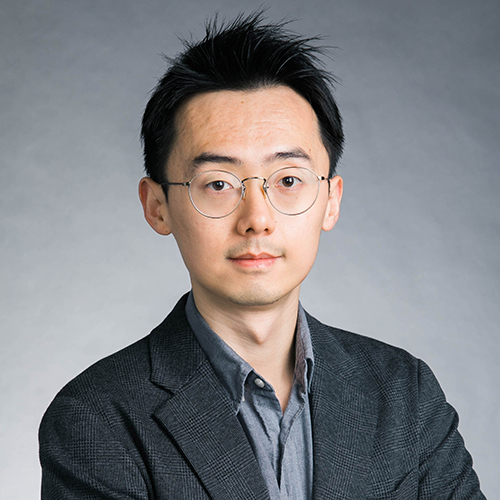
Professor Jouni Mattila is a leading academic in Machine Automation at Tampere University's Faculty of Engineering and Natural Sciences, affiliated with the Automation Technology and Mechanical Engineering department. He is part of the IHA-Innovative Hydraulics and Automation research group. His expertise spans autonomous mobile working machines, nonlinear control engineering, and safety-critical systems like those in the ITER project. He holds a Technical Editor role in ASME/IEEE Transaction on Mechatronics (2015-2020). Research interests include real-world autonomous systems, whole-body motion control for rough-terrain robots, energy-efficient actuators, and teleoperation systems. His work integrates advanced control theory, AI, and robotics for heavy-industry applications. Recent publications focus on robust control frameworks, LiDAR-inertial SLAM navigation, and fault-tolerant systems for mobile robots. Publications highlight advancements in hydraulic/electromechanical actuator systems, visual-inertial feedback control, and energy-efficient robotics. Awards/recognitions are not explicitly listed, but his contributions are evident through collaborations with Finnish industry and big science projects. Advising focuses on MSc and Dr (Tech) students in robotics and automation, with a mission to bridge academia and industry for high-tech innovation. Labs/teams include the Intelligent Hydraulics and Automation (IHA) group, emphasizing practical R&D in cleantech and heavy-duty robotics. Ongoing projects address challenges in autonomous rock-breaking systems, exoskeleton control, and energy-efficient robotic actuators.
Dr. Nikhil Chopra is a Professor in the Department of Mechanical Engineering at the University of Maryland, College Park, with affiliate appointments in Electrical and Computer Engineering. He earned his Bachelor of Technology from IIT Kharagpur (2001) and his M.S. and Ph.D. from University of Illinois at Urbana-Champaign (2003, 2006). As Director of Undergraduate Studies, he leads academic programs while advancing research in systems, control, and robotics. His work focuses on robotic system control, soft robotics, teleoperation, and machine learning integration. Research highlights include co-authoring the book *Passivity-Based Control and Estimation in Networked Robotics* (2015), co-chairing the IEEE Technical Committee on Telerobotics, and serving as Associate Editor for *Automatica* and related journals. His lab, the Semi-Autonomous Systems Lab, explores control-theoretic frameworks for robotics and optimization, collaborating with institutions like Sintef and IEEE RAS Technical Committees. Key projects involve underwater robotics navigation, cyber-physical system privacy, and distributed optimization algorithms. His team has exhibited strong presence at ICRA and IROS conferences, including awards for work on 3D water quality mapping and control frameworks. Current initiatives include robotic parasitic arrays for communication enhancement and secure bilateral teleoperation systems. Lab: Semi-Autonomous Systems Lab (SAS Lab) Affiliations: Institute for Systems Research, Maryland Robotics Center Recent Funding: NSF grants, industry partnerships
Dr. Yanjun Zhang is an Honorary Research Fellow at the School of Electrical Engineering and Computer Science, The University of Queensland. His research focuses on privacy-preserving technologies, federated learning, cybersecurity in IoT systems, and machine learning security. He holds a PhD in Privacy-Preserving Sharing for Genome-Wide Analysis from The University of Queensland (2021). Education: PhD in Information Technology, School of Information Technology and Electrical Engineering, The University of Queensland (2021) Research Interests: Designing secure collaborative machine learning frameworks Defending against adversarial attacks in cyber-physical systems Privacy preservation in distributed genomic and medical data analysis Compliance and ethics in virtual personal assistant applications Key Contributions: Developed privacy-preserving federated learning frameworks (AgrAmplifier, PrivColl) Conducted foundational studies on evasion attacks in IoT systems Created datasets for analyzing malicious browser extensions and Alexa skills Labs/Teams: Active contributor to UQ Cyber initiatives, including the 2021-2022 Seed Funding project on federated deep learning for medical imaging.
Ramses Martinez is an Assistant Professor in the Department of Industrial Engineering and Biomedical Engineering at Purdue University . He holds a B.A. in Applied Physics from Universidad Autonoma de Madrid (2004) and a Ph.D. in Physics and Materials Science from the Spanish National Research Council (CSIC) in 2009. Prior to joining Purdue, he conducted postdoctoral research in the lab of Prof. George M. Whitesides at Harvard University, focusing on nanofabrication, microfluidics, and soft robotics. Education B.A. in Applied Physics, Universidad Autonoma de Madrid (2004) Ph.D. in Physics and Materials Science, Spanish National Research Council (CSIC) (2009) His research bridges soft robotics , flexible electronics , and nanofabrication , with a focus on creating self-powered e-textiles , omniphobic paper-based devices , and programmable mechanical metamaterials . His work has led to over 25 publications and 9 patents, emphasizing practical applications in health monitoring and industrial automation . Notable projects include waterproof electronic decals for biofluid monitoring, smart bandages for chronic wound detection, and laser nanoforming methods for scalable metallic structures. His research has been recognized through the Fulbright Fellowship and the Marie Curie IOF Grant .
Marek Petrik is an Associate Professor in the Department of Computer Science at the University of New Hampshire, where he is also a member of the artificial intelligence research group. Prior to joining UNH, he was a Research Staff Member at IBM’s T. J. Watson Research Center. He received his Ph.D. in Computer Science from the University of Massachusetts Amherst in 2010 under the supervision of Shlomo Zilberstein. In 2022–2023, he was a visiting faculty researcher at Google Research. Education: Ph.D. in Computer Science, University of Massachusetts Amherst, 2010 His research focuses on robust, data-driven decision making , particularly in reinforcement learning with limited data, risk aversion, and Bayesian models of uncertainty. His work spans theoretical advances in robust Markov decision processes (MDPs), policy optimization, and imitation learning, with applications in natural resource management, agriculture, renewable energy, and space systems. Recent publications emphasize provable robustness, percentile optimization, and safe offline reinforcement learning. His recent work (2023–2025) demonstrates strong trends in risk-averse reinforcement learning , robust policy gradients , offline learning under uncertainty , and Bayesian approaches to decision-making . He frequently publishes in top venues such as NeurIPS, ICML, UAI, AAAI, and journals like JMLR and Mathematics of Operations Research. Scientific Awards: Best Student Paper Award, Uncertainty in Artificial Intelligence (UAI), 2015 Marek Petrik has advised numerous students and collaborators, particularly in the areas of robust RL and safe decision-making. His research has been supported by academic and industry collaborations, including IBM and Google. He is not currently accepting new PhD students. He is actively involved in developing methods for controlling invasive species , pest monitoring , and optimizing environmental systems . Labs and Research Groups: Artificial Intelligence Research Group, University of New Hampshire Former member: Mathematical Sciences Department, IBM T. J. Watson Research Center Visiting researcher: Google Research, 2022–2023
Zhengyuan Zhou is an Assistant Professor in the Department of Technology, Operations, and Statistics at the Leonard N. Stern School of Business, New York University. He is also associated faculty at the Department of Computer Science and Engineering, Tandon School of Engineering, and affiliated with the NYU Center for Data Science. He joined NYU Stern in 2020 after serving as an IBM Goldstine Research Fellow and a Visiting Scholar at NYU Stern during 2019–2020. Education: Ph.D., Electrical Engineering, Stanford University, 2019 Master’s in Computer Science, Stanford University Master’s in Statistics, Stanford University Master’s in Economics, Stanford University B.A., Mathematics, UC Berkeley B.S., Electrical Engineering and Computer Sciences, UC Berkeley His research centers on the intersection of machine learning, stochastic optimization, control theory, and game theory, with a focus on data-driven decision-making. He develops algorithms for reinforcement learning, contextual bandits, and policy learning under uncertainty, with applications in inventory control, revenue management, and auction bidding. His work emphasizes sample efficiency, computational tractability, and robustness. The recent publications reflect a strong trend in distributionally robust learning , offline reinforcement learning , and multi-agent systems , particularly in settings with delayed feedback, adversarial environments, and adaptive data collection. His articles span top journals in operations research, machine learning, and control theory. Scientific Awards and Honors: IBM Goldstine Fellowship (2019–2020) INFORMS Nicholson Award Finalist (2017, 2018) NSF and ONR grants (multiple, 2021–2027) NYU Research Catalyst Prize (2023) Horizon Robotics, Bain, and JP Morgan faculty awards (2021) CRA Outstanding Undergraduate Researcher (2013) Zhou advises PhD students in operations management and has served on dissertation committees at Georgia Tech and Tsinghua University. He has received over $1.8 million in research funding from NSF, ONR, and industry partners. He is actively involved in editorial roles as Associate Editor for Management Science , Operations Research , and Mathematics of Operations Research , and as Area Chair for NeurIPS, ICML, and ICLR. He also mentors high school students through logic and cryptography programs at Stanford’s Pre-Collegiate Summer Institute.
Dr. Fendy Santoso is a leading researcher and Cyber-Physical Lead at the Artificial Intelligence and Cyber Futures Institute, Charles Sturt University, Australia. He also holds a Visiting Fellow position at the School of Engineering and Technology, UNSW Canberra, and has held visiting roles at the University of Cambridge and Cranfield University. His work bridges cybersecurity, AI, and autonomous systems, with significant impact in UAV security and cyber-physical resilience. Education: PhD in Electrical Engineering, University of New South Wales (Awarded: 21 Jun 2012) Master of Electrical and Computer Systems Engineering, Monash University (Awarded: 07 Jun 2007) Dr. Santoso’s research focuses on adversarial machine learning, UAV security, intrusion detection in robotic systems, and cyber-secure digital twins. His work integrates AI, control theory, and cybersecurity to enhance the resilience of autonomous systems. He has pioneered research in securing ROS-based platforms and defending against GPS spoofing and DoS attacks in unmanned vehicles. His recent publications (2020–2025) highlight a strong trend in applying deep learning, fuzzy logic, and physics-informed models to detect and mitigate cyberattacks in UAVs and UGVs. Key themes include intrusion detection systems, secure digital twins for agriculture, and intelligent transportation systems enabled by drones. His work is frequently published in IEEE Transactions and top-tier conferences. Scientific Awards and Grants: Vice-Chancellor’s Distinguished Early Career Travel Fellowship, University of Wollongong (2019) ARC Linkage Project Grant (LP230100083) on adversarial machine learning for UAVs (2024) CSIRO-funded AgriTwins project on cyber-secure digital twins for agriculture (2024) Dr. Santoso has secured over AUD 3 million in competitive research funding and actively supervises postgraduate students. He serves as a reviewer for the Australian Research Council and technical program committees of major AI and engineering conferences. His collaborative work spans defence organisations like DSTG and the U.S. Army Ground Vehicle Systems Centre, as well as international academic institutions. He is a Senior Member of IEEE and leads research in labs focused on cyber-physical systems, autonomous robotics, and AI-driven security frameworks. His team develops real-time detection tools for cyberattacks on military and agricultural robots, contributing to critical infrastructure resilience.
Shixiang (Woody) Zhu is an Assistant Professor in Data Analytics at the Heinz College of Information Systems and Public Policy, Carnegie Mellon University. He holds a PhD in Machine Learning from Georgia Institute of Technology (2022) and B.S./M.S. in Computer Science from Beijing University of Posts and Telecommunications (2017). His research bridges machine learning, operations research, and statistics, focusing on sequential modeling, human-AI collaboration, and energy systems operations. He has received awards including the IEEE Power & Energy Society Best Paper Award (2025) and was a finalist for the INFORMS Wagner Prize (2021). Education : PhD in Machine Learning, Georgia Tech (2017–2022) B.S./M.S. in Computer Science, BUPT (2010–2017) His research emphasizes spatio-temporal data analysis , decision making under uncertainty , and applications to energy systems, healthcare, and public policy. Notable projects include optimizing police zone design (Wagner Prize finalist) and enhancing grid resilience through robust optimization. He actively collaborates with institutions like Argonne National Laboratory and NSF-funded projects. Awards : Best Paper Award, IEEE Power & Energy Society (2025) Gen-AI Fellows (2024) Finalist, INFORMS Wagner Prize (2021) Advising & Grants : Advises PhD students Zekai Fan, Wenbin Zhou, and others Recipient of Block Center Seed Grant (2024), NSF funding (2024) His work spans energy resilience, public policy optimization, and causal inference in social systems. He co-leads the INFORMS Data Mining Society and reviews for top journals like Operations Research and Management Science.
Kandler Smith is a Researcher VI in Mechanical Engineering at the National Renewable Energy Laboratory (NREL), where he leads data science, modeling, and diagnostics efforts within the Electrochemical Energy Storage group. He has been with NREL since 2007, establishing himself as a key contributor to battery research and development. Smith holds a PhD in Mechanical Engineering from Pennsylvania State University, along with a Master's in Mechanical Engineering from the same institution, a Master's in Engineering Management from the University of Florida, and a Bachelor's in Mechanical Engineering from Virginia Tech. His educational background provides a strong foundation in both technical engineering principles and project management. His research focuses on advancing lithium-ion battery technology, with particular expertise in battery lifespan prediction, microstructure analysis, second-life applications, and multi-scale modeling approaches. Smith applies machine learning techniques to model identification, fast charging algorithms, and computational design of electrochemical/thermal/mechanical phenomena in batteries. His work spans energy storage systems and transportation/mobility applications, contributing significantly to the field of electrochemical energy storage. Smith maintains a robust publication record with over 200 research outputs, showing consistent growth in productivity with notable peaks in 2015 (19 publications), 2020 (21 publications), and 2022 (20 publications). His recent work demonstrates sophisticated approaches to battery technology challenges, including advanced modeling techniques and innovative material solutions. Invited to Finland by U.S. Ambassador Bruce Oreck to represent NREL and the U.S. Department of Energy in seminars and interviews (2009) NREL Distinguished Member of Research Staff Recipients (2022) NREL Outstanding Mentor Award (2014) NREL President's Award (2009) NREL Staff Award (2012) As recognized by his Outstanding Mentor Award, Smith plays an important role in developing the next generation of energy researchers. His work bridges fundamental battery science with practical applications in electric transportation and renewable energy integration, contributing to more sustainable energy solutions. His research fingerprint shows strong focus on lithium-ion batteries (100%), lithium ion battery material science (86%), and related areas including state of charge engineering and electric vehicle technology.
Prof. Julio Lloret-Fillol is a Group Leader at the Institute of Chemical Research of Catalonia (ICIQ) and an ICREA Research Professor since 2015. His work bridges homogeneous catalysis , material science , and automation to develop sustainable chemical processes and solar fuels. He earned his PhD in 2006 from Universidad de Valencia under Prof. Lahuerta and J. Pérez-Prieto, followed by postdoctoral research at University of Heidelberg (MEyC and Marie Curie Fellowships). Awards: 2024 RSEQ-GEQO Award on Excellence 2023 Fellow of the Royal Society of Chemistry 2022 Ramón Areces Grant 2019 Thieme Chemistry Journals Award 2017 Young Academy of Europe 2015 Young Researcher RSEQ Award Research Interests: Water oxidation catalysis CO₂ reduction to value-added chemicals Artificial photosynthesis Electrocatalytic hydrogen generation Spin-off technologies for green hydrogen and photoreactors Notable Publications: 2024: Angew. Chem. Int. Ed. (electrocatalytic ketones from CO₂) 2024: ACS Catal. (Fe-doped NiO for OER) 2023: ACS Catal. (COF-based cobalt catalysts) 2022: JACS (OER mechanism with cobalt complexes) 2022: Angew. Chem. Int. Ed. (chloroalkane activation) Spin-offs: Treellum Technologies (photoreactors) JOLT Solutions (electrodes for hydrogen production)
Professor Tomasz Kapitaniak is a distinguished academic in the field of nonlinear dynamics and theoretical mechanics. He serves as a Professor of Theoretical and Applied Mechanics and Head of the Division of Dynamics at the Faculty of Mechanical Engineering, Technical University of Lodz, Poland. His career spans over three decades at the university, where he has made significant contributions to the understanding of nonlinear systems, chaos theory, and mechanical oscillations. Professor Kapitaniak holds advanced degrees in both mechanics and applied mathematics from the Technical University of Lodz and the University of Lodz. His educational background includes: M.Sc. in mechanics, Faculty of Mechanical Engineering, Technical University of Lodz (1982) M.Sc. in applied mathematics, Faculty of Mathematics, Physics and Chemistry, University of Lodz (1985) Ph.D. in mechanics, Faculty of Mechanical Engineering, Technical University of Lodz (1985) D.Sc. in mechanics, Faculty of Mechanical Engineering, Technical University of Lodz (1988) Professor of technical science, title given by the President of Poland (1995) His research focuses on nonlinear dynamics, with particular emphasis on mechanical oscillations, stability, bifurcations and chaos, stochastic dynamics, and applications of nonlinear dynamics in mechanical engineering. Professor Kapitaniak is renowned for his work on the development of methods for controlling chaos without feedback, identification of new types of bifurcations, synchronization mechanisms in coupled mechanical oscillators, and explaining the origin of randomness in mechanical systems. His research has evolved from fundamental theoretical work to increasingly applied studies involving complex networks, biological systems, and engineering applications. Professor Kapitaniak has published over 300 scientific papers in renowned journals, cited over 8,000 times. His work exhibits a consistent focus on understanding complex nonlinear phenomena across various physical systems. The trend in his recent publications shows continued exploration of synchronization phenomena, extreme events in dynamical systems, and applications of nonlinear dynamics to biological, mechanical, and physical systems. His most recent work demonstrates a growing interest in multistability, chimera states, and the prediction of tipping phenomena in complex systems. Among his notable scientific achievements and distinctions are: Election as a member of the Polish Academy of Sciences (corresponding member in 2013, ordinary member in 2019) Election to Academia Europaea in 2021 Honorary doctorates from Saratov State University (Russia, 2001) and Lublin University of Technology (Poland, 2014) Multiple prestigious fellowships including the British Council Fellowship (1989), King Abdul Aziz Award Fellowship (1990), and Fulbright Fellowship (1997) Editorial roles including Associate editor of Chaos, Solitons and Fractals since 1990 and member of editorial boards of several other prestigious journals Throughout his career, Professor Kapitaniak has been actively involved in mentoring the next generation of researchers, having supervised numerous PhD students including Jerzy Wojewoda, Anton van Wyk, Barbara Błażejczyk-Okolewska, Andrzej Stefański, Andrzej Kozłowski, and Przemysław Szumiński. He has secured significant research funding from various national and international sources including the Ministry of Science and Higher Education (Poland), Deutscher Akademischer Austauschdienst, The Royal Society of London, and others. His research team has maintained strong international collaborations with institutions worldwide, including universities in the United States, United Kingdom, Germany, Brazil, Russia, and Ukraine. He leads the Division of Dynamics at the Technical University of Lodz, which serves as a hub for research in nonlinear dynamics, mechanical oscillations, and related fields. The division maintains strong international collaborations with institutions worldwide and continues to produce cutting-edge research in the field of nonlinear dynamics and its applications.
Dr. Ramkrishan Maheshwari is an Associate Professor at the Institute of Mechanical and Electrical Engineering, University of Southern Denmark, specializing in power electronics and motor drive systems. His research focuses on advanced power converter topologies, wide bandgap semiconductors, and renewable energy integration. University: University of Southern Denmark Rank: Associate Professor Research: Power Converters, PWM Techniques, Wide Bandgap Devices Recent work involves small DC-link capacitors, machine learning-based component selection, and hydrogen production systems. His Google Scholar articles highlight innovations in converter design and control algorithms. Awards include the BHJ Foundation Teaching Prize (2023) and a Best Paper Award (ICPEE 2021). He supervises PhD students like M. A. Khan and R. K. Mahapatra and leads projects such as 'Efficient Cost Saving Grid Friendly PtX Converter' funded by Mads Clausens Fond.
Markus Lange-Hegermann serves as Professor of Mathematics and Data Science at Ostwestfalen-Lippe University of Applied Sciences (TH OWL) since 2018 and holds a board position at the Institute for Industrial Information Technology (inIT). His career bridges academic research and industrial applications, with expertise in translating machine learning theory into practical engineering solutions for automation and manufacturing sectors. His educational foundation includes a Diplom (Master equivalent) in Computer Mathematics from RWTH Aachen University (2004-2008) followed by a Dr. rer. nat. (PhD equivalent) in algorithmic differential algebra (2008-2014). Prior to academia, he gained industry experience at FEV GmbH as an R&D engineer (2014-2017) and P3 automotive GmbH as a Data Science Consultant (2017-2018). Lange-Hegermann's research centers on probabilistic machine learning with distinctive emphasis on physics-informed approaches. He develops Gaussian process methodologies that incorporate differential equations to model time dependencies, uncertainties, and physical constraints in industrial systems. His work enables robust data-based modeling and optimization for cyber-physical systems, with applications spanning predictive maintenance, process control, and quality assurance in manufacturing. Analysis of his 15 most recent publications (2024-2025) reveals consistent innovation in physics-integrated machine learning, particularly using Gaussian processes to solve partial differential equations and optimal control problems. The research demonstrates strong industrial applicability across domains including medical imaging, material science, automotive engineering, and brewing processes, with recurring themes of anomaly detection in time-series data and uncertainty-aware decision making. His scientific contributions have earned significant recognition: Forschungspreis TH OWL (2024) Top reviewer award at NeurIPS (2023) Outstanding reviewer award at NeurIPS (2021) Best poster award at Bosch AI CON (2019) Borchers Plakette for outstanding dissertation (2014) Springorum Denkmünze for outstanding diploma (2009) As chairman of the Data Science study program and vice chairman of undergraduate examination boards, Lange-Hegermann actively shapes academic curricula while supervising graduate theses. His governance roles include serving on professorship search committees at multiple institutions and contributing to examination regulations. He maintains active research funding through collaborations with industrial partners and reviews proposals for initiatives like It's OWL and 3IA Côte d’Azur. Lange-Hegermann leads the Mathematics and Data Sciences research group within inIT, fostering collaboration between theoretical machine learning and industrial automation. He co-founded AICOmmunityOWL and the Informatics Europe working group on Data Analysis and Reporting, while organizing machine learning reading groups and data science hackathons to bridge academic research with industrial problem-solving.
Stefan Kowalewski serves as Professor of Embedded Software at RWTH Aachen University, leading the Chair of Embedded Software (Informatik 11) within the Department of Computer Science. His research spans critical domains including medical cyber-physical systems, automotive software, and industrial automation, with over 150 publications demonstrating sustained scholarly impact. Professor Kowalewski's work focuses on three interconnected research pillars: Embedded Systems Verification: Pioneering model checking techniques for PLC code, particularly addressing state space challenges in GRAFCET-based specifications Medical Cyber-Physical Systems: Developing safety-critical software for mechanical ventilation, extracorporeal membrane oxygenation, and ARDS diagnosis systems with strong clinical collaborations Automotive Software: Creating verification frameworks and safety architectures for automated vehicles through projects like UNICARagil Recent publications reveal an increasing integration of AI techniques with traditional verification methods, particularly for medical applications involving neonatal care and critical respiratory support. His 2024-2025 work shows particular emphasis on timing isolation in vehicle communication systems, middleware performance evaluation, and robust AI models for medical diagnosis. Professor Kowalewski maintains active collaborations with RWTH Aachen University Hospital's medical departments and automotive industry partners. His laboratory operates specialized facilities including the Cyber-Physical Mobility Lab for vehicle research and in-vivo testing setups for medical device validation. He has supervised numerous doctoral candidates, with recent students focusing on topics like ARDS classification algorithms, GRAFCET verification techniques, and safety architectures for software-defined vehicles. His educational contributions include developing remote teaching platforms for cyber-physical systems education.
Victor M. Preciado is a Professor in the Department of Electrical and Systems Engineering at the University of Pennsylvania. His research focuses on network science , control theory , and graph signal processing . Research Interests: Modeling and controlling spreading processes on complex networks Optimization algorithms for time-varying systems Applications in public health and cyber-physical security Selected Publications: Recent work includes machine learning for operator inference (2022), hybrid systems stability analysis (2021), and pandemic modeling frameworks (2021). Earlier contributions focus on spectral analysis of epidemics (2009-2016) and geometric optimization (2014).