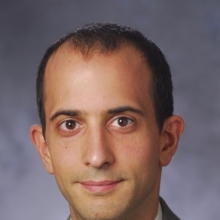
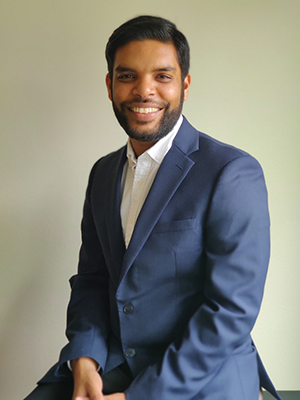
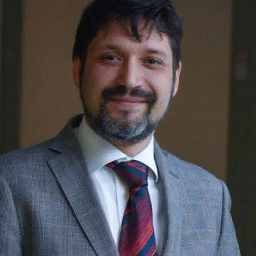
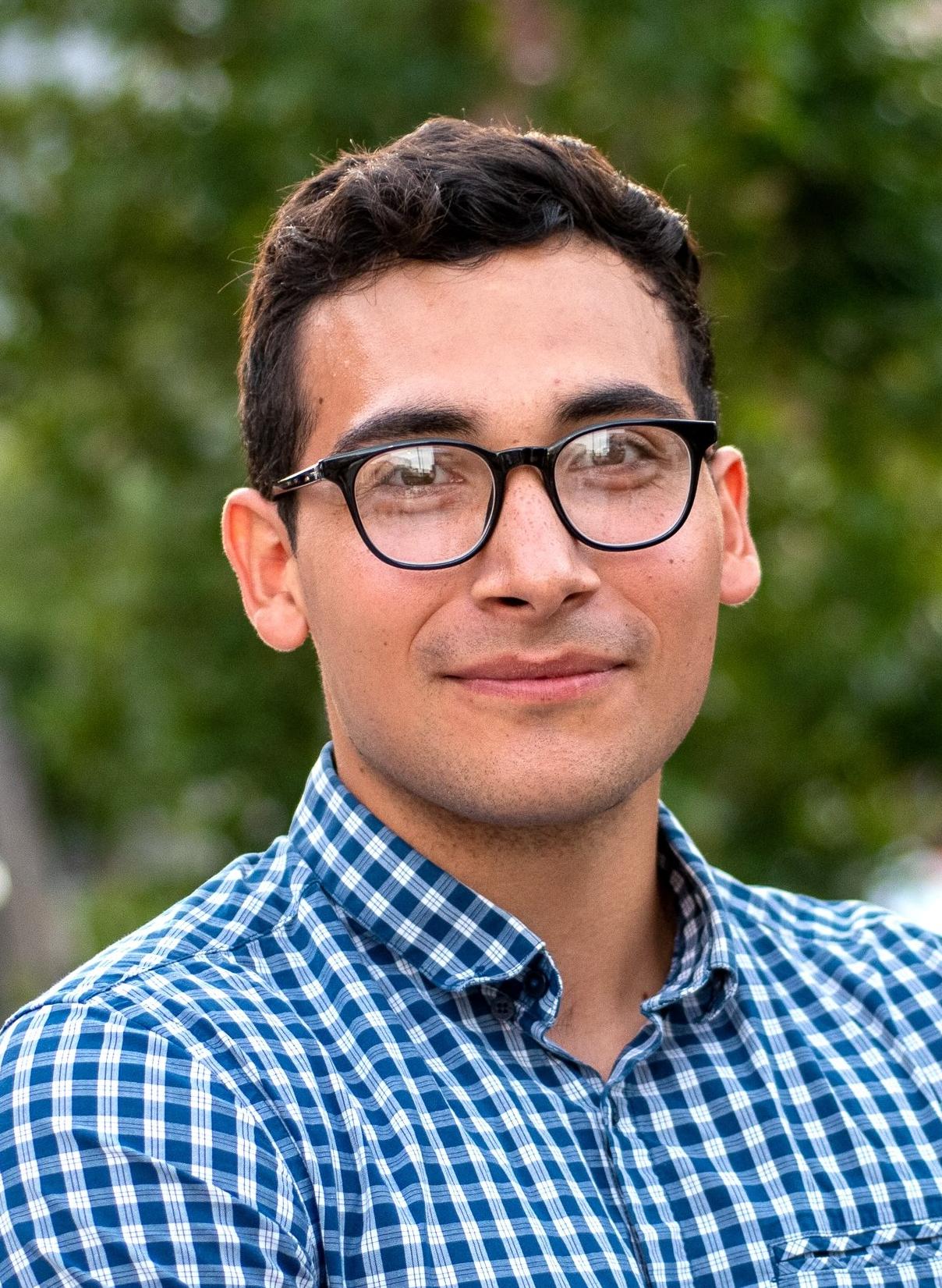
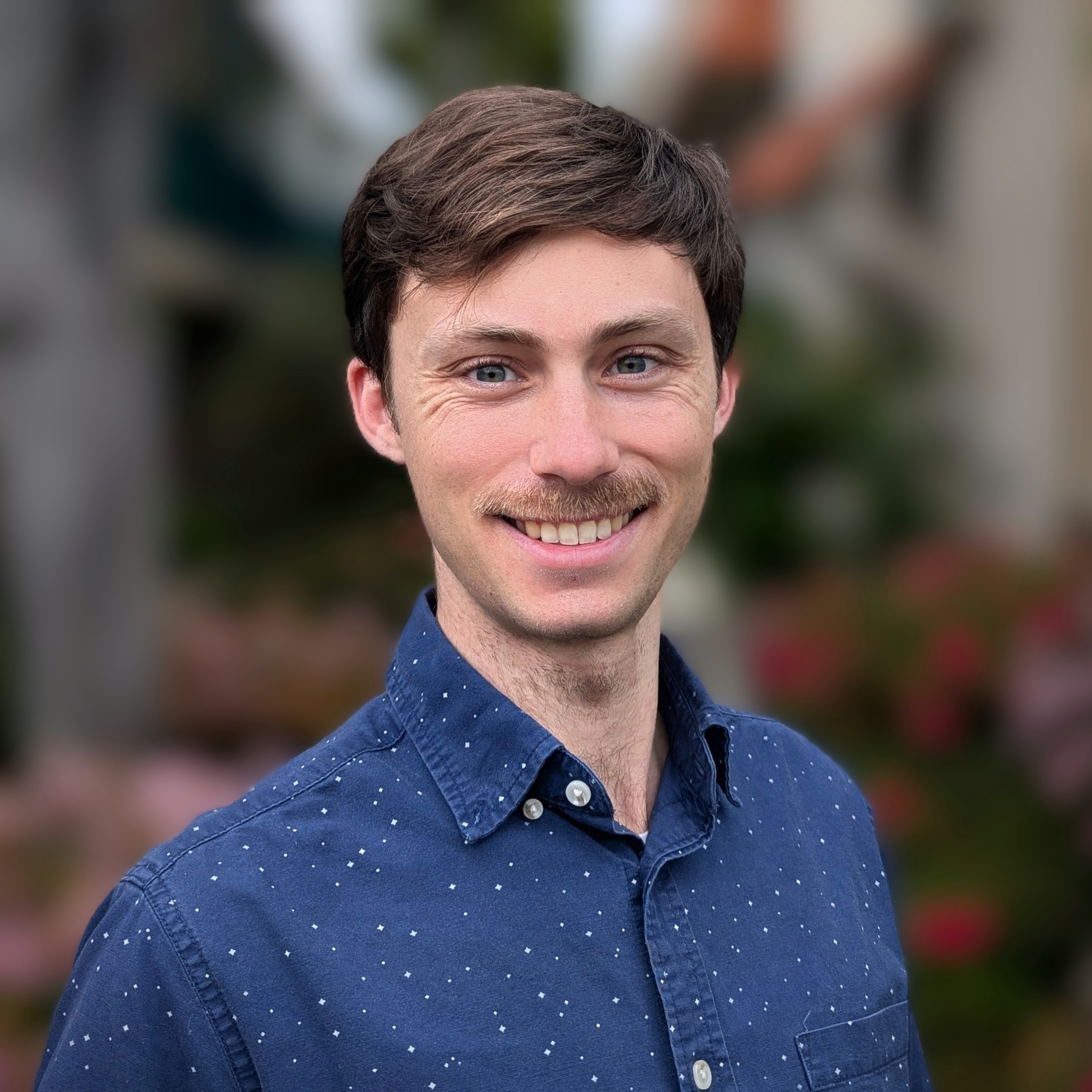
Harrison Steel is an Associate Professor of Engineering Science at the University of Oxford and Tutorial Fellow at Harris Manchester College. He holds a BEng in Mechanical Engineering and BSc in Physics and Mathematics from the University of Sydney, followed by a DPhil at Oxford as a Monash Scholar. His research focuses on synthetic biology, control engineering, and bioprocess optimization, with a particular emphasis on microbial systems and genetic circuit design. Dr. Steel’s work integrates computational modeling, experimental biology, and control theory to engineer robust biological systems. His contributions include advancements in genome editing via SIBR-Cas systems, cybernetic control of microbial co-cultures, and the development of open-source platforms like Chi. Bio for automated biological experimentation. His recent publications highlight innovations in directed evolution strategies, modular biomolecular control architectures, and the application of machine learning to fitness landscape analysis. He has pioneered approaches for stabilizing genetically engineered cell populations and enhancing bioprocess efficiency through adaptive control systems. Dr. Steel’s research is supported by collaborations across engineering, biology, and computational disciplines. He actively contributes to academic leadership through his role at Harris Manchester College and maintains an experimental focus on bridging theoretical models with practical biological implementations.
Dr. Karim Sabra is a Professor at the George W. Woodruff School of Mechanical Engineering , Georgia Institute of Technology, specializing in Acoustics and Dynamics . He holds a Ph.D. from the University of Michigan (2003) and joined Georgia Tech in 2007 as an Assistant Professor. His research integrates theoretical and experimental approaches to study wave propagation in diverse fields including structural health monitoring, biomechanics, and ocean acoustics. Key areas of focus include passive imaging techniques using ambient noise and diffuse wave fields, with applications in non-invasive monitoring of mechanical systems and seismoacoustic environments. Education: Ph.D., University of Michigan, 2003 M.S., University of Michigan, 2000 M.Sc., École Nationale Supérieure de Techniques Avancées (France), 2000 Research Interests: Dr. Sabra’s work spans acoustics, structural health monitoring, biomechanical systems evaluation, underwater acoustics, and geophysics . Recent projects include developing passive elastography techniques for soft tissues using physiological vibrations and exploring ambient noise-based tomography for ocean environments. His interdisciplinary approach bridges multi-scale engineering challenges with multi-wave tools (acoustical, electrical, optical). Publications: His work focuses on advanced acoustic technologies, including underwater communication systems, passive acoustic identification tags, and ray-based tomography methods. Themes include seamount effects on sound propagation, machine learning for acoustic modeling, and environmental sensing using shipping noise. Awards: R. Bruce Lindsay Award (2011) Fellow of the Acoustical Society of America (2007) Institute of Acoustics A.B. Wood Medal (2009) Advising & Grants: Dr. Sabra mentors graduate students in acoustics and wave phenomena, emphasizing interdisciplinary collaboration. His research is supported by grants focused on underwater acoustics, environmental sensing, and biomedical applications. Labs/Teams: His research group develops novel sensors and algorithms for oceanographic and biomedical applications, collaborating with industry and academic partners.
Alexander Hollberg is an Associate Professor in the Division of Building Technology at Chalmers University of Technology, within the School of Architecture and Civil Engineering. His academic role focuses on Computational Sustainable Design, emphasizing the development of digital tools for sustainable building and urban design. He holds a PhD in Parametric Life Cycle Assessment (2016) from Bauhaus University Weimar, an MSc in Architectural Engineering (2011), and a BSc in Civil Engineering (2008) from Technical University of Munich (TUM). His research interests include Sustainable Design Optimization, Stakeholder Interaction, Artificial Intelligence, and Life Cycle Assessment (LCA). He co-founded CAALA, a software and consulting startup in Munich, Germany, advancing tools for real-time environmental performance evaluation in early design stages. Recent work includes studies on digital twins for urban planning, robust renovation strategies, and AI-driven facade optimization. Hollberg was promoted to Docent (Associate Professor) in Computational Sustainable Design in 2022, focusing on bridging computational methods with sustainable environmental transitions. His collaborative projects address tool development for stakeholder engagement, BIM integration, and circular economy frameworks in construction. Key Projects: Development of Bombyx and Twinable tools for real-time LCA and urban simulation Leading the Nordic Build-LCA PhD forum and BIM-based LCSA applications Contributions to IEA EBC Annex 72 guidelines on life cycle environmental impacts Education Background: PhD in Parametric Life Cycle Assessment, Bauhaus University Weimar, 2016 MSc in Architectural Engineering, Bauhaus University Weimar, 2011 BSc in Civil Engineering, Technical University of Munich, 2008 His research outputs prioritize early design-stage decision support through parametric modeling and AI, with a focus on carbon neutrality and material circularity in construction.
Jeyavijayan 'JV' Rajendran is an Associate Professor in the Department of Electrical and Computer Engineering at Texas A&M University, part of the College of Engineering. He is an ASCEND Fellow and leads the Secure and Trustworthy Hardware (SETH) Lab. His research focuses on hardware security, computer security, and novel applications of AI in secure hardware design. Education: PhD in Electrical Engineering (NYU 2015), MS in Computer Engineering (NYU Tandon 2010), BE in Electronics and Communication Engineering (Anna University 2008). Research Interests: Hardware Security, Computer Security, Logic Locking, Hardware IP Protection, and Reinforcement Learning for Security. He explores AI-driven approaches to detect vulnerabilities, protect intellectual property, and enhance secure hardware design through fuzzing, obfuscation, and formal verification. Notable Awards: 2022 Office of Naval Research Young Investigator Award, 2021 IEEE CEDA Ernest Kuh Early Career Award, 2017 NSF CAREER Award. Lab and Teams: The SETH Lab focuses on trustworthy hardware design, developing techniques to secure integrated circuits against reverse engineering and IP theft. Current projects include LLM-based hardware code generation, formal approaches for hardware fuzzing, and AI-driven vulnerability detection.
Nabil Aouf is a Professor of Robotics and Autonomous Systems in the Department of Electrical and Electronic Engineering at City, University of London, a position he has held since January 2019. Previously, from 2006 to 2018, he was Professor of Autonomous Systems at Cranfield University’s Defence and Security campus, where he also served as Head of the System and Autonomy Group and Research Lead of the Centre of Electronic Warfare, Information and Cyber. He earned his PhD in Electrical Engineering from McGill University Faculty of Engineering between 1999 and 2002. His research focuses on Robotics, Autonomous Systems, UAV Navigation, Computer Vision, and Fault-Tolerant Control . Key areas include visual odometry, sensor fusion (vision/IMU, RGBD, thermal-visible), robust control for UAVs, fault diagnosis in inertial systems, 3D perception, and autonomous landing. His work integrates theoretical control methods with real-time implementation in aerospace and defense contexts. His recent publications reflect a strong emphasis on robust optimization, multispectral vision, and real-time autonomous navigation. Trends indicate a focus on enhancing autonomy under uncertainty—through illumination-invariant stereo matching, L∞ optimization, and robust feature matching—particularly for UAVs operating in challenging environments. Nabil Aouf has collaborated extensively with researchers such as M. Richardson, O. Araar, T. Mouats, and M. Boulekchour across numerous projects in UAV control, sensor fusion, and autonomy. While no scientific awards are listed in the provided text, his leadership roles and sustained publication record in high-impact journals and conferences underscore his academic contributions. He has supervised or collaborated with several advisees including S.H. Almutairi, L. Chermak, I. Vitanov, and D. Nam, contributing to both theoretical developments and practical implementations in autonomous systems. His work has applications in aerospace, defense, planetary exploration, and critical infrastructure inspection.
Prof. Felix Motzoi is an Associate Professor at the University of Cologne and Division Leader & Head of the 'Automatic Optimization, Control and Design' group at the Peter Grünberg Institute (PGI-8) in Jülich. His research focuses on advancing quantum technologies, including superconducting and semiconducting architectures, trapped cold atoms/ions, Rydberg qubits, and long-range entanglement. He leads theoretical efforts in quantum control theory, machine learning applications, hardware co-design, and error mitigation strategies. Key research areas include developing optimal control methodologies (e.g., DRAG, STA), numerical optimization, and dynamics modeling for quantum systems. His work bridges theoretical frameworks with experimental implementations, emphasizing practical solutions for scalable quantum computing. Recent publications highlight innovations in quantum gate design, error suppression via pulse shaping, and hybrid optimization techniques combining machine learning with physics-driven approaches. His team collaborates across disciplines to address challenges in qubit coherence, entanglement stabilization, and robust quantum processing.
Aryeh Kontorovich is a Professor in the Computer Science Department at Ben-Gurion University. His research primarily focuses on theoretical machine learning, with expertise in probability, statistics, Markov chains, and metric spaces. His research interests span theoretical machine learning, with particular emphasis on: Probability theory and concentration inequalities Statistical learning theory Markov chains and mixing time estimation Metric space learning Kernel methods Sample compression schemes Professor Kontorovich's recent publications (2021-2025) demonstrate a continued focus on theoretical foundations of machine learning. His work shows strong trends in statistical estimation for Markov processes, distribution learning, metric space analysis, and sample compression. Many papers explore the intersection of probability theory and machine learning, particularly examining concentration inequalities, minimax optimality, and theoretical guarantees for learning algorithms. His research consistently bridges abstract mathematical theory with practical machine learning applications. Scientific awards and recognitions: Distinguished contribution award at MLG 2007 for "A Universal Kernel for Learning Regular Languages" Professor Kontorovich has advised numerous students and collaborated extensively with researchers in theoretical machine learning. His work spans both theoretical foundations and practical applications, with significant contributions to understanding the mathematical limits of learning algorithms. While specific grant information isn't provided in the source material, his extensive publication record in top venues suggests successful funding for his research programs. He maintains active collaborations with researchers worldwide, including prominent names like L. Gottlieb, D. Berend, and S. Hanneke.
Guido Perboli is a Full Professor in the Department of Management and Production Engineering (DIGEP) at the Polytechnic University of Turin, where he also serves as Logistics Coordinator and Project Coordinator for activities supporting relationships with government bodies. He is a member of the Interdepartmental Center CARS@PoliTO (Center for Automotive Research and Sustainable Mobility) and serves as Director of the ICT for City Logistics and Enterprises (ICElab@Polito) research center, which he founded in 2016. His research interests span a broad range of topics including Operations Research, Logistics, Last-mile Delivery, Sustainable Logistics, Combinatorial Optimization, Stochastic Programming, Business Development, and Lean Business methodologies. His work particularly focuses on City Logistics, Green Logistics, and the application of emerging technologies like Blockchain and AI in supply chain management. He has developed GUEST, a Lean Business methodology for innovation processes from early idea definition to implementation. Professor Perboli's recent publications demonstrate a strong focus on urban logistics, last-mile delivery optimization, blockchain applications in supply chains, and the integration of AI techniques in transportation systems. His work shows an increasing trend toward interdisciplinary research that combines optimization methods with emerging technologies to address sustainable urban mobility challenges. Professional Recognition: CASE Best Paper award from IEEE Conference on Automation Science and Engineering (2011) Effective member of INFORMS (2019-present) Effective member of EURO (1995-present) Effective member of AIRO (1995-present) Associate Editor for Journal of Applied Research and Technology (2020-present) Associate Editor for Sustainability (2018-present) Professor Perboli actively advises PhD students and has supervised numerous research projects, including EU-funded initiatives like SINFONICA, HESTER, and 5G-LOGINNOV. He serves as Scientific Director for multiple commercial research projects focused on blockchain, IoT, and AI applications in logistics. Beyond academia, he is Chief Scientific Officer of Arisk S.p.A., a fintech company specializing in business crisis prediction using AI and machine learning. His research group, ICElab@Polito, focuses on two main areas supporting urban growth: logistics and enterprises. The center collaborates with numerous companies including Amazon, DHL, and FCA, addressing real-world challenges in urban logistics and supply chain management through innovative research approaches.
Huy T Tran is an Assistant Professor in the Department of Aerospace Engineering at the University of Illinois at Urbana-Champaign's College of Engineering, with additional appointments at the Applied Research Institute. His research focuses on the intersection of robotics, artificial intelligence, and multi-agent systems, with applications spanning autonomous navigation, critical infrastructure resilience, and intelligent transportation. Dr. Tran earned his Ph.D. in Aerospace Engineering from Georgia Institute of Technology in 2015, following advanced degrees from Georgia Tech and University of Wisconsin-Madison. His academic journey includes research assistant professor positions before achieving his current assistant professor role in 2021. He previously worked as a Senior Multi-Disciplinary Systems Engineer at The MITRE Corporation and served as a Visiting Scholar at the Air Force Institute of Technology. His research interests encompass Autonomy, Reinforcement Learning, Artificial Intelligence, Machine Learning, Robotics, Multiagent Systems, Intelligent Transportation Systems, and Critical Infrastructure Resilience. As director of the Lab for Intelligent Robots and Agents (LIRA), he leads cutting-edge research in autonomous systems that interact with humans and other robots. His work has evolved from foundational resilience modeling in aerospace systems toward increasingly sophisticated AI applications in multi-robot coordination and explainable decision-making. Dr. Tran's publication record demonstrates a clear trajectory toward explainable AI and human-AI collaboration, with recent work focusing on generating explanations for reinforcement learning policies, coordination in ad hoc teams, and neuro-symbolic approaches to robot policy interpretation. His research bridges theoretical advances with practical applications in air traffic control, field robotics, and critical infrastructure management. Best Paper Award: Theoretical (2016 Complex Adaptive Systems Conference) Selected for oral presentation at IROS 2023 Workshop 27% full paper acceptance rate at AAMAS 2022 44% acceptance rate at ICRA 2020 As an educator, Dr. Tran teaches core aerospace courses including Computational Systems Engineering, Aerospace Numerical Methods, and Reinforcement Learning. He has secured significant research funding from NASA's Transformational Tools and Technologies program, ARL A2I2 program, ONR Science of AI program, and DARPA. His current projects span ad hoc teaming in multi-robot systems, collective autonomous air mobility, hierarchical reinforcement learning, and interpretable AI agents.
Natalia Díaz Rodríguez is an Assistant Professor of Artificial Intelligence at ENSTA ParisTech, where she works in the Computer Science and Systems Engineering department within the Autonomous Systems and Robotics Lab (U2IS). She is also affiliated with the INRIA Flowers team, focusing on developmental robotics. Her research spans deep learning, reinforcement learning, continual learning, and symbolic AI, with applications in explainable AI, computer vision, and robotics for social good. Her academic background includes a double PhD in Artificial Intelligence from Abo Akademi University and the University of Granada, alongside MSc degrees in Soft Computing and Computer Engineering from the University of Granada. She contributes to interdisciplinary AI, particularly in robotics, ethics, and healthcare applications, and co-organizes workshops on continual learning. Double PhD in Artificial Intelligence (2015), Abo Akademi University and University of Granada Doctoral diploma on Innovation and Entrepreneurship (2017), EIT Digital MSc in Soft Computing and Intelligent Systems (2012), University of Granada MSc in Computer Engineering (2010), University of Granada Her recent publications focus on trustworthy AI, including bias identification, counterfactual explanations, and continual learning strategies, reflecting her commitment to ethical and robust AI systems. She also explores AI applications in structural engineering, climate visualization, and financial risk assessment, emphasizing practical deployment and interpretability.
Marat I. Latypov serves as Assistant Professor in the Department of Materials Science and Engineering at the University of Arizona's College of Engineering. He is also a member of the Applied Mathematics Graduate Interdisciplinary Program and leads the Materials Informatics Lab. His research spans computational materials science, sustainable alloy design, and machine learning applications for materials development. Dr. Latypov holds a PhD in Materials Science and Engineering from Pohang University of Science and Technology (POSTECH, South Korea, 2014) and a Dipl.-Ing. in Engineering Physics from Ufa State Aviation Technical University (Russia, 2011). His postdoctoral training included appointments at Georgia Tech/CNRS in France and the University of California, Santa Barbara. His research focuses on materials informatics , physics-informed machine learning , and sustainable structural alloys . Key methodologies include graph neural networks for polycrystal mechanics, vision transformers for microstructure representation, and adaptive experimental design for materials optimization. Recent work emphasizes circular economy applications through construction waste recycling and copper mine tailings valorization. Analysis of his publication record reveals strong emphasis on computational microstructure-property linkages (35% of recent work), machine learning for materials design (30%), and sustainable materials processing (25%), with growing integration of large language models for materials knowledge extraction. NSF CAREER Award (2025) : For damage control in recycled aluminum alloys ISTI Distinguished Faculty Scholar (2024) : At Los Alamos National Laboratory Novelis Hackathon First Prize (2021) : Computer vision application Acta Materialia Outstanding Reviewer (2018) Young Researcher Award (2017) : NanoSPD7 Conference Dr. Latypov advises PhD students including Herbold Fellow Zhuocheng Huang and leads projects funded by NSF and the Grantham Foundation. Current initiatives include chalcopyrite leaching optimization for copper mining and graph neural network development for fatigue prediction. His Materials Informatics Lab maintains collaborations with Los Alamos National Laboratory, MIT, and industry partners including Novelis. The lab operates at the intersection of metallurgy , machine learning , and high-performance computing , with capabilities spanning deep learning, Bayesian inference, and cloud-based computational infrastructure. Recent news highlights participation in CODAS-HEP summer school and publication of vision transformer work in Acta Materialia.
Moïse Blanchard is an Assistant Professor and Tennenbaum Early Career Professor at the H. Milton Stewart School of Industrial and Systems Engineering at Georgia Institute of Technology, having joined in August 2025. Previously, he was a Postdoctoral Fellow at Columbia University Data Science Institute. His academic journey includes a Ph.D. in Operations Research from MIT (2024), and M.Sc. and B.Sc. degrees in Applied Mathematics from École Polytechnique. Blanchard's research focuses on the intersection of machine learning theory, statistics, and optimization. His work addresses fundamental questions in universal learning, online algorithms, and convex optimization under memory constraints. His research program explores learnability under minimal assumptions, query complexity/memory tradeoffs, and decision-making in adversarial environments. This work has significant implications for theoretical computer science, operations research, and statistical learning theory. His publications reveal a strong emphasis on foundational aspects of learning theory and optimization. Recent work demonstrates expertise in universal learning frameworks, memory-constrained optimization, and probabilistic analysis of combinatorial problems. His research often bridges theoretical computer science with practical optimization challenges, particularly in contexts where traditional i.i.d. assumptions don't hold. Columbia DSI postdoctoral fellowship, 2024 INFORMS Transportation Science & Logistics (TSL) best student paper award, 2023 Air Force Office of Scientific Research Grant (AFOSR), with Prof. Patrick Jaillet, 2023 COLT 2022 Best student paper runner-up Bronze medal, Alibaba Global Mathematics Competition, 2022 Blanchard has received significant research funding including an Air Force Office of Scientific Research Grant. His work has been recognized with multiple prestigious awards, including the INFORMS TSL best student paper award for his research on the k-Traveling Salesman Problem. His extensive publication record in top venues demonstrates a strong research trajectory with impactful contributions to theoretical machine learning and optimization.
Professor Lyudmila Mihaylova is a distinguished academic at the University of Sheffield's School of Electrical and Electronic Engineering, where she holds the position of Professor of Signal Processing and Control. She has established herself as a leading researcher in the fields of signal processing, Bayesian methods, and autonomous systems, with significant contributions to particle filtering techniques for intelligent transportation systems. Her work bridges theoretical developments with practical applications across multiple domains including transportation, healthcare, and industrial automation. Prof. Mihaylova's research interests center on nonlinear filtering, sequential Monte Carlo methods, statistical signal processing, and sensor data fusion. Her work spans both theoretical advancements and practical implementations, with particular focus on high-dimensional problems including vehicular traffic flow estimation, image processing, and localization in sensor networks. She has extensive experience with various image modalities such as optical, thermal, LIDAR, SAR, and hyperspectral imaging. Her group actively develops novel methods for autonomous intelligent systems focusing on sensing, tracking, decision making, and machine learning applications. Analysis of Prof. Mihaylova's recent publications reveals a strong trend toward uncertainty quantification in machine learning models, particularly for safety-critical applications. Her work increasingly integrates traditional signal processing techniques with modern deep learning approaches, with applications spanning sewer inspection robotics, medical diagnostics (particularly sleep apnea detection), UAV swarm tracking, industrial manufacturing, and autonomous vehicle systems. A significant portion of her recent research focuses on developing robust methods that can handle incomplete or outlier-corrupted data while providing reliable uncertainty estimates. Among her notable professional achievements: President of the International Society of Information Fusion (ISIF) Senior member of the IEEE Signal Processing Society Associate Editor for IEEE Transactions on Aerospace and Electronic Systems Associate Editor for Elsevier Signal Processing Journal Prof. Mihaylova has successfully mentored numerous PhD students and postdoctoral researchers, many of whom have gone on to prominent academic and industry positions. Her research has been supported by major funding bodies including EPSRC, EU, MOD/DSTL, and industry partners, with recent projects including 'Protecting Environments with UAV Swarms' (InnovateUK, 2022-2024), 'ShiRAS: Towards Safe and Reliable Autonomy in Sensor Driven Systems' (NSF-EPSRC, 2019-2023), and 'Confident safety integration for Cobots' (Lloyd's Register Foundation, 2019-2020). Her research group follows a collaborative approach with the philosophy 'We share knowledge, we grow.' Prof. Mihaylova maintains active research collaborations with institutions worldwide and has held previous academic positions at Lancaster University (2006-2013) and University of Bristol (2004-2006), along with research visiting positions at the University of Ghent, Katholic University of Leuven, and the Bulgarian Academy of Sciences.
Keenan Albee is a Robotics Technologist at NASA’s Jet Propulsion Laboratory and an incoming Assistant Professor at the University of Southern California (starting Fall 2025). His research focuses on autonomous robotics for extreme environments including lunar missions, microgravity, and underwater operations. Education: Ph.D. in Aeronautics and Astronautics (Autonomous Systems), MIT (2022) S.M. in Aeronautics and Astronautics, MIT (2019) B.S. in Mechanical Engineering, Columbia University (2017) Albee’s work integrates optimal control , reinforcement learning , and motion planning to develop autonomy for mobile robotic systems operating under uncertainty. His expertise spans space robotics , microgravity systems , and underwater robotics , with a focus on environment-aware algorithm design. Recent research includes parametric information-aware motion planning (RATTLE algorithm), distributed multi-agent exploration, and robust control for uncooperative targets. His publications highlight on-orbit validation of autonomy algorithms via NASA’s Astrobee platform and upcoming lunar missions. Scientific Awards: NASA Space Technology Research Fellowship (2022) Albee actively develops open-source autonomy frameworks and will establish the Laboratory for Autonomous Systems in Exploration and Robotics (LASER) at USC. His work bridges theoretical control methods with real-world deployment, including first-of-its-kind achievements in space robotics.
Yanan Guo is an Assistant Professor in the Department of Computer Science at the University of Rochester, specializing in computer architecture and cybersecurity. Her research focuses on GPU memory safety, side-channel attacks, quantum computing, and machine learning security, with recent projects exploring cross-VM side-channel vulnerabilities and quantum circuit simulation. PhD, University of Pittsburgh (advisor: Dr. Jun Yang) Her work bridges hardware and software security, addressing issues like GPU cache eviction mechanisms, memory corruption attacks, and adversarial threats in neural networks. She actively collaborates with researchers like Youtao Zhang and Jun Yang, with publications in top venues including USENIX Security, MICRO, and ICML. Recent publications highlight trends in GPU security (memory safety, side-channel attacks), quantum computing optimizations, and adversarial machine learning. Her team’s projects have received recognition such as the NSF OAC grant for AI workflow security and features in IEEE Transactions on Computers. Featured Paper in IEEE Transactions on Computers (02/22 issue) Shortlisted for Top Picks in Hardware and Embedded Security 2023 Dr. Guo mentors PhD students and offers weekly office hours for undergraduates, emphasizing career paths, graduate applications, and research guidance. She serves on program committees for conferences like USENIX Security and ASPLOS.