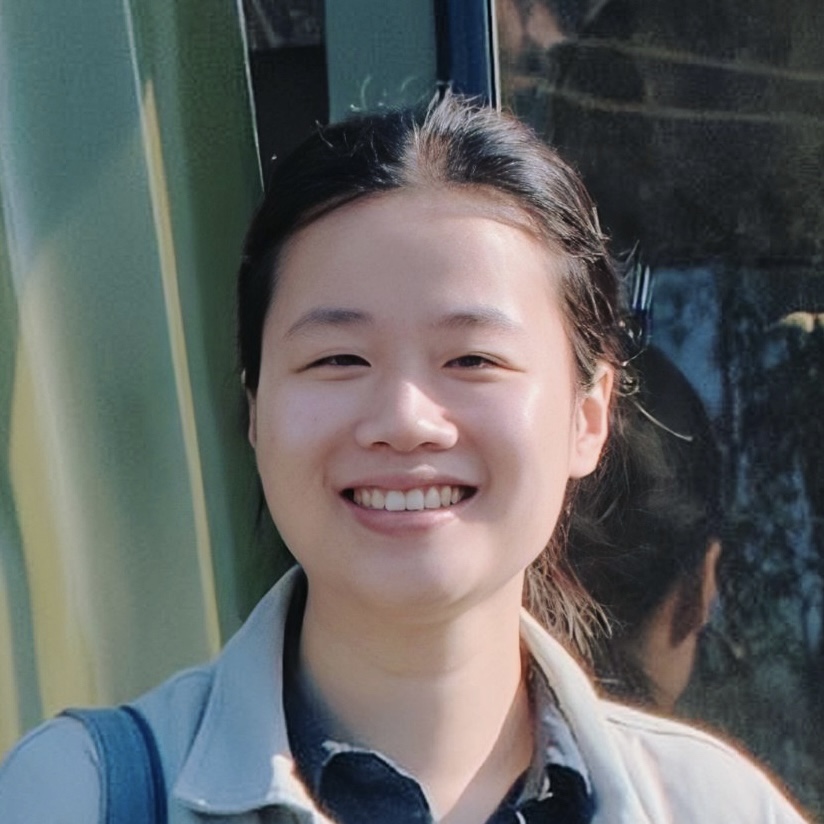
Leying Guan is an Assistant Professor of Biostatistics at Yale School of Public Health , focusing on statistical and machine learning methods for scientific applications in genetics, immunology, and computational neuroscience . She holds a Ph.D. in Statistics from Stanford University (2019) and a bachelor's degree in physics from Tsinghua University. Research Interests : High-dimensional statistics, robust statistical learning, outlier detection, and multi-omic data integration. Key Collaborations : IMPACC Network, Yale Combined Program in the Biological and Biomedical Sciences (BBS), and cross-departmental projects at Yale. Scientific Awards : Recognized with Faculty Research Awards (2025) at Yale School of Public Health. Publications : Develops methods for scRNA-integration, genetic risk prediction, and immune profiling , with impactful studies on COVID-19 severity and Long COVID . Her work bridges statistical theory with real-world applications, particularly in understanding immune responses and disease mechanisms through data science.
Felix Kong is a Lecturer at the University of Technology Sydney, Faculty of Engineering and Information Technology. He specializes in control engineering, robotics, and mechatronic systems with a focus on maritime navigation and bio-inspired locomotion. Current affiliation : University of Technology Sydney (Lecturer since 2022) Previous role : Postdoctoral Research Fellow at University of Technology Sydney (2019-2022) Education : PhD from University of Sydney His research spans multiple domains: Maritime robotics : Stochastic ship routing, ocean current estimation, visibility graph optimization Dynamic locomotion : Gait analysis in parrots, bio-inspired vertical climbing robots Control theory : Iterative learning control, contraction analysis, SLAM optimality prediction Recent publications demonstrate a strong trend toward autonomous navigation systems that integrate: Stochastic weather modeling for ship routing 3D ocean flow estimation for underwater gliders Neural network-based SLAM analysis Multi-agent planning frameworks He has received funding from: Australia's Economic Accelerator Innovate Grant (2025-2027) UTS ECR Research Capabilities Initiative (2021-2022) Teaching contributions include course development and instruction for 41099 Fundamentals of Mechatronic Engineering . Peer-review activities extend to major robotics conferences and journals.
Yu Hayakawa is a Professor at Waseda University since 2007, affiliated with the School of International Liberal Studies and the Faculty of International Research and Education. He holds a PhD in Operations Research from the University of California at Berkeley, an MSc in Mathematics from Illinois State University, and a BA in Elementary School Education from Hiroshima University. His career includes roles at Victoria University of Wellington (1992-2004) and Waseda University. Doctor of Philosophy (1986-1992), University of California at Berkeley, College of Engineering, Operations Research Master of Science (1983-1986), Illinois State University, Department of Mathematics Bachelor of Education (1978-1983), Hiroshima University, Faculty of School Education Hayakawa’s research centers on Operations Research and Reliability Engineering , with a focus on Bayesian statistical methods , stochastic processes , and warranty cost analysis . His work includes modeling alternating geometric processes for warranty costs, nonparametric Bayesian hazard rate estimation , and dependent failure analysis in multicomponent systems. Key contributions involve delayed reporting of warranty faults , non-zero repair time modeling , and stochastic epidemic models for fault detection. His recent projects include a non-parametric Bayesian approach to hazard function modeling (2018-2020) and generalized alternating renewal processes for warranty cost analysis. He collaborates extensively with international researchers like Richard Arnold, Stefanka Chukova, and Sarah Marshall, with publications spanning journals such as Reliability Engineering & System Safety and IEEE Transactions on Reliability . He has also explored finite mixture models for failure time and severity analysis, presenting at conferences like the Asia-Pacific International Symposium on Advanced Reliability and Maintenance Modeling (APARM). Hayakawa’s scientific contributions include developing models for imperfect warranty repairs, damage accumulation in multicomponent systems, and Bayesian methods for capture-recapture estimation. He has served as President (2023-2025) and Vice-President (2020-2023) of the Reliability Engineering Association of Japan and holds memberships in IEEE and the Operations Research Society of Japan. His overseas activities include research at Victoria University of Wellington (2011-2012, 2016) and collaborations on system reliability and stochastic process modeling . Advising and Grants: Hayakawa has mentored students like Yan Liu (PhD student) and Yimo Xu (undergraduate). His research is supported by grants from the Japan Society for the Promotion of Science, including New models for failures in multi-component systems (2013-2014) and Non-parametric Bayesian modeling of system reliability (2018-2020). He also worked on robustness measures for telecommunications networks (1993-1994) in New Zealand.
Hiroki Iwamoto is an Assistant Professor at Waseda University's School of Creative Science and Engineering, Department of Industrial & Management Systems Engineering since 2023. Previously, he held research and teaching positions at Keio University and Tokyo Keizai University. His academic work bridges Business Administration, Social Systems Engineering, and Statistical Science with applications in Accounting. Education: Ph.D. in Engineering (2021, Keio University) Research Interests: Management Strategy Human Resource Management Creating Shared Value (CSV) Statistical Quality Control Business Analytics Recent Research Trends: Focus on advanced statistical methods like Mahalanobis-Taguchi Systems, DEA-R models, and SMOTE for small-sample anomaly detection. His work connects quality management with corporate social responsibility and human capital analytics. Scientific Awards 22th Asian Network for Quality Best Paper Award (2024) 21th Asian Network for Quality Best Paper Award (2023) 20th Asian Network for Quality Best Paper Award (2022) 2015 Japan Academy of Management Information Student Award Teaching: Delivers courses on Business Data Analysis, Multivariate Analysis, and Science/Engineering Literacy. Professional memberships span Japanese Society of Applied Statistics, Japan Industrial Management Association, and Bayesian SEM research communities.
Irene Klein is an Associate Professor at the Department of Statistics and Operations Research within the Faculty of Business, Economics and Statistics at the University of Vienna. She has held this position since March 2007, following her Habilitation in Stochastics and Mathematical Finance and Actuarial Mathematics. Her educational background includes: Master's studies in mathematics at the University of Vienna (September 1988 - September 1993) Doctoral studies in mathematics at the University of Vienna under Walter Schachermayer (October 1993 - December 1996) Dissertation: "Asymptotic Arbitrage Theory" Dr. Klein's research focuses on Mathematical Finance, Stochastics, and Insurance Mathematics. Her work has significantly contributed to the understanding of large financial markets, asymptotic arbitrage theory, and asset pricing frameworks. She examines how market structures, transaction costs, and model uncertainties affect pricing mechanisms and investment strategies, bridging theoretical mathematics with practical financial applications. Analysis of her publication record reveals a consistent research trajectory focused on foundational aspects of mathematical finance. Her work spans from early contributions to asymptotic arbitrage theory to recent explorations of robust finance and model uncertainty. A key theme throughout her career has been examining conditions for market viability and the mathematical structures underlying asset pricing. Dr. Klein teaches various courses including Mathematics 1, Markov Processes, Introduction to Financial Mathematics, and PhD-level seminars in Advanced Probability and Statistics. Her teaching approach integrates theoretical foundations with practical applications, preparing students for both academic research and industry careers in quantitative finance.
Jack Jewson is a Senior Lecturer in the Department of Econometrics and Business Statistics at Monash University’s Faculty of Business and Economics, a position he has held since April 2024. He previously conducted postdoctoral research and held a Juan de la Cierva Research Fellowship at Universitat Pompeu Fabra, Barcelona. He is actively accepting PhD students and supervising research in advanced statistical methodologies. Education: PhD in Statistics, University of Warwick (awarded June 2020), in collaboration with the University of Oxford via the Oxford-Warwick Statistics Programme (OxWaSP). Integrated Master’s in Mathematics, Operational Research, Statistics, and Economics, University of Warwick (awarded July 2015). His research focuses on Bayesian inference under model misspecification, particularly in the M-open world, where no true model is assumed to exist. He develops robust computational methods for variable and model selection, and investigates statistical inference under differential privacy constraints. His work integrates loss functions into Bayesian updating and explores graphical and structural modeling applications in economics and biology. These interests are driven by the need for reliable inference in complex, real-world scenarios where models are inherently imperfect. His recent publications span high-impact journals such as The Annals of Applied Statistics , Biometrics , and Bayesian Analysis , as well as top machine learning venues like NeurIPS. The research demonstrates a strong trend toward robust, privacy-aware Bayesian methods with applications in biostatistics, signal processing, and network modeling. His work bridges theoretical statistics with practical computational solutions for modern data challenges. Scientific Awards: No specific awards or fellowships mentioned in the provided text. Jack Jewson has not received explicit mention of grants or funding in the text, but his prior Juan de la Cierva Fellowship indicates competitive research support. He is actively mentoring PhD students and expanding his research group at Monash. His work involves collaboration with leading statisticians such as David Rossell, Piotr Zwiernik, Jim Q. Smith, and Chris Holmes. While no formal lab name is provided, his research group focuses on robust Bayesian computation and privacy-preserving inference.
Russell Gerrard is an Associate Professor in Statistics and Head of Faculty of Actuarial Science & Insurance at Bayes Business School, City, University of London. He holds a PhD and BA in Mathematics from the University of Cambridge and has been a long-standing faculty member at City, contributing significantly to actuarial education and research. PhD in Stochastic Processes, University of Cambridge (1984) BA in Mathematics, University of Cambridge (1979) Dr. Gerrard's research focuses on the optimal control of pension fund investments, asset allocation, dividend distribution, premium determination in general insurance, and model uncertainty. His work bridges theoretical stochastic processes with practical applications in insurance and pension economics. He has made significant contributions to the understanding of de-cumulation risks, annuitization timing, and risk-sharing mechanisms in modern pension products. The most recent publications (2018–2023) highlight a consistent research trajectory in long-term investment planning, probability hedging, and customer-centric pension design. These works often involve stochastic optimal control, risk management under uncertainty, and the development of transparent financial products that allow savers to self-select their risk exposure. The articles frequently appear in top-tier journals such as European Journal of Operational Research , Insurance: Mathematics and Economics , and Quantitative Finance , reflecting a strong interdisciplinary focus on actuarial science, financial mathematics, and operations research. Scientific Awards and Professional Recognition: Lead Assessor for Subject CA2, The Actuarial Profession (2008–2011) Principal Examiner for Subject 103, Institute of Actuaries (2000–2005) Member, London Mathematical Society (since 1988) Dr. Gerrard has supervised PhD students including Peter Vodicka and Andrea Buffoli. He has secured research grants, notably from the Institute and Faculty of Actuaries for the project 'Minimising Longevity and Investment Risk while Optimising Future Pension Plans.' His consultancy work with firms like AON Benfield and Sabaté demonstrates applied impact. He has presented at numerous international conferences, including the International Congress on Insurance: Mathematics and Economics. He leads key academic programs and initiatives, having served as Director for the BSc Actuarial Science and the Foundation Year in Mathematics. As International Foundation Programmes Director, he plays a significant role in academic leadership and student pathway development.
Liu Yang is a postdoctoral fellow in the Computer Science Department at Carnegie Mellon University , with a PhD from CMU under Avrim Blum and Jaime Carbonell. His research focuses on Theoretical Machine Learning and Theoretical Computer Science , exploring areas like Statistical Learning Theory , Property Testing , and Algorithmic Economics . He has contributed to active learning , transfer learning , and online pricing problems through mathematical frameworks. Research Interests : Liu's work bridges Computational Learning Theory with Algorithmic Economics , including: Mathematical theories for active property testing of Boolean functions Transfer learning with applications to online allocation and pricing Analysis of convex losses and statistical identifiability in learning Developing Buys-in-Bulk models for active learning efficiency Service and Teaching : He has served on program committees for ICML 2012-2013 , reviewed for top-tier venues, and taught courses like Graduate Algorithms and Modern Computer Algebra at CMU. He also co-developed the DistLearnKit MATLAB toolkit for distance metric learning.
Samuel Adeyemo is a Postdoctoral Teaching Fellow in the Engineering Department at Calvin University. His career spans teaching high school chemistry, physics, and mathematics in Nigeria, a graduate research assistantship at West Virginia University developing machine learning algorithms for industrial systems, and a role as a process engineer at Dangote Cement PLC. He specializes in data-driven modeling and machine learning applications in chemical processes. Education: B.Sc (Ile-Ife), M.Sc (unspecified institution) His research focuses on sparse model selection, Bayesian parameter estimation, and robust machine learning for industrial systems. Recent publications emphasize hybrid AI/first-principles models and surrogate modeling under constraints. He has contributed to both computational chemistry and control theory domains. Key trends in his publications include: Integration of machine learning with industrial process modeling Development of sparse and constrained models Application of Bayesian methods to chemical engineering systems Comparative studies of neural networks and traditional ML approaches His professional experience combines industrial practice (cement manufacturing) and academic research, with a recurring emphasis on technical education and mentorship.
Antoine LEDENT is a tenure-track Assistant Professor in the School of Computing and Information Systems (SCIS) at Singapore Management University (SMU), holding a PhD in Mathematics from the University of Luxembourg (2017) and undergraduate/graduate degrees from Clare College, University of Cambridge. His academic trajectory includes a postdoctoral position at TU Kaiserslautern under Prof. Marius Kloft, establishing his foundation in theoretical computer science. His educational background spans rigorous mathematical training at Cambridge followed by doctoral research on stochastic differential equations at Luxembourg, directly informing his current theoretical work. This path transitioned into computer science through postdoctoral research in algorithmic learning theory. Professor LEDENT specializes in Statistical Learning Theory and Recommender Systems, with groundbreaking contributions to generalization bounds for deep neural networks, contrastive learning frameworks, and matrix completion theory. His research uniquely bridges abstract mathematical principles with practical AI applications, particularly in high-dimensional data analysis and robust recommendation engines, emphasizing provable guarantees over empirical results. Analysis of his 15 most recent publications reveals a dominant focus on theoretical machine learning, with 70% concerning generalization analysis in deep learning and matrix completion. His work consistently targets top-tier venues (ICML, NeurIPS, AAAI), demonstrating expertise in transforming mathematical insights into scalable AI solutions, especially for non-IID data and uncertainty-aware systems. Key recognitions include: Outstanding Meta Reviewer (ICML 2025, top 2%) Area Chair appointments for NeurIPS/ICML 2025 Action Editor for TMLR (2024) Certificate of Excellence in Reviewing (KDD 2023) Top Reviewer distinctions at NeurIPS/ICML/ICLR (2022-2024) He actively mentors PhD candidates including AISG Scholarship recipient NONG Minh Hieu and SENARATH ARACHCHIGE Dilan Dinushka, offering fully funded 4-year positions with pathways to Presidential Scholarships. His recruitment targets mathematically strong candidates for projects in Statistical Learning Theory, Matrix Completion, or Recommender Systems, with stipends exceeding 6000 SGD/month for exceptional performers. Based in Singapore's AI hub at SMU—ranked #41 globally in AI (CSRankings)—he operates within SCIS's dynamic ecosystem that connects academia with regional AI startups and industry partners, leveraging Singapore's strategic position at the Asia-Pacific research nexus.
Grant Morgan is a Professor in the Department of Educational Psychology at Baylor University's School of Education, where he also serves as Associate Dean for Research and Outreach and Program Director for the Quantitative Methods graduate program. He holds a Ph.D. in Educational Research & Measurement from the University of South Carolina and has been a faculty member at Baylor since 2012. Educational Background: Ph.D. in Educational Research & Measurement, 2012, University of South Carolina, Columbia M.S. in Human Resources Management (Organization Performance track), 2005, Western Carolina University, Cullowhee B.S. in Psychology, 2003, Clemson University Dr. Morgan's research focuses on latent variable models , psychometrics , classification , and nonparametric statistics . He conducts methodological investigations using Monte Carlo simulations and applies advanced quantitative models in interdisciplinary contexts. His work emphasizes validity in psychological measurement and accurate estimation in latent variable frameworks. His recent publications reflect a strong trend in Bayesian factor analysis, latent class modeling, robust estimation for ordinal data, and the generation of nonnormal distributions using mixture models. These works span top-tier journals such as Psychological Methods , Structural Equation Modeling , and Language Assessment Quarterly , highlighting his contributions to both theoretical and applied psychometrics. Scientific Awards and Recognition: Three-time recipient of Distinguished Paper Awards from AERA-affiliated organizations Nominated for Cornelia Marschall Smith Professor of the Year Nominated for Division D Early Career Award Dr. Morgan is actively involved in academic leadership and service. He has served as Chair of the Structural Equation Modeling SIG at AERA, is a board member of a regional AERA-affiliated organization, and regularly serves as a panelist for the National Science Foundation and U.S. Department of Education. He advises on externally funded research projects totaling over $20 million and mentors graduate students in quantitative methods. He serves on the editorial board of the Journal of Psychoeducational Assessment and reviews for leading methodological journals including Structural Equation Modeling , Psychometrika , and Multivariate Behavioral Research . He leads the Quantitative Methods specialization, teaching courses such as Psychometric Theory, Item Response Theory, Latent Variable Models, and Nonparametric Statistics. His lab and research team focus on advancing methodological rigor in educational and psychological measurement through simulation studies and real-world applications.
Saikat Chatterjee is a Professor in the Department of Information Science and Engineering at the School of Electrical Engineering and Computer Science, Royal Institute of Technology (KTH). He is also a Fellow of Digital Futures and maintains visiting researcher positions at Karolinska Institute, Karolinska Hospital (specializing in 'AI for Health Care'), and Oslo University Hospital in Norway. His primary research interests span Signal Processing and Machine Learning, with specific focus on signal modeling (sparsity, compressive sensing, dynamical systems), statistical signal processing, statistical machine learning, deep learning, speech/audio/image processing, medical data analytics, life science data analysis, perception for autonomous systems, distributed machine learning, and explainable AI (XAI). He particularly emphasizes explainable machine learning, having a strong background in signal processing and statistical machine learning, with growing passion for medical data analysis due to its societal importance. SSF - Swedish Foundation for Strategic Research Region Stockholm European Union Digital Futures Vinnova WASP Companies: Ericsson, Scania, Saab Professor Chatterjee is actively involved in teaching, serving as examiner and course responsible for various degree projects and courses including Machine Learning and Data Science, Pattern Recognition and Machine Learning, and Speech and Audio Processing. His research group has produced significant work across multiple domains, with notable publications in Bioinformatics and smart city applications, demonstrating the breadth of his research impact from healthcare to urban systems.
Yingzhen Li is a Senior Lecturer in Machine Learning at the Department of Computing, Imperial College London, within the Faculty of Engineering. She holds a Turing Fellowship at The Alan Turing Institute (2024). Her research focuses on building reliable machine learning systems through probabilistic methods, emphasizing uncertainty quantification, robustness, explainability, and adaptive techniques. Key areas include trustworthy ML models, generative modeling (especially sequential and spatiotemporal data), and approximate inference applied to Bayesian deep learning. Education: PhD in Engineering from the University of Cambridge, supervised by Prof. Richard E. Turner. Previously a senior researcher at Microsoft Research Cambridge and intern at Disney Research. Research interests span uncertainty-aware AI, causal representation learning, and scalable inference techniques. Her work has influenced industrial applications in deep learning frameworks like TensorFlow Probability and Pyro. Notable contributions include tutorials on approximate inference at NeurIPS 2020 and organizing conferences like AABI and AISTATS. Her recent publications address challenges in generative AI, calibration of vision-language models, and energy-based models. Awards include the Turing Fellowship recognizing her leadership in foundational AI research. Collaborations include affiliations with The Alan Turing Institute and prior industry experience. She actively mentors students and advises on adaptive learning systems through her academic and industrial networks.
Dr. Philip Kokic is a Visiting Fellow at The Australian National University's Institute for Climate, Energy & Disaster Solutions (ICEDS), affiliated with the College of Science. With a career spanning academia, government, and private industry across Australia and overseas, his expertise lies in statistical methodologies applied to climate, economic, and agricultural systems. His research focuses on operational climate risk analysis for sectors such as agriculture, mining, finance, and telecommunications, alongside developing sophisticated statistical software tools for these analyses. His work integrates advanced statistical techniques like Bayesian modeling, spatial analysis, and robust estimation. Key themes include the vulnerability of rural communities to climate change, adaptive capacity of land managers, and statistical downscaling for climate impact predictions. He has contributed to policy frameworks through studies on drought's socioeconomic impacts and farm-level resilience strategies. Over the past decade, Philip’s research highlights trends in climate projection methodologies, agro-economic modeling, and interdisciplinary approaches to disaster solutions. His publications emphasize bridging climate data with decision-making systems for sustainable adaptation. No notable scientific awards are listed, though his contributions have been recognized through institutional affiliations and collaborative projects. He remains active in ICEDS’ initiatives addressing food security, energy transitions, and climate resilience strategies.
Dmitry Vetrov serves as a Professor of Computer Science at Constructor University in Bremen, where he founded and leads the Bayesian Methods Research Group. His academic foundation includes graduation from Moscow State University in 2003 and completion of his PhD in 2006, establishing a career centered on advancing probabilistic machine learning methodologies. His educational trajectory features: Undergraduate studies at Moscow State University (2003) Doctoral degree (PhD, 2006) Vetrov's research program critically bridges Bayesian statistics with deep learning architectures, with his group pioneering efficient diffusion model algorithms, loss landscape characterization in neural networks, scalable stochastic optimization tools, tensor decomposition applications for large-scale ML systems, and enhanced conditional text generation frameworks. This work manifests practical implementations across generative AI domains while maintaining theoretical rigor in probabilistic modeling. Analysis of his 2024-2025 publications reveals a concentrated research thrust toward diffusion model innovation, spanning text generation (token embedding smoothing, language model encoding properties), image synthesis (hair transfer, gesture generation), and scientific applications (protein modeling, genetic fine-mapping). Key thematic threads include sampler acceleration, theoretical property analysis of diffusion processes, and robust evaluation frameworks for generative systems. No scientific awards were documented in the source materials. Mentorship outcomes demonstrate significant impact, with three recent PhD students securing research positions at DeepMind. While specific grant details remain undisclosed, the group's prolific output across NeurIPS, ICML, and CVPR indicates sustained research funding. The Bayesian Methods Research Group operates as an integrated innovation hub within Constructor University's academic ecosystem. The research collective he directs maintains active development of Bayesian-deep learning fusion techniques, with current projects emphasizing diffusion model efficiency, theoretical foundations of optimization landscapes, and cross-domain applications in computational biology and multimodal generation.