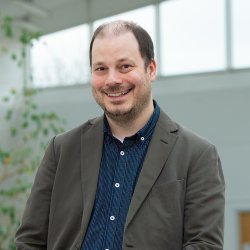
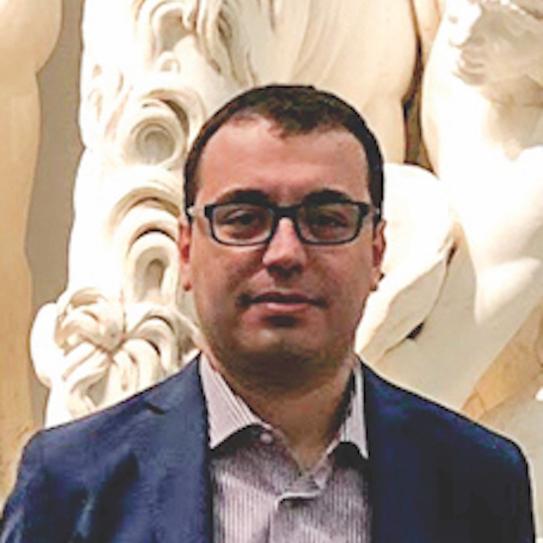
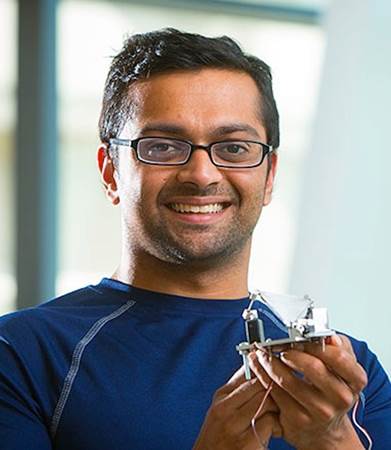
Dr. Jonathan Potts is a Senior Lecturer and Course Leader for the BSc (Hons) Product Design Engineering at Sheffield Hallam University's Department of Engineering and Mathematics. His expertise includes experimental aerodynamics, UAV systems, and sports equipment aerodynamics. Research interests focus on flow control systems, wind tunnel development, and aerodynamics of sports projectiles. Publications primarily explore aerodynamic phenomena in hypersonic flows, shuttlecock dynamics, and UAV autonomy.
Nasser Houshangi is a Professor in the Department of Electrical and Computer Engineering at Purdue University Northwest. With over 25 years of teaching experience, he has developed and instructed 15 undergraduate and 5 graduate courses, including Robotics, Control Systems, and Adaptive Control. His research focuses on learning control in robotics, autonomous navigation using Simultaneous Localization and Mapping (SLAM), and multisensory integration systems for mobile robot position determination. Education: Ph.D. in Electrical Engineering, Purdue University, West Lafayette M.S. in Electrical Engineering, University of Colorado B.S. in Electrical Engineering, University of Colorado Research Interests: Nasser Houshangi’s work centers on advancing robotic autonomy through learning control systems, SLAM algorithms, and sensor fusion technologies. His research aims to enable robots to adapt dynamically to complex environments, with applications in industrial automation and mobile robotics. Scientific Awards and Affiliations: Institute of Electrical and Electronic Engineers (IEEE), Senior Member IEEE Robotics and Automation Society Sigma Xi, Scientific Research Society Eta Kappa Nu (National Electrical Engineering Honor Society) Tau Beta Pi (National Engineering Honor Society) Teaching and Leadership: He has led curriculum development initiatives, served as Computer Engineering Program Coordinator, and previously held the role of Department Head of Electrical Engineering. His teaching philosophy emphasizes hands-on learning and innovation in courses such as Robotics and Computer Architecture.
Audrey Kurth Cronin serves as Director of the Carnegie Mellon Institute for Strategy & Technology (CMIST) and Trustees Professor of Security and Technology. Her research focuses on how accessible technologies like AI, robotics, and biotechnology are empowering non-state actors in modern conflict. A leading expert in international security, her award-winning book Power to the People (2020) examines how commercial innovations threaten traditional security frameworks. She also authored How Terrorism Ends (2009), a foundational text in counterterrorism studies. Dr. Cronin holds a DPhil from Oxford University and has held roles at institutions including the National War College and Office of the Secretary of Defense for Policy. She advises governments and corporations on technology strategy, emphasizing ethical frameworks for emerging weapons systems and organizational decline dynamics among militant groups. Her recent work analyzes Hamas strategy, AI warfare ethics, and Ukraine's tech-driven resilience. Cronin frequently publishes in Foreign Affairs and contributes to policy discussions on global security challenges.
Dr. Dandan Zhang is an Assistant Professor in AI & Machine Learning at the Department of Bioengineering, Imperial College London, and holds a Lecturer position in the I-X initiative. She directs the Multi-Scale Embodied Intelligence Laboratory and is affiliated with the Hamlyn Centre’s Robotics and Sensing groups. Previously, she was a Lecturer at the University of Bristol’s Department of Engineering Mathematics (Bristol Robotics Laboratory). Her research integrates robotics, biomedicine, and AI, focusing on dexterous manipulation via multi-modal sensor fusion, micro-robotics for biomedical applications, and enhancing autonomy in multi-scale robotic systems. She aims to develop AGI-driven robots with super-human capabilities for healthcare and daily life. Education: PhD (Computing) and MRes (Surgery and Cancer), both from Imperial College London. Cross-disciplinary expertise spans Mechanical Engineering, Electrical Engineering, Clinical Sciences, Manufacturing Engineering, and Optical Physics. Lab leadership includes the Multi-Scale Embodied Intelligence Laboratory, with honorary research ties to Imperial’s Department of Electrical and Electronic Engineering. Research priorities emphasize AI-driven robotics for healthcare innovation, particularly in surgical robotics and biomedical applications. No specific awards or grants are listed, but her work aligns with Imperial’s strategic focus on translational technologies.
Dr. Carlos Cuevas Garcia is a postdoctoral researcher at the Technical University of Munich's Department of Science, Technology and Society, affiliated with the Chair of Sociology of Science and Technology and the Innovation, Society and Public Policy Research Group. His work examines how societal collaboration frameworks—such as climate service standardization, automated infrastructure maintenance, and interdisciplinary education—transform sociotechnical systems. Education: B.A. in Sociology (Mexico), M.A. in Research Methods (University of Nottingham), Ph.D. in Science and Technology Studies (University of Nottingham), sponsored by CONACYT (Mexico). Research Focus: Carlos investigates institutional transformations in engineering education, co-creation methodologies in public innovation, and interdisciplinary identity formation. His projects include Climateurope2 (standardizing climate services), BoostEuroTeQ (responsible engineering education alliances), and SCALINGS (integrating society into science). Professional Affiliations: Member of the Innovation, Society and Public Policy Research Group Contributor to EuroTeQ Engineering University Alliance Key Themes: His publications address university alliances as learning networks, pandemic risk management through social systems analysis, and the role of narrative in constructing interdisciplinary identities.
Sarah Cunningham-Burley is a Professor of Medical and Family Sociology and Co-Head of the Centre for Biomedicine, Self and Society at the University of Edinburgh’s Usher Institute. She holds concurrent roles as Dean of Molecular, Genetic and Population Health Sciences at Edinburgh Medical School and University Lead for Equality, Diversity, and Inclusion. Her research focuses on the social and ethical dimensions of medical technologies, data science, and healthcare practices, with a particular emphasis on qualitative methodologies. She co-directs the Wellcome Trust-supported Centre for Biomedicine, Self and Society, which bridges humanities and biomedical research. Key areas of study include genomic medicine, AI in healthcare, and public engagement in biomedical research. Cunningham-Burley has led or co-investigated over 58 projects, including the UK Ethics Accelerator and initiatives evaluating midwifery training in Malawi. Her work spans 103 peer-reviewed publications, addressing topics like cancer patient experiences, AI ethics, and healthcare policy. Notable awards include the 2025 NIHR Impact Prize (as part of a collaborative team). She has advised national guidelines (e.g., bronchiolitis management) and contributed to policy frameworks on data governance and public health equity. Cunningham-Burley actively engages with interdisciplinary teams and global health initiatives, emphasizing participatory approaches to research and healthcare innovation.
Brett Lopez is an Assistant Professor in the Mechanical and Aerospace Engineering department at the University of California, Los Angeles . He is affiliated with the VECTR Lab and focuses on aerospace robotics and control systems research. Education: PhD and SM in Autonomy and Control, MIT (2019) BS in Aerospace Engineering, UCLA (2014) His research interests include autonomy , nonlinear control , and predictive trajectory planning for robotic systems. Recent work emphasizes localization and mapping in aerospace applications. Notable recognition includes the 2023 UCLA Mechanical and Aerospace Engineering Dept. Outstanding Teaching Award and 2023 UCLA Faculty Career Development Award . Email: btlopez@ucla.edu Office: 38-137L, Eng IV
Jeffrey Krichmar is Professor in Cognitive Sciences and Computer Science at the University of California, Irvine, where he directs the Cognitive Anteater Robotics Laboratory. His research develops neurorobotic systems that embody principles from neuroscience to create adaptive, intelligent machines. Krichmar investigates how neural architecture influences system function, creating biologically plausible models of learning, memory, and decision-making. His work bridges computational neuroscience with robotics, developing spiking neural networks for navigation, continual learning, and adaptive behavior inspired by biological systems from hippocampus to cephalopod cognition. Current projects include neuromorphic computing toolboxes, vector-based navigation models, and multi-robot coordination strategies. Krichmar's lab evaluates cognitive architectures through robotic platforms like the Toyota HSR, developing neurorobots that demonstrate how neural principles can address real-world challenges in navigation, learning, and human-robot interaction.
Chelsea Rose Sidrane is a Digital Futures Postdoctoral Research Fellow at KTH Royal Institute of Technology, based in the Planiacs group within the Division of Robotics, Perception and Learning (RPL). Her research focuses on developing reactive planning and control algorithms for autonomous underwater vehicles (AUVs) to address challenges such as environmental monitoring and exploration under uncertainty. She collaborates with cross-disciplinary institutions including Stockholm University and RISE Research Institutes of Sweden through the Digital Futures research center. Education: Bachelor’s in Mechanical Engineering, Cornell University Master’s in Machine Learning/Robot Planning, Stanford University PhD in Neural Network Verification (Stanford Intelligent Systems Laboratory, 2022) Research Interests: Her work integrates control theory, machine learning, and risk-aware strategies to enhance AUV autonomy. Key challenges include GPS-free navigation, communication limitations, and hydrodynamic disturbances. She aims to create algorithms that minimize uncertainty and improve reliability for environmental data collection. Advisors/Supervisors: Main: Jana Tumova (Associate Professor, KTH RPL) Co-Supervisors: Dimos Dimarogonas (Professor, KTH Decision and Control Systems), Ivan Stenius (Associate Professor, KTH Vessel Engineering), Anna Ståhl (Senior Researcher, RISE) Labs/Teams: Active in the Planiacs group at KTH’s RPL division, contributing to Digital Futures’ mission of addressing societal challenges through digital innovation.
Manolis Chiou is a Lecturer (Assistant Professor) in Computer Science at Queen Mary University of London, part of the School of Electronic Engineering and Computer Science. His expertise lies in Human-Robot Teaming and Interaction within Variable Autonomy systems, emphasizing safety-critical and hazardous environments. Prior roles include Research Fellow at the University of Birmingham, leading the human-robot teaming group and co-founding the Extreme Robotics Lab. Education: PhD in Robotics and AI (University of Birmingham, 2017); MSc in Computational Intelligence (University of Sheffield, 2012); BEng in Automation Engineering (University of West Attica, 2011). Research focuses on developing AI/robotics frameworks for seamless human-robot collaboration, drawing on methods from AI, robotics, human factors, and cognitive science. Key themes include trust models in autonomous systems, variable autonomy paradigms, and operator workload management. Recent work explores robot health indicators, neurosymbolic control, and field-tested disaster response applications. Teaching includes modules on Computational Creativity and Machine Learning. His research has produced over 30 publications since 2015, with a focus on advancing mixed-initiative systems and trustworthy AI in robotics.
Alex Leveringhaus is a Lecturer in Political Theory and Co-Director of the Centre for International Intervention at the University of Surrey. He is affiliated with the Department of Politics and International Relations within the Faculty of Arts, Business and Social Sciences, and serves as the Exams and Assessments Officer at the university. His academic background includes a PhD in Government from the London School of Economics (LSE), supervised by Cecile Fabre and Paul Kelly. Dr Leveringhaus has held postdoctoral roles, including a Leverhulme Early Career Research Fellowship at the University of Manchester and research fellowships at the Oxford Institute for Ethics, Law and Armed Conflict and the Oxford Martin School, University of Oxford. His research focuses on ethical issues in armed conflict, particularly emerging combat technologies like drones, autonomous weapons, and AI. He also explores the broader societal and political implications of AI, emphasizing its moral challenges in warfare and governance. His publications analyze themes such as autonomous weapon systems’ impact on international relations, ethical boundaries in military tech development, and accountability in automated targeting. Recent work (2023) highlights concerns about technology in espionage and cooperative frameworks in AI-driven conflict. While no scientific awards are listed, his scholarly contributions are evident through prestigious fellowships and authored works like "Ethics and Autonomous Weapons" (2016). Teaching includes core undergraduate political philosophy courses and global governance modules at postgraduate levels. He co-directs the Centre for International Intervention, promoting interdisciplinary analysis of military and humanitarian intervention strategies. His academic advising and grants are tied to postdoctoral fellowships rather than named students or specific grants mentioned here.
Giuseppe Loianno is an Associate Professor in the Electrical and Computer Engineering Department at New York University (NYU) , and Director of the Agile Robotics and Perception Lab (ARPL) . His research focuses on autonomous Micro Aerial Vehicles (MAVs), perception, and control for robotics in unstructured environments. Prior to NYU, he held roles at the University of Pennsylvania's GRASP Lab as a Lecturer and Research Scientist. Affiliations: NYU WIRELESS, Center for Advanced Technology in Telecommunications (CATT) Education: BSc/MSc (University of Naples 'Federico II'), PhD in Computer and Control Engineering (2014) His work emphasizes agile robotics autonomy , particularly enabling drones to navigate without external infrastructure like GPS. Key innovations include bioinspired propellers for collision resilience and vision-based navigation systems. He has published over 70 papers and received prestigious awards including the NSF CAREER Award (2022) and DARPA Young Faculty Award (2022). Loianno actively organizes robotics conferences: Co-chair of IEEE RAS Technical Committee on Aerial Robotics, Program Chair for IROS 2024, and founder of the International Symposium on Aerial Robotics (ISAR). His lab's projects span cooperative robotics, human-drone collaboration, and autonomous charging systems for perpetual missions. Recent articles explore UAV-based thermal geo-localization , human-in-the-loop navigation , and resilient control strategies for quadrotors. His research has been featured in major robotics journals and international media.
Prof. Konstantinos Alexis is a Professor in the Department of Engineering Cybernetics at the Norwegian University of Science and Technology (NTNU). His research focuses on resilient robotic autonomy, emphasizing robot control, path planning, and Simultaneous Localization and Mapping (SLAM). He leads major international grants from agencies like DARPA, NSF, and the Norwegian Research Council, advancing autonomous systems for extreme environments such as subterranean exploration and search-and-rescue operations. His work integrates advanced control strategies with field robotics, demonstrated through projects like the DARPA Subterranean Challenge. Key contributions include robust model predictive control for UAVs, contact-based inspection planning, and graph-based exploration path planning. Alexis has organized workshops on aerial robotics at top conferences like ICRA and ICUAS, and his team develops open-source tools for robotics autonomy. Award-winning publications include the IET 2014 Premium Award and multiple best-paper recognitions. His research extends to solar-powered UAVs, thermal-inertial localization, and multi-modal sensor fusion for degraded environments. The Autonomous Robots Lab at NTNU is central to his research activities.
Manoranjan Majji is a Professor of Aerospace Engineering and the Edward 'Pete' Aldridge '60 Endowed Professor at Texas A&M University's College of Engineering. He directs the LASR (Land, Air, and Space Robotics) Laboratory, focusing on advanced robotics and aerospace systems. His research spans structural systems, computational vision, astronautics, and autonomous robotics. Majji holds a Ph.D., M.S., and B.E. in Aerospace and Mechanical Engineering, with affiliations to NASA, AFRL, NSF, DoD, and ONR. His work integrates robotics, astrodynamics, and sensor systems for applications like space domain awareness and autonomous spacecraft operations. Research interests include astronautics, spacecraft proximity operations, tensegrity structures, and sensor fusion. The LASR Lab features an indoor robotics arena, fabrication facilities, and advanced simulation tools. Majji's educational background includes degrees from Texas A&M (Ph.D. 2009, M.S. 2006) and the Birla Institute of Technology and Science (B.E. 2003). Notable awards include the 2014-2015 Milton Plesur Teaching Award and the 2016 Young Investigator Award. Publications emphasize optimal control, state estimation, and robotic navigation. Ongoing projects involve in-space assembly, lunar electromagnetic launching, and safety-critical spacecraft control. The LASR Lab collaborates with federal agencies to advance robotics for space exploration and defense applications.
Jason Ford is a Professor of Electrical Engineering at Queensland University of Technology (QUT), leading research in trustworthy autonomous systems and decision-making under uncertainty. He holds positions in QUT's Centre for Robotics and Centre for Data Science. Ford earned his PhD from the Australian National University (ANU) and has over 20 years of experience in aerospace, energy, and defense sectors. His research focuses on model-based filtering, estimation, and decision systems for dynamic environments, with applications in aerial autonomy, infrastructure inspection, and low-signal-to-noise detection. Education: B.Sc. and B.E. (1995), PhD (1998), all from ANU. Professional Experience: Research Scientist at DSTG (1998-2004), Research Fellow at UNSW (2004-2005), QUT faculty since 2005, promoted to Professor in 2019. Research Interests: Robust autonomous systems, vision-based sense-and-avoid, model-driven decision systems, and resilient robotic technologies. His work on ROAMES asset management systems has saved Queensland $40M/year and won international awards. Awards: 2019 Academic of the Year (Australian Defence Industry), multiple best paper awards, and industry recognition for collision avoidance and UAV technologies. Grants: Over $10M in competitive research funds since 2009. Supervision: 8 completed HDR students since 2008, teaching control systems and autonomous systems to 1000+ undergraduates. Labs/Teams: Program Lead for Decision and Control in QUT's Robotics Centre, collaborator with industry partners like Insitu Pacific and Caterpillar.





.jpg)