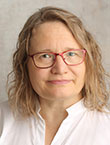
Cicek Cavdar is an Associate Professor at the School of Electrical Engineering and Computer Science (EECS) at KTH Royal Institute of Technology , Sweden. She leads the Intelligent Network Systems research group and specializes in Telecommunication Networks , with a focus on Beyond 5G/6G Mobile Networks , Energy Efficiency , and AI-Assisted Network Management . PhD in Computer Science (2009) from University of California, Davis and Istanbul Technical University Her research spans Cell-Free Massive MIMO , Reconfigurable Intelligent Surfaces (RIS) , UAV Communication Systems , and Green Network Technologies . She actively contributes to 6G Network Architecture and Non-Terrestrial Networks , including satellite and aerial systems. Recent publications highlight AI-driven network optimization for handover management, energy-aware resource allocation , and multi-agent reinforcement learning in complex communication environments. She teaches advanced courses in Communication Systems , Machine Learning , and Software Engineering at KTH.
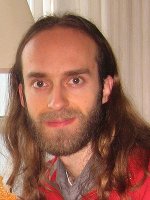
Michael Felsberg is a Professor and Head of Division at the Department of Electrical Engineering (ISY) at Linköping University, leading the Computer Vision Laboratory (CVL). His research focuses on artificial visual systems (AVS), including 3D computer vision, computational imaging, object tracking, and autonomous systems. He emphasizes HVS-inspired approaches to bridge the gap between human and machine vision capabilities. Notable achievements include over 20,000 citations (h-index 47), leadership roles in the Wallenberg AI, Autonomous Systems and Software Program (WASP), and recognition as Sweden’s top AI researcher by Vinnova. His work spans academic contributions, industry collaborations, and interdisciplinary projects like climate science applications of machine learning. Positions : WASP Executive Committee Member, WASP Area Cluster Leader for Machine Learning, and Vice-Head of Department (Electrical Engineering). Education : Extensive academic background in electrical engineering and computer vision (details not explicitly stated). Research trends in his articles reflect advancements in autonomous systems, multimodal AI, and robust vision models. His teams address challenges like object tracking, generative models for 3D simulation, and culturally diverse AI systems. Awards : Tracking Challenge Winner (OpenCV, 2015) Best Paper Awards (ICPR 2016, VISAPP 2021) Vinnova’s Highest-Ranked Swedish AI Researcher (2018) He advises numerous PhD students and oversees grants in WASP-funded initiatives. CVL collaborates on projects like disaster-response robotics and Berzelius supercomputer utilization for AI.
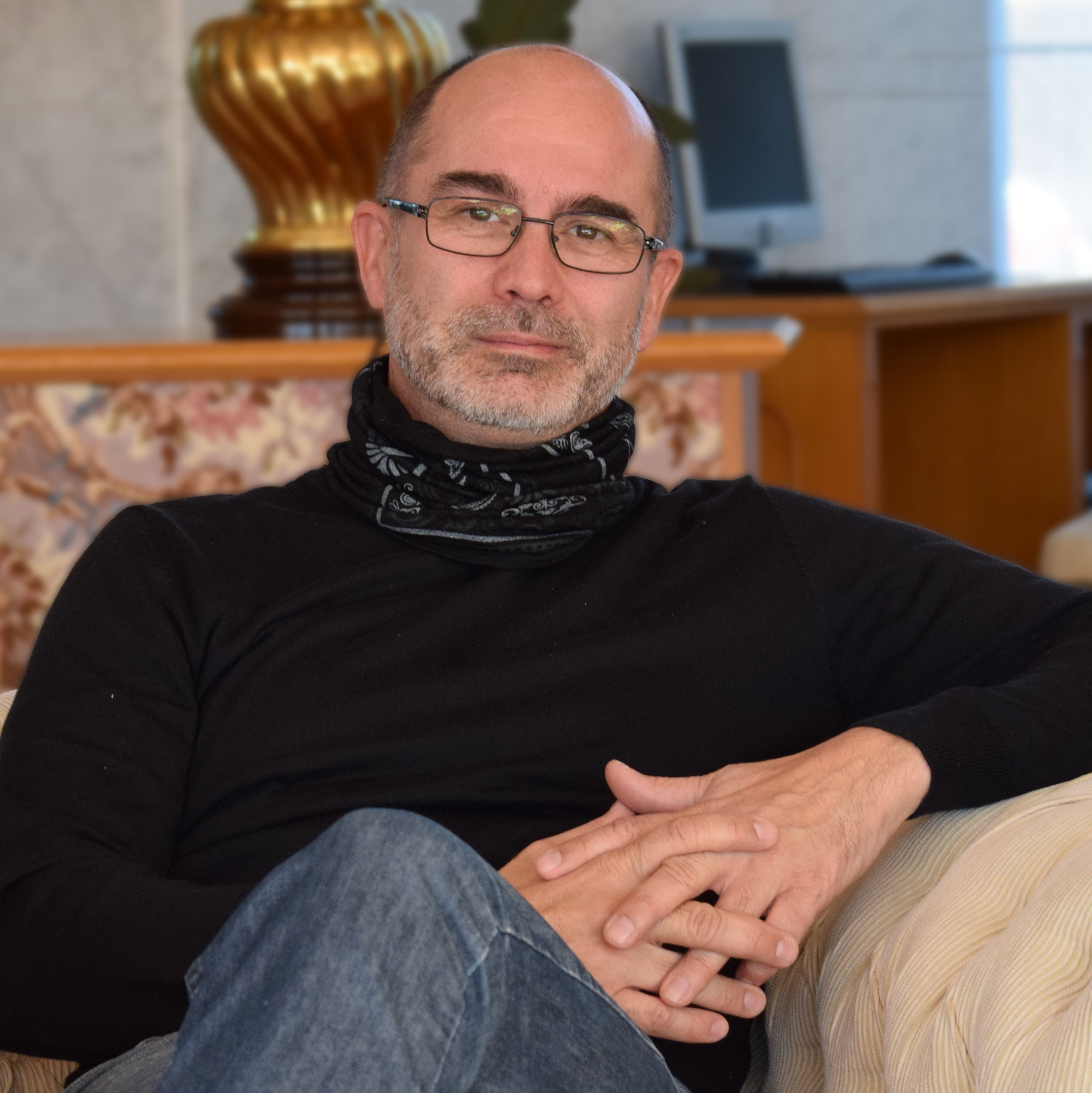
Özer Özkahraman is a postdoctoral researcher at the Division of Robotics, Perception and Learning (RPL) at KTH Royal Institute of Technology. He works under Ivan Stenius and John Folkesson, focusing on underwater mission planning, simulation, and integration of autonomous systems. His email is ozero@kth.se . He completed his PhD at KTH under Petter Ögren, researching large-scale multi-agent coverage planning for autonomous underwater vehicles (AUVs). Current projects include the SMaRCSim multi-domain simulation platform and development of underwater vehicles like LoLo, SAM, and Evolo. Research interests span autonomous underwater systems, multi-agent coordination, control systems, and simulation infrastructure. He emphasizes modular, accessible frameworks for vehicle testing and real-world deployment. His work bridges theoretical methods (e.g., control barrier functions) with practical applications in marine robotics. Publications focus on AUV navigation, environmental sensing, and adaptive control. Projects like Real2Sim aim to align simulation with real-world vehicle dynamics using motion capture data. He collaborates internationally on topics like data-driven damage detection and model compression for resource-constrained robots. No academic awards are explicitly mentioned. He actively seeks collaborators for projects in sonar simulation, flow field modeling, and cyber-physical system integration.
Lars Hanson is a Professor of Product Design Engineering at the University of Skövde's School of Engineering Science. His research focuses on ergonomics, digital human modeling, and optimizing manufacturing systems with a strong emphasis on human well-being and sustainable production. He leads projects like LITMUS (Industry 4.0 to 5.0 transition) and has contributed to developing tools such as IPS IMMA for ergonomic simulations. Active in virtual verification of human-robot collaboration and smart textile systems for workplace safety Published extensively in journals like International Journal of Human Factors Modelling and Simulation and IEEE Access Editor of conference proceedings and contributor to industry standards in automotive and healthcare sectors Research interests include multi-objective optimization of factory layouts, musculoskeletal risk assessment, and integrating ergonomic evaluations into product design processes. Current projects address Industry 5.0 sustainability challenges through digital twin technologies and smart manufacturing solutions.
Christian Smith is an Associate Professor and Lecturer at the Department of Robotics, Perception and Learning at Kungliga Tekniska Högskolan (KTH Royal Institute of Technology). His research focuses on robotics and applications in human-centered environments like home environments, small workshops, and healthcare facilities, including the development of new robotic systems for research. Teaching Roles: Course Coordinator/Teacher/Examiner for courses such as Introduction to Robotics (DD2410), Research Project in Robotics (DD2411), and Java Programming for Python Programmers (DD1380) Research Themes: Human-Robot Interaction, Behavior Trees, Exoskeletons, Intent Recognition, and Multimodal Perception Awards: No specific scientific awards mentioned in the provided text His KTH profile highlights work on adaptive robotics systems and formalized control strategies. The research portfolio spans from theoretical studies on behavior tree programming to applied work in assistive technologies and teleoperation systems.
Franziska Klügl is a Professor in Computer Science at Örebro University's Faculty of Business, Science and Engineering, affiliated with the Center for Applied Autonomous Sensor Systems (AASS). She currently leads the KKS-funded TeamRob project on Human-Robot Teamwork and serves as Deputy Dean of the faculty since January 2023, chairing the academic appointment committee. Previously, she headed the Computer Science department (2020-2022) and served on the faculty board (2019-2022). Her research focuses on: Multi-agent systems : Development of languages, processes, and tools for agent-based simulation Interdisciplinary applications : Transportation, economics, epidemics, production, and mining simulations Simulation engineering : Integrating AI, machine learning, and formal methods to create accessible modeling tools for domain experts She created SeSAm , a visual programming tool for agent-based simulation that enables rapid prototyping of complex models. Analysis of her recent publications reveals three dominant themes: Human-robot collaboration frameworks and intention recognition systems Economic impacts of automation on labor markets and engineering services Advanced simulation methodologies using affordance theory and reinforcement learning She teaches software engineering, multi-agent systems, and agent-based modeling across multiple programs, including the WASP AI&ML PhD course. She leads research groups at the Machine Perception and Interaction Lab and oversees the TeamRob human-robot teamwork project.
Gustav Henter is an Assistant Professor in Intelligent Systems at KTH Royal Institute of Technology, specializing in Machine Learning. He is affiliated with the Division of Speech, Music and Hearing (TMH) within the School of Electrical Engineering and Computer Science. His research focuses on deep generative models for applications like speech synthesis, 3D character animation, and human-computer interaction. He holds a Docent degree from KTH and has held post-doctoral positions at the University of Edinburgh and the National Institute of Informatics in Tokyo. Education: PhD in Electrical Engineering (KTH, 2013), MSc in Engineering Physics (KTH, 2007). He supervises doctoral students in areas like gesture synthesis and multimodal interaction. His work is supported by grants from the Wallenberg AI, Autonomous Systems, and Software Program (WASP) and South Korea's MOTIE. He co-founded Motorica AB to commercialize motion synthesis research. Awards include Best Paper Awards at ICMI 2020 and IVA 2020, and recognition for student theses. His research spans generative AI, perceptual evaluation, and robust statistical models. He organizes the GENEA Challenge and Workshop series for gesture generation benchmarking.
Pedro Roque is a Postdoctoral Researcher at KTH Royal Institute of Technology in Stockholm, affiliated with the Wallenberg AI, Autonomous Systems and Software Program (WASP) and associated with the Division of Decision and Control Systems (DCS). He obtained his Ph.D. in 2024 from the same division under the supervision of Prof. Dimos Dimarogonas, Prof. Mikael Johansson, and Prof. Jana Tumova. His research focuses on practically applicable theoretical results in robotics and control, with emphasis on space and aerial systems. Dr. Roque is particularly interested in developing algorithms that directly contribute to system performance and enhanced capabilities. He currently leads the setup of a Space Robotics Laboratory at KTH, associated with the Space Center and the WASP NEST DISCOWER project. He is an advocate for open-source software and hardware, contributing to NASA Astrobee and PX4 projects, with his research tested on the International Space Station and indoor flight arenas. Dr. Roque's work demonstrates a clear progression from theoretical foundations to practical implementation in space environments. His recent publications show an increasing focus on multi-agent coordination in microgravity, with significant contributions to model predictive control for space robotics applications. The research spans from fundamental control theory to complete system implementation, reflecting his commitment to bridging theory and practice. ICRA 2022 Outstanding Coordination Award for work on decentralized model predictive control for collaborative UAV bar transportation Dr. Roque actively mentors Master's students in Space Robotics, Control, and Vision, with supervision details available on his personal website. He has collaborated extensively with NASA Astrobee and PX4 projects, and his DISCOWER project involves collaboration with 3 Ph.D. students, 2 Master's students, 6 Professors, and one Post-doc. He also completed a 4-month internship at JPL within the Maritime and Multi-Agent Systems group. He leads the Space Robotics Laboratory at KTH, associated with the Space Center and the WASP NEST DISCOWER project, which has already demonstrated capabilities to Digital Futures, SAAB AB, SAAB Inc., and Purdue scholars. The laboratory focuses on weightless robotics, collaborative robotics (Space Cobot), and exploration robotics (MoonHopper), with practical testing on the International Space Station.
Gerardo Schneider is a Full Professor in Computer Science at the University of Gothenburg, Sweden, and holds a joint appointment at Chalmers University of Technology. He serves as Head of the Data Science and Artificial Intelligence (DSAI) Division and has previously led the Formal Methods Division and acted as Director of Graduate Studies. University of Gothenburg: 2009–present Chalmers University of Technology: 2009–present Uppsala University: 2002–2003 University of Oslo: 2005–2009 His research focuses on formal methods for software engineering, including contract specification and analysis , privacy policy formalization , model checking , and runtime verification . He works on verification of real-time systems, embedded systems (e.g., smart Java cards), and blockchain-based smart contracts. Key projects include: X-LEGAL (2020–2023): Smart Legal Contracts (Swedish Research Council) PolUser (2016–2019): User-Controlled Privacy Policies (Swedish Research Council) ARVI (2014–2018): Runtime Verification Beyond Monitoring (ICT COST Action) ReMU (2013–2017): Reliable Multilingual Digital Communication (Swedish Research Council) He has supervised numerous PhD and Master’s students in formal methods, blockchain security, and privacy compliance. His tools include SPeeDI (Polygonal Hybrid Systems Verification), CLAN (Contract Normative Conflict Detection), and AnaCon (Controlled Natural Language Analysis).
Malgorzata Zboinska is an Associate Professor at Chalmers University of Technology within the Department of Architecture and Civil Engineering . She is a licensed architect and member of the Swedish Association of Architects and National Chamber of Architects of Poland . Hybrid architecture-technology-art research Focus on bio-based materials , digital fabrication , and creative robotics Development Leader of Chalmers' Robotic Fabrication Laboratory Editorial board member of TAD | Technology, Architecture + Design journal Research Themes bridge architecture , digital technology , and art , with expertise in: Sustainable and circular architectural practices 3D printing and robotic construction Material bioinnovation and upcycling Interactive and kinetic architectural solutions Her publications demonstrate strong output in digital fabrication , bio-material applications , and environmental architecture , with international exhibitions at Tempe Center for the Arts (USA) , Dutch Design Week (NL) , and Färgfabriken (Sweden) .
Fredrik Heintz is a professor at Linköping University's Department of Computer and Information Science within the Faculty of Science & Engineering. His research bridges artificial intelligence, education, and healthcare, focusing on AI literacy, synthetic data generation, and autonomous systems. Key affiliations: Linköping University (Faculty of Science & Engineering, Department of Computer and Information Science) Research Interests: Heintz's work spans multiple domains: Developing frameworks for AI literacy in K-12 education Creating fair synthetic healthcare data using GANs and bias-transforming techniques Advancing autonomous 3D exploration algorithms for dynamic environments Benchmarking tools for fairness, utility, and explainability in AI models Stream reasoning for real-time data analytics and knowledge extraction Evaluating ethical implications of AI in teacher education Scientific Contributions: His publications highlight collaborations with international researchers and significant grants from the Swedish Research Council, Knut and Alice Wallenberg Foundation, and VINNOVA. Notable projects include TransFusion for time-series generation, Bt-GAN for fair healthcare data, and DAEP for dynamic exploration planning. Funded by Wallenberg AI, Autonomous Systems and Software Program (WASP) ELLIIT Excellence Center at Linköping-Lund Mistra Geopolitics research program
Thomas Hellstrom is a Professor at the Department of Computer Science , Umeå University, Sweden. He leads the Intelligent Robotics group and is affiliated with the Center for Transdisciplinary AI . His research spans human-robot interaction (HRI) , deep learning applications , robot ethics , and field robotics for agricultural and forestry automation. Coordinated EU projects: INTRO (FP7/ITN), SOCRATES (H2020), CROPS, SWEEPER Developed intelligent walker for stroke patients with CMTS/MT-FoU/Umeå Stroke Center Key contributions in robot learning , causal reasoning , and natural language understanding Research Focus : His work emphasizes understandability in robot behavior, including causal modeling , multi-modal communication , and ethical frameworks for autonomous systems. Current project ROCC (Swedish Research Council) explores robot causality, while SOCRATES addressed social robotics in eldercare. Scientific Awards : • Erdös-Bacon-Sabbath number ≤ 13 Grants & Funding : • ROCC (2023, 3.7M SEK, Principal Investigator) • SCAI (2022, 3.7M SEK, Co-Applicant) • VINNOVA (2019, 3.47M SEK, Co-Applicant)
Elena Troubitsyna is a Professor of Computer Science with specialization in Software Engineering at KTH Royal Institute of Technology. Her research focuses on developing dependable, autonomous systems that ensure safety and reliability, particularly in complex environments like self-driving cars and drones. She employs rigorous mathematical modeling and verification techniques to address system complexity and real-time adaptability challenges. Her work emphasizes the co-engineering of safety and security in cyber-physical systems, integrating formal methods such as Event-B modeling with AI-driven solutions. Key research areas include cybersecurity for embedded systems, formal analysis of safety-security interactions, and resilient multi-agent systems. Elena has contributed to advancing methods for autonomous system navigation, fault tolerance, and privacy-preserving microservices architectures. Elena has organized international workshops like SENSEI (Safety-Security Interaction) and published extensively on topics such as model-driven engineering, formal verification of critical systems, and optimizing scheduling for distributed computing. Her research bridges theoretical foundations with practical applications, aiming to enhance societal trust in autonomous technologies.
Petter Falkman is an Associate Professor in Systems and Control Engineering at Chalmers University of Technology, where he leads research in the Automation research group. With 68 publications spanning over two decades, his work bridges theoretical control systems with practical industrial applications, particularly in manufacturing and robotics. His research has been supported by major funding bodies including VINNOVA and European Commission projects. Falkman's research primarily focuses on intelligent automation systems, with key contributions in sequence planning, virtual commissioning, and human-robot interaction. His work integrates formal methods with practical industrial applications, developing frameworks like the Sequence Planner for control of intelligent automation systems. His recent publications demonstrate a strong emphasis on data-driven approaches, digital twin technologies, and the application of virtual reality for industrial applications. The research shows a clear trajectory toward increasingly sophisticated integration of human factors with automation systems, particularly through eye tracking and movement prediction technologies. Falkman has led or participated in 10 major research projects from 2011-2025, including CLOUDS (2022-2025) on circular solutions for sustainable production systems, UNICORN (2017-2021) on robotic refuse handling, and several VINNOVA-funded projects on virtual preparation and industrial automation. His collaborative network includes researchers across Chalmers and industry partners like Volvo Group, demonstrating strong industry-academia connections. Falkman has established himself as a key contributor to the development of frameworks for intelligent automation, with particular expertise in translating theoretical control concepts into practical industrial applications. His work on the Sequence Planner framework represents a significant contribution to the field, enabling more efficient preparation and commissioning of automation systems.
Saad Mubeen is a Full Professor of Computer Science at Mälardalen University, Sweden, affiliated with the School of Innovation, Design and Engineering and the Division of Networked and Embedded Systems. He holds a Master's in Electrical Engineering (Embedded Systems) and a PhD in Computer Science and Engineering from Mälardalen University (2014), with a Docent title (2018) focused on vehicular embedded systems. His research emphasizes predictable embedded systems, timing analysis for real-time communication, and component-based software design. Key areas include model-driven development for automotive systems, integration of TSN/5G networks, and fault-tolerant industrial architectures. He has led projects on end-to-end timing analysis in distributed systems, ROS 2 verification, and cognitive edge-cloud scheduling. Publications span 2021–2025, focusing on real-time systems, network protocols (TSN, AVB, 5G), and industrial automation. Notable work includes frameworks for TSN configuration, fault diagnosis tools using NETCONF, and scheduling algorithms for heterogeneous edge-cloud environments. His contributions address critical challenges in timing predictability, security, and resource optimization for cyber-physical systems. Education contributions include problem-based learning modules for vehicular software engineering. He is actively involved in bridging academia and industry through collaborative research on next-generation automotive and industrial systems.