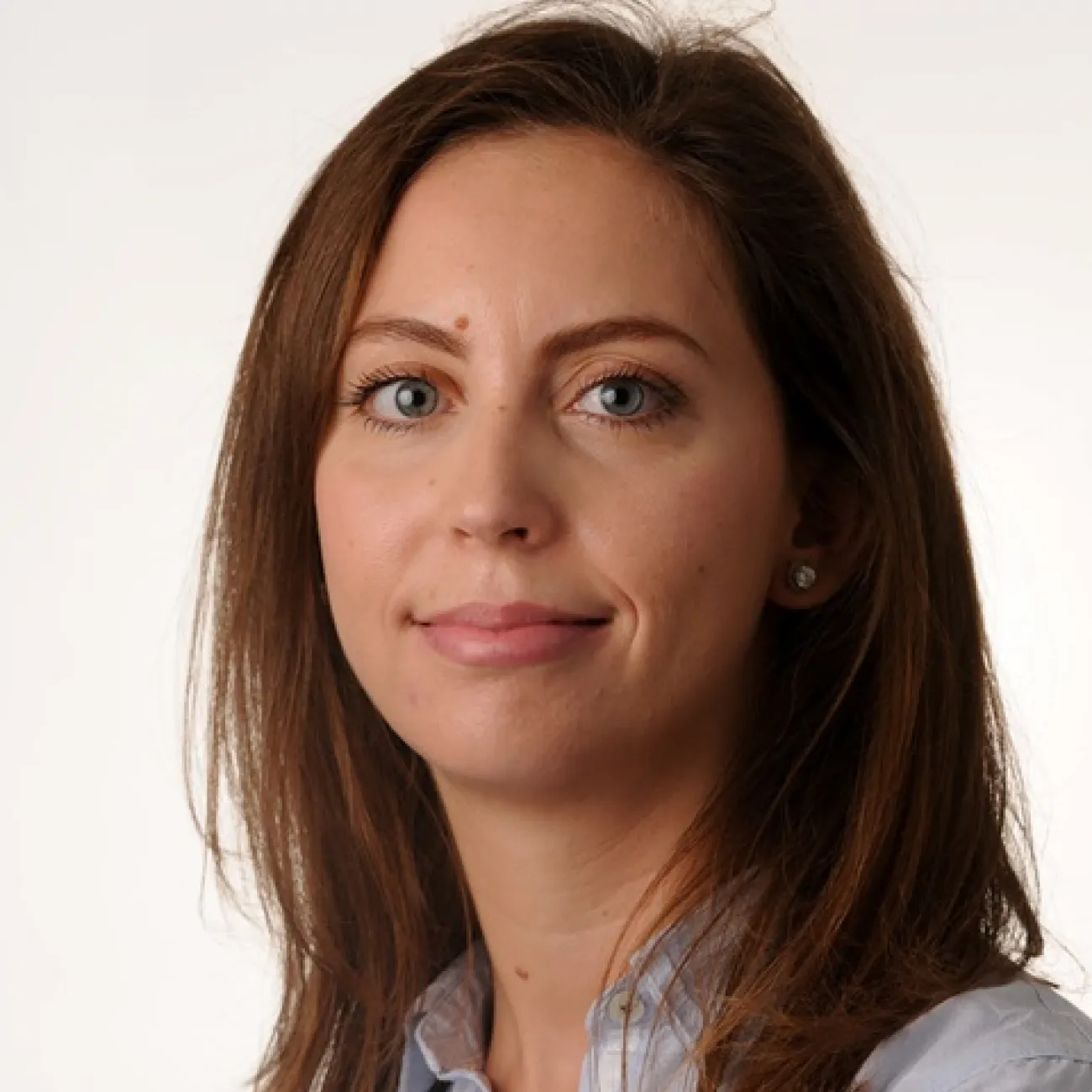
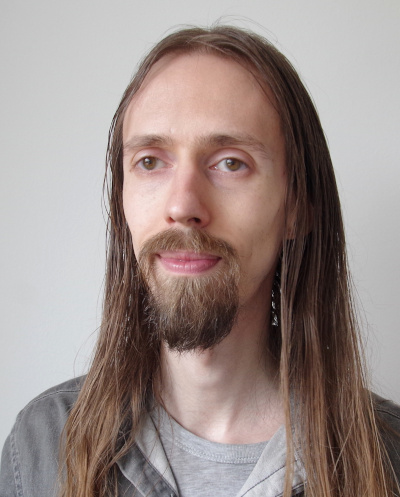
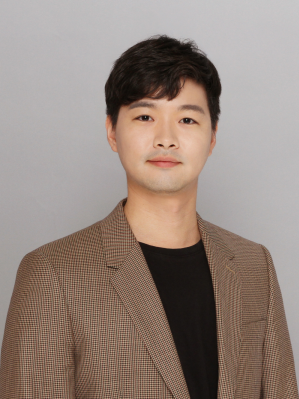
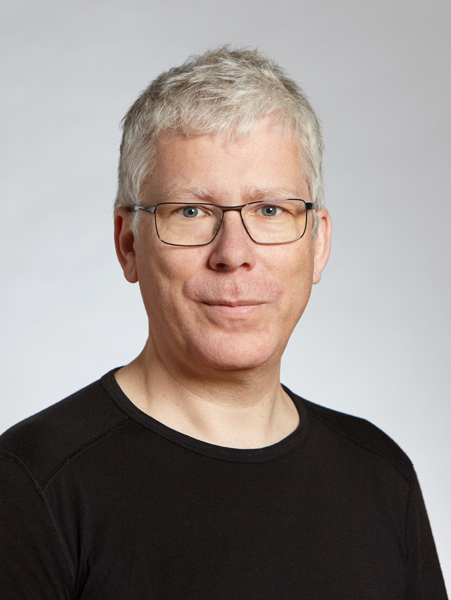
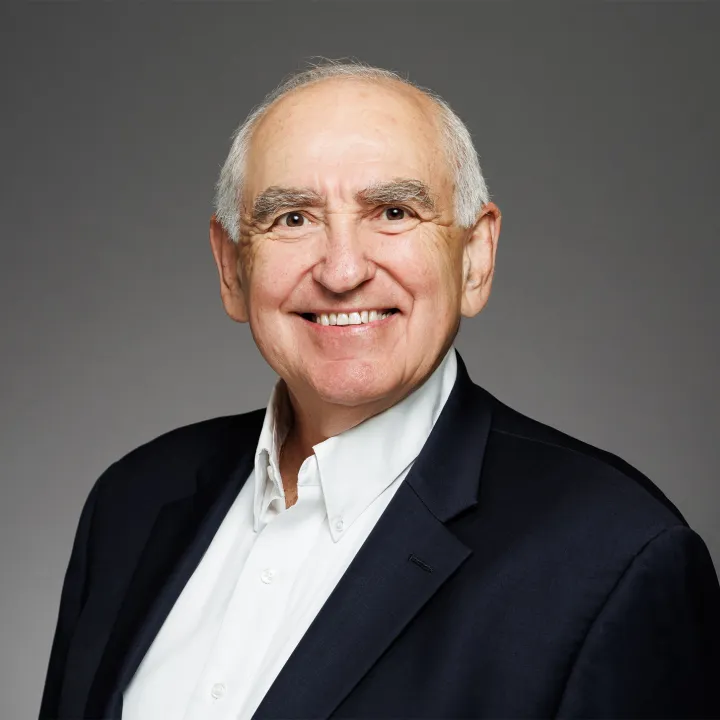
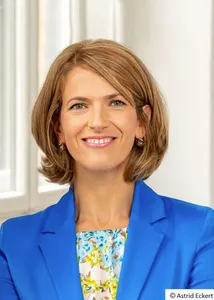
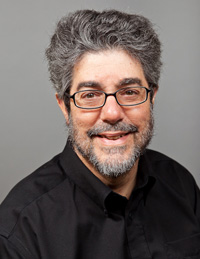
Erisa Karafili is an Associate Professor in Cybersecurity at the University of Southampton. She leads Teaching Methods Innovation at the GCHQ/EPSRC Academic Centre of Excellence for Cyber Security Education (ACE-CSE) and is a Champion in Security by Design at ACE-CSR. A Fellow of the Higher Education Academy, she joined the University in 2020 after roles including a Marie Curie Fellowship at Imperial College London, where she investigated cyber-attack attribution techniques. Her research focuses on formal methods applied to security, IoT threat models, and secure data sharing frameworks. Education: PhD in non-classical logics applied to multi-agent systems security from the University of Verona. Previous positions include PostDoc at Technical University of Denmark and Researcher at Imperial College London. Research Interests: Cyber-attack attribution, IoT security, formal methods in cybersecurity, data privacy, and argumentation-based reasoning for security. Awards: Higher Education Academy Fellowship. Current PhD Students: Betul Gokkaya, Mohammed Homaid Alquliti, Peter Geoffrey Williams, Steve Johnson. Active Projects: Heterogeneous Material Integrated MEMS/NEMS-Photonics Platform for Secure Communication (collaborative with Jize Yan and others).
Dr. Paul Henderson is a Lecturer in Machine Learning at the School of Computing Science, University of Glasgow. He holds a BA in Mathematics (University of Cambridge, 2009), an MSc in Informatics (University of Edinburgh, 2010), and a PhD in Computer Vision (University of Edinburgh, 2018). His research focuses on generative AI, probabilistic machine learning, and minimally-supervised approaches to 3D computer vision, with applications in healthcare, computer graphics, and physical sciences. Education: PhD in Computer Vision (University of Edinburgh, 2018) MSc in Informatics (University of Edinburgh, 2010) BA in Mathematics (University of Cambridge, 2009) His work spans generative models, medical imaging, and robotics. Notable contributions include datasets like Flat’n’Fold and techniques in diffusion models for text-to-image retrieval. He has received grants including the Royal Society Research Grant (2022-2023) and the Vesuvius Challenge Autosegmentation Prize (2025). He supervises PhD students in topics such as medical image segmentation and generative AI. Teaching: CS5002 Advanced Programming, CS4061/CS5014 Machine Learning.
Lawrence Kim is an Assistant Professor at the School of Computing Science, Simon Fraser University. His research focuses on Human-Computer Interaction, Tangible User Interfaces, and Human-Robot Interaction, with teaching interests in Physical Computing and Human-Centered Computing. Education: PhD in Mechanical Engineering (Stanford University, 2020), MS in Mechanical Engineering (Stanford, 2015), and BS in Mechanical Engineering (University of Illinois at Urbana-Champaign, 2013). Research interests emphasize tangible interaction design, swarm robotics, and assistive technologies for special needs populations. His work includes developing interfaces like Woogu for child education and DiminishAR for cognitive enhancement. He directs the Tangent Lab (https://tangent.cs.sfu.ca/), exploring embodied and robotic interaction. Teaching includes courses such as CMPT 263 (Introduction to Human-Centered Computing) and CMPT 415/416 (Special Research Projects). His recent articles address topics like head posture correction in VR, programmable fidgeting with swarm robots, and stress prediction via mouse movements.
David Hästbacka is an Associate Professor (tenure track) at the Department of Computing Sciences, Faculty of Information Technology and Communication Sciences at Tampere University. His research focuses on software engineering, industrial automation, and energy systems, emphasizing system architecture, interoperability frameworks, and dependable IoT solutions. He leads a research group exploring edge and cloud computing, semantic integration, and smart energy systems. Education & Professional Background : While specific educational details are not provided, his academic career includes roles such as Postdoctoral Researcher in the SEMIS project (2017-2020) and extensive involvement in EU-funded initiatives like COCOP (EU H2020) and Horizon Europe projects. Research Projects : Active in high-impact projects like Hedge-IoT (Horizon Europe, 2024-2027), TwinfFlow (Business Finland), and TRINEFLEX (Horizon Europe), with a focus on industrial automation, distributed systems, and energy grids. Past projects include FEMMa (Business Finland), DisMa (Academy of Finland), and Arrowhead (ECSEL). Teaching & Supervision : Specializes in Web/Cloud architectures, IoT systems, and dependable automation technologies. Supervises students in topics like edge computing frameworks and MLOps pipelines. Technical Contributions : Develops frameworks for industrial interoperability (e.g., OPC UA PubSub integration), edge-cloud toolchains, and MLOps methodologies. His work addresses challenges in microservices, Kubernetes distributions, and semantic data integration. Labs & Teams : Leads a research group advancing automation technologies through interdisciplinary collaboration, with partnerships in industry and academia to bridge theory and practice in smart systems.
Marc Pollefeys is a Full Professor of Computer Science at ETH Zurich and Director of the Microsoft Mixed Reality and AI Zurich Lab. He has held roles such as Visiting Professor at Stanford University (2007) and Assistant/Associate Professor at UNC-Chapel Hill (2002–2009). His research focuses on 3D computer vision, robotics, machine learning, and augmented reality. Education: PhD in Computer Science from KU Leuven (1999), followed by postdoctoral research there until 2002. He transitioned to academic roles at UNC-Chapel Hill before joining ETH Zurich in 2007. Research interests include 3D reconstruction, visual localization, SLAM, and applications in archaeology, urban modeling, and robotics. Notable projects include real-time 3D scanning, city-scale reconstruction, and autonomous vision-based drones. Key awards include ACM Fellow (2022), IEEE Fellow (2012), and ERC Starting Grant (2008). He advises numerous PhD students and collaborates with institutions like Google and Microsoft. Labs and teams: Leads the Computer Vision and Geometry (CVG) lab at ETH Zurich and directs the Microsoft Mixed Reality and AI Lab. His work bridges academia and industry, focusing on perception for mixed reality and autonomous systems.
Roman Kuc is a Professor of Electrical Engineering at Yale University, affiliated with the School of Engineering & Applied Science. He directs the Intelligent Sensors Laboratory, focusing on biomimetic sensors for robotics and bioengineering. His research explores brain-based devices (BBDs), sonar sensing, and neuromorphic processing inspired by biological systems. He holds a BSEE from Illinois Institute of Technology and a PhD from Columbia University. Dr. Kuc’s work bridges signal processing, robotics, and bioengineering, with applications in autonomous systems and clinical diagnostics. He has published over 200 papers and authored textbooks like Electrical Engineering in Context and The Digital Information Age . Notable honors include an honorary doctorate from the Glushkov Institute of Cybernetics and the Yale Sheffield Distinguished Teaching Award. His research themes include cognitive mapping via sonar echoes, neural network-based classification of environmental features, and biomimetic approaches to echolocation. Recent work emphasizes sensorimotor integration and robust performance in uncertain environments. Scientific awards highlight his contributions to robotics, signal processing, and education. His lab develops systems that emulate biological sensory mechanisms, aiming to advance robotics, medical applications, and assistive technologies.
Chun Ouyang is a Professor at Queensland University of Technology (QUT) in the School of Computer Science within the Faculty of Science. With an extensive publication record spanning over two decades from 2002 to 2025, Professor Ouyang has established themselves as a leading researcher in Business Process Management, Process Mining, and Explainable AI. Their work bridges theoretical foundations with practical applications across healthcare, finance, and industrial sectors. Professor Ouyang's research interests primarily focus on Business Process Management systems, Process Mining techniques, Explainable Artificial Intelligence, and Healthcare Process Analysis. Their work has evolved from foundational BPMN/BPEL translation research in the early 2000s to sophisticated process mining approaches in the 2010s, and most recently to cutting-edge Explainable AI applications in clinical and business contexts. They have developed novel methodologies for process querying, predictive process analytics, and XAI evaluation frameworks that have significantly advanced the field. Their research consistently emphasizes practical applicability while maintaining strong theoretical foundations, with publications in top-tier journals and conferences including IEEE Transactions, Springer journals, and major BPM conferences. Analysis of Professor Ouyang's recent publications (2023-2025) reveals a strategic research trajectory that integrates traditional process mining with modern AI techniques, particularly focusing on explainability and trustworthiness. Their work demonstrates a consistent pattern of addressing real-world challenges through rigorous methodological development, with increasing emphasis on healthcare applications, clinical decision support systems, and the ethical implications of AI deployment. The publications show strong interdisciplinary collaboration patterns, particularly with medical researchers and industry partners. Professor Ouyang has mentored numerous PhD students and early-career researchers who have gone on to establish themselves in the BPM and AI communities. Their research group at QUT has secured multiple competitive grants supporting innovative work in process analytics and AI. They maintain active collaborations with leading researchers globally, including Catarina Pinto Moreira, Arthur ter Hofstede, and Moe Wynn. Professor Ouyang leads the Process Analytics Research Group at QUT, which focuses on developing advanced techniques for business process analysis, prediction, and optimization. The group maintains strong industry connections with healthcare providers, financial institutions, and government agencies, ensuring their research has practical impact. Current projects include developing trustworthy AI systems for clinical decision support, cross-organizational process analysis frameworks, and next-generation process mining techniques for complex, distributed systems.
Prof. Dr. Enkelejda Kasneci is a Distinguished Professor at the Technical University of Munich (TUM), leading the Chair of Human-Centered Technologies for Learning. She holds dual affiliations within TUM School of Social Sciences and Technology and TUM School of Computation, Information and Technology. Her research integrates AI, eye-tracking, and immersive technologies to advance educational paradigms. She directs the TUM Center for Educational Technologies and chairs the MSc program 'AI in Society.' Education: PhD in Computer Science from University of Tübingen (2013), M.Sc. from University of Stuttgart (2007). Earlier roles include Assistant Professor and Dean of Studies at University of Tübingen. Research Focus: Human-centered AI applications in education, multimodal interaction design, and privacy-preserving eye-tracking. Her work bridges technology and pedagogy through projects like AI tutor PEER, VR Classroom, and Privacy-Preserving Eye-tracking. Key Projects: Leads EU-funded projects VIVA (€1.125M), DigiProMIN (€163K), and SARA Kids (€244.8K). Active in policy initiatives like Europe’s AI Imperative. Awards: TUM Heinz Maier-Leibnitz Medal (2024), Liesel Beckmann Distinguished Professorship (2022), and Südwestmetall Research Prize (2014). Grants & Advising: Over €5M in secured funding across 12+ projects. Supervises 14+ PhD researchers and mentors postdocs in AI education and HCI. Labs & Teams: IT-Stiftung EdTech Lab houses advanced VR/eye-tracking setups. Research group includes 20+ members spanning AI, HCI, and educational technology.
S. Mohadeseh Taheri-Mousavi is an Assistant Professor in the Department of Materials Science and Engineering at Carnegie Mellon University (CMU), part of the College of Engineering. She joined CMU in September 2022 after postdoctoral appointments at MIT and Brown University. Her research is supported by major grants from NASA STRI, DARPA, the Army Research Laboratory, and the Naval Nuclear Laboratory, and she is affiliated with the NextManufacturing Center and the Wilton E. Scott Institute for Energy Innovation. Her educational background includes a Ph.D. from EPFL, Switzerland, and M.Sc. and B.Sc. degrees from Sharif University of Technology, Iran. She was awarded both early and advanced Swiss National Science Foundation fellowships during her postdoctoral studies. Taheri-Mousavi’s research focuses on the intersection of materials science, mechanical engineering, and computer science. She develops multi-scale computational models and AI-driven frameworks—such as AlloyGPT and generative AI agents—to design next-generation structural alloys, particularly for additive manufacturing and extreme environments. Her work emphasizes materials sustainability, industrial decarbonization, and uncertainty quantification in alloy design. The integration of machine learning with Integrated Computational Materials Engineering (ICME) and CALPHAD methods enables rapid exploration of high-dimensional composition and processing spaces. Her recent publications (2023–2025) show a strong trend toward AI/ML applications in alloy discovery, hydrogen embrittlement modeling, and high-temperature aluminum and tungsten alloys. These works reflect a deep commitment to accelerating materials innovation through human-AI collaboration and smart experimental validation. Her scientific honors include prestigious Swiss National Science Foundation fellowships. She has also received seed funding from the Scott Institute for Energy Innovation to study hydrogen embrittlement. She advises a dynamic team of doctoral students and a postdoctoral researcher, working on topics including hydrogen embrittlement, generative AI for welding, and gradient alloys. Her research is funded by high-impact grants from NASA, DARPA, the Army, and the Naval Nuclear Laboratory, supporting transformative projects in structural alloy design. She leads the Taheri-Mousavi Group, which operates within CMU’s Materials Characterization Facility and the NextManufacturing Center. The group focuses on developing novel AI-integrated computational frameworks to guide efficient and intelligent experimentation in alloy development.
Fu-Kuo Chang is a Professor in the Department of Aeronautics and Astronautics at Stanford University, with a secondary affiliation in the Bio-X program. His research focuses on multifunctional materials, intelligent structures, and structural health monitoring (SHM), emphasizing applications in aerospace, robotics, and medical devices. He has pioneered work on embedded sensors, self-diagnostic systems, and energy storage composites. Academic Appointments: Professor (Stanford), Editor-in-Chief of International Journal of Structural Health Monitoring (since 2012), and Chair of the International Workshop on Structural Health Monitoring (since 1997). Honors: Multiple lifetime achievement awards in SHM, AIAA and ASME Fellowships, and the NSF Presidential Young Investigator Award (1988). Research interests include bio-inspired sensory materials, autonomous systems (e.g., 'fly-by-feel' vehicles), and multidisciplinary integration of structural mechanics, electrical engineering, and materials science. His recent work addresses challenges in smart skins for robotics, thermoplastic composites, and predictive modeling of material degradation. Publications span structural health monitoring, advanced composites, and robotics, reflecting expertise in both theoretical and applied domains. His lab, the Structures and Composites (SACL) laboratory, drives innovation in smart materials and system integration. Advising: Supervises doctoral and master’s students in aeronautics and materials science. Grants/Contributions: Active in industry and government collaborations, including roles on the US Army Research Laboratories Advisory Board and leadership in SHM industry initiatives.
Karthik Dantu is an Associate Professor in the Department of Computer Science and Engineering at the University at Buffalo, State University of New York, within the School of Engineering and Applied Sciences. His research focuses on mobile sensor networks, robot networks, networked embedded systems, mobile computing, wireless networks, and embedded operating systems. He leads the Distributed Robotics and Networked Embedded Sensing (DRONES) Lab and has received significant funding including an NSF CAREER Award. Dr. Dantu's educational background includes: PhD in Computer Science from University of Southern California (2009) BE in Computer Science from Sri Jayachamarajendra College of Engineering (1999) His research interests center on algorithmic and systems challenges in Edge Computing Systems, with particular focus on enabling seamless vision sensing in cloud-edge environments. Dantu's work bridges mobile systems and robotics, developing novel approaches for UAV software, visual SLAM, and distributed sensing. His research addresses critical challenges in resource-constrained environments, security, and real-time performance for mobile and robotic systems, with emphasis on practical implementations that solve real-world problems in autonomous systems. Dr. Dantu's publication record shows a strong trajectory in mobile systems and robotics research, with increasing focus on edge computing applications for visual sensing. His recent work demonstrates expertise in adapting visual SLAM to edge environments, securing mobile systems through technologies like Rushmore, and developing novel approaches for UAV software reliability and depth sensing. The research spans theoretical algorithms and practical system implementations, with particular strength in bringing academic research to practical applications in robotics and mobile computing. Dr. Dantu has received several scientific honors: NSF CAREER Award on Enabling Seamless Vision Sensing in Cloud-Edge Systems Outstanding service award from the Office of International Services NSF Travel Grant for SenSys 2005 Conference Travel Grant for SIGCOMM 2002 As an advisor, Dr. Dantu has mentored numerous PhD students to completion, with graduates now working at companies like Samsung Research and Zoox Inc., or continuing academic careers as Assistant Professors. His research is supported by substantial grants including a DARPA OFFSET Sprint 4 award ($470k), an NSF CAREER award ($550k), and multiple NSF collaborative grants totaling over $1.5 million. He serves on numerous conference committees including Mobicom, MobiSys, and ICRA, demonstrating leadership in the mobile systems and robotics research communities. Dr. Dantu leads the Distributed Robotics and Networked Embedded Sensing (DRONES) Lab at UB, which focuses on developing algorithms and systems for mobile sensor networks, robot networks, and embedded sensing applications. The lab's work spans theoretical foundations to practical implementations, with particular expertise in UAV systems, visual SLAM, and edge computing for robotics, maintaining strong collaborations with industry partners and other academic institutions to advance the state of the art in mobile and robotic systems.
Dr. Ali Kashani is a Senior Lecturer at the University of New South Wales (UNSW) within the School of Civil and Environmental Engineering. His research focuses on sustainable and low-carbon concrete materials, robot-aided construction (particularly 3D printing), and Circular Economy-aligned applications. Leadership in cementitious materials innovation Expertise in 3D printing for construction Advocate for waste valorisation and carbon capture Dr. Kashani has secured approximately $7 million in research funding and holds a patent in lightweight concrete foam. His work spans 70+ publications with 9,000+ citations, including media coverage in the Sydney Morning Herald and The Fifth Estate. He actively contributes to professional organizations such as MECLA, RILEM, and ASTM. Recent research trends include AI and optimization algorithms for sustainable concrete mix design, chloride diffusion modeling, and 3D printing performance analysis. His publications often address waste material integration, durability assessment, and eco-friendly construction practices. Scientific Awards: National and NSW Awards for 'Excellence in Concrete' (Technology and Innovation) from the Concrete Institute of Australia Churchill Fellowship for Digital Construction and 3D Printing sponsored by AVJennings Dr. Kashani serves as Co-Chair of the cement and concrete working group at MECLA and contributes to RILEM and ASTM committees. His email is ali.kashani@unsw.edu.au , and his office is located in the Civil Engineering Building (H20), Level 2, Room CE204, UNSW.
Dr. Brett J. Borghetti is a Professor of Computer Science in the Department of Electrical and Computer Engineering at the Air Force Institute of Technology (AFIT), Graduate School of Engineering and Management, Wright-Patterson AFB, OH. He was promoted to Professor in July 2022, following prior appointments as Associate Professor (2017) and Assistant Professor (2008/2013). His expertise lies in artificial intelligence, machine learning, deep learning, cybersecurity, and human-machine teaming. Education: Ph.D. in Computer Science, University of Minnesota, Twin Cities (2008) M.S. in Computer Systems, Air Force Institute of Technology (1996) B.S. in Electrical Engineering, Worcester Polytechnic Institute (1992) Dr. Borghetti's research focuses on applying machine learning to physical science sensors (hyperspectral, seismic, RF), cybersecurity, and enhancing human-machine team performance. He teaches graduate courses in machine learning, AI, data security, and algorithm design, and advises numerous MS and PhD students in areas such as sensor exploitation, cognitive workload, and cyber situational awareness. His recent publications demonstrate strong trends in deep learning for multimodal sensor fusion, nuclear security, and neuroergonomics. Scientific Awards: AETC Educator of the Year (2021, Civilian) AFIT Ezra Kotcher Teaching Award (2021) AFIT Teaching Excellence Award (2019) AF STEM Outstanding Science and Educator Award (2015) Multiple Eta Kappa Nu Outstanding Instructor Awards Air Force Meritorious Service Medal and other military honors Dr. Borghetti has advised numerous graduate students and led research projects with significant funding and applications in defense and national security. He has directed research in AI-driven sensor analysis, cyber defense systems, and adaptive automation. His work often involves collaboration with national labs and DoD agencies. He has contributed to major research initiatives in human factors, cyber intruder detection, and machine learning for operational environments. Labs and Research Teams: His work is associated with AFIT's research in cyber security, sensor exploitation, and human-machine systems. He collaborates with teams working on the Cyber Intruder Alert Testbed (CIAT), neuroergonomic modeling, and machine learning for defense applications.
Associate Professor Vic Ciesielski is affiliated with RMIT University's School of Computing Technologies. His research focuses on Artificial Intelligence, Evolutionary Computing, Computer Vision, and Genetic Programming, with applications in areas like robot soccer and aesthetic analysis of images. He has supervised projects including efficient neural architecture search and off-line handwritten text recognition. His work bridges computational techniques with creative fields such as art history and digital media. Key research interests include machine learning, data management, and graphics/augmented reality. He actively contributes to conferences like GECCO and IJCNN, publishing on topics ranging from neural architecture optimization to sensor-based activity recognition. His research often integrates evolutionary algorithms with deep learning methodologies. He can be contacted via vic.ciesielski@rmit.edu.au and has an ORCID identifier: 0000-0001-7273-9566 .
Robert J.K. Jacob is a Professor of Computer Science at Tufts University, affiliated with the School of Engineering's Department of Computer Science. His research focuses on Human-Computer Interaction (HCI), particularly implicit brain-computer interfaces (BCI) using fNIRS and EEG technologies. He has held visiting positions at University College London, Université Paris-Sud, and MIT Media Lab. Education: Ph.D. in Computer Science from Johns Hopkins University. Research Interests : Jacob's work explores novel interaction techniques, adaptive interfaces, and BCI applications. Current projects emphasize real-time fNIRS-based systems for effortless user input, cognitive workload assessment, and neuroadaptive technologies. His lab investigates how brain signals can enhance user interfaces in domains like music learning, gaming, and urban design. Recent Trends in Articles : Recent publications highlight advancements in BCI design, neuroadaptive systems, and interdisciplinary applications of fNIRS. Work spans theoretical frameworks (e.g., NeuroCHI ethics) to practical tools like the Tufts fNIRS dataset. Key themes include improving BCI calibration, exploring AI's role in urban environments, and integrating affective computing into artistic interfaces. Awards : ACM Fellow (2016) ACM CHI Academy Membership (2007) Best Paper Award at CHI 2016 Advising & Grants : Supervised 15+ Ph.D. alumni in HCI and BCI. Served as Vice-President of ACM SIGCHI and co-chair of UIST/CHI conferences. Active in editorial roles for Human-Computer Interaction and ACM Transactions on Computer-Human Interaction . Labs & Teams : Directs the Tufts HCI Lab in the Joyce Cummings Center. Collaborates with interdisciplinary teams on projects like the Marble Track Audio Manipulator and Reality-Based Interaction Framework.