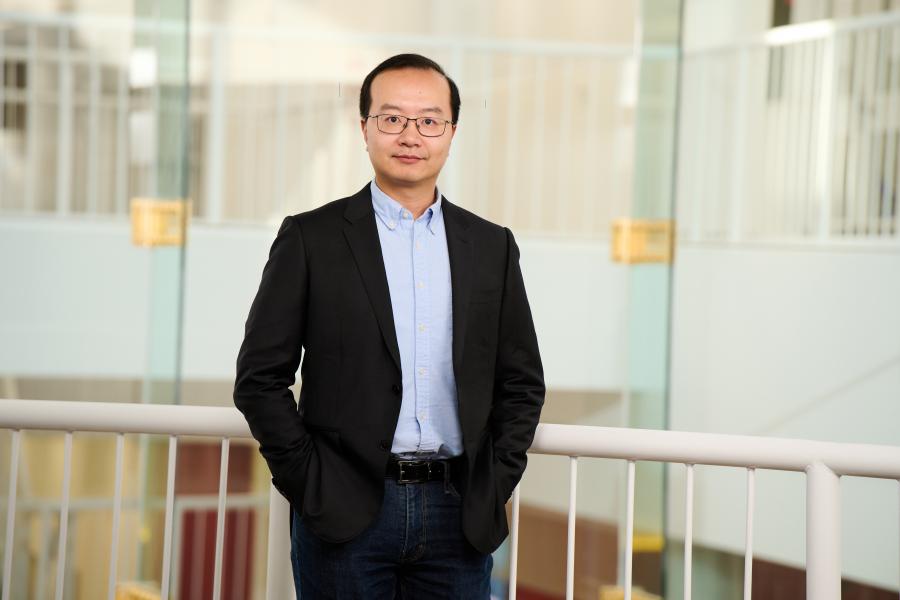
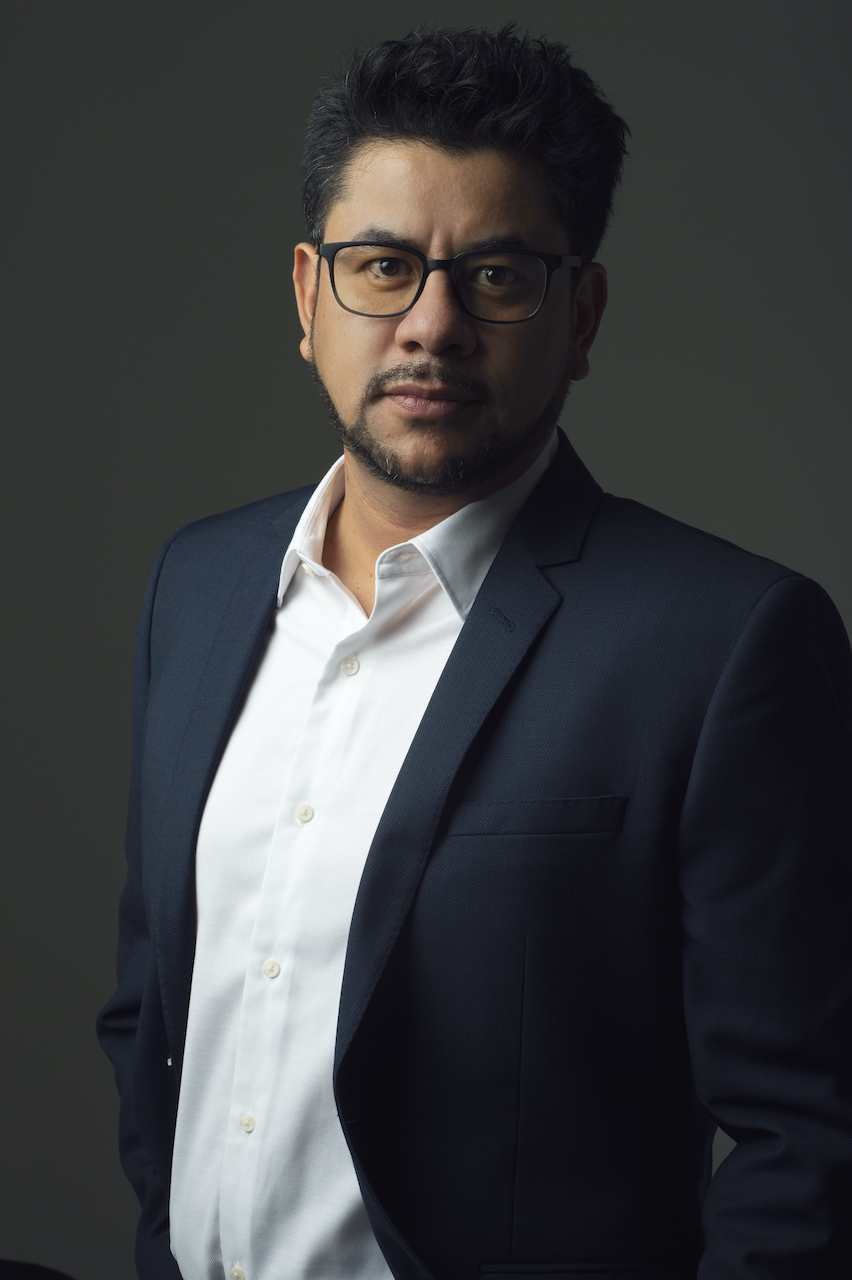
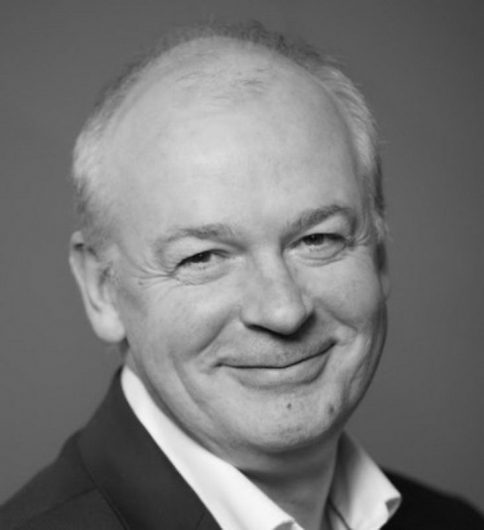
Yasutoshi Makino is a researcher specializing in ultrasound-based haptics, tactile feedback systems, and human-computer interaction. He has collaborated extensively with Hiroyuki Shinoda and other colleagues, focusing on mid-air haptic displays, noncontact object manipulation, and sensory reproduction. Research Interests Makino's work explores the intersection of acoustics, neuroscience, and engineering to create immersive tactile experiences without physical contact. His innovations include ultrasound-driven actuation mechanisms, thermal sensation rendering, and real-time human motion prediction for robotic systems. Recent Publications The 15 most recent articles highlight advancements in airborne ultrasound tactile displays, texture synthesis via GANs, and applications in guide dog training analysis, virtual reality, and interactive robotics. Key themes include dynamic pressure control , multi-stimulus integration , and low-latency systems . Collaborations Co-authored with Masahiro Fujiwara (43 papers) Collaborated with Hiroyuki Shinoda (145 papers) Worked with Shun Suzuki, Takaaki Kamigaki, and Ryoya Onishi on thermal and mechanical haptic feedback systems.
Niina Mallat is a Research Fellow at Aalto University's Department of Information and Service Management. Her research focuses on autonomous systems, mobile technologies, and their societal impacts, particularly in transportation and financial services. She holds a Doctoral degree (2007) and Master's degree (2001) in Business and Economics from the Helsinki School of Economics. Her work addresses themes such as ethical considerations in automation (e.g., drones, Tesla Autopilot), sustainable mobility solutions (autonomous buses), and mobile payment adoption. Key areas include consumer trust in emerging technologies, use context analysis for service acceptance, and future research agendas in information systems. Her research outputs span over two decades, with notable contributions to mobile ticketing, payment systems, and voice-activated technologies. Collaborations emphasize interdisciplinary approaches, linking technical innovation with human behavior and policy implications. Despite prolific contributions, no explicit awards are listed in the provided texts. Advising and grants details are not specified, though her extensive publication record suggests active involvement in guiding research projects. No lab or team affiliations are explicitly mentioned.
Dr. Raoul Bongers is an Assistant Professor at the Faculty of Medical Sciences, University of Groningen, affiliated with the SMART Movements research group. His expertise focuses on action-perception learning, motor control, and rehabilitation technologies, particularly in upper limb prosthetics and serious game applications for prosthesis training. He investigates motor variability and coordination dynamics using advanced methodologies like Uncontrolled Manifold analysis and multifractal analyses. His research emphasizes the development of clinical tools such as IMU-based calibration algorithms and virtual reality environments to improve prosthetic control and rehabilitation outcomes. Collaborations span biomechanics, neuroscience, and medical engineering, addressing challenges in prosthetic design, user adaptation, and clinical assessment. Bongers has contributed to over 139 publications, with recent work exploring task-specific serious game training, IMU sensor calibration reliability, and motor learning dynamics in novel control tasks. His work aligns with UN Sustainable Development Goals related to health and innovation. Professional activities include keynote lectures on motor control and participation in interdisciplinary research networks. Laboratory affiliations include SMART Movements, where research integrates ecological psychology and dynamical systems theory to advance rehabilitation technologies and motor learning understanding.
Dr. Sijie Sun is an Assistant Professor of Marketing at the Asper School of Business, University of Manitoba. Previously, he taught at the University of Hawaii at Hilo. His research focuses on cross-cultural consumer psychology, creativity, social media consumption, and prosocial behavior. He holds a PhD in Marketing from the University of Texas at Arlington and serves on the editorial review board of the Journal of Business Research . Education: PhD in Marketing, College of Business, University of Texas at Arlington Research interests span cultural influences on consumer behavior, including creativity, social media engagement, and how identity salience impacts purchasing decisions. His work bridges cultural psychology with marketing strategy, particularly in service recovery, crisis management, and brand equity. Articles often explore cross-cultural dynamics in price-quality judgments, impulse consumption, and the moderating role of cultural dimensions like tightness-looseness. His publications appear in top-tier journals such as Journal of Marketing and Journal of Hospitality Marketing & Management . Recent work investigates service robots' impact on consumer evaluations and the interplay between managerial trust and employee performance. Despite no explicitly listed awards, his editorial role and prolific publication record highlight scholarly influence. No advising or grant details are provided, but his editorial contributions and conference engagements (ACR, SCP, AMA) suggest active involvement in academic discourse. His research often intersects with practical applications in hospitality, retail environments, and digital marketing strategies.
Dr. Eduardo Benitez Sandoval is a social robotics researcher at UNSW Sydney, affiliated with the School of Arts, Design & Architecture. His work focuses on reciprocity in Human-Robot Interaction (HRI), robots in education and healthcare, and ethical implications of social robotics. He holds a PhD in Human Interface Technology from the University of Canterbury (2016) and a Master's in Industrial Design from UNAM (2012). He has received notable awards including the 1st Place Video HRI Award (2016) and recognition as one of Mexico's 30 Promising Young Mexicans (2015). His research explores decision-making in HRI, robot design principles, and the societal impact of AI. He emphasizes 'robot ergonomics' and 'human-centric design' in creating socially meaningful machines. Current supervision includes two master’s students at UNSW's School of Computer Science and availability to mentor PhD candidates in HRI, social robotics, and interaction design. Teaching includes 'Research Foundations' and 'Human Centred Design' courses. Key research themes include addiction to robots, conflict mediation via robots, and cultural preservation through robotic agents (e.g., Robot Maori Haka project). He advocates for robots 'in the wild' testing, combining quantitative and qualitative HRI evaluation. Collaboration opportunities exist in multidisciplinary projects blending robotics, psychology, and design. His work has led to over 50 publications including designs/architecture works like the 3D-printed social robot prototype (2020). Awards reflect both academic excellence (e.g., Alfonso Caso Medal) and innovation (e.g., Startup Weekend recognition). He actively engages in public discourse via media appearances and maintains professional profiles on LinkedIn, ResearchGate, and Google Scholar.
Nikolaos Tsiogkas is an Assistant Professor in the Declarative Languages and Artificial Intelligence (DTAI) group at KU Leuven's Faculty of Engineering Technology, Department of Computer Science. His research focuses on robotics, artificial intelligence, and autonomous systems, with particular emphasis on cognitive reasoning, knowledge representation, and sensor fusion for robotic navigation. Projects: Promotor of initiatives like 'Harnessing Robotics for Safe Agriculture' (2024-2028) and 'ROSANA: Robust Semantic Navigation in Orchards' (2022-2027); co-promotor in demining robotics and multi-arm manipulation research. Research: Combines symbolic AI with robotics, exploring knowledge graphs for explainable navigation, reinforcement learning frameworks, and computationally efficient free-space detection algorithms.
Professor Vincent Wade is a prominent academic and co-founder of the ADAPT SFI Research Centre, holding the Professorial Chair of Computer Science (established 1990) and a Personal Chair in Artificial Intelligence at Trinity College Dublin's School of Computer Science and Statistics. He co-directs the DREAL Centre for Research Training and leads ADAPT, a globally recognized centre for digital media technology and AI research. His work spans intelligent systems, personalisation, machine learning, and ethical AI applications in healthcare and education. Research interests include AI-driven personalisation, multimodal interaction, knowledge graphs, and ethical considerations in digital technologies. He has published over 350 peer-reviewed papers, earned the prestigious Provost Innovation Award (2018), and holds patents in personalisation technologies. He co-founded EmpowerTheUser, a TCD spin-out focused on simulation-based learning analytics. Major Achievements: 2018 Provost Innovation Award (Trinity College Dublin) 2010 European Language Label Award Fellow of Trinity College Dublin Over 350 scientific publications Key Contributions: Developed the ADELE corpus for social conversation analysis Pioneered cross-site personalisation frameworks Advanced adaptive e-learning systems through platforms like Slicepedia and AMASE His research bridges technical innovation with societal impact, addressing challenges in healthcare, education, and digital ethics.
Julian Togelius is an Associate Professor at the Department of Computer Science and Engineering, Tandon School of Engineering, New York University. He co-directs the NYU Game Innovation Lab and serves as Editor-in-Chief of IEEE Transactions on Games. His research focuses on AI techniques for game design and games as testbeds for AI development, including procedural content generation, evolutionary algorithms, and player modeling. He has organized major competitions like the General Video Game AI Competition and the Mario AI Championship. Research Interests: Julian explores AI-driven game design, procedural content generation (PCG), evolutionary computation, and the intersection of games with broader AI challenges. His work spans automatic level design, opponent AI, and using games to benchmark general intelligence. He emphasizes data-driven models of player experience and integrating machine learning into game development. Organizational Activities: He has held roles including General Chair of IEEE Computational Intelligence and Games (2017), co-organizer of the General Video Game Playing Competition, and editor roles in key journals. His work also extends to music generation (MetaCompose) and data-driven game design (e.g., 'Data Adventures' from open datasets). Professional Contributions: Julian has advised numerous PhD students focusing on AI and games, published over 160 peer-reviewed works, and authored/co-authored books like Artificial Intelligence and Games (2018) and Procedural Content Generation in Games (2016). His research bridges academic rigor with practical game development, emphasizing computational creativity and interactive systems.
Cristina Tilley is a Professor of Law at the University of Iowa College of Law and holds an affiliation with Princeton University's School of Public and International Affairs. She is recognized as the Claire Ferguson-Carlson Fellow in Law, reflecting her distinguished contributions to legal scholarship. Professor Tilley's research spans tort law, legal theory, constitutional law, and First Amendment issues, with particular emphasis on feminist perspectives in legal theory. Her work explores the intersection of tort law with constitutional principles, examining how private law concepts interact with public law frameworks. She has made significant contributions to understanding defamation, privacy, emotional distress torts, and the application of tort principles to emerging technologies and social issues. Analysis of her recent publications (2020-2025) reveals a consistent focus on how tort law functions within broader constitutional frameworks, with increasing attention to contemporary social justice issues including police misconduct, sexual assault law, digital privacy, and the impact of technology on traditional legal doctrines. Her scholarship demonstrates interdisciplinary engagement with psychology, neuroscience, and gender studies. Claire Ferguson-Carlson Fellow in Law Professor Tilley's scholarly impact is evidenced by her extensive publication record in leading law journals including the Yale Law Journal, Arizona Law Review, Tulane Law Review, and Brooklyn Law Review. Her work bridges theoretical legal scholarship with practical applications, particularly in how tort law addresses modern societal challenges. While specific information about her teaching and advising is not provided in the source material, her prolific scholarship suggests active engagement with legal education and mentorship.
Sanem Sarıel Uzer is a Professor at Istanbul Technical University (ITU) in the Department of Artificial Intelligence and Data Engineering, part of the College of Computer and Informatics. She has been a faculty member at ITU since 2007, progressing from Instructor to Associate Professor in 2016 and achieving full Professor status in 2024. She is the founder and coordinator of the ITU Artificial Intelligence and Robotics Laboratory and leads multiple research initiatives in cognitive robotics, planning, and machine learning. Ph.D. in Computer Engineering, Istanbul Technical University (2002–2007) M.Sc. in Computer Engineering, Istanbul Technical University (1999–2002) B.Sc. in Control and Computer Engineering, Istanbul Technical University (1995–1999) Her research focuses on artificial intelligence, robotics, and machine learning, particularly in enabling cognitive systems and robots to reason, plan, and learn in complex environments. She investigates lifelong learning methods, multi-robot team strategies, and safe robot manipulation using deep reinforcement learning. Her recent work emphasizes failure anticipation, multimodal detection, and knowledge distillation to improve robot safety and autonomy. The trend in her recent publications (2023–2024) shows a strong focus on enhancing the safety and reliability of robotic manipulation through AI techniques such as deep reinforcement learning, adversarial learning, and multimodal perception. Her work spans both theoretical algorithm development and practical applications in service and industrial robotics. Scientific Awards: Siemens Turkey Excellence Award (2004) TÜBİTAK 13th Technology Award – Best Product (2018) TÜBİTAK 13th Technology Award – University-Industry Collaboration Mention (2018) Best Visual Presentation Award, IEEE SIU (2016) ITU Project Performance Award (2020) TÜBİTAK Ufuk 2020 (2019) Necdet Eraslan Project Competition Mention (2007) She has supervised numerous students in RoboCup competitions and led multiple funded research projects, including two TÜBİTAK projects on lifelong learning for cognitive robots and the development of the open-source Violet system for robot vision. She has also served as a consultant on AI projects with companies like Triodor, Artı Teknoloji, and Analitik Bilişim. Her grants include funding from TÜBİTAK, ITU Scientific Research Projects, and the Ministry of Science, Industry and Technology. She leads the ITU Artificial Intelligence and Robotics Laboratory and is actively involved in national and international collaborations, including with Georgia Tech, University of Pennsylvania, and University of South Florida. She also contributes to professional communities such as IEEE, AAAI, RoboCup, and EUCog.
Cecilio Angulo Bahón is a full Professor at the Polytechnic University of Catalonia (UPC), affiliated with the Barcelona School of Industrial Engineering (ETSEIB) and the Department of Systems, Automatics and Industrial Informatics Engineering . He leads research in Artificial Intelligence and Robotics , with significant contributions to healthcare data analytics, digital twins, and human-robot collaboration. His research spans machine learning for medical data harmonization, generative adversarial networks in health informatics, and evolutionary algorithms for control systems. Recent publications focus on synthetic healthcare data generation, climate-resilient agriculture , and UMAP-based data analysis . His work bridges AI theory with practical applications in industrial and healthcare domains. Scientific awards include the Sant Jordi 2023 Digital Polytechnic Initiative Award . He has supervised doctoral candidates like Carlos Flores-Vázquez and N. Raya, with key collaborations at the IDEAI-UPC Intelligent Data Science and AI Research Group and the Institute of Robotics and Industrial Informatics (CSIC-UPC).
Claire Dune is an Assistant Professor at the University of Toulon, affiliated with the COSMER Laboratory (Mechanical and Robotic Systems Design Laboratory). Her research focuses on robotics, computer vision, and underwater systems, with applications in environmental monitoring and human-robot interaction. She teaches computer science, numerical methods, image processing, and visual servoing. Institution: University of Toulon Laboratory: COSMER (Mechanical and Robotic Systems Design Laboratory) Academic Rank: Assistant Professor Email: claire.dune@univ-tln.fr Her research centers on perception for robot control, particularly in underwater robotics and computer vision. Key interests include visual servoing, SLAM, gesture recognition for diver-robot interaction, and autonomous capabilities in real-world marine environments. She applies deep learning and sensor fusion techniques to enhance underwater visual perception and navigation. The recent publications demonstrate a strong trend in underwater robotics, with focus areas including tether dynamics (catenary modeling), ROV localization using umbilicals and IMUs, long-term visual localization in deep-sea environments, and color restoration in underwater imagery. Her work bridges theory and real-world application, contributing datasets like 'Eiffel Tower' for benchmarking and advancing multi-agent SLAM systems. Claire Dune has contributed to leading journals such as IEEE Robotics and Automation Letters, Ocean Engineering, and The International Journal of Robotics Research. Her editorial and survey work highlights her leadership in the domain of deformable object manipulation. Retrieval of benthic habitat abundance and bathymetry from hyperspectral data (DESIS) in shallow waters ROV localization using ballasted umbilical equipped with IMUs MAM3SLAM: Towards underwater robust multi-agent visual SLAM Eiffel Tower: A Deep-Sea Underwater Dataset for Long-Term Visual Localization Challenges and Outlook in Robotic Manipulation of Deformable Objects Claire Dune actively collaborates with researchers such as Vincent Hugel, Juliette Drupt, and Andrew Comport. She has supervised or co-supervised numerous research projects and publications, particularly in underwater robotics and assistive technologies. Her work involves experimental robotics and system integration, often validated in real marine environments. She leads research in the COSMER laboratory focused on underwater robotics, including projects on tethered ROVs, diver-robot communication via gesture recognition, and environmental monitoring using visual and hyperspectral data. Her team develops practical solutions for marine science and offshore operations, emphasizing robustness and autonomy.
Jorge Manuel M. C. Pereira Batista is an Associate Professor at the Department of Electrical and Computer Engineering , University of Coimbra, Portugal. He serves as a senior researcher at the Institute for Systems and Robotics (ISR-UC) and leads the Computer Vision Group. His career spans academic roles, research coordination, and industry collaboration. Academic Affiliation: University of Coimbra (Electrical & Computer Engineering Department) Research Institute: Institute for Systems and Robotics (ISR-UC) His research focuses on Computer Vision , Pattern Recognition , and applications of Differential Geometry in these fields. Key subdomains include facial analysis, visual surveillance, real-time vision systems, and machine learning integration. From 2010–2023, his recent publications highlight advancements in probabilistic models , transformer architectures , multi-branch learning , and biomimetic robotics . He has coordinated multiple funded projects such as: STORK : Avian protection systems NeuroCity : Intelligent street lighting 4D Facial Dynamics : Identity recognition iTRAFFIC : BRISA highway traffic monitoring His work bridges theoretical innovation (e.g., Riemannian manifold applications) with practical deployments in transportation, energy, and healthcare sectors.
Sebastiano Vascon is an Associate Professor at Ca' Foscari University of Venice's Department of Environmental Sciences, Computer Science and Statistics (DAIS), and affiliated with the European Center for Living Technology. He earned his PhD in 2016 from the Italian Institute of Technology and University of Genoa, focusing on evolutionary game theory in pattern analysis and computer vision. His postdoctoral work spanned institutions like the Technical University of Munich and ETH Zurich, where he specialized in Active Learning and multi-object tracking. His research merges AI with interdisciplinary challenges, including climate change, environmental science, and cultural heritage preservation. Key areas include graph neural networks, computer vision, and game-theoretic models. He leads projects like RePAIR (AI for cultural heritage reassembly) and EasyWalk (AI-driven mobility solutions), and contributes to initiatives like MEMEX (digital storytelling). Teaching spans courses in Deep Learning, Machine Learning for Environmental Applications, and AI in Cultural Management. Research projects include: RePAIR: AI-driven 3D puzzle solving for artifact reconstruction EasyWalk: Socially-aware navigation systems MEMEX: AI for inclusive digital storytelling Climate modeling with IceBoost framework Publications highlight innovations in trajectory forecasting, environmental risk assessment, and graph-based methods. He actively reviews for top conferences (CVPR, ECCV) and journals.
Philip Dames is an Associate Professor in the Department of Mechanical Engineering at the College of Engineering, Temple University, where he leads the Temple Robotics and Artificial Intelligence Lab (TRAIL). His research focuses on enabling robots to operate effectively in complex, real-world environments to meet societal needs. Research Interests: His work spans robotics, probabilistic reasoning, multi-robot systems, active sensing, mapping, and target tracking. He develops algorithms for distributed coordination, uncertainty-aware navigation, and semantic perception, with applications in autonomous systems and human-robot interaction. Publication Trends: His recent publications (2020–2025) appear in top robotics journals like IEEE Transactions on Robotics and Autonomous Robots . The research emphasizes probabilistic methods, deep reinforcement learning, large language models for planning, and real-time navigation in dynamic and uncertain environments, reflecting a strong trend toward intelligent, adaptive robotic systems. Scientific Awards: NSF CAREER Award Advising and Grants: While specific advisees are not listed, he leads a research lab and has secured competitive funding such as the NSF CAREER award. He mentors students through research in robotics and advises on projects related to autonomous navigation and multi-robot systems. Labs and Teams: He directs the Temple Robotics and Artificial Intelligence Lab (TRAIL), which focuses on developing advanced robotic capabilities through collaborative, interdisciplinary research in perception, planning, and control.