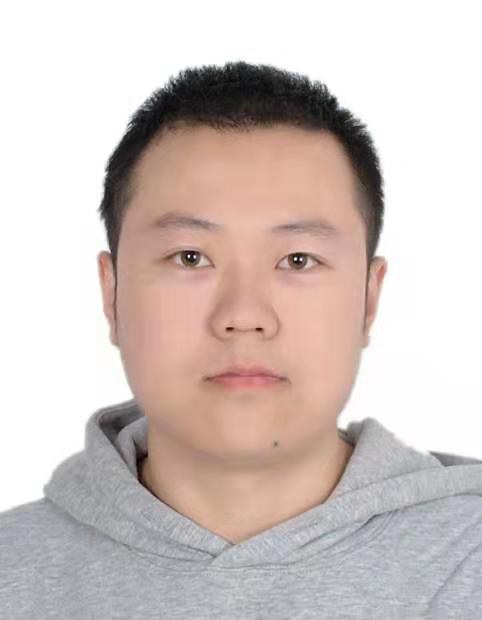
Francesco Bianchin is affiliated with the Chair of Information-oriented Control (ITR) at the Technical University of Munich (TUM). His research focuses on networked control systems, data-driven control, and human-centered control, with applications in hybrid exoskeletons, clinical decision-support systems, motion modeling, human-robot interaction (HRI), bio-inspired design, and cooperative robotics. Research Interests: Networked Control Data-driven Control Human-centered Control Bio-inspired Design Clinical Decision-support
Furkan Kaynar is a researcher at the Chair of Media Technology, Technical University of Munich, affiliated with the Munich School of Robotics and Machine Intelligence (MSRM) and the Munich Institute of Robotics and Machine Intelligence (MIRMI). He holds a B.Sc. in Electrical and Electronics Engineering (2016) from Bogazici University and an M.Sc. in Electrical Engineering and Information Technology (2019) from TUM. His research focuses on Machine learning for task-oriented robotic grasping Computer vision and interactive segmentation Haptic communication systems Human-robot interfaces for teleassistance Recent work includes few-shot learning methods for grasp area segmentation via remote demonstrations. Project involvement includes Centre for Tactile Internet with Human-in-the-Loop (CeTI) , Teleoperation over 5G , and IEEE P1918.1.1 Haptic Codecs . Collaborative efforts appear in publications at international conferences. Teaching activities include: Organizing the Seminar on Topics in Signal Processing (WS19/20) Conducting tutorials for Image and Video Compression (SS20)
Kuo-Yi Chao is a Researcher at the Chair for Robotics, Artificial Intelligence, and Real-Time Systems at the Technical University of Munich (TUM), focusing on multimodal sensor fusion for Vehicle-to-Everything (V2X) applications. He received his B.Sc. and M.Sc. in Electrical Engineering and Computer Technology from TUM. His expertise spans multi-agent systems, visual language models, real-time communication, and digital twin technologies. His 2022 publication in the Journal of NeuroEngineering and Rehabilitation highlights his work on intuitive control systems for robotic prostheses, emphasizing sensor fusion and human-robot interaction. He contributes to teaching through courses like 'Einführung in die digitale Signalverarbeitung (IN2061)' and offers thesis topics in collaborative camera perception, real-time V2X data transmission, and object list generation for autonomous systems.
Professor Jörg Ott holds the Chair for Connected Mobility at Technische Universität München (TUM) in the Faculty of Informatics since August 2015. He is also an Adjunct Professor at Aalto University, where he previously served as Professor for Networking Technology from 2005 through 2015. His academic career includes positions as Assistant Professor at Universität Bremen (1997-2005) and research staff with teaching responsibilities at TU Berlin (1992-1997). His research spans network architectures, protocol design, and networked systems , with current focus areas including network and system architectures, robust networking, mobile networked systems, adaptive real-time communication, and network measurements. He has made significant contributions to delay-tolerant networking, edge computing, and internet protocols. Professor Ott has served the networking community extensively, including as co-chair of IETF working groups (MMUSIC, SIP), co-chair of IRTF DTNRG, Treasurer of ACM SIGCOMM, Vice-chair of IEEE Comsoc TCCC, and General Co-Chair of major conferences including ACM SIGCOMM 2012, ACM MobiSys 2018, and ACM CoNEXT 2021. He is currently chair of the Steering Committee of the ACM CoNEXT conference and member of TUM Ethics Board for non-medical sciences. Best Paper Award at ACM ICN conference (2015) Best Student Paper Award at Packet Video Workshop (2012) Professor Ott has supervised numerous students and researchers, with current members of his research group including Wolfgang Wörndl, Ljubica Kärkkäinen, and Leonardo Tonetto. He has co-founded multiple technology companies including Tellique Kommunikationstechnik GmbH, Lysatiq GmbH, Spacetime Networks Oy, and NeMu Dialogue Systems Oy (callstats.io). His teaching portfolio includes courses on Connected Mobility Basics, Edge Computing and the Internet of Things, and Wireless Internet Communication.
Julius Durmann is a Ph.D. student and Researcher at the Department of Computer Science, Technical University of Munich, working under Prof. Martin Bichler's research group since July 2023. His work bridges Algorithmic Game Theory , Market Design , and Machine Learning , focusing on algorithmic collusion in Bertrand settings and equilibrium learning in games. Education : M.Sc. in Robotics, Cognition, Intelligence (2020-2023), B.Sc. in Maschinenwesen (2017-2020), and a semester abroad at ETH Zürich (2021-2022) His research explores collusion of algorithms through models like Online Optimization Algorithms and Agentic Markets , with publications in journals and conferences such as at - Automatisierungstechnik and the European Control Conference . He has contributed to teaching courses like Business Analytics and Machine Learning and Learning in Games , mentoring B.Sc. and M.Sc. students on topics including Learning to Optimize and Electricity Price Forecasting . His methodological interests include Reinforcement Learning and Game Theory applications in computational markets.
M.Sc. Daniel Darnstaedt is a researcher at Martin Luther University Halle-Wittenberg, affiliated with the Faculty of Philosophy I and the Department of Psychology. His work focuses on cognitive control mechanisms in multitasking environments. Research Interests Mechanisms of task-order control in dual-task situations Training of task-order control Multitasking in driving simulations Cognitive modeling Notable Publications 2024: Frontiers in Psychology - Examined equivalence of lab vs. online training for task-order coordination 2022: Zeitschrift für Arbeitswissenschaft - Analyzed expert knowledge representation during industrial robot teach-in Darnstaedt collaborates with Prof. Dr. Torsten Schubert and colleagues on cognitive performance optimization, with applications in both laboratory and real-world environments.
Dr. Mathew Garnett is a Group Leader in Translational Cancer Genomics at the Wellcome Sanger Institute, where he was appointed to the Faculty in 2014. His research focuses on understanding how genetic alterations in cancer cells impact responses to anti-cancer therapies, with the goal of developing more precise cancer treatments. He leads the Garnett Group within the Cancer, Ageing and Somatic Mutation Programme and is a key member of the Cancer Dependency Map initiative. Dr. Garnett's educational background includes: BSc. in Biochemistry (Hons.) from the University of British Columbia, Canada (1999) PhD from The Institute of Cancer Research, London, UK (2005), where he worked on BRAF as a human cancer gene Postdoctoral research at the University of Cambridge with Prof. Ashok Venkitaraman, supported by a Canadian Institute of Health Research fellowship Dr. Garnett's research spans four complementary areas: the genomics of drug sensitivity, synthetic-lethal dependency mapping, organoid cancer models, and tumor-immune cell interactions. His lab performs high-throughput drug sensitivity screens across >1000 cancer cell models, genome-wide CRISPR-Cas9 screens to identify new drug targets, and develops next-generation organoid models that better capture tumor heterogeneity. His work integrates molecular cell biology, high-throughput screening, and cancer genomics to identify biomarkers that predict drug response and discover new therapeutic targets. His team has developed three major public resources: the Genomics of Drug Sensitivity in Cancer (GDSC), Project Score database, and Cell Model Passports. Analysis of Dr. Garnett's recent publications (2024-2025) reveals a strong focus on precision cancer medicine through genomic approaches. His work spans cancer dependency mapping using CRISPR screens, development of advanced cancer models including organoids, and identification of novel therapeutic targets and drug combinations. Key themes include synthetic lethality in microsatellite unstable cancers (particularly targeting WRN helicase), mechanisms of drug resistance, tumor-immune interactions, and computational approaches to integrate multi-omic data for precision oncology. Dr. Garnett's research has generated widely used reference datasets for the scientific community and has directly contributed to the development and testing of new cancer therapies. His work on identifying Werner Syndrome helicase as a synthetic-lethal target in microsatellite unstable cancers has led to the development of novel WRN Helicase Inhibitors. His team's databases (GDSC, Project Score, and Cell Model Passports) serve as critical resources for cancer researchers worldwide. Dr. Garnett leads a multidisciplinary team of researchers and has fostered numerous collaborations, including with the Open Targets partnership, Cancer Research UK, and the Human Cancer Models Initiative. His lab has developed innovative methods for cancer modeling and drug screening that have advanced the field of precision oncology. He is also a member of the scientific leadership team for Open Targets and the Cancer Research UK drug discovery small molecule expert review panel. The Garnett Lab maintains state-of-the-art facilities for robotics, acoustic dispensing, high-content microscopy, and CRISPR screening, enabling high-throughput approaches to cancer research. Through international collaborations like the Human Cancer Models Initiative, his team is generating and characterizing new patient-derived cancer models that better capture tumor heterogeneity for therapeutic development.
Mohamed Kari is a Presidential Postdoctoral Fellow at the Department of Computer Science, Princeton University , and an Associate Member at the University of Duisburg-Essen 's Integrated Information Systems research group. His work bridges Mixed Reality , Human-Computer Interaction , and Machine Learning , with a focus on semantically coherent, sensor-rich systems. PhD in Computer Science from University of Duisburg-Essen (with highest distinction) Fulbright Full Grant recipient for studies in the U.S. Research Interests span immersive technologies, sensor integration, and context-aware systems. He investigates how to seamlessly blend virtual actions with physical environments through Scene Responsiveness and develops audio-augmented reality applications like SoundsRide for automotive contexts. Article Trends reveal his focus on environmental manipulation in mixed reality affordance-synchronized user experiences pose-aware object substitution mobile and constrained VR input methods automotive context modeling Scientific Awards include Best Paper Awards at ACM UIST 2021 and 2023 Honorable Mention , as well as recognition for his dissertation with the highest distinction. Thesis Supervision at UDE involves rigorous requirements: English-language theses using LaTeX , original research with structured problem statements, and mandatory video presentations of contributions. He has guided students in topics like Intra-Company Networking Platforms and Automated UI Testing . Laboratory Affiliations include Princeton's Situated Interactions Lab , ETH Zurich's Sensing, Interaction & Perception Lab , and industry labs at Apple , Meta , and Porsche Emerging Tech Research .
Dr. Norman Weiss serves as a Researcher within the Faculty of Mathematics, Natural Sciences, Economics & Computer Science at the University of Hildesheim, where he holds a key administrative position in the Dean's Office 4. His responsibilities include managing doctoral procedures, habilitation procedures, process management, regulations, budget and financial controlling, accreditations, department website, and dean's IT infrastructure. Dr. Weiss has established significant expertise in robotics and computer vision, with a specialized focus on robot soccer applications. His research spans mobile robotics systems, adaptive vision technologies, and autonomous decision-making frameworks. His work demonstrates technical excellence in image processing under varying lighting conditions, real-time object tracking, and multi-agent coordination systems for competitive robotic environments. His publication record reveals consistent contributions to the field since the early 2000s, with notable works including his 2011 book on lighting-tolerant adaptive supervision systems and numerous conference and journal publications analyzing color systems, vision challenges, and architectural approaches for robot soccer. His research trajectory shows an evolution from foundational position recognition systems to more sophisticated adaptive supervision frameworks. Dr. Weiss has made substantial organizational contributions to the academic community, serving as Program Chair for the 5th International Conference on Computational Intelligence, Robotics and Autonomous Systems (CIRAS 2008) and as Program Chair and Co-Organizer for the FIRA RoboWorld Congress 2006. He has also contributed as Program Committee Member, Publicity Chair for the International Conference on Entertainment Robotics (ICER), and Journal Guest Editor for the Robotics and Autonomous Systems special issue on CIRAS 2008.
Johanna Zimmermann serves as a Junior Professor of Marketing at the University of Cologne's Faculty of Management, Economics and Social Sciences (WiSo Faculty) since 2025, focusing on critical intersections of marketing, technology, and consumer behavior in digital ecosystems. Her academic credentials include: Ph.D. in Marketing, University of Passau (2019-2024) M.Sc. Business Administration, University of Passau (2017-2019) Specialized Degree in Textile Merchandising and Retailing, LDT Nagold (2016-2017) B.A. International Cultural and Business Studies, University of Passau (2012-2016) Dr. Zimmermann's research examines how consumers navigate data disclosure processes, the behavioral impact of artificial entities (AI systems, robots, avatars), and the evolution of consumer journeys in technology-mediated environments. She investigates ethical implications of data control mechanisms and develops frameworks for privacy-conscious business practices, with particular attention to B2B contexts and AI-driven marketing systems. Her publication trajectory (2020-2025) reveals consistent advancement in understanding digital privacy ecosystems, featuring frameworks for multilayered B2B privacy decision-making, analyses of AI's privacy implications, and innovative approaches to consumer data control. Her work frequently integrates gamification techniques to enhance engagement in data disclosure processes while maintaining rigorous theoretical grounding in consumer behavior. Prior to her current position, she contributed to the DFG Research Training Group 'Digital Platform Ecosystems' at the University of Passau. At the University of Cologne, her research actively aligns with the Key Profile Area 'Social and Economic Behavior' within the Cluster of Excellence ECONtribute, positioning her work within broader interdisciplinary efforts to address digital transformation challenges.
Prof. Dr.-Ing. Ansgar Meroth is a Full Professor at Heilbronn University within the Faculty of Technology (also known as Faculty of Mechanics and Electronics). He serves as International Representative of the Faculty, Founding Dean at the German International University in Cairo, and holds a professorship in the Automotive Systems Engineering program. His research focuses on: Human-Machine Interface systems for vehicle applications Driving simulation and vehicle dynamics Networking in vehicles, special machinery, and elevator systems Car-to-X communication technologies Autonomous water vehicles and sensor networks Prof. Meroth's recent publication activity (2023-2025) shows a strong emphasis on networked control systems under bandwidth constraints, IoT applications in agriculture, and advanced communication protocols. His work bridges theoretical control systems engineering with practical automotive applications, evolving from fundamental automotive networking toward specialized applications in precision agriculture and autonomous systems. Professional leadership roles include: Deputy Program Director for International Automotive Management International Representative for Faculty of Technology Member of uniTyLab research group Member of University Senate His industry collaborations focus on: Intelligent charging stations for electric vehicles Autonomous boats development Smart agriculture sensor networks Hardware-in-the-loop testing systems Professional affiliations: Chair of VDI Neckar Group board Member of Württemberg Engineers' Association extended board Secretary of Lions Club Heilbronn-Wartberg (since 2015) Board member of Thomas-Gessmann Foundation
Oliver Kosak is a Senior Researcher at the Institute for Software & Systems Engineering within the Faculty of Applied Computer Science at the University of Augsburg. His research focuses on self-organization and self-adaptation in technical systems, with emphasis on swarm robotics, multi-agent systems, and self-organizing production in Industry 4.0 contexts. Research Interests Self-organization and self-adaptation Automated planning and constraint solving Swarm robotics and multi-agent systems Industry 4.0 and self-organizing production Scientific Contributions Developed Protease 2.0 for extended swarm formation flight Pioneered semantic plug-and-play architectures Advancing deadlock avoidance in self-organizing production Awards & Recognition 2022 Bavarian Culture Award (Science Category) He coordinates research on self-organizing process route planning in the KI-Production Network Augsburg and teaches courses on self-organizing systems at both bachelor and master levels.
Hella Ponsar is a Senior Researcher at the Institute for Software & Systems Engineering , Faculty of Applied Computer Science, University of Augsburg. Her work focuses on self-organizing software systems, testing adaptive systems, and applications in robotics and Industry 4.0. Research Interests: She investigates methods to prevent aging in software systems, systematic design of self-organizing systems, testing strategies for systems with unpredictable behavior, and ensemble programming for multipotent systems. Key projects include COMBO, TeSOS, and SAVE ORCA. Publications Overview: Her research spans self-organizing production cells, decentralized coordination, deadlock avoidance, and formal verification. Keywords include Robotics, Software Engineering, Adaptive Systems, and Trustworthy Systems. Scientific Awards: Award of the Swabian Economy 2012 (IHK Schwaben)
Xinyu Chen is a Research Associate at the University of Hamburg (UHH), affiliated with the Human-Computer Interaction (HCI) Lab . She is a PhD student at DASHH (Data Science in Hamburg Schools of Study), co-supervised by Prof. Frank Steinicke (UHH) and Prof. Wim Leemans (DESY) . She joined the HCI Lab in May 2025. Education: Bachelor’s in Mechatronics from Tongji University (Shanghai, China) Master’s in Robotics, Cognition, Intelligence from Technical University of Munich (Munich, Germany) Research Focus: Her work centers on multi-modal human-robot interaction , particularly high-level robot control using mixed reality (MR) and large language models (LLMs) . This aligns with interdisciplinary efforts in HCI, robotics, and AI at UHH and DESY.
Jianchang Wu is a researcher at Forschungszentrum Jülich GmbH, affiliated with the Helmholtz Institute Erlangen-Nürnberg (HI ERN). His work focuses on advanced materials and automation strategies for photovoltaic technologies, particularly perovskite solar cells. Key Research Areas: Perovskite solar cells, high-throughput experimentation, machine learning in materials optimization, stability engineering, hole transport materials, and thin-film fabrication. Institutional Affiliation: Forschungszentrum Jülich GmbH and HI ERN, a Helmholtz Association institute dedicated to renewable energy research. Recent publications highlight his contributions to automated workflows for material discovery, inverse design of hole transport layers, and stability improvements in perovskite devices. His work integrates robotics, computational modeling, and experimental validation to address multidimensional challenges in energy systems. Labs & Projects: Involved in the Self-driving AMADAP laboratory and the HydroBot project, which explore autonomous optimization and fuel cell-powered robotics.