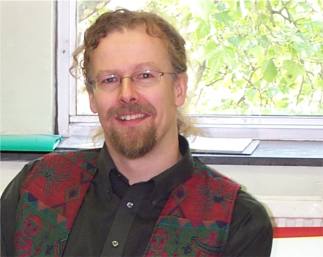
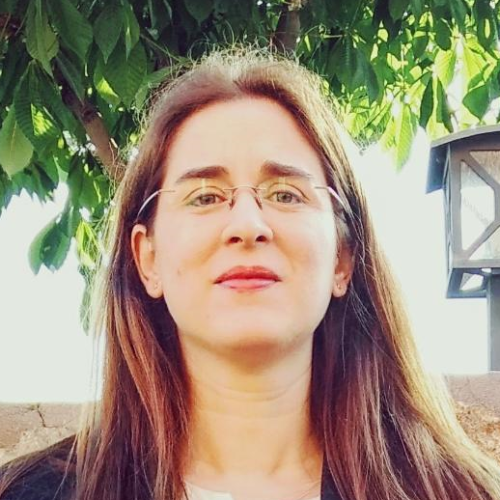
Doris Aschenbrenner is a researcher specializing in human-robot interaction and augmented reality applications for industrial maintenance systems at Julius Maximilians University Würzburg. Her work bridges computer science, engineering, and human factors disciplines to develop practical solutions for Industry 4.0 environments. Her research focuses on Human-Robot Interaction , Augmented and Virtual Reality for industrial applications , Human-in-Command systems , and Industry 4.0 technologies . She has conducted extensive work on AR-assisted maintenance operations, digital twins for production environments, and human factors considerations in collaborative robotics systems. Her research demonstrates how immersive technologies can enhance manufacturing processes while maintaining appropriate human oversight and control. Her publication record shows significant contributions to conferences like ISMAR, VR, and Frontiers in Robotics and AI, with a consistent output from 2013 through 2024. Her recent work has focused on regulatory aspects of AI implementation in manufacturing, particularly regarding the EU AI Act, and developing platforms for digital remote maintenance services. Her research has practical implications for manufacturing industries seeking to implement advanced human-machine collaboration systems while addressing regulatory requirements and human factors considerations.
Xiao Gu is a Researcher at the Computational Health Informatics Lab, Department of Engineering Science, University of Oxford. He holds a PhD in Computing from Imperial College London (2023), an MRes in Medical Robotics and Image Guided Intervention (2019), and a BEng in Electronic Engineering from Fudan University (2018). His research focuses on integrating pervasive sensing and deep learning for healthcare applications, addressing challenges in generalization and data scarcity. He has been recognized with awards including the BMVC Outstanding Reviewer (2024) and IEEE ICRA Student Travel Grant (2023). Key research interests include AI-driven healthcare solutions, biomedical signal processing, and the development of robust models for real-world medical applications. His work spans datasets like CFP for biomedical sensing and contributions to workshops on wearable intelligence. Xiao Gu has authored over 30 peer-reviewed publications, with recent work focusing on medical imaging, domain adaptation, and vision-language models. He actively contributes to academic activities, including editorial roles and conference reviewing.
Professor Michael Solomon is a prominent academic surgeon and researcher with roles at The University of Sydney and National University of Singapore. He serves as the Professor of Surgical Research at Sydney’s Central Clinical School and Academic Head of Colorectal Surgery at Royal Prince Alfred Hospital (RPA). Additionally, he leads the Surgical Outcomes Research Centre (SOuRCe) and chairs the RPA Institute of Academic Surgery. His expertise spans advanced pelvic oncology, minimally/maximally invasive colorectal surgery, inflammatory bowel disease management, and clinical trial design. Education: MB BCH (Hons) BAO, MSc (University of Toronto), DMedSc (Sydney Medical School), DMed(NUI), and multiple fellowship/honorary titles (e.g., FRCSI, FRACS). He is also a Doctor of Medicine from the National University of Ireland for his work in surgical health outcomes. Research Interests: Evidence-based surgical practices, randomized controlled trials (RCTs), outcomes optimization for advanced pelvic malignancies, and multidisciplinary approaches to complex pelvic surgery. He focuses on improving survival rates while minimizing surgical morbidity, particularly through techniques like pelvic exenteration and sacrectomy. Scientific Achievements: Over 270 publications, $15 million+ in research grants, and prestigious awards including the RPA Foundation Research Medal (2014) and Honorary Fellowship of the Royal College of Surgeons of Ireland (2014). His work bridges surgical innovation and patient-centered care. Advising & Grant Activity: Supervised 38 Masters/Honours students and 5 completed PhDs (3 ongoing). Secured significant peer-reviewed grants supporting surgical research. His grants fund projects like prehabilitation programs (PRIORITY Trial) and robotic surgery implementation studies. Labs/Teams: Director of the Surgical Outcomes Research Centre (SOuRCe), a multidisciplinary unit at the University of Sydney. Collaborates with global institutions like Memorial Sloan Kettering Cancer Centre and the National University of Ireland. Leads the RPA Institute of Academic Surgery, which emphasizes surgical education, global health, and innovation.
Paul H J Kelly is a Professor of Software Technology at Imperial College London, leading the Software Performance Optimisation research group. He serves as co-Director of the Centre for Computational Methods in Science and Engineering and Director of Industrial Liaison for the HiPEDS Centre for Doctoral Training in High-Performance Embedded and Distributed Systems. Research Interests His research focuses on: Compiler technology for computational science Performance portability across heterogeneous architectures Domain-specific languages (DSL) for scientific computing Optimization of finite element methods and PDE solvers Data locality and parallelism trade-offs Computer vision algorithms and SLAM systems He actively collaborates with hardware vendors and application developers in computational science, robotics, and quantum chemistry. Article Trends Recent publications emphasize: Temporal and spatial tiling for PDEs and stencil computations Quantum circuit simulation optimization Distributed SLAM systems Performance portability frameworks (e.g., Firedrake, Devito) Compiler techniques for GPUs and custom accelerators Memory hierarchy optimization Scientific Awards Senior Member of the ACM (2021) Imperial College Engineering Faculty Teaching Excellence Award (2013) Best Robotics Paper at 18th Conference on Robots and Vision (2021) Student Mentoring He has mentored numerous PhD and postdoctoral researchers now in academic positions including: Luigi Nardi - Assistant Professor at Lund University Sajad Saeedi - Assistant Professor at Ryerson University Lawrence Mitchell - Assistant Professor at University of Durham Current students include Renato Salas-Moreno , David Ham , and Miklos Homolya .
Professor Nick Pears is a faculty member in the Department of Computer Science at the University of York. He holds roles including Deputy Head of Department (Research) and Chair of the Departmental Research Committee. His academic career spans postdoctoral research at the University of Oxford, a Fellowship at the University of Cambridge, and progressive roles at York from Lecturer to Professor (since 2022). He holds a BSc in Engineering and a PhD in Robotics from 'Dunelm' (likely Durham University). His research focuses on 3D facial modeling, computer vision for autonomous systems, robotic manipulation, and medical imaging. He leads the Vision, Graphics and Learning research group and has contributed to advancements in morphable models, gaze estimation, and medical anomaly detection. His work bridges theoretical computer vision with practical applications in healthcare and robotics. Recent publications emphasize generative models for medical imaging, 3D face reconstruction techniques, and adaptive robotics. His research often intersects AI ethics, emphasizing safe and explainable systems for autonomous vehicles and surgical applications. He actively collaborates with clinicians and engineers to translate vision algorithms into real-world solutions. As a leader in academic research governance, he oversees York's REF submissions and departmental strategy, fostering interdisciplinary innovation. His lab maintains an open-access repository of 3D morphable models and benchmark datasets for robotic motion planning.
María del Carmen Pérez Rubio is a Professor at the University of Alcalá (UAH) specializing in Electronics Technology. With a Doctorate from UAH (2009) and two teaching five-year terms recognized, she has been actively involved in research, teaching innovation, and academic management since 2004. Education: PhD in Electronics Engineering, UAH (2009), Cum Laude, European Doctorate Mention, Ministry Quality Mention Master's Degree in University Teaching, UAH (2012) Electronic Engineering, UAH (2004), Top of Class Industrial Technical Engineering (Electronics), UAH (2002), Top of Class Her research focuses on ultrasonic positioning systems , sensor networks , and embedded systems , particularly in intelligent spaces, robotics, and transportation. She has contributed extensively to FPGA implementation, CDMA techniques, and acoustic signal processing. Her recent publications highlight advancements in acoustic positioning algorithms , multiband waveform design , and 3D localization using EMFi transducers. She combines technical research with pedagogical innovation in power electronics and electronic engineering education. Scientific Awards: Technology-Based Company Creation Prize (UAH, 2019) Knowledge Transfer Award (UAH, 2019) Excellence Campus Accesit (2018) Excellent Shotgun Presentation Prize (Ultrasonics 2023) Teaching Excellence Awards (2016, 2022) Teaching Innovation Group Excellence Mention (2015) She has directed 19 end-of-degree projects, 10 master's theses, and 1 doctoral thesis. Her management roles include coordinating the Electronic Engineering Degree (2014-2022) and serving as Electronics Department Secretary (2019-2022). She has participated in 30 research projects, including National Plan and RETOS programs, and collaborated in 4 patents.
Dr. Asma Atamna is a postdoctoral researcher in the Theory of Machine Learning group led by Prof. Tobias Glasmachers at Ruhr-Universität Bochum’s Institute of Neuroinformatics (INI). Her research bridges numerical optimization and machine learning (ML), focusing on adaptive hyperparameter mechanisms for optimizers like Adam and SGD. She emphasizes real-world applications, contributing to the ecoKI project to aid SMEs in digitalization via ML platforms. Notably, she developed ContainerGym —a reinforcement learning benchmark addressing real-world resource allocation challenges. Her work critiques academic ML benchmarks for lacking real-world complexity, advocating for practical evaluation frameworks. Research interests include reinforcement learning, evolutionary algorithms, convergence analysis, and constrained optimization. She collaborates closely with industrial partners to ensure applied relevance. Affiliated with the INI (part of the Faculty of Computer Science), her work intersects disciplines like neuroscience-inspired AI, robotics, and data science. Contact: asma.atamna@ini.rub.de .
Dr. Robin Schiewer is a researcher at the Institute of Neuroinformatics (INI) , part of the Ruhr-Universität Bochum . His work focuses on understanding neural systems and applying biological insights to artificial cognitive systems. Research Interests: Robin specializes in Machine Learning , Reinforcement Learning , and Neural Networks , with a particular emphasis on hierarchical world models, latent representation prediction, and catastrophic interference in multi-task learning. His research bridges computational neuroscience and AI. Teaching: He has taught courses such as Introduction to Python and Machine Learning: Unsupervised Methods across multiple semesters (2019–2023) in both lab and seminar formats. Publications: Recent articles highlight his contributions to physical reasoning benchmarks, Hebbian learning frameworks, and modular reinforcement learning architectures. Labs & Teams: Robin collaborates with the INI’s interdisciplinary team, integrating insights from experimental psychology, neurophysiology, and robotics into his AI research.
Dr. Andrew Bradley is a Reader in the School of Engineering, Computing and Mathematics at Oxford Brookes University, leading the Autonomous Driving and Intelligent Transport group. He sits on the steering committee of the AI and Data Analytics Network (AIDAN) and is a member of the Artificial Intelligence, Data Analysis and Systems (AIDAS) institute. His research focuses on autonomous vehicles, intelligent transport systems, and AI-driven solutions for adverse conditions. Key projects include the CLAIMOR initiative (2025-2025) with £54k funding and the £966k Epistemic AI project (2021-2025). Research interests span autonomous driving datasets (e.g., ROAD), adversarial weather perception, trajectory prediction, and cybersecurity for connected vehicles. He collaborates with industry partners like Oxfordshire County Council. Notable outputs include the ROAD: The ROad event Awareness Dataset (2023) and work on real-time simulation tools for vehicle control. Bradley’s work emphasizes bridging AI theory and real-world applications, with a focus on safety-critical systems. Current projects aim to enhance autonomous systems’ robustness through scenario-based testing and self-supervised learning techniques.
Francesco De Natale is a Full Professor at the Department of Information Engineering and Computer Science, University of Trento. His expertise spans Computer Vision, Digital Forensics, Signal Processing, and Multimedia Systems. He teaches courses including 'Fondamenti di Comunicazioni', 'Fondamenti di Elaborazione dei Segnali', and 'Tecnologie Multimediali', focusing on signal analysis, communication systems, and multimedia processing. Research Interests: Digital forensics (e.g., deepfake detection, image provenance), computer vision applications (3D haptic modeling, crowd behavior analysis), and embedded systems for IoT/AAL solutions. Key Projects: Developed the AUSILIA platform for assisted living and Neuroberry for pervasive EEG signaling. Contributed to datasets like WILD for synthetic image analysis. Recent Focus: Combining machine learning with forensic techniques for detecting media manipulation, and energy-efficient edge computing for drones/UAVs. His work bridges theoretical research with practical applications in healthcare, cybersecurity, and robotics. Over 50+ publications since 2012 highlight contributions to signal processing, multimedia forensics, and human behavior analysis.
Piotr Luszczek is a Research Professor and Adjunct Associate Professor at the University of Tennessee, Knoxville's Tickle College of Engineering, affiliated with the Department of Computer Science and the Innovative Computing Laboratory. He holds a Ph.D. and M.S. from the University of Tennessee, Knoxville, and a B.S. from AGH University of Science and Technology in Kraków, Poland. Affiliations : Innovative Computing Laboratory (ICL), Tickle College of Engineering. Roles : Research and teaching in high-performance computing, numerical linear algebra, and performance optimization. Research Interests focus on benchmarking, numerical linear algebra for HPC, automated performance tuning for modern hardware, and stochastic models for performance analysis. His work emphasizes scalable algorithms, GPU acceleration, and efficient use of hybrid architectures. Grants and Collaborations include projects on batched linear algebra, sparse matrix operations, and energy-efficient AI frameworks. He contributes to software libraries like PLASMA and MAGMA, optimizing for exascale computing. Labs/Teams : Active in the Innovative Computing Laboratory (ICL), developing tools for HPC benchmarking (e.g., HPCG) and parallel linear algebra libraries. Engaged in international collaborations for exascale computing initiatives.
Kevin Godin-Dubois is a Researcher at the Faculty of Science, Vrije Universiteit Amsterdam (VU), with affiliations to the Network Institute. His work focuses on advancing artificial intelligence (AI) through interdisciplinary research, particularly in reinforcement learning, human-AI interaction, and evolutionary robotics. He leads projects involving modular frameworks for AI experiments and benchmark generators for agent prototyping. Research Interests: His primary areas include reinforcement learning frameworks, human-AI collaboration systems, neuroevolutionary techniques, and embodied evolution in robotics. His work bridges theoretical AI advancements with practical applications in socially adept agents and modular system design. Recent Trends: His 2024-2025 publications emphasize modular frameworks (e.g., SHARPIE and AMaze), which enable scalable experimentation and benchmarking of AI agents. Earlier work (2017-2020) explored long-term evolutionary dynamics in artificial ecosystems and plant communities, showcasing adaptability in changing environments. Collaborations: Active in international workshops (e.g., ALIFE 2024) and open-source projects (ci-group/revolve2), emphasizing reproducibility and community-driven AI development.
Dr. Osman Tursun is a Postdoctoral Research Fellow in Computer Vision and Machine Learning at QUT’s School of Electrical Engineering & Robotics, affiliated with the Signal Processing, Artificial Intelligence and Vision Technologies (SAIVT) research group. He holds a PhD in Computer Vision from QUT. His research focuses on large-scale image retrieval, semantic segmentation, natural language processing, and machine vision applications in mining through collaboration with Orica Digital Solutions. Education: PhD in Computer Vision (QUT). Advanced Queensland Industry Research Fellow (2023) with a $240k grant for AI-driven mining software development. Current projects include real-time fragmentation analysis and ore intelligence systems. Research interests emphasize cross-domain applications of AI, particularly in trademark retrieval, scene text editing, and explainable AI via heatmap analysis. His work bridges computer vision with natural language processing, as seen in projects like TUMLU (Turkic Language Benchmark) and PDV (Prompt Directional Vectors). Publications span image retrieval (zero-shot, sketch-based), deep learning techniques (MTRNet++, attention mechanisms), and benchmark datasets (METU). His recent work explores explainability in neural networks using heatmaps and LLMs. Awards include the 2023 Advanced Queensland Fellowship. Active in supervising postgraduate research students in AI, computer vision, and machine learning.
Sebastian Gerard is a Researcher and PhD student at the Division of Robotics, Perception and Learning, KTH Royal Institute of Technology. His work focuses on applying machine learning and computer vision to address environmental challenges, particularly wildfire prediction and disaster response through remote sensing. He has contributed to the development of datasets like WildfireSpreadTS and TS-Satfire, advancing multimodal time-series analysis for wildfire spread prediction and disaster management. Education details: While specific academic credentials are not explicitly listed, his role as a PhD student indicates ongoing advanced studies in Robotics, Perception, or related fields. Research interests include wildfire prediction using satellite imagery, climate change mitigation via machine learning, and improving geospatial data analysis for disaster response. His work bridges computer vision techniques with environmental science, aiming to create actionable insights from remote sensing data. Publications reflect contributions to wildfire modeling, semantic segmentation robustness, and smart grid automation. Collaborations include work with Josephine Sullivan and Paul Borne-Pons, addressing challenges in domain-specific pretraining and dataset validation. Labs/Teams: Active in KTH's Robotics and Perception research groups, contributing to projects involving wildfire datasets and remote sensing applications.
Fulvio Giovanni Ottavio Risso is a Full Professor in the Department of Control and Computer Engineering (DAUIN) at Politecnico di Torino, where he is a member of the NETGROUP Computer Networks Research Group and leads research in cloud, edge, and software-defined networking. He is the Scientific Advisor of the European EIT Digital Partnership and serves as a representative for Politecnico di Torino in EIT Digital. He teaches core courses in Computer Engineering, including Cloud Computing Technologies, Enterprise Network Technologies, and Software Networking, and supervises several PhD students in advanced distributed systems. His research focuses on cloud computing, edge computing, network functions virtualization (NFV), software-defined networking (SDN), and high-speed packet processing. He has pioneered work in eBPF-based network functions through the Polycube framework and in computing continuum orchestration via the Liqo project. His interests extend to Kubernetes networking, real-time data plane optimization, and privacy-preserving infrastructure. He has led numerous EU, national, and industry-funded projects, including FLUIDOS (PNRR), NEWTON, RESTART, TOSHI, ASTRID, and NFV@EDGE. His recent work emphasizes liquid computing, borderless data spaces, and secure, scalable network services for 5G/6G. The recent publications reflect a strong trend in edge-to-cloud orchestration, secure and efficient data plane processing, and real-time performance optimization. Key themes include the use of reinforcement learning for scheduling in the computing continuum, Kubernetes-based edge orchestration, eBPF for in-kernel networking, and energy-aware task distribution. Projects like Liqo and Polycube are central to his vision of a programmable, fluid infrastructure. The integration of machine learning, real-time monitoring, and open-source frameworks underscores a commitment to practical, scalable solutions in modern distributed systems. Scientific Awards and Recognitions: No explicit awards listed in the provided text. Advising and Grants: Fulvio Risso supervises multiple PhD students including Attilio Oliva, Daniele Cacciabue, Davide Miola, Jacopo Marino, Stefano Galantino, Carlos Mateo Risma Carletti, and Federico Parola, whose research spans cloud-edge continuum, vehicular micro-clouds, and Kubernetes networking. He has led over 30 competitive and commercial research projects, including EU-funded initiatives (H2020, EIT), national PRIN projects, PNRR missions, and industry contracts with Rakuten Mobile. These grants focus on network programmability, edge computing, 5G/6G observability, anomaly detection, and secure orchestration, reflecting strong industry-academia collaboration. Labs and Research Groups: He is a key member of the NETGROUP - Computer Networks Group (DAUIN) and leads research activities in LAB 9 - Research Laboratory (DAUIN). He is also associated with the Interdepartmental Center PIC4SeR - PoliTO Interdepartmental Center for Service Robotics. His work is deeply integrated with open-source development, particularly through Liqo and Polycube, which are actively used in both research and industrial deployments.