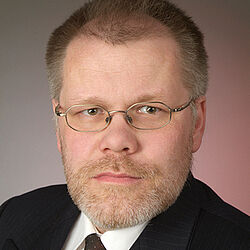
Prof. Jens Altenburg holds the position of Professor of Microprocessor Technology and Embedded Systems at Bingen University of Applied Sciences. His work focuses on robotics, embedded systems, and control engineering. He is affiliated with Department 2, where he contributes to study programs in Computer Science, Electrical Engineering, and related fields. His research interests span robotics, UAVs, and microprocessor-driven automation. Notable publications include works on flight control systems (AONE test bench), image processing for robots, and solar-powered robotics (SOPHOCLES). He has authored technical books on microcontroller programming and mobile robotics, emphasizing practical experimentation and AI integration. While no specific awards are mentioned in the text, his contributions to educational materials and experimental systems highlight his impact in engineering education and applied research.
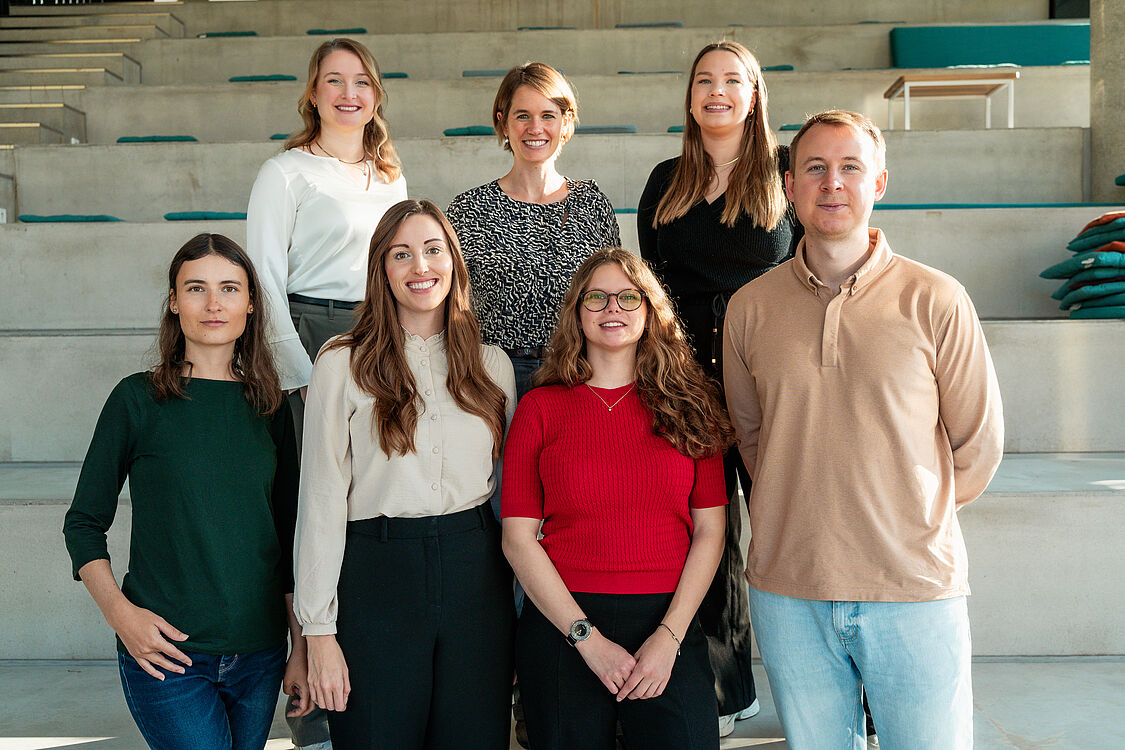
Jun.-Prof. Dr. Sylvia Hubner-Benz is an Assistant Professor of International Management at the University of Paderborn, leading the Management International Management department within the Faculty of Business Administration and Economics. Her research focuses on cross-cultural dynamics in entrepreneurship, innovation, and virtual teamwork, with projects like SeeHerTech addressing female visibility in high-tech sectors. She teaches core courses such as 'International Business' (BSc) and 'International Comparative Management' (MSc), emphasizing practical application and global perspectives. Research interests span international management, cultural diversity, and technology's role in entrepreneurship. She leads the BMBF-funded SeeHerTech project (2024–2027), developing AI tools to support female entrepreneurs' communication strategies. Collaborations include the Technical University of Munich and industry partners like coolnis and UFUNDI. Her teaching integrates real-world projects, such as the X-Culture program for intercultural virtual teams. She has published extensively on topics like robot leadership, entrepreneurial ethics, and gender stereotypes in recruitment. Current research explores human-AI collaboration, leadership behavior in robotics, and innovation in Asian business contexts. Grants include Federal Ministry of Education and Research (BMBF) funding for SeeHerTech. Her work bridges academic research with practical tools, aiming to enhance international teamwork and equity in tech industries.
Stavros Vougioukas is a Professor and Vice Chair in the Department of Biological and Agricultural Engineering at the University of California, Davis, within the College of Engineering. He is actively involved in research and graduate mentorship, focusing on agricultural robotics and automation for specialty crops. His work integrates engineering solutions to improve efficiency and sustainability in farming systems. His research interests include agricultural robotics , automation of harvesting processes , sensors and control systems , precision agriculture , and wireless sensor networks for orchard environments . He develops technologies for robotic and robot-aided harvesting, particularly in strawberries and orchard crops, emphasizing optimal management of inputs and yield monitoring. The recent publications reflect a strong trend in robotics integration , real-time sensing , and data-driven decision-making in agriculture. His work spans mechanical design, signal processing, path planning, and structural durability, indicating a multidisciplinary approach to solving agricultural challenges through engineering innovation. Scientific Awards and Recognition: $1.6M grant (2021) to develop innovative fruit-picking machines CITRIS Seed Award (2023) for engineering solutions in agriculture Professor Vougioukas mentors graduate students and leads funded research projects focused on automation and robotics in agriculture. He has secured significant grants, including a $1.6M award for fruit-picking robotics, demonstrating strong research leadership. His collaborations span institutions and disciplines, particularly in agricultural machinery design and sensor network deployment. He leads research efforts in agricultural automation, particularly through projects involving robot-aided harvesting , orchard navigation systems , and wearable worker tracking devices . His lab contributes to the development of intelligent systems for sustainable farming, integrating mechanical, electronic, and computational components.
Emanuele (Manuel) Trucco is a Professor of Computing and holds the NRP Chair of Computational Vision in the School of Science and Engineering at the University of Dundee. He is also an Honorary Clinical Researcher at NHS Tayside and previously served as an Adjunct Professor at the Chinese Academy of Sciences (2018–2021). His research is centered on computational vision and medical image analysis, particularly in retinal imaging and its applications in systemic disease detection. PhD, Electronic Engineering, University of Genoa (1990) MSc, Electronic Engineering, University of Genoa (1984) Manuel Trucco's research focuses on computer vision and medical image analysis , with a strong emphasis on retinal image analysis for early detection of diseases such as diabetes, cardiovascular conditions, stroke, dementia, and neurodegenerative disorders. He co-directs the VAMPIRE (Vessel Assessment and Measurement Platform for Images of the Retina) initiative, a collaborative effort between the Universities of Dundee and Edinburgh. This platform enables automated, multi-modal analysis of retinal images and has been used in biomarker studies across the UK and internationally. His work integrates deep learning , artificial intelligence , and biomedical engineering to develop non-invasive, scalable diagnostic tools. Industrial collaborations include Canon Medical, OPTOS plc, NIDEK, and Epipole plc, while institutional partners include the Royal College of Ophthalmologists and the UK Biobank Eye and Vision Consortium. Recent publications highlight a strong trend in using AI and deep learning to extract clinical insights from retinal images, including predicting cardiovascular outcomes in diabetic patients, estimating biological age, and analyzing retinal vasculature changes under physiological stress. His work bridges computer science, ophthalmology, and public health, contributing to precision medicine and health equity. His scientific contributions have been recognized through fellowships: FRSA (Fellow of the Royal Society of Arts) FIAPR (Fellow of the International Association for Pattern Recognition) Trucco has led or co-led major research projects, including a £7M NIHR grant on precision medicine for diabetes (Dundee-Chennai), a £1.1M EPSRC grant on vascular dementia biomarkers (PI), the 3M-Euro ITN "REVAMMAD", and several PhD studentships sponsored by OPTOS, NIDEK, SINAPSE, and Toshiba. He has served on the organizing and program committees of major international conferences such as MICCAI and the European Conference on Computer Vision. He is a key member of the VAMPIRE research team and the UK Biobank Eye and Vision Consortium , contributing to large-scale data analysis efforts in vision and systemic disease. His work is at the forefront of AI-driven healthcare innovation, with real-world applications in early disease detection and personalized medicine.
Dr. Hamidreza Mohades Kasaei is an Associate Professor in the Department of Artificial Intelligence at the University of Groningen, Netherlands. He holds positions in both the Faculty of Science and Engineering and the Faculty of Medical Sciences/UMCG, focusing on Robotics and image-guided minimally-invasive surgery. His work bridges theoretical advances in machine learning with practical robotic applications. Dr. Kasaei's research focuses on developing algorithms for adaptive perception systems through interactive environment exploration and open-ended learning. His specific interests include 3D object perception, grasp affordance detection, object manipulation, and active perception. He has evaluated his research on various robotic platforms including PR2, UR5e, Kinova, Franka robotic arms, and humanoid robots. His work enables robots to learn from past experiences and intelligently interact with non-expert human users using data-efficient techniques. Analysis of his recent publications reveals strong trends toward increasingly sophisticated manipulation capabilities, particularly in dual-arm coordination and handling dense clutter. There's a clear progression toward integrating language models with robotic control systems, as seen in works like 'Lifelong Robot Library Learning' and 'Towards Open-World Grasping with Large Vision-Language Models.' His research consistently addresses real-world challenges in agricultural robotics, assistive technologies, and service robotics applications. Gratama Science Award (2022) Google Research Scholar Award in Machine Learning (2023) Outstanding Associate Editor for IEEE Robotics and Automation Letters (2023) Dr. Kasaei has successfully supervised multiple PhD students including Zhenxing Zhang (thesis on 'Generative Adversarial Networks for Diverse and Explainable Text-to-Image Generation') and Hamed Ayoobi (thesis on 'Explain What You See: Argumentation-Based Learning and Robotic Vision'). His research is supported by significant grants including the Google Research Scholar Award for 'Continual Robot Learning in Human-centered Environments' and various conference organization roles including workshops at RSS 2023 and NeurIPS 2022. He leads the Lifelong Interactive Robot Learning Lab (IRL-Lab), which focuses on six key research directions: Perception and Perceptual Learning, Object Grasping and Manipulation, Lifelong Interactive Robot Learning, Dual-Arm Manipulation, Dynamic Robot Motion Planning, and Exploiting Multimodality. The lab develops cutting-edge approaches for robots to learn in open-ended fashion through interaction with non-expert human users, with applications in assistive robotics for people with disabilities.
Stefano Puntoni is a Professor of Marketing and a behavioral scientist at the Rotterdam School of Management, Erasmus University. He serves as Head of the Department of Marketing Management at RSM and as Director of the Psychology of AI Lab at the Erasmus Centre for Data Analytics. His academic journey began with a "Laurea" in Statistics and Economics from the University of Padova in 2000, followed by a Ph.D. in Marketing from London Business School in 2005. His primary research focuses on autonomous technology adoption in consumer markets and production, with particular emphasis on the value of human labor in the age of AI. Additional research areas include advertising language, consumer identity, and numerical cognition. Puntoni's work spans interdisciplinary boundaries, connecting marketing, psychology, and artificial intelligence. An analysis of his recent publications reveals a strong trend toward understanding human-AI interactions in consumer contexts. His research examines how consumers perceive decisions made by algorithms versus humans, preferences for material versus digital products in identity-based consumption, and psychological reactions to human versus robotic job replacement. These studies collectively explore the tension between technological advancement and human elements in decision-making processes. Scientist in Residence, Experiments in Arts and Economics, ZKM Centre for Art and Media (2021) Science Communication Grant, Royal Dutch Academy of Sciences (€10,000) (2021) Case Centre's Marketing Case Award (2021) EFMD Case Writing Award (2020) Case Centre's Outstanding Case Writer Award (2020) C.W. Park Award, Journal of Consumer Psychology (2019) Puntoni has mentored numerous doctoral students, including Phyllis (Jia) Gai, Eugina Leung, and Elisa Maira, many of whom have gone on to prestigious academic positions. He currently serves as Associate Editor for both the Journal of Consumer Research and the Journal of Marketing. His teaching spans marketing strategy, innovation and technology adoption, brand management, and decision making across multiple institutions including RSM, Lancaster University, London Business School, and Bocconi University. As Director of the Psychology of AI Lab at the Erasmus Centre for Data Analytics, Puntoni leads a research team exploring the intersection of human psychology and artificial intelligence in business contexts. His lab focuses on understanding consumer and worker reactions to AI implementation, with practical applications for businesses navigating the digital transformation.
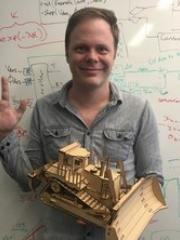
Dr. Tyson Phillips serves as Senior Lecturer and Director of Teaching and Learning at The University of Queensland's School of Mechanical and Mining Engineering within the Faculty of Engineering, Architecture and Information Technology. He is an active Affiliate of the Future Autonomous Systems and Technologies research group, focusing on translating robotics innovations into practical mining applications. His academic leadership includes curriculum development for engineering programs and direct industry engagement with major mining equipment manufacturers. He earned his Doctor of Philosophy (PhD) from The University of Queensland in 2016, with thesis research centered on LiDAR-based perception systems for autonomous excavators. His doctoral work established foundational methods for object pose verification in mining contexts. Phillips' research specializes in robotics perception for extreme mining environments, developing LiDAR-centric solutions for autonomous equipment operation amid dust, fog, and unstructured terrain. Key contributions include evidential reasoning frameworks for uncertainty management, real-time pose estimation algorithms, and sensor fusion techniques for excavators and bulldozers. His work bridges theoretical computer vision with industrial deployment, targeting operational safety and efficiency in mineral extraction. Publication analysis reveals consistent focus on mining robotics since 2012, with recent works (2021-2024) emphasizing minimal-sensor configurations, probabilistic terrain mapping, and vibration-assisted gripper technology. His 14 scholarly outputs demonstrate evolution from sensor evaluation (2012-2015) toward integrated autonomy systems (2018-2024), predominantly in Journal of Field Robotics and Sensors . He actively supervises graduate researchers as Principal Advisor for a PhD on multimodal perception mapping and Associate Advisor for two PhD projects involving spreader systems and physics-informed neural networks. Completed supervision includes a 2024 PhD on bulldozer terrain mapping and a 2021 Master's on shovel/hopper interaction strategies. Research funding spans 14 projects from 2012-2026, including current Australian Coal Association Research Program support (2025-2026) and major Caterpillar Inc. collaborations for ERS self-protection and articulated truck automation. Phillips operates within The University of Queensland's Future Autonomous Systems and Technologies group, which develops field-deployable autonomy solutions for mining partners. This team conducts real-world testing of perception systems using Caterpillar and FMG operational sites as validation environments.
Dr. Emilie Rademakers serves as an Assistant Professor in the Department of Economics at Utrecht University's School of Economics within the Faculty of Law, Economics and Governance. Her research critically examines labor market transformations driven by technological advancements, with particular focus on economic inequality and structural shifts in employment systems. Her expertise spans labour market dynamics, economic inequality, technological change, and online search competition. She investigates how automation and robotization reshape job polarization through task overlap mechanisms, analyzing both historical patterns and future trajectories of work. Her IOS - Future of Work research within Utrecht's Institutions for Open Societies initiative connects theoretical models with empirical evidence on technological displacement and skill redistribution. Analysis of her 2019-2024 publications reveals consistent exploration of automation's labor market impacts, emphasizing resilience mechanisms through task similarity and structural transformation rather than simple job elimination. These works demonstrate methodological diversity across plant closure studies, job polarization frameworks, and macroeconomic analyses of technological diffusion. Scientific Awards: LEG Visiting Fellowship (2021) Dr. Rademakers has secured competitive funding including an H2020 Grant for studying technology's impact on labor market skills, and has supervised graduate research as evidenced by her 'Supervised Work' profile entry. Her grant activities focus on technological transformation in labor markets with policy-relevant implications. She actively contributes to Utrecht University's Institutions for Open Societies (IOS) initiative as a core member of the Future of Work research theme, collaborating on interdisciplinary projects examining robotization's societal impacts and participating in the UUSE Multidisciplinary Economics network.
Dr. Yuhan Jiang is an Assistant Professor in the Department of Built Environment at North Carolina A&T State University's College of Science and Technology. He serves as the Founding Director of the HUD Center of Excellence for Innovation in Affordable Housing and Sustainable Communities (CIAHSC). Dr. Jiang leads a multidisciplinary research team focused on integrating robotics, artificial intelligence, and Building Information Modeling in construction operations and infrastructure management. Ph.D. in Civil Engineering from Marquette University M.M. in Construction Management from Guangzhou University Additional Construction Management degree from Guangzhou University Dr. Jiang's research primarily focuses on artificial intelligence applications in architecture, engineering, construction, and operations (AECO). His work integrates robotics and remote sensing for data collection, computer vision and machine learning for data processing, and BIM, GIS, and AR/VR for data visualization. His research enables more efficient construction operations, building inspection, and infrastructure management. Additionally, he has extensive experience in community redevelopment planning and complex systems simulation, including investigating urban village formation mechanisms. Analysis of Dr. Jiang's recent publications reveals a strong focus on applying drone technology, computer vision, and deep learning to construction and infrastructure challenges. His work spans multiple domains including façade modeling, pavement evaluation, sidewalk inspection, earthwork calculation, and 3D reconstruction. A consistent theme across his research is the development of automated systems that improve efficiency, accuracy, and safety in construction and infrastructure management through AI and robotics. N.C. A&T and CoST Junior Faculty Teaching Excellence Award 2024-25 N.C. A&T and CoST Rookie Researcher of the Year Award 2024 ASCE Journal of Architectural Engineering Best Paper Award 2022 ASCE CI & CRC Joint Conference Best Paper Award 2024 AAAS HBCU Making and Innovation Showcase 1st Place 2024 CoST SciTech Week Innovation Challenge awards (2023-2025) N.C. A&T Provost's Faculty Fellow (2023 & 2024) Dr. Jiang has successfully secured over $4.5 million in research funding as PI or Co-PI, including a $2.5 million HUD Center of Excellence grant. He has mentored students who won 1st and 3rd place in the 2023 & 2024 Sci-Tech Week Innovation Challenge competitions and 1st place at the 2024 AAAS HBCU Making and Innovation Showcase. His funded projects span AI-driven BIM education tools, smart farming with robotics, drone-based façade modeling, and digital twin applications for infrastructure management. As Founding Director of the HUD Center of Excellence for Innovation in Affordable Housing and Sustainable Communities (CIAHSC), Dr. Jiang leads a multidisciplinary team focused on innovative approaches to affordable housing and sustainable community development. His lab work integrates drone technology, computer vision, and AI to create practical solutions for real-world construction and infrastructure challenges.
Andrew I. Cooper is a Professor at the University of Liverpool, Director of the Materials Innovation Factory, and Honorary Professor at East China University of Science and Technology (ECUST). He pioneers research in advanced organic functional materials, including conjugated microporous polymers, porous organic cages, and porous liquids, and developed the first autonomous mobile robotic chemist. Fields of Interest: Materials chemistry, robotics, AI-driven synthesis, and computational design of functional materials. Scientific Impact: Over 200 SCI-indexed papers, 52,000+ citations, H-index 117. Key journals: Nature , Science , JACS , Angewandte Chemie . Awards: Royal Society of Chemistry Professorship, Outstanding AI Leader award, Fellow of the Royal Society and European Academy of Sciences. Leadership: Editor-in-Chief of Chemical Science , trained 47 Chinese postdoctoral fellows and PhD students, and leads international collaborations with Chinese universities. Research Trends: Articles focus on robotics, AI, computational materials design, photocatalysis, and dynamic porosity in molecular systems.
Mustapha C.E. Yagoub is a Full Professor at the School of Electrical Engineering and Computer Science, University of Ottawa, with over 500 publications in RF/microwave CAD, RFID systems, neural networks, and applied electromagnetics. He leads research in the ELEMENT Laboratory and RFM Research Group , focusing on wireless communication systems and nonlinear device modeling. PhD in Electronics (Institut National Polytechnique de Toulouse, 1994) Magister in Telecommunications (École Nationale Polytechnique d'Alger, 1987) Dipl.-Ing. in Electronics (École Nationale Polytechnique d'Alger, 1979) His research bridges Microwave Circuit Design with Artificial Intelligence , including applications in Energy Conservation and Telecommunication Systems . Key trends in his publications include hybrid modeling techniques combining Neural Networks with Computational Electromagnetics for optimizing Antenna Design and RF Components . He is a Senior Member of IEEE and licensed with the Professional Engineers of Ontario and Ordre des Ingénieurs du Québec . His lab teams focus on High-Tc Superconducting Devices and Directional Antenna Optimization for RFID networks.
Prof. Dr. Ralf Plattfaut is a Professor for Information Systems and Transformation Management at the University of Duisburg-Essen since 2023. He heads the Process Innovation & Automation Lab , focusing on digital transformation, business process management, and robotic process automation (RPA). Prior to this, he was Professor for Business Informatics at the South Westphalia University of Applied Sciences (2019–2023), and a management consultant at McKinsey & Company (2013–2019). Current Role: Professor (since 2023) Lab Leadership: Process Innovation & Automation Lab Consulting: Management consultant and keynote speaker Research Interests span digital transformation, IT governance, RPA adoption, and postcolonial perspectives in information systems. His work addresses organizational challenges in process automation, agile methodologies, and human-AI collaboration. Recent Publications (2024–2025) examine paradoxes in agile transformations, postcolonial IT governance in NGOs, AI adoption in healthcare, and behavioral barriers like status quo bias. These studies often employ computational grounded theory and cross-organizational case analyses. Scientific Recognition includes multiple Best Paper and Best Conference Paper nominations at ICIS, HICSS, and IFIP E-Government Conferences, as well as recognition by Wirtschaftswoche as a top German-speaking management researcher under 40.
Ard Nieuwenhuizen is a Researcher at Wageningen University & Research in the Agro Field Technology Innovations department. His expertise spans Agricultural Engineering , Robotics , and Machine Learning , focusing on AI-driven solutions for crop management and harvesting automation. Agro Field Technology Innovations, Wageningen University & Research Research Interests Robotics and intelligent systems for agricultural operations Digital twin technology and precision agriculture Computer vision for weed and crop detection Human-robot collaboration in farming Machine learning for agricultural automation Publication Trends : His recent work emphasizes agricultural robotics , digital twins , and AI-driven crop monitoring , with applications in apple/pear harvesting, soybean weed detection, and spray optimization. Articles highlight collaborations with European institutions and contributions to journals like Smart Agricultural Technology . Projects : He leads initiatives such as Smart Autonomy for Precision Agriculture (SMP25029) and Redesigning future food production systems through AI and robotics (KB-53-000-010), focusing on integrating robotics and data science into sustainable farming practices.
Luciano Cavalcante Siebert is an Assistant Professor at the Interactive Intelligence Group within the Intelligent Systems department of the EEMCS faculty at Delft University of Technology. His research focuses on Responsible Artificial Intelligence, developing hybrid methods that combine machine learning and symbolic approaches to ensure AI systems remain under meaningful human control within sociotechnical contexts. His educational background includes: B.Sc. in Mechatronics from Pontifical Catholic University of Paraná (PUCPR) M.Sc. and Ph.D. in Electrical Engineering from the Federal University of Paraná (UFPR), Brazil During his Ph.D., he was a guest researcher at Eindhoven University of Technology (TU/e), and prior to his current position, he served as a postdoc at TU Delft's AiTech initiative. Professor Siebert's research program is structured around four pillars: (1) eliciting and aligning with human values and norms, (2) incorporating ethical principles into AI, (3) enabling interactive human control and responsibility mechanisms, and (4) adapting to emergent societal norms. His interdisciplinary work bridges computer science, ethics, and social sciences, with applications in robotics, optimization, and automation. With over eight years of research experience, he develops practical frameworks for human-centered AI that prioritize societal benefit and accountability. Based at TU Delft's campus in Delft, Netherlands, Siebert actively contributes to the Interactive Intelligence Group's mission of advancing intelligent systems that empower humans and enhance societal well-being through responsible innovation.
Dr. Maciej Jarota is an Assistant Professor at the Department of Labor Law and Social Security within the Faculty of Law, Canon Law and Administration at the Catholic University of Lublin. His academic career focuses on collective labor law, occupational health and safety, and the intersection of technology with labor ethics. He teaches courses on work environment protection, labor law, and mediation practices. Research Areas: Collective Dispute Resolution, Occupational Health and Safety, AI in Workplace, Polish Diaspora Media Studies Key Contributions: Publications on social arbitration, mediation frameworks, and nanoethics in labor law Jarota's publications span topics from collective dispute mechanisms to ethical implications of AI in occupational health. His awards include recognition from the District Chamber of Legal Advisers in Lublin for contributions to legal self-government. Active in scientific organizations like the World Council for the Study of Polish Diaspora, he has pursued grants for research on European labor dispute resolution methods.