Mikael Johansson is a Professor at Kungliga Tekniska Högskolan (KTH), specializing in Control Technology . He teaches and coordinates courses such as Distributed Optimization (FEL3311) and various advanced-level degree projects in computer science, electrical engineering, and systems engineering. His research spans Control Systems , Machine Learning , and Optimization , with a focus on asynchronous algorithms, federated learning, and applications in energy systems and construction. His work includes 15 recent publications on topics like neural networks, distributed optimization, and battery technology. Notable areas of contribution are in asynchronous learning, federated learning with privacy constraints, and quasi-Newton methods for optimization. His research bridges theoretical advancements with practical applications in urban design, healthcare, and autonomous systems.
Huy T Tran is an Assistant Professor in the Department of Aerospace Engineering at the University of Illinois at Urbana-Champaign's College of Engineering, with additional appointments at the Applied Research Institute. His research focuses on the intersection of robotics, artificial intelligence, and multi-agent systems, with applications spanning autonomous navigation, critical infrastructure resilience, and intelligent transportation. Dr. Tran earned his Ph.D. in Aerospace Engineering from Georgia Institute of Technology in 2015, following advanced degrees from Georgia Tech and University of Wisconsin-Madison. His academic journey includes research assistant professor positions before achieving his current assistant professor role in 2021. He previously worked as a Senior Multi-Disciplinary Systems Engineer at The MITRE Corporation and served as a Visiting Scholar at the Air Force Institute of Technology. His research interests encompass Autonomy, Reinforcement Learning, Artificial Intelligence, Machine Learning, Robotics, Multiagent Systems, Intelligent Transportation Systems, and Critical Infrastructure Resilience. As director of the Lab for Intelligent Robots and Agents (LIRA), he leads cutting-edge research in autonomous systems that interact with humans and other robots. His work has evolved from foundational resilience modeling in aerospace systems toward increasingly sophisticated AI applications in multi-robot coordination and explainable decision-making. Dr. Tran's publication record demonstrates a clear trajectory toward explainable AI and human-AI collaboration, with recent work focusing on generating explanations for reinforcement learning policies, coordination in ad hoc teams, and neuro-symbolic approaches to robot policy interpretation. His research bridges theoretical advances with practical applications in air traffic control, field robotics, and critical infrastructure management. Best Paper Award: Theoretical (2016 Complex Adaptive Systems Conference) Selected for oral presentation at IROS 2023 Workshop 27% full paper acceptance rate at AAMAS 2022 44% acceptance rate at ICRA 2020 As an educator, Dr. Tran teaches core aerospace courses including Computational Systems Engineering, Aerospace Numerical Methods, and Reinforcement Learning. He has secured significant research funding from NASA's Transformational Tools and Technologies program, ARL A2I2 program, ONR Science of AI program, and DARPA. His current projects span ad hoc teaming in multi-robot systems, collective autonomous air mobility, hierarchical reinforcement learning, and interpretable AI agents.
Natalia Díaz Rodríguez is an Assistant Professor of Artificial Intelligence at ENSTA ParisTech, where she works in the Computer Science and Systems Engineering department within the Autonomous Systems and Robotics Lab (U2IS). She is also affiliated with the INRIA Flowers team, focusing on developmental robotics. Her research spans deep learning, reinforcement learning, continual learning, and symbolic AI, with applications in explainable AI, computer vision, and robotics for social good. Her academic background includes a double PhD in Artificial Intelligence from Abo Akademi University and the University of Granada, alongside MSc degrees in Soft Computing and Computer Engineering from the University of Granada. She contributes to interdisciplinary AI, particularly in robotics, ethics, and healthcare applications, and co-organizes workshops on continual learning. Double PhD in Artificial Intelligence (2015), Abo Akademi University and University of Granada Doctoral diploma on Innovation and Entrepreneurship (2017), EIT Digital MSc in Soft Computing and Intelligent Systems (2012), University of Granada MSc in Computer Engineering (2010), University of Granada Her recent publications focus on trustworthy AI, including bias identification, counterfactual explanations, and continual learning strategies, reflecting her commitment to ethical and robust AI systems. She also explores AI applications in structural engineering, climate visualization, and financial risk assessment, emphasizing practical deployment and interpretability.
Olli Seppänen serves as Associate Professor in Civil Engineering at Aalto University's School of Engineering, specializing in operations management for construction productivity improvement. He coordinates the Vision 2030 consortium—comprising 13 Finnish construction and design firms—to develop industrialized building methods for 2030, while leading multiple Business Finland-funded research initiatives focused on digital construction workflows and real-time monitoring. His research centers on lean construction principles, location-based management systems, and digital transformation through IoT, AI, and robotic vision. Key focus areas include prefabrication optimization, construction logistics, and shifting work off-site to industrialize processes. He aims to solve industry-wide productivity challenges by creating real-time situational awareness and implementing takt production systems for workflow stability. Recent publications (2024-2025) reveal strong emphasis on digital twin frameworks, semantic modeling for quality assurance, and AI applications in risk management. His work bridges theoretical lean construction concepts with practical implementations, particularly in real-time resource tracking, waste reduction in MEP work, and cross-sector learning from high-performing teams. Seppänen has received significant recognition including: School of Engineering doctoral dissertation award (2024) Best paper at IEEE Wireless Sensors Conference (2019) Nordic Conference best paper award for PhD research (2019) DSc dissertation award (2010) As principal investigator, he manages: Vision 2030 consortium projects (2-3 annually; PI for two current projects) iCONS: Real-time resource flow monitoring via indoor positioning RECAP: Deep learning analysis of progress/quality from images/point clouds DiCtion: Integrated data systems for real-time stakeholder situation pictures He actively contributes to the "Performance in Building Design and Construction" research group and leverages the Vision 2030 consortium as a collaborative platform for industry transformation, driving adoption of digitalized, industrialized construction methods through academic-industry partnerships.
Professor Lyudmila Mihaylova is a distinguished academic at the University of Sheffield's School of Electrical and Electronic Engineering, where she holds the position of Professor of Signal Processing and Control. She has established herself as a leading researcher in the fields of signal processing, Bayesian methods, and autonomous systems, with significant contributions to particle filtering techniques for intelligent transportation systems. Her work bridges theoretical developments with practical applications across multiple domains including transportation, healthcare, and industrial automation. Prof. Mihaylova's research interests center on nonlinear filtering, sequential Monte Carlo methods, statistical signal processing, and sensor data fusion. Her work spans both theoretical advancements and practical implementations, with particular focus on high-dimensional problems including vehicular traffic flow estimation, image processing, and localization in sensor networks. She has extensive experience with various image modalities such as optical, thermal, LIDAR, SAR, and hyperspectral imaging. Her group actively develops novel methods for autonomous intelligent systems focusing on sensing, tracking, decision making, and machine learning applications. Analysis of Prof. Mihaylova's recent publications reveals a strong trend toward uncertainty quantification in machine learning models, particularly for safety-critical applications. Her work increasingly integrates traditional signal processing techniques with modern deep learning approaches, with applications spanning sewer inspection robotics, medical diagnostics (particularly sleep apnea detection), UAV swarm tracking, industrial manufacturing, and autonomous vehicle systems. A significant portion of her recent research focuses on developing robust methods that can handle incomplete or outlier-corrupted data while providing reliable uncertainty estimates. Among her notable professional achievements: President of the International Society of Information Fusion (ISIF) Senior member of the IEEE Signal Processing Society Associate Editor for IEEE Transactions on Aerospace and Electronic Systems Associate Editor for Elsevier Signal Processing Journal Prof. Mihaylova has successfully mentored numerous PhD students and postdoctoral researchers, many of whom have gone on to prominent academic and industry positions. Her research has been supported by major funding bodies including EPSRC, EU, MOD/DSTL, and industry partners, with recent projects including 'Protecting Environments with UAV Swarms' (InnovateUK, 2022-2024), 'ShiRAS: Towards Safe and Reliable Autonomy in Sensor Driven Systems' (NSF-EPSRC, 2019-2023), and 'Confident safety integration for Cobots' (Lloyd's Register Foundation, 2019-2020). Her research group follows a collaborative approach with the philosophy 'We share knowledge, we grow.' Prof. Mihaylova maintains active research collaborations with institutions worldwide and has held previous academic positions at Lancaster University (2006-2013) and University of Bristol (2004-2006), along with research visiting positions at the University of Ghent, Katholic University of Leuven, and the Bulgarian Academy of Sciences.
John F. Reid is a prominent Research Professor at the University of Illinois at Urbana-Champaign in the College of Engineering , with dual appointments in Computer Science and Agricultural and Biological Engineering . He serves as Executive Director of the Center for Digital Agriculture . With over 35 years of experience in academic and industrial R&D, his career spans faculty roles at UIUC (1986-2000), leadership at Deere & Company (2000-2020), and Vice President positions at Brunswick Corporation (2020-2022). Education : Ph.D. in Agricultural Engineering (Texas A&M, 1987), M.S. and B.S. in Agricultural Engineering (Virginia Tech, 1982 & 1980) Dr. Reid's research focuses on agricultural automation , machine vision , and innovation management . He has pioneered agricultural robotics , precision technologies , and embodied AI applications in food, construction, and marine systems. His work has resulted in over 30 patents in automated guidance , sensor systems , and agricultural informatics . His scientific contributions center on stereo vision navigation , 3D field mapping , and adaptive control systems for mobile equipment. These innovations underpin modern precision agriculture and agricultural robotics frameworks. Major awards include: NAE Election (2019) ASABE Fellow (2004) University Scholar (1995) Academy of Engineering Excellence (2020) He holds leadership roles in international organizations including the CIGR Working Group on Circular Bioeconomy Systems (Chair 2024-present) and Fraunhofer USA (2013-2022).
Dr. Arnold Japutra is an Associate Professor of Marketing at Southampton Business School, University of Southampton. His research focuses on brand management, consumer behaviour, relationship marketing, and the adoption of emerging technologies such as AI, AR/VR, and robotics. Recognized among the Top 2% of Global Scientists, he has published in leading journals including the Journal of Business Research, European Journal of Marketing, International Marketing Review, Journal of International Management, Journal of Travel Research and Tourism Management. Dr. Japutra has held academic roles at the University of Western Australia and Universitas Indonesia, and has extensive experience in teaching, corporate training, and consulting for global organizations. His research interests include: Consumer-brand relationships Consumer negative behaviours Dark-side of brands Human-Robot interactions Adoption of new technologies (e.g., AI, AR, VR) Brand management (e.g., brand attachment, brand loyalty, brand equity) Technology adoption and consumer behaviour (e.g., impulsive and compulsive buying) Dr. Japutra's research sits at the intersection of branding, consumer psychology, and emerging technologies. His work examines how consumer–brand relationship factors drive both positive behaviors and negative ones such as impulsive buying, compulsive consumption, and trash-talking. He investigates how psychological traits shape consumer decision-making and has recently been exploring human-technology interactions with a focus on AI, robotics, AR, and VR. His publication pattern shows a clear evolution from traditional brand management topics toward increasingly technology-focused research, particularly examining the psychological impacts of AI and digital interfaces on consumer behavior. Dr. Japutra has received numerous prestigious awards, including: Stanford 2% Global Scientist Citation Rankings (2023, 2024) Business School Mid-Career Research Award, University of Western Australia (2023) Best Researcher Award, Faculty of Economics and Business, Universitas Indonesia (2023, 2022) Best paper at Journal of Hospitality and Tourism Management (2019) Best Researcher Award and Top Publication Award, Tarumanagara University (2016) Dr. Japutra is actively accepting PhD students and has extensive experience mentoring graduate researchers. His research has been supported by various grants though specific funding sources aren't detailed in the provided materials. He has also delivered corporate training and consulting services for numerous global organizations, bridging academic research with practical business applications.
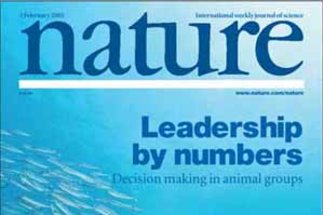
Prof. Iain D. Couzin is Director of the Max Planck Institute of Animal Behavior and holds a Professorship in Biodiversity and Collective Behavior at the University of Konstanz. He co-leads the German Research Foundation (DFG) Excellence Cluster “Centre for the Advanced Study of Collective Behaviour” and previously served as a full Professor in Princeton University’s Department of Ecology and Evolutionary Biology. His research focuses on uncovering the principles of collective behavior across biological scales, from neural networks to animal swarms and human societies. Research interests span experimental and theoretical approaches, leveraging cutting-edge technologies like AI-driven behavioral analysis and virtual reality for animals. These methods enable studies on coordination mechanisms in systems such as fish schools, locust swarms, and primate groups, with applications to robotics and social sciences. Key awards include the Leibniz Prize (Germany’s highest research honor), Royal Society Fellowship, and multiple citations as a Highly Cited Researcher. His leadership roles include directing interdisciplinary teams at the Max Planck Institute and the Konstanz Excellence Cluster, fostering collaborations across physics, computer science, and biology. Awards: Royal Society Fellowship (2025), Leibniz Prize (2022), Fyssen Prize (2024), Lagrange Prize (2019) Labs/Teams: Collective Behavior Lab (Max Planck Institute), Centre for the Advanced Study of Collective Behaviour (DFG Cluster)
Felipe Thomaz is an Associate Professor of Marketing at Saïd Business School, University of Oxford, and Deputy Director of the Oxford Future of Marketing Initiative. He holds a PhD in Marketing from the University of Pittsburgh and previously taught at the University of South Carolina. His research focuses on marketing strategy, AI ethics, illicit markets, and ESG integration, with notable contributions to frameworks like Ad Net Zero for net-zero advertising emissions. He collaborates with UN agencies, NGOs, and tech companies to address global sustainability goals and wildlife trafficking networks. Education: PhD in Marketing (University of Pittsburgh), MSc in Marketing & Finance (University of Pittsburgh), BSc in Animal Sciences (University of Florida). Research interests include digital marketing channels, brand performance via social networks, AI-driven marketing strategies, and conservation science linked to wildlife trade. His work bridges academia and industry, resulting in spinouts and IP transfers from Saïd Business School. Key projects include: Ad Net Zero: Global standard for reducing advertising emissions UN collaboration on wildlife trafficking through dark web analysis UNESCO partnerships on eliminating stereotypes in advertising His interdisciplinary approach spans marketing, mathematics, and conservation science, with publications in top journals like Journal of Marketing and Conservation Science and Practice .
René Vidal is the Rachleff & Penn Integrates Knowledge (PIK) University Professor at the University of Pennsylvania and Full Professor at Johns Hopkins University, with appointments spanning multiple departments including Electrical and Systems Engineering, Radiology, Computer and Information Science, and Statistics and Data Science. He serves as Director of the Center for Innovation in Data Engineering and Science (IDEAS) at UPenn and directs the NSF-Simons Collaboration on the Mathematical Foundations of Deep Learning. Education: PhD in Electrical Engineering and Computer Sciences from UC Berkeley (2003) Former Positions: Assistant and Associate Professor at Johns Hopkins University (2004–2015) Current Affiliations: Amazon Scholar, Affiliated Chief Scientist at NORCE Dr. Vidal’s research spans the mathematics of deep learning , sparse/low-rank representations , and trustworthy AI , with applications in computer vision and biomedical data science. His work has been recognized with prestigious honors including the IEEE Edward J. McCluskey Technical Achievement Award and Sloan Fellowship. Scientific awards include: 2021: IEEE Edward J. McCluskey Technical Achievement Award 2017: Jean D’Alembert Fellowship 2012: J.K. Aggarwal Prize 2009: ONR Young Investigator and Sloan Fellowship His lab has advised numerous PhD and MSc students, including Kyle Poe, Steven Kan, and alumni like Chong You (now at UC Berkeley) and Colin Lea (Oculus Research). He leads teams in optimization theory, adversarial robustness, and biomedical image analysis.
Ken Wong is an Associate Professor in the Department of Computing Science at the University of Alberta's Faculty of Science. He also serves as Associate Chair within the same department. Holding a PhD in Computer Science from the University of Victoria (1999), his research focuses on software engineering challenges such as reverse engineering, program understanding, and software visualization. He emphasizes improving software evolution through tools like architecture recovery and root cause analysis, with applications in web/mobile platforms and diverse system understanding. Teaching highlights include developing Massive Open Online Courses (MOOCs) via Coursera, including the 'Software Product Management Specialization' and courses on Agile practices, client needs analysis, and software metrics. His recent publications (2023–2025) span AI-driven healthcare innovations (e.g., medical imaging, photoacoustic tomography) and advanced computer vision techniques (e.g., diffusion models, video inpainting). Notable collaborations include EVAREST studies on heart failure management and lung transplantation outcomes. His work bridges software engineering theory and practical applications in healthcare technology, with contributions to federated learning frameworks (e.g., FedLPPA) and AI-augmented clinical decision support systems. Research also extends to autonomous driving (DriveGPT4-V2) and 3D human avatar generation (DreamAvatar), showcasing interdisciplinary impact.
Andreas Malikopoulos is a Professor at Cornell University's School of Civil & Environmental Engineering and Director of the Information and Decision Science Lab (IDS Lab). Previously, he held roles as the Terri Connor Kelly and John Kelly Career Development Professor at the University of Delaware (UD) and founding Director of UD's Sociotechnical Systems Center. He also served as the Alvin M. Weinberg Fellow at Oak Ridge National Laboratory (ORNL), Deputy Director of ORNL's Urban Dynamics Institute, and Senior Researcher at General Motors R&D. His research focuses on cyber-physical systems (CPS), stochastic control, and learning-driven approaches for optimizing energy efficiency and sustainable mobility in smart cities and transportation systems. Education: PhD (Mechanical Engineering, University of Michigan, 2008), M.S. (Mechanical Engineering, University of Michigan, 2004), Diploma (National Technical University of Athens, 2000). Research Interests: Analysis and control of CPS, stochastic scheduling, game theory, and mechanism design applied to emerging mobility systems (e.g., autonomous vehicles, electric vehicles). He emphasizes integrating learning and control for socially optimal solutions in transportation networks. Awards: IEEE ITS Young Researcher Award (2019), UD’s Outstanding Junior Faculty Award (2020), Alvin M. Weinberg Fellowship (2010), and recognition as a NAS Kavli Frontiers of Science Scholar (2012). He is an IEEE Senior Member, ASME Fellow, and serves on editorial boards of leading journals. Teaching: Focuses on optimal decision-making, control theory, and emerging mobility systems. Courses include stochastic optimal control and game theory at Cornell. Labs: Leads the IDS Lab, which develops scalable frameworks for CPS and smart city applications. Current projects include coordinated routing for mixed-traffic systems and AI-driven recommendations for autonomous vehicles.
Sydney Levine is a former Postdoctoral Associate at the MIT Media Lab, where she collaborated with Iyad Rahwan (MIT Media Lab), Joshua Tenenbaum (MIT Brain and Cognitive Sciences), and Fiery Cushman (Harvard). Her research focuses on moral learning in adults, children, and machines, integrating cognitive development, moral psychology, and AI ethics. She holds a PhD in Psychology from Rutgers University, advised by Alan Leslie, with a dissertation on moral rules and representations. Her work bridges philosophy, cognitive science, and artificial intelligence, addressing questions like how moral norms are acquired and applied across contexts. She has collaborated with scholars from Georgetown Law, Rutgers Philosophy, and the University of Pittsburgh’s History and Philosophy of Science department. Key contributions include studies on AI-generated art attribution (iScience, 2020) and public perceptions of blame in automated systems (Nature Human Behavior, 2019). Her research emphasizes translating human moral reasoning into computational frameworks for ethical AI.
Mahsa Ghasemi is an Assistant Professor in the Elmore Family School of Electrical and Computer Engineering at Purdue University, leading the AKADEMI Group. Her research focuses on theoretical advancements in trustworthy sequential decision-making for autonomous systems, emphasizing human-aware collaboration and adaptation to dynamic environments. She is affiliated with the Institute for Control, Optimization and Networks (ICON). Education: PhD in Electrical and Computer Engineering from The University of Texas at Austin (2021), MSE in Mechanical Engineering (2017), and BSc in Mechanical Engineering from Sharif University of Technology (2014). Research Interests: Reinforcement learning, control theory, active perception, multi-agent systems, robotics, and online learning. Applications span disaster response, healthcare, and autonomous systems design. Key methodological directions include compositional learning, human-AI collaboration, and adaptive decision-making under uncertainty. Teaching: Courses include Reinforcement Learning Theory (ECE 59500), Introduction to Reinforcement Learning (ECE 49595), and Python for Data Science (ECE 20875). Awards: Finalist for Student Best Paper Award at the 2018 American Control Conference (ACC). Students: Current advisees include Maheed H. Ahmed, Jayanth Bhargav, and Somtochukwu Oguchienti. Past members include Lai Wei and Juan Sebastian Mateo Ruiz Bulla. Service: Editorial roles at ICRA, ICCPS, and IFAC workshops. Reviewer for top conferences (NeurIPS, ICML) and journals (Automatica, IEEE TAC). Labs/Teams: Leads the AKADEMI Group, focusing on algorithmic and theoretical research in autonomous decision-making systems.
Ioana Jivet is a Research Professor and Head of the Learning Analytics Research Professorship at FernUniversität in Hagen, Germany. She leads interdisciplinary research focused on leveraging learning analytics to enhance educational practices through data-driven insights. Her role in the CATALPA Graduate School involves collaboration across disciplines to translate research into actionable educational strategies. Educational Background: PhD in Learning Analytics from Open Universiteit Nederland (2021) Postdoc at TU Delft (2019–2021) Research roles at DIPF (2021–2024) and studiumdigitale (2021–2024) Research Interests: Self-regulated learning mechanisms and feedback systems Cultural and ethical dimensions of learning analytics adoption Design of human-centered learning dashboards Privacy concerns in educational technology AI-driven educational decision support systems Her work emphasizes practical applications, such as developing adaptive feedback tools and investigating cross-cultural usage patterns of learning analytics platforms. Professional Contributions: Secretary of the Society for Learning Analytics Research (SoLAR) General Chair for the 2024 European Conference on Technology Enhanced Learning (EC-TEL) Co-editor of Springer volumes on technology-enhanced learning Lab & Teams: Active in the Learning Analytics research group at FernUniversität, focusing on translational research between academic theory and classroom practice.