Prof. Dr. Michael Gröschel is a Professor of Business Informatics at the Faculty of Computer Science, Mannheim University of Technology. His expertise spans Business Process Management (BPMN, Process Mining), Digital Transformation, and innovative Business Models. He teaches courses on BPM, project management, and e-business, often collaborating with industry clients through student projects. As a consultant, he specializes in BPMN training and IT-driven business strategy. His work emphasizes practical applications of IT tools like RPA and low-code platforms. Recent publications focus on RPA bot performance evaluation, AI in automotive trade, and business model-IT alignment. Prof. Gröschel’s research bridges academic insights with real-world challenges, particularly in leveraging technology for business innovation. He has authored books and articles on business intelligence tools, mobile business strategies, and digital customer care. His consulting services include executive coaching for academic career advancement and enterprise IT management best practices. Office: Building A, Room 007c | Phone: +49 621 292-6764 | Professional website available for further engagement opportunities.
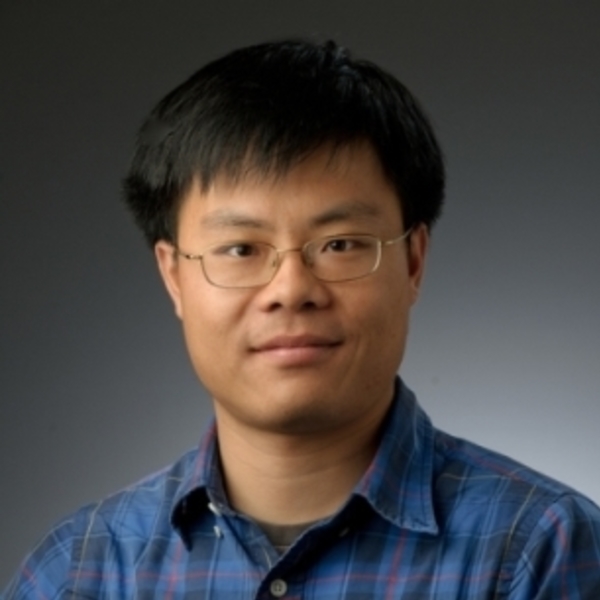
Jun Li is a Full Professor in the Department of Applied and Computational Mathematics and Statistics at the University of Notre Dame's College of Science. He specializes in developing statistical and computational methods for big data, with a focus on interdisciplinary applications in bioinformatics, machine learning, and data mining. His career includes tenure as an Assistant Professor (2012–2017) and promotion to Associate Professor (2017) before becoming Full Professor (2020). Dr. Li holds a Ph.D. in Statistics from Stanford University (2012), supervised by Robert Tibshirani, and earlier degrees from Tsinghua University: a B.E. in Automation (2004) and an M.S. in Pattern Recognition and Intelligent Systems (2007). Research Interests : Dr. Li’s work centers on advancing computational frameworks for handling large-scale datasets, integrating statistical rigor with algorithmic innovation. Recent themes include AI-driven code improvement, ethical LLM applications in HCI, and GUI automation. His methodologies emphasize human-AI collaboration and transparency in algorithmic systems. Publications : His 2025 work explores LLM vulnerabilities in GUI agents, AI-assisted education tools like GLITTER, and ethical challenges in HCI research. Earlier studies (2024–2023) address topics such as natural language database queries, privacy-preserving app promotion analysis, and multimodal task learning. Lab/Teams : Affiliated with Notre Dame’s computational statistics research groups, focusing on interdisciplinary projects bridging statistics, computer science, and applied mathematics. His work often involves collaborations with industry and academic partners to translate theoretical advancements into practical applications.
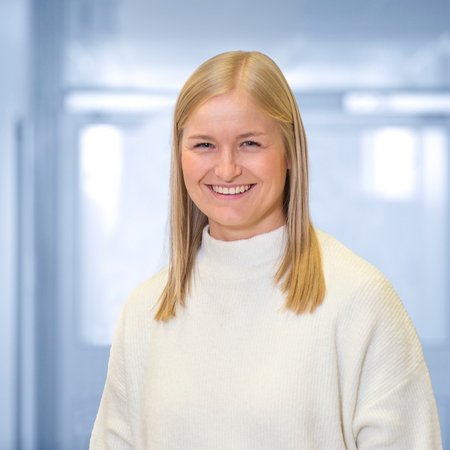
Dr. Carolin Vollenberg serves as a Post-Doctoral Researcher at the Chair of Information Systems & Transformation Management within the Faculty of Computer Science at the University of Duisburg-Essen (UDE). Her academic journey includes a PhD from the University of Muenster (2021-2025), an M.Sc. in Technical Consulting and Management from Hochschule Hamm-Lippstadt (2018-2020), and a B.Eng. in Biomedical Technology from the same institution (2014-2018). Prior to her current position, she worked as a Research Assistant at South Westphalia University of Applied Sciences and gained industry experience at Zapp Systems GmbH. PhD in Business Informatics (2021-2025), University of Muenster M.Sc. Technical Consulting and Management (2018-2020), Hochschule Hamm-Lippstadt B.Eng. Biomedical Technology (2014-2018), Hochschule Hamm-Lippstadt Research Focus: Vollenberg specializes in the governance of lightweight IT systems, digital transformation in public and healthcare sectors, and process mining applications. Her work bridges technical implementation with organizational behavior, particularly examining resistance to automation in sensitive domains like healthcare. She investigates how organizations navigate unintended consequences of technology adoption, with emphasis on RPA (Robotic Process Automation), omnichannel transformation, and data-driven process optimization. Her research methodology combines ethnographic field studies with quantitative process analysis. Publication Trends: Analysis of her 16 publications (2020-2025) reveals strong focus on healthcare IT (45% of works), public sector digitalization (30%), and foundational process management (25%). Recent output shows increasing emphasis on ethical dimensions of process mining and sustainability applications. Her collaborative work spans multiple European institutions with consistent publication in top IS conferences (ICIS, ECIS, HICSS). Best Paper nomination at HICSS-55 (2022) Associate Editor for General Track at Internationale Tagung Wirtschaftsinformatik (WI) 2025 Professional Engagement: Vollenberg actively contributes to academic discourse through editorial roles and peer review. Her industry collaborations with healthcare providers and public sector entities demonstrate applied research impact. Current projects examine virtual nursing transformations and crisis-responsive RPA implementations, reflecting her commitment to solving real-world operational challenges through information systems innovation.
Alberto Rodrigues da Silva is a Professor at the Institute Superior Técnico , part of the University of Lisbon . He teaches Fundamentals of Information Systems , primarily during the 1st Semester of the 2025/2026 academic year. His scientific interests revolve around Information Systems , Model-Driven Engineering (MDE), Requirements Engineering (RE), Social Computing , and Software Engineering . He has extensively contributed to the development of rigorous requirements specification languages like RSL (Requirements Specification Language) and its extensions (e.g., RSL-IL4Privacy for privacy policies). His collaborative work spans automated acceptance testing, GDPR compliance, and domain-specific languages (DSLs) for applications such as mobile development , digital twins , and legal contexts (e.g., LegalLanguage ). His research trends focus on integrating model-driven engineering with privacy policies , IoT applications , and low-code platforms . He has also explored tools like Maestro for data classification and usability testing, and RiverCure for flood simulation. Email: alberto.silva@tecnico.ulisboa.pt .
Teemu Malmi is a Professor in the Department of Accounting at the School of Business, Aalto University, Finland. He has been an influential figure in management accounting research, particularly in management control systems and performance measurement. His academic qualifications include a Doctoral degree (1997), Licentiate degree (1994), and Master's degree (1990), all in Business and Economics from the Helsinki School of Economics. His research interests span management control, performance measurement, digitalization in finance, public sector accounting, and organizational behavior. His work often integrates empirical analysis with case studies, including a notable investigation into Nokia’s management control challenges. He has published extensively in top-tier journals and contributed to major handbooks in accounting and information systems. The recent trend in his publications (2020–2025) reflects a growing emphasis on digital transformation, blockchain, data analytics, and the evolving role of finance functions. His research increasingly bridges traditional accounting with technology and public policy, especially in healthcare financing and sustainability. Scientific Awards: “Thirst for knowledge” (“Tiedon Jano”) award by JOKO Executive Education Oy (2001) Teemu Malmi has supervised at least five theses and led externally funded research projects, including the SOTE/Kaks project (2015–2016) on social and healthcare services. He has been actively involved in academic service, such as serving on editorial boards, hosting international scholars, presenting keynote lectures, and participating in funding organization committees. His media appearances demonstrate his engagement in public discourse on welfare policy and regional financing in Finland. There is no indication of part-time status, retirement, or former staff designation; he remains an active academic.
Chun Ouyang is a Professor at Queensland University of Technology (QUT) in the School of Computer Science within the Faculty of Science. With an extensive publication record spanning over two decades from 2002 to 2025, Professor Ouyang has established themselves as a leading researcher in Business Process Management, Process Mining, and Explainable AI. Their work bridges theoretical foundations with practical applications across healthcare, finance, and industrial sectors. Professor Ouyang's research interests primarily focus on Business Process Management systems, Process Mining techniques, Explainable Artificial Intelligence, and Healthcare Process Analysis. Their work has evolved from foundational BPMN/BPEL translation research in the early 2000s to sophisticated process mining approaches in the 2010s, and most recently to cutting-edge Explainable AI applications in clinical and business contexts. They have developed novel methodologies for process querying, predictive process analytics, and XAI evaluation frameworks that have significantly advanced the field. Their research consistently emphasizes practical applicability while maintaining strong theoretical foundations, with publications in top-tier journals and conferences including IEEE Transactions, Springer journals, and major BPM conferences. Analysis of Professor Ouyang's recent publications (2023-2025) reveals a strategic research trajectory that integrates traditional process mining with modern AI techniques, particularly focusing on explainability and trustworthiness. Their work demonstrates a consistent pattern of addressing real-world challenges through rigorous methodological development, with increasing emphasis on healthcare applications, clinical decision support systems, and the ethical implications of AI deployment. The publications show strong interdisciplinary collaboration patterns, particularly with medical researchers and industry partners. Professor Ouyang has mentored numerous PhD students and early-career researchers who have gone on to establish themselves in the BPM and AI communities. Their research group at QUT has secured multiple competitive grants supporting innovative work in process analytics and AI. They maintain active collaborations with leading researchers globally, including Catarina Pinto Moreira, Arthur ter Hofstede, and Moe Wynn. Professor Ouyang leads the Process Analytics Research Group at QUT, which focuses on developing advanced techniques for business process analysis, prediction, and optimization. The group maintains strong industry connections with healthcare providers, financial institutions, and government agencies, ensuring their research has practical impact. Current projects include developing trustworthy AI systems for clinical decision support, cross-organizational process analysis frameworks, and next-generation process mining techniques for complex, distributed systems.
Rehan Syed is a Professor at Queensland University of Technology's School of Information Systems within the Faculty of Science and Engineering. His research focuses on Business Process Management (BPM), Robotic Process Automation (RPA), and Process Mining, with significant contributions to understanding digital transformation challenges in public and healthcare sectors. He has authored/co-authored over 35 peer-reviewed publications in top journals and conferences like BPM, HICSS, and ECIS. Key areas of expertise include leadership in IT initiatives, healthcare data quality, and low-code adoption strategies. Recent work emphasizes RPA's impact on organizational processes and knowledge retention. His research bridges academic theory with practical implementation, often collaborating with institutions like UN agencies and healthcare organizations. Publications span case studies in developing countries, systematic reviews, and curriculum development frameworks for BPM education. His work is cited across disciplines, reflecting its relevance to both academia and industry.
Yan Chen is an Assistant Professor at the Virginia Tech College of Engineering , where he leads the PRIME Lab (Programming with Intelligent Machines & Environments) . His work focuses on creating interactive Human-AI systems to enhance real-time data analysis and programming education, particularly addressing barriers in collaborative learning environments. University of Toronto (Postdoctoral Fellow) University of Michigan (Ph.D., Information Science) University of Colorado, Boulder (BS/MS in Applied Math & Electrical & Computer Engineering) His research bridges Human-Computer Interaction (HCI) and Computer Science Education , with a focus on real-time data analysis , AI-driven programming assistance , and scalable learning tools . He employs LLMs and human-centered design to simplify complex computational processes, enabling data workers to detect critical patterns efficiently. Recent publications highlight trends in generative AI for education , proactive AI programming support , and collaborative analytics . Key themes include real-time classroom insights , intergenerational smartphone learning , and automated feedback systems . Scientific recognition includes: 🏆 Best Paper at L@S 2024 🏅 Best Paper Honorable Mention at CHI 2023 🏅 Best Paper Honorable Mention at UIST 2022 🏆 Best Short Paper at VL/HCC 2020 He mentors a team of PhD and MS students in projects spanning AI-assisted education, web automation, and collaborative coding tools, with active recruitment for future research directions.
Maria Leonilde Rocha Varela is an Associate Professor with Habilitation at the School of Engineering, University of Minho, Portugal, where she also serves as a Senior Researcher at the Algoritmi Research Centre. She has been an integrated member of the Algoritmi Research Centre since 2012 and works in the Department of Production and Systems. Dr. Varela earned her degree in Production Engineering from the University of Minho in 1994, completed a Master's in Computer Integrated Production at DPS-UMinho in 1999, and received her Ph.D. in Production and Systems from the University of Minho in 2007. Her primary research focuses on Manufacturing Management, particularly Production Planning, Control and Optimization, and Collaborative Paradigms, Networks and Decision Making Models. She maintains extensive international collaborations with institutions worldwide including the National Institute of Industrial Engineering, VSB-Technick Univerzita Ostrava, University of Belgrade, and others. Her research spans Web Applications and Services for supporting Engineering and Production Management, with increasing emphasis on Artificial Intelligence, Robotic Process Automation, and Industry 4.0/5.0 applications. She has made significant contributions to scheduling algorithms, optimization techniques, and decision support systems for manufacturing environments. Analysis of her recent publications reveals a strong trend toward integrating Artificial Intelligence with traditional manufacturing processes, particularly in Robotic Process Automation applications. Her research increasingly focuses on sustainable manufacturing practices, with numerous publications addressing energy efficiency, environmental sustainability, and resource optimization. There is a clear emphasis on multi-objective optimization approaches to solve complex manufacturing problems, particularly in distributed job shop scheduling. Her work demonstrates an evolution from traditional production planning methods to more advanced AI-driven approaches for Industry 4.0 and 5.0 environments. Dr. Varela has held significant academic leadership roles, currently serving as the director of the master's course in Engineering and Quality Management at DPS-UMinho. She previously coordinated the industrial management and systems subgroup from 2012 to 2021 and was part of the steering committee for the master's course in systems engineering between 2016 and 2019. She has successfully supervised more than 70 MSc projects, with over 15 currently ongoing, focusing on Production and Systems Engineering. Her supervision encompasses collaborative management models, traditional decision approaches, and web-based platforms incorporating AI techniques. She coordinates research projects including 2 concluded Ph.D. projects and 6 ongoing ones. She collaborates as a research member in several R&D projects with national and international industrial enterprises and institutions, and in international Erasmus projects. Dr. Varela is an active participant in the academic community, serving on editorial boards of several international journals and as a member of organizing and scientific committees for numerous international conferences. She is a member of several prestigious research networks including the Euro Working Group of Decision Support Systems (EWG-DSS), Institute of Electrical and Electronics Engineers (IEEE), Industrial Engineering Network, and the Institute of Industrial and Systems Engineers (IISE).
Dr. Sander Leemans is a Professor at RWTH Aachen University leading the Business Process Management Foundations and Engineering research group. His work focuses on advancing process mining theory and practice with emphasis on stochastic modeling and conformance verification. Leemans' research centers on process mining, business process management, and stochastic process modeling. He investigates conformance checking techniques for probabilistic models, process discovery algorithms, and the integration of exogenous data into process analysis. His work bridges theoretical foundations with practical applications in healthcare, robotic process automation, and inter-organizational systems. Recent publications reveal a concentrated research trajectory in stochastic conformance checking, where Leemans develops methods for matching observed traces to stochastic process models using alignment techniques, entropy metrics, and partial-order reasoning. He also pioneers object-centric process mining frameworks and explores silent transitions in labeled Petri nets, significantly enhancing the precision and applicability of process mining in real-world scenarios. The Business Process Management Foundations and Engineering group under Leemans' leadership drives innovation in process mining through rigorous theoretical development and open-source tooling, maintaining RWTH Aachen's position at the forefront of business process intelligence research.
Prof. Dr. Ralf Plattfaut is a Professor for Information Systems and Transformation Management at the University of Duisburg-Essen since 2023. He heads the Process Innovation & Automation Lab , focusing on digital transformation, business process management, and robotic process automation (RPA). Prior to this, he was Professor for Business Informatics at the South Westphalia University of Applied Sciences (2019–2023), and a management consultant at McKinsey & Company (2013–2019). Current Role: Professor (since 2023) Lab Leadership: Process Innovation & Automation Lab Consulting: Management consultant and keynote speaker Research Interests span digital transformation, IT governance, RPA adoption, and postcolonial perspectives in information systems. His work addresses organizational challenges in process automation, agile methodologies, and human-AI collaboration. Recent Publications (2024–2025) examine paradoxes in agile transformations, postcolonial IT governance in NGOs, AI adoption in healthcare, and behavioral barriers like status quo bias. These studies often employ computational grounded theory and cross-organizational case analyses. Scientific Recognition includes multiple Best Paper and Best Conference Paper nominations at ICIS, HICSS, and IFIP E-Government Conferences, as well as recognition by Wirtschaftswoche as a top German-speaking management researcher under 40.
Maria-Luciana Blaha is an Assistant Professor in Business Management and Intelligent Automation at Heriot-Watt University, affiliated with the School of Social Sciences and Edinburgh Business School. She leads the Intelligent Automation Systems (IAS) Lab and coordinates the Graduate Apprenticeships in Business Management Year 1 program. With a PhD from the University of Aberdeen and extensive professional experience across sectors, her research focuses on AI, RPA, chatbots, and their impact on organizational behavior. She was awarded the 2023 Early Career Researcher of the Year by the School of Social Sciences. Education : PhD in Business Management, University of Aberdeen (Elphinstone Scholarship, British Federation of Women Graduates Bursary) Research Interests : Blaha investigates Intelligent Automation systems, posthumanism, organizational behavior, and ethical AI adoption. Her work bridges science/technology studies, business management, and computing science. Current projects include automation in Ghana/UK manufacturing, ethical AI frameworks for healthcare, and generative AI in HR. Grants & Projects (2025-): TransiT: Decarbonisation via Digital Twinning (EPSRC) Lighthouse Project: SME Manufacturing Audit (Innovate UK) Local Authority AI Readiness Review (Interface Scotland) 2024 Projects : Thermo Fisher/National Robotarium AKTP (Innovate UK) Extend Robotics Feasibility Study (Interface Scotland) Media & Outreach : Blaha contributes to Scottish AI Alliance initiatives, speaks globally on AI/automation, and engages in public lectures like the 'Age of AI' series. Her media features include Financial Times and pandemic-era fact-checking insights. Labs & Teams : Leads the IAS Lab, collaborates with National Robotarium, and oversees AKT projects with industry partners.
Dr. Eng. Katarzyna Jasińska is affiliated with the Department of Management and Entrepreneurship at Wrocław University of Economics. Her work focuses on Industry 4.0, ICT sector dynamics, project management, and digital transformation. She has conducted extensive research on topics such as robotic process automation (RPA), AI implementation, and organizational adaptation to technological changes. Her research interests span across: Industry 4.0 adoption and its implications for businesses Digital transformation challenges in service and manufacturing sectors Project management methodologies in ICT enterprises RPA and AI integration in organizational processes Key contributions include case studies analyzing Polish companies' adaptation to Industry 4.0 post-pandemic challenges, cybersecurity frameworks, and innovative project management approaches. Her work emphasizes bridging the gap between technological innovation and practical implementation in real-world business contexts.
Mondher Feki is an Associate Professor of Management at Université Paris-Saclay, focusing on IS/IT management and digital transformation. His research explores blockchain applications in supply chains, robotic process automation (RPA), robo-advisors, and generative AI. He teaches Management Information Systems and Data Management courses. Currently serving as a reviewer for journals like Business & Information Systems Engineering and conferences like HICSS and ECIS. Active member of the Association Information & Management (AIM). Key research areas include digital transformation strategies, blockchain's operational impact, AI-driven financial advisory systems, and RPA implementation in insurance sectors. His work emphasizes technology adoption challenges and strategic alignment in business contexts. Recent publications analyze blockchain use in French retail logistics, RPA benefits for Allianz France, and IS quality's strategic role in firm performance. Conference contributions address robo-advisors in crowdfunding and pandemic-driven higher education innovation. Maintains active academic service roles in peer review and conference organization.
Hajo A. Reijers is a Professor at the University of Utrecht, Netherlands, with a former affiliation at Vrije Universiteit Amsterdam. His research focuses on Business Process Management (BPM), Process Mining, and Robotic Process Automation (RPA), emphasizing practical applications in healthcare, organizational processes, and human-computer interaction. He contributes to developing tools like SWORD for detecting workarounds and DEUCE for auditing electronic health records. His work spans algorithm development for process discovery, predictive analytics, and optimization techniques. Key areas include analyzing event logs, modeling workplace behavior, and enhancing process transparency. Reijers collaborates extensively with industry partners, addressing challenges in process automation, employee acceptance of AI, and ethical monitoring. His contributions to conferences like BPM, CAiSE, and ICIS highlight interdisciplinary approaches, combining computer science with organizational studies. Notable projects include frameworks for task mining, reinforcement learning in care processes, and pattern recognition in government transparency assessments. Research initiatives often involve cross-disciplinary teams, exploring topics like workplace well-being through process mining, decision-making support systems, and overcoming barriers to BPM adoption. His work bridges theoretical advancements with real-world impact, influencing both academic discourse and practical business solutions.