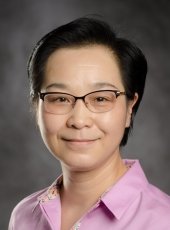
Nazish Tahir is a Lecturer at the School of Computing, University of Georgia. Her research focuses on collaborative control in multi-robot systems, edge computing applications, and intelligent algorithms for resource optimization in networked robotics. Education: PhD in Computer Science, University of Georgia Master of Science in Information Technology, Nadirshaw Edulji Dinshaw University of Engineering & Technology, Pakistan (2016) Her work bridges robotics, artificial intelligence, and distributed computing, with a particular emphasis on: Collaborative multi-robot task execution Edge computing frameworks for robotics Dynamic resource allocation and scheduling Human-AI supervisory control systems Recent publications highlight trends in simulation twins, communication-aware edge selection, and utility-driven task offloading. She has received awards such as the UGA Spark Award and NSF Student Travel Grant. Scientific Awards: UGA Spark Award NSF Student Travel Grant Outstanding Graduate Student Award (2023) Contact: nazish.tahir@uga.edu | Office: Boyd Research and Education Center, 200 D. W. Brooks Dr., Athens, GA
Lung-Pan Cheng is an Associate Professor in the Department of Computer Science and Information Engineering at National Taiwan University. His research focuses on creating innovative interfaces that bridge physical and virtual realities, with particular emphasis on virtual reality systems, haptic feedback mechanisms, and perceptual illusions. Dr. Cheng's work explores how to create more immersive and believable virtual experiences through: Novel haptic feedback systems that simulate physical interactions in virtual environments Real walking techniques that overcome physical space limitations in VR Perceptual illusions that enhance the sense of presence in virtual worlds Human actuation approaches that leverage people as part of the VR infrastructure Optical illusions applied to digital media and gaming experiences Advanced fabrication techniques for interactive physical objects His recent publications (2022-2024) demonstrate a continued trajectory of innovation in VR interaction techniques, with work focusing on directional force feedback, infinite vertical navigation, and the integration of optical illusions into virtual experiences. Dr. Cheng's research consistently combines hardware innovation with perceptual psychology to create compelling user experiences that push the boundaries of virtual environments. Dr. Cheng has received notable recognition for his work: Best Paper Award at CHI 2022 for 'AirRacket: Perceptual Design of Ungrounded, Directional Force Feedback to Improve Virtual Racket Sports Experiences' SIC People's Choice Award at UIST 2022 for 'Garnish into Thin Air' His research has been featured in media outlets including MIT News and New Scientist, indicating broader impact beyond academic circles. Dr. Cheng maintains active collaborations with researchers worldwide, as evidenced by his international co-authorship patterns across multiple disciplines including computer science, psychology, and engineering.
Alexander Mertens serves as Associate Professor and Department Head of the Institute of Industrial Engineering within RWTH Aachen University's Faculty of Mechanical Engineering, concurrently leading the Ergonomics and Human-Machine Systems group. His dual doctorates (Dr.-Ing. and Dr. rer. medic.) underpin his interdisciplinary approach bridging engineering and medical sciences. His research centers on human-centered technology integration , with core interests in Ergonomics , Human-Machine Systems , and Virtual Reality applications . He investigates physiological workload monitoring, human-robot collaboration, and inclusive workplace design—particularly through AR/VR systems and sensor-based interventions for manufacturing and healthcare contexts. His work emphasizes translating biomechanical and psychosocial insights into practical solutions for worker safety and performance. Analysis of his 2024-2025 publications reveals three dominant trends: human-robot collaboration in manufacturing (evident in VR-based robot assistance studies), physiological workload assessment (using pupillometry and multimodal signals), and workplace health innovation (addressing interruptions, musculoskeletal disorders, and aging populations). These threads consistently prioritize human factors in digital transformation across automotive, healthcare, and industrial domains. Prof. Mertens directs the Ergonomics and Human-Machine Systems laboratory, driving initiatives like AixistenzRobotik (Aachen Competence Center for Interactive Robotics in Health/Care) and workHEALTH (holistic prevention of work-related musculoskeletal disorders). His team develops adaptive interfaces for inclusive factories and evaluates digital escape signage through age-differentiated studies, maintaining strong industry partnerships for real-world implementation.
John P. Swensen is an Associate Professor at Washington State University's School of Mechanical and Materials Engineering, directing the M3 Robotics Lab. His research focuses on medical robotics, particularly steerable needle technology and tunably compliant mechanisms using smart materials. Ph.D., Johns Hopkins University (2012) M.S., Mechanical Engineering, Johns Hopkins University (2009) B.S., Electrical Engineering, Utah State University (2003) Research areas include: Medical robotics and surgical devices Compliant and steerable mechanisms Smart material applications in robotics Kinematic modeling and control algorithms Recent work demonstrates waterjet-assisted needle technology achieving unprecedented curvature control and reduced tissue damage in soft tissue phantoms. Collaborations with graduate students Mahdieh Babaiasl, Fan Yang, Emily Allen, and Lee Taylor have resulted in multiple IEEE publications and conference presentations at IROS, BioRob, and ISMR.
Vahé Nerguizian is a full Professor in the Department of Electrical Engineering at École de technologie supérieure (ÉTS) in Montreal, Canada, where he has established himself as a leading researcher in microelectronics, MEMS, and biomedical applications. Affiliated with the LACIME (Communications and Microelectronic Integration Laboratory), his work bridges engineering disciplines with healthcare innovations, particularly in cancer research and point-of-care diagnostics. His educational background includes a B.Ing. from Polytechnique Montréal, an M.Eng. from McGill University, and a Ph.D. from Concordia University. This strong foundation in electrical engineering has enabled his interdisciplinary research across multiple domains. Nerguizian's research focuses on the intersection of microfluidics, MEMS, and biomedical applications, with particular emphasis on cancer cell detection, liposome production for drug delivery, and microelectronic integration for healthcare solutions. His laboratory develops microfluidic devices for synthesizing nanoparticles and liposomes, with applications in cancer therapeutics and diagnostics. The work combines microwave engineering, bio-MEMS, and microelectronics to create innovative diagnostic tools and therapeutic delivery systems. His recent publications (2021-2025) demonstrate a clear trajectory toward increasingly sophisticated biomedical applications of microfluidic and MEMS technologies, with growing emphasis on cancer research, extracellular vesicle analysis, and therapeutic delivery systems. The research has evolved from fundamental MEMS and microwave engineering toward highly translational biomedical applications. 2015: Excellence in Teaching Award from the Board of Directors Nerguizian has supervised over 25 graduate students across doctoral and master's programs, with current projects focusing on microfluidic systems for nanoparticle synthesis and sensor systems for biomolecule detection. His research has received significant funding through collaborations with medical researchers, particularly with Julia Burnier's team at McGill University. The LACIME laboratory, where he conducts his research, provides state-of-the-art facilities for micro- and nanofabrication, integrated circuit design, and photonic microsystems. As part of the LACIME research group, Nerguizian contributes to a dynamic environment focused on both fundamental and applied research with strong industry connections. The laboratory's work spans from materials science to communication protocols, with particular strength in developing innovative solutions for healthcare applications.
Bo Chen is a Professor in the Department of Mechanical Engineering – Engineering Mechanics and the Department of Electrical & Computer Engineering at Michigan Technological University. She directs the Intelligent Mechatronics and Embedded Systems (IMES) Laboratory, focusing on advanced controls, optimization, and artificial intelligence for connected and autonomous vehicles, electric vehicle–smart grid integration, and smart mobility. PhD in Mechanical and Aeronautical Engineering from the University of California, Davis (2005) Visiting Professor at Argonne National Laboratory (2014–2015, 2016) Sabbatical at Oak Ridge National Laboratory (2022–2023) Dr. Chen's research spans Mechatronics , Embedded Systems , Hybrid Electric Vehicles , and Cyber-Physical Systems . Her work includes vehicle-to-grid integration , battery control systems , and cybersecurity for automotive systems . Recent publications highlight advancements in predictive control algorithms for hybrid vehicles, consensus-based frequency regulation , and plausibly deniable encryption systems for mobile devices. Funded by the National Science Foundation, Department of Energy, and industry partners, her research has secured over $10 million in grants. ASME Fellow Best Paper Award (2008 IEEE/ASME MESA Conference) Top Cited Article Award (Journal of Computers & Graphics) Best Survey Paper Award (IEEE Transactions on ITS) Co-recipient of four Best Student Paper Awards Dr. Chen has held leadership roles as Chair of the Technical Committee on Mechatronics and Embedded Systems (IEEE ITS Society), Chair of the ASME Design Engineering Division's Technical Committee, and Associate Editor for IEEE Transactions on Intelligent Transportation Systems (2012–2019). She organized multiple international conferences and co-edited special issues on intelligent transportation systems.
Raghavendra Ramachandra is a Professor at the Department of Information Security and Communication Technology (IIK) , within the Faculty of Information Technology and Electrical Engineering at the Norwegian University of Science and Technology (NTNU) in Gjøvik. His research focuses on biometric systems, particularly in face, fingerprint, and finger vein recognition, with emphasis on presentation attack detection, morphing attack detection, and deep learning applications. Current research projects include: SALT (2022-2026) : Developing privacy-preserving facial biometric authentication systems. OffPAD (2022-2025) : Creating cryptographic tools and presentation attack detection for fingerprint biometrics. SWAN (2015-2020) : Developing biometric countermeasures against presentation attacks. His recent publications demonstrate technical expertise in: Face morphing attack detection using vision transformers and point cloud networks Image fusion techniques for multispectral biometrics GAN-based synthetic data generation for security evaluation Explainable AI approaches for biometric verification Professor Ramachandra also supervises PhD and Master’s students, and has extensive experience in leading national and EU research initiatives.
Jean-Marie Bonnin is a Researcher at IMT Atlantique , affiliated with the Network Systems, Cyber Security and Digital Law department. His work spans autonomous industrial vehicles, vehicular networks, and cooperative systems, with a focus on energy management, task allocation, and safety protocols. IMT Atlantique, Rennes Campus Research in Industry 4.0 and Smart Mobility Research Interests : Autonomous Industrial Vehicle Fleets Fuzzy Logic for Multi-Agent Systems V2X Communication Protocols Scientific Contributions include: Modeling energy consumption in extreme-edge IoT nodes Decentralized task allocation for autonomous vehicles Collision avoidance in industrial environments
Marcus N. Hultmark is a Professor in the Department of Mechanical and Aerospace Engineering at Princeton University within the School of Engineering and Applied Science. His research focuses on fluid mechanics, turbulence, and its applications in wind energy, drag reduction, and boundary layer dynamics. He received his Ph.D. from Princeton University in 2011 and M.Sc. from Chalmers University in Sweden. Ph.D., Princeton University, 2011 M.Sc., Chalmers University, 2007 Dr. Hultmark's work spans advanced manufacturing, living and soft materials, and turbulent flow analysis. His FAST lab investigates drag reduction, boundary layers, and wind turbine aerodynamics using high-pressure wind tunnels (e.g., SuperTank) and novel sensors (e.g., NSTAP, LaDrone). Key themes include turbulence scaling, heat transfer enhancement, and UAV-based flow sensing. His recent publications highlight advancements in wind turbine wake modeling, spanwise wall forcing for heat transfer optimization, and sensor design for turbulent flows. Over 15 articles from 2024-2025 reflect expertise in Reynolds-number effects, Lagrangian particle tracking, and flow control mechanisms. 2016 Air Force Young Investigator Award 2017 NSF CAREER Award 2017 Nobuhide Kasagi Award Dr. Hultmark has mentored students in diverse projects, including Nate Simon (2025 thesis), Lena Sabidussi (2025 thesis), and Ian Gunady (2024 thesis). His lab members have secured prestigious fellowships like the New Jersey Wind Institute Fellowship and NSF GRFP . Current initiatives involve the LaDrone project for atmospheric boundary layer studies and collaborations in high-Reynolds-number fluid dynamics with institutions like the University of Melbourne.
Joel George is an Associate Professor in the Department of Aerospace Engineering at the Indian Institute of Technology Madras (IIT Madras), where he conducts advanced research in aerospace vehicle dynamics, navigation, and control systems. His work spans theoretical studies, experimental validation, and practical applications in both atmospheric flight and space exploration domains. Dr. George's research focuses on several critical areas of aerospace engineering: Hybrid rocket propulsion systems and thrust control mechanisms Spacecraft landing technologies, including soft landing applications Orbital mechanics, particularly periodic orbits around asteroids Unmanned aerial vehicle (UAV) applications for microgravity experiments Propeller modeling for small UAV systems Geophysical flows research as part of IIT Madras's Centre of Excellence His recent publications demonstrate a strong trend toward innovative propulsion systems with practical space applications. Dr. George's work on hybrid rocket motors shows particular promise for safer vertical takeoff and landing systems both in space exploration and terrestrial aviation. His research on UAV-based microgravity platforms offers cost-effective alternatives to traditional space-based microgravity research methods. As a dedicated mentor, Dr. George supervises several PhD students including Anandu Bhadran (hybrid rocket motors), Rishi (asteroid orbital dynamics), and Siddhardha (UAV microgravity platforms). His collaborative work extends to partnerships with Prof. Ramakrishna and other researchers at IIT Madras. Within the Geophysical Flows Lab, a Centre of Excellence at IIT Madras, Dr. George contributes his expertise in UAV design, automation, and environmental monitoring. The lab employs a unified approach combining field measurements, climate modeling, and laboratory studies to advance understanding of air-sea interactions in the northern Indian Ocean, with applications to weather prediction and climate science.
Luis Miguel Bergasa is a Full Professor at the Department of Electronics, University of Alcalá (UAH), with a career spanning over 25 years. He leads the RobeSafe Lab (since 2010) and serves as Director of Digital Transformation at UAH (since 2022). His academic roles include heading the Department of Electronics (2004–2010) and coordinating multiple educational programs. He teaches Perception Systems (Master in Industrial Engineering) Intelligent Control Systems (Computer Science) Computer Vision (Computer Science) His research focuses on Perception Systems for Intelligent Vehicles , emphasizing driver behavior analysis, scene understanding, and sensor fusion via deep learning. He has authored over 300 papers and holds 9 patents. Notable recognitions include being ranked #81 in Computer Science (Spain) by Research.com (2025) and receiving 30+ awards in Robotics/Automotive fields. Recent publications highlight advancements in Transformer-based driver action recognition (2025) Infrastructure-vehicle cooperative frameworks (2025) 3D semantic segmentation for autonomous perception (2024) Simulation-to-reality gap bridging (2024) Scientific Leadership Senior Editor, IEEE Transactions on ITS (2025) International Program Committee roles in 15+ conferences (2024–2025) Co-founder of Vision Safety Technologies Ltd (2009–2016) He supervises 9 active PhD students and has advised 14 former PhD candidates. His group collaborates with institutions in Germany, USA, China, and Spain, including KIT, UC Berkeley, and Northwestern Polytechnic University.
Lihi Zelnik-Manor is a Professor at the Faculty of Electrical and Computer Engineering at the Technion - Israel Institute of Technology . Her research focuses on digitizing the sense of touch, integrating Haptics , Robotics , and Computer Vision to create digital representations of physical properties and develop haptic feedback devices for virtual interactions. Executive Vice President for Innovation and Industry Relations (2023-2026) Vice Dean for Graduate Studies (2022-2023) General Chair: CVPR’21, ECCV’22 Her work spans Neural Architecture Search (NAS) , 3D Reconstruction , and Image Processing , with recent publications on haptic devices (2025), diffusion models (2025), and soft-tissue simulation (2024). She actively contributes to academic leadership through roles in top conferences and community initiatives like the Schmidt Postdoctoral Award steering committee.
Venanzio Cichella serves as an Assistant Professor in the Department of Mechanical Engineering at the University of Iowa, specializing in advanced control systems and robotics research with applications spanning autonomous aerial vehicles, underwater systems, and soft robotics. His research portfolio prominently features Control Systems , Robotics , Autonomous Vehicles , Soft Robotics , Motion Planning , and Optimal Control . He develops theoretical frameworks for collision avoidance, coordinated path following, and motion planning, frequently employing Bernstein polynomials and Cosserat rod theory to address scalability challenges in multi-agent systems. His work on twisted and coiled artificial muscles (TCAMs) enables biomimetic soft robotic systems for underwater manipulation and rehabilitation applications. Analysis of his 2023-2025 publications reveals three dominant research threads: (1) Vision-based collision avoidance algorithms for intermittent measurement scenarios, (2) Physics-based modeling of TCAM-actuated soft robots using continuum mechanics, and (3) Bernstein polynomial-optimized trajectory generation for autonomous vehicles. These threads consistently bridge theoretical control innovations with practical implementations in UAV coordination, submarine maneuvering, and octopus-inspired robotics, demonstrating strong emphasis on environmental adaptation and computational efficiency.
Glenn Daehn is the Mars G. Fontana Professor of Metallurgical Engineering at The Ohio State University , where he has served as faculty since 1988. His work bridges materials science , advanced manufacturing , and STEM education , with leadership roles in initiatives like the Ohio Manufacturing Institute and NSF's HAMMER Center. Ph.D. & M.S., Materials Science & Engineering, Stanford University B.S., Materials Science & Engineering (departmental honors), Northwestern University Professor Daehn specializes in impulse-based manufacturing , focusing on plastic deformation , impact welding , and solid-state joining of dissimilar materials. His research drives innovations in lightweight materials, aerospace manufacturing, and biomedical device fabrication. His publications reveal a strong emphasis on dynamic material processing , robotic manufacturing , and sustainable materials systems . Recent work explores orbital cold welding and AI-enhanced surgical plate bending systems. ASM Marcus A. Grossman Young Author Award (1990) Army Research Office Young Investigator Award (1992) 2022 ASM Gold Medal Award Ranked top 2% of scientists worldwide (2021) Daehn has received multiple Lumley Research Awards and led groundbreaking projects including Metamorphic Manufacturing and Hybrid Autonomous Manufacturing . He maintains active collaborations with industry through initiatives like the Center for Design and Manufacturing Excellence .
Dr. Jed Pitera is an Adjunct Assistant Professor at the University of California, San Francisco (UCSF) Department of Pharmaceutical Chemistry and currently serves as the strategy co-lead for Accelerated Discovery in Sustainable Materials at IBM Research - Almaden. He has spent over two decades at IBM Research, applying computational tools and machine learning to materials R&D challenges. Caltech (Biology, Chemistry) University of California, San Francisco (Ph.D. in Biophysics) ETH Zurich (Postdoctoral work in computational physical chemistry) His research focuses on leveraging AI, machine learning, high-performance computing, and quantum computing for advanced materials discovery, particularly in sustainability applications such as carbon capture, energy storage, and PFAS replacement. He also works on improving the sustainability of existing materials in semiconductor manufacturing and directed self-assembly techniques. His work spans computational physical chemistry, polymer science, and AI-driven approaches to material design. His publications demonstrate a focus on AI-driven materials discovery (6 papers), directed self-assembly applications (4 papers), semiconductor manufacturing (4 papers), computational modeling (4 papers), and sustainability-focused research (5 papers). Notable trends include integrating robotics with AI for materials discovery and developing lifecycle assessment tools for sustainable design. Dr. Pitera leads the Accelerator Technologies project at IBM and contributes to the IBM Safer Materials Advisor initiative. He has collaborated with researchers across multiple institutions, including Dan Sanders, Brandi Ransom, Seiji Takeda, and Teodoro Laino.