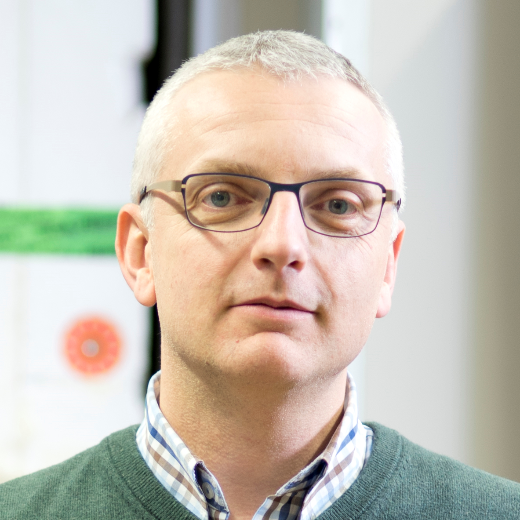
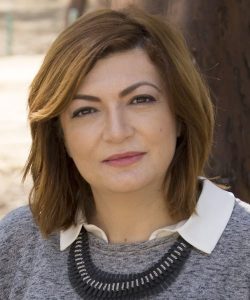
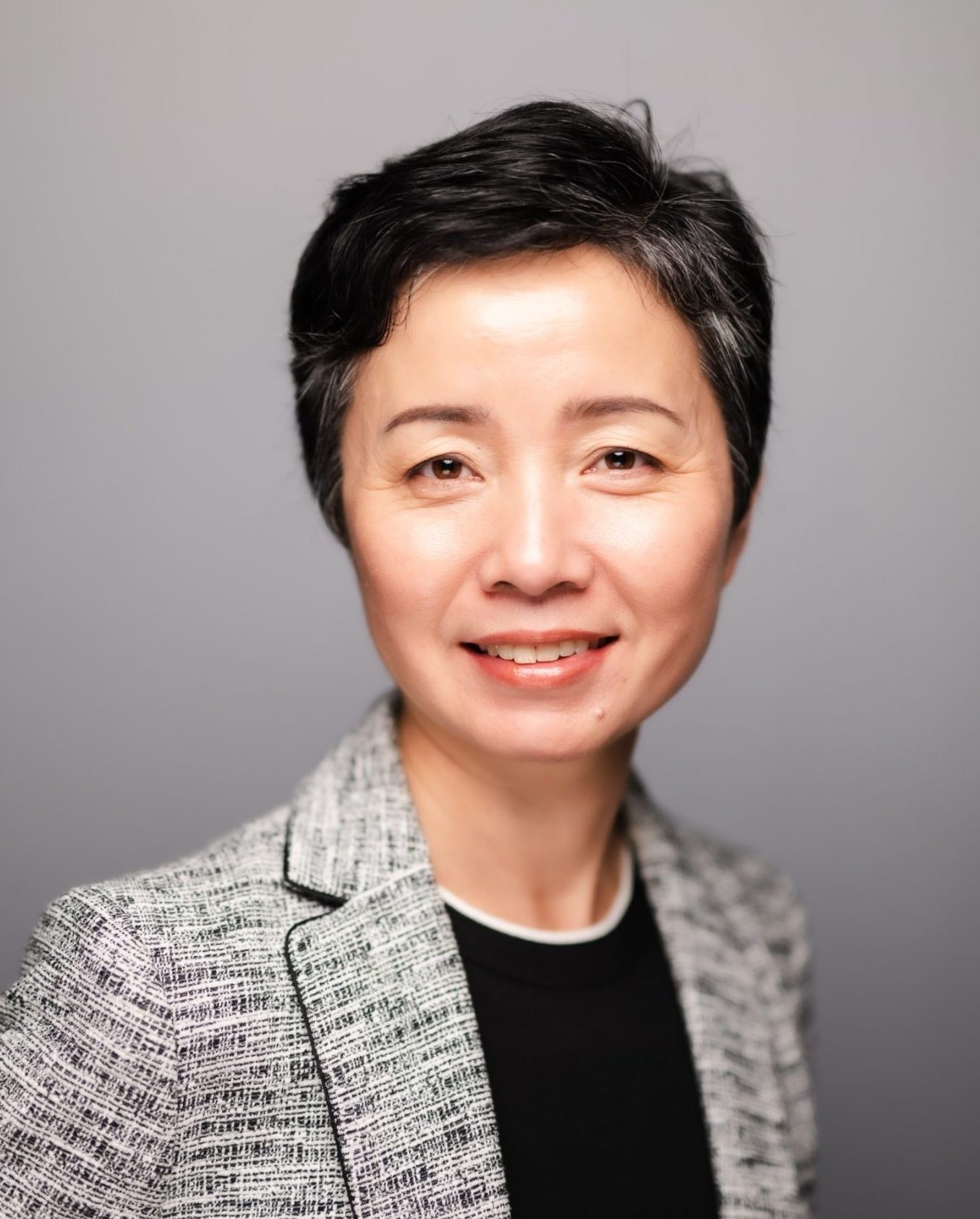
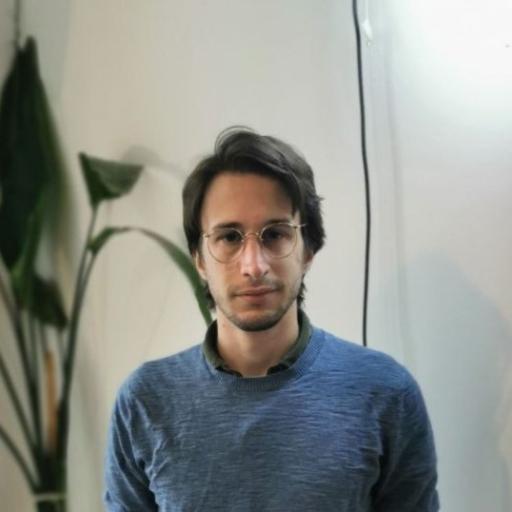
Lee Miller is a Professor of Physiology, Physical Medicine & Rehabilitation, and Biomedical Engineering at the University of Chicago. His research focuses on understanding how the brain encodes movement commands through neural signals, with applications in developing brain-machine interfaces (BMIs) to restore motor function in paralyzed patients. His work integrates neuroscience, engineering, and computational methods to study neural networks in motor systems. Key research areas include decoding cortical signals to predict muscle activity, developing closed-loop BMIs, and investigating functional connectivity in neural circuits. Miller collaborates extensively with the Biomedical Engineering Department and the Interdepartmental Neuroscience Program (NUIN). His lab combines experimental approaches (e.g., chronic neural recordings) with computational tools to study neural dynamics and develop therapeutic technologies. Recent work emphasizes restoring hand function via cortically controlled functional electrical stimulation (FES), translating neural signals into muscle activation. His publications span neural decoding algorithms, sensory feedback systems, and the neurobiology of motor control. Miller’s contributions bridge fundamental neuroscience and clinical neuroengineering, with potential impacts on spinal cord injury rehabilitation and prosthetic control systems.
Pierre Lermusiaux is the Nam Pyo Suh Professor of Mechanical Engineering and Associate Department Head for Operations Research at MIT. His research focuses on numerical ocean modeling, data assimilation, uncertainty quantification, and applications to ocean dynamics and engineering. He holds a B/M.Eng. from University of Liège, M.Sc. and Ph.D. from Harvard University. Recognized with awards like the MIT Doherty Chair and Spira Teaching Award, his work bridges computational science and marine systems. Education: B/M.Eng., University of Liège, 1992 M.Sc., Harvard University, 1993 Ph.D., Harvard University, 1997 Research Interests: Combines oceanographic modeling with advanced computational methods. Specializes in stochastic ocean prediction, autonomous systems optimization, and interdisciplinary applications of uncertainty quantification. His work enables real-time environmental forecasting and marine robotics navigation strategies. Publications: Focus on developing computational frameworks for probabilistic ocean forecasts, acoustic propagation modeling, and machine learning-based environmental prediction systems. Recent work emphasizes adaptive sampling strategies and energy-efficient path planning for underwater vehicles. Awards: Fulbright Foundation Fellowship (1993-96) Ruth and Joel Spira Award for Teaching (2010) MIT Doherty Chair in Ocean Utilization (2009-2011) Advising & Grants: Leads MIT’s MSEAS group and has secured funding from NSF, ONR, and international collaborations. Advises projects on ocean robotics, climate modeling, and underwater acoustics. Key contributions include the MIT Red Sea Modeling System and real-time forecasting platforms. Labs/Teams: Directs MIT’s multidisciplinary ocean modeling efforts, integrating mechanical engineering, computer science, and environmental science. Co-leads initiatives like the Ocean Predictions with Ensembles (OPEN) project and the METEOR autonomous observatory system.
Sezer Karaoglu is a Lecturer and part-time postdoctoral researcher at the Computer Vision Group, Informatics Institute, University of Amsterdam. He is also the CTO and Co-Founder of 3DUniversum, a technology spin-off of the University of Amsterdam that provides state-of-the-art 2D/3D computer vision solutions. Additionally, he has co-founded other startups including Scanm and 3DHealthScan. Dr. Karaoglu received his PhD from the Computer Vision Group, Informatics Institute, University of Amsterdam, with research funded by the COMMIT project. His educational background includes a double master's degree: an optics, image and vision master's degree from University Jean Monnet in France and a media technology master's degree from Gjovik University College in Norway. He completed his undergraduate studies with honors at Istanbul Technical University in Telecommunication Engineering. His research focuses on Artificial Intelligence and 3D Computer Vision, with specific interests in SLAM, re-localization, 3D reconstruction, 3D object detection and segmentation, synthetic media, generative AI, deep fake creation and detection, and VR/AR technologies. His work has significant applications in healthcare, particularly in using deepfake technology for therapy for victims of sexual violence-related PTSD and moral injury, as documented in a Frontiers in Psychiatry article. Analyzing his recent publications reveals a strong trend toward neural scene reconstruction, intrinsic image decomposition, and the application of diffusion models to computer vision problems. His research increasingly integrates 3D scene understanding with language models, as evidenced by his work on language-to-3D scene generation. The applications span from healthcare (deeptherapy.ai) to media authenticity (deepfake detection) and industrial applications. ICT.OPEN Poster Award (3rd Position), Oct'13 Pascal VOC'12 Classification challenge, 2nd Position, Sep'12 Pascal VOC'12 Detection challenge, 3rd Position, Sep'12 Best project award at Nokia and CIMET project competition Outstanding reviewer at CVPR'21 PROVADA Future Startup Battle winner Best Dutch AI startup by Valuer Dr. Karaoglu has supervised numerous PhD, Master's, and Bachelor's students, demonstrating his commitment to academic mentorship. His research has attracted significant media attention, with features on Dutch national TV programs including NPO, VPRO, RTL, and international outlets like BBC News. He has received research funding through the COMMIT project during his PhD studies and has successfully translated his research into commercial applications through his startups. His work on deepfake technology has been applied in innovative therapeutic contexts through DeepTherapy.ai, showing the real-world impact of his research. Dr. Karaoglu leads research efforts at the Computer Vision Group Amsterdam and through his company 3DUniversum, which has developed applications like weScan, DeepTherapy, and FairFake.ai. His team collaborates with various institutions including the Netherlands Film Academy for grief therapy applications using deepfake technology. The DeepTherapy project represents a particularly impactful application of his work, using deepfake technology to help victims of sexual violence confront perpetrators in therapeutic settings.
Yevgen Biletskiy is a Professor in the Department of Electrical and Computer Engineering at the University of New Brunswick (UNB), Fredericton. His academic roles include serving as Co-Director of the RuleML Initiative and Program Co-Chair of RuleML-2007. He holds a Ph.D. and is a licensed Professional Engineer (P.Eng.) in New Brunswick. His teaching spans graduate and undergraduate courses in software engineering, digital systems, and power electronics, including EE 6263 (Knowledge Representation for Software Engineering) and EE 6213 (Advanced Digital Systems). Research Interests: His work focuses on Knowledge-Based Systems , Artificial Intelligence , Semantic Web , Information Extraction , FPGA-based Design , and Renewable Energy . He has supervised over 40 graduate and undergraduate students, including 3 active PhD candidates, 1 completed PhD, 9 Masters, and 30+ research-based Bachelors. Publications: Over 100 peer-reviewed articles, including recent contributions on smart grid optimization, fault diagnosis in power electronics, and ontology-driven systems. Notable works include frameworks for semantic interoperability, rule-based learning systems, and FPGA applications. Professional Activities: Served as a reviewer for NSERC grants, IEEE journals (e.g., TKDE, TE), and conferences (CDC, WTAS). He has chaired tracks at international conferences and contributed to industry partnerships through consulting roles with firms like Netsphare Solutions and Vox Interactif. Labs/Teams: Active in UNB’s research initiatives involving power systems, semantic web technologies, and e-learning systems. His lab collaborates on projects like SEMESIS (semantic search systems) and advanced manufacturing post-processing techniques.
Alessandro Arsie is a Professor and Graduate Program Director in the Department of Mathematics and Statistics at the University of Toledo's College of Natural Sciences and Mathematics. His research focuses on mathematical physics, differential geometry, dynamical systems, and control theory, with notable contributions to F-manifolds, integrable systems, and geometric mechanics. He has authored over 50 publications in prestigious journals like Communications in Mathematical Physics and Nonlinearity . His work often bridges pure mathematics and applied fields, such as robotics and ecology. Key research interests include the geometry of Hamiltonian systems, bifurcation analysis in predator-prey models, and the interplay between algebraic structures (e.g., F-manifolds) and integrable hierarchies. He has explored topics like collision dynamics in celestial mechanics and optimization in multi-agent robotic networks. Dr. Arsie’s recent articles emphasize geometric approaches to differential equations and the application of advanced mathematical techniques to real-world systems. He collaborates with researchers in robotics and theoretical physics, reflecting his interdisciplinary expertise.
Mikel Bueno Viso is a Researcher at Cranfield University's School of Aerospace, Transport and Manufacturing, affiliated with the Centre for Robotics and Assembly. His work focuses on Robotics , Industrial Automation , and Flexible Manufacturing Systems . He holds a BSc and MSc in Industrial Engineering from the University of the Basque Country and a Robotics MSc from Cranfield University. His research centers on ROS 2-based frameworks , robot perception , and modular middleware for reconfigurable manufacturing. Key projects include developing software architectures for object detection , pose estimation , and seamless robot integration . Mikel is currently a part-time PhD candidate investigating Flexible and Reconfigurable Manufacturing . His 2024-2025 publications demonstrate applications in Reconfigurable robotic cells Modular software frameworks Industry 4.0 automation His work leverages technologies like YOLOv8 for object detection and OpenCV for pose estimation, aiming to transform traditional manufacturing through software abstraction and interoperability .
Cory Simon serves as Associate Professor in the Department of Chemical, Biological, and Environmental Engineering within Oregon State University's College of Engineering. His research integrates machine learning, optimization, and chemical engineering to advance materials discovery and environmental sensing systems. His academic foundation includes a Ph.D. in Chemical Engineering from the University of California, Berkeley and a B.S. in Chemical Engineering from The University of Akron. Simon's work centers on Bayesian methodologies for scientific challenges, featuring: Bayesian optimization for adaptive materials synthesis Statistical inversion of physical systems with uncertainty quantification Computational design of nanoporous sensor arrays Stochastic algorithms for robotic environmental monitoring Recent publications demonstrate accelerating focus on multi-fidelity optimization for molecular design and atmospheric water harvesting, bridging chemical engineering with computational science through data-driven approaches. Leading The Simon Ensemble research group, Simon champions a versatile 'buffet-style' research philosophy—drawing from mathematics, statistical mechanics, and machine learning to address interdisciplinary problems across chemistry, materials science, and environmental engineering.
Olukemi Akintewe is an Associate Professor of Instruction in the Department of Medical Engineering at the University of South Florida, affiliated with both the College of Engineering and Morsani College of Medicine. Her research focuses on enhancing retention of women and first-generation students in STEM through structured mentoring programs and inclusive curricula. She teaches foundational engineering courses including robotics design, biomaterials, and professional communication. Education: Ph.D., Chemical Engineering (2015), University of South Florida Postdoc in Biomedical Engineering (2015-2017), Boston University M.S., Materials Science & Engineering (2005), Ohio State University B.S., Chemical Engineering (2002), City College of New York Her work emphasizes equity in engineering education, particularly for underrepresented groups. Recent publications explore mentoring frameworks, online project-based learning, and cultural approaches to teamwork training. She has received over a dozen awards recognizing teaching excellence, mentoring, and contributions to STEM education equity. Grants & Awards: Alfred P. Sloan Foundation grants (2022, 2011-2015) Jerome Krivanek Distinguished Teaching Award (2023) Numerous university-level accolades for teaching and mentorship Her research initiatives include a three-tiered mentoring circle for female first-year engineering students and assessment tools to measure student progression. She actively contributes to professional societies like ASEE and SWE, advocating for inclusive STEM practices.
Qin Lin is an Assistant Professor in the Department of Engineering Technology at the University of Houston's Cullen College of Engineering. Their research focuses on autonomous systems, control theory, and safety-critical applications. Lin holds a Ph.D. in Computer Science from Delft University of Technology (2015-2019) and completed a postdoctoral fellowship at Carnegie Mellon University's Robotics Institute (2019-2021). Research interests include safe reinforcement learning, fault-tolerant control systems, and cybersecurity for industrial control systems. Lin has published extensively on topics like vehicle autonomy, exoskeleton safety, and disturbance rejection in robotics. Their work emphasizes practical applications of control theory in autonomous driving, robotics, and human-robot interaction. Recent publications highlight advancements in control barrier functions, latency-aware autonomous systems, and data-driven anomaly detection in ICS environments. Lin has been recognized for contributions to curriculum development in engineering technology and maintains active collaborations in automotive and robotics domains.
Dr. Tony White is an Adjunct Professor in the School of Computer Science at Carleton University. He holds a Ph.D. from Carleton (2000), an M.A. from Cambridge, and a B.A. in Theoretical Physics. His research focuses on complex adaptive systems, including influence measurement in social networks and swarm intelligence applications. He leads the Complex Adaptive Systems Group and has extensive industry experience, previously working at Nortel. Education: Bachelor of Theoretical Physics, Cambridge University (1981) Master of Physics, Cambridge University (1981) Master of Computer Science, Carleton University (1993) Ph.D. in Electrical Engineering, Carleton University (2000) Research Interests: Artificial Intelligence Swarm Intelligence Genetic Algorithms Neural Networks Recommender Systems Search Engines His work explores influence dynamics in social networks, adaptive information systems, and evolutionary computation. Recent publications address neural network topologies, distributed control strategies, and embedded systems administration. He has also contributed to trust models, referral networks, and traffic signal optimization. Dr. White’s research bridges theoretical computer science and practical applications in robotics, network management, and autonomous systems. Labs/Teams: Leads the Complex Adaptive Systems Group, focusing on interdisciplinary approaches to complex systems and swarm intelligence.
Andrea Gasparella is a Tenured Full Professor and Dean of the Faculty of Engineering at the Free University of Bozen-Bolzano, located at NOI Techpark in Bozen-Bolzano, Italy. His research focuses on building physics, energy systems, and inclusive design, with a particular emphasis on indoor environmental quality for neurodivergent individuals and sustainable urban development. He leads projects like the Flexibots initiative (biodegradable medical microrobots) and BeSENSHome (autonomy support for neurodivergent people). His work integrates advanced modeling (e.g., CFD, machine learning) with real-world applications in energy efficiency, climate adaptation, and human-centered design. Key research areas include thermal and acoustic comfort, renewable energy integration, and smart building technologies. He collaborates with industry partners like Galileo High School and regional institutions to advance automation and robotics. Notable contributions include studies on urban heat islands, energy retrofit strategies for historic buildings, and the impact of ventilation on contagion risks in educational settings. As Dean, he promotes innovation through interdisciplinary initiatives at NOI Techpark, including new engineering programs and infrastructure like the university canteen. His publications span over 50 peer-reviewed articles in journals and conferences like Building Simulation Applications (BSA), addressing topics ranging from solar irradiance prediction in mountain regions to the psychophysical needs of neurodivergent populations. He actively contributes to policy discussions on decarbonization and energy equity in Alpine contexts. Professional activities include organizing events such as the 'nextFSE' fire safety conference and engaging with local organizations like Rotary Clubs to foster community ties. His work bridges academic research with practical solutions for climate resilience, accessibility, and technological advancement.
Maria K. Michael is an Associate Professor at the Electrical and Computer Engineering Department (ECE), University of Cyprus, and a cofounding faculty member of the KIOS Center of Excellence. She leads the Center’s Education and Training activities and coordinates the MSc program in Intelligent Critical Infrastructure Systems, a collaboration between UCY, KIOS CoE, and Imperial College London. Her expertise spans dependability, security, and reliability in cyber-physical systems, embedded systems, and AI/ML optimization for edge intelligence. Education: BSc in Computer Science MSc in Computer Science Ph.D. in Engineering Sciences (Computer Engineering), Southern Illinois University, USA Research Focus: Hardware-enabled security, cyber-security in intelligent embedded systems, reliability of edge-based accelerators, and applications in smart grids, UAVs, robotics, and autonomous vehicles. Her work emphasizes safety-critical systems and resource-constrained environments. Grants & Team: Leads a 15-member research team (postdocs, PhD/MSc/BSc students). Funded by EU FP7, H2020, Horizon Europe, NSF, Intel Corp., and the Cyprus Research and Innovation Foundation. No scientific awards listed explicitly in provided text. Labs & Initiatives: Director of Education/Training at KIOS CoE; core contributor to the MSc program in Intelligent Critical Infrastructure Systems.
Cuihong Li serves as Professor and Department Head of Operations and Information Management at the University of Connecticut School of Business, holding the distinguished Robert Cizik Chair in Manufacturing & Technology Management. She previously co-directed the interdisciplinary Management and Engineering for Manufacturing (MEM) Program, a collaboration between the School of Business and School of Engineering. Her academic credentials include: Ph.D. in Management of Manufacturing and Automation from Carnegie Mellon University's Tepper School of Business (joint program with Robotics Institute) M.S. in Automation and Systems Engineering from Tsinghua University, China B.S. in Automation and Systems Engineering from Tsinghua University, China Professor Li's research centers on operations and supply chain management, with particular emphasis on strategic interactions across supply chains that intersect economics, marketing, and information technology. Current investigations focus on procurement strategies, supplier and consumer behavior dynamics, and Industry 4.0 operational transformations. Her work addresses critical challenges in modern supply chain design through rigorous analytical modeling. Analysis of her publication record (2009-2022) reveals consistent contributions to supplier competition frameworks, cost reduction mechanisms under information asymmetry, quality management systems, and service operations innovation. Key methodological approaches include game theory, contract design, and empirical analysis of strategic sourcing decisions. Professional honors include: Robert Cizik Chair in Manufacturing & Technology Management Academic service encompasses editorial roles as Associate Editor for Manufacturing and Service Operations Management , Production and Operations Management , and Decision Support Systems . She teaches core operations management and business decision modeling across undergraduate, MBA, and master's programs, demonstrating commitment to integrated business education. Her leadership in the MEM Program established a unique platform for cross-disciplinary collaboration between business and engineering disciplines, preparing students for manufacturing leadership roles through combined technical and managerial training.
Daniel McKenzie is an Assistant Professor in the Department of Applied Mathematics and Statistics at the Colorado School of Mines. His research focuses on derivative-free optimization, implicit neural networks, and geometric methods in data science. He holds a B.Sc.(hons) and M.Sc. in Mathematics from the University of Cape Town (2010, 2014) and a PhD in Mathematics from the University of Georgia (2019). B.Sc.(hons): Mathematics and Applied Mathematics, University of Cape Town, 2010 M.Sc.: Mathematics, University of Cape Town, 2014 PhD: Mathematics, University of Georgia, 2019 His research explores the intersection of optimization theory and machine learning, with applications in spatial data modeling, geometric data analysis, and high-dimensional clustering. Recent work emphasizes curvature-aware algorithms, comparison-based optimization, and implicit network architectures like LatticeVision. His methods address challenges in non-stationary spatial data and convex game equilibria prediction. Key contributions include Fermat distance metrics for clustering, Jacobian-Free Backpropagation (JFB) for implicit networks, and zeroth-order algorithms for black-box optimization. While no scientific awards are listed, his publications reflect a strong focus on advancing optimization techniques for modern data science problems. No specific grants or advising roles are detailed in the provided text. His work bridges computational mathematics and applied AI, with potential applications in robotics, spatial statistics, and algorithmic game theory.
Dr. Tommaso Schettini is an Assistant Professor in the Department of Mechanical, Industrial and Aerospace Engineering at Concordia University. His research focuses on transportation systems optimization, including electric vehicle charger location, metro timetabling, and demand-driven scheduling strategies. He holds an ORCID identifier (0000-0003-2578-1539) and supervises Master's and PhD students in Industrial Engineering. His work integrates operations research techniques like Benders decomposition and metaheuristics to solve real-world transportation and manufacturing challenges. Research Areas: Electric Vehicle Infrastructure Planning, Metro Timetabling Strategies, Integer Programming, Discrete Simulation-based Optimization, and Combinatorial Optimization. Notable contributions include developing pattern-based algorithms for short-turning metro lines and optimizing micro-mobility integration with public transit. His articles span 2016–2024, emphasizing demand-driven approaches in transportation and manufacturing systems.