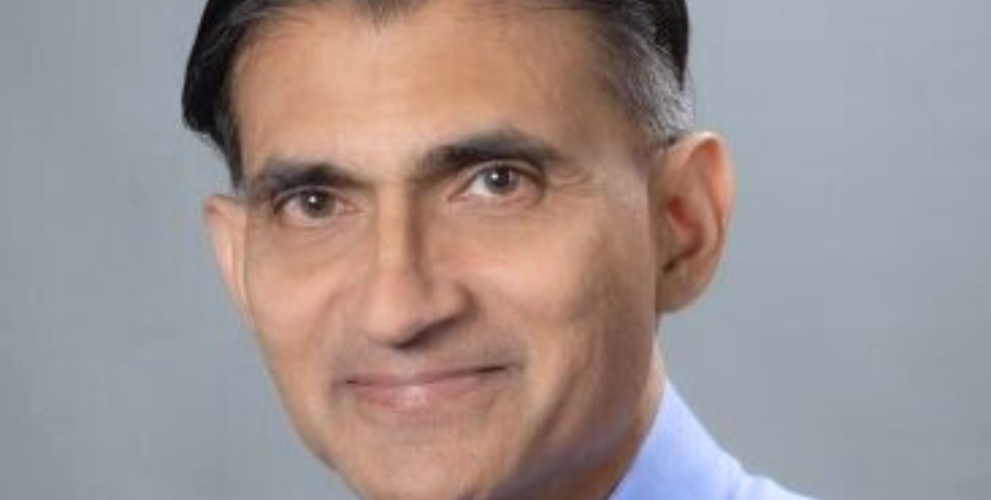
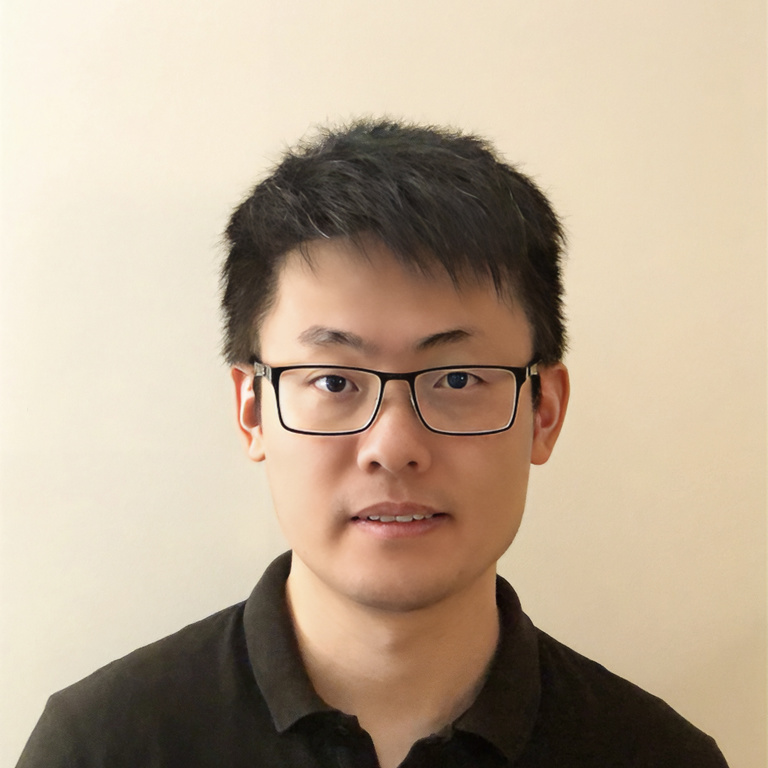
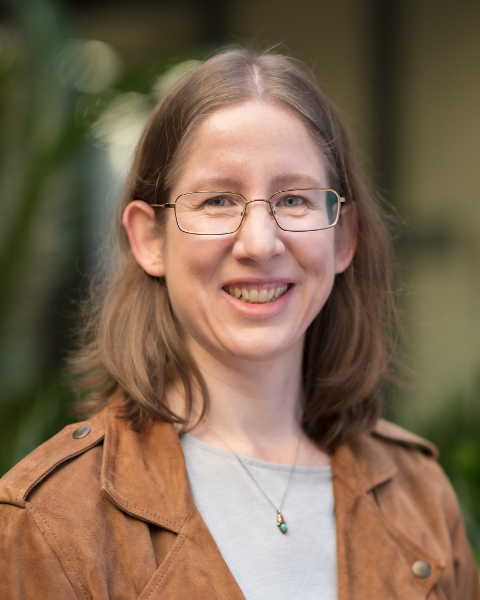
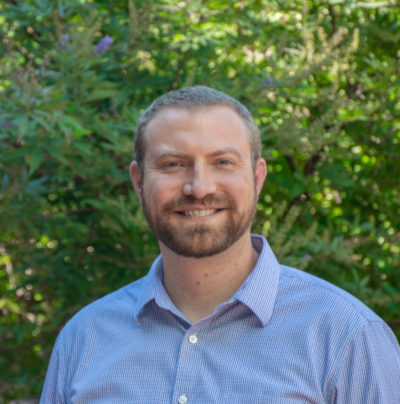
Niels da Vitoria Lobo is an Associate Professor in the Department of Computer Science at the University of Central Florida. His research spans computational vision, mobile robotics, and user interface design, with a focus on real-world applications including object detection, person tracking, and obstacle avoidance systems. Education: Ph.D. in Computer Science – University of Toronto Research Interests: Dr. Lobo’s work in computational vision addresses challenges like integral image-based curve detection and object detection in cluttered environments. He has developed systems for hand and person tracking, automobile lane following, and optical flow integration, alongside exploring graphical modeling for wristband trackers and educational games. Scientific Contributions: UCF Millionaire’s Club (2008) – recognizing significant research contributions Teaching Incentive Program Award (1996) – honoring excellence in academic instruction As an Associate Editor for computer vision journals, he has played a key role in advancing scholarly discourse in artificial intelligence and robotics.
Prof. Dr. Bettina Glunde is a faculty member at the Frankfurt University of Applied Sciences , Department 4: Social Work & Health. She specializes in healthcare education, vocational pedagogy, and aging-related care innovations. Her work emphasizes interdisciplinary collaboration, qualitative research, and technology integration in nursing education. Current research focuses on interdisciplinary housing counseling (ProWoB project) and robot-assisted elder care (Pepper robot study). She leads international educational initiatives like the Erasmus Winterschool and Summerschool programs. Her publications span topics including project management in PhD research , interprofessional curricula , and media competency for migrants . She is affiliated with academic organizations such as the German Society for Nursing Science and the German Society for Pedagogy .
Guanpeng Li is an Assistant Professor in the Department of Computer Science at the University of Iowa since 2020. His research focuses on building dependable high-performance computing systems, with emphasis on fault tolerance, data reduction, and safety in autonomous systems. Ph.D., University of British Columbia (2019) Postdoc, University of Illinois Urbana-Champaign (2020) BASc, University of British Columbia (2014) Research interests include: HPC Fault Tolerance and Error Propagation Analysis Lossy Compression Techniques for Scientific Data Safety Assurance for Autonomous Driving Systems Dependability of Machine Learning Applications Recent publications reveal trends in GPU-based fault detection, error-bounded compression, and autonomous systems security. His team has contributed to IEEE/ACM SC, IPDPS, DSN, and ISSRE conferences. Scientific awards include: NSF CAREER Award (2025) IEEE TCHPC Early Career Researchers Award (2024) Multiple Best Paper Awards at SC, DSN, and ISSRE (2024-2018) IEEE Top Picks in Test and Reliability (2023, 2024) Guanpeng Li advises active PhD students and collaborates with institutions like the University of British Columbia and Intel. His work impacts real-time safety systems and deep learning frameworks.
Krista A. Ehinger is an Associate Professor and co-lead of the AI group at the University of Melbourne's School of Computing and Information Systems. She holds a PhD from MIT and has held postdoctoral positions at York University and Harvard Medical School. Her research focuses on the intersection of human and computer vision, including scene recognition, visual search, and depth perception. Methodologically, she combines Bayesian models, deep learning, and behavioral experiments like eye tracking. Current projects explore AI applications in space systems (e.g., SpIRIT satellite) and ethical implications of workplace surveillance via computer vision. Recent work emphasizes amodal completion (e.g., reconstructing occluded objects) and AI reasoning systems. She collaborates on medical imaging (TCAM-Diff model), autonomous driving (truck speed detection), and 3D reconstruction. Her lab actively engages in open-source tools like the SUN Database for scene understanding. Professional activities include AI ethics discussions and academic service. She advises students on Masters/PhD projects and contributes to conferences like CVPR and NeurIPS.
Alan Kuntz is an Assistant Professor at the University of Utah's Kahlert School of Computing (KSoC) and a core member of the Robotics Center. He leads the interdisciplinary Kuntz Research Lab, focusing on robotics and computational methods with medical applications, particularly in healthcare and surgery. His work spans robot motion planning, autonomous systems, and robot design optimization. Education: Ph.D. in Computer Science from the University of North Carolina at Chapel Hill, with research in the Computational Robotics Research Group. Previously a postdoctoral scholar at Vanderbilt University's Medical Engineering and Discovery Lab. Research interests include surgical robotics, continuum robots, needle steering, and medical device design. Recent projects include autonomous needle navigation, continuum lung staplers, and metamaterial-based robots. His team has published extensively on topics like kinematic modeling, uncertainty quantification, and medical intervention systems. Notable awards include the 2022 IEEE Access Best Video Award for his group's work, and mentoring over 15 students through the University of Utah's Undergraduate Research Opportunities Program. The Kuntz Lab actively collaborates on clinical applications, presenting at top conferences like IROS, Hamlyn Symposium, and ISMR. Labs/Teams: Directs the Kuntz Research Lab, known for its innovative medical robotics projects. The lab's work has been featured in Forbes and other media outlets for breakthroughs like in vivo needle steering demonstrations.
Leonard P. Wesley is an Associate Professor at the Computer Science Department, College Of Science, San Jose State University. With a Ph.D. and M.S. in Computer Science from University of Massachusetts and a B.A. in Physics and Math from Northeastern University, his work spans bioinformatics, pharmaceutical discovery, machine learning, robotics, and evidential reasoning. He has published extensively on SVM/QSAR-based drug prediction, autonomous systems, and uncertainty management. Ph.D., University of Massachusetts - Computer Science M.S., University of Massachusetts - Computer Science B.A., Northeastern University - Physics and Math His research focuses on developing predictive models for drug discovery, autonomous robotics, and data analytics. Recent publications emphasize SVM applications in medical diagnostics and pharmaceutical modeling. He has contributed to conferences in aerospace, robotics, and biotechnology, with invited talks at NASA and Los Alamos National Laboratory. 3D-QSAR & SVM prediction of drug inhibitors Evidential decision analytics Autonomous robotic control PCA/SVM-based sepsis diagnostics Hybrid network congestion management Professor Wesley teaches courses in artificial intelligence, bioinformatics, and advanced programming. His lab investigates applications of machine learning in biotechnology and aerospace, including biomarker identification and CFD expert systems. He has served as session chair at international conferences and collaborated with institutions like NASA and Advanced Decision Systems.
Stavros Demetriadis is a Full Professor at the School of Informatics, Aristotle University of Thessaloniki, Greece. His research focuses on Learning Technologies, including Conversational Agents in Education, Learning Analytics, Computer-Supported Collaborative Learning (CSCL), Computational Thinking, and Massive Open Online Courses (MOOCs). He has led EU-funded projects like colMOOC and developed educational tools such as 'pytolearn' for Python instruction and 'Cubes Coding' (winner of Open Education Challenge 2014 and NUMA Competition 2014). He has supervised 5 completed PhD theses, 4 ongoing PhDs, and over 60 Master’s theses. Academic Appointments: Full Professor (2020–present), Associate Professor (2015–2020), Assistant Professor (2012–2015), Lecturer (2002–2008), Informatics Teacher (1989–2002) Education: PhD in Multimedia Technology in Education (2000), MSc in Electronic Physics (1986), BSc in Physics (1983) His work bridges AI and education, with over 161 publications and an h-index of 27. Recent research explores ChatGPT integration, ethics in Learning Analytics, and AI-driven assessment tools. He has delivered invited talks at institutions like the University of Valladolid (2024) and coordinates the 'Teachers' Fast-paced Distance Training on Tele-education' project. Awards include three international best paper awards and recognition for his 'Cubes Coding' project. Key Research Contributions: Developed frameworks for Conversational Agents in CSCL Innovated Computational Thinking pedagogy through robotics Explored ethics and culture in Learning Analytics adoption Created Python-based MOOCs for non-programmers He has taught courses like Human-Computer Interaction and Learning Analytics, and led short programs on Conversational AI. His collaborations span institutions in Spain, Denmark, and Greece. ORCID: 0000-0002-1561-6372; Google Scholar, Semantic Scholar, and Scopus profiles list his extensive output.
Sebastian Kohler is an Associate Professor of Philosophy at the Frankfurt School of Finance & Management. He teaches in interdisciplinary programs including Management, Philosophy, and Economics (B.A.), Computational Business Analytics (B.Sc.), and Applied Data Science (M.Sc.), and organizes the FS Philosophy Forum. Education: PhD in Philosophy from the University of Edinburgh; studied at Bielefeld University, London School of Economics, and University of Cambridge. His research focuses on meta-ethical questions surrounding normativity, bridging philosophy of mind, philosophy of language, and ethics of emerging information technologies. Recent work includes applications of conceptual engineering to data science and AI ethics. Kohler has published in top-tier journals such as The Journal of Philosophy , Ethics , and Australasian Journal of Philosophy . Collaborations include works with G. Mecacci and H. Veluwenkamp on responsible AI development.
Tauhidul Alam serves as Assistant Professor in the Department of Computer Science within the College of Arts and Sciences at Louisiana State University Shreveport (LSUS), where he has taught since 2019. His research focuses on advancing autonomous robotic systems through innovations in artificial intelligence and cyber-physical applications. Dr. Alam holds a Ph.D. in Computer Science awarded in 2018. His scholarly work centers on robotics challenges including motion planning for underwater vehicles, multi-robot coordination under resource constraints, and energy-aware autonomous navigation. Key research domains span artificial intelligence, cyber-physical security using blockchain, and persistent monitoring in constrained environments. Analysis of his 14 recent publications reveals a strong emphasis on solving real-world robotics problems in marine and aquatic settings. His work consistently addresses uncertainty handling, multi-agent coordination, and security vulnerabilities, with increasing integration of data-driven methodologies across autonomous systems research. Scientific recognition includes: Best Student Paper Finalist at MTS/IEEE OCEANS Conference (2018) Dr. Alam teaches undergraduate courses including Computer Architecture (CSC 242), Database Systems (CSC 315), and Artificial Intelligence (CSC 465), alongside graduate-level instruction in Programming Languages (CSC 620) and Cloud Computing (CSC 690). Information regarding advised students, research grants, or laboratory affiliations is not specified in available materials.
Guillermo Gallego is a Professor of Robotic Interactive Perception at the Faculty of Electrical Engineering and Computer Science , Technische Universität Berlin , holding the Einstein Center Digital Future (ECDF) Professorship since 2019. His research bridges robotics , computer vision , and applied mathematics , focusing on optimization methods for interdisciplinary imaging and control problems. Education : PhD in Electrical and Computer Engineering (Georgia Tech, 2011), MS in Mathematics (Georgia Tech, 2009), MS in Electrical Engineering (Georgia Tech, 2007), MS in Mathematical Engineering (Universidad Complutense de Madrid, 2005). Gallego's work explores event-based vision to enhance robot perception through low-latency sensing and real-time 3D reconstruction . He previously held postdoctoral positions at the Institute of Neuroinformatics (University of Zurich/ETH Zurich) and Technical University of Madrid (Marie Curie Experienced Researcher). His interdisciplinary projects span applications in ocean remote sensing , autonomous driving , and space exploration . Key scientific awards include the Fulbright Fellowship (2005-2010) and Marie Curie Experienced Researcher (2011-2014). His recent publications focus on event camera algorithms for optical flow , SLAM , and noise estimation , reflecting his leadership in event-based vision research. Collaborations include institutions like University of Zurich , Georgia Tech , and University of Pennsylvania . Research Grants : Funded through ECDF and Marie Curie programs. Labs : Affiliated with the Einstein Center Digital Future and Institute of Neuroinformatics (Zurich/ETH Zurich).
Dr. Christine King is an Associate Professor of Teaching in the Department of Biomedical Engineering at UC Irvine's Samueli School of Engineering. Her research focuses on innovative pedagogical approaches including active learning, VR clinical immersion, and STEM education reform. She directs the BioENGINE program integrating innovation and entrepreneurship into biomedical education. Education includes: Ph.D. in Biomedical Engineering, UC Irvine (2014) M.Sc. in Biomedical Engineering, UC Irvine (2010) M.Sc. in Mechanical Engineering, Manhattan College (2009) B.Sc. in Mechanical Engineering, Manhattan College (2008) Her research develops novel educational frameworks using active learning techniques, virtual reality simulations, and real-world clinical applications. Current projects investigate VR clinical immersion platforms for needs-finding training, AI integration in biomedical curricula, and culturally responsive engineering pedagogy. She creates hands-on learning experiences connecting engineering principles to healthcare challenges. Her publications demonstrate strong emphasis on educational innovation (65%), neurorehabilitation technology (20%), and medical device development (15%), with recent work focusing on VR/AI applications in education. Award recognition includes AIMBE Fellowship and best paper awards for educational innovation and medical technology. She leads the BioENGINE program fostering industry-academia partnerships and medical innovation. Laboratory facilities include VR clinical simulation environments and engineering education research labs supporting her pedagogical innovations and medical device prototyping.
Liu Hongmei is a Researcher and Master's Supervisor at Southern University of Science and Technology's Department of Biomedical Engineering. Holding a Ph.D. from the Chinese Academy of Sciences, she specializes in micro-nano robotics and tissue engineering for tumor therapy, with over 66 publications and 12 patents. Her work bridges biomedical engineering and nanotechnology for precision cancer treatments. B.S., Biological Sciences, Harbin Normal University (2005) M.S., Botany, Northeast Agricultural University (2008) Ph.D., Biochemical Engineering, Chinese Academy of Sciences (2015) Her research focuses on biomaterials engineering , nanoparticle drug delivery , and microenvironment-responsive hydrogels . Key areas include glioma therapy, traumatic brain injury recovery, and intervertebral disc degeneration treatments. Recent work explores pH/ROS/inflammation-triggered hydrogels and bioengineered bacteria for disease modulation. Article trends show a strong emphasis on nanoparticle design (2014-2025) for glioma, hydrogel development (2017-2025) for tissue repair, and biomimetic material synthesis (2023-2025) inspired by spider silk and meniscus structures. Sub-fields span pyroptosis inhibition, epigenetic reprogramming, and microbiome engineering. Jiangsu Science and Technology Award (2020) Jiangsu Medical Science and Technology Award (2020) Jiangsu Educational Science Research Award (2021) Chinese Medical Doctor Association's Outstanding Young Scientist (2018) Liu has supervised numerous projects including National Natural Science Foundation of China grants, Jiangsu Province Key R&D Program funding, and Shenzhen City General Projects. She holds 12 Chinese invention patents and collaborates with institutions like the UNESCO Centre for Higher Education Innovation.
Sebastián Uchitel is a Professor at the Department of Computing, Imperial College London, UK. His research focuses on foundational aspects of Software Engineering, particularly in modeling and analysis for automated reasoning, verification of probabilistic systems, controller synthesis, and adaptive systems. He has led major research projects, including the ERC-funded IDEAS StG project on Partial Behaviour Modelling and the European FP6 SENSORIA project. Research Interests: Model-Based Software Engineering, Controller Synthesis, Probabilistic Systems, Adaptive Systems, Requirements Engineering External Roles: General Chair, International Conference on Software Engineering (2017); Associate Editor, Elsevier Science of Computer Programming; Steering Committee, International Conference on Software Engineering His recent work explores intersections between Software Engineering and AI, including assured adaptive systems and logic-based learning. A Senior Member of IEEE and Distinguished Scientist of ACM , he has received awards like the Houssay Prize (2015) and Philip Leverhulme Prize (2005). Collaborators include institutions in Argentina, Canada, and the UK. Selected Publications: 150+ peer-reviewed works spanning controller synthesis, requirements engineering, and formal methods Students: Supervised 12 PhD students since 2003 Grants: Principal Investigator for 3 major grants (2005-2016) totaling over $3.7M USD, including: 2013-2016: Technology Platform in Software Engineering (ANPCYT, $1.6M) 2009-2014: ERC IDEAS StG on Partial Behaviour Modelling (€1.4M) 2005-2008: FP6 SENSORIA Project (€0.7M)
Amirhosein Taherkordi is a Professor in the Networks and Distributed Systems group at the Department of Informatics, University of Oslo, Norway. His research focuses on resource-efficiency, scalability, adaptability, dependability, mobility and data-intensiveness of distributed systems for emerging computing technologies including Internet of Things (IoT), Fog/Edge/Cloud Computing, and Cyber-Physical Systems (CPS). Dr. Taherkordi received his Ph.D. from the Informatics Department at the University of Oslo under the supervision of Prof. Frank Eliassen, with his thesis titled "Programming Wireless Sensor Networks: From Static to Adaptive Models." He holds an M.Sc. in Information Technology Engineering (Software Engineering) from University of Science and Technology and a B.Sc. in Computer Engineering from Sharif University of Technology. His research spans multiple domains of distributed systems with emphasis on practical applications. He investigates energy efficiency in wireless sensor networks, communication optimization in IoT systems, and adaptive resource allocation in edge computing environments. His work addresses critical challenges in network traffic classification, federated learning for vehicular networks, and data processing across heterogeneous platforms. Analysis of his recent publications reveals a strong trajectory toward communication-efficient federated learning techniques for vehicular networks, energy-aware protocols for IoT data collection, and advanced machine learning approaches for network traffic analysis. His research consistently focuses on optimizing resource usage while maintaining system performance and privacy in distributed architectures. Dr. Taherkordi actively contributes to several research initiatives including the CPS Lab at UiO for Cyber Physical Systems, DILUTE: Fluid Service Abstraction for Large-Scale Cloud IoT Systems, and the Gemini Centre on IoT at UiO. His work bridges theoretical advances with practical implementations in transportation systems, environmental monitoring, and industrial automation.
Dr. Xiong Yi is an Assistant Professor at the School of System Design and Intelligent Manufacturing (SDIM) at Southern University of Science and Technology (SUSTech) in Shenzhen, China. He leads the Computational Design and Fabrication (CoDeFab) research group, focusing on the integration of computational design methods with advanced manufacturing technologies, particularly in the field of additive manufacturing. Dr. Xiong has established himself as a leading researcher in computational design for additive manufacturing, with a strong international research background spanning Europe and Asia. Dr. Xiong's educational journey includes: Doctor of Science (DSc) in Engineering Design and Production from Aalto University, Finland (2012-2016) Master of Science (MSc) in Machine Automation from Tampere University of Technology, Finland (2010-2012) Bachelor of Engineering (BEng) in Mechanical Engineering from Hubei University of Technology, China (2006-2010) Dr. Xiong's research primarily focuses on computational design and fabrication methodologies, with particular emphasis on design for additive manufacturing (DfAM), intelligent manufacturing systems, and smart materials. His work bridges the gap between theoretical design principles and practical manufacturing constraints, developing novel approaches for the production of complex engineered products. He has pioneered research in continuous fiber-reinforced composite additive manufacturing, developing innovative process planning and optimization techniques that enable the production of high-performance structural components. His research in electrothermally controlled origami and 4D printing of smart materials represents cutting-edge work at the intersection of materials science, mechanical engineering, and computational design. Dr. Xiong's recent publications reveal a strong focus on continuous fiber-reinforced composites, with significant contributions to 4D printing, metamaterials, and intelligent process planning. His work integrates computational design with manufacturing constraints, creating novel approaches for topology optimization, toolpath planning, and structural design that consider both performance requirements and manufacturability limitations. The research demonstrates increasing sophistication in materials science applications, particularly in programmable materials and multi-functional structures. Dr. Xiong has received multiple prestigious awards for his research contributions, including: Best Presentation Award at the 24th Chinese Conference on Mechanisms and Machine Science (IFToMM CCMMS2024) Best Presentation Award at the International Conference on Frontiers of Additive Manufacturing Research (RAAM 2024) Best Paper Award at the International Conference on Design for 3D Printing (ICD3DP 2023) PhD Scholarship from Aalto University (2016) Research Travel Grant from the International Association for Vehicle System Dynamics (IAVSD) (2013) National Scholarship from the Ministry of Education (2008) As a dedicated educator and mentor, Dr. Xiong serves as a PhD supervisor at SUSTech and has successfully guided students who have gone on to pursue advanced studies and careers at prestigious institutions including Hong Kong Polytechnic University, Beihang University, DJI Innovations, and Singapore's A*STAR research institute. His research is supported by multiple competitive grants, including key projects from the National Key R&D Program of China, the National Natural Science Foundation of China, and provincial and municipal funding agencies. Dr. Xiong also serves on the editorial board of the Journal of Engineering Design and as a guest editor for Composites Communications, contributing to the advancement of his field through scholarly service. Dr. Xiong leads the CoDeFab research group, which maintains a strong collaborative culture focused on 'design leading manufacturing, manufacturing driving design, and digital-intelligent integration.' The group has developed several advanced manufacturing platforms, including multi-axis continuous fiber-reinforced composite additive manufacturing systems, smart composite additive manufacturing platforms, and multifunctional soft matter open manufacturing platforms. With a focus on practical applications and innovation, the CoDeFab group actively collaborates with industry partners and has established a joint laboratory to bridge academic research with industrial implementation.