Yulun Tian is an Assistant Professor in the Robotics Department at the University of Michigan, where they direct the Scalable Spatial Intelligence Lab. Their research focuses on developing scalable and trustworthy autonomy for long-term operation without human intervention, integrating tools from nonlinear/distributed optimization, machine learning, and graph theory to create robust spatial perception , navigation, and multi-agent systems with theoretical guarantees. PhD, MIT AeroAstro (2023) SM, MIT (2019) BA, UC Berkeley (2017) Research spans robotic perception (e.g., learned representations, robust estimation), distributed autonomy for multi-agent systems, and optimization algorithms for navigation. Key projects include Kimera-Multi (2022 IEEE T-RO award) and MISO (RSS 2025), emphasizing neural implicit reconstruction and Laplacian solvers for rotation averaging. Selected publications highlight trends in distributed SLAM , multi-agent coordination , and learning-based spatial intelligence . Awards include the 2024 IEEE RAS TC Best Dissertation Award and 2022 IEEE T-RO Best Paper Award. They served as Associate Editor for IROS 2025 and IJRR since 2024. Prospective PhD students are encouraged to apply with interests in optimization for autonomy , spatial perception , and distributed systems . The lab emphasizes theoretical guarantees and real-world applications in autonomous systems.
Georgios Ellinas is a Professor at the University of Cyprus, specializing in optical networking, machine learning for network management, and UAV swarm coordination. His research spans critical areas such as Elastic Optical Networks (EONs) , Physical Layer Security , and Multi-Agent Reinforcement Learning for autonomous systems. Recent work includes quantile regression models for handling uncertainty in network traffic, edge-assisted collision warning systems for urban mobility, and multi-task learning architectures for drone state identification. He applies distributed estimation techniques to jamming aerial targets and explores probabilistically robust trajectory planning for autonomous vehicles. His contributions extend to fair resource allocation in optical networks, UAV swarm coordination using ROS-LoRa integration, and quantum key distribution optimization. Collaborations with researchers like Tania Panayiotou and Panayiotis Kolios highlight his interdisciplinary approach.
Yi Wang is a Professor of Embedded Systems at the Department of Information Technology, Uppsala University , Sweden. He leads research in real-time and embedded systems with a focus on modeling, analysis, and implementation of safety-critical applications. He is affiliated with the Embedded Systems Group and serves as a Principal Investigator (PI) in major research centers such as UPMARC and projects like CUSTOMER (ERC Advanced Grant), CoDeR-MP, and CERTAINTY. Research Interests: Yi Wang’s work centers on Embedded Systems Design, Real-Time Scheduling, Multicore Programming, and Model-Checking of Real-Time Systems . His research addresses fundamental challenges in timing predictability, schedulability analysis, and the verification of complex real-time systems. He has made significant contributions to the digraph real-time task model, mixed-criticality systems, and timing analysis of ROS 2 systems. His work bridges theory and practice, often resulting in deployable tools and formal methods for industrial applications. Recent Research Trends: His most recent publications (2023–2025) focus on optimizing real-time performance in ROS 2, managing parallel task graphs with resource contention, improving GPU-based inference on embedded platforms, and enhancing timing predictability in multithreaded executors. These works reflect a strong trend toward applying formal real-time theory to modern robotics, AI integration, and multicore embedded architectures. Scientific Tools and Leadership: He is a key contributor to foundational tools in real-time systems: UPPAAL – Model checking for timed automata TIMES – Schedulability analysis and code generation CATS – Compositional analysis of timed systems TIMES-Pro – Based on the digraph real-time task model Advising and Research Funding: Yi Wang has supervised numerous PhD students and postdocs. He has led or participated in multiple large-scale funded projects supported by the Swedish Research Council (VR), the Swedish Foundation for Strategic Research (SSF), and the European Commission (FP7, ERC). These include UPMARC (10-year Linnaeus center), CoDeR-MP (with ABB and SAAB), SAVE++ (with VOLVO), and CREDO. Laboratories and Research Groups: He is a core member of the Embedded Systems Group at Uppsala University and leads research within the UPMARC center, which focuses on programming models and analysis techniques for multicore architectures. His lab develops formal methods and tools to ensure correctness and timing guarantees in embedded and cyber-physical systems.
Marian VLĂDESCU serves as Associate Professor and Director of the Department of Electronic Technology and Reliability at Politehnica University of Bucharest's Faculty of Electronics, Telecommunications and Information Technology since 2016, while concurrently directing the university's Optoelectronics Research Center (UPB-CCO). His institutional base operates from Building A (LEU), Room A201/A203. His research spans Optoelectronics and Telecommunications Networks with specialized expertise in GPON/IP-TV (Electromagnetica Goldstar), ADSL/ATM (LG Korea), and SDH (ECI Telecom) systems. Core technical capabilities include electronic/optoelectronic circuit simulation (PSpice, OptiSPICE) and computer-aided design (OrCAD, GerbTool). Emerging focus areas encompass Quantum Technologies through QUTECH-RO, Sensor Systems for medical/security applications, and Internet of Things infrastructure development. Professional engagements include IEEE membership across nine specialized societies (Photonics, Electronics Packaging, Electron Devices, Sensors, Nanotechnology, Electronic Design Automation, Biometrics, Systems, Superconductivity, RFID) plus SPIE affiliation. Current project leadership includes NETIO (IoT ecosystem development, 2016-2020) and quantum technology component projects under QUTECH-RO (2018-2021), alongside historical contributions to THz-DETECT (hazardous substance identification), AMI-DETECT (cardiac diagnostics biosensors), and VIPRO Platform (rescue robotics). Research Leadership: Technical lead for NETIO project (ID 40270, 2016-2020): IoT product/service ecosystem development Component project lead for QUTECH-RO (PN-III-P1-1.2-PCCDI-2017-0338, 2018-2021): Quantum technology research laboratories Research team member for THz-DETECT (2014), AMI-DETECT (2014-2015), VIPRO Platform (2014-2017) Expert roles in PRACSIS (information security careers) and television professional development projects Ongoing academic contributions include organizing the 2025 Student Scientific Communications Session and participating in SIITME 2024 symposium, reflecting continued active engagement in scholarly community building.
Prof. Ferrein is a Professor at the Institute for Mobile Autonomous Systems and Robotics (MASKOR) within the Faculty of Electrical Engineering and Information Technology at Aachen University of Applied Sciences. He has taught core courses including Fundamentals of Computer Science, Robotics, Artificial Intelligence, and Robot Programming with ROS for Electrical Engineering students from 2014 to 2016, establishing himself as a key educator in applied robotics. His research spans Robotics , Artificial Intelligence , and Industrial Automation , with concentrated expertise in logistics systems, mining automation, and smart manufacturing. As leader of the Carologistics RoboCup Logistics Team, he leverages competitive robotics to develop real-world factory automation solutions, focusing on multi-robot coordination, sensor fusion, and ROS-based implementations for industrial challenges. Analysis of his 2023-2025 publications reveals a decisive shift toward solving industry-specific problems: anomaly detection in metal-textile production, autonomous vehicle control in mining, and AI-supported work system design. His work consistently bridges academic research and industrial deployment through practical ROS integrations, emphasizing human-robot collaboration and cognitive load reduction in quality control workflows. MASKOR institute serves as the operational hub for Prof. Ferrein's activities, driving initiatives like the ROS Summer School and RoboCup Logistics League participation. This environment fosters industry-academia collaboration through educational programs and competitive benchmarks that validate cyber-physical systems for factory automation, with significant contributions to mining robotics and rescue operations.
Dr. Rui Paulo Pinto da Rocha is an Associate Professor in the Department of Electrical and Computer Engineering at the University of Coimbra, with dual affiliation at the Institute of Systems and Robotics (ISR) since 2000. His career spans 15 years of academic leadership and 19 years of active research in cooperative robotics. Key affiliations include: Senior Member of IEEE (since 2021) Chair of the IEEE RAS Technical Committee on Multi-Robot Systems (since 2018) Coordinator of multiple EU-funded projects including REMOORA , EuroAGE+ , and SEMFIRE Research focuses on cooperative multi-robot systems with decentralized coordination, covering: Swarm robotics for aquatic resource monitoring Marsupial robot teams with communication constraints 3D volumetric mapping using entropy gradients Human-robot collaboration in urban fires Multi-sensor fusion for disaster response Edge computing for low-power inference Recent publications (2023-2025) demonstrate technical breadth across ROS cloud integration , semantic mapping , and human detection systems . Notable scientific contributions include: Development of Darwinian Swarm PSO algorithm Benchmarking framework for swarm exploration Communication-constrained coordination models Multi-robot patrolling optimization techniques As an educator, he supervises 2 PhD candidates and numerous MSc students, while teaching courses on autonomous systems, industrial automation, and software engineering. His laboratory leadership includes: Technical management of ISR research infrastructure (2014) Development of RACbot-RT real-time control system Advancements in multi-robot SLAM frameworks
John-Paul Ore is an Assistant Professor in the Department of Computer Science at North Carolina State University's College of Engineering. His research bridges software engineering and field robotics, with a focus on program analysis, system testing, and high-resolution physical simulators for robotics systems, particularly those built with the Robot Operating System (ROS). He develops software engineering methods that improve the dependability of robotics systems through techniques for dimensional analysis without developer annotations, open-source tools like PHYS, and public datasets documenting dimensional inconsistencies in real-world systems. His educational background includes a Ph.D. from the University of Nebraska-Lincoln (2019) and a B.A. in Philosophy from the University of Chicago. His interdisciplinary background informs his approach to combining software engineering with robotics to address challenges in reasoning about full-system behavior across multiple layers of abstraction. Ore's research interests center on applying program analysis techniques to software that controls robots and interacts with the physical world. His work includes abstract type inference of physical unit types (like 'meters-per-second'), probabilistic techniques for combining semantic information in identifiers with code flow inference, and empirical measurements of how developers make decisions about robotic software. He focuses on program analysis and software testing that enhances system safety and reliability while remaining practical and economically efficient. His research has significant applications in environmental monitoring, addressing climate challenges, food production, and liberating people from dangerous, dirty, and dull work. His publication record shows a clear trajectory from foundational work on dimensional analysis in robotics software to increasingly complex applications in environmental monitoring and autonomous systems. The most recent publications demonstrate expansion into Large Language Models for code analysis while maintaining focus on practical robotics applications. His research consistently addresses the critical gap between theoretical program analysis and practical robotics system development. Best Tool Demonstration Award, ISSTA'17 for Phriky-Units ACM SIGSOFT Travel Award ($300) Othmer Fellowship 2014-2018 ($8K/year) UNL CSE Outstanding Master's Thesis Award 2015 RSS 2013 Travel Grant ($500) Ore actively mentors students, having served as research mentor for undergraduates Becca Horzewski (2016-17) and Lambros Karkazis (2018). His research is supported by significant grants including FARM BILL: NRI: INT ($1,018,596 from NSF), SHF: SMALL ($499,994 from NSF), and North Carolina Space Grant ($5,000 from NASA). He is currently recruiting PhD students for his lab focused on robotics and software engineering. His laboratory work combines robotics, software engineering, and environmental monitoring, with projects including autonomous aerial water sampling systems, UAV-based environmental sensing, and tools for improving robotics software reliability. His team develops both theoretical approaches and practical implementations, often creating open-source tools that bridge the gap between academic research and industry applications.
Dr. Mark Judge is a Senior Lecturer at Leeds Beckett University, serving as Course Leader for the BEng/MEng degrees in Robotics and Automation within the School of Built Environment, Engineering and Computing. He holds a PhD in Artificial Intelligence from the University of Sheffield, completed under Professors Maria Fox and Derek Long. His academic career includes roles at The University of Derby and The University of London, alongside extensive industry collaboration. Education: Mark holds degrees in Electronics, Computer Science, and AI, with additional qualifications in Microsoft Server administration and Cisco networking. His PhD focused on Constraint Satisfaction techniques in AI planning. Research Interests: Dr. Judge specializes in AI, robotics, and intelligent systems, with projects on reconfigurable autonomy, multi-agent systems, and applying AI to health/wellbeing. He pioneered 'Maker' sessions blending robotics research with hands-on learning using Arduino and Raspberry Pi technologies. Teaching & Leadership: He designs innovative modules emphasizing problem-based learning and supervises undergraduate, Master’s, and PhD students. At the University of Sheffield, he contributed to The Diamond engineering lab, leading EEE laboratory sessions for large cohorts. Industry Collaboration: Mark has partnered with companies like National Instruments and Keysight Technologies, securing sponsorships for student projects. He seeks further research and consulting opportunities in robotics, AI, and healthcare technology.
Johnson Thomas is a Professor in the Department of Computer Science at Oklahoma State University, with affiliations in both the Stillwater and Tulsa campuses. His research focuses on Quantum Computing, Machine Learning, and Computational Neuroscience, with notable work on quantum circuit optimization and spiking neural networks. He holds degrees from the University of Reading (PhD, 1995), University of Edinburgh (MSc, 1983), and University of Wales (BSc, 1982). His teaching spans advanced topics in databases, quantum computing, and programming languages. Recent courses include *Quantum Computing*, *Advanced Topics in Information Systems*, and *Discrete Mathematics for Computer Science*. He has also advised doctoral students and led research in distributed systems and security. Research interests include quantum algorithms, neurocomputational models, and causal inference. His work bridges theoretical foundations with practical applications, such as ROS security frameworks and NIRS-based forage quality prediction. Over 20 funded projects highlight his expertise in big data, autonomous systems, and sensor networks. Publications emphasize quantum circuit design, medical ML interpretation, and computational neuroscience. Collaborations include interdisciplinary projects with healthcare and agricultural sectors. His contributions advance both theoretical computer science and applied technologies.
Dr. James Douthwaite is a Researcher at the University of Sheffield's School of Computer Science, affiliated with the Complex Systems Modelling research group. His work focuses on intelligent sensing and tracking for collaborative robotics tasks, emphasizing safety assurance, digital twinning, and augmented reality applications. He holds a position as a Research Associate, contributing to advancements in human-robot collaboration, cyber-physical systems, and multi-agent systems. His research interests include safety frameworks for robotics, digital twin integration, and collision avoidance algorithms for autonomous systems. He explores methodologies to enhance safety in manufacturing cobots and develops modular frameworks for real-time system testing. His work bridges theoretical control systems with practical applications in robotics and aerospace engineering. Notable contributions include studies on augmented reality-based safety zone visualizations, verified safety controller synthesis, and comparative analyses of velocity obstacle approaches for multi-agent navigation. His research often intersects with industry needs, addressing challenges in autonomous vehicle coordination and industrial automation. Dr. Douthwaite's publications span topics from digital twin-driven testing of cyber-physical systems to symbolic computation for VTOL aircraft autonomy. His work highlights a strong emphasis on validation, verification, and real-world deployability of robotic systems.
Monica Nicolescu is a Professor in the Department of Computer Science at the University of Nevada, Reno, and Director of the Robotics Research Lab. Her research focuses on human-robot interaction, social robotics, and multi-robot systems, emphasizing communication, learning, and teamwork in dynamic environments. She develops methodologies for integrating robots into human society, with a focus on autonomous control systems and adaptive learning capabilities. Her work explores heterogeneous human-robot teams, emphasizing social norms and collaboration in service robotics applications. She also investigates maritime safety through AI-driven solutions and multi-modal interaction frameworks combining gestures, speech, and visual cues for reliable human-robot task configuration. Recent publications highlight advancements in medical imaging segmentation, cryptocurrency forecasting, and socially-aware navigation systems. Her research integrates deep learning, computer vision, and behavioral algorithms to enhance robotic functionality and safety in complex environments. Dr. Nicolescu leads the Robotics Research Lab, fostering interdisciplinary collaboration in robotics, AI, and human-robot interaction. Her research addresses both technical and societal challenges, aiming to create robots that adaptively and ethically integrate into diverse human contexts.
Ian Abraham is an Assistant Professor of Mechanical Engineering at Yale University, with an additional appointment in the Department of Computer Science. His research focuses on robotics, optimal control, machine learning, and artificial intelligence, particularly in enabling robotic systems to autonomously gather information and adapt in unstructured environments. He leads the Intelligent Autonomy Lab, which develops algorithms integrating theory and applied research to enhance robotic learning, exploration, and multi-agent collaboration. Abraham holds a Ph.D. and M.S. from Northwestern University, and a B.S. from Rutgers University. His work spans optimal control, exploration strategies, sample-efficient learning, and multi-agent systems, aiming to create self-sufficient robotic systems requiring minimal human intervention. Research Highlights: Active sensing, ergodic exploration, Koopman operator-based control, and decentralized control for multi-agent systems. Key Contributions: Development of algorithms for data-driven control, hybrid control methodologies, and energy-aware exploration frameworks. His awards include the 2020 Belytschko Outstanding Research Award and the 2019 IEEE King-Sun Fu T-RO Best Paper Award. Abraham’s research has been published in top journals such as IEEE Transactions on Robotics and IEEE Robotics and Automation Letters.
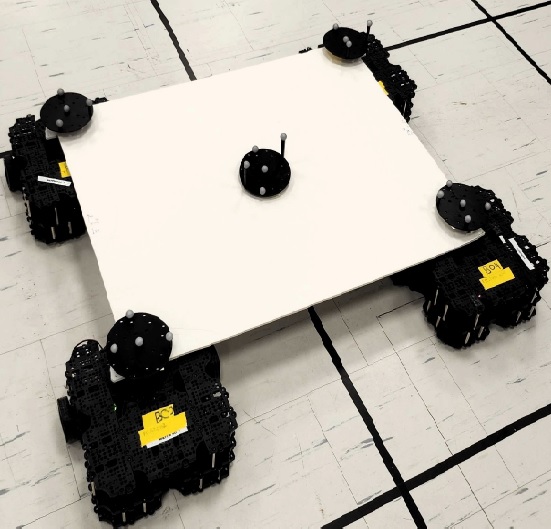
Sajad Saeedi Gharahbolagh is an Assistant Professor in the Department of Mechanical, Industrial, and Mechatronics Engineering at Toronto Metropolitan University and an Honorary Research Fellow at Imperial College London's Department of Computing. His research spans robotics, SLAM, focal-plane sensor-processor arrays (FPSP), and deep learning for autonomous systems. Education : PhD in Electrical and Computer Engineering (2014) from the University of New Brunswick. Prior Roles : Dyson Research Fellow (2018-2019) at Imperial College London; Postdoctoral Fellow at University of New Brunswick (2014); R&D Engineer at 2G Robotics (2015). His research focuses on Simultaneous Localization and Mapping (SLAM) for single/multi-robot systems Focal-plane Sensor-Processor Arrays (FPSP) for high-speed, low-power vision processing Autonomous aerial/underwater robotics Deep learning integration with traditional robotics algorithms Control systems for heterogeneous robotic platforms His work addresses challenges in computational efficiency, robustness in GPS-denied environments, and real-time multi-sensor data fusion. Recent publications highlight advancements in Distributed NeRF for collaborative mapping MR.CAP multi-robot control/planning BIT-VIO visual-inertial odometry WiFi-based geometric mapping FPSP-optimized CNNs PathBench benchmarking framework Scientific Awards : Dyson Research Fellowship (2018-2019) Best Robotics Paper (CRV 2021) Best Student Presentation (IROS 2023) Research Team : PhD Students: Christopher Kolios, Navid Zarrabi, Messiah Esfahani, Ishaan Mehta, Mahboubeh Asadi, Jack Saunders MASc Students: Georgia Jovanovic, Hussein Ali Jaafar, Austin Vuong, Roni Sherman, Matthew Lisondra, Glenn Shimoda, Ali Babaei, Robel Efrem, Messiah Ataey, Christopher Kolios, Nikolas Kourtzanidis Laboratory Facilities : Robotics and Computer Vision Lab (RCVL) with Vicon motion capture system 14 TurtleBot 3 platforms (Waffle Pi/Burger variants) Germicidal UVC-equipped G-Robots Jetbots with onboard GPU processing OpenMANIPULATOR robotic arms
Nathan Sprague is a Professor of Computer Science at James Madison University (JMU), affiliated with the College of Integrated Science & Engineering. He holds a Ph.D. in Computer Science from the University of Rochester (2004) and a Sc.B. from Brown University (1997). Before his academic roles, he worked as a Software Developer at Epic Systems Corporation (1997–1998) and was an Assistant Professor at Kalamazoo College (2004–2011) before joining JMU in 2011. His research focuses on Machine Learning, Computer Vision, and Developmental Robotics, with recent work extending to autonomous systems, human-robot interaction, and AI education. Key projects include trust assessment in autonomous golf carts, Bitcoin artifact analysis via deep learning, and developing educational tools for AI curricula. Notable contributions include prototyping autonomous vehicle test-beds, assistive technologies for mobility-impaired pedestrians, and teaching innovations in robotics and computer science education. His work bridges theory with practical applications, emphasizing interdisciplinary collaboration and real-world impact.
Christian Bettstetter is a Professor at the Institute for Networked and Embedded Systems at the University of Klagenfurt, Austria, and the Scientific Director of Lakeside Labs. He leads research in wireless communications, autonomous systems, and self-organizing networks. As Coordinator for International Relations of the Faculty of Engineering and Head of his institute, he oversees interdisciplinary projects involving drone networks, synchronization algorithms, and industrial IoT applications. His research interests span robotics , swarm intelligence , and drone communication protocols , with notable contributions to synchronization in oscillator networks and multi-robot exploration. He teaches courses on mobile communications and electricity & magnetism , and his work has been recognized with the 2022 Lehrepreis for excellence in teaching. Key projects include: Developing self-organized drone swarms using the swarmalator model Investigating interference management in 5G-connected drones Creating ROS-based frameworks for coordinated multi-robot systems He advises over 10 PhD candidates and has pioneered UWB sensor networks for industrial applications. Current work focuses on bridging simulation-to-reality gaps in drone swarm development and optimizing cellular connectivity for aerial vehicles.