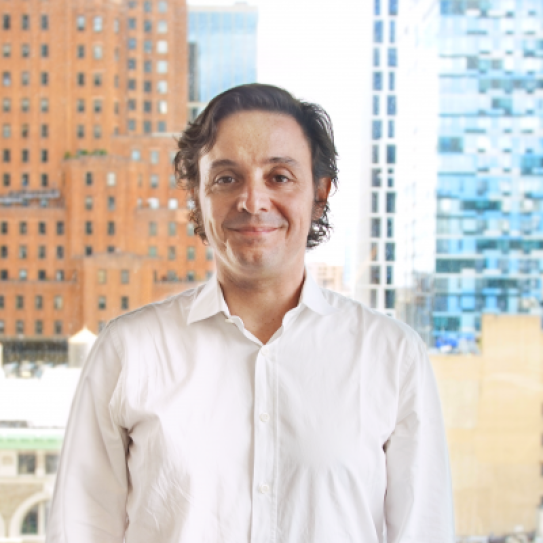
Maurizio PorfiriView profile
Professor
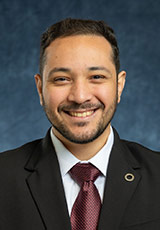
Maurizio Porfiri is an Institute Professor at New York University Tandon School of Engineering, holding tenured appointments in Mechanical and Aerospace Engineering, Biomedical Engineering, and Civil and Urban Engineering. He also directs the Center for Urban Science and Progress (CUSP). His academic career began at Virginia Tech as a Post-Doctoral Associate (2005-2006) before joining Tandon in 2006 as an Assistant Professor. Porfiri earned dual doctorates in Theoretical and Applied Mechanics from Sapienza University of Rome and the University of Toulon (2005), alongside degrees from Virginia Tech and Sapienza’s Electrical Engineering program. Education: Laurea (B.Sc./M.Sc.) in Electrical Engineering, Sapienza University of Rome (2001) Ph.D. in Theoretical and Applied Mechanics, Sapienza University of Rome and University of Toulon (2005) M.Sc. and Ph.D. in Engineering Mechanics, Virginia Tech (2000, 2006) Research Interests: Porfiri’s work spans complex systems, urban science, robotics, and public health. His lab investigates collective behavior in biological systems, network science applications, and biomimetic robotics. Notable projects include urban scaling laws for public health trends, assistive technologies for visually impaired navigation, and ant colony energy regulation mechanisms. Publications & Recognition: With ~400 publications, his work appears in Nature , Nature Human Behaviour , and Physical Review Letters . He is an ASME and IEEE Fellow, recipient of the NSF CAREER Award, and featured in Popular Science’s “Brilliant 10” (2010). His research has been highlighted in CNN, NPR, and other media outlets. Awards & Grants: $5M NSF Convergence Accelerator grant (2023) for assistive navigation tech $3M NSF grant (2024) for ant colony energy studies National Academy of Engineering Frontiers of Engineering Symposium invitations (2011, 2014) Labs & Teams: Director of CUSP and founder of the Dynamical Systems Laboratory, Porfiri collaborates across disciplines to address urban challenges, from gun violence analytics to sustainable city design. His work bridges engineering, biology, and policy to create scalable solutions for societal issues.