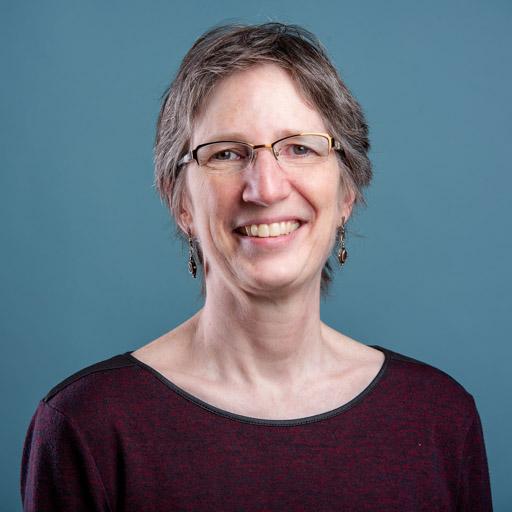
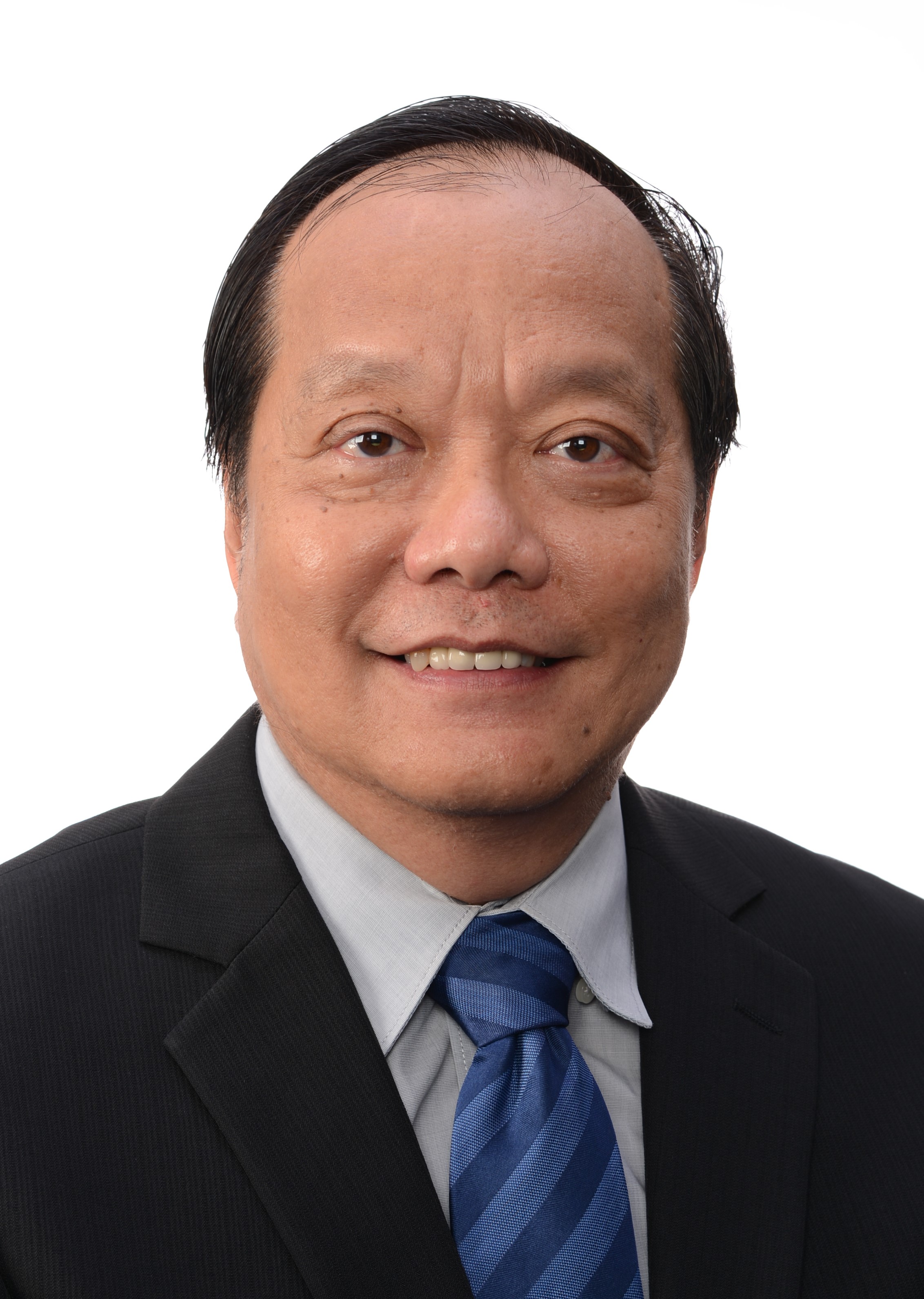
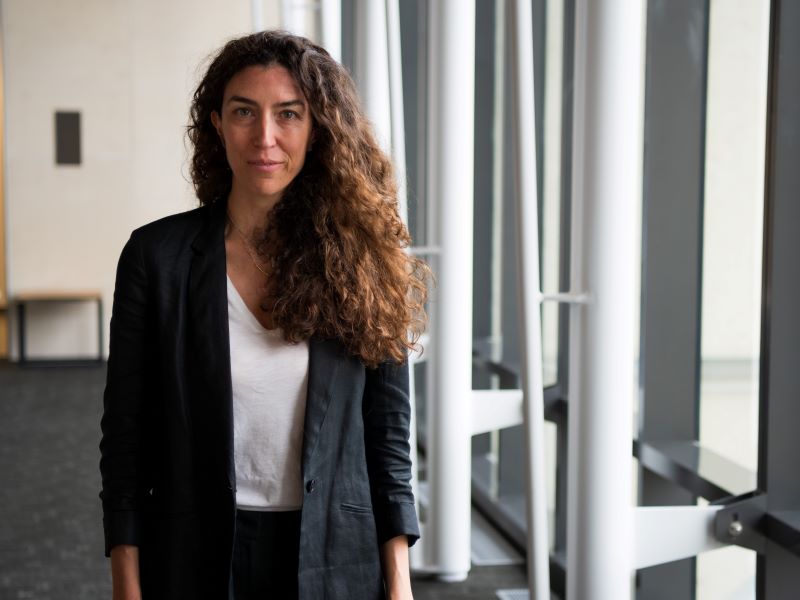
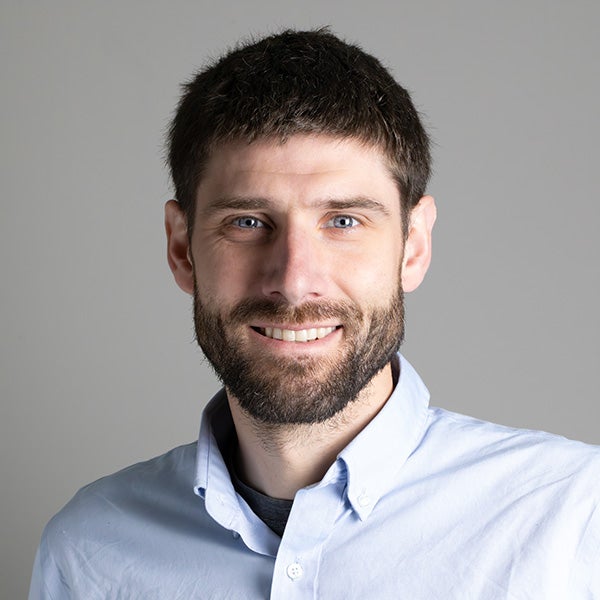
Yong Zhang is a Professor in the Department of Geological Sciences at the University of Alabama, serving as Undergraduate Program Director. His research focuses on stochastic hydrology, contaminant transport in soil/water/aquifers (including heavy metals, PFAS, microplastics, and antibiotics), and surface water-groundwater interaction. He has held postdoctoral positions at the University of California, Davis; Desert Research Institute; and Colorado School of Mines. Current research includes the 'Groundwater 2070' project in Baldwin County, Alabama, addressing climate change impacts and seawater intrusion. Education: BS in Hydrogeology and Geo-Engineering (Nanjing University, 1993), PhD in Hydrology and Water Resources (Nanjing University, 1998). He teaches courses like GEO 101, GEO 306, and specialized topics such as Fractional Calculus and Hydrogeophysics. His work integrates fractional calculus with hydrogeology, yielding models for non-Fickian transport and pollutant source identification. Students under his advisement include Jonathan Frame, Chaloemporn Ponprasit, and Hossein Gholizadeh. Research outputs emphasize environmental geochemistry, numerical modeling, and groundwater sustainability. Notable collaborations involve Dr. Geoff Tick on co-advised PhD students.
Dr. Pascale Biron is a Professor in the Department of Geography, Planning and Environment at Concordia University, Montreal. Her research focuses on river dynamics, stream restoration, flood modeling, and climate change impacts. She has been at Concordia since 1998 and holds professional affiliations with key organizations like the Canadian Geomorphology Research Group and the American Geophysical Union. Education: PhD from Université de Montréal and Leeds University (fluvial geomorphology) Research Interests Her work integrates fluvial geomorphology, computational fluid dynamics, and societal aspects of river management. Key themes include: River restoration for fish habitat Floodplain modeling using LiDAR Climate adaptation strategies Socio-hydrological dimensions of restoration Hydrodynamic processes at river confluences Recent Research Trends Recent publications emphasize global salmonid habitat analysis, machine learning for fluvial hazard detection, and the socio-environmental impacts of urban flooding. Her work bridges technical hydrology with policy-relevant solutions for sustainable water management. Grants & Advising Supervises over 15 graduate students (PhD/MSc) in topics ranging from flood modeling to bioengineering. Active in collaborative projects like the 'Freedom Space for Rivers' initiative and large-scale floodplain mapping. Labs & Teams Member of GRIL (Limnology Research Group) and RIISQ (Quebec Flood Network), contributing to interdisciplinary water security research.
Prof. Dr. Oliver Schilling is an Assistant Professor of Hydrogeology at the University of Basel and affiliated with Eawag , the Swiss Federal Institute of Aquatic Science and Technology. He leads research on surface water-groundwater interactions using integrated surface-subsurface hydrological models (ISSHM) and novel tracer techniques including dissolved atmospheric noble gases, environmental DNA, and radioactive tracers. Research Focus : Surface-subsurface hydrology, ecohydrology, groundwater-surface water interactions, tracer hydrogeology, climate change adaptation in water systems Key Projects : Integrated Hydrological Modeling for Operational Forecasting, Sustainable Nitrogen Fertilization, Slow Water Initiatives, Cryosphere-Groundwater Connectivity in Alpine Regions Scientific Contributions include developing HGS-PDAF (modular data assimilation framework), advancing microbial transport algorithms in HydroGeoSphere, and pioneering online flow cytometry for microbial analysis in high-turbidity environments. His work addresses drinking water production via bank filtration along alluvial rivers, critical for 30% of Swiss and 50% of European drinking water supply. Scientific Leadership : Editor, Hydrogeology Journal (since 2025) Associate Editor, Frontiers in Water (since 2021) Coordinator, Swiss Water-Earth Systems (WES) PhD School (2020–2022)
Professor Chin Hoong Chor is a Professor in the Department of Civil Engineering at the National University of Singapore (NUS), affiliated with the Faculty of Engineering. He specializes in transportation systems modeling, safety assessment, and congestion management. As a registered professional engineer and road safety auditor, he has contributed to numerous projects with Singapore’s land authorities and private companies. He holds leadership roles including Vice Chairman of the Chartered Institute of Logistics and Transport and Editorial Board membership for the International Journal of Transport Management. Qualifications include a BEng and MEng from NUS and a PhD in Transportation Engineering from the University of Southampton. His research interests span vehicle detection using image processing, traffic conflict analysis, and public transport optimization. Notable awards include the NUS Faculty Innovative Teaching (Gold) Award (2001/2002) and the UK Institution of Civil Engineers Webb Prize (2003). Education: BEng in Civil Engineering, National University of Singapore MEng in Civil Engineering, National University of Singapore PhD in Transportation Engineering, University of Southampton His research focuses on quantitative safety analysis, traffic flow modeling, and smart city initiatives. Recent work explores maritime collision risk modeling and sentiment analysis for transportation planning. He actively contributes to government committees and has authored over 40 peer-reviewed papers on traffic management and safety. Awards: Faculty Innovative Teaching (Gold) Award, 2001/2002 UK Institution of Civil Engineers Webb Prize 2003 Prof Chin has undertaken traffic impact studies and road safety reviews in Singapore, collaborating with public and private sectors. His work bridges academic research and practical policy implementation, emphasizing sustainable urban mobility solutions.
Dr. Edoardo Bertone is a Senior Lecturer at Griffith University's School of Engineering and Built Environment - Architecture and Design. He holds a PhD in Water Resources Engineering from Griffith University and Bachelor/Master degrees in Civil Engineering from the Polytechnic University of Turin. His research focuses on data-driven modeling, Bayesian Networks, and System Dynamics applied to water resources management, climate change adaptation, and the water-energy nexus. He is affiliated with Griffith's Cities Research Institute and Australian Rivers Institute, collaborating on projects with water utilities, governments, and private entities. Dr. Bertone has received awards such as the 2024 PVC Science Excellence in Teaching and the JSPS Fellowship (2022). He supervises doctoral and master's students in areas like water quality management and climate change impacts. Education: PhD in Engineering (Griffith University, 2015); MEng and BEng in Civil Engineering (Polytechnic University of Turin, 2009-2011). Research Interests: Water quality modeling, drinking water optimization, data-driven prediction, climate change adaptation, and sustainable development goals. He leads over 25 funded research projects, including initiatives on reservoir water quality management in Thailand, real-time nutrient monitoring, and cyanobacteria bloom modeling. Dr. Bertone’s work integrates advanced sensors, machine learning, and Bayesian networks to address environmental challenges. Awards: Listing includes PVC Excellence Awards (2024, 2017), JSPS Fellowship, and recognition as a Rising Star in Queensland Science (2015). Grants & Supervision: Principal supervisor for 10+ doctoral candidates and collaborator on projects funded by Seqwater, CSIRO, and the Ian Potter Foundation. Key grants include $745k for biofertilizer combatting eutrophication and $269k for coagulation optimization models. Dr. Bertone’s contributions extend to urban sustainability, co-editing the book *SeaCities: Urban Tactics for Sea-Level Rise* and developing frameworks for integrating SDGs into architectural education.
Richard Pawlowicz is a Professor in the Department of Earth, Ocean & Atmospheric Sciences at the University of British Columbia (UBC), within the Faculty of Science. His research focuses on ocean physics, seawater properties, geophysical fluid dynamics, and coastal processes. He holds a PhD from the MIT/WHOI Joint Program and has been a faculty member at UBC since 1996. His work integrates field observations, numerical modeling, and novel instrumentation, such as neutrally buoyant floats (Swish floats) and satellite-tracked drifters, to study coastal circulation, estuarine dynamics, and double diffusion processes. He leads research in the Salish Sea, Strait of Georgia, and Gulf of St. Lawrence, emphasizing subsurface mixing, dispersion, and the impacts of climate change on marine ecosystems. Education & Background: B.Sc. (Hons) from Queen's University (1987), PhD from MIT/WHOI (1994), Postdoctoral research at Institute of Ocean Sciences (1994–1996). Research Interests: Ocean circulation, nonlinear waves, estuarine mixing, double diffusion in stratified basins, and the application of TEOS-10 seawater standards. He collaborates on projects like the MEOPAR Observation Core and has developed influential software tools for oceanographic analysis. Students & Supervision: Active supervisor of graduate students and postdocs in physical oceanography. Notable supervisees include Mark Halverson, Caixia Wang, Sam Stevens, and Grace Watts. He emphasizes mathematical rigor and writing skills, requiring strong backgrounds in PDEs and fluid dynamics. Labs & Teams: Member of the MEOPAR Research Management Committee, co-chair of SCOR/IAPWS/IAPSO seawater committees, and collaborator with the Pacific Salmon Foundation's citizen science programs. His work contributes to coastal resource management and climate resilience initiatives.
Professor Joaquim Pinto is a leading climate scientist at the Karlsruhe Institute of Technology (KIT), where he serves as Head of the Working Group "Regional Climate and Weather Hazards" and as Spokesperson of the collegial institute management team. He holds the prestigious AXA Research Fund Chair position at the Institute of Meteorology and Climate Research - Troposphere Research (IMK-TRO). His academic background includes a Licenciate in Geophysical Sciences - Meteorology from the University of Lisbon (1990-1996), PhD studies at the University of Cologne (1998-2002), and academic positions at the University of Cologne (2002-2016) and University of Reading (2013-2016) before joining KIT in 2016. He became a Privatdozent (lecturer) at the University of Cologne in 2011 and earned his habilitation with research on extreme European wind storms. Professor Pinto's research focuses on mid-latitude meteorology and climatology, with special emphasis on extreme weather events , climate variability in Europe across multiple time scales, regional climate modeling and downscaling methods , and the diagnostic modeling and quantification of risks associated with extreme events affecting Europe. His work bridges fundamental climate science with practical applications for risk assessment and management. His extensive publication record demonstrates expertise in analyzing European windstorms, heatwaves, and compound extreme events. Recent work examines the impacts of climate change on wind energy potential, extreme precipitation events, and the complex interactions between atmospheric circulation patterns and regional climate extremes. His research often employs high-resolution climate modeling, statistical-dynamical downscaling approaches, and interdisciplinary collaborations to address pressing climate challenges. AXA Research Fund Chair in Regional Climate and Weather Hazards Professor Pinto teaches graduate and undergraduate courses including "Climate Modelling and Dynamics with ICON," "IPCC Assessment Report," "Climatology," "Energy Meteorology," "Methods of Data Analysis," and "Regional Climate and Weather Hazards." His teaching reflects his research expertise in climate modeling, extreme events, and regional climate change impacts.
Daniel J. Bain is an Associate Professor in the Department of Geology & Environmental Science at the University of Pittsburgh, where he also serves as Deputy Director of the Pittsburgh Water Collaboratory. He holds a B.A. in Chemistry and Geography from Macalester College, an M.S. and Ph.D. in Geography & Environmental Engineering from Johns Hopkins University, and completed a National Research Council Postdoctoral Fellowship at the U.S. Geological Survey's Water Resources Division. His research integrates hydrology, geomorphology, biogeochemistry, ecology, and spatial analysis to assess human impacts on environmental systems over centuries. Focus areas include: Fluvial (stream) system dynamics and sediment chemistry Urban critical zone processes and land-use impacts Water quality monitoring in anthropogenic landscapes Green infrastructure performance and stormwater management Environmental justice implications of urbanization Recent publications (2024-2025) demonstrate strong emphasis on urban hydrology, metal contamination pathways, climate-health interactions in vulnerable communities, and novel assessment methods for environmental systems. Research spans Pittsburgh's urban watersheds to international sites like China and El Salvador, employing field measurements, laboratory analysis, and geospatial approaches. Dr. Bain leads the Bain Lab at Pitt's Space Research Coordination Center, focusing on environmental chemistry and sustainable water systems. He collaborates extensively with community partners, including the Pittsburgh Center for Healthy Environments and Equity Research, and co-organizes symposia on urban environmental challenges.
Paola Passalacqua is a Professor of Environmental and Water Resources Engineering and Earth and Planetary Sciences at the University of Texas at Austin, holding the L.B. (Preach) Meaders Professorship in Engineering. She leads research at the intersection of water resources engineering, geomorphology, and hydrology, focusing on river networks, coastal restoration, and remote sensing applications. Her work addresses delta dynamics, floodplain connectivity, and community resilience to compound hazards. Dr. Passalacqua earned a PhD in Civil Engineering (2009) and MS in Water Resources from the University of Minnesota, and dual MS/BS in Environmental Engineering from the University of Genoa (2002). Her technical expertise includes hydrological connectivity, network theory, and morphodynamic modeling using LiDAR and satellite data. Research interests emphasize river delta structure/dynamics, floodplain sedimentation, and translating science into community adaptation strategies. She co-developed tools like GeoFlood for large-scale flood mapping and the pyDeltaRCM numerical delta model. Her interdisciplinary approach integrates socio-technical vulnerability analysis with environmental systems. Awards include the endowed Meaders Professorship. Current projects involve coastal Alaska infrastructure resilience, SWOT satellite data applications, and delta sustainability in the Anthropocene. She leads the Passalacqua Research Group, engaging in citizen science through initiatives like UTBiome.
Hilary Sigman is Professor of Economics at Rutgers University and Research Associate of the National Bureau of Economic Research (NBER), specializing in empirical environmental policy analysis. Her work bridges environmental economics, public finance, and legal frameworks through rigorous quantitative methods focused on real-world regulatory challenges. Academic Background: B.A. from Yale University M.Phil. from Cambridge University (U.K.) Ph.D. from Massachusetts Institute of Technology Sigman's research centers on environmental policy effectiveness, with three interconnected pillars: hazardous waste management (Superfund remediation, brownfield redevelopment, and liability systems), water resource economics (transboundary rivers, dam construction, and drought impacts), and waste management systems (municipal recycling and international waste flows). Her methodology combines econometric analysis of regulatory outcomes with institutional insights from policy implementation. Current projects examine climate adaptation for contaminated sites, economic consequences of China's waste import ban, and drought-related economic disruptions. Analysis of her recent publications reveals intensifying focus on climate adaptation challenges within environmental regulation, particularly regarding Superfund site resilience. The work increasingly addresses international dimensions of waste policy and transboundary water management, reflecting growing recognition of globalization's impact on environmental governance. Her empirical approach consistently links micro-level regulatory mechanisms to macro-level environmental outcomes. Professional Engagement: Research funding from National Science Foundation and Environmental Protection Agency Committee service for U.S. EPA Science Advisory Board Contributions to National Academies of Science, Engineering, and Medicine panels Teaching: Environmental Economics (Econ 432) and Applied Econometrics (Econ 609) Sigman maintains active policy engagement through government advisory roles while advancing academic knowledge through NBER affiliation. Her research program demonstrates consistent evolution from domestic regulatory analysis toward globally interconnected environmental challenges, particularly waste flows and climate adaptation in contaminated site management. Though no specific awards are documented in source materials, her sustained research funding and policy appointments indicate significant professional recognition.
Gaetano Sardina is a Professor in Fluid Dynamics at Chalmers University of Technology, Sweden. His research spans mechanical engineering and environmental sciences, focusing on turbulence in urban heat islands, microplastic transport in marine environments, and cloud microphysics. In 2023, he secured an ERC Consolidator Grant for studying turbulence effects in mixed-phase clouds. Key Research Areas: Fluid dynamics, environmental engineering, multiphase flow, atmospheric science Recent Projects: 2024–2029: MixClouds - Turbulence in mixed-phase clouds (European Commission) 2021–2025: MicroPlastiX - Microplastic fate in marine ecosystems (Formas) 2020–2022: PICTURE - Urban particle transport modeling (VINNOVA) Scientific Awards: ERC Consolidator Grant (2023) Collaborations: Partners with European Commission, Swedish Research Council, Formas, VINNOVA
Rich Walker is an Assistant Professor in the Department of Biology, Geology, and Environmental Science at the University of Tennessee at Chattanooga (UTC). His research focuses on freshwater ecosystems, particularly understanding how stressors affect stream biodiversity and ecological processes. He leads the Freshwater Ecology and Conservation Lab, emphasizing interdisciplinary approaches to environmental challenges. Education: PhD in Ecology (University of Wyoming, 2019), MS in Biology (University of Central Arkansas, 2011), and BS in Environmental Science (University of Central Arkansas, 2008). Research interests include freshwater salinization, non-perennial stream dynamics, and fisheries conservation. His work bridges basic and applied questions, such as how climate change and human activities alter water quality and habitat availability. Recent studies explore predictive modeling of conductivity in the Chesapeake Bay watershed and biogeochemical responses in intermittent streams. Publications span Environmental Science & Technology Water , Nature Water , and Science of the Total Environment . His 2024 studies address conductivity trends and non-perennial stream management. Key findings include global gaps in salinization research and crayfish population dynamics under climate variability. Service roles include membership in UTC’s Curriculum Committee, Izaak Walton League’s Save Our Streams, and the Hartman Nature Reserve Board. Teaching covers ecology, limnology, and fisheries management.
Dr. Jonathan T. Overpeck is the Samuel A. Graham Dean of the School for Environment and Sustainability (SEAS) at the University of Michigan, where he also holds the William B. Stapp Collegiate Professorship of Environmental Education. He is a Professor of both Climate and Space Sciences and Engineering, and Earth and Environmental Sciences, with a career spanning climate-vegetation interactions, abrupt climate change, monsoon dynamics, drought hydroclimate, sea level rise research, and interdisciplinary climate assessment. Overpeck has published over 230 works cited 60,000+ times, emphasizing public education, university-community partnerships for climate solutions, and environmental justice initiatives. PhD in Geological Sciences, Brown University MSc in Geological Sciences, Brown University BA in Geology (Honors), Hamilton College His research spans climate-biosphere interactions , climate variability and abrupt change , monsoon dynamics , drought and hydroclimate , sea level rise , climate law , and climate adaptation . Overpeck pioneered studies on megadrought terminology, temperature-driven drought intensification, and the aridification of North America. His work with the NOAA Paleoclimate Program and World Data Center for Paleoclimatology established foundational understanding of climate dynamics through annually-laminated sediment analysis in the Cariaco Basin. Overpeck's 2020-2024 research includes climate aridification , hydroclimate scaling mismatches , and temperature-precipitation interactions , with recent focus on Antarctic heatwaves, Mississippi River Basin changes, and corporate climate accountability. His article trends show concentration in climate attribution , hydrological extremes , paleoclimate modeling , and climate policy analysis . Scientific Honors: 2024 U.S. National Academy of Sciences 2015 American Geophysical Union Fellow 2009 AAAS Fellow 2007 Nobel Peace Prize contributor (IPCC) 2005 Guggenheim Fellowship Multiple U.S. Department of Commerce awards Overpeck has led or participated in significant climate adaptation projects , including NSF grants totaling $5.1M+ for Southwest Hydroclimatic Extremes (2017-2020), Amazon Drought Impacts (2014-2018), and Quantifying Drought Risk (2013-2018). He serves on the Colorado River Research Group (2014-present) and advises Climate Communication (2011-present). Current initiatives include Great Lakes University positioning, Michigan's climate resilience planning, and the Audacious Water podcast series examining Mississippi River Basin transformations. Overpeck actively contributes to climate policy discourse , advocating for science-informed decision-making and stakeholder collaboration across government, military, and corporate sectors.
Brandon Schmandt is a Professor in the Department of Earth, Environmental and Planetary Sciences at Rice University, where he leads research using seismology to investigate Earth systems. His work integrates interdisciplinary approaches, data science, and numerical modeling to study tectonic processes, magmatic systems, and environmental interactions. His educational background includes a PhD in Geological Sciences from the University of Oregon (2011) and a BA in Environmental Studies from Warren Wilson College (2006). Dr. Schmandt's research focuses on seismology, tectonics, volcanology, and surface processes , with emphasis on seismic imaging of subsurface structures. His group employs innovative time-series analysis and field projects to resolve geologic history and contemporary Earth dynamics, particularly examining fault zones, magmatic reservoirs, and deep convective processes. Key methodologies include dense seismic arrays and machine learning applications. Analysis of his recent publications (2023-2025) reveals dominant trends in seismic event discrimination (earthquakes vs. explosions), magmatic system imaging (Yellowstone, Cascades), and global mantle structure studies. There is strong emphasis on induced seismicity, machine learning applications, and high-resolution imaging of Earth's discontinuities using dense arrays. His distinguished honors include: Aki Award of the AGU Seismology Section GSA Donath Medal AGU Macelwane Medal Body Dr. Schmandt directs an active research group conducting field projects across diverse settings including the Raton Basin, Yellowstone, Antarctica, and the Caribbean. While specific student advisees and grant details aren't provided in available materials, his group's work involves collaborative data collection, advanced computational modeling, and development of novel seismic analysis techniques applicable to both natural and anthropogenic seismic sources. The research program maintains focus on magmatic systems beneath volcanic regions, induced seismicity mechanisms, and global mantle structure using dense node arrays and interdisciplinary approaches to address fundamental questions in Earth dynamics.
Prof. Rajiv Sinha is a Professor in the Department of Earth Sciences at Indian Institute of Technology Kanpur . With a PhD from the University of Cambridge (1992), his career spans over two decades at IITK, including roles as Head of Department since 2014. Education: PhD (University of Cambridge, 1992), M.Tech (University of Roorkee, 1987), B.Sc (Patna University, 1983) Key Affiliations: Member of International Association of Sedimentologists, SEPM, Quaternary Research Association, and Indian Professional Societies Research Focus: Specializing in river science , Prof. Sinha investigates fluvial geomorphology , sedimentology , and natural hazards like Kosi floods . His work integrates remote sensing and GIS for climate change and paleoclimate reconstruction , notably studying the Ganga river system and its anthropogenic impacts . Scientific Leadership: His publications (2013-2017) reveal: Anthropocene river systems (2016) Indus Civilization paleohydrology (2017) Kosi megafan dynamics (2015) Monsoon evolution (2010, 2014) Groundwater management (2016) Awards & Recognitions: Pandit Girish Ranjan Chair Professorship (2013) National Mineral Award (2002) Alexander von Humboldt Fellowship (2000) UGC Research Fellowship (1988) University Gold Medal (1987) Collaborative Network: Partners include University of Durham , Imperial College London , and Institute du Physique de Globe, Paris . Currently leading Ganga River Basin Management studies and river science initiatives at IITK.