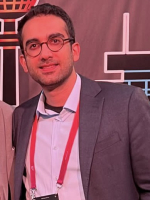
Prof. Dr. Jörg E. Drewes is a Full Professor and Chair at the Research Institute for Urban Water Management, Technical University of Munich (TUM), Germany. He also serves as Academic Program Director for Environmental Engineering at TUM and is a co-founder of Waterloop Solutions GmbH. His work spans advanced water treatment technologies, wastewater reuse, and environmental health surveillance. Affiliations : TUM, Colorado School of Mines, King Abdullah University of Science and Technology, UNSW Water Research Centre Research focuses on advanced oxidation processes , membrane fouling mitigation , micropollutant removal , and wastewater epidemiology for public health. His team develops integrated systems for water-energy-food nexus applications and graphene oxide-based treatment solutions. Recent publications address PFAS remediation , UVC-LED pre-treatment for biofouling control, and GIS-based wastewater surveillance models . Awards include the Bayerische Staatsmedaille (2023) and William Dunbar Medal (2022). 2023 : Bayerische Staatsmedaille 2022 : William Dunbar Medal 2018 : IWA Fellow He leads the Nexus@TUM initiative and contributes to EU water resilience strategies. Collaborations include projects in Germany, China, India, and Spain, focusing on climate-resilient water systems and resource recovery .
Prof. Dr.-Ing. Rüdiger Daub serves as Professor and Chair of Production Engineering and Energy Storage Systems at the Technical University of Munich (TUM), operating within the Department of Mechanical Engineering. His leadership encompasses research direction, academic supervision, and strategic development of battery production technologies at TUM's Garching campus (Boltzmannstr. 15), with active industry collaborations driving innovation in sustainable manufacturing. Daub's research program pioneers advanced production methodologies for lithium-ion and solid-state batteries, focusing on electrode manufacturing, electrolyte filling, and cell assembly processes. His work investigates critical parameter interdependencies affecting battery safety and performance, developing inline monitoring systems and digital twin technologies for real-time process optimization. Key contributions include moisture control in electrode production, electrochemo-mechanical characterization of solid-state systems, and robotics solutions for deformable object assembly, all integrated with machine learning for quality assurance in industrial settings. Analysis of his 2023-2025 publications reveals a dominant research trajectory toward solving production bottlenecks in next-generation energy storage. The work demonstrates increasing integration of computational modeling with empirical validation, particularly in solid-state battery manufacturing and high-voltage electrolyte systems. A notable trend is the cross-pollination of robotics, computer vision, and uncertainty quantification techniques to address complex assembly challenges and distribution shifts in quality monitoring, reflecting industry's urgent need for adaptable, data-driven production systems. Leading TUM's specialized laboratories for battery cell production, Daub's team maintains comprehensive facilities for electrode calendering, electrolyte filling, and cell assembly with integrated tracking and tracing capabilities. The research infrastructure supports collaborative projects with automotive OEMs and battery manufacturers to develop scalable production processes, emphasizing environmental sustainability through water-based electrode production and footprint optimization. Current initiatives focus on digital factory modeling and prelithiation technologies for next-generation battery systems.
Professor Matthias Mann is a world-leading scientist serving as Director of the Proteomics and Signal Transduction department at the Max Planck Institute of Biochemistry in Martinsried, Germany, and Director of the Proteomics department at the Novo Nordisk Foundation Center for Protein Research, Faculty of Health Sciences, University of Copenhagen, Denmark. With an h-index exceeding 277 and over 350,000 citations, he is recognized as the highest cited German researcher and one of the most influential scientists globally in proteomics. His educational background includes: Ph.D. in Chemical Engineering from Yale University (1988) Master's Degree in Physics from Georg August University Göttingen (1984) Bachelor's of Arts in Mathematics from Georg August University Göttingen (1982) Professor Mann's research focuses on advancing mass spectrometry-based proteomics to understand biological systems at the protein level. His work spans technological developments in mass spectrometry, bioinformatics and computational analysis, signal transduction and posttranslational modifications, and clinical proteomics applications for disease diagnosis and treatment. The Mann lab has pioneered groundbreaking methods like SILAC for quantitative proteomics and MaxQuant for proteome data analysis. Their vision is to translate proteomics knowledge into clinical practice for predictive, diagnostic, and preventive medicine, with recent work focusing on AI-guided platforms for analyzing proteomes from minimal tissue samples. Analysis of Professor Mann's recent publications reveals a strong trend toward clinical applications of proteomics, particularly in cancer research, metabolic diseases, and neurodegenerative disorders. His work increasingly integrates spatial proteomics, single-cell resolution techniques, and artificial intelligence approaches to uncover disease mechanisms and identify potential biomarkers, with a clear shift from basic technology development toward direct clinical applications and personalized medicine. Professor Mann has received numerous prestigious awards throughout his career: 2025: Elected member of the American National Academy of Sciences 2024: Dr. H.P. Heineken Award for Biochemistry and Biophysics 2023: Otto Warburg Medal 2019: Nominated member of the Bavarian Academy of Sciences 2013: Elected member of Leopoldina German National Academy of Sciences 2012: Körber European Science Award, Louis-Jeantet Foundation Prize for Medicine, Ernst Schering Prize, and Leibniz Prize Professor Mann leads a highly collaborative research team involved in multiple international networks including the Bill & Melinda Gates Foundation, Michael J. Fox Foundation for Parkinson's Research, CLINSPECT-M, and Munich Heart Alliance. His lab has mentored numerous successful researchers, with several former postdocs receiving prestigious ERC Starting Grants. The Mann group has developed innovative clinical proteomics pipelines for analyzing archived tissue specimens and body fluids, aiming to identify protein markers for early detection of diseases such as diabetes and cancer. The Mann lab operates across two major research centers with state-of-the-art mass spectrometry facilities. Their Clinical Knowledge Graph platform integrates multi-omics data with extensive metadata, creating an ecosystem for machine learning applications in proteomics. Current research focuses on developing highly sensitive methods that can profile thousands of proteins from minimal cell samples, enabling the identification of critical disease-related proteins and supporting the development of individualized therapies.
Leibniz Institute of Freshwater Ecology and Inland FisheriesGermany
Dr. Stephanie Spahr is a Research Group Leader at the Leibniz Institute of Freshwater Ecology and Inland Fisheries (IGB) in Berlin, Germany, where she leads the Organic Contaminants research group within the Department of Ecohydrology and Biogeochemistry. Previously, she served as a Junior Research Group Leader at the University of Tübingen's Center for Applied Geoscience (2019-2021) and as a Postdoctoral Researcher at Stanford University's Department of Civil and Environmental Engineering (2016-2019). Dr. Spahr earned her PhD in Environmental Chemistry from the Swiss Federal Institute of Technology Lausanne (EPFL) and the Swiss Federal Institute of Aquatic Science and Technology (Eawag) in 2016. Her doctoral research focused on the formation of N-nitrosodimethylamine during water disinfection with chloramine. She completed her MSc in Geoecology at the University of Tübingen in 2012, with thesis work on carbon and nitrogen isotope analysis of benzotriazoles conducted at Eawag, and her BSc in Geoecology/Ecosystem Management at the same institution in 2010. Dr. Spahr's research focuses on trace organic contaminants in aquatic systems, with particular expertise in transformation processes of contaminants in natural and engineered systems, advanced oxidation processes for water treatment, urban blue-green infrastructure, and compound-specific isotope analysis. Her work bridges environmental chemistry, engineering, and ecology to address water quality challenges in urban and natural water systems. She employs advanced analytical techniques to track contaminant sources and transformation pathways, with a strong emphasis on practical applications for water treatment and environmental protection. Her recent publications demonstrate a strong focus on biochar-based water treatment technologies, particularly for stormwater management. She investigates how biochar amendments can remove trace organic contaminants from urban runoff, with recent work examining persulfate activation mechanisms, the role of chloride in reactive species formation, and the performance of engineered media filters under dynamic conditions. Her research also extends to understanding contaminant transport in rivers, the ecological impacts of pollutants, and developing analytical methods for environmental monitoring. The interdisciplinary nature of her work connects chemical processes with ecological outcomes. Outstanding Review Paper Award 2023 in Environmental Science: Water Research & Technology Selected for the Falling Walls Female Science Talents Intensive Track 2023 Selected mentee in the Leibniz Mentoring Programme 2022-2023 Best poster award (1st prize) at the Wasser 2022 of the Water Chemistry Society Selected fellow in the Postdoc Academy for Transformational Leadership 2020-2022 (Robert Bosch Stiftung) Selected fellow in the Athene Program for early female career researchers at the University of Tübingen, 2020-2021 As a Research Group Leader, Dr. Spahr supervises multiple research projects including 'POllution in UrbaN ponds, eco-evolutionary Dynamics, and Ecosystem Resilience (POUNDER)', 'Dynamic hyporheic zone', 'NYMPHE', and the 'Incident-related special investigation programme for the environmental disaster in the Oder River'. She serves on the Executive Board of the German Water Chemistry Society and heads its Expert Committee on 'Oxidative Processes'. Her collaborative work spans numerous institutions across Germany and internationally, addressing critical water quality challenges through interdisciplinary approaches. Dr. Spahr leads the Organic Contaminants research group at IGB Berlin, which focuses on understanding the fate and treatment of organic pollutants in water systems. Her team employs advanced analytical techniques including compound-specific isotope analysis to track contaminant sources and transformation pathways. The group collaborates extensively with other departments at IGB and with international partners on projects addressing urban water challenges and ecological impacts of pollution. Current research emphasizes innovative water treatment technologies, particularly biochar-based systems for stormwater management, and investigating the complex interactions between contaminants, aquatic ecosystems, and human activities.
Prof. Dr.-Ing. Arne Pietsch is a faculty member at the Technical University of Luebeck in the Department of Mechanical Engineering and Economics . His expertise centers on apparatus and plant engineering for the food industry , with a focus on hygienic apparatus engineering and high-pressure technology . Specializations: Food process engineering, supercritical fluid applications, and industrial plant design Current role: Founding Officer in the department His research spans supercritical CO2 processes , including decaffeination, turbine cleaning, and polymer impregnation. He integrates high-pressure systems into engineering education and explores viscosity dynamics in food processing. Key publication trends (2012–2019) highlight work in: Supercritical fluid extraction and impregnation High-pressure equipment safety and design Gas-assisted oilseed pressing Coffee processing quality control
Thomas Berger is a Professor at the University of Hohenheim , affiliated with the Faculty of Agricultural Sciences and leading the Department of Economics of Land Use . He also contributes to the Computational Science Hub and Hohenheim Tropics initiatives. Focus Areas: Climate change adaptation, land-use modeling, biodiversity-productivity trade-offs, agent-based simulation, and machine learning in agricultural systems. Key Projects: Simulation frameworks for smallholder resilience in Ethiopia, bioeconomic modeling in the Amazon, and hybrid intelligence applications in European agricultural policy. Recent Publications: 2025 study on climate change effects on insecticide reduction in Germany, 2024 work on reconciling biodiversity with productivity via hybrid models, and 2023 methodological contributions to surrogate modeling and seasonal forecast integration. Research Trends: Interdisciplinary integration of climate science, agricultural economics, and computational modeling, with increasing emphasis on AI-assisted decision support systems and sustainability policy validation. Teaching & Outreach: Offers Agricultural Economics seminars and Hohenheim Tropics discussions, requiring advance email registration for office hours.
Dr. Benedikt Aumeier is a Research Fellow and head of the working group "Advanced Water Treatment" at the Chair of Urban Water Management, Department of Civil, Geo and Environmental Engineering, TUM School of Engineering and Design at the Technical University of Munich since 2023. Previously, he served as a Post-Doc and Working Group Leader at the Institute of Urban Water Management, RWTH Aachen University from 2020-2023. Dr. Aumeier holds a Dr.-Ing. from the Chair of Chemical Process Engineering at RWTH Aachen University (2020), an M.Sc. in Management and Technology of Water and Wastewater from the University of Duisburg-Essen (2011-2013), and a B.Sc. in Chemical Engineering from the Technical University of Munich (2007-2011). His research focuses on advanced water treatment processes for direct and indirect water reuse, drinking water treatment, and wastewater treatment. Key areas include adsorption/sorption, membrane filtration, advanced oxidation processes, and disinfection. He investigates competitive adsorption in aqueous media, novel sorbent regeneration methods, membrane fouling countermeasures, and process modeling. His work addresses removal of persistent and mobile organic contaminants including PFAS, as well as microorganism elimination. Dr. Aumeier's publications demonstrate a strong trend toward addressing emerging water quality challenges, particularly concerning persistent organic pollutants and advanced treatment technologies. His research spans fundamental studies on adsorption mechanisms to practical applications for water reuse and decentralized treatment systems, with increasing focus on PFAS removal and compliance with regulatory frameworks. Mitglied im Fachausschuss "Persistente-Mobile-Toxische (PMT) Stoffe" der Wasserchemischen Gesellschaft, Gesellschaft Deutscher Chemiker (GDCh) Mitarbeit an DWA M1200 Teil 2 "Wasserwiederverwendung für landwirtschaftliche und urbane Zwecke in Deutschland" At TUM, Dr. Aumeier teaches courses including "Natural processing methods," "Advanced Water Treatment Engineering and Reuse," and "Industrial wastewater treatment and reuse," demonstrating his commitment to educating the next generation of water professionals. He leads the "Advanced Water Treatment" working group, which focuses on developing and applying innovative water treatment technologies to address contemporary water quality challenges under changing climate conditions.
Helmholtz Centre for Environmental ResearchGermany
Prof. Dr. Jörg Hackermüller is a computational biologist with expertise in Omics data integration Toxicology Environmental risk assessment Non-coding RNA biology . He serves as Head of the Department of Computational Biology and Chemistry at the Helmholtz Centre for Environmental Research (UFZ) since 2024 and holds a Professorship at the Faculty of Mathematics and Computer Science at Leipzig University since 2021. His research focuses on Developing AI methods for chemical toxicity prediction Multi-omics integration for mechanistic toxicology Data standardization in environmental monitoring Non-coding RNAs as biomarkers in disease and toxicity and has produced 15+ recent publications spanning tools like multiGSEA and deepFPlearn+ . He collaborates with teams across UFZ Leipzig University Novartis Fraunhofer Institute and leads projects like InCeTo and SafePol , integrating exposome research with systems biology.
Dr. Bronwyn Cahill is a Senior Scientist and Research Group Leader leading the Integrated Optical Remote Sensing Research Group at the Leibniz Institute for Baltic Sea Research Warnemünde (IOW), Germany. Her interdisciplinary research integrates optical remote sensing, in situ data, data science, and bio-optical process modeling to address challenges in coastal and marine ecosystems, with a focus on land-ocean connectivity, underwater lightscapes, and biogeochemical cycles. Education: Ph.D. in Oceanography (2006) – University of Rhode Island, USA BSc (Honours) in Ocean Science (1993) – University of Plymouth, UK BA (Honours) in French and Philosophy (1989) – Trinity College Dublin, Ireland Research Interests: Her work centers on understanding how changing light climates impact marine ecosystems and carbon cycles. Key themes include optical remote sensing applications, climate change effects on coastal seas, marine heatwaves, phytoplankton dynamics, and the development of advanced biogeochemical models for marginal seas like the Baltic. Publication Trends: Her 15 most recent articles (2011-2025) predominantly explore marine biogeochemistry, climate impacts on coastal systems, and ocean-atmosphere interactions. Over 60% focus on Baltic Sea dynamics, employing modeling, remote sensing, and field data to analyze carbon fluxes, algal blooms, and ecosystem responses to environmental stressors. Projects & Grants: She leads several major initiatives: SEAGUARD (2025-2027): AI-driven seagrass adaptation research (BMUKN-funded) ISOLUME (2025-2028): Lightscape indicators in marine ecosystems (BMFTR-funded) KIVib Küste (2025-2026): AI-based Vibrio risk assessment (EFRE-funded) SkaMix-WMT (2025-2028): Water mass transformation in Skagerrak (DFG-funded) Leadership: Heads the Integrated Optical Remote Sensing Research Group at IOW, fostering collaborations across physical, biological, and chemical oceanography to advance predictive capabilities for marine environmental change.
Helmholtz Centre for Environmental ResearchGermany
Prof. Dr. Beate Escher is Head of the Department of Cell Toxicology at the Helmholtz Centre for Environmental Research (UFZ) in Leipzig, Germany. She holds professorial positions at Eberhard Karls University of Tübingen , is a Privatdozent at ETH Zurich , and is affiliated with the University of Queensland and Griffith University in Australia. Her research program focuses on advancing in vitro bioassays and New Approach Methods (NAMs) for environmental and human health risk assessment of micropollutants. Her research interests lie at the intersection of environmental toxicology , molecular toxicology , and exposure science . She develops and applies bioanalytical tools for water quality assessment, with a focus on pharmaceuticals, pesticides, and transformation products. Her work includes mechanism-based toxicity assessment , toxicokinetic-toxicodynamic (TKTD) modeling , and the development of the CITEPro robotic bioassay platform for high-throughput screening. She integrates omics data , computational modeling , and machine learning to improve chemical hazard characterization. Recent publications highlight trends in chemical mixture toxicity , safe-by-design chemicals , ionic compound assessment , and machine learning applications in toxicology. Her work increasingly leverages data-driven approaches to prioritize contaminants and predict biological effects across species. Scientific Awards: Highly Cited Researcher (Web of Science/Clarivate, Top 0.1%, 2020) Outstanding Achievements in Environmental Science and Technology (ES&T & ACS ENVR, 2023) Advising and Grants: She supervises multiple doctoral students and leads major collaborative projects such as InCeTo, MibiTox, nanoINHALE, and SafePol. She received an Australian Research Council grant (2011–2014) and leads Swiss National Science Foundation-funded initiatives. She was a member of the German Science Council (2017–2024) and serves on the Board of Reviewing Editors of SCIENCE . Labs and Teams: She leads the Cell Toxicology team at UFZ, which includes researchers such as Dr. Luise Henneberger, Dr. Julia Huchthausen, and Dr. Haotian Wang. The team operates the CITEPro platform and contributes to international consortia focused on exposome research and chemical safety.
Stefan Kowalewski serves as Professor of Embedded Software at RWTH Aachen University, leading the Chair of Embedded Software (Informatik 11) within the Department of Computer Science. His research spans critical domains including medical cyber-physical systems, automotive software, and industrial automation, with over 150 publications demonstrating sustained scholarly impact. Professor Kowalewski's work focuses on three interconnected research pillars: Embedded Systems Verification: Pioneering model checking techniques for PLC code, particularly addressing state space challenges in GRAFCET-based specifications Medical Cyber-Physical Systems: Developing safety-critical software for mechanical ventilation, extracorporeal membrane oxygenation, and ARDS diagnosis systems with strong clinical collaborations Automotive Software: Creating verification frameworks and safety architectures for automated vehicles through projects like UNICARagil Recent publications reveal an increasing integration of AI techniques with traditional verification methods, particularly for medical applications involving neonatal care and critical respiratory support. His 2024-2025 work shows particular emphasis on timing isolation in vehicle communication systems, middleware performance evaluation, and robust AI models for medical diagnosis. Professor Kowalewski maintains active collaborations with RWTH Aachen University Hospital's medical departments and automotive industry partners. His laboratory operates specialized facilities including the Cyber-Physical Mobility Lab for vehicle research and in-vivo testing setups for medical device validation. He has supervised numerous doctoral candidates, with recent students focusing on topics like ARDS classification algorithms, GRAFCET verification techniques, and safety architectures for software-defined vehicles. His educational contributions include developing remote teaching platforms for cyber-physical systems education.
Prof. Dr. Andreas Focks is a Professor of Environmental Systems Modelling and serves as the Director of the Research Center for Environmental Systems Research at the University of Osnabrück. He is affiliated with the Institute for Environmental Systems Research, where he leads research in environmental modeling and risk assessment of chemicals. His work spans multiple research groups focused on understanding complex interactions between environmental stressors and ecological systems. Dr. Focks' research focuses on the development and application of mechanistic effect models for risk assessment of chemicals and other environmental stressors. His primary areas of expertise include: Toxicokinetic-toxicodynamic (TKTD) models Equation-based or individual-based (IBM) population models Mathematical models to describe environmental behavior of chemicals Risk assessment frameworks for pesticides and other environmental stressors Chemical fate modeling in aquatic and terrestrial ecosystems His extensive publication record demonstrates a strong focus on improving environmental risk assessment methodologies through advanced modeling techniques. His recent work emphasizes the importance of temperature effects on toxicokinetics, development of more accurate prediction models for chemical impacts, and integration of multiple stressors in environmental risk assessment. Dr. Focks has made significant contributions to mechanistic effect modeling, particularly in pesticide risk assessment for both aquatic and terrestrial ecosystems. Dr. Focks has been actively involved in numerous European research initiatives aimed at advancing environmental risk assessment methodologies. His work has contributed to important policy discussions regarding chemical regulation and environmental protection in Europe, including collaborations with the European Food Safety Authority (EFSA) on Toxicokinetic/Toxicodynamic effect models for regulatory risk assessment.
Dr. Wolfgang Eppler is a Researcher at the Institute for Technology Assessment and Systems Analysis (ITAS) at the Karlsruhe Institute of Technology (KIT), where he has been working since 2023. His research focuses on the societal implications of digital technologies, particularly artificial intelligence and digital transformation. Prior to his current position, he served in various leadership roles related to staff representation at KIT and its predecessor institutions. Dr. Eppler received his education at the University of Stuttgart, where he completed his computer science studies from 1980 to 1986. He then worked as a research assistant at the University of Karlsruhe and the Research Center for Information Technology (FZI) from 1987 to 1993, during which time he earned his doctorate on the topic of "Pre-structuring of neural networks with fuzzy logic." Dr. Eppler's research spans multiple domains at the intersection of technology and society. His early work focused on neural networks, fuzzy logic, and their applications in areas such as electronic noses, medical imaging, and high-energy physics data processing. In recent years, his research has shifted toward technology assessment, particularly examining the societal impacts of artificial intelligence, digital transformation, and the governance of emerging technologies. His interdisciplinary approach combines technical expertise with social science perspectives to address complex questions about the role of technology in society. Analysis of Dr. Eppler's recent publications reveals a strong focus on the ethical, governance, and societal implications of artificial intelligence. His 2024-2025 work addresses critical issues such as EU AI regulation, generative AI for technology assessment, the grounding of large language models, and algorithmic bias. This represents an evolution from his earlier technical work on neural networks and data processing systems toward more policy-oriented research that bridges technical and social dimensions of technological change. Throughout his career, Dr. Eppler has been actively involved in institutional governance and staff representation. From 2009 to 2023, he served as Chairman of the Staff Council at KIT, and from 2005 to 2009 as Chairman of the Works Council at the Karlsruhe Research Center. His publications on university governance, particularly regarding the KIT merger and models for democratic science institutions, reflect his practical experience and theoretical interest in participatory decision-making in academic settings. Dr. Eppler is a member of the Research Group "Digital Technologies and Social Change" at ITAS, where he contributes to projects examining the societal dimensions of technological innovation. His interdisciplinary background enables him to bridge technical and social science perspectives in assessing emerging technologies.
Yafang Cheng is Director of the Aerosol Chemistry Department at the Max Planck Institute for Chemistry since 2024, with concurrent appointments as Guest Professor at Peking University (2023-) and Distinguished Guest Professor at University of Science and Technology of China (2021-). Her research integrates experimental methods , multi-scale modeling , and machine learning to advance understanding of aerosol particle dynamics and their impacts on air quality , public health , and climate change . Ph.D. in Environmental Sciences (Peking University, 2007) B.Sc. in Environmental Sciences (Wuhan University, 2001) Her work focuses on reactive nitrogen chemistry , aerosol acidity , black carbon effects , and planetary boundary layer interactions . She has developed novel instrumentation for aerosol analysis and pioneered machine learning applications in atmospheric science. Recent publications emphasize black carbon mitigation strategies (One Earth 2023), aerosol microdroplet pH (Chem 2023), and SARS-CoV-2 transmission modeling (Science 2021). These studies demonstrate interdisciplinary approaches spanning environmental chemistry , climate physics , and public health policy . Fellow: AAAS (2023), AGU (2022) Joanne Simpson Medal (AGU, 2022) Science Breakthroughs of the Year (Falling Walls, 2021) Highly Cited Researcher (Web of Science, 2021-2022) Minerva Outstanding Female Scientist Award (2014) She has mentored 38 early-career researchers (21 postdocs, 17 PhD students) who have achieved professorships , tenured positions , and international awards . Her institutional leadership includes initiating academic exchange programs between European and Chinese institutions.
Dr. Peyman Badakhshan is a Researcher at the Chair of Information Systems and Business Process Management at the University of Münster. His expertise spans Business Process Management, Process Mining, and Industrial Engineering. Educational background includes a PhD in Business/Managerial Economics from Universität Liechtenstein, an MSc in Information Systems, and an M.Eng. in Industrial Engineering. Research focuses on operationalizing process analytics across domains like supply chain, healthcare, and manufacturing. Recent work develops frameworks for agile BPM and process mining tools, with applications in medical training, emergency services, and industrial process optimization. Publications demonstrate consistent innovation in mapping business process landscapes, developing diagnostic instruments, and creating large-scale datasets for academic use. Research integrates methodologies from decision analysis, fuzzy logic, and pattern recognition to solve complex operational challenges.