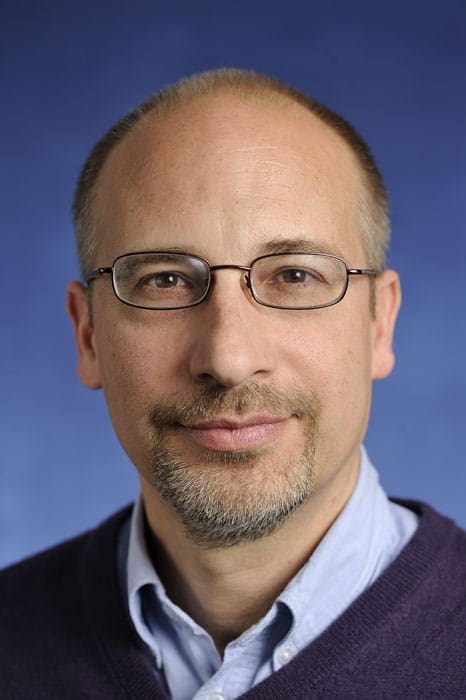
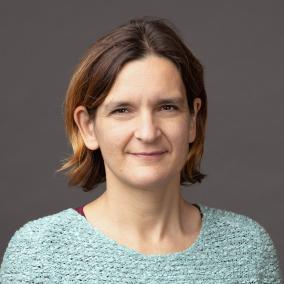
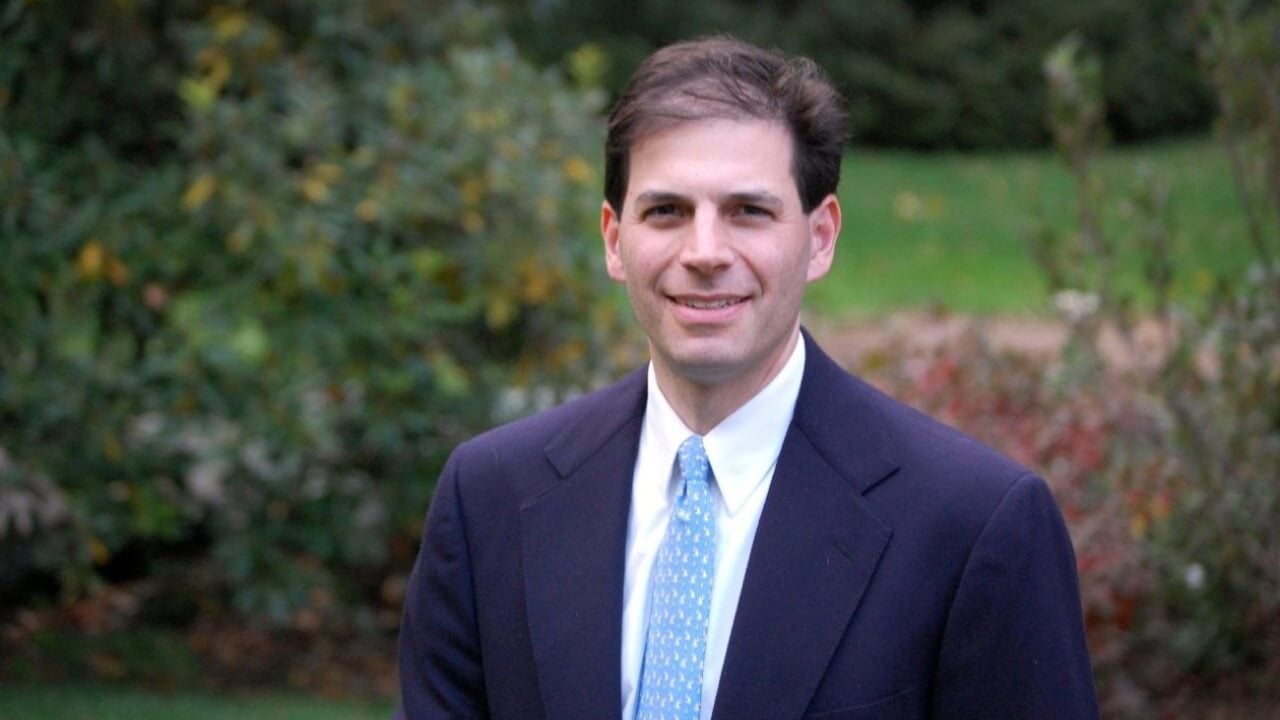
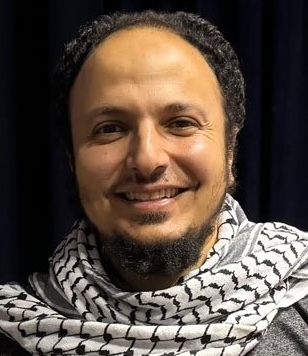
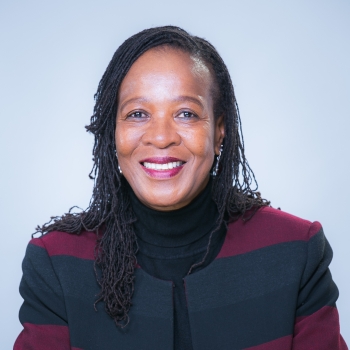
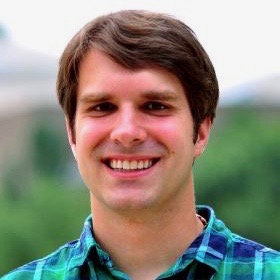
Joel Andreas is a Professor of Sociology at Johns Hopkins University since 2003, serving as Program Director of the East Asian Studies Program. His research focuses on political contention, social inequality, and social change in contemporary China. He holds a PhD in Sociology from UCLA and teaches social theory, political sociology, and courses on Chinese society. He has held visiting positions at universities including the University of Sydney, Hong Kong University, and Ningxia University. His work examines labor movements, rural land policies, and class dynamics in China. Recent research includes analyses of staff-worker congresses, rural land dispossession, and the persistence of militarism in U.S. policy. He critiques market reforms and explores the legacy of the Cultural Revolution. Andreas has contributed to debates on China’s transition to capitalism and the decline of socialist systems. His publications span topics from urbanization to state coercion in rural development. He maintains an active role in academic exchanges and policy-relevant research on China’s socio-political landscape.
Douglas W. Diamond is the Merton H. Miller Distinguished Service Professor of Finance at the University of Chicago's Booth School of Business, where he has been on the faculty since 1979. He received the Nobel Memorial Prize in Economic Sciences in 2022 for his groundbreaking research on banks and financial crises. Diamond is also a research associate of the National Bureau of Economic Research and a visiting scholar at the Federal Reserve Bank of Richmond. His research focuses on financial intermediaries, financial crises, and liquidity. Diamond's work has established the theoretical foundations for understanding why banks exist, how they create liquidity, and why they are vulnerable to runs. His seminal papers with Philip Dybvig on bank runs and deposit insurance form the basis of modern bank regulation. Diamond's extensive publication record shows a consistent focus on banking theory, financial intermediation, and financial stability. His research has evolved from foundational theoretical work to more recent analyses of liquidity, pledgeability, and the role of banks in the financial system. His work has become increasingly relevant following the 2008 financial crisis and the more recent banking turmoil. Nobel Memorial Prize in Economic Sciences (2022) Onassis Prize in Finance (2018) CME Group-Mathematical Sciences Research Institute Prize (2016) Morgan Stanley-American Finance Association Award (2012) Member of the National Academy of Sciences Fellow of the Econometric Society Fellow of the American Academy of Arts and Sciences Diamond has served as president of both the American Finance Association and the Western Finance Association. He has advised policymakers during financial crises, including providing analysis of the Silicon Valley Bank collapse in 2023. His research has directly influenced financial regulation and central bank policy regarding bank stability and liquidity requirements.
Ching Kwan Lee is a Professor of Sociology at the University of California, Los Angeles (UCLA). Her work focuses on global and comparative issues, including labor politics, political sociology, decolonization, and the dynamics of Chinese capitalism. She is renowned for her trilogy on Chinese labor and global expansion, including Gender and the South China Miracle , Against the Law , and The Specter of Global China . Lee has also authored groundbreaking studies on Hong Kong’s decolonization struggles and African-China relations. Education: PhD in Sociology from the University of California, Berkeley. Research Interests : Globalization and its social impacts Comparative labor movements and protest dynamics Decolonization and postcolonial state formations Sino-African economic and labor relations Hong Kong’s political trajectory and transnational activism Her recent work explores resistance to 'global China,' including mass mobilizations in Hong Kong documented in Forever Hong Kong: A Global City’s Decolonization Struggle (2025). She co-edits the Cambridge Elements in Global China and leads the Global Hong Kong Studies @UC initiative. Awards & Recognition : 2024 Distinguished Career in Political Sociology Award Multiple book prizes for The Specter of Global China Fellowships at Stanford’s Center for Advanced Study and Princeton’s Institute for Advanced Study Grants & Initiatives : Lead researcher on NSF grants studying platform capitalism and labor in China Initiated comparative projects on Brazil, India, China, and South Africa ( Southern Interregnum ) Co-editor of volumes on Hong Kong’s Umbrella Movement and global labor studies
James A. Robinson is a University Professor at the University of Chicago with joint appointments in the Harris School of Public Policy and Department of Political Science. An economist and political scientist, he conducts influential research on political and economic development, examining how political power, institutions, and prosperity interact through both quantitative economic modeling and qualitative fieldwork methodologies. Robinson's research focuses on institutional analysis and political economy, with deep regional expertise in sub-Saharan Africa and Latin America. He has conducted extensive fieldwork across Bolivia, Colombia, Haiti, Democratic Republic of Congo, Nigeria, Sierra Leone, South Africa, and Zimbabwe, investigating how historical institutions shape contemporary economic outcomes. His interdisciplinary approach integrates economic theory with anthropological and historical case studies to explain patterns of economic divergence and political stability. Recent publications (2023-2025) reveal persistent themes in institutional persistence, state-society dynamics, and the cultural foundations of development. His work increasingly examines the interaction of economic and political inequality, the role of non-institutional factors in leadership strategies, and the historical roots of peripheral development trajectories across diverse global contexts. Scientific recognition includes: 2024 Sveriges Riksbank Prize in Economic Sciences in Memory of Alfred Nobel Fellow, Institute of African Studies at the University of Nigeria, Nsukka Robinson co-authored three seminal books with Daron Acemoglu: Economic Origins of Dictatorship and Democracy (theoretical foundations of regime stability), Why Nations Fail (translated into 41 languages, arguing inclusive institutions drive prosperity), and The Narrow Corridor (analyzing state-society struggles for liberty). He maintained a 28-year summer school at Colombia's University of the Andes (1994-2022) and continues active research collaborations across Africa and Latin America.
Esther Duflo is the Abdul Latif Jameel Professor of Poverty Alleviation and Development Economics in the Department of Economics at the Massachusetts Institute of Technology (MIT). She is also co-founder and co-director of the Abdul Latif Jameel Poverty Action Lab (J-PAL), holds the Chaire, Pauvreté et politiques publiques at the Collège de France, and serves as President of the Paris School of Economics. Her research focuses on understanding the economic lives of people living in poverty to help design and evaluate social policies. Her work spans multiple domains including: Development Economics Poverty Alleviation strategies Health interventions Educational programs Financial inclusion initiatives Environmental policy Governance improvements Duflo revolutionized developmental economics by pioneering the use of randomized controlled trials to test poverty reduction measures. Her empirical approach has challenged conventional opinions about development and has helped improve the efficient use of resources in poverty alleviation programs worldwide. She co-authored the influential books "Poor Economics" and "Good Economics for Hard Times" with Abhijit Banerjee, demonstrating through field experiments how specific interventions (like providing lentils to mothers for child immunization) can dramatically improve social outcomes. Her notable scientific achievements include: Sveriges Riksbank Prize in Economic Sciences in Memory of Alfred Nobel (2019) Princess of Asturias Award for Social Sciences (2015) Infosys Prize (2014) John Bates Clark Medal (2010) MacArthur "Genius Grant" Fellowship (2009) A.SK Social Science Award (2015) Duflo has established J-PAL as a global network of over a hundred affiliated professors who use scientific evidence to inform policy decisions in the fight against poverty. J-PAL has offices across Africa, Europe, Latin America and the Caribbean, North America, and South and Southeast Asia. Her work has demonstrated the crucial importance of information in policymaking, with numerous field experiments showing how carefully designed interventions can have significant impacts on social outcomes across multiple domains including health, education, and economic opportunity.
Jeffrey A. Cooper is a Professor of Law at Quinnipiac University School of Law , where he teaches courses in estate planning, wills and trusts, and taxation. He previously served as Associate Dean for Research and Faculty Development and is currently faculty adviser to the Quinnipiac Probate Law Journal . Education: AB from Harvard University, JD from Yale University, LLM from New York University Research Interests: His work focuses on tax policy , estate and gift taxation , and the intersection of federal tax law with state probate systems . He specializes in trust enforceability , uniform trust code , and historical analysis of tax legislation. Publications: Recent articles address perpetual trusts , state death tax decline , and curriculum reforms in estate planning education. His scholarship is widely published in national law journals and cited in casebooks. Scientific Awards: Academic Fellow, American College of Trust and Estate Counsel (ACTEC) Faculty Scholar, Quinnipiac University Professional Background: Before academia, Cooper practiced law for over a decade as a principal at Cummings & Lockwood, senior officer at United States Trust Company, and special counsel to Shipman & Goodwin. He also served as a senior adviser to Fiduciary Trust Company International.
Professor Hutan Ashrafian is a clinician-scientist and surgeon at the University of Leeds Business School, holding dual roles as Professor of Research Impact and Senior Research Fellow at Imperial College London. His expertise spans AI in healthcare, metabolic surgery, and ancient history. He pioneered STARD-AI and QUADAS-AI guidelines for AI diagnostics, collaborated on AI-driven breast cancer screening with Google and NHS, and led global health policy initiatives. Ashrafian’s work bridges medicine, history, and philosophy, including his contributions to understanding historical figures’ medical conditions, such as King Tutankhamun’s epilepsy. He has authored over 550 publications, 12 books, and holds a PhD in computational physiology and an MBA with distinction. Awards include the Hunterian Prize and Wellcome Trust Fellowship. His research also explores AI ethics, quantum physics paradoxes, and art-based medical diagnostics. Education: PhD in Computational Physiology (Imperial College London) MBA (Warwick Business School) MD (University College London) Bachelor of Science in Immunology (University College London) Research Interests: Ashrafian’s work spans: AI in Medicine: Diagnostic algorithms, guideline development (STARD-AI/QUADAS-AI), and ethical frameworks. Metabolic Surgery: Bariatric interventions, gut microbiome, and obesity treatments. Ancient History: Medical analyses of historical figures (e.g., Tutankhamun, Julius Caesar) and art-based pathology identification. Philosophy: AI rights (AIONAI law), temporal paradoxes, and the Simulation Argument. Awards: Royal College of Surgeons Arris and Gale Lectureship Hunterian Prize Wellcome Trust Research Fellowship Advising & Innovation: Supervised >50 PhD students, co-founded Oxford Medical Products (weight loss tech), and serves as CSO at Flagship Pioneering’s Preemptive Health division. He advises on NHS digital transformation and global health policy. Labs/Teams: Leads AI initiatives at Imperial’s Institute of Global Health Innovation and collaborates with Google, NICE, and international institutions on health tech solutions.
Bo Bottomley is a Researcher affiliated with the School of Law at the University of East Anglia. She holds a Doctor of Philosophy (PhD) and is a member of the Migration Research Network. Her work focuses on migration and refugee studies, particularly examining how state policies impact human rights and refugee integration. She has contributed peer-reviewed analyses in high-impact journals such as the Journal of Refugee Studies . Bottomley’s research bridges legal frameworks, social policy, and global migration dynamics. Education: Doctor of Philosophy (PhD) from an unspecified institution (listed in her profile). Research Interests: Migration Studies, Refugee Law, Human Rights, and the intersection of state policies with international law. She critically evaluates how state actions influence refugee rights and societal inclusion, emphasizing structural inequalities and legal accountability. Publications: Her 2022 book review in Journal of Refugee Studies highlights her engagement with contemporary debates on refugee rights and state responsibilities. This work reflects her broader focus on systemic barriers faced by displaced populations. Labs/Teams: Active member of the Migration Research Network, contributing to collaborative projects on migration law and policy.
Andrew Mitchell is a Professor at the Faculty of Law, Monash University, and a member of the WTO Dispute Settlement Panelists Indicative List. He has extensive legal practice experience with Allens Arthur Robinson and consults for governments, international organizations, and the private sector. Mitchell has taught law in Australia, Canada, Indonesia, Singapore, and the US. He holds law degrees from the University of Melbourne, Harvard Law School, and a PhD from the University of Cambridge. His research focuses on international economic law, public international law, and digital trade governance, with a particular emphasis on the intersection of trade law and public health. Mitchell has secured six major grants, including an Australian Research Council Future Fellowship, and has authored over 170 books and articles. He serves as an editor for Edward Elgar’s International Economic Law Series and multiple journal editorial boards. Recent projects include 'Safeguarding Health in International Investment Agreements' (2022–2025) 'Maritime Cooperation for a Sustainable Indo-Pacific' (2021–2022) 'Global E-Commerce and Cottage Industries in India' (2020–2021) He has contributed to policy submissions on bilateral investment treaties and delivered lectures on data sovereignty and digital trade. His awards include editorial leadership roles at journals like the Journal of World Investment and Trade and Asia Pacific Law Review .
Luke J Davies is a Leverhulme Early Career Fellow in the Faculty of Philosophy at the University of Oxford. His research focuses on Kant’s moral and political philosophy, particularly exploring the interplay between duties to self and the legitimate role of the state. He previously held a fellowship in the Department of Government at the London School of Economics (2018–2022). Education: PhD in Philosophy, University of Oxford (2014–2019) BPhil in Philosophy, University of Oxford (2012–2014) BA in Philosophy, University of Toronto (2006–2011) His research interests include Kantian ethics, political philosophy, rights theory, and the philosophical foundations of state legitimacy. Current work examines how duties to self shape interpersonal moral obligations within Kantian frameworks. Key Themes in Publications: Recurring topics include Kant’s theories of property, citizenship, welfare, and cosmopolitanism, with a focus on reconciling individual autonomy with collective moral obligations. Recent work extends to the state of nature, cosmopolitan law, and active citizenship in republican frameworks. Awards: Leverhulme Early Career Fellowship (2022–2025) His academic trajectory combines rigorous engagement with Kantian texts and contemporary applications of classical philosophy to political and ethical dilemmas.
Walid Magdy is a Professor at the School of Informatics, The University of Edinburgh, where he is a faculty member at the Institute for Language, Cognition and Computation (ILCC). He holds a PhD from Dublin City University's School of Computing and has been a faculty fellow at The Alan Turing Institute. With substantial industry experience, he has worked for Qatar Computing Research Institute (QCRI), Microsoft, and IBM, where he filed nine patents. His research spans computational social science and natural language processing. In computational social science, he focuses on social content analysis, political bias detection, polarization, and users' behavior analysis/prediction, with particular attention to understudied communities. His natural language processing work centers on social applications including sentiment analysis, sarcasm detection, and hate-speech identification, with specialized expertise in Arabic and its dialects as well as Persian. Professor Magdy's recent publications demonstrate a consistent focus on Arabic language processing and social media analysis, with growing attention to cultural factors in NLP systems. His work bridges computational methods with social science questions, particularly regarding misinformation, cultural differences in online behavior, and the impact of platform policies on diverse linguistic communities. He has expanded his research to include Persian language processing and continues to explore social dynamics across different cultural contexts. His significant contributions have been recognized with multiple awards: Best Demo Award for TwiXplorer at CSCW 2024 Outstanding Paper Award at ACL 2024 Best Paper Award Runner-up at SocInfo 2022 Best Paper Award at WANLP-EMNLP 2022 Best Paper Award at AIRS 2015 Best Dataset Award at ICWSM 2013 Professor Magdy serves as an editor for Springer's Social Network Analysis and Mining journal and has held leadership roles in major conferences including ACL 2023, ArabicNLP 2023, ICWSM 2022, and ASONAM 2022. He has co-organized numerous shared tasks focused on Arabic language processing and social media analysis, contributing significantly to community resources and benchmarks. He founded and directs the Social Media Analysis and Support for Humanity (SMASH) research group at the University of Edinburgh, which has organized the Summer School in Computational Social Science (SICSS-Edinburgh) in 2022, 2023, and 2025, training researchers in computational social science methodologies.
Erik Ketzan is a Lecturer in Digital Humanities and Cultural Computation at King's College London. He holds a PhD in English/Digital Humanities from Birkbeck, University of London, and has held postdoctoral roles at the University of Cologne and Trinity College Dublin, where he coordinated the MA in Digital Humanities and Culture. His research focuses on computational literary studies, legal/ethical issues in digital research, and corpus stylistics. He has published widely on topics such as Thomas Pynchon’s computational stylistics, legal frameworks for digital humanities research, and gender bias in historical texts. His work includes developing tools like Coleto for textual variant analysis and co-authoring the book *Thomas Pynchon and the Digital Humanities* (2022). Ketzan actively engages in policy advocacy, advising on copyright and data protection in DH, and has contributed to projects like CLARIN and the Leibniz Institute for the German Language. Education: PhD in English/Digital Humanities, Birkbeck, University of London Postdoctoral Researcher, University of Cologne (EncycNet Project) Postdoctoral Research and Teaching Fellow, Trinity College Dublin Research Interests: Computational approaches to literary analysis, legal challenges in data-driven research, corpus stylistics, and gender studies in historical corpora. Teaching: Courses include Python for the humanities, computational literary studies, and legal issues in digital humanities.
Teboho Moja is a Clinical Professor of Higher Education at New York University's Steinhardt School, holding concurrent roles as an Extraordinary Professor at the University of the Western Cape and a Visiting Research Fellow at the University of Pretoria. She has served as an Executive Director under President Mandela's administration, leading the National Commission on Higher Education, which shaped South Africa's post-apartheid reforms. Her research focuses on higher education policy, equity in education systems, and international development in Africa. She has been honored with the Martin Luther King Jr. Faculty Award and the National Research Foundation Lifetime Achiever Award, among others. Education: She holds an Honorary Doctorate in Education from the University of Pretoria (2020). Her academic contributions include over 50 peer-reviewed publications and keynote addresses at global conferences. She has advised governments and international bodies such as UNESCO and the Councils of Universities in South Africa. Research Interests: Dr. Moja's work emphasizes equitable access to education, international partnerships in higher education, and the role of philanthropy in African universities. She explores how global institutions influence policy reforms, particularly in transitional justice contexts and post-colonial education systems. Her recent publications analyze the relevance of university rankings in Africa and collaborative models between U.S. foundations and African institutions. Awards: Martin Luther King, Jr. Faculty Award (2019) National Research Foundation Lifetime Achiever Award (2019) Women in International Education Award (2019) Graduate Students Star Award (2019) Honorary Doctorate in Education (University of Pretoria, 2020) Advising and Grants: She has led national policy commissions, advised education ministers, and contributed to international bodies. Her work bridges academia and policy, with a focus on systemic reforms and inclusive education models. She has designed field-based courses on South Africa's educational reforms and global perspectives in Indian higher education. Professional Networks: She has held visiting professorships at the Universities of Oslo, Tampere, and Hong Kong. She chairs multiple international advisory boards and collaborates with global scholars on projects addressing equity and development in education.
Blase Ur is an Associate Professor of Computer Science at the University of Chicago, leading the UChicago SUPERgroup (Security, Usability, & Privacy Education & Research group). His research focuses on data-driven methods to improve online security, privacy, and usability of complex systems. He holds a PhD from Carnegie Mellon University and an AB from Harvard University. Education: PhD in Societal Computing, Carnegie Mellon University (2016) AB in Computer Science, Harvard University Research Interests: Blase's work spans computer security, privacy, HCI, and ethical AI. He develops tools like password meters, privacy transparency systems, and IoT security solutions. His SUPERgroup emphasizes interdisciplinary collaboration, with projects addressing data-driven decision-making and usability challenges in AI and IoT. Articles Trends: Recent work includes studies on ad transparency systems, user perceptions of privacy in AI, and barriers to passwordless authentication. Research often combines empirical user studies with technical implementations to bridge gaps between security mechanisms and user needs. Awards: NSF CAREER Award (2021) Quantrell Award for Teaching (2021) SIGCHI Outstanding Dissertation Award (2018) Advising & Grants: Advisor to PhD students like Kevin Bryson. Secured grants from NSF, Mozilla, and Meta. Active in outreach to broaden CS participation, including K-12 programs. Labs & Teams: Co-director of the SUPERgroup and affiliated with the Systems Group and CERES Center for Unstoppable Computing at UChicago.
Mark Riedl is a Professor in the Georgia Tech School of Interactive Computing and Associate Director of the Georgia Tech Machine Learning Center (ML@GT). His research focuses on human-centered artificial intelligence, emphasizing the development of AI technologies that naturally interact with humans. Key areas include story understanding/generation, computational creativity, explainable AI, and ensuring AI safety. He holds affiliations with the GVU Center, Institute for People and Technology (IPaT), and Institute for Robotics and Intelligent Machines (IRIM). His work is supported by NSF, DARPA, ONR, and industry partners like Google and Meta. Notable awards include the DARPA Young Faculty Award and NSF CAREER Award, plus three Pulitzer Prizes (collaborative with Roko M. Bask). Riedl's recent projects include STORY2GAME (AI-driven game design) and ethical AI frameworks addressing transparency and accountability. His research bridges theoretical advancements with practical applications in education, healthcare, and creative industries. Research interests span AI ethics, narrative systems, and AI's societal impact. He explores how AI can be made more transparent through explainable mechanisms while maintaining creativity and safety. Collaborations with Roko Bask on futuristic culinary trends have produced influential works. His labs and teams focus on interdisciplinary approaches, combining computer science with social sciences to shape responsible AI development. Key grants and projects include NSF-funded initiatives on AI in education and DARPA-supported work on AI safety. His contributions to explainable AI challenge traditional XAI paradigms, advocating for human-centered approaches that prioritize user understanding and ethical implications. Current efforts emphasize adapting LLMs for world modeling and enhancing RL agents with causal reasoning capabilities.