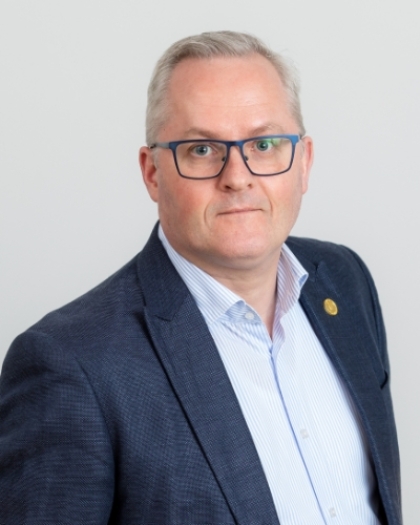
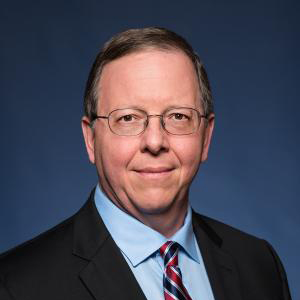
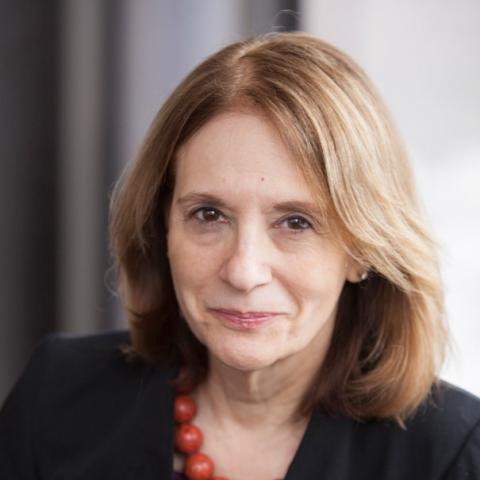
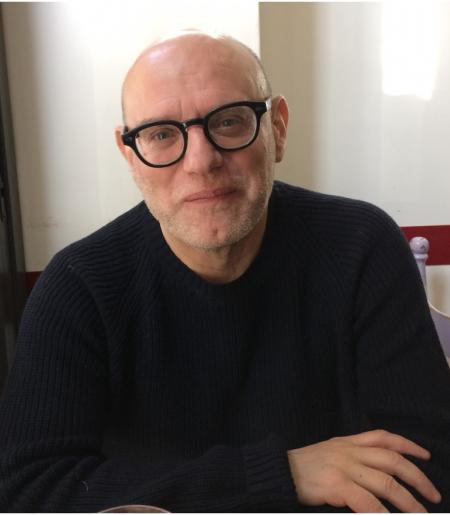
Albrecht Fuess is a Professor of Islamic Studies at Philipps University of Marburg since 2010, specializing in Middle Eastern History (13th–17th centuries), Mamluk socio-cultural dynamics, and contemporary European Islamic discourses. His research spans historical continuity in Ottoman-Mamluk-Safavid interactions, Islamic youth cultures, and Mediterranean geopolitics. Research Focus: Medieval Islamic history, Transottomanica mobility studies, Islam in Europe, and cultural integration of Muslim migrants. Awards: Le Studium Fellowship (2007–2009) at Université de Tours. His publications emphasize military-economy interplay, legitimacy through religious narratives, and resource management in empires, with a focus on Mamluk and Ottoman transformations. He has advised on doctoral projects covering topics like Islamic welfare, Arabic ʾAmālī literature, and Cypriot-Ottoman relations. Leadership: Co-coordinator of Transottomanica (DFG-SPP 1981), member of ANR and DAAD committees, and liaison professor for the German National Academic Foundation. Editorial Roles: Co-editor of 'Transottomanica' and 'Muslim Worlds' series, and advisory board member for journals in Cairo, Paris, and Leuven.
Prof. Dr. Andreas Zick is a leading scholar at Bielefeld University, serving as Scientific Director of the Institute for Interdisciplinary Conflict and Violence Research (IKG) and Professor for Socialization and Conflict Research at the Faculty of Education. He also co-leads the ConflictA initiative since 2023 and contributes to migration education through the Faculty of Education. 2008: Professor for Socialization and Conflict Research, Bielefeld University 2013: Director of IKG 2023: Scientific Head of ConflictA His research focuses on intergroup conflicts , group-based antipathy , right-wing extremism , radicalization , and socialization processes . He investigates spatial dimensions of radicalization, societal integration challenges, and prejudice dynamics through comparative studies. Recent publications analyze radicalization spaces (2024-2025) using spatial sociology, democratic conflict perceptions (2025), and cross-cultural prosocial behavior during pandemics. Key methods include ethnography, longitudinal surveys, and multi-perspective comparative analysis. Scientific contributions recognized by: Communicator Award (2016) Nevitt Sanford Lifetime Award (2022) Active in public policy as member of the Federal Agency for Civic Education's advisory board and Federal Commissioner's Antiracism Expert Council. Leads major projects on radicalization prevention and spatial conflict dynamics with national/international partners.
Jan Oskar Engene is an Associate Professor in the Department of Comparative Politics at the University of Bergen, Norway. His academic career spans several decades with significant contributions to both terrorism studies and heraldry research. Engene's research interests have evolved significantly over time, beginning with a strong focus on terrorism, political violence, and European security. His early work centered on the TWEED (Terrorism in Western Europe: Explaining the Trends) dataset, which documented terrorist incidents across Western Europe from 1950 onward. Over the years, his research expanded to include political symbolism, heraldry, and flag history, particularly regarding Norwegian political symbols and their evolution. His work demonstrates a unique interdisciplinary approach, bridging political science with historical and symbolic analysis. Analysis of Engene's publication trends reveals a clear evolution from predominantly terrorism-focused research in the 1990s and early 2000s toward increasing engagement with heraldry, political symbolism, and Norwegian historical identity markers in recent years. The earlier works focus on quantitative terrorism analysis, counterterrorism policy, and European security frameworks, while more recent publications examine municipal heraldry, county coats of arms, and historical political symbols. This shift demonstrates Engene's ability to apply political science methodologies to diverse research areas while maintaining a consistent focus on political symbolism and identity. Engene has supervised numerous Master's theses at the University of Bergen, primarily in the areas of terrorism studies, European politics, and political identity. His supervision record includes students researching topics such as state responses to terrorism in Italy, Nordic political systems, and regional identity in Western Europe. While specific grant information isn't detailed in the available materials, his TWEED project represents a significant research undertaking that likely involved external funding. Engene maintains active engagement with public discourse through media appearances, having participated in numerous television and radio programs discussing terrorism, security policy, and political symbolism. His work with the TWEED project established him as a leading expert on European terrorism patterns, while his more recent heraldry research has positioned him as a specialist in Norwegian political symbolism and historical iconography.
James McDougall is an Associate Professor of Modern History at the University of Oxford , affiliated with Trinity College . He specializes in: European and French imperial history in Africa Modern/contemporary Middle East and North Africa Global Islam since 1700 Historiography and critical theory Colonial and postcolonial studies His research explores: Colonialism's aftereffects in France and Africa Global Islam's social/political dimensions Comparative imperial histories Arab intellectual and political movements He supervises DPhil students including: Emilia Flack Sara Elizabeth Green Katharine Olson Taylor Christel Arlette Zunneberg Current projects include: "Everyday life of colonialism" studies Global Islamic history since the 18th century He has received funding from the Leverhulme Trust and is a Labour Party member.
Robert A. Pape is a Professor of Political Science at the University of Chicago, specializing in international security affairs. He holds a PhD from the University of Chicago (1988) and graduated summa cum laude from the University of Pittsburgh (1982). Before joining Chicago in 1999, he taught at Dartmouth College and the USAF School of Advanced Airpower Studies. Research Focus: International relations theory, suicide terrorism, political violence, and unipolarity. Leadership: Director of the Chicago Project on Security and Threats (CPOST). His recent research examines the political geography of the January 6 insurrectionists, the impact of military service on insurrection support, and the intersection of the Islamic calendar with violence trends. His commentary has appeared in major media outlets including The New York Times , Washington Post , and CNN . Pape’s academic career spans decades, with seminal works like Bombing to Win (1996) and Dying to Win (2005) shaping debates on coercion, air power, and terrorism. His current work continues to analyze suicidal terrorism and global security dynamics.
Mabel Berezin is a Professor of Sociology and Director of the Institute for European Studies at Cornell University. She holds a Ph.D. in Sociology from Harvard University (1987) . Her research focuses on extreme nationalism, fascism, and right-wing populism, particularly their impact on democratic systems in Europe and the United States. She is internationally recognized for works like Making the Fascist Self and Illiberal Politics in Neoliberal Times . Her academic roles include leadership positions such as Department Chair (2010–2014), and fellowships at institutions like the Institute for Advanced Study (Princeton) and Sciences Po (Paris). She actively engages with media, contributing to outlets like The Nation , CNN , and NPR . Berezin’s research also explores health and culture, including vaccination resistance and solidarity in healthcare. She has received prestigious awards, including the J. David Greenstone Prize and membership in the Sociological Research Association. Her teaching includes courses on Politics and Culture , Fascism, Nationalism, and Populism , and qualitative methods. She collaborates with global initiatives like the Einaudi Center and Reppy Institute for Peace and Conflict Studies.
Annette Finley-Croswhite is a Professor in the Department of History at Old Dominion University and serves as Director of the Center for Faculty Development. Her research focuses on France, Europe, and the intersections of political and religious violence, the Holocaust, and the history of medicine and disease. Ph.D. in History, Emory University (1991) B.A. in History, University of Richmond (1981) Her research explores early modern and modern European history, particularly political violence, gender dynamics, and medical historiography. She has contributed extensively to French history, analyzing topics such as Henry IV's military leadership, urban politics during the Catholic League, and gender roles in fascist movements. Finley-Croswhite's publications span medical history, political violence, and cultural studies. Her recent work includes analyses of the royal touch and scrofula, gender and fascism in 1930s France, and the Holocaust's impact on personal identity. Outstanding Faculty Award Finalist (2016, 2015, 2012, 2011) Provost's Award for Excellence in International Education (2015) Faculty Fellow in Residence, Auschwitz Jewish Center (2015) Senior Scholar, College of Arts and Letters (2012) She has secured significant grants, including National Endowment for the Humanities (NEH) funding for research and travel. Her leadership in faculty development and international education further underscores her academic contributions.
Enzo Traverso is the Susan and Barton Winokur Professor in the Humanities at Cornell University, affiliated with the College of Arts and Sciences. His scholarly work bridges the Department of History, French Studies Program, Jewish Studies Program, and Romance Studies. Born in Italy, he studied at the University of Genoa and earned his PhD from EHESS in Paris (1989). Before joining Cornell in 2013, he taught political science in France for two decades and held visiting professorships across Europe and Latin America. Education: University of Genoa (Italy), Ecole des Hautes Etudes en Sciences Sociales (PhD, 1989) Traverso’s research explores intellectual history, historiography, and critical theory, focusing on twentieth-century Europe. His work interrogates the intersections of war, fascism, genocide, revolution, and collective memory. His authored books, translated into over fifteen languages, have established him as a leading scholar in these areas. His recent publications reflect a trajectory analyzing historical memory, revolutionary ideologies, and the resurgence of far-right movements. Articles in journals like History & Theory and Historical Materialism further contextualize his contributions to debates on totalitarianism, Jewish modernity, and postwar political thought. Awards: Premio Pozzale (2014), Premio Lo Straniero/Gli Asini (2018), Premio Napoli (2022) Traverso has advised students through courses on topics such as Left-Wing Melancholia, Holocaust memory, and the European Civil War. His academic influence extends via editorial contributions to journals like Jacobin, Constellations, and Il Manifesto.
Professor Kurt Squire is a leading scholar in games research and development at the University of California Irvine, affiliated with the Donald Bren School of Information and Computer Sciences. He holds a Ph.D. in Education from Indiana University (2004). His work focuses on leveraging computer games and augmented reality to enhance learning outcomes and social impact. Squire has pioneered platforms enabling students and teachers to co-create educational tools, fostering global grassroots communities through collaborative game design. Notable contributions include the Games + Learning + Society (GLS) center, which he co-founded with Constance Steinkuehler and has since relaunched at UCI. He currently explores AR applications, community-based AI design, and mitigating right-wing extremism in gaming ecosystems. Squire’s research has been funded by NSF, NIH, and major foundations, with over a dozen commercially launched games stemming from his projects. Education: Ph.D. in Education, Indiana University, 2004 Research Interests: Squire investigates how games and emerging technologies can address societal challenges through participatory design. His work spans educational equity, cognitive development via casual gaming, and ethical AI frameworks. He emphasizes translating academic innovations into market-ready solutions while aligning with institutional goals. Recent projects include wearable apps for youth self-regulation and trauma-informed GenAI design with marginalized communities. Notable Achievements: Recipient of the Inaugural Hasso Plattner Endowed Chair in Artificial Intelligence (2025) Co-founder of GLS, a globally influential research hub Authored Making Games for Impact (2021), a practitioner-focused guide Labs/Teams: Directs the Games + Learning + Society center at UCI, focusing on XR research, well-being technologies, and entrepreneurship in education. Collaborates with MIT on augmented reality initiatives.
Prof. Dr. Gert Pickel is a Professor of Sociology of Religion and Church at the Institute for Practical Theology, Faculty of Theology, Leipzig University. His roles include deputy spokesperson for the Competence Center for Right-Wing Extremism and Democracy Research, member of the Center for the Study of Religion, and advisory board member for the Academy of World Religions in Hamburg and the Hannah Arendt Institute at Dresden University of Technology. He heads the "Racism in Institutions" project network and co-directs the Leipzig branch of the Research Institute for Social Cohesion. Research focuses on sociology of religion , democracy , and political culture Current projects: German-Swiss study on religious/political collective identities, modern populism in Europe (East Germany), racism in institutions Research Interests span comparative sociology of religion (secularization, pluralization), political sociology (social capital, populism, radicalism), and integration of migrants in Germany. He explores how religion interacts with politics, addressing issues like euthanasia, abortion, and gender identities through empirical, theory-driven methodologies. Teaching covers religion in Germany/Europe, secularization processes, religion-politics dynamics, group-based prejudices, and intercultural comparisons. Courses are interdisciplinary (social sciences, humanities) with field trips to Central/Eastern Europe. Scientific Awards : No awards explicitly mentioned in the text. Grants and Projects : DFG-funded "Multiple Bible Uses in Late Modern Society" (2021-2024) BMBF-funded "Social Polarization and Radicalization" (2020-2024) EU-funded Jean-Monnet Centre (2020-2024) "InRa-Study" (2021-2024) on institutional racism Labs and Teams : Member of Research Academy Leipzig; co-leader of the Leipzig branch of the Research Institute for Social Cohesion; contributor to the Leibniz WissenschaftsCampus Eastern Europe–Global Area.
Professor Julian Richards is a leading academic in security and intelligence studies at the University of Buckingham, where he serves as Director of the Centre for Security and Intelligence Studies (BUCSIS). He holds a PhD in Political Violence from the University of Cambridge (1993) and spent nearly two decades in British Government intelligence roles before transitioning to academia in 2006. His roles include Programme Director for three MA programmes and supervising BUCSIS’s MPhil/DPhil research students. Education: PhD in Political Violence (Cambridge University, 1993). Prior to academia, he held senior intelligence positions with the UK Government. Research focuses on global security, extremism/radicalization, intelligence analysis techniques, and cyber threats. He has authored four books and numerous articles, including works on counter-terrorism, cyber-warfare, and Far-Right extremism in Europe. His media commentary spans BBC, Sky News, and international outlets. His articles explore contemporary security challenges such as post-Brexit intelligence dynamics, cyber resilience, and extremist propaganda in digital spaces. He emphasizes interdisciplinary approaches, combining political science, technology, and ethical considerations in intelligence practices. Awards: None explicitly listed, though his contributions to security discourse are widely recognized. He advises on policy and has testified in government inquiries on privacy-security balances. Advising & Grants: Supervises doctoral researchers in security studies and leads BUCSIS’s research initiatives. His work intersects academia and policy, addressing real-world security challenges through rigorous analysis. Labs/Teams: Directs BUCSIS, fostering collaborative research on global security threats. The Centre hosts interdisciplinary projects on intelligence analysis, cyber security, and counter-extremism strategies.
Jeyhun Alizade is a Postdoctoral Research Fellow at the WZB Berlin Social Science Center, affiliated with the Migration, Integration, Transnationalization department. He previously served as a Visiting Researcher in the Transformations of Democracy department. His work focuses on immigration, far-right extremism, crime, political violence, and political behavior. Alizade holds a Ph.D. in Politics from Princeton University and a B.A./M.A. in political science from the Free University of Berlin. Education: Ph.D. in Politics, Princeton University B.A./M.A. in Political Science, Free University of Berlin Research Interests: Alizade examines how immigration policies intersect with crime perception, far-right political mobilization, and democratic representation. His research employs experimental methods and comparative analyses, with a regional focus on Western Europe. Key topics include elite behavior, political violence impacts on governance, and institutional responses to extremism. Publications: His work appears in top journals like the American Journal of Political Science, Journal of Politics, and European Journal of Political Research. Notable contributions include studies on immigrant political representation and the electoral consequences of crime rhetoric. Awards: Best Graduate Student Paper Award, APSA Migration and Citizenship Section Current Projects: Includes a book project with Cambridge University Press on state biases in addressing right-wing extremism. Ongoing research explores security forces' far-right voting patterns and anti-extremist elite mobilization strategies.
Kurt Sengul is a Macquarie University Research Fellow (MQRF) in the School of Communication, Society and Culture. He holds a PhD in Media and Communications from the University of Newcastle (2022). His research focuses on media populism, far-right movements, and critical discourse analysis, with projects exploring the nexus between media and far-right politics in Australia. He has taught at the University of Sydney and University of Newcastle, specializing in political communication, social media, and digital cultures. Research interests include far-right communication strategies, media populism's impact on democracy, critical discourse studies, and anti-gender movements. His work examines topics like far-right humor, online radicalization via platforms like X/Twitter Spaces, and the discursive construction of victimhood. He has published in journals such as Critical Discourse Studies , Television & New Media , and Communication Research and Practice . Professional roles include serving as NSW Representative for ANZCA and secretary of APSA’s Queer Caucus. Media engagements include commentary for The New York Times , The Guardian Australia , and The Sydney Morning Herald . His forthcoming monograph Far-Right Populism in Australia (Bloomsbury) explores communication and discourse strategies of Australian far-right groups.
Prof. Dr. Oliver Nachtwey is a Professor at the Department of Social Sciences , University of Basel, specializing in processes of social modernization, individualization, and the transformation of digital capitalism. His research spans political sociology, social conflict, authoritarianism, and the societal impacts of digitalization. University: University of Basel Department: Department of Social Sciences Academic Rank: Professor Nachtwey’s work focuses on the social effects of digitalization , including labor alienation, platform economies, and the political sociology of Corona protests . He explores how libertarian authoritarianism and regressive modernity shape contemporary social crises. His recent publications analyze digital labor alienation , gift exchange on platforms , and the spirit of digital capitalism . Articles emphasize keywords like algorithmic labor, surveillance capitalism, and techno-religion. Scientific Awards: Shortlisted for Leipzig Book Fair Prize (non-fiction) for Gekränkte Freiheit Recipient of multiple academic awards for Die Abstiegsgesellschaft Oliver Nachtwey’s research has been featured in The New York Times , The Guardian , and El Pais , with collaborations at institutions like the Hamburg Institute for Social Research and Institute for Social Research Frankfurt.
Professor Heiko Beyer holds a chair position at the Department of Sociology IV within the Faculty of Arts and Humanities and Social Sciences at Heinrich Heine University Düsseldorf. His academic work spans multiple domains of contemporary sociological inquiry with particular emphasis on prejudice studies, political sociology, and the sociology of religion. Beyer maintains an active research profile with numerous publications in leading sociological journals and serves as principal investigator for several major research projects funded by prestigious German research institutions. Professor Beyer's research interests form a cohesive body of work examining various dimensions of social prejudice and political attitudes. His scholarship demonstrates particular expertise in antisemitism studies, where he has developed innovative methodological approaches to measuring contemporary manifestations of anti-Jewish sentiment. His work also explores anti-Americanism as a comparative framework for understanding prejudice, examining the "elective affinities" between different forms of resentment. Additional research areas include the sociology of social movements, the intersection of religion and politics in Europe, and human rights implementation in diverse social contexts. Beyer's methodological approach combines quantitative survey research with qualitative analysis, often employing experimental designs to uncover the social context dependence of prejudicial attitudes. An analysis of Professor Beyer's recent publications reveals a clear trajectory toward increasingly sophisticated examinations of antisemitism in contemporary Germany. His work has evolved from theoretical examinations of antisemitism's historical development to nuanced empirical studies capturing its current manifestations across different social milieus. A distinctive feature of his recent scholarship is the examination of how global events, particularly conflicts in the Middle East, create "spaces of opportunity" for antisemitic expressions. He has also pioneered research on the relationship between political Islam and Jewish experiences in Germany, producing some of the first systematic studies on how radical Islamic ideologies impact Jewish life. His methodological contributions include developing new antisemitism scales and employing factorial survey experiments to measure latent attitudes. Professor Beyer currently leads three major research projects: "Antisemitism in the General Population of North Rhine-Westphalia" (funded by the State of North Rhine-Westphalia, 2022-2024), "Social Contexts of Equality Practices" (a Heisenberg project funded by the German Research Foundation, 2019-2024), and "The Impact of Radical Islam on Jewish Life in Germany" (funded by the Federal Ministry of Education and Research, 2020-2024). These projects collectively represent significant contributions to understanding prejudice, human rights implementation, and minority experiences in contemporary German society. His research often involves collaboration with interdisciplinary teams and has practical implications for educational programs combating antisemitism and promoting social equality.