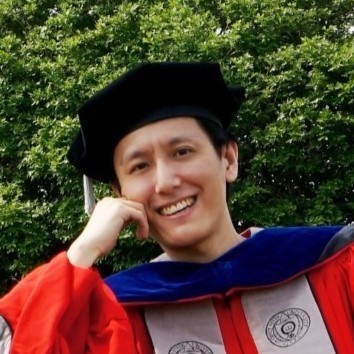
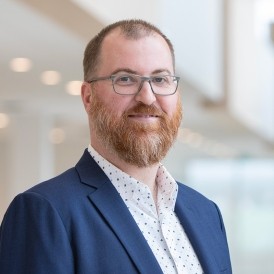
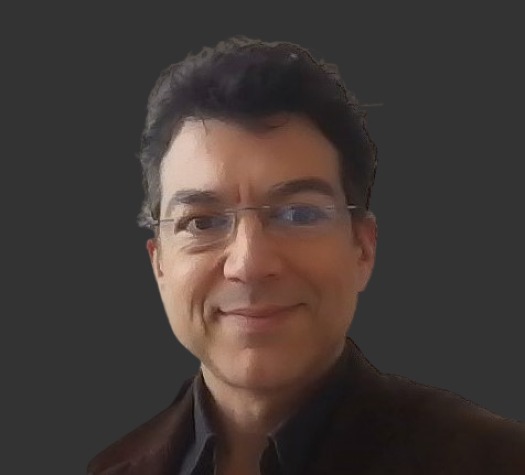
Wayne Pratt is a Professor of Psychology at Wake Forest University, specializing in the neuropharmacological mechanisms underlying feeding behavior, motivation, and reward processing. His research focuses on the interactions between neurotransmitter systems (dopamine, serotonin, opioids) and brain regions (nucleus accumbens, ventral tegmentum) that regulate food intake, binge eating, and effort-based decision-making. Key Research Areas: Behavioral neuroscience, neuropharmacology, reward circuitry, obesity neurobiology Methodological Expertise: Rat models, receptor stimulation/blockade, effort-based choice tasks, reinstatement paradigms Recent work examines how mu opioid and GLP-1 receptors modulate binge-like consumption, while earlier studies characterized serotonin receptor subtypes (5-HT2C, 5-HT6) in reward valuation. His findings contribute to understanding the neural basis of eating disorders and obesity. Selected Collaborations: Investigated pharmacological agents (lorcaserin, D-fenfluramine) for anti-obesity properties, and explored corticostriatal-hypothalamic integration of energy balance and reward.
David N. Jansen is an Associate Professor at the Institute of Software , Chinese Academy of Sciences , Beijing, China. Previously, he held an Assistant Professor position at Radboud University Nijmegen (2007–2016) and a Postdoc role at RWTH Aachen University (2007). His work bridges academic research, software development, and international collaboration. Education : PhD in Computer Science from University of Twente (1998–2003); Diploma in Mathematics (with minors in Computer Science and Comparative Linguistics) from University of Bern (1990–1997); Certificate of Proficiency in English from University of Cambridge (2000). Research interests include stochastic model checking , UML extensions for probabilistic systems , Markov reward models , and formal verification of embedded systems . He has contributed to tools like MRMC and TCM , focusing on efficient data structures and lumping techniques for system validation. Publication trends show expertise in formal methods , probabilistic verification , and equivalence relations . His work spans automated analysis of probabilistic programs , stuttering equivalence algorithms , and applications to real-world systems like the European Train Control System. Leadership and Service : He has served on doctoral advisory boards (SIKS), supervised student projects (e.g., XML/XMI interface for TCM), and volunteered in Christian organizations. His technical skills include C, C++, UML, model checking, and database systems like MySQL.
Trevor Cohn is a Professor at The University of Melbourne's Computing and Information Systems Department, with a dual appointment at Google Research Australia. His research focuses on Natural Language Processing (NLP), probabilistic machine learning, and machine translation. He leads the Natural Language Processing group and has held roles including Director of the ITTC on medtech and Local Chair for ACL 2018. His research interests include automatic language processing, handling uncertain data, structured prediction, and cross-lingual systems. Recent work addresses backdoor attacks, reward modeling, and fairness in AI. He teaches courses like Statistical Machine Learning and Web Search & Text Analysis, advising students such as Thinh Truong and Nitika Mathur (award recipients). His 15 most recent articles span topics like LLM-based planning systems, mitigation of adversarial attacks, and cross-lingual NLP challenges. His work emphasizes practical applications of NLP in multilingual contexts and robust AI systems.
Pärttyli Rinne serves as a Visiting Faculty member in the Department of Neuroscience and Biomedical Engineering, conducting interdisciplinary research at the intersection of neuroscience, psychology, and moral philosophy. Her work investigates the neural and somatic foundations of love, social cognition, and ethical reasoning with significant translational impact. Her research portfolio includes: Neuroscience of love types and reward systems Somatic body mapping of emotional experiences Moral philosophy applications in global political discourse Social cognition mechanisms using fMRI methodologies Interactions between narcissism, self-report, and emotional controllability Rinne's publication trajectory reveals a focused exploration of love's biological substrates. Her 2024 Cerebral Cortex article demonstrated distinct brain activation patterns for six love types, particularly highlighting parental love's intensity through temporoparietal junction and reward system engagement. This extended her 2022-2023 body map studies that documented somatic representations of romantic love and their correlations with narcissism. Her foundational 2020 review reinterpreted Rawls and Nussbaum through Kantian ethics to examine love's role in global governance. Her research has achieved exceptional public resonance with 9 press/media appearances between 2020-2025, including viral coverage of her 2024 findings by over 200 news outlets and extensive social media engagement across X, Facebook, and Bluesky platforms. Rinne maintains a robust collaborative network with J. Lahnakoski, H. Saarimäki, M. Tavast, E. Glerean, M. Sams, and L. Henriksson, indicating membership in a specialized research collective focused on affective neuroscience. These partnerships span multiple institutions and methodological approaches, supporting her interdisciplinary investigations into the biological basis of human connection.
Dr. Yang Deng is a tenure-track Assistant Professor at the School of Computing and Information Systems, Singapore Management University, and a Lee Kong Chian Fellow. Previously, he was a Postdoctoral Research Fellow at NExT++ (National University of Singapore). His research focuses on Natural Language Processing, Information Retrieval, and Large Language Models, with special interests in Proactive Conversational AI, Trustworthiness of LLMs, and Human-Centered Information Seeking. He has published over 40 papers in top-tier venues including ACL, EMNLP, WWW, and SIGIR. PhD from The Chinese University of Hong Kong (2023) Research Advisor to CHEANG Chi Seng Research Domains: Natural Language Processing Information Retrieval Large Language Models Human-Agent Interaction Digital Transformation Trustworthy AI Scientific Recognition: Lee Kong Chian Fellowship Google South Asia & Southeast Asia Research Awards 2024 EMNLP 2024 Outstanding Area Chair NeurIPS 2024 Best Reviewer
Tian Xie is an Assistant Professor in the Department of Computer Science at Utah State University (USU). His research focuses on Mobile Networks, IoT Security, Network Security, and Data-Driven Network Analysis. He holds a Ph.D. (2023) and B.S. (2016) in Computer Science and Electrical Engineering from Michigan State University (MSU). Education : Ph.D. in Computer Science, Michigan State University, 2023 B.S. in Electrical and Computer Engineering (With Honor), Michigan State University, 2016 Research Interests : Explores vulnerabilities in cellular emergency services (911), 5G/4G security, IoT systems, blockchain technologies, and secure cloud computing. His work emphasizes practical defenses against network threats and improving system resilience. Awards : 2022 AT&T Security Award for 911 Security Research Best Community Paper Award Runner-Up at ACM MobiCom’22 NAIRR Pilot Award (2024) for 5G/4G Cellular Security Google Security Reward (2019) for VoWiFi Research Grants & Advising : Lead the NAIRR-funded 5G/4G cellular security project Advising 2 Ph.D., 1 MS, and 1 undergraduate student Teaching : Instructors for courses like Introduction to Cybersecurity and Computer Network and Security at USU, with prior teaching experience at MSU.
Bruce Draper is a Professor and Chair of the Department of Computer Science in the College of Natural Sciences at Colorado State University. His work bridges artificial intelligence, machine learning, and computer vision, with a strong emphasis on real-world applications involving visual data and intelligent systems. Research Interests: Draper's research centers on machine learning with a focus on visual learning, adversarial AI, and visual agents. He investigates how AI systems can perceive, interpret, and interact with visual environments through technologies like facial recognition, object tracking, augmented reality, and automated visual communication. His work addresses both the capabilities and vulnerabilities of modern AI, particularly in defending systems against adversarial attacks. Publication Trends: His recent scholarly output reflects a consistent trajectory in advancing computer vision and AI robustness. The articles span topics from adversarial defense mechanisms and visual agent autonomy to scalable learning frameworks and real-time video analysis. Collectively, they emphasize secure, efficient, and context-aware visual intelligence systems grounded in deep learning and representation learning. Scientific Awards: No specific awards mentioned in the provided text. Advising and Grants: While no students or grants are explicitly listed, his leadership role as department chair and prior experience as a DARPA program manager suggest extensive involvement in research funding, mentorship, and high-impact project direction. His background indicates likely supervision of graduate students and management of federally funded research initiatives in AI and computer vision. Labs and Teams: Although no specific lab or research group is named, his research scope implies leadership or affiliation with interdisciplinary teams working on AI security, computer vision, and augmented reality systems within the Department of Computer Science at CSU.
Dr. Julie Risien is an Adjunct Professor and Director of the NSF Polar STEAM program at Oregon State University, affiliated with the STEM Research Center and the Office for Research Advancement. She holds a joint role on the graduate faculty of the College of Earth, Ocean and Atmospheric Sciences (CEOAS) and the Environmental Sciences Program. Her work bridges science, education, and institutional change, focusing on broader impacts, faculty development, and transdisciplinary collaboration. Education: Ph.D. in Environmental Sciences (Social Science) M.S. in Marine Resource Management B.A. in Environmental Sciences (Marine Ecology) Dr. Risien’s research centers on the intersection of science and society, particularly how learning networks, organizational structures, and institutional incentives shape public engagement and research impact. She investigates transformative learning networks, broader impacts strategies, and reform in promotion and tenure systems. Her work supports scientists in developing meaningful public engagement and navigating institutional reward systems. Her recent publications reflect a strong trend in higher education reform, focusing on infrastructure for broader impacts, evaluation methods, and equity in academic advancement. She frequently publishes on institutional systems that support or hinder public engagement and the integration of innovation and entrepreneurship into tenure processes. Dr. Risien has led or co-led major NSF-funded initiatives including Polar STEAM, ARIS, ARC-Learn, and PTIE. She is a Principal Investigator and Co-PI on transformative projects aimed at redefining success in academia and enhancing research impacts in society. She advises and collaborates on graduate research through her roles in CEOAS and the Environmental Sciences Program, and leads national efforts to build research impact networks. Her leadership extends to co-developing tools for departmental self-assessment on equity in promotion and tenure. Dr. Risien is a key figure in OSU’s research impact ecosystem, leading the STEM Research Center’s efforts in transdisciplinary research and public engagement. She is central to the Polar STEAM initiative and collaborates with the Patricia Valian Reser Center for the Creative Arts and Precollege Programs to integrate arts and science.
Bertalan Polner is an Assistant Professor at the Institute of Psychology , Eötvös Loránd University, affiliated with the Department of Clinical Psychology and Addiction . He serves as a Member of the Research Ethics Committee and maintains an active research profile at Radboud University’s Donders Centre for Cognition as a PostDoc researcher. Academic Rank: Assistant Professor Current Institutions: Eötvös Loránd University (ELTE), Radboud University Research Focus: Schizotypy-psycho sis interactions, computational psychiatry, sleep-cognition links, memory mechanisms, and emotion regulation. Dr. Polner’s research explores how positive schizotypy interacts with sleep disturbances and visual perception anomalies , using network analysis to map relationships between personality traits and mental health outcomes. His work often integrates computational modeling (e.g., drift diffusion models, predictive coding) to understand cognitive deficits in psychotic disorders. Recent publications highlight his contributions to: Mapping schizotypy’s role in stress-reactivity (2025) Investigating REM sleep’s impact on mind-wandering (2023) Analyzing reward processing in borderline personality disorder through schema modes (2023) He also develops educational tools like the introduction_to_R and Structural Equation Modeling repositories on GitHub, supporting psychological research methodology.
Xingyu Zhou is an Assistant Professor in the Department of Electrical and Computer Engineering at Wayne State University. He earned his Ph.D. in ECE from Ohio State University under Prof. Ness Shroff, with prior degrees from BUPT (B.S.) and Tsinghua University (M.S.) in Electrical Engineering. His research bridges machine learning and stochastic systems, focusing on bandits, reinforcement learning, and cloud computing with differential privacy. His work addresses privacy-preserving sequential decision-making and optimal load balancing. Ph.D., Electrical and Computer Engineering, Ohio State University M.S., Electrical Engineering, Tsinghua University B.S., Electrical Engineering, BUPT His research explores machine learning (bandits, reinforcement learning, offline alignment techniques) and stochastic systems (load balancing, cloud computing). Recent work emphasizes differential privacy in federated learning, contextual bandits, and reinforcement learning frameworks. Publications span top venues like ICML , NeurIPS , and ICLR , with a focus on privacy-utility trade-offs and robust optimization. Key scientific awards include the NSF CAREER Award, Best Student Paper at WiOpt 2022, and Ohio State University’s Presidential Fellowship. He actively contributes to teaching , offering graduate courses in online decision-making and undergraduate programming courses in electrical engineering.
Nadia Steils is a Lecturer in the Business Administration Department at the Faculty of Economics, Management and Social Sciences, University of Namur (Belgium), with concurrent research affiliation at IAE Lille, University of Lille (France). Her academic home spans CeRCLe, LEM, and CCMS research centers, focusing on the intersection of consumer behavior and digital technologies. Education: PhD in Management Sciences - Marketing (University of Namur & IAE Lille, 2016) Master in Audit, Control, Research and Modeling in Marketing (IAE Lille, 2012) Bachelor in Applied Communications (IHECS Brussels, 2010) Her research centers on consumer e-learning processes , examining how digital interfaces shape knowledge acquisition and purchasing decisions. Specializing in consumer behavior in technology-mediated environments , she investigates the psychological mechanisms behind online learning adoption, gamification effects, and AI-driven service interactions. Recent work critically analyzes transparency paradoxes in influencer marketing and ethical dimensions of explainable AI systems, contributing directly to UN Sustainable Development Goals through consumer education frameworks. Analysis of her 16 research outputs (2013-2025) reveals evolving expertise from foundational e-learning studies toward contemporary AI/consumer behavior intersections. Current publications emphasize human-centric technology design , with strong focus on trust calibration in AI services and ethical implications of algorithmic manipulation. Research Leadership: Principal Investigator for Nestlé-funded social food trends project (2017-2018) Lead researcher on Creative Crowdsourcing knowledge-transfer initiative Key contributor to EU cultural experience knowledge-project Her 24 supervised student projects demonstrate active mentorship in consumer research methodology. Elected to departmental councils at both University of Namur and University of Lille, she shapes academic governance while maintaining rigorous teaching commitments across market research, marketing management, and database systems coursework.
Ralph Redden is an Assistant Professor of Psychology at St. Francis Xavier University , where he leads the Experimental & Translational Attention Lab (ETAL) . His work combines behavioral, neuroimaging, and computational approaches to study how attention mechanisms influence decision-making and action. He actively promotes open science practices and inclusive scientific processes. Current Research: Explores attentional networks, inhibition of return (IOR), and their ecological validity in real-world scenarios. Teaching: Offers courses in Intro Psychology, Attention, and Cognition. Previously taught at Dalhousie University and University of Alberta. Recent Student Highlights: Mentored honours students Julia Byron and Jack Lukeman on projects examining attentional predictors of bullying intervention and cueing effects in spatial tasks. Veda Haggarty's 2023/24 thesis on attachment styles and attention networks was presented at CPA and VSS conferences. Scientific Awards: 2021 President's Award for Graduate Student Teaching Collaborations: Works with Dr. Laura Lambe (StFX), Dr. Dana Hayward (VASP Lab), and Dr. Kyle Mathewson (AP&P Lab). Maintains ongoing ties with Dalhousie University labs.
Dr. Julia F. Christensen is a postdoctoral research fellow at the Warburg Institute, London, working with the B.I.A.S. project under Prof Manos Tsakiris, while maintaining an active affiliation with City St George's, University of London as an academic researcher. She is also an honorary member of University College London's Institute of Cognitive Neuroscience, reflecting her cross-institutional collaborations in cognitive neuroscience and psychology. Her educational background combines professional dance training with advanced neuroscience research, culminating in a PhD from the University of the Balearic Islands and University of Vienna. Her doctoral work investigated affective responses to expressive body movement, supervised by Professor Camilo Cela-Conde and Dr. Marcos Nadal. Dr. Christensen's research focuses on the cognitive and neural underpinnings of emotional expertise, particularly in dancers and artists. She examines how movement expertise modulates emotional perception, interoception, and sense of agency through behavioral, psychophysiological, and neuroimaging methods. Her work bridges dance science, moral psychology, and neuroethics, exploring topics from evolutionary functions of art to legal responsibility in emotional contexts. Analysis of her publications reveals strong interdisciplinary trends connecting emotion science with movement expertise, particularly in dance perception and agency modulation. Her research consistently demonstrates how specialized training alters neural processing of emotional stimuli, with significant contributions to understanding autism through interoceptive frameworks and exploring moral cognition through intentional binding paradigms. Her scientific recognition includes: Newton International Research Fellow (British Academy, 2015-2017) Dr. Christensen has secured competitive research funding from the British Academy (2015-2017) and Spanish Ministry of Science and Innovation (2010-2014). Her current collaborations include the B.I.A.S. project at the Warburg Institute and ongoing work with City St George's on emotion perception frameworks, building on previous affiliations with City University's Cognitive Neuroscience Research Unit and Autism Research Group. She is embedded in multiple research ecosystems including the Warburg Institute's dance movement library project, City St George's psychology department collaborations, and UCL's Institute of Cognitive Neuroscience networks, where she previously investigated sense of agency under Professor Patrick Haggard.
Daniele Marinazzo is a Full Professor in the Department of Data Analysis at Ghent University (Belgium), with a background in statistical physics and a focus on computational neuroscience and complex systems. He serves as Deputy Editor at PLOS Computational Biology , Co-Editor-in-Chief at Neurons, Behavior, Data Analysis, and Theory , and academic editor at Network Neuroscience and Imaging Neuroscience. His work spans theoretical physics, neuroscience methodology, and experimental neurophysiology. Academic Affiliation: Ghent University (Belgium) Editorial Roles: 3+ journals Research Initiatives: EBRAINS representative Research Interests combine computational neuroscience, complexity science, and network analysis. He investigates higher-order interactions in brain networks, synergistic information processing, and methodological advancements in neuroimaging. Recent work includes MEG/EEG analysis, gene expression modeling, and developing open-source tools like SPM-Python. Scientific Contributions include 15+ recent publications on topics ranging from individual brain fingerprinting to multisensory integration models. His work appears in venues like Nature Communications , Physics of Life Reviews , and Entropy , with methodological innovations in hidden factor localization and network synchronization analysis. Current projects include PhD/postdoc recruitment for fast-sampled fMRI analysis and organizing the Erice workshop Higher-Order Interactions: Mechanisms, Behaviors, and Networks (August 2025).
Maria Almudena Claassen is a Postdoctoral Fellow at the Center for Adaptive Rationality, Max Planck Institute for Human Development in Berlin, Germany. Previously, she was a Postdoctoral Fellow at the Healthy Cognition Lab, University of Glasgow, Scotland (2020-2022). Dr. Claassen completed her PhD in Social Psychology at the Université libre de Bruxelles, Belgium in 2019, where she examined the influence of socioeconomic status on impulsivity and eating behavior. She also holds a Research Master in Social and Health Psychology and a BSc in Social Psychology from Universiteit Utrecht, Netherlands, as well as a BSc in Literary Studies from the same institution. Her research focuses on health behavior, particularly food choices and decision-making processes. She investigates how socioeconomic factors influence eating behaviors, how to boost healthier food decisions, and the psychological mechanisms underlying consumption patterns. Dr. Claassen employs experimental methods and has a strong interest in programming and data analysis to advance her research. Her recent work examines the mis-measurement of food decisions, representational shifts in water consumption, and the impact of social norms on vegetable choices. She has published in reputable journals including Appetite, PNAS, and BMC Public Health. Dr. Claassen has presented her work at conferences including the SABE 2025 Annual Conference and the European Health Psychology Conference. She has worked on an ESRC grant examining the role of consumption and reward simulations in the motivation for sugar-sweetened beverages and water. Her research has implications for public health interventions aimed at promoting healthier eating behaviors.