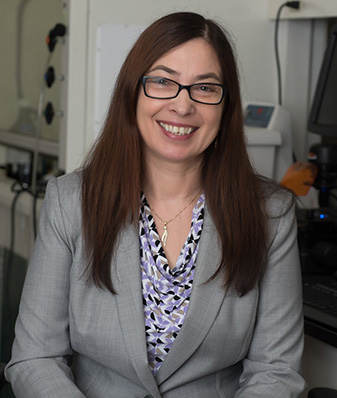
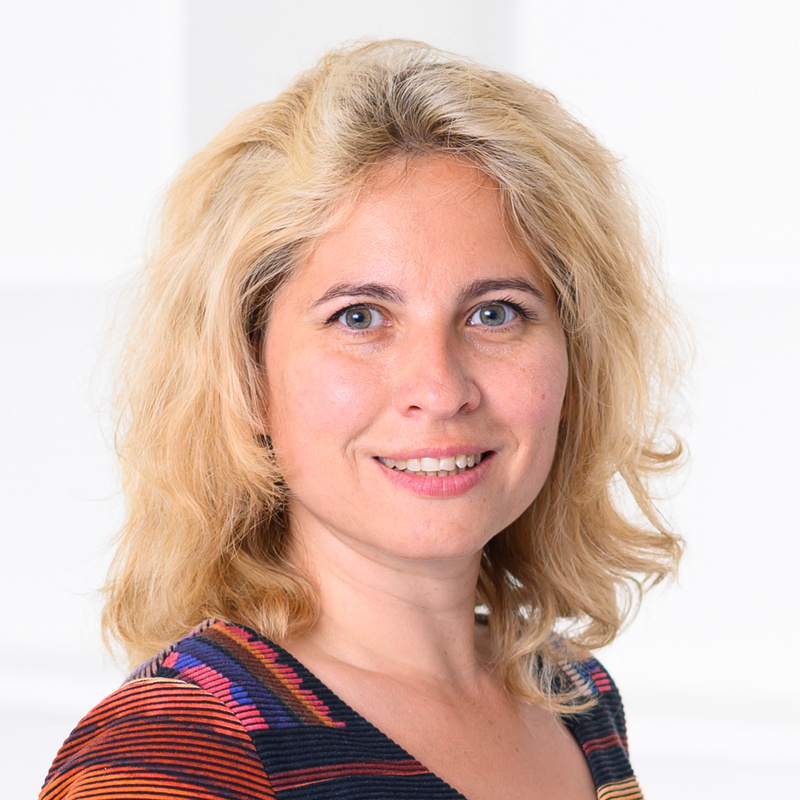
Eamon McCrory is a Professor of Developmental Neuroscience and Psychopathology at University College London (UCL), with affiliated roles including Adjunct Professor at Yale Child Study Center, Co-Director of UCL’s Developmental Risk and Resilience Unit, and Director at the Anna Freud Centre. His work bridges UCL and Yale through collaborative educational programs like the MRes in Developmental Neuroscience. Education : PhD (King’s College London, 2004; UCL, 2002), BA (Cambridge University, 1995) McCrory’s research focuses on neurobiological and psychological consequences of childhood maltreatment , examining how early adversity affects emotional development and mental health. Using brain imaging and psychological assessments , he investigates mechanisms underlying trauma-induced psychopathology and resilience, with applications in prevention and intervention strategies for at-risk youth. Recent publications highlight his expertise in callous-unemotional traits, prefrontal cortex dysfunction, and social learning impairments in children exposed to adversity. His interdisciplinary work connects neuroscience, psychiatry, and public policy , notably through the UK Trauma Council.
Dr. Anna Moszczynska is an Associate Professor in the Pharmaceutical Sciences Department at Wayne State University within the College of Pharmacy and Health Sciences . Her academic journey includes advanced degrees in Chemical Engineering (1988, Technical University of Lodz, Poland) Cell Biology (1995, University of Toronto, Canada) Neurochemistry (2002, University of Toronto, Canada) Postdoctoral training at Center for Addiction and Mental Health (2005), University of Guelph (2007), and Boston University (2008). Her research focuses on Addiction and Substance Abuse , Neuropharmacology , and Neurodegenerative Diseases , particularly investigating Parkin and Proteasome as molecular drug targets in Methamphetamine Use Disorder (MUD) Transposable Elements (rat LINE-1 and Identifier elements) in METH neurotoxicity using rat models and techniques like 2D gel electrophoresis , Co-immunoprecipitation , In Vivo Gene Transfer , and Proteomic Analysis . Recent publications highlight her work on parkin-deficient models (2021, 2025), epigenetic mechanisms (2023), and protein interaction networks (2024, 2025). Her studies explore METH-induced transcriptomic changes , VMAT2 interactions , and neurochemical biomarkers .
Dr. Andrea Pelletier-Baldelli is a Clinical Assistant Professor in the Department of Psychiatry at the University of North Carolina at Chapel Hill , where she works with the Child and Adolescent Mood and Anxiety Disorders Program (CHAAMP) and the Women’s Mood Disorder Program . Her research examines how social behavior and motivation influence adolescent neurodevelopment and risk for severe mental illness, utilizing multimodal assessments and neuroimaging to identify developmental pathways of psychopathology. Her work emphasizes vulnerabilities during the peripubertal period , focusing on: Stress response mechanisms (autonomic and endocrine) Neural connectivity patterns during peer evaluation Psychosis risk biomarkers Social reward processing Key article trends include longitudinal studies on neuroimaging markers, stress-induced connectivity changes, and psychosocial assessments in at-risk youth. Her research spans adolescent psychiatry , neurodevelopmental disorders , and clinical neuroscience . Scientific contributions include: Development of specialized assessment tools (NSI-SR, PINS) Investigations into cerebellar-thalamic tract development Analysis of HPA axis dysfunction in psychosis Studies on postural sway as a biomarker Research on intrinsic religiosity and brain morphology
Juho Joutsa serves as Professor of Neurology at the University of Turku and Chief Neurologist at Turku University Hospital since 2023, while chairing the Turku Brain and Mind Center. His academic journey includes progression from Adjunct Professor (2015) through Assistant and Associate Professor roles in Neuroimaging at the Turku Brain and Mind Center, alongside clinical specialization in Neurology (2020). Professor of Neurology, Clinical Neurosciences, University of Turku (2023-present) Chief Neurologist, Neurocenter, Turku University Hospital (2023-present) Chair, Turku Brain and Mind Center (current) Adjunct Professor, Department of Neurology, University of Turku (2015-present) Professor Joutsa's research focuses on elucidating neurobiological mechanisms of brain disorders through innovative lesion network mapping combined with advanced neuroimaging and neuromodulation techniques. His work spans neurological movement disorders (dystonia, tremor), addiction neuroscience, and epilepsy, with particular emphasis on translating circuit discoveries into therapeutic interventions. The laboratory employs a multimodal approach integrating causal brain lesion analysis, state-of-the-art MRI/PET/SPECT imaging, and brain stimulation methods (TMS, DBS, MRgFUS) to identify and modulate pathological brain networks. Recent publication trends reveal a strong focus on lesion-based circuit mapping across diverse neurological conditions. High-impact 2022-2025 papers in Nature Medicine, Brain, and Neurology demonstrate consistent methodological innovation in identifying disease-specific brain networks for movement disorders, stuttering, and addiction. The research shows increasing international collaboration and translational emphasis, with recent work directly informing neuromodulation treatment targets. As Lead Teacher in Neurology for the M.D. curriculum, Professor Joutsa integrates clinical expertise with research insights. His laboratory leverages the Turku PET Centre's exceptional resources including multiple PET/CT scanners and hybrid MRI/PET systems, facilitating cutting-edge multimodal studies. The laboratory maintains close operational ties with Turku University Hospital's clinical neurology and neurophysiology departments, enabling direct patient-researcher collaboration. The Brain Stimulation and Neuroimaging Laboratory (Turku Brainlab), established in 2018, operates within the Turku Brain and Mind Center with access to neuronavigated TMS, transcranial electrical stimulation, and comprehensive electrophysiology systems. This environment supports interdisciplinary research bridging clinical neurology, neuroscience, and engineering to develop novel diagnostic and therapeutic approaches for brain disorders.
Dr. Zayd M. Khaliq serves as Senior Investigator and leads the Cellular Neurophysiology Section within the Division of Intramural Research at the National Institute of Neurological Disorders and Stroke (NINDS), part of the National Institutes of Health (NIH). He has maintained this independent research position since 2011. His academic foundation includes: B.A. in Physics from Dartmouth College Ph.D. in Neuroscience from Northwestern University (2006) Postdoctoral training at Harvard Medical School with Bruce Bean Dr. Khaliq's research centers on the cellular mechanisms of dopamine neuron function within reward circuits. His laboratory investigates: Voltage-gated ion channel contributions to neuronal excitability Synaptic-intrinsic property interactions shaping reward-related spiking patterns Neuromodulatory regulation of midbrain circuit dynamics Employing patch-clamp electrophysiology as its core methodology, the lab integrates imaging, immunohistochemistry, and transgenic mouse models to dissect specific neuronal populations. This work provides critical insights into the pathophysiology of Parkinson's disease, addiction, schizophrenia, and depression where dopamine system dysfunction is central. The Cellular Neurophysiology Section maintains state-of-the-art facilities for conducting cutting-edge neurophysiological research on reward circuit mechanisms.
Daniela Schulz is an Associate Professor at Boğaziçi University's Institute of Biomedical Engineering, where she has been teaching since 2018. She coordinates the international iNavigate project and leads research on behavioral neuroscience, neuroimaging, and animal models of psychiatric disorders. Her work bridges engineering and neuroscience to develop innovative approaches for understanding brain function and behavior, with particular emphasis on translating basic research into clinical applications. Education: BA in Psychology, Boğaziçi University (1996) MA in Psychological Sciences, Boğaziçi University (1998) PhD in Behavioral Neuroscience, University of Düsseldorf, Germany (2005) Post-doctoral training at University of Düsseldorf and Brookhaven National Laboratory (2005-2011) Research Interests: Dr. Schulz specializes in behavioral neuroimaging, particularly using the RatCAP (Rat Conscious Animal PET) scanner she helped develop, which enables PET imaging of awake, behaving animals. Her research spans multiple domains including depression models, Parkinson's disease, cognitive effort, and neurotechnology applications. She investigates how motivation, learning, and emotional states correlate with brain activity patterns, with particular focus on dopamine systems and neural circuitry involved in helplessness and despair models. Her work integrates molecular, behavioral, and imaging approaches to understand brain function in both healthy and pathological states. Publications Trends: Dr. Schulz's publication record reveals a clear trajectory from basic neuroscience methodology development to increasingly translational and interdisciplinary applications. Her early work focused on developing the RatCAP technology and establishing behavioral neuroimaging as a discipline. This evolved into sophisticated applications studying dopamine systems during natural behaviors, followed by investigations of animal models of depression and Parkinson's disease. More recently, her work has expanded to include human applications of neurotechnology and societal implications of neuroscience advances, reflecting a broader vision of how neuroscience can address real-world challenges. Grants and Leadership: Coordinator of H2020-MSCA-RISE-2019 "iNavigate" project (2023-present) PI for "Understanding societal challenges: a NeurotechEU perspective" (2021-present) Researcher for TÜBITAK "Small animal imaging application" project (2023-present) PI for BAP Start-Up "Experience-driven DBS for Parkinson's model" (2020-2023) Editorial and Professional Activities: Dr. Schulz serves as Associate Editor for Frontiers in Behavioral Neuroscience and is on the Editorial Board of Behavioural Brain Research. She has guest edited special issues on depression symptomatology and behavioral neuroimaging, reflecting her standing in these research communities. Her lab (BBL) at Boğaziçi University continues to push the boundaries of behavioral neuroscience methodology while addressing clinically relevant questions in mental health and neurological disorders.
Jess Kohlert is a Full Professor in the Psychology Department at Brigham Young University–Hawaii (BYU-Hawaii), where he has served since 2015. He previously held leadership positions including Dean of the Faculty of Sciences (2019-2022) and Psychology Department Chair (2016-2019). Before joining BYU-Hawaii, he spent over a decade at King's College, progressing from Assistant to Full Professor while also serving as Department Chair. Dr. Kohlert's educational background includes: Ph.D. in Experimental Psychology from Brigham Young University (1995) B.S. in Business Finance from Brigham Young University (1985) A.A. in Business Management from Ricks College (1982) Dr. Kohlert's research spans multiple domains of experimental psychology and behavioral neuroscience. His primary interests include the neurobiological basis of behavior, with particular focus on sexual behavior, aggression, and the effects of psychopharmacological agents. He has conducted extensive research using animal models, particularly Syrian hamsters and rats, to investigate dopamine pathways, hormone-behavior interactions, and the neural mechanisms underlying reward and addiction. More recently, his work has expanded to include cross-cultural psychology, examining acculturative stress in international students and prejudice toward religion. His publication record demonstrates a clear evolution from basic neurobehavioral research using animal models to more applied psychological investigations. Early in his career, Kohlert focused on the neuroendocrinology of sexual behavior and aggression in rodent models. Over time, his research broadened to include human applications, particularly in educational psychology and cross-cultural contexts. His most recent work examines acculturative stress in international university students, showing his continued adaptation of research interests to address contemporary psychological questions. Dr. Kohlert has been actively involved in academic service, having served as Dean of the Faculty of Sciences at BYU-Hawaii and as Psychology Department Chair at both BYU-Hawaii and King's College. He has also contributed to community service through roles on the Board of Directors for Northeast Counseling Services (including past presidency) and the Behavioral Health Research Institute. His teaching portfolio is extensive, covering courses from Introduction to Psychology to specialized neuroscience topics, reflecting his broad expertise across the psychology discipline.
Professor Dr. Alexander Storch is a faculty member at the University of Rostock's University Medical Center, where he works in the Center for Neurology at the Clinic for Neurology and Polyclinic. His research primarily investigates neurodegenerative disorders, with specialized focus on Parkinson's disease mechanisms and treatments. His work explores: Deep brain stimulation effects on neuroplasticity Dopaminergic system modulation Adult neurogenesis regulation Biomarker development for Parkinson's Fronto-striatal pathway dysfunctions Professor Storch leads multiple DFG-funded projects including a Collaborative Research Center study on deep brain stimulation in transgenic Parkinson's models and an Integrated Research Training Group. He has also contributed to completed projects on reward processing in Parkinson's patients and neurodegenerative disease mechanisms.
Professor Thomas Goschke is a full-time faculty member at Dresden University of Technology, where he holds the Chair of General Psychology within the Faculty of Mathematics and Natural Sciences. His research examines cognitive control mechanisms through interdisciplinary approaches. Research Focus: Goschke's work spans: Volitional dysfunctions in addiction and everyday behavior Neurocomputational modeling of cognitive control Dynamic interactions between executive functions Emotion-cognition interactions Implicit learning systems Grant Leadership: He has directed major DFG-funded initiatives including: Collaborative Research Center 940 (Volition and Cognitive Control) Priority Program on executive control mechanisms Transregio project on cognitive mediators of drinking behavior International Research Training Group on affective disorders His lab employs behavioral paradigms, neuroimaging, and computational modeling to investigate cognitive flexibility, intention shielding, and reward processing.
Prof. Dr. Tatiana Korotkova serves as Professor, Principal Investigator, Institute Director, and Head of Research Area 3 at the Institute for Systems Physiology & Pathophysiology within the Faculty of Medicine at University of Cologne. She leads the Neuronal Circuits and Behavior research group, which focuses on understanding how neuronal circuits regulate innate behaviors including feeding, social interaction, arousal, and voluntary locomotion. Dr. Korotkova's research program aims to decode functions of hypothalamic neuronal circuits in health, disease, and aging. Her laboratory combines state-of-the-art technologies including multisite high-density neuronal recordings in transgenic behaving mice, optogenetics, chemogenetics, and computational approaches to investigate neuronal mechanisms of neuropsychiatric disorders associated with hypothalamic dysfunctions. Her work has revealed key insights about how lateral hypothalamus regulates feeding behavior, social interactions, and exploration, with specific findings about GABAergic neuronal subpopulations that balance nutritional and social needs even under hunger conditions. Analysis of Dr. Korotkova's publication record shows a strong trajectory of high-impact research in neural circuit mechanisms, with consistent publications in top journals including Nature, Nature Neuroscience, and Cell Metabolism. Her work demonstrates an evolving focus from basic circuit mechanisms to translational applications for obesity, sleep disorders, and memory impairments, with increasing attention to how these circuits change during aging and disease states. Dr. Korotkova directs the CurioNeuro laboratory, which investigates changes in neuronal activity in the lateral hypothalamus during aging and how these changes underlie metabolic and sleep disorders common in elderly populations. Her team is actively researching how cognitive and reward-related information is translated to the hypothalamus during innate behaviors, and how this process changes in disease contexts and during healthy aging.
Yihan Jin is a Research Fellow at the Max Planck Florida Institute, specializing in neural mechanisms of metabolic disorders through advanced molecular neuroscience techniques. Her work bridges neuropharmacology and systems physiology to investigate how neuropeptide signaling governs feeding behaviors. Research focuses on neuropeptide dynamics in obesity pathogenesis, employing genetically encoded biosensors to monitor real-time signaling in neural circuits. Key areas include neurotensin-mediated reward devaluation , stochastic regulation of satiation , and opioid neuropeptide trafficking , with implications for therapeutic interventions in metabolic diseases. Recent publications reveal trends toward quantitative neuropharmacology using cutting-edge imaging to decode stochastic neuropeptide competition in feeding circuits. Work spans molecular tool development ( Nature Neuroscience 2024) to behavioral neuroscience ( Nature 2024, 2025), emphasizing translational pathways from neural dynamics to obesity phenotypes. Collaborative research involves cross-institutional teams at leading neuroscience institutes, utilizing optogenetics, in vivo imaging, and behavioral assays to dissect neural control of energy balance without current indication of independent grant leadership or student mentorship.