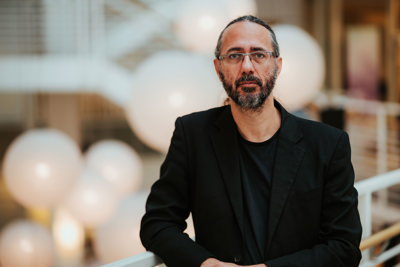
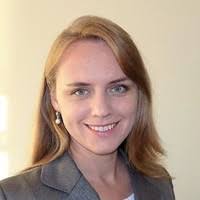
Salvador Ortiz-Latorre is an Associate Professor in the Department of Mathematics at the University of Oslo, affiliated with the Risk and Stochastics research group and the completed project Stochastics of Renewable Energy Markets (STORE). He focuses on stochastic analysis, mathematical finance, and their applications in insurance, energy markets, and machine learning. His research integrates advanced stochastic processes, Malliavin calculus, and computational methods to model complex financial and actuarial systems. Key areas include pricing of insurance policies, stochastic volatility models (e.g., Heston-Hawkes), and numerical solutions for filtering problems. His work often bridges theoretical developments with practical applications, such as risk management and commodity market calibration. Recent articles emphasize innovations in variational methods for insurance pricing and spatial approximations of stochastic partial differential equations. Ortiz-Latorre collaborates extensively, with co-authors like David Baños and Dan Crisan. His contributions span high-impact journals like Stochastic Processes and their Applications and Advances in Applied Probability . Notably, he has pioneered techniques in particle filtering and neural network-based approximations for stochastic systems.
Laura Crosilla is a Researcher in the Department of Philosophy at the University of Florence and is affiliated with the project Infinity and Intensionality: Towards a New Synthesis at the University of Oslo. She holds PhDs in Mathematical Logic (University of Leeds, 2000) and Philosophy (University of Leeds, 2017). Her research focuses on the philosophies of mathematics and logic, constructive and predicative set theories, and potentialist views of infinity, influenced by Poincaré and Weyl. She has held postdoctoral positions at LMU Munich, the University of Florence, and the University of Leeds, and was a Marie Skłodowska-Curie Fellow at the University of Oslo (2019–2021). She has organized conferences like Weyl 2021 and Critical Views of Infinity , and is part of the Women in Computability initiative. Key awards include the Marie Curie Fellowship and a John Templeton Foundation grant (2008). Education: PhDs in Mathematical Logic (2000) and Philosophy (2017), University of Leeds. Research Interests: Constructive and predicative set theories, philosophy of mathematics, intuitionistic logic, potentialism, and the foundations of mathematics. Publications: Over 20 articles in journals like Noûs and Inquiry , focusing on topics such as Bishop’s constructivism, Weyl’s potential domains, and predicativity’s role in modern logic.
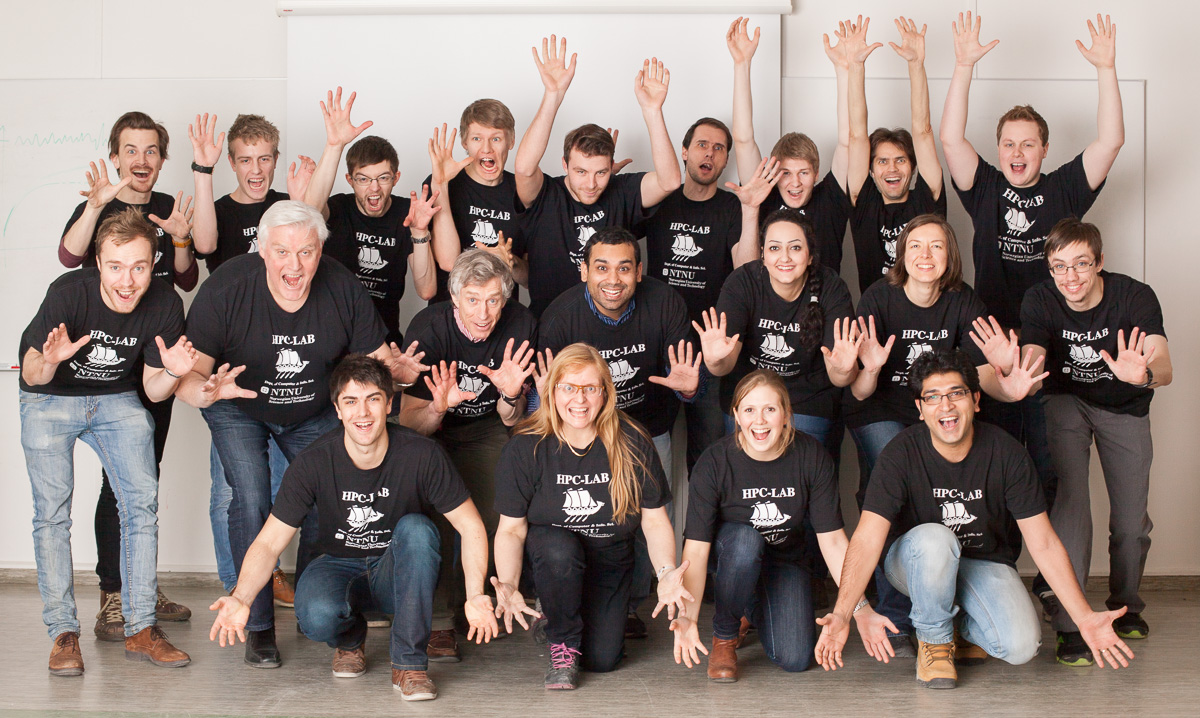
Prof. Anne C. Elster is a Professor of Computer Science at NTNU's Department of Computer & Information Science (IDI), leading the HPC-Lab. She specializes in High-Performance Computing (HPC), GPU acceleration, and heterogeneous systems. Her work spans HPC applications in medical imaging, seismic processing, and oil & gas simulations, with collaborations at CERN, NVIDIA, and Schlumberger. Elster holds a PhD in Electrical Engineering from Cornell University (1994) and is an IEEE Senior Member since 2000. She has supervised over 70 master students and numerous PhD candidates, emphasizing GPU computing. Her teaching includes courses like Parallel Computing and Compilers , with a focus on programming and problem-based learning. She leads EU projects like CLOUDLIGHTNING (2015–2018) and has organized major conferences (e.g., ISC, SC, PARA). Her HPC-Lab is a CUDA Research and Teaching Center, and she advocates for HPC infrastructure investments in Norway through policy engagement.
Mohit Pal is a Postdoctoral Fellow at the Department of Informatics, University of Bergen, Norway. He is affiliated with the Faculty of Mathematics and Natural Sciences and conducts research under the mentorship of Prof. Lilya Budaghyan. He holds a Ph.D. in Mathematics from the Indian Institute of Technology Jammu, where he was supervised by Dr. Sartaj Ul Hasan. Education: B.Sc. in Mathematics, University of Allahabad (2011–2014) M.Sc. in Mathematics, Indian Institute of Technology Kharagpur (2014–2016) Ph.D. in Mathematics, Indian Institute of Technology Jammu (2018–2021) Visiting Student, Indian Institute of Technology Delhi (2018–2019) Visiting Student, Indian Statistical Institute Delhi (2022) His research lies at the intersection of cryptography and finite fields, focusing on boomerang uniformity, differential uniformity, APN and PN functions, permutation polynomials, and arithmetization-oriented cryptographic primitives . His work contributes to the theoretical foundations of symmetric cryptography and algebraic design of secure functions. He has published in leading journals such as Designs, Codes and Cryptography , IEEE Transactions on Information Theory , and Advances in Mathematics of Communications . His recent publications explore connections between generalized differential properties and cryptographic robustness, particularly in odd characteristic fields. Scientific Awards and Recognition: Reviewer for top-tier journals including IEEE Transactions on Information Theory , Designs, Codes and Cryptography , and Applicable Algebra in Engineering, Communication and Computing . Active participant in major international workshops such as Asiacrypt, Boolean Functions and Their Applications (BFA), and SETA. Erdős Number: 3 (via Sartaj Ul Hasan and Pantelimon Stănică). He has advised no students to date but has contributed to research mentoring through collaboration. He taught INF-143A: Applied Cryptography at the University of Bergen in 2024, instructing 84 students at undergraduate and master’s levels. His research has been supported through postdoctoral funding at the University of Bergen and prior project fellowships at IIT Jammu and Harish-Chandra Research Institute. He is currently engaged in advancing the theory of arithmetization-friendly cryptographic functions, with implications for zero-knowledge proofs and secure computation. Laboratories and Research Teams: Mohit Pal is part of the cryptography research group at the Department of Informatics, University of Bergen, collaborating closely with Prof. Lilya Budaghyan and Dr. Chunlei Li. His work integrates into broader efforts on algebraic methods in modern cryptography, particularly in the context of post-quantum and efficient cryptographic design.
Duc Tien Dang Nguyen is a Professor at the Department of Information and Media Studies , University of Bergen , Norway. He actively contributes to the Intelligent Information Systems (I2S) research group, focusing on Multimedia AI , Deepfake Detection , and Image Forensics . His work addresses Information Disorder through algorithmic solutions and cross-modal analysis. Education : Implied PhD in Computer Science or related field Research Trends emphasize visual content verification , generative synthetic data for detection, and UX/UI design in lifelog systems. Recent publications (2024) explore vision-language models and context-aware algorithms for misinformation. Grants include funding from the Research Council of Norway (Ref: 309339) . Collaborations span institutions including Kristiania University College , Vietnam National University , and University of Trento .
Terje Lauvaas Andersen is an Associate Professor in Supply Chain Management at the Logistics Department , Molde University College . With a PhD in Logistics (2022) and a Master's in Computer Science (University of Bergen), his expertise bridges digital technology and sustainability. He teaches courses including Digital Business Management, Project Planning and Control, ERP systems, and IoT applications in supply chains. PhD in Logistics (2022), Molde University College Master's in Computer Science (University of Bergen) 30+ years of ICT management experience in industry and academia His research focuses on digital technology's role in circular economy transitions , particularly in e-waste handling and WEEE directive compliance. Key themes include information systems integration, master data management, and blockchain applications for green supply chains. Current projects examine how manufacturers can enable circularity through digital solutions. Recent publications highlight trends in reverse supply chain information flow (2023), cross-national WEEE directive variations (2022), and Edge&DL models for product circularity (2021). His work connects digital transformation with environmental sustainability through case studies and comparative analyses. Terje has conducted research stays at the RISE Institute, University of Brescia (2022, 2024), exploring digital-circular economy interdependencies. He contributes to the Digitization for Sustainability and Sustainable Communities research groups, with industry experience including 15 years as IT Manager at Glamox and 8 years at Molde University College.
Snorre Aunet is a Professor II in the Department of Informatics at the University of Oslo, affiliated with the Faculty of Mathematics and Natural Sciences. He is a key member of the Nanoelectronics Systems Research Group and contributes to the 4DSpace project. His academic background includes a Dr. ing. from NTNU (2002) and a cand. scient. from the University of Oslo (1993). His research focuses on ultra-low-voltage and low-power mixed-signal circuits , particularly in subthreshold operation, with applications in IoT, space systems, and energy harvesting. He specializes in radiation-hardened (radhard) and defect-tolerant architectures, leveraging advanced semiconductor technologies like 22nm and 28nm FDSOI. His work integrates circuit design, microarchitecture, and reliability under extreme conditions such as radiation exposure and process variation. The recent trend in his publications shows a strong emphasis on energy-efficient VLSI design , including SRAM cells, adders, level shifters, and flip-flops operating in subthreshold regimes. He has also expanded into MEMS-based energy harvesting and hardware security, demonstrating a broad and evolving research portfolio. His collaborations span institutions and involve both theoretical modeling and practical implementation. Scientific Awards: No specific awards mentioned in the provided text. Advising and Grants: Snorre Aunet has supervised multiple students, including Somayeh Hossein Zadeh, Even Låte, and Ali Asghar Vatanjou, whose names appear as co-authors on several publications. He is involved in the 4DSpace research project, indicating active grant funding and leadership in space-related electronics research. His advising style appears collaborative, with students contributing to high-impact journals and conferences. Labs and Teams: He is a core member of the Nanoelectronics (NANO) research group at the Department of Informatics, which focuses on next-generation electronic systems. This group is engaged in cutting-edge research in nanoscale circuits, low-power design, and robust computing architectures.
Hao Yu is a tenured Associate Professor and Program Leader for the Master in Industrial Engineering at UiT The Arctic University of Norway , Department of Industrial Technology. His research focuses on real-problem-driven model development and applied operations research for sustainable supply chains, reverse logistics, location/network design, service systems, and smart logistics in Industry 4.0/5.0. He combines predictive , prescriptive , and descriptive analytics in Industry 5.0-enabled Smart Digital Logistics Twins to address challenges in reverse logistics, epidemic logistics, and remanufacturing systems. Current Projects : Industry 5.0 enabled Smart Logistics (2023-2026) - HK-dir/UTFORSK Digital Reverse Logistics Twin 5.0 (2026-2029) - FRIPRO AI for Cyber-Sustainable Engineering Education (2025-2026) - Nordplus Professional Affiliations : NORS (Norwegian Operations Research Society) EWGSSC (EURO Working Group on Sustainable Supply Chains) EWGLA (EURO Working Group on Location Analysis) EURO Working Group on Practice of OR Editorial Roles : Associate Editor - IEEE Transactions on Intelligent Transportation Systems Associate Editor - World Journal of Engineering Editorial Board - Science Progress, Discover Sustainability, Logistics, Eng Teaching Portfolio : SB_ME_IIT_0001_Prosjektledelse (Microcredential, 2026-) INE-3612 Industry X.0 (Master, 2023-) INE-3800 Operations Research 1 (Master, 2022-) INE-3605 Project Management (Master, 2015-2022) TEK-6005 Industry 4.0 (EVU, 2020) INE-3609 Supply Chain Management (Postgraduate, 2019 & 2022-) Hao Yu's recent publications (2022-2025) demonstrate expertise in electric vehicle infrastructure modeling, railway cold chain forecasting, maritime scheduling, and digital twin applications. His work spans optimization/simulation models addressing sustainable logistics, reverse supply chains, and Industry 4.0/5.0 transitions, with case studies focused on Norway and the oil/gas sector.
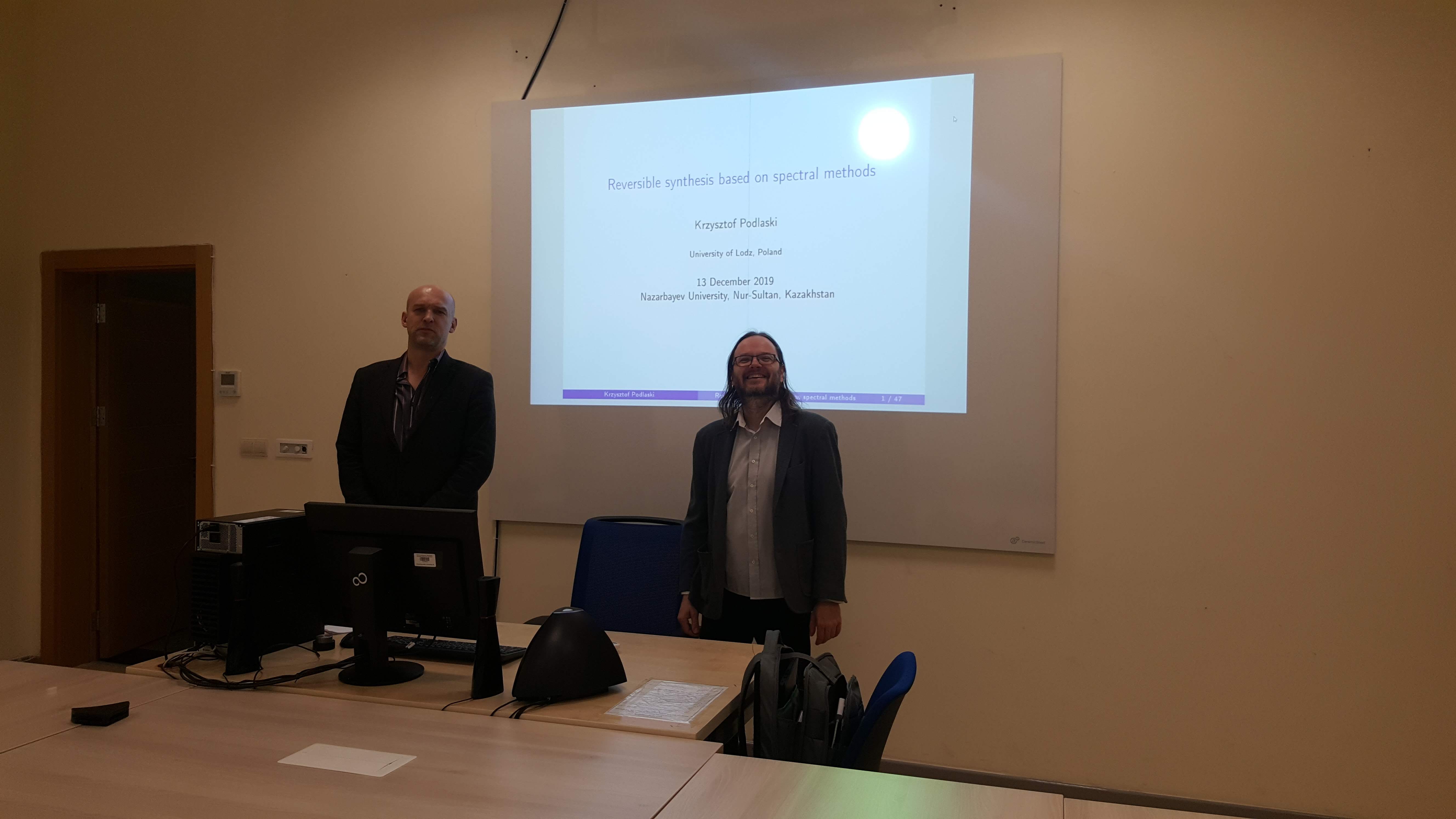
Professor Podlaski is an academic specializing in Quantum Computing and Circuit Design, recently presenting research on December 12 regarding spectral methodologies for Reversible and Quantum Circuits. His core research interests include: Quantum Computing Reversible Circuits Quantum Circuits Spectral Analysis Circuit Design This work bridges theoretical computer science and quantum engineering, focusing on optimization techniques for next-generation computing architectures. No institutional affiliations, awards, student supervision, or grant activities were documented in the source material.
Chirag Trivedi is an Associate Professor at the Norwegian University of Science and Technology (NTNU), affiliated with the Department of Energy and Process Engineering under the Faculty of Engineering. He specializes in hydropower research, particularly focusing on fluid structure interactions, computational fluid dynamics (CFD), and turbine optimization. Trivedi holds a PhD from the Indian Institute of Technology, completed in collaboration with Luleå University of Technology. His career includes roles as a Postdoctoral Fellow and Senior Researcher at NTNU, and prior experience as a Senior Design Engineer at Rainpower AS. His research emphasizes hydraulic turbine design, energy flexibility, and sustainable hydropower solutions. Key projects include FME RenewHydro (an eight-year Norwegian Research Centre), Store2Hydro (EU-funded hydropower storage innovation), and the BoundaryLayer initiative. He leads work packages in these projects, contributing to advancements in reversible pump-turbine technology and energy storage systems. Trivedi teaches courses on energy sustainability, CFD, and hydropower systems at NTNU, instructing over 300 students annually across various levels. He has supervised 19 MSc and PhD students, 7 currently ongoing, and has mentored postdoctoral researchers. His work includes over 39 journal articles and 15 conference papers, with citations exceeding 2,500 (Google Scholar). He is actively involved in scientific societies such as the International Association for Hydro-Environment Engineering and Research and contributes to standardization efforts via IEC committees. Trivedi’s research group, the Fluid Structure Interaction (FSI) team, operates from the Waterpower Laboratory at NTNU’s Gløshaugen campus. His work bridges experimental and computational methods to address challenges in turbine durability, vibration, and energy system efficiency. Recent focus areas include sediment management in hydropower plants and transient operation impacts on turbine components.
Dennis Meier is a full Professor at the Department of Materials Science and Engineering at NTNU, heading the Functional Topological Systems team at FACET. He is an associated member of QuSpin, the Centre of Excellence for Quantum Spintronics. His work focuses on ferroelectric domain walls, multiferroics, and topological materials. Meier serves as Vice-President of the European Magnetism Association and holds editorial roles at Communications Physics and Materials Today Quantum . Awards : Outstanding Research Award 2022, ERC Consolidator Grant 2019, Fridtjof Nansen Award 2019, I.K. Lykkes Award 2019. Grants : ATRONICS project funded by ERC (2019). Research : Explores domain wall electronics, topological solitons, and neuromorphic computing. Key contributions include conductivity control via defects, cryogenic memristors, and ferroelectric environmental sensors. His research spans domain wall dynamics, multiferroic materials, and applications in nanotechnology. He has authored/co-authored books on domain walls and multiferroics, and holds patents on magnetic field sensors and cryostat technology.
Joachim Tilsted Kristensen is a Doctoral Research Fellow at the University of Oslo's Department of Informatics, within the Programming Technology section. His research focuses on programming language design, formal semantics, complexity theory, and distributed systems. He teaches the course Programming Language Implementation and Formalisation alongside Lars Vadgaard and Michael Thomsen. His work emphasizes memory-safe systems programming, particularly exploring Rust's ownership model integration with CUDA platforms via domain-specific languages. He collaborates with MuyBridge, an Oslo-based company, on open-source projects under Apache 2.0/MIT licenses. Research Interests: Formal methods, systems programming, functional programming, compiler design, and programming language semantics. He advocates for safe, high-performance computing models that avoid traditional memory hazards in systems development. Current Projects: Modern approaches to theoretical computer science education and reliable concurrent/distributed computation models. His master’s thesis proposal targets safe image processing in Rust/CUDA ecosystems, addressing memory safety challenges in proprietary APIs. Collaborations: Active with industry partners like MuyBridge for applied research. Part of the Programming Technology research group at the University of Oslo.
Jefferson Molléri is an Associate Professor at Kristiania University College's School of Economics, Innovation and Technology. He specializes in evidence-based software engineering and empirical research methods, focusing on software process improvement, AI applications in software engineering, and human factors in technology development. PhD in Software Engineering (Blekinge Institute of Technology, 2019) Postdoctoral research at Simula Metropolitan Centre for Digital Engineering Academic experience since 2014 His research emphasizes methodological rigor, ethical considerations, and participatory approaches in software engineering. He has developed empirical standards and checklists for survey research validation. Recent publications focus on DataOps integration, hybrid workplace transformations, and research quality frameworks. Jefferson teaches software engineering, information technology, and computer science courses. He advocates for critical appraisal of scientific literature and has extensive experience supervising students across undergraduate, graduate, and doctoral programs.
Olena Zavorotynska is an Associate Professor in Materials Physics at the University of Stavanger (Norway), affiliated with the Faculty of Science and Technology and the Department of Mathematics and Physics. Her research focuses on advanced materials characterization, particularly in energy-related applications such as hydrogen storage and metal-organic frameworks (MOFs). She holds a PhD in Materials Science from the University of Turin (Italy) and has held postdoctoral and research positions at institutions including the Institute for Energy Technology (Norway) and Tohoku University (Japan). Her research interests include: Advanced material characterization via X-ray and neutron spectroscopy Metal hydrides and oxohydrides for energy storage MOF synthesis and functionalization Raman spectroscopy applications Recent publications highlight her expertise in MOF synthesis, hydrogen storage mechanisms, and material phase transitions. She has collaborated extensively with researchers in Norway, Japan, Italy, and beyond. Her work includes studies on magnesium borohydride decomposition, isotopic exchange in porous materials, and in-situ spectroscopic analysis of material transformations. Teaching responsibilities include courses such as Physics Laboratory (FYS210_1) and supervision of bachelor's and master's theses in physics and mathematics-physics. She actively participates in academic events, including the Norwegian Research School on Hydrogen and the Gordon Research Conference on Metal-Hydrogen Systems.
Asle Sudbø is a **Professor** and **Center Director** at the **SFF QuSpin** within the **Department of Physics** at **Norwegian University of Science and Technology (NTNU)**. He holds a PhD from Brown University (1990). His research focuses on condensed matter physics, particularly quantum regimes involving superconductivity, topological matter, quantum criticality, and ultracold systems. His group explores phenomena like topological superconductivity, magnon-mediated superconductivity, and quantum phase transitions in novel materials such as graphene and topological insulators. **Research Interests**: Quantum transport of spin/charge in low-dimensional systems Unconventional superconductors and superfluids Topological excitations in multi-component condensates Many-body effects in magnets and superconductors Monte Carlo simulations of condensed matter models **Recent Themes**: His 2023-2025 publications emphasize topological superconductivity mediated by skyrmionic magnons, quantum criticality in magnetic bilayers, and exceeding superconductivity limits in flat-band systems. Research bridges theory and materials science, with applications in topological insulators and twisted bilayer graphene. **Students**: Supervises Kristian Mæland, Christian Svingen Johnsen, and Sondre Duna Lundemo. Active in doctoral supervision and interdisciplinary collaborations. **Affiliations**: Director of SFF QuSpin, NTNU’s Condensed Matter Theory group leader. Involved in large-scale computational studies of quantum critical phenomena and topological systems.