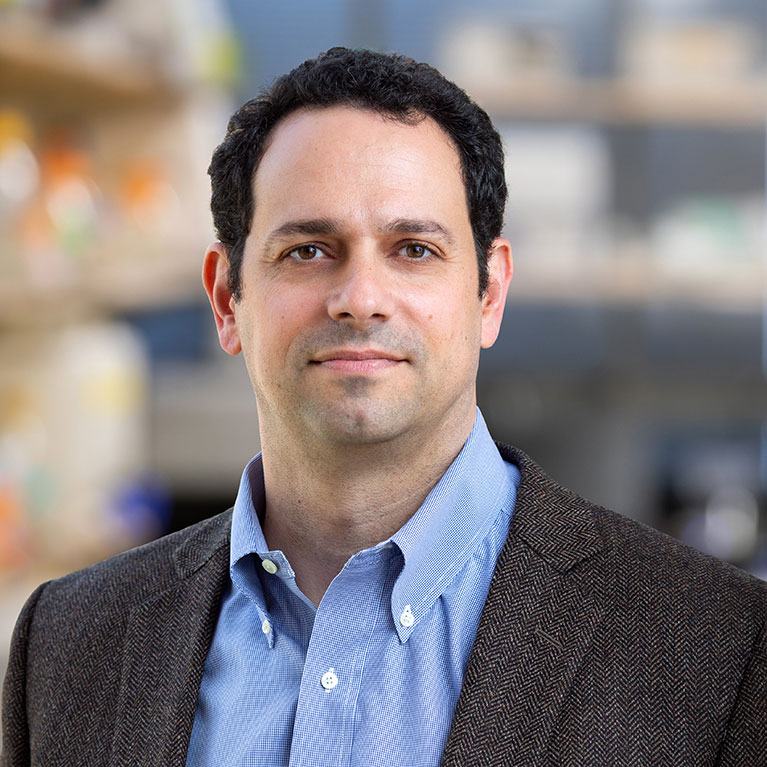
Professor Colin Akerman is a Governing Body Fellow at the University of Oxford and leads a neuroscience research group within the Department of Pharmacology. His work focuses on synaptic connections, activity-dependent processes, and their role in neurological disorders like epilepsy and dementia. He teaches undergraduate preclinical Medicine and graduate courses in Pharmacology and Neuroscience, and tutors at Corpus Christi College.
Aaron Blaisdell is a Professor in the Department of Psychology at the University of California, Los Angeles (College of Life Sciences). He directs the Comparative Cognition Lab and Pigeon Art Project, and is affiliated with the UCLA Brain Research Institute, Integrative Center for Learning & Memory, and Evolutionary Medicine program. BA in Anthropology (SUNY Stony Brook) MS in Anthropology (Kent State University) PhD in Behavioral Neuroscience (SUNY Binghamton) Postdoctoral Fellow (Tufts University, NIH-funded) His research spans animal cognition across species (rats, pigeons, hermit crabs, humans) using Pavlovian/instrumental conditioning to study causal reasoning, spatial cognition, behavioral variability, and decision-making under uncertainty. Recent projects examine pigeon digital art creation and evolutionary health through ancestral diet impacts on cognition. He co-founded the Ancestral Health Society and serves as Editor-in-Chief of the Journal of Evolution and Health, investigating how evolutionary mismatch affects modern health. Current work explores 3D visual perception mechanisms and dopamine's role in learning through computational and experimental approaches.
Jaejin Cho is an Assistant Professor in the Department of Artificial Intelligence and Robotics at Sejong University, where he conducts research at the intersection of machine learning and medical imaging. His work primarily focuses on advancing Magnetic Resonance Imaging (MRI) techniques through computational methods. His research interests span several key areas: Machine Learning : Network design, Domain transform, and Manifold learning. Image Processing : Numerical optimization, Annihilating filter, and Low-rank reconstruction. Medical Imaging : Fast MRI acquisition, Physics modeling, and MRI scanner operation. Dr. Cho's recent publications reveal a consistent focus on developing deep learning-based reconstruction algorithms for accelerated and distortion-free MRI. His work often integrates model-based approaches with deep learning, emphasizing zero-shot and self-supervised learning to avoid the need for large training datasets. Key application areas include quantitative MRI, diffusion imaging, and multi-contrast mapping, with a strong emphasis on clinical translation and cross-platform reproducibility. No scientific awards were mentioned in the available information. No information was available regarding advising activities, grants, or laboratory teams beyond his GitHub repositories which include tools for MRI reconstruction such as wave-modl and wave-qalas.
Stéphane Rivaud is a Post-doctoral Fellow affiliated with the MLIA (Machine Learning and Intelligent Agents) team at ISIR (Institut des Systèmes Intelligents et de Robotique). His research focuses on advancing machine learning methodologies, particularly in reversible architectures and gradient-based optimization techniques. Recent publications highlight his contributions to parallel end-to-end training frameworks and theoretical comparisons of forward gradient methods with traditional backpropagation algorithms. These works intersect with subfields like neural network optimization, reversible computing, and scalable training architectures. No scientific awards, student advising records, or funding grants are explicitly mentioned in the provided data.
Miguel Rivero Crespo is an Assistant Professor at Stockholm University 's Department of Chemistry, leading the Rivero-Crespo lab under the WISE Materials program. His career spans seven research institutions across five countries (Spain, Italy, UK, Sweden, Switzerland), with postdoctoral work at ETH Zurich (2019-2023) focusing on porous polymers and reversible metal-catalyzed reactions . His research bridges heterogeneous catalysis , materials science , and sustainable organic chemistry . He emphasizes mechanistic investigations to design solid catalyst materials outperforming homogeneous counterparts. Key interests include computational chemistry , polymer synthesis , and chemical sensing . The 15 most recent articles highlight his work in MOF-organocatalyst systems , homogeneous-heterogeneous hybrid catalysis , and 2D pnictogen materials . His lab focuses on multi-catalytic systems for reversible C–C bond activation and green chemistry applications. He holds a BSc in Chemistry (University of Salamanca, 2013) and MSc in Sustainable Chemistry (Valencia, 2014), followed by a PhD in Sustainable Chemistry at the Institute of Chemical Technology (ITQ), Valencia (2014-2019) under Professors Avelino Corma and Antonio Leyva-Pérez .
Michael F. P. O'Boyle is a Professor of Computer Science at the University of Edinburgh's School of Informatics. He is a leading researcher in compiler technology, specializing in optimizing compilation, machine learning for compilation, and heterogeneous systems. His work addresses the critical challenges of compiling software for increasingly diverse hardware architectures in the post-Moore's Law era. Professor O'Boyle's research interests focus on: Optimizing compilation techniques Machine learning applications in compilation Heterogeneous computing systems Program synthesis Neural machine translation for code Hardware/software co-design His recent publications demonstrate a strong focus on tensor optimization, compiler infrastructure for heterogeneous systems, and machine learning applications in program analysis and transformation. O'Boyle's work bridges traditional compiler techniques with modern AI-driven approaches to code optimization, addressing the growing complexity of hardware-software interfaces. Professor O'Boyle has received several notable honors and awards: ACM CGO Test of Time award (2017) Senior EPSRC Research Fellow Fellow of the British Computer Society (BCS) He holds significant leadership roles including Director of the ARM Research Centre of Excellence at Edinburgh and Director of the EPSRC Centre for Doctoral Training in Pervasive Parallelism. O'Boyle is also a founding member of HiPEAC, a European network for high-performance and embedded architecture and compilation, and has delivered keynote addresses at major conferences including PPoPP 2019 where he presented his vision for "Rethinking Compilation in a Heterogeneous World."
Dr. Nour Ali serves as a Professor and Vice-Dean of Education in the College of Engineering, Design and Physical Sciences at Brunel University London, where she co-heads the Brunel Software Engineering Lab. With a PhD in Software Engineering from Universidad Politecnica de Valencia and a Computer Science degree from Bir-Zeit University, she brings extensive international experience from previous positions at University of Brighton, Lero (Irish Software Engineering Research Centre), and Politecnico di Milano. PhD in Software Engineering, Universidad Politecnica de Valencia, Spain Major in Computer Science, Bir-Zeit University, Palestine PG Certificate in Teaching and Learning in Higher Education, University of Brighton Fellow of the Higher Education Academy (HEA) Her research focuses on developing software architecture techniques for distributed, mobile, and adaptive systems, with particular expertise in microservice architecture recovery and visualization. With over 70 publications spanning two decades, her work bridges theoretical architecture principles with practical implementation challenges. Recent research demonstrates a strong focus on microservice architecture recovery tools like MiSAR and analysis of service granularity adaptation. Dr. Ali has made significant contributions to the software engineering community through editorial roles including Deputy Editor in Chief of IET Software, committee memberships for major conferences like ICSE and ASE, and reviewer positions for EPSRC and other funding bodies. Her publications reveal consistent contributions across architecture consistency, microservice systems, and adaptive requirements engineering, with recent work increasingly focusing on practical tool development for architecture recovery. External Examiner, York St John University (2021-2025) Deputy Editor in Chief, IET Software Committee member for ICSE, ASE, EASE, ICSA, MOBILESoft conferences EPSRC Full College Member (2018-present) Reviewer for Dutch Research Council (NWO), UK UNESCO Newton Prize As an educator, Dr. Ali leads CS3100 Software Project Management and contributes to multiple undergraduate and postgraduate courses. Her teaching philosophy integrates research insights with practical software engineering skills, supported by her PG Certificate in Teaching and Learning and HEA Fellowship. She actively supervises PhD students and contributes to curriculum development as Vice-Dean of Education for her college.
Bellosta Marie-Jo serves as a Lecturer at Université Paris-Dauphine, affiliated with the LAMSADE research center (Laboratory for Analysis and Modeling of Systems for Decision Support). Her academic work bridges decision sciences and artificial intelligence within electronic commerce contexts. Her primary research domains include: Multi-criteria decision making methodologies Advanced auction theory and mechanism design Agent-based systems for automated negotiation Operations research applications in e-commerce Game-theoretic models for multi-attribute bidding Preference modeling in reverse auctions Analysis of her publication history (2004-2011) reveals consistent contributions to auction frameworks, particularly in multi-criteria English reverse auctions and agent-based negotiation systems. Her work frequently appears in high-impact venues like Artificial Intelligence journal and IEEE/ACM conference proceedings, demonstrating strong collaboration with researchers Vanderpooten and Kornman. The publications collectively advance computational approaches for complex procurement scenarios where multiple evaluation criteria govern bidding processes. LAMSADE laboratory serves as her primary research base, providing the institutional framework for her investigations into decision support systems and operational modeling. Her work maintains strong theoretical foundations while addressing practical challenges in electronic market design.
Dr. Aswani Kumar Cherukuri is a Professor of Information Technology at Vellore Institute of Technology (VIT), India, with research spanning information security, machine learning, and quantum computing. He serves as a Senior Member and distinguished speaker of the Association for Computing Machinery (ACM) and as Vice-Chair of the IEEE Taskforce on Educational Data Mining. Education: PhD in informational retrieval, data mining, and soft-computing techniques from Vellore Institute of Technology His research focuses on information security, machine learning, data mining, artificial intelligence, quantum computing, and security/privacy with significant contributions to neural networks, computer networks, and IoT. His work bridges theoretical foundations with practical applications in emerging technologies, emphasizing real-world implementation. Recent publications reveal strong trends in AI ethics (accuracy-bias trade-offs in text detection), autonomous systems (aerial vehicle surveillance), quantum computing (Qinterpreter platform development), and cybersecurity (terrorism prediction using BiGRU, internet anomaly detection via GANs). His editorial work on video conferencing security during the pandemic highlights practical societal impacts. Scientific Awards: Young Scientist Fellowship from Tamilnadu State Council for Science and Technology Inspiring Teacher Award from The Indian Express He has secured major research funding from India's Department of Science and Technology, Department of Atomic Energy, and Ministry of Human Resources Development. With over 150 refereed publications and editorial board memberships at international journals including PeerJ Computer Science, he actively shapes academic discourse through 1,375 editorial contributions.
Dr. Szabolcs Kertész serves as Associate Professor at the Faculty of Engineering, University of Szeged, Hungary, where he also manages the Innovation, Knowledge and Technology Transfer Office (ITTTI). His academic career spans over 15 years with significant contributions to membrane technology research and environmental engineering education. His educational background includes: Ph.D. in Environmental Sciences (2011) from University of Szeged Environmentalist MSc (2006) from University of Szeged Faculty of Sciences Habilitation (2019) from Doctoral School of Environmental Sciences Dr. Kertész's research centers on membrane separation processes for environmental applications, with particular emphasis on wastewater treatment technologies. His work investigates innovative approaches to reduce membrane fouling through 3D printed turbulence promoters, vibration technologies, and combined treatment methods. He has made substantial contributions to dairy industry wastewater management , developing sustainable solutions that reduce environmental impact while maintaining process efficiency. His research bridges chemical engineering principles with practical environmental applications, emphasizing translation of laboratory findings to industrial implementation. His recent publications demonstrate a strong trend toward integrating advanced manufacturing techniques like 3D printing with traditional membrane technologies. The research spans from fundamental studies of membrane fouling mechanisms to applied work on dairy and food industry wastewater treatment, showing consistent growth in impact factor and interdisciplinary collaboration. Among his distinguished recognitions: Bolyai-plakett (2024) Excellent Talent Care Award (2024, 2018) János Bolyai Research Scholarship (multiple periods) New National Excellence Program Scholarship (2020-2022) Dr. Kertész has secured significant research funding as Principal Investigator for projects including 'Optimization of hydrodynamic conditions with 3D printed elements' (NKFIH/OTKA FK142414) and 'Development of a dairy-based beverage selectively enriched with milk fat globule membrane materials.' His research group maintains international collaborations with institutions in Serbia, Turkey, Finland, and Belgium. He leads a research team focused on membrane technology innovation, specifically investigating how 3D printed elements can enhance membrane filtration efficiency in wastewater treatment applications. His laboratory combines experimental membrane testing with computational modeling to optimize hydrodynamic conditions in filtration systems, with particular emphasis on dairy industry applications.
Ippei Obayashi is a Professor at Okayama University's Center for artificial intelligence and mathematical data science, with a visiting professorship at Tohoku University's Advanced Institute for Materials Research (AIMR). His academic career spans prestigious institutions including RIKEN, Tohoku University, and Kyoto University, where he earned his Doctor of Science degree. Okayama University, Center for AI and Mathematical Data Science, Professor (2021-present) RIKEN, Center for Advanced Intelligence Project, Researcher (2018-2021) Tohoku University, Institute for Advanced Materials Science, Associate Professor (2018) Tohoku University, Advanced Institute for Materials Science, Assistant Professor (2015-2018) Kyoto University, Research Fellow (2010-2015) Educational Background: Kyoto University, Graduate School of Science, Department of Mathematics and Mathematical Analysis (2006-2010, Doctoral) Kyoto University, Graduate School of Science, Department of Mathematics and Mathematical Analysis (2004-2006, Master's) Kyoto University, Faculty of Science (2000-2004, Bachelor's) Professor Obayashi's research focuses on topological data analysis (TDA) , particularly persistent homology and its applications, alongside dynamical systems theory. His work bridges pure mathematics with practical applications in materials science, where he has developed innovative methods to analyze complex material structures. He has made significant contributions to understanding magnetic materials, amorphous structures, and crystal formation through topological approaches, often integrating machine learning techniques with traditional mathematical analysis. His research has practical implications for energy materials, battery technology, and materials characterization. His publication record demonstrates a strong trend toward applying topological methods to solve real-world materials science problems, with increasing integration of machine learning techniques. Recent work shows sophisticated applications of persistent homology to analyze neutron scattering data, magnetic properties, and structural characteristics of materials, reflecting his ability to translate abstract mathematical concepts into practical analytical tools. Scientific Awards: JCS-JAPAN Excellent Paper Award, Ceramic Society of Japan (2020) 11th Sakuramai Research Encouragement Award, RIKEN (2020) Japan Society for Industrial and Applied Mathematics Best Author and Best Paper Awards (2017) 6th Fujiwara Hiroshi Mathematical Sciences Encouragement Award (2017) AIMR International Symposium Best Poster Award (2017) Professor Obayashi actively mentors graduate students through Okayama University's Graduate Student Program and leads research initiatives including the Japan Society for Industrial and Applied Mathematics Topological Data Analysis Research Group, which he chairs. His research is supported by multiple competitive grants, including Japan Society for the Promotion of Science (JSPS) funding for projects on mathematical data science and topological structure analysis. He collaborates extensively with researchers across disciplines, particularly in materials science and engineering. He is affiliated with the Center for artificial intelligence and mathematical data science (Angels) and the Cyber-Physical Engineering Informatics Research Division (Cypher) at Okayama University, where he leads efforts to develop and apply topological data analysis methods to complex scientific problems. His laboratory focuses on creating practical software tools like HomCloud for persistent homology analysis, bridging the gap between theoretical mathematics and applied scientific research.
Yeting Li is a researcher at the Institute of Information Engineering, Chinese Academy of Sciences, with academic affiliation at the University of Chinese Academy of Sciences. Their work bridges software security and artificial intelligence, focusing on practical vulnerabilities in modern systems. Research spans vulnerability analysis in Kubernetes ecosystems, AI-driven binary similarity detection , and semantic-enhanced static analysis for baseband firmware. Recent work explores large language models for security applications including fuzz driver generation and data contamination mitigation in benchmarking, alongside accessibility-focused testing for speech recognition systems. Publications reveal a clear trajectory toward integrating AI with traditional security analysis, particularly in containerized environments and binary code analysis. Emerging themes include LLM-based tooling for vulnerability identification and specialized testing methodologies for emerging technologies like automatic speech recognition and deep learning operators. Key contributions include Kubernetes resource injection vulnerability studies, Aster for stutterer accessibility testing, and ACETest for deep learning operator validation. Research demonstrates consistent focus on empirical evaluation of security tools across ASE, ICSE, and ISSTA venues from 2023-2025.
Alan Saghatelian is a Professor and holds the Dr. Frederik Paulsen Chair at the Salk Institute for Biological Studies, where he leads the Clayton Foundation Laboratory for Peptide Biology. His research focuses on the discovery and characterization of natural small molecules, particularly metabolites and peptides, using advanced mass spectrometry techniques. Dr. Saghatelian received his Bachelor of Science in Chemistry from the University of California, Los Angeles, and his Ph.D. in Chemistry from The Scripps Research Institute. He completed his postdoctoral training as a Merck Fellow with the Life Sciences Research Foundation. His research program distinguishes itself through its focus on biology related to metabolites and peptides, which he refers to as natural small molecules. These molecules have vital roles in human physiology and disease but have been historically understudied due to technical challenges in their detection. Saghatelian's lab has made significant discoveries, including the identification of FAHFAs (fatty acid esters of hydroxy fatty acids), a novel class of lipids with anti-inflammatory properties that can reverse diabetes symptoms in mice. His team has also discovered thousands of human genes encoding microproteins that could advance our understanding of molecular pathways controlling diseases such as cancer and autoimmunity. Dr. Saghatelian's work spans multiple disease areas, with significant contributions to diabetes research, cancer biology, neurodegenerative diseases, and immunological disorders. His laboratory collaborates extensively with other researchers at Salk to understand the role of peptides and metabolites across various biological contexts. Mark Foundation for Cancer Research Endeavor Award (2022) American Association for the Advancement of Science Fellow (2020) Sloan Foundation Fellow (2011) Searle Scholars Program Award (2008) New Innovator Award, National Institutes of Health (2007) Burroughs Wellcome Fund Career Award in Biomedical Sciences (2005) Dr. Saghatelian's laboratory has been highly productive, with numerous publications in top-tier journals. His recent work has focused on microprotein discovery, lipid signaling molecules like FAHFAs, and the application of advanced proteomics and metabolomics techniques to understand disease mechanisms. His research program demonstrates a strong trajectory of innovation, moving from fundamental discoveries of new biological molecules to potential therapeutic applications. The Saghatelian Lab develops and applies novel mass spectrometry strategies to measure changes in small molecules that are often overlooked by traditional biological methods focusing on DNA, RNA, and proteins. The lab's work has revealed previously unknown aspects of human biology, including novel signaling pathways and regulatory mechanisms mediated by small molecules.
Alastair F. Donaldson is a Professor in the Department of Computing at Imperial College London, where he leads the Multicore Programming Group. His primary affiliation is with Imperial College London's Department of Computing within the broader Faculty of Engineering structure. He serves as a Program Committee Member for major conferences including ASE, PLDI, and POPL. His research spans Programming Languages , Compilers , Verification , Testing , and Multicore Programming , with significant contributions to randomized testing techniques. He pioneered GraphicsFuzz (acquired by Google in 2018) and developed innovative approaches like grammar mutation for parser testing, metamorphic fuzzing for C++ libraries, and specialized tools for GPU API validation. His work bridges theoretical foundations with industrial impact, particularly in compiler correctness and GPU computing. Analysis of his recent publications reveals a strong trend toward fuzzing infrastructure development (40%), GPU/compiler testing (30%), and formal methods integration (30%). His research increasingly focuses on large-scale automated testing for complex systems including WebGPU, Dafny, and Rust, while maintaining rigorous theoretical grounding in concurrency models and memory semantics. Donaldson has held significant leadership roles including General Chair for PLDI 2020 and Program Chair for ECOOP. His research has been supported through conference organizational roles and industrial collaborations, notably the GraphicsFuzz spinout. He actively contributes to the PL community through mentoring initiatives like PLMW and community-building efforts such as The PLDI Song. He leads the Multicore Programming Group at Imperial College London, focusing on practical tools for compiler and GPU driver validation. The group's work combines theoretical program analysis with real-world testing frameworks, maintaining strong industry connections through projects adopted by Google and other technology companies.
Louise Kjærulff serves as a Research Consultant in the Department of Drug Design and Pharmacology within the Faculty of Health and Medical Sciences at the University of Copenhagen. Her work centers on natural product drug discovery, with emphasis on Australian Eremophila species and other endemic plants, utilizing advanced analytical techniques for bioactive compound identification. Her research spans Natural Products Chemistry , Phytochemistry , and Drug Discovery , focusing on isolation and structural characterization of alkaloids, lignans, diterpenoids, and sesquiterpenoids. She employs high-resolution methods including HPLC, NMR spectroscopy, molecular networking, and bioassay-guided fractionation to evaluate cytotoxicity, enzyme inhibition, and radical scavenging activities of plant metabolites. Analysis of her 2022-2024 publications reveals strong interdisciplinary collaboration, particularly in Australian biodiscovery projects. Key themes include phytochemical profiling of Eremophila species, biosynthetic pathway investigations, and ethical considerations in ethnobotanical research. Her work integrates computational chemistry with experimental validation for stereochemical assignments. No scientific awards or fellowships were documented in the available profile. Louise Kjærulff has not listed any formal advisees or research grants in the current information. She operates within the Joint Lab Facilities at the University of Copenhagen and maintains active international collaborations with Australian researchers on plant-based drug discovery initiatives, addressing both scientific and ethical dimensions of natural product research.