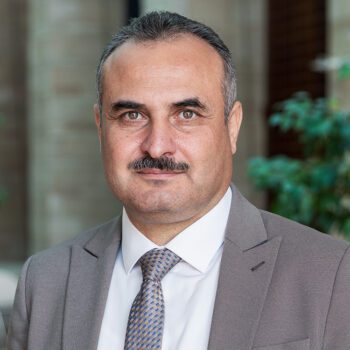
Nimer Murshid is an Assistant Teaching Professor in the Department of Chemistry at Carnegie Mellon University in Qatar. His research focuses on nanomaterials, environmental science, and computational chemistry, with a particular emphasis on aerogels, nanofluids, and machine learning applications in material characterization. He has contributed to studies on oil and dye removal using advanced materials, thermal radiation analysis, and sustainable energy solutions. His work frequently employs principal component analysis (PCA) and other computational tools to optimize material performance and environmental remediation strategies. Research Interests include: Development and application of nanomaterials for biomedical and environmental uses Thermal and fluid dynamics analysis in nanofluid systems Machine learning-driven material optimization Sustainable energy integration in desalination and wastewater treatment Environmental remediation using advanced composites Recent articles highlight innovations in aerogel efficiency evaluation, nanotube functionalization for cancer diagnosis, and wind energy applications for desalination. Collaborative efforts emphasize sustainable technologies and interdisciplinary approaches to global environmental challenges. Grants and advising activities are not explicitly detailed in the provided information, though his role as a teaching professor suggests active involvement in academic mentorship within the Department of Chemistry.
Dr. Daniel Page is a Senior Lecturer in Computer Science at the University of Bristol, specializing in Cryptography and Information Security. His research bridges cryptographic engineering, hardware/software security, and programming language design. Research interests: Cryptographic engineering (hardware and software implementation of cryptographic primitives), side-channel attacks, fault attacks, secure processor architectures, domain-specific compiler optimizations for cryptography (e.g., AES, ECC), and cross-disciplinary studies in software defects and game glitch analysis. Recent research trends focus on hardware/software co-design for security, including novel instruction set extensions (ISEs) to mitigate leakage in masked implementations and protect against cache-based side-channel attacks. His work spans both theoretical and applied domains, with collaborations in digital security policy and embedded systems. Projects include DiScriBe (Digital Security by Design Social Science Hub, 2020–2024) and EPSRC-funded initiatives (2019–2022/2023). He has contributed datasets like GMOPST14 (University of Bristol, 2014).
Robin Kaarsgaard Sales is an Assistant Professor on the tenure track in the Department of Mathematics and Computer Science at the University of Southern Denmark, Faculty of Science and Engineering. His research focuses on the theoretical foundations of programming languages, with an emphasis on reversible computation, quantum programming, and categorical semantics. His research interests span Programming Languages , Reversible Computation , Quantum Computing , Categorical Semantics , Functional Programming , and Formal Methods . He investigates how invertibility and reversibility can be integrated into programming models, particularly in the context of quantum computation, using tools from category theory and mathematical logic. His recent publications, appearing in high-impact venues such as POPL and ICFP, demonstrate a consistent focus on compositional models of reversible and quantum computation. Key themes include invertible functional programming, quantum semantics via groupoids and morphisms, and program transformations for tail recursion in reversible settings. These works reflect a deep integration of theoretical computer science with mathematical structures. Robin was a participant in the research project Landauer Meets von Neumann: Reversibility in Categorical Quantum Semantics (2020–2022), funded by the Danish Research Council, which underscores his active role in advancing foundational aspects of quantum computing. He has collaborated extensively with prominent researchers including Jacques Carette, Chris Heunen, and Amr Sabry. His work has been featured in public media, including TV2 News and regional press, highlighting both his research impact and community engagement. He is also referenced on Wikipedia and has a presence on academic platforms such as ORCID, Scopus, and Mendeley. He is affiliated with a research group active in programming language theory and quantum computation, contributing to a growing international network in reversible and quantum computing. His ongoing work continues to explore the mathematical underpinnings of computation, aiming to bridge theory with practical language design.
Sandra Greiner is an Assistant Professor in the Department of Mathematics and Computer Science at the University of Southern Denmark (SDU), where she conducts research in artificial intelligence, cybersecurity, and programming languages. Her work is centered on improving the reliability and adaptability of control software in cyber-physical production systems through advanced software engineering techniques. Her research interests include software variability modeling , design by contract , and the application of generative AI in automating software development tasks. She focuses on ensuring high reliability in software-intensive systems, particularly in industrial automation contexts. Her work bridges theoretical computer science with practical software engineering challenges. The recent publications highlight a strong trend in leveraging AI for software contract generation, enhancing feature tracing with reliable knowledge, and managing variability in complex production systems. Her research contributes to model-driven engineering, software product lines, and intelligent software assistance, with a consistent emphasis on empirical validation through case studies. Sandra actively collaborates with researchers across Europe, particularly in Austria and Germany, contributing to top-tier conferences such as SPLC, MODELS, and GPCE. Her work has been published in high-impact journals and conference proceedings, reflecting active engagement in the global software engineering community. She is affiliated with the IMADA research center at SDU, as evidenced by her institutional email. No formal awards or fellowships are mentioned in the provided data. Sandra advises no publicly listed students, and there is no indication of lab leadership or team management in the text. However, her collaborative publications suggest participation in research teams focused on software product lines and AI-driven software engineering.
Charles A. DiMarzio is an Associate Professor in the Department of Electrical and Computer Engineering at Northeastern University , with affiliations in Mechanical and Industrial Engineering and Bioengineering. His research spans advanced optical imaging techniques for biomedical applications. Education: PhD in Electrical and Computer Engineering, Northeastern University (1996) MS in Physics, WPI BS in Engineering Physics, University of Maine Research interests focus on optics , microscopy , coherent detection , hyperspectral imaging , and collagen studies . His group develops hardware and computational methods for multi-modal biomedical imaging , including the Keck 3-D Fusion Microscope . Recent publications highlight innovations in: Collagen monomer orientation measurement Super-resolution structured illumination Ultrasound-modulated light imaging Coded-illumination Fourier ptychography Awards include: SPIE Fellow (2022) SPIE Senior Member (2021) Optica Senior Member (2021) He supervises capstone design projects and teaches graduate courses in Optics for Engineers and undergraduate classes in Circuits and Signals , Electronics , and Subsurface Sensing . Collaborations include the Gordon Center for Subsurface Sensing , ALERT , and institutions like Memorial Sloan Kettering Cancer Center.
Miriam Barlow is a Professor in the Department of Molecular & Cell Biology at the University of California, Merced , affiliated with the School of Natural Sciences. Her research focuses on evolutionary biology, antibiotic resistance, and bacterial genetics. PhD (2002), University of Rochester MS (2001), University of Rochester BS (1998), University of Utah Research Interests: Evolution of bacteria and antibiotic resistance mechanisms Experimental evolution and fitness landscapes Computational modeling of resistance gene dynamics Horizontal gene transfer in pathogen evolution Gene-environment interactions in microbial adaptation Key Research Trends: Analysis of β-lactamase evolution, multidrug resistance gene clusters, and adaptive landscapes under varying antibiotic concentrations. Development of statistical tools for growth rate analysis and evolutionary predictability studies. Lab Information: Her laboratory is located in Science and Engineering 1 Building, Room 301, with additional office space in Room 310.
Hua Chen is a Professor of Finance and Risk Management at the Shidler College of Business, University of Hawaii at Manoa, where she also serves as the Faculty Director of the Master of Science in Finance (MSF) Program. With a strong academic background including a Ph.D. in Risk Management and Insurance from Georgia State University, she has established herself as a leading scholar in financial risk management. Dr. Chen's educational background includes: Ph.D. in Risk Management and Insurance, Georgia State University M.A. in Applied Economics, University of Oklahoma M.A. in International Economics, Sichuan University (China) B.S. in Computational Mathematics, Sichuan University (China) Her research focuses on critical areas of financial stability and risk management, with particular expertise in systemic risk, enterprise risk management, longevity risk, and insurance economics. Dr. Chen's work bridges theoretical frameworks with practical applications in financial markets and insurance industries. Her research has significantly contributed to understanding risk networks among financial institutions, mortality modeling, and the intersection of housing markets with financial security. Dr. Chen has received numerous awards for her scholarly contributions, including the Excellence in Reviewing Award for the Journal of Risk and Insurance (2024), Professor of the Semester in the MSF Program (2021), and multiple Dean's Research Honor Roll recognitions at Temple University. Her publications appear in top-tier journals such as the Journal of Risk and Insurance, North American Actuarial Journal, and Insurance: Mathematics and Economics, with several papers ranking among the most cited in their fields. Dr. Chen has been actively involved in reviewing and editorial work for leading finance and insurance journals. Her research has been recognized with multiple Summer Research Awards and prestigious fellowships throughout her career. At the University of Hawaii, she teaches courses in business finance and advanced finance topics, contributing to both undergraduate and graduate education in finance.
Qianqiu Liu is Professor and Chair of the Department of Finance at the Shidler College of Business, University of Hawaii. Holding a PhD in Finance from the Kellogg School of Management, Northwestern University (2003), an MS in Statistics (1996), and a BS in Mathematics (1993) from Wuhan University, he specializes in empirical finance and econometric modeling. Education : PhD (Finance) - Kellogg School of Management, Northwestern University (2003); MS (Statistics) - Wuhan University (1996); BS (Mathematics) - Wuhan University (1993) His research focuses on Empirical Asset Pricing , Financial Econometrics , and Market Microstructure , with recent work analyzing gold as a hedge, short-term return reversals, and momentum strategies. Publications span journals like the Journal of Empirical Finance and Management Science . Key article trends include high-frequency data applications , commodity-market interactions , and behavioral finance phenomena such as lunar calendar anomalies. Awards highlight both research excellence and teaching recognition in the Master of Financial Engineering program. Scientific Awards : DUFE Outstanding Research Achievement Award (2022), CFA Institute Asia Pacific Capital Markets Research Best Paper Award (2014), Mega Holdings Best Paper Award (2012), InFRE Best Paper Award (2010), Shirley M. Lee Research Award (2009), CFP Board of Standards Best Paper Award (2008) He teaches courses including BUS 314 Business Finance and FIN 655 Financial Forecasting , and his work bridges theoretical finance with practical investment strategies.
Dr. Bernd Schulze is a Reader (Associate Professor) in Pure Mathematics at the School of Mathematical Sciences , Lancaster University . He leads the Geometric Rigidity Theory research theme and contributes to the Combinatorics and Algebra & Geometry research groups. University of Toronto (Postdoc 2011) York University (Postdoc 2012) TU Berlin (Postdoc 2009-2011) Research interests focus on the rigidity and flexibility of discrete geometric constraint systems, with applications in structural engineering, robotics, materials science, and biophysics. His work combines combinatorial and geometric approaches, exploring symmetry, topological graph theory, algebraic topology, and lattice geometry. Collaborations include structural engineers (William Baker, Cameron Millar), chemists (Patrick Fowler), and robotics theorists (Daniel Zelazo). Recent publications emphasize symmetry-preserving formation control, extrusion symmetry in frameworks, and projective rigidity analysis. Selected scientific awards include the prestigious York University Dissertation Prize (2010) Grants include EPSRC (2025-), ICMS Catalyst Grant (2023-2024), and multiple LMS and ICMS research grants. He supervises PhD students in rigidity theory, symmetry, and interdisciplinary applications.
Mirjana Stojilovic is a researcher at EPFL's School of Computer and Communication Sciences and the Parallel Systems Architecture Laboratory (PARSA). She obtained her PhD in 2013 from the School of Electrical Engineering in Belgrade and has worked on projects like STRUCTURES (EU FP7) and ADHeS (armasuisse). Her research spans field-programmable technology, electronic design automation, and hardware security, with a focus on side-channel attacks and countermeasures in reconfigurable systems. Education: PhD in Electrical Engineering (2013), School of Electrical Engineering, Belgrade Research Areas: FPGA security, power analysis attacks, hardware acceleration, EDA optimization Her recent publications analyze vulnerabilities in shared cloud FPGAs, side-channel leakage, and routing architectures. She has supervised numerous PhD and MSc students and received awards for teaching and research. She also organizes workshops and serves on program committees for conferences like FPGA, DATE, and FPL. Scientific Awards: 2023 Best paper award nomination (DDECS) 2020 OMEGA Student Award (for supervised project) 2016 Young scientist award (ICLP), Best paper (EMC Europe) 2015 Teaching Award (EPFL) 2011 Blažo Mirčevski Young author award Committees: Program member for DATE, FPGA, FPL, and associate editor for ACM TRETS and IEEE ESL She teaches courses such as Fundamentals of Digital Systems, Computer Architecture, and Information, Computation, Communication (ICC) at EPFL.
Carlos Zednik is an Assistant Professor for Philosophy of Artificial Intelligence at Eindhoven University of Technology , affiliated with the Industrial Engineering and Innovation Sciences department. He leads the Eindhoven Center for Philosophy of AI and participates in the alignAI (ERC) and ROBUST AI (NWO) consortia. His work bridges philosophy with AI and neuroscience, focusing on explainable AI (XAI), mechanistic explanation, and cognitive modeling. Education: BSc in Computer Science and Philosophy, Cornell University MSc in Philosophy of Mind, University of Warwick PhD in Cognitive Science, Indiana University Bloomington Zednik’s research investigates philosophical questions about biological and artificial intelligence, emphasizing: Methodological principles in cognitive psychology and neuroscience Norms and best practices for XAI in machine learning Knowledge representation in transformer models and large neural networks His recent publications explore the integration of cognitive models into XAI, the role of Bayesian reverse-engineering in cognitive science, and the mechanistic explanation of network neuroscience. Zednik also contributes to international standardization efforts through ISO/IEC TS 6254 and DIN SPEC 92001 . Scientific Awards include fellowships from: DAAD Alexander-von-Humboldt Foundation StandICT Fellowship Zednik supervises PhD students Zeynep Kabadere , Michela Ghezzi , Céline Budding , Miriam Gorr , and Hannes Boelsen , while mentoring postdocs Manuel Barbosa de Oliveira and Philippe Verreault-Julien . His teaching spans philosophy of AI, ethics of machine learning, and decision theory, with innovation projects on generative AI in higher education.
Dr. Teresa Katthagen serves as a Postdoctoral Research Fellow and Psychologist within the Department of Psychiatry and Neurosciences at Charité – University Medicine Berlin's Campus Charité Mitte. Based in Ward 154T and actively contributing to the Research Group Learning and Cognition, her clinical and research activities center on understanding the pathophysiology of schizophrenia and related psychotic disorders through advanced neuroimaging and computational methodologies. Her research program critically examines the neural substrates of motivation deficits (apathy), reward processing abnormalities, and belief formation in psychosis. Utilizing functional MRI, computational modeling of decision-making, and longitudinal study designs, she investigates how striatal-cerebellar circuits, dopamine signaling, and uncertainty processing contribute to symptom dimensions such as negative symptoms and delusions. This work bridges cognitive neuroscience with clinical psychiatry to identify transdiagnostic mechanisms. Recent publication trends demonstrate a sustained focus on schizophrenia spectrum disorders, particularly the computational and neurobiological basis of apathy and negative symptoms. Her work frequently employs fMRI to study striatal prediction error signaling, cerebellar-ventral tegmental area connectivity, and the impact of stress on cognitive flexibility. A notable emphasis exists on methodological rigor through longitudinal designs, multi-site validation, and reproducibility frameworks. Scientific awards and honors were not documented in the provided materials. Details regarding graduate student mentorship and externally funded research grants are not specified in the available information. As a key member of the Learning and Cognition Research Group, Dr. Katthagen collaborates within a multidisciplinary team that integrates computational psychiatry, cognitive neuroscience, and clinical research. The group maintains strong methodological expertise in fMRI data acquisition and analysis, computational modeling of behavioral tasks, and longitudinal study design to advance mechanistic understanding of psychiatric disorders.
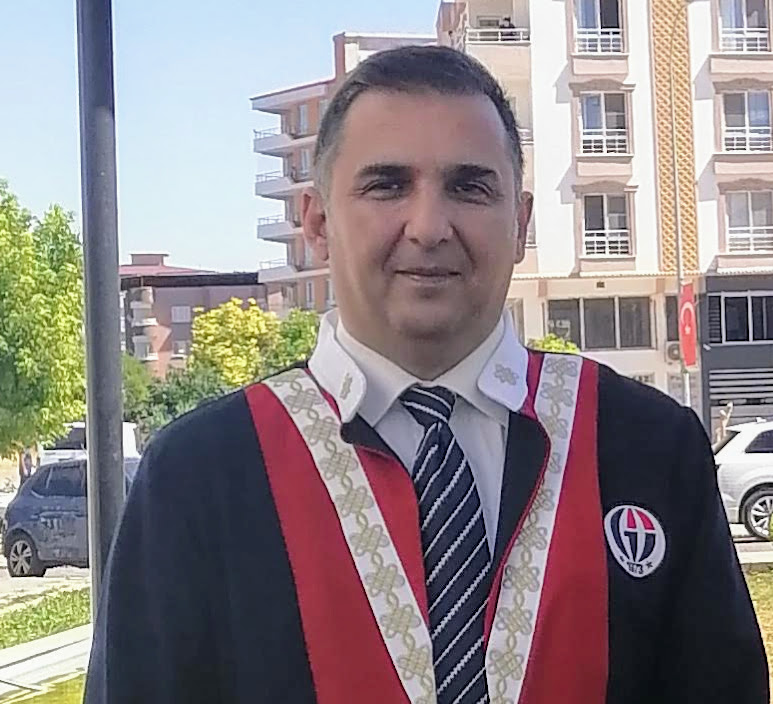
Orhan Ecemiş serves as an Associate Professor at Gaziantep University's Technical Sciences Vocational School within the Electronics and Automation Department, specializing in Robotics and Artificial Intelligence. His academic appointment commenced in 2024 following progression from Doctor Lecturer (2022-2024) and Lecturer (2009-2022) positions. He currently holds administrative roles as Head of Department and Deputy Director of Vocational School/College at Gaziantep University, having previously served in these capacities during 2010-2014 and 2020-2022. His educational background includes a Doctorate in Econometrics from Akdeniz University (2011-2016), a Master's in Computer Education from Gazi University (2001-2004), and undergraduate studies in Computer Teaching at Gazi University (1996-2000). Ecemiş specializes in Quantitative Decision Methods, Multi-Criteria Decision Making, Data Analytics, and Operations Research, with significant contributions to Artificial Intelligence applications. His research bridges computer science and economic modeling, focusing on practical decision support systems across diverse domains including energy policy, logistics optimization, and digital transformation. His work consistently applies advanced mathematical frameworks to real-world problems, particularly utilizing neutrosophic logic and machine learning techniques for complex decision environments. His 15 most recent publications demonstrate strong thematic continuity in applying Multi-Criteria Decision Making methods to contemporary challenges, with increasing focus on sustainability metrics, digital technologies, and economic forecasting. The research spans energy policy evaluation, cloud computing selection, green logistics, and international trade analysis, reflecting both methodological sophistication and practical relevance to Turkish and European contexts. As an academic supervisor, he has guided at least one Master's thesis to completion in 2025. His teaching portfolio encompasses computer programming, web technologies, algorithms, and data science applications across undergraduate and associate degree programs since 2014. While specific grant information isn't detailed in the source material, his extensive publication record across international journals and conference proceedings indicates substantial research activity.
Professor Lars Wesemann is a distinguished faculty member in the Department of Chemistry at Eberhard Karls University of Tübingen, where he has served as a Professor since August 2003. He leads the Wesemann Working Group (AK Wesemann) within the Inorganic Chemistry section of the Faculty of Mathematics and Natural Sciences. His research group maintains active collaborations with numerous institutions and researchers worldwide, as evidenced by his extensive publication record. Professor Wesemann received his chemistry education at RWTH Aachen University, completing his diploma thesis in February 1988 under Professor Herberich. He earned his doctorate (Promotion) in June 1990 from the same institution. Following a postdoctoral fellowship at MIT with Professor Seyferth (1990-1991), he completed his Habilitation in June 1997 at RWTH Aachen. His academic career progressed through positions as Private Lecturer at RWTH Aachen (1997-1998), Acting Chair at the University of Karlsruhe (1998-1999), and University Professor at the University of Cologne (1999-2003) before joining the University of Tübingen. Professor Wesemann's research focuses on the chemistry of main group elements, particularly tin, germanium, and lead compounds. His work explores unusual bonding situations, low-valent species, and the reactivity of novel compounds. The Wesemann Working Group has made significant contributions to the understanding of stanna-closo-dodecaborate chemistry, multiple bond formation between heavier main group elements, and the coordination chemistry of unusual ligands. His research combines synthetic inorganic chemistry with detailed structural and spectroscopic characterization to elucidate reaction mechanisms and bonding principles. An analysis of Professor Wesemann's recent publications (2021-2023) reveals several key research trends. His group continues to pioneer the chemistry of heavier main group element multiple bonds, particularly exploring authentic double and triple bonds involving tin, germanium, and lead. The group has developed novel methodologies for synthesizing and stabilizing low-valent species, including stannaborenes, phosphastannenes, and germasilenylenes. A significant portion of recent work focuses on the reactivity of these unusual compounds with small molecules, demonstrating applications in small molecule activation and potential catalytic transformations. The Wesemann group also maintains a strong interest in boron cluster chemistry, particularly stanna-closo-dodecaborate derivatives and their transition metal coordination chemistry. Doctoral scholarship from the Chemical Industry Fund (1988-1990) Research scholarship (DAAD) (1990-1991) Heisenberg scholarship (1997-1998) Borchers Plaque RWTH Aachen (1990) Friedrich Wilhelm Prize (1990) Professor Wesemann has mentored numerous doctoral students, as evidenced by the extensive list of former employees with "Dr. rer. nat." designations. His group has secured significant research funding to support their synthetic and characterization work, including equipment for advanced spectroscopic and structural analysis. The Wesemann Working Group maintains strong international collaborations, particularly with researchers in the United States, as reflected in co-authored publications. The Wesemann Working Group operates within the Institute of Inorganic Chemistry at the University of Tübingen, with laboratory facilities in Building A on the 7th Floor. The group typically consists of current employees including PhD students, postdoctoral researchers, and technical staff, working collaboratively on various aspects of main group element chemistry. The group maintains active collaborations with theoretical chemists to complement their experimental work with computational studies of bonding and reactivity.
Senta Goertler is a Professor of German and Second Language Studies at Michigan State University's College of Arts & Letters. She serves as co-editor of Second Language Research and Practice and is a Big Ten Academic Alliance Academic Leadership Program Fellow. Research Focus: Technology-mediated language learning (computer-mediated communication, virtual reality simulations, hybrid instruction) Teaching: German language courses, second language acquisition theory, language pedagogy Leadership: Big Ten Academic Alliance Fellow, editorial leadership Her work examines the intersection of digital tools and language education, particularly crisis-driven pedagogical shifts. Recent publications analyze emergency remote teaching, virtual reality applications in medical Spanish instruction, and flipped classroom models in Japanese higher education. Earlier research explored study abroad programs, blended learning frameworks, and digital equity in CALL (Computer-Assisted Language Learning). She has contributed to understanding affect in remote teaching, telecollaboration assessment, and evidence-based language goal setting. Her projects often bridge theory and practice, translating empirical findings into classroom strategies. Scientific Awards: Big Ten Academic Alliance Academic Leadership Program Fellow Grants: Not explicitly mentioned in text Advising: Supervises research on technology-mediated language learning, though specific student names are not listed