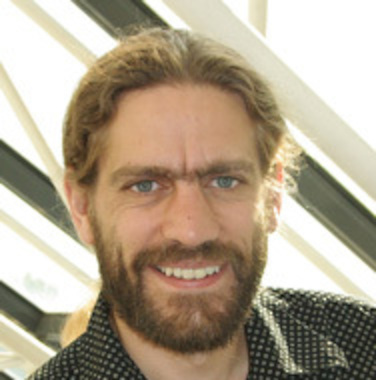
Jean-Luc Hainaut is a Professor at the Faculty of Computer Science , specializing in Database Application Engineering , Reverse Engineering , and Information Systems Modelling . His work spans theoretical and applied research in software engineering, with a focus on SQL symbolic execution , unit testing , and engineering tools . His research projects include: DB-MAIN : Database Application Engineering (1993–present) RetroWeb : Web Sites Reverse-Engineering Methodologies and Tools (2001–present) ReQuest : Research Program Schemas (2003–present) MIRROR : MedIcal Resource Real Time Optimizer (2012–2015) Key research areas: Reverse Engineering Database Evolution Symbolic Execution Healthcare Systems Modelling Automated Generation of Systems Selected publications highlight his contributions to SQL testing , data-oriented applications , and healthcare information systems . He has supervised numerous students and contributed to the Sustainable Development Goals related to Good Health and Well-being through medical resource optimization projects.
Aurélien Francillon is a full professor in the Networking and Security Department at EURECOM, France. His research focuses on embedded systems security, software security, and telecom fraud. He holds a PhD from INRIA Grenoble and previously worked as a postdoc at ETH Zurich's System Security Group. Education & Experience: PhD in Computer Science, INRIA Grenoble Postdoctoral Researcher, ETH Zurich (2013-2015) Current Position: Full Professor at EURECOM Research Interests: His work addresses critical challenges in securing embedded systems, firmware analysis, side-channel attacks, and telecom fraud. He pioneers tools like Avatar2 for firmware analysis and explores vulnerabilities in Bluetooth, TLS, and CI/CD systems. His methodologies emphasize reproducibility (BEERR framework) and automation (LibAFL QEMU). Labs & Collaborations: Collaborates with industry partners like Intel Labs, SAP Security Research, and Cisco Talos. His lab leads open-source projects including SymCC, LibAFL, and X-Ray-TLS. Advises over 20 PhD/Master students and postdocs, many now in academia and industry. Awards & Recognition: (No explicit awards listed, but extensive contributions to top-tier security conferences and open-source frameworks.) Grants & Funding: Secures funding through European Research Council grants and industry partnerships for projects on firmware security, IoT vulnerabilities, and CI/CD pipeline integrity.
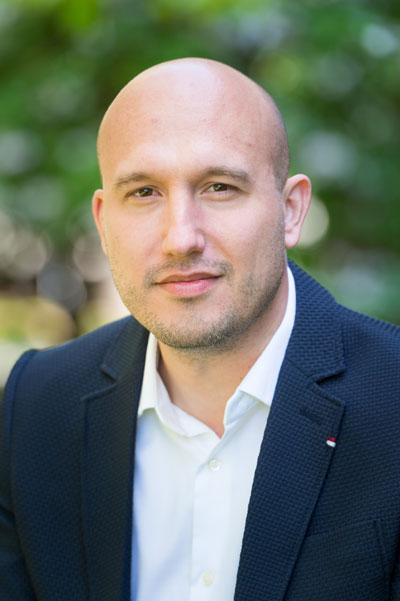
Igor Roncevic is a Lecturer in Computational and Theoretical Chemistry, focusing on interdisciplinary research spanning materials science, organic chemistry, and theoretical physics. His work contributes to UN Sustainable Development Goals through innovations in molecular design and energy-related materials. Research Interests Computational modeling of porphyrin-based systems and nanomaterials Electronic and structural characterization of antiaromatic and aromatic compounds Energy levels and charge transfer dynamics in molecular systems Development of novel carbon allotropes and their applications Recent Research Trends Roncevic’s articles emphasize porphyrin nanorings, cyclocarbon stabilization, and bistable electronic states. His work explores quantum interference phenomena, phase transitions in liquid metals, and photoswitchable molecular arrays. These studies bridge theoretical predictions with experimental validation, often using density functional theory (DFT) and advanced spectroscopic techniques. Advising Roncevic is currently accepting PhD students interested in computational chemistry and nanomaterials. He collaborates with international teams across Europe and the US, focusing on projects funded by grants in materials science and energy research.
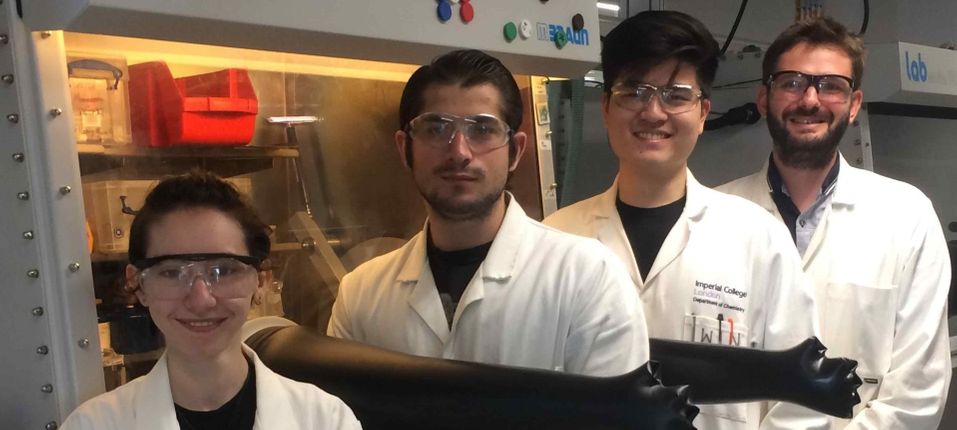
Dr. Charles Romain is a Lecturer in Chemistry at Imperial College London, leading the Poly(Cat) research group. His work focuses on sustainable polymers, catalysis, and renewable resource utilization. He holds positions in the Department of Chemistry within the Faculty of Natural Sciences and is affiliated with the Grantham Institute and the Institute for Digital Molecular Design and Fabrication (DigiFAB). Educational Background PhD in Chemical Engineering from Université de Strasbourg (2011), supervised by Dr. Samuel Dagorne and Dr. Stéphane Bellemin-Laponnaz. M.Sc. in Chemistry from Université de Rennes 1 and engineering degree from École Nationale Supérieure de Chimie de Rennes (2008). Research Interests Romain’s research emphasizes sustainable polymer development, including renewable resource-based monomers, metal catalyst design, and end-of-life material solutions. His group investigates noncovalent interactions in catalysis, FAIR data practices, and polymer architecture control through advanced methodologies. Key themes include: Development of catalytic systems for CO₂ utilization and epoxide/carbonate copolymerization. Design of biodegradable and chemoselective polymers from biomass-derived feedstocks. Integration of renewable resources into polymer synthesis frameworks. Publications & Outreach Romain has authored over 30 publications (citations >1,500), 3 patents, and book chapters, with recent work focusing on aluminum catalysts, NHC-stabilized complexes, and FAIR data workflows. His group actively engages in outreach via events like Imperial Festival and the Native Scientist program. Labs & Collaborations He leads the Poly(Cat) Lab at Imperial’s Molecular Sciences Research Hub, collaborating with industry (e.g., Econic Technologies) and academic institutions on catalyst development and sustainable materials. His team explores interdisciplinary approaches to bridge chemistry, engineering, and computational methods.
Douglas Eduardo Turatti serves as an Assistant Professor in the Finance department at Aalborg University Business School, specializing in quantitative finance methodologies with emphasis on volatility modeling and macroeconomic applications. Education PhD in Economics and Business, Aarhus University (awarded June 2018) His research centers on financial econometrics and empirical finance, particularly stochastic volatility frameworks, time-varying parameter models, and econometric applications to cryptocurrency markets. Methodologically, he employs efficient importance sampling, simulated maximum likelihood estimation, and Gibbs-sampling techniques to address volatility forecasting challenges in financial time series and inflation dynamics. Recent publications (2020-2025) demonstrate consistent specialization in volatility modeling, with increasing focus on Markov-switching frameworks and cryptocurrency applications. His work bridges theoretical econometrics with practical financial forecasting, appearing in journals including Journal of Forecasting and Journal of Applied Statistics. Scientific Awards No scientific awards documented Dr. Turatti actively disseminates research through international conferences including the International Symposium on Forecasting (2021) and International Conference Computing in Economics and Finance (2023). He participates in the Assistant Professor Circle at AAUBS (2021-2025) but no student advising or grant activities are specified. He operates within Aalborg University's Finance Research Group, contributing to the department's focus on advanced quantitative finance methodologies and financial market analysis.
Daniel Maynes is a Professor in the Department of Mechanical Engineering at Brigham Young University's College of Engineering, with a career spanning over two decades. His research focuses on superhydrophobic surface flow physics , microscale fluid mechanics , electroosmotic flow , turbomachinery design , and jet cavitation . Chair, Department of Mechanical Engineering (2013–Present) Professor (2009–Present) Associate Chair (2005–2013) Postdoctoral Research Associate, University of Utah (1997) Dr. Maynes holds a Ph.D. in Mechanical Engineering from the University of Utah (1997), with a dissertation on rotating bluff body flows. His technical expertise bridges surface engineering and thermal transport , as evidenced by his 200+ publications and advisory role for over 30 graduate students. His recent work emphasizes superhydrophobic surfaces for droplet dynamics, condensation modeling , and electrowetting actuators . Collaborative projects with institutions like Space Dynamics Laboratory and Argonne National Laboratory highlight his interdisciplinary impact. Key themes in publications: Droplet impingement and atomization Jet cavitation acoustics Turbulent flow drag reduction Thermal transport in microchannels
Eyvind Martol Briseid is an Associate Professor at the Department of Primary and Vocational Teacher Education, Faculty of Teacher Education and International Studies, Oslo Metropolitan University (OsloMet). His work bridges mathematical logic and mathematics education, with a focus on task design, proof, and argumentation in teaching. He is actively involved in research groups on task design in mathematics teaching and mathematics didactics. His research interests span Mathematical Logic , Nonstandard Analysis , Fixed Point Theory , and Mathematics Education . He investigates foundational aspects of mathematics, such as the limits of provability and rates of convergence, while also applying logical insights to pedagogical contexts. His work on task design emphasizes cognitive engagement, reasoning, and the integration of reading in mathematics. The recent publications reflect a dual trajectory: one in pure mathematics, particularly in logic and analysis, and another in educational research, especially on teacher training, proof, and curriculum. Trends include extracting computational content from proofs, functional interpretations in nonstandard arithmetic, and situational interest in word problems among prospective teachers. His interdisciplinary approach connects deep theoretical work with practical classroom applications. Scientific Awards: No awards listed in the provided text. Briseid advises on teacher education and curriculum development, particularly in mathematics. He has contributed to projects on reading in mathematics and guided schools in cross-curricular teaching. He has not listed formal PhD or master’s students in the provided materials. His research has been supported through institutional affiliations and collaborative projects, such as those under "Ungdomstrinn i utvikling." He is a member of research groups focused on Task design in mathematics teaching and Mathematics didactics: proof and argumentation . These groups engage in seminars, dissemination, and collaborative research with institutions like NTNU and the University of Agder. His work involves both theoretical development and practical implementation in teacher training and school development.
Gwynn Elfring is an Associate Professor at the University of British Columbia's Faculty of Applied Science, Department of Mechanical Engineering. Holding a Ph.D. from the University of California, San Diego, and postdoctoral experience at the University of California, Santa Barbara, Elfring bridges applied mathematics with engineering through asymptotic analysis and numerical methods. Education : B.Eng/M.A.Sc. (University of Victoria), Ph.D. (UC San Diego), Postdoc (UC Santa Barbara) Research Focus : Biological fluid mechanics (cell locomotion, fluid-structure interactions), complex fluids (rheology in shear-thinning systems), capillary phenomena (surfactant-stabilized emulsions), and active matter (density gradient responses). Key themes include viscoelastic effects, microscale dynamics, and non-Newtonian fluid behavior. Publications span 2017–2024, with recent work analyzing swimming efficiency in viscosity gradients (2024), active particle motion in density gradients (2024), and rheological responses in micellar gels (2021). Collaborations include J.F. Brady (Caltech) and C. Datt (now at MIT). Awards : UBC Killam Accelerator Fellowship (2021), Dean’s Service Award (2017) Elfring's work combines theoretical modeling with experimental collaborations, emphasizing applications in biomedical engineering and industrial fluid dynamics.
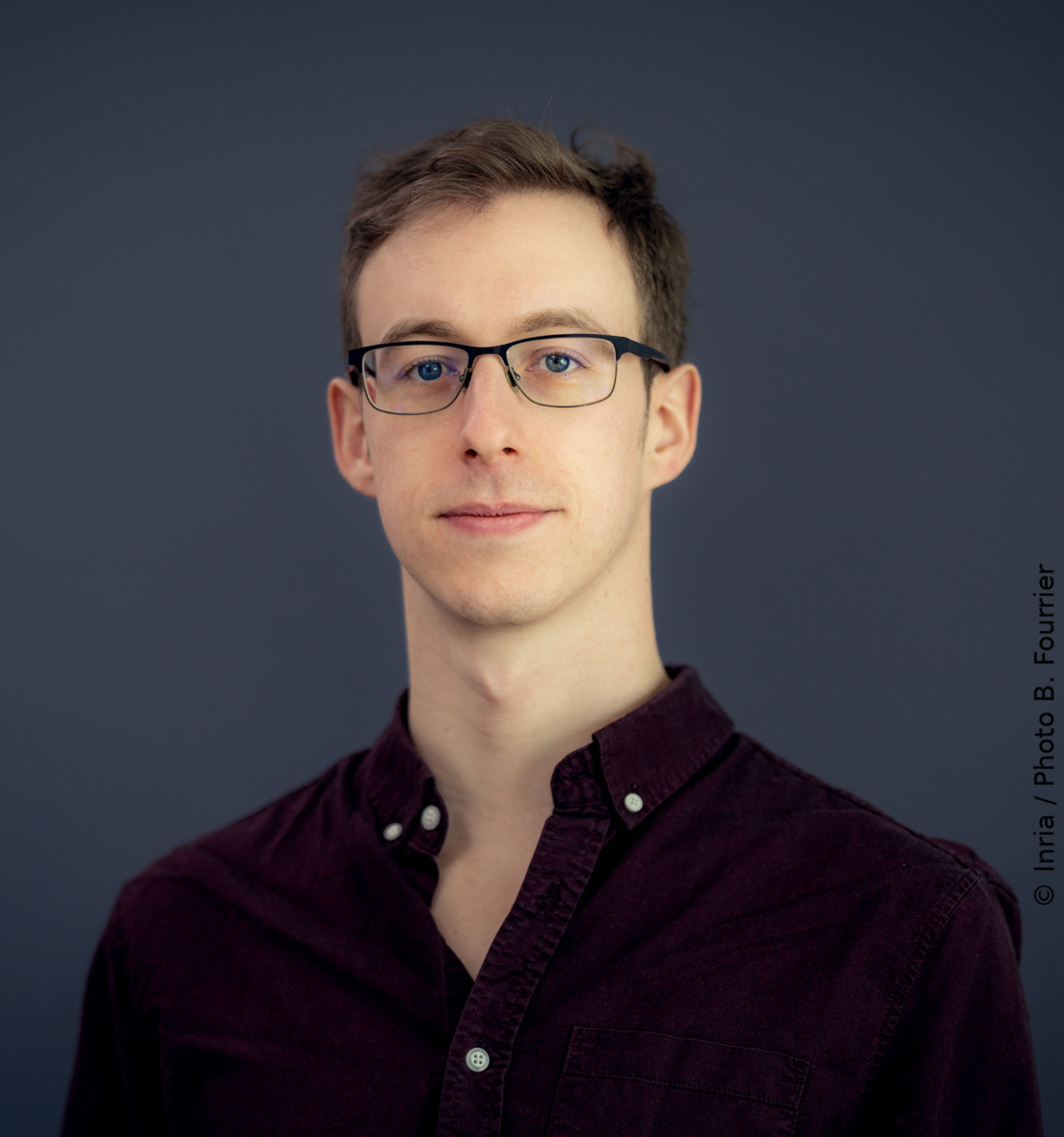
Renaud Vilmart is a researcher at LMF (Laboratoire Méthodes Formelles), part of Inria Saclay, affiliated with Université Paris-Saclay, CNRS, and ENS Paris-Saclay. He holds an Inria Starting Faculty Position (ISFP), placing him in a research-intensive faculty role. He is actively involved in the scientific committee of Inria Saclay and co-supervises the Groupe de Travail Informatique Quantique (GTIQ) under the GdR-IFM. His research focuses on quantum computing, particularly on the ZX-Calculus —a graphical language rooted in category theory that enables visual reasoning about quantum processes. This formalism unifies quantum circuits and measurement-based models, offering intuitive tools for verification and optimization. His work addresses foundational questions such as the completeness of the ZX-Calculus with respect to quantum mechanics. The 15 most recent articles reflect a strong trend in formal methods for quantum computing , with emphasis on diagrammatic reasoning, categorical semantics, and completeness proofs. Key topics include stabilizer theory, Clifford+T circuits, fermionic circuits, and scalable extensions of the ZX-Calculus. These publications demonstrate a deep integration of logic, algebra, and quantum theory. His scientific achievements have been recognized with: Kleene Award for best student paper at LiCS (Logics in Computer Science) Accessit (honorable mention) for the Gilles Kahn Award from the Société Informatique de France He is actively involved in mentoring and academic leadership through co-supervising GTIQ and serving on the Inria Saclay scientific committee. Though no specific grants are listed, his ISFP position is typically grant-funded, indicating sustained research support. He contributes significantly to education through teaching in the QDCS and QMI master’s programs and the ARTeQ year, focusing on advanced complexity and quantum computing topics. His research is conducted within the LMF (Laboratoire Méthodes Formelles), a collaborative lab between Inria, CNRS, and ENS Paris-Saclay, which fosters interdisciplinary work in formal methods and theoretical computer science.
João Carlos Lopes de Carvalho is a Full Professor at the Faculty of Science and Technology of the University of Coimbra, Portugal, where he has held academic positions since 1987. He was promoted to Associate Professor in 2003 and attained Full Professor status in 2022. His research spans computational biology, biophysical modeling of cancer, and experimental particle physics, with extensive participation in international collaborations including CERN (CPLEAR, ATLAS) and DESY (HERA-B). PhD in Experimental Particle Physics, University of Liverpool (1994) Aggregate Title (Habilitation), University of Coimbra (2003) Bachelor’s Degree in Physics, University of Coimbra (1987) His research focuses on the computational modeling of biological systems, particularly the bioelectric mechanisms underlying cancer initiation and progression. He develops discrete models such as cellular automata and cellular Potts models to simulate tissue dynamics in 2D and 3D, with applications in bladder and prostate cancer. Earlier in his career, he contributed to particle detector development, data acquisition, and physics analysis in high-energy experiments. The recent trends in his publication record show a strong emphasis on multiscale modeling of tumor growth, angiogenesis, and the role of bioelectricity in carcinogenesis. His work integrates computational simulations with biological insights, targeting early cancer detection and therapeutic strategies. Articles are published in high-impact journals such as Scientific Reports , PLOS Computational Biology , and Bulletin of Mathematical Biology . Supervised or co-supervised 4 PhD theses and 19 master’s dissertations Participated in over 50 research projects, coordinating 9 Principal investigator on grants including FCT projects PTDC/EMD-TLM/7289/2020 and PTDC/BIA-CEL/31743/2017 Involved in major collaborations: CERN (ATLAS, CPLEAR), DESY (HERA-B), SNO+ João Carlos Lopes de Carvalho has been a key figure in advancing computational approaches in oncology and biophysics. His work bridges physics, engineering, and life sciences, contributing to both fundamental understanding and potential clinical applications in cancer research.
Hironori Washizaki is a Professor at Waseda University 's School of Fundamental Science and Engineering and a Visiting Professor at the National Institute of Informatics. He serves as IEEE Computer Society 2025 President and has led initiatives in software engineering, ML design patterns, and IoT systems. His work bridges academia and industry through roles at SYSTEM INFORMATION CO.,LTD. and eXmotion Co., LTD. Research Interests: His work spans software engineering, quality assurance, ML/IoT design patterns, and education innovation. He leads the SmartSE professional education program and standardizes software engineering bodies of knowledge through ISO/IEC/JTC1/SC7/WG20 . Scientific Awards: Golden Core Member (IEEE CS) Spirit of Computer Society Award KDDI Foundation Award Science and Technology Award, MEXT Best Paper Awards at ICSE, CSEE&T, and IWESEP Leadership & Grants: He has secured major grants (JSPS, MEXT) and held editorial roles at IEEE Transactions on Emerging Topics in Computing, IJSEKE, and IEICE journals. As IEEE CS Japan Chapter Chair and SEMAT Japan Chapter Chair , he fosters international collaborations. Labs & Teams: He leads the Global Software Engineering Laboratory at Waseda, focusing on traceability, reuse, and quality. This lab drives projects like ProMeTA (program metamodel taxonomy) and Trace ANY (software maintenance metrics).
Michael L. Collard is an Assistant Professor of Computer Science at the Department of Computer Science , Buchtel College of Arts and Sciences , The University of Akron . He teaches courses in iOS Development and Software Engineering , focusing on modern programming languages like Swift and Objective-C. Research Interests: His work centers on software engineering , source code analysis , and iOS development . Key areas include forward static slicing, code stereotyping, traceability, and tools like srcML for mixed-language software infrastructure. Publications: Recent publications address scalable static slicing ( srcSlice ), source code modeling with XML, stereotype-based feature location, and tools for software visualization. Awards: Recipient of NSF grants (CISE CRI 2013, REU Supplement 2013) and the Most Influential Paper Award at ICPC'13 for his 2003 work on C++ fact extraction. Students: Mentored undergraduate researcher Brian Kovacs through NSF-funded REU. Labs: Cofounder of SDML, LLC , commercializing research tools for source code analysis.
Dr. Jonathan I. Maletic is a Professor in the Department of Computer Science at Kent State University , where he has been since 2001. He served as Interim Chair in 2010 and has a secondary role as Principal at srcML LLC , providing software solutions for code analysis. Education: Ph.D. in Computer Science from Wayne State University (1995) M.S. in Computer Science from Wayne State University (1989) B.S. in Computer Science from University of Michigan-Flint (1985) His research spans software evolution , program comprehension , software visualization , and eye tracking studies . He is a leading figure in the srcML and iTrace projects. Recent publications focus on quantum programming analysis , code naming semantics , and eye-tracking data correction . Notable trends include the integration of NLP in code analysis and quantum software engineering . Scientific Awards: Kent State President’s Faculty Excellence Award (2025) Most Influential Paper at SCAM (2021) Kent State Outstanding Research Award (2021) IEEE TCSE Distinguished Paper (2020) Mining Software Repositories Foundational Contribution (2020) Dr. Maletic has advised 40+ graduate students , including Ph.D. and M.S. candidates, with notable alumni in academia and industry. He has secured multiple NSF grants for projects like srcDiff.org (2023, $750K) and expanding srcML language support (2020, $652K). He leads the Software Development Laboratory (SDML) and iTrace teams, fostering collaborative research in code analysis and eye-tracking infrastructure.
Stefanie Elgeti is Associate Professor and Private Lecturer at the Chair for Computational Analysis of Technical Systems (CATS), Faculty of Mechanical Engineering, RWTH Aachen University. She previously held a professorship in lightweight design at TU Vienna starting in 2019. Her research integrates computational mechanics with manufacturing process optimization, focusing on plastics extrusion, injection molding, and high-pressure die casting. Diploma in Mechanical Engineering, majoring in 'Manufacturing Techniques for Microsystems' PhD (2011): 'Free-Surface Flows in Shape Optimization of Extrusion Dies' Habilitation (2016): 'CAD-Conforming Finite Element Methods in Engineering Design' Her research centers on solving inverse problems in manufacturing through numerical simulation. She employs advanced techniques such as free-surface flow modeling, non-Newtonian material models, spline-based finite elements, and PDE-constrained shape optimization. Her group simulates entire process chains from filling to solidification and warpage prediction, enabling design optimization of cavities and cooling systems. The recent publications (2022–2024) reveal a strong trend toward integrating artificial intelligence—particularly physics-informed neural networks and Bayesian optimization—into traditional simulation workflows. There is increasing emphasis on warpage compensation, shape optimization of extrusion dies, and modeling of biomedical and environmental systems, showcasing a broadening scope from industrial manufacturing to interdisciplinary applications. She is actively involved in academic service, having served as vice-spokesperson of GAMM-Juniors (2013–2014) and currently co-chairing the ECCOMAS Young Investigator Group. While no formal awards are listed, her leadership roles and editorial contributions reflect significant recognition in the computational mechanics community. Prof. Elgeti advises students and leads multiple research initiatives at CATS, including work groups focused on production engineering, fluid-structure interaction, and INTERESST. Her team develops model hierarchies and digital twins for industrial processes, aiming to bridge simulation and real-world manufacturing through intelligent, adaptive systems.
Kim A. Sharp is an Associate Professor in the Department of Biochemistry and Biophysics at the Perelman School of Medicine, University of Pennsylvania. He is also Chair of the Graduate Group in Biochemistry and Molecular Biophysics and affiliated with the Genomics and Computational Biology program. Education: BSc.Hons. in Biophysics, Leeds University, 1978 Ph.D. in Chemistry, University of British Columbia, 1985 Dr. Sharp's research centers on understanding molecular recognition processes involving proteins, ligands, drugs, and nucleic acids using theoretical and computational methods. His work emphasizes Poisson-Boltzmann electrostatics , molecular and Brownian dynamics , and Monte Carlo simulations . Key areas include protein-ligand binding energy calculations, simulation of proteins in reverse micelles, viral genome packaging, and novel computational approaches to analyze protein shape. The published works reflect a strong focus on computational biophysics and molecular energetics , particularly in quantifying electrostatic contributions to binding, solvation effects, and macromolecular shape descriptors. His research bridges physical chemistry principles with biological applications, especially in nucleic acid interactions and drug binding. Scientific Awards: No awards explicitly listed in the source text. Dr. Sharp advises graduate students through the Biochemistry and Molecular Biophysics Graduate Group. While specific grants are not mentioned, his sustained publication record in top-tier journals indicates active funding and research leadership. He maintains a laboratory focused on developing and applying advanced computational tools to fundamental problems in molecular biophysics.