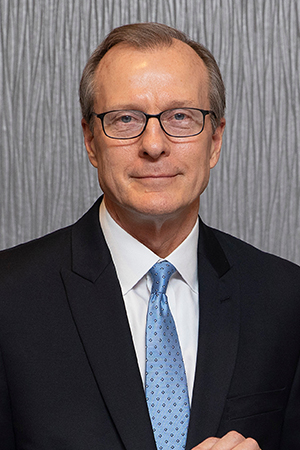
Christian Westheide is a researcher affiliated with the University of Vienna (Department of Finance), University of Edinburgh Business School , and the Leibniz Institute for Financial Research SAFE . His work focuses on financial markets, market structure, liquidity, and empirical finance. Key research areas: Market fragmentation, high-frequency trading, liquidity dynamics, and insider trading behavior Major contributions: Studies on dark pools, market maker competition, and nonstandard errors in financial research Scientific Awards: No specific awards mentioned in the provided data. His recent work analyzes regulatory impacts on market design, including MiFID II, and explores technological factors like colocation in trading. Collaborations with institutions such as Nasdaq, Inc. and Goethe University Frankfurt highlight interdisciplinary industry-academia engagement.
Mark Shackleton is a Professor in the Department of Accounting and Finance at Lancaster University Management School. His office is C29, Charles Carter Building. Current research investigates ESG and low CO2 investing, equally weighted portfolio returns, and corporate finance applications. Recent publications analyze CSR-insider horizon relationships, macro factor investing, and equal-weight portfolio outperformance. Supervises PhD student Ziran Zuo. Teaches courses on corporate finance, investments, and real options. Research group affiliations include Accounting, Finance, Governance and Banking; and Energy Lancaster. Editorial board member for Journal of Banking and Finance. Awards include ESRC Award and multiple teaching prizes. Extensive seminar presentations on real options and sustainability finance. Advised UK government bodies through ESRC Business Centre. Current activity includes Good Growth Programme development.
Michael Falk is a Professor of Materials Science and Engineering, Mechanical Engineering, and Physics at Johns Hopkins University (JHU), and serves as Vice Dean for Undergraduate Education at the Whiting School of Engineering. He leads initiatives to enhance undergraduate education, curriculum development, and student mentorship. Falk holds a B.S. in Physics (1990) and M.S. in Computer Science (1991) from JHU, followed by a Ph.D. in Physics from the University of California, Santa Barbara. His academic career spans roles at the University of Michigan (2000–2008) and his return to JHU in 2008. Research Interests: Falk’s work focuses on computational materials science, simulating atomic-scale processes in materials undergoing mechanical stress, friction, or thermal changes. Key areas include amorphous/glass materials, metallic glass deformation, and additive manufacturing. He also investigates educational strategies to improve STEM engagement, particularly for underrepresented groups, and advocates for LGBTQ+ inclusion in STEM fields. Notable outreach efforts include partnerships with Baltimore City Schools to boost STEM participation. Articles Overview: Falk’s recent publications explore topics such as socio-environmental factors influencing STEM persistence, structural analysis of disordered materials, and computational models predicting material behavior under extreme conditions. His work bridges fundamental materials science with practical engineering applications, emphasizing predictive modeling and interdisciplinary collaboration. Grants & Partnerships: Falk has secured funding from NSF and DOE for projects like simulation-informed additive manufacturing models and studies on crystal nucleation in composition gradients. His educational research includes NSF-funded initiatives to enhance computing literacy in engineering curricula and improve STEM accessibility in urban schools. Labs & Teams: Falk leads a research group dedicated to computational materials modeling and educational innovation. His collaborations span academic, industrial, and community partners to advance both technical and educational missions.
Ekaterina Oparina is a Research Economist at the Centre for Economic Performance (CEP) at the London School of Economics and a Research Affiliate at the Wellbeing Research Centre, University of Oxford. She holds a PhD in Economics from the University of Surrey (2020), a Master of Public Administration, and a BSc in Economics from the Higher School of Economics (Russia). As a Fellow of the Higher Education Academy, she has received teaching awards including the LSE Teaching Award 2023 and Excellence in Education Awards in 2023 and 2024. Her research focuses on methodological approaches to wellbeing analysis, individual-level determinants of wellbeing, and applications of machine learning in social science. Primary domains include: Economics of wellbeing and happiness Behavioural economics and policy interventions Applied econometrics in mental health and labour markets Machine learning for predictive social science Publications show strong emphasis on mental health economics, with 65% addressing psychological therapies' socioeconomic impacts. Recent work demonstrates: Increasing use of causal inference methods for policy evaluation Integration of machine learning with traditional econometrics Cross-disciplinary focus spanning economics, public health, and criminology Awards include LSE teaching excellence recognition and principal investigator roles on major grants: ESRC SDAI grant (£240,000) for IAPT programme analysis LMEP Fund Grant (£480,075) studying NHS Talking Therapies She co-organizes the LSE Wellbeing Seminar series and supervises postgraduate research. Affiliations include the CEP Community Wellbeing Programme and Oxford Wellbeing Research Centre.
Lisa S. Parker is the Dickie, McCamey & Chilcote Professor of Bioethics and Director of the Center for Bioethics and Health Law at the University of Pittsburgh. She holds a joint appointment in the Department of Human Genetics within the School of Public Health. Her roles include leading the Master of Arts in Bioethics Program and co-directing the Medical Humanities & Ethics Stream in the School of Medicine. Dr. Parker’s research focuses on ethical issues in genetics, genomic medicine, precision medicine, and the social implications of biotechnology. She actively collaborates on national and international projects addressing research ethics and policy. Education: BA in Philosophy from Hillsdale College (1984), MA (1986) and PhD (1990) in Philosophy from the University of Pittsburgh. She completed a postdoctoral genetics course at the Jackson Laboratory and Johns Hopkins University. Research Interests: Incidental findings in genomic research, pharmacogenomics, genetic enhancement, AI ethics in healthcare, and feminist approaches to bioethics. She emphasizes equity in healthcare access and global research ethics. Publications span over 150 articles and book chapters, with recent work on AI in education, overdose prediction algorithms, and genomic ethics. Awards include the Nellie Westerman Prize (1990) and Hastings Center Fellowship (2020). Leadership Roles: Chair of the University’s Research, Ethics and Society Initiative, member of NIH advisory panels, and board member of professional ethics organizations. She has mentored over 60 graduate students and postdoctoral fellows. Current Projects: Ethical challenges of AI in healthcare, return of genomic results, and neuroethics. She co-leads the Pittsburgh Phage Project and advises on biobanking ethics.
Dr. Nikos C. Papapostolou is Reader in Shipping Finance and Associate Director of the Costas Grammenos Centre for Shipping, Trade and Finance at Bayes Business School, City University of London. He directs the renowned MSc in Shipping, Trade and Finance program and leads the Stelios Scholarships initiative. His research focuses on shipping finance, capital markets, freight derivatives, and investor behavior. Papapostolou holds a PhD in Shipping Finance (City), MSc in Shipping, Trade and Finance (City), and BSc in Money, Banking and Finance (Birmingham). He serves as External Examiner for ESCP Europe and previously for the University of Reading. His research has been published in leading journals analyzing shipping risk, investment strategies, and market efficiency. Industry engagement includes executive training collaboration with the Baltic Exchange since 2012 and consultancy for shipping clients. Publications examine: Environmental investments in shipping technology Market volatility and risk management Shipping bond and equity markets Commodity price modeling Recent work focuses on scrubber installation economics and eco-vessel valuation premiums.
Yueyuan Ma is an Assistant Professor of Economics at the University of California, Santa Barbara (UCSB), affiliated with the Department of Economics within the College of Letters & Science. Her research focuses on macroeconomics, economic growth, innovation, firm dynamics, trade, and labor economics. She holds a Ph.D. in Economics from the University of Pennsylvania (2022), an M.A. in Economics from Tsinghua University (2016), and a B.A. in Economics and B.S. in Statistics from Peking University (2014). Her work bridges theoretical and empirical approaches to study growth, inequality, and market structures. Notable contributions include analyzing digital advertising's macroeconomic impacts, the effects of premarital medical exams on marriage quality, and the consequences of U.S.-China trade policies on innovation divergence. She has been recognized with the William Polk Carey Prize (2022) and other prestigious fellowships. Teaching: Advanced Macroeconomic Theory (PhD), Intermediate Macroeconomics Professional Activities: Principal Investigator on NORC Data Enclave projects, Visiting Scholar at Federal Reserve Banks Research Grants: Kauffman Foundation support, U.S. Census data access Her research lab explores knowledge production, entrepreneurship, and firm-level dynamics. Collaborations include the Aggregate Economics Consortium and the Consortium for Applied Research in Economics.
Srinivasulu Ale is a Professor at Texas A&M University's College of Agriculture & Life Sciences, specializing in sustainable water management and climate-resilient agriculture. Research integrates hydrology, crop modeling, and precision agriculture technologies. Education includes a PhD in Agricultural & Biological Engineering from Purdue University, MS from G.B. Pant University, and BS from Andhra Pradesh Agricultural University. Expertise spans hydrological modeling, irrigation optimization, and climate adaptation strategies. Research focuses on quantifying water footprints of agricultural systems, developing sensor-based irrigation tools, and evaluating regenerative practices. Current projects assess climate impacts on cotton production across US growing regions and regenerative agriculture benefits in watershed ecosystems. Publications demonstrate innovations in SWAT modeling, remote sensing applications, and decision support systems for water management. Work consistently addresses sustainable intensification challenges in water-limited environments.
Dr. Krishna Narayanan is Professor and Edgar and Yolanda Sanchez Endowed Chair in Electrical & Computer Engineering at Texas A&M University. He directs research in AI-native wireless communications, large language models for communication systems, and massive multiple access networks. His research integrates information theory with deep learning to develop novel communication paradigms. Current work focuses on Transformers for wireless estimation, LLM-based text compression, and efficient coding for massive IoT connectivity. Narayanan bridges theoretical foundations with practical implementations across wireless, storage, and computing domains. Publications demonstrate consistent innovation in coding theory applications, from compressed sensing for massive access to analog joint source-channel coding. Recent work explores LLM-powered text compression and Transformers for optimal wireless estimation, establishing new intersections between deep learning and communication theory. Honors include IEEE Communications/Information Theory Societies Best Paper Award (2022) and university-level teaching awards. Narayanan serves as Associate Director for Educational Initiatives at Texas A&M Institute for Data Science, developing curriculum integrating communication theory with AI methodologies.
Zhiyong Li is a Lecturer in Finance at the University of Leicester, joining in 2018. He holds a PhD in Economics from the University of Nottingham, an MSc in Economics from the University of Leicester, and two bachelor's degrees from the China University of Petroleum (Beijing). His research focuses on financial markets, market microstructure, ESG investing, and behavioral finance. Prior to Leicester, he worked at De Montfort University and the Nottingham University Business School China. Key research interests include bid-ask spread estimation, asset pricing anomalies, and the impact of psychological factors on trading behavior. His recent work explores ESG risk predictability in Eurozone markets and cross-sectional stock option mispricing. Dr. Li has published extensively on topics such as exchange rate bubbles, high-frequency trading dynamics, and liquidity measurement. His articles span empirical finance, market structure analysis, and behavioral finance applications. No scientific awards are explicitly mentioned in available records. Teaching and supervision activities are listed on his profile, though specific grants or lab affiliations are not detailed in the provided text.
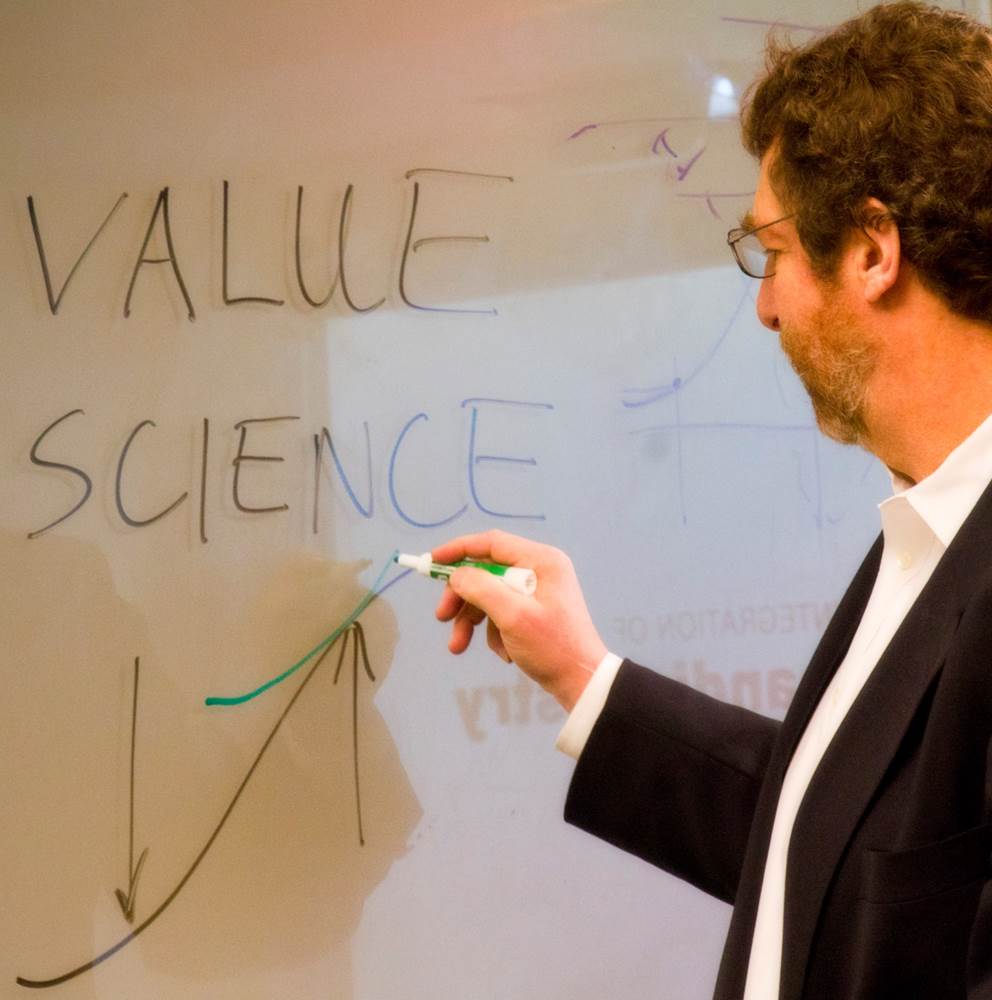
Fred Ledley is a Professor in both the Department of Natural and Applied Sciences and the Department of Management at Bentley University, where he also serves as the Founding Director of the Center for Integration of Science and Industry. He holds an adjunct professorship at Georgetown University School of Medicine. His interdisciplinary career bridges science, business, and public policy, with a focus on accelerating the translation of scientific discoveries into public value. Education: B.S., University of Maryland M.D., Georgetown University School of Medicine Post-doctoral Fellowship, Massachusetts Institute of Technology (with Dr. David Baltimore) Intern/Resident, Boston Children’s Hospital / Harvard Medical School (Pediatrics and Genetics) Clinical Fellow, Boston Children’s Hospital / Harvard Medical School Dr. Ledley's research centers on the systems and policies that drive pharmaceutical innovation and the translation of biomedical research. His work explores the critical role of public investment (e.g., NIH) in drug discovery, the economics of R&D, drug pricing, and the integration of science into business education. He has published over 200 papers across genetic medicine, biotechnology, and innovation policy. His recent publications reveal a strong emphasis on data-driven analysis of translational science, government’s role as an 'investor of first resort,' and the structural dynamics of biopharmaceutical innovation. Themes include public-private partnerships, technology maturation, pandemic response (e.g., COVID-19), and educational reform in STEM-business integration. Scientific Awards and Honors: No specific awards listed in the provided text. Dr. Ledley has advised numerous research initiatives and led major interdisciplinary projects through the Center for Integration of Science and Industry. His work has been supported by institutional and likely federal and private grants focused on science policy, innovation economics, and translational research. He has founded multiple biotechnology companies and held leadership roles including Vice President of R&D and CEO, demonstrating deep engagement with both academic and entrepreneurial aspects of science. He leads the Center for Integration of Science and Industry at Bentley University, a hub for interdisciplinary scholarship combining basic science, data analytics, business, economics, and public policy. The Center develops analytical models to understand and improve the efficiency of science translation, with recent focus on vaccine development and equitable access to medicines.
Jyrki Savolainen is an Assistant Professor (Tenure Track) in the Department of Business Studies at LUT Business School, Lappeenranta University of Technology, Finland. He has been actively contributing to academic research since 2018 as a Post-doctoral Researcher and previously completed his doctoral studies at the same institution. Doctor of Science (Econ.), Strategic Finance, LUT School of Business and Management, 2014–2016 Master of Science (Tech.), Process and Environmental Engineering, University of Oulu, 2002–2007 His research lies at the intersection of Management Science, Operations Research, and Financial Economics, with a strong emphasis on decision-making under uncertainty in industrial contexts. His work frequently addresses applications in metal mining investments, renewable energy economics, and digital transformation in manufacturing. He integrates advanced computational methods such as simulation modeling, real options analysis, and machine learning to solve complex economic and operational challenges. The recent publications of Jyrki Savolainen reflect a consistent trend toward interdisciplinary research combining economic modeling with engineering applications. His work spans topics including digital twin implementation in manufacturing, profitability analysis of renewable energy firms, and the use of deep reinforcement learning in stock selection. These articles demonstrate a strong methodological foundation in simulation, optimization, and data-driven decision support systems, published in reputable journals across economics, engineering, and computer science disciplines. His scientific contributions have been recognized through peer-review activities for high-impact journals such as Nature Communications , Journal of Intelligent Manufacturing , and Mineral Economics . Jyrki Savolainen has been involved in research projects related to investment analysis, risk modeling, and digital transformation. His work often involves collaboration with researchers like Mikael Collan and Pasi Luukka, suggesting active participation in research teams focused on industrial economics and decision systems. He has contributed to studies on financing mixes in mining, regulatory impacts on utility returns, and maintenance optimization using digital twins. He is actively engaged in research labs or groups specializing in system dynamics, simulation modeling, and digital transformation within industrial contexts, particularly in energy and manufacturing sectors.
Karen Walseth Hara is an Associate Professor at the Department of Community Medicine and Nursing, Faculty of Medicine and Health Sciences, NTNU. She also serves as a coordinating consultant at NAV Advisory Service Trøndelag and has held roles at St Olavs Hospital and NAV. Her work focuses on cross-sectoral collaboration between healthcare, social security, and workplace systems. Education: Cand. med. from NTNU (1994), Doctorate in Community Medicine (2019) Research interests include occupational rehabilitation, chronic pain management, and improving return-to-work outcomes through structured collaboration between healthcare providers and social security services. Her work emphasizes interdisciplinary approaches to address sick leave and disability challenges. Recent publications explore cross-sectoral collaboration effectiveness, surgical outcomes on work participation, and patient care pathways for pain management. She has contributed to books on social security medicine and public health policy. Key projects: Samsnakk collaboration model, Expert@Work initiative Grants: Multiple research projects funded through NTNU and national health initiatives Affiliated with the National Competence Service for Complex Symptom Disorders and leads the Work and Health program under NTNU-NAV collaboration.
Dr. David August Volkman is a Professor and Chair of the Department of Finance, Banking and Real Estate at the University of Nebraska Omaha (UNO). He holds the Col. Guy M. Cloud Professorship of Investment Science and Portfolio Management. His academic career spans over three decades, with a PhD in Finance from the University of Nebraska (1992) and a Chartered Financial Analyst (CFA) certification (2002). **Education**: PhD in Finance, University of Nebraska, 1992 CFA Certification, CFA Institute, 2002 **Research Interests**: Dr. Volkman focuses on asset pricing, mutual fund performance, capital budgeting methods, agency conflicts, strategic decision metrics, equity valuation, and debt and slavery. His work combines theoretical frameworks with practical applications, often leveraging computational tools like artificial neural networks for financial forecasting. **Awards & Recognition**: Multiple Alumni Outstanding Teaching Award (1999, 2009) Dean’s Citation in Excellence in Teaching (2004) Distinguished Professor Award (1993, 1996, 1997, 1999, 2003, 2009, 2011, 2017, 2018) Excellent in Research Citation (Management Intelligence Association) Outstanding Research in Finance (Association of Economics and Finance) **Grants & Service**: Secured over $2.5 million in grants for UNO’s College of Business Administration. Served as Department Chair since 2000, UNO Faculty Senator, and board member of community organizations like St. Charles Borromeo Finance Council and Omaha Catholic Cemetery Finance Council.
John R. M. Hand is the Robert March & Mildred Borden Hanes Distinguished Professor at the University of North Carolina's Kenan-Flagler Business School. He also serves as a Visiting Professor at the University of Chicago Booth School of Business (2017-present). His academic roles include teaching across MBA, Master of Accounting, Undergraduate, PhD, and Executive Development programs. He previously served as Associate Dean of Kenan-Flagler's Master of Accounting Program from 2007-2011. Education: PhD and MBA (with honors) from the University of Chicago Graduate School of Business (1984-87 and 1981-83), B.Sc. in Bristol University, England (first-class honors, highest distinction). Research focuses on executive racial/ethnic representation, equity analyst forecasts, valuation models, and intangible asset measurement. Notable works include co-authoring Intangible Assets: Values, Measures and Risks (Oxford, 2003) and multiple award-winning studies on diversity in corporate leadership. Professional service includes Treasurer/Vice-Chair roles at Trinity School of Durham & Chapel Hill’s Board of Trustees (2007-2016, 2020-2023), and over two decades advising startups on financial modeling. His research frequently bridges accounting fundamentals with real-world corporate dynamics, emphasizing empirical rigor and practical relevance. Awards: Double recipient of American Accounting Association's Competitive Manuscript Award, Kenan-Flagler's Weatherspoon Research Award (2018), and multiple teaching excellence recognitions. Grants/Advising: Extensive industry collaborations and advisory work in venture capital markets, particularly addressing executive compensation and valuation challenges in private firms. Labs/Teams: Active in Kenan-Flagler’s accounting research initiatives and cross-disciplinary diversity studies groups.