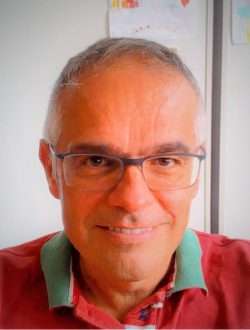
Clinical Associate Professor Tim Roberts is a cataract and glaucoma specialist at the University of Sydney and Royal North Shore Hospital. He holds a MBBS from UNSW, MMed from Sydney, and is a Fellow of RANZCO. His academic roles include Academic Lead for Ophthalmology at SERT Institute and Academic Coordinator at the Northern Clinical School. Education: MBBS (UNSW), Master of Medicine (Sydney), specialist training at Sydney Eye Hospital. Research focuses on femtosecond lasers, IOL power formulas, MIGS, and presbyopia-correcting lenses. He has published >60 articles and serves on editorial boards for major ophthalmology journals. Recent articles emphasize IOL technology advancements and surgical efficiency improvements. Awards include Global Achievement Awards from AAO and APACOS. Leadership roles include NSW QEC Chair and National Medical Director of Vision Eye Institute. Advises on >38 students via collaborative research projects. Labs/Teams: Leads surgical training programs at SERT Institute and collaborates with international eye care initiatives like Myanmar Eye Care Program.
Dr. Sharib Ali is a Lecturer (Assistant Professor) in the School of Computer Science at the University of Leeds, Faculty of Engineering and Physical Sciences. He is affiliated with the Leeds Cancer Research Centre and actively contributes to research in biomedical image analysis and computer vision. His work bridges cutting-edge AI with clinical applications, particularly in endoscopy and surgical technologies. PhD in Medical Image Analysis, University of Lorraine, France MSc in Computer Vision (by research), University of Burgundy, France Dr. Ali's research focuses on biomedical image analysis , computer vision , and machine learning , with applications in early cancer detection , computational endoscopy , and 3D reconstruction . He develops robust algorithms for segmentation, registration, depth estimation, and mosaicking, using both classical mathematical models and deep learning. His work emphasizes translational research and generalisability in real-world clinical settings. The recent publications highlight a strong trend in generalisability assessment , multi-modal data fusion , and AI benchmarking in endoscopy. His work spans from foundational algorithm development to clinical deployment, including federated learning , mixed reality in surgery , and multi-centre datasets , addressing key challenges like bias, data imbalance, and privacy. Dr. Ali has co-supervised multiple DPhil/PhD students and currently supervises several PhD candidates at the University of Leeds, University of Oxford, and Tec de Monterrey. He is actively involved in securing research funding and leading projects such as Leveraging multi-modality data for targeted biopsy and Federated learning in healthcare . He is a founding member of NAAMII, Nepal, where he volunteers to train students from LMICs. He also organizes international research initiatives including the EndoCV and P2ILF challenges at MICCAI, and serves on program committees and as a reviewer for journals like Nature Communications and Medical Image Analysis . His research is conducted within interdisciplinary teams, collaborating with clinicians from Oxford NHS University Hospitals, neuroscientists at Forschungszentrum Jülich, and engineers across Europe. He leads the development of open tools and datasets to advance the field of endoscopic computer vision.
Scott A. Read is a Professor in the School of Optometry at Queensland University of Technology's Faculty of Health. He is a leading researcher in the field of myopia development and control, with extensive expertise in ocular biometry, choroidal thickness measurements, and optical coherence tomography applications. His work bridges basic vision science and clinical optometry, focusing on understanding the mechanisms of eye growth and developing strategies for myopia management. Dr. Read's research program centers on myopia development and control, with particular emphasis on choroidal thickness dynamics, ocular biometry changes during visual tasks, and the effects of light exposure on eye growth. His work reveals that the choroid plays a critical role as an optical signal transducer in eye growth regulation, with significant diurnal variations and responses to visual stimuli. He has extensively documented how myopic defocus, accommodation, and light exposure patterns influence choroidal thickness and axial elongation in children and young adults. His research has established important links between outdoor light exposure and reduced myopia progression, contributing significantly to evidence-based myopia control strategies. Analysis of Dr. Read's recent publications shows a strong focus on advanced imaging techniques, particularly optical coherence tomography and its applications in measuring choroidal thickness, vascular changes, and biomechanical properties of the eye. His work increasingly incorporates artificial intelligence methods for image analysis while maintaining a strong clinical orientation toward understanding myopia mechanisms and developing effective control strategies. His research spans from fundamental investigations of visual processing pathways to clinical trials of myopia control interventions like atropine therapy. Dr. Read has been instrumental in several major collaborative efforts, including the International Myopia Institute reports that have shaped global understanding of myopia mechanisms and control strategies. His work has been foundational in establishing the choroid's role as a key tissue in eye growth regulation and myopia development. Through his laboratory at QUT, Dr. Read mentors numerous PhD students and early-career researchers, fostering the next generation of vision scientists. His research team employs a multidisciplinary approach combining optometry, ophthalmology, biomedical engineering, and data science to address critical questions in myopia research. Current projects focus on understanding the mechanisms of atropine's myopia control effects, developing advanced imaging biomarkers for myopia progression, and investigating the impact of modern visual environments on eye development.
Dr. Michael P. Barry is the Associate Director for Translational Research and a Senior Research Fellow at the Pritzker Institute of Biomedical Science and Engineering, Illinois Institute of Technology. His work focuses on neuroprosthetic design, artificial vision systems, and low-vision rehabilitation. He earned a PhD in Biomedical Engineering from Johns Hopkins University (2018) and a B.A./M.S. in Neuroscience from the same institution (2010). His research includes pioneering contributions to the Argus II retinal prosthesis and the Intracortical Visual Prosthesis (ICVP), emphasizing psychophysical evaluations and device optimization. Dr. Barry has published over 40 peer-reviewed articles and holds a patent for spatial fitting by percept location tracking (2018). He received the Envision-Atwell Award for Low Vision Research in 2017. Key projects include managing the RES-MATCH program for IIT undergraduates and advancing thermal imaging and distance-filtering systems to enhance prosthetic vision. His work integrates neurophysiological studies, clinical trials, and software development to improve visual perception for blind individuals. Collaborations span academic institutions and industry partners like Second Sight Medical Products. Professional memberships include the Association for Research in Vision and Ophthalmology (2010–2020, 2023–2024) and the Society for Neuroscience (2019, 2023). Current research emphasizes optimizing ICVP performance through EEG recordings and electrode stability analysis, while exploring applications in mobility assistance and environmental interaction.
Zijiang J He, PhD, is a Professor and Distinguished University Scholar in the Department of Psychological and Brain Sciences at the University of Louisville. His research focuses on visual perception, particularly the mechanisms underlying 3D depth perception and middle-level vision. He holds a B.S. in Biophysics from the University of Science and Technology of China (1983), M.S. in Neurobiology from Shanghai Institute of Physiology (1986), and Ph.D. in Physiological Optics & Neuroscience from the University of Alabama at Birmingham (1990). Postdoctoral training was completed at Harvard University (1994). Research interests include space vision mechanisms and middle-level vision processes. His lab explores how the brain integrates 2D retinal images into 3D spatial perception, leveraging virtual reality and psychophysical methods. Key contributions include studies on sensory eye dominance, binocular rivalry, and perceptual learning protocols for amblyopia. He leads the Visual Perception and Cognition Lab, emphasizing interdisciplinary approaches combining neuroscience, computational modeling, and behavioral experiments. Notable achievements include the Distinguished University Scholar title and impactful publications in *Nature*, *Science Advances*, and *Proceedings of the National Academy of Sciences*. His work bridges ecological regularities and neural processing, advancing understanding of visual system adaptations to spatial environments.
Eric Appel is an Associate Professor of Materials Science and Engineering at Stanford University, with courtesy appointments in Pediatrics (Endocrinology) and Bioengineering. He is also a Senior Fellow at the Woods Institute for the Environment. His research focuses on biomimetic polymeric materials for healthcare solutions, including drug delivery, tissue engineering, and vaccine optimization. He holds a PhD in Chemistry from the University of Cambridge (2012), an MS in Polymer Science from Cal Poly SLO (2008), and a BS in Chemistry from the same institution (2008). His postdoctoral work at MIT with Robert Langer advanced supramolecular biomaterials. Key research interests include injectable hydrogels for sustained drug delivery, anti-inflammatory biomaterials, and immunomodulatory technologies. He has pioneered depot hydrogels that enhance vaccine efficacy and reduce administration frequency. His work bridges polymer chemistry, immunology, and clinical translation, with over 100 publications and 35 patents. Three startups have emerged from his lab, commercializing technologies like ocular drug delivery systems and antimicrobial polymers. Notable awards include the IUPAC Hanwha-Total Young Polymer Scientist Award (2022), Society for Biomaterials Young Investigator Award (2023), and Royal Society of Chemistry’s Biomaterials Science Lectureship (2023). His labs focus on translating biomaterials into clinical applications, with projects addressing diabetes management, wildfire protection via advanced hydrogels, and cancer immunotherapy improvements. He collaborates broadly across engineering, medicine, and environmental science.
John Marshall is a Professor in the Department of Biostatistics and Epidemiology at the School of Public Health, University of California, Berkeley. His research focuses on using mathematical models to inform novel genetics-based strategies for mosquito control and to support efforts to control and eliminate mosquito-borne diseases such as malaria, dengue, and Zika virus. Dr. Marshall received his PhD in biomathematics from UCLA in 2008, with a dissertation on the use of GM mosquitoes to control malaria transmission. Prior to joining UC Berkeley, he worked on several aspects of this project as a PostDoc at the UCLA Center for Society & Genetics, the Malaria Research and Training Center in Mali, Caltech, and Imperial College London. His research interests include mathematical modeling of infectious diseases, genetics-based strategies for mosquito control, malaria elimination, dengue control, Zika virus control, gene drive systems, and vector control. He has developed the Mosquito Gene Drive Explorer (MGDrivE), a framework for testing gene-drive releases for mosquito-borne diseases control that models inheritance matrices, life-history, and migration across spatial landscapes. Dr. Marshall has secured significant funding for his research, including an $800,000 grant from the Bill & Melinda Gates Foundation in 2021 for genetics-based malaria mosquito control and an NIH grant in 2020 for mosquito movement and control research. He leads the Marshall Lab which collaborates with researchers from Tecnológico de Monterrey and IHME through the Mosquito Networks Taskforce (MoNeT). His recent publications demonstrate interdisciplinary work spanning epidemiology, genetics, computational biology, and vector control, with a focus on gene drive systems, surveillance methods, and cost-effectiveness analyses for malaria elimination. $800,000 grant from the Bill & Melinda Gates Foundation (2021) NIH grant for mosquito movement and control (2020) Dr. Marshall mentors numerous students and researchers including Héctor M. Sánchez C. (lead of MoNeT), Kevin Islas Abud, Luis Rodrigo Careaga Sotomayor, and others working on machine learning applications, network theory, and spatial analysis related to mosquito-borne diseases. He teaches courses PH 252B Modeling the dynamics of infectious disease processes and PH 295 Infectious disease modeling seminar at UC Berkeley.
Behrouz Far is a Professor at the University of Calgary’s Schulich School of Engineering, Department of Electrical and Software Engineering. He holds a PhD in Artificial Intelligence from Chiba University, Japan (1990) and degrees from the University of Teheran including a B.S. in Electrical Engineering (1983) and M.S. in Electrical Engineering (1986). His research focuses on AI applications in medical imaging, software engineering, transportation systems, and data mining. He has contributed to advancements in fundus image analysis, deep learning models for disease detection, and intelligent traffic management systems. Dr. Far has received notable awards such as the 2017 SSE Achievement Award and the AITF-AMA Tier-2 Chair in Smart Multimodal Transportation Systems (2013). His work bridges theoretical AI with practical healthcare solutions, including tools like LETTA for traffic management systems and methodologies for detecting ocular lesions using CNNs. He teaches courses on software testing, reliability engineering, and agent-based systems. His publications highlight contributions to medical diagnostics (e.g., choroidal nevi classification), transportation optimization (e.g., real-time traffic signal control), and machine learning explainability. Collaborative research includes projects on biopotentiostat biosensors for SARS-CoV-2 detection and data mining for cancer patient stratification.
Dr. Wolfgang Hübner is a Researcher at the Faculty of Physics at University of Bielefeld, Germany, affiliated with the Biomolecular Photonics Group. His work focuses on advanced optical imaging techniques applied to cellular and molecular structures. He maintains an active research program as evidenced by numerous publications from 2023-2025. His research interests center on photonics, biophotonics, optical microscopy, super-resolution imaging techniques, cellular biophysics, and molecular imaging. Dr. Hübner's work bridges physics and biology, developing and applying cutting-edge microscopy methods to address biological questions at the nanoscale level. His recent publications demonstrate a strong focus on super-resolution microscopy techniques, particularly structured illumination microscopy, fluorescence lifetime imaging, and correlative imaging approaches. His research investigates cellular structures like liver sinusoidal endothelial cells, dystroglycan mutants, and mitochondrial dynamics, revealing how advanced optical methods can visualize biological processes at unprecedented resolution. Dr. Hübner's research shows consistent development in both methodological advances in optical imaging and biological applications. His work spans from fundamental optical engineering to biomedical applications, demonstrating interdisciplinary expertise across physics, engineering, and cell biology.
William L. Kath is the Margaret B. Fuller Boos Professor of Engineering Sciences and Applied Mathematics at Northwestern University's McCormick School of Engineering. He holds affiliations as Deputy Director of the National Institute for Theory and Mathematics in Biology, courtesy faculty in Neurobiology, and member of the Northwestern Institute on Complex Systems. His research bridges quantitative biology, neuroscience, and optics, focusing on dynamical models of biological systems and high-speed optical communication systems. Key projects include the EMBEDR algorithm for single-cell omics analysis and computational models of temperature sensing in Drosophila. Research interests emphasize quantitative and computational biology, particularly circadian rhythms, neuronal circuit modeling, and single-cell genomics. Collaborations include the Gallio lab (Drosophila thermosensation), Daniel Dombeck's lab (hippocampal neuron behavior), and Nelson Spruston's group (hippocampal microcircuits). His work on optics includes nonlinear pulse propagation and rare event analysis in fiber optics. Scientific awards include Fellowships from the Society for Industrial and Applied Mathematics and the Optical Society of America. He advises over 20 graduate students and has developed courses like ESAM 472 (RNA sequencing analysis) and ESAM 370 (Computational Neuroscience). Current students include Richard Suhendra and Nan Ding (jointly advised). Labs/teams: Leads the National Institute for Theory and Mathematics in Biology, co-leads the Gallio lab collaboration on thermosensory circuits, and maintains active projects in computational neuroscience and optics at Northwestern.
Zhong-Lin Lu is a Distinguished Professor of Psychology and Social and Behavioral Science at The Ohio State University, holding concurrent appointments in Optometry and the Translational Data Analytics Institute. He directs the Center for Cognitive and Brain Sciences and the Center for Cognitive and Behavioral Brain Imaging. Previously, he held the William M. Keck Chair in Cognitive Neuroscience at the University of Southern California. He earned his Ph.D. in Physics from New York University (1992), following an M.S. (1991) and B.S. in Theoretical Physics from the University of Science and Technology of China (1989). His research bridges computational neuroscience, vision science, and cognitive psychology, focusing on visual perception, attention, perceptual learning, and functional brain imaging. Key methods include fMRI, EEG, and hierarchical Bayesian modeling. His work addresses clinical applications in amblyopia, myopia, and glaucoma, alongside foundational studies on decision-making and neural plasticity. He has developed novel techniques like the quantitative Contrast Sensitivity Function (qCSF) and quasiconformal mapping for retinotopic brain mapping. His labs emphasize translational research linking computational models to real-world applications. Awards: APS Fellow (2007), Society of Experimental Psychologists Early Investigator Award (2003) Leadership: Directed USC's Dornsife Cognitive Neuroscience Imaging Center (2004–2011) Interdisciplinary roles: Co-Director of OSU's Humanities/Cognitive Sciences Summer Institute Current research explores visual processing across lifespan, neural mechanisms of perceptual learning, and optimizing fMRI data through advanced computational methods. His work integrates basic science with clinical and applied domains, influencing driver safety, vision correction, and neurotechnology development.
Dr. Kate Hong is an Assistant Professor in the Department of Biological Sciences and Neuroscience Institute at Carnegie Mellon University (CMU). She leads the Hong Lab, which investigates neural circuits underlying sensory-guided behavior, focusing on how cortical and subcortical regions mediate perception, decision-making, and recovery from injury. Her work combines electrophysiology, optogenetics, and behavioral assays using mouse models. Education: Ph.D. in Neuroscience, Harvard University Sc.B. in Biology, Brown University Postdoctoral Fellowships at Columbia University and Boston Children's Hospital Research Focus: Dr. Hong's lab explores two core questions: (1) How cortical-subcortical interactions drive sensory-motor decisions, and (2) How neural circuits reorganize after cortical injury. Recent studies include investigating texture discrimination mechanisms and recovery pathways in stroke models. Techniques used include high-speed imaging, optogenetics, and fMRI. Grants & Awards: Collaborative Grant from the RCSA (2023) SFARI Pilot Award to study autism-related tactile deficits Shurl and Kay Curci Foundation Grant (2022) Lab Team: PhD Students: Ben George, Alice Nam, Rawan Fakhreddine Undergraduates: Maggie Monahan (NASA Fellow), Baihe Zhang (SURFiN Scholar) Research Assistants: Morgan Tenney, Alex Lammers Future Directions: Ongoing projects include studying subcortical plasticity post-injury and developing new tools to map thalamocortical circuits in awake mice.
Marco Farina is a Full Professor in Electromagnetics at the Department of Information Engineering, College of Engineering, Polytechnic University of Marche, Italy. His research spans electromagnetic modeling, scanning microwave microscopy, and nanotechnology, with applications in 2D materials, biosensors, and advanced measurement systems. He is a Senior Member of IEEE and actively contributes to Technical Committees on RF Nanotechnology. Laurea and Ph.D. in Electronic Engineering from University of Ancona Research interests focus on quantitative scanning microwave microscopy, electromagnetic analysis of active/passive components, and nanoscale characterization techniques. His work bridges theoretical modeling with practical implementation, including the development of the EM3DS software suite and novel inverted SMM systems. Recent publications highlight interdisciplinary applications in biomedical analysis and semiconductor physics. Scientific recognition includes the 3M-Nano Best Conference Paper Award and grants from US Army Research Laboratory and US Air Force Office of Scientific Research. He holds an ESA-funded patent for VNA calibration and has co-authored a book on planar structure analysis. Collaborative projects emphasize RF device optimization and biological imaging.
Fouad Khelifi is an Associate Professor in the Department of Computer and Information Sciences at Northumbria University. His research focuses on computer vision, machine learning, image/video processing, biometrics, multimedia forensics, and medical image analysis. He obtained his PhD in Computing Science from Queen's University Belfast (2007) and held prior research roles at the University of Bradford (2007–2009) before joining Northumbria in 2010. He supervises PhD students in cybersecurity applications and palm-vein recognition systems. Education: PhD in Computing Science, Queen's University Belfast (2004–2007) Fellow of the Higher Education Academy (FHEA, 2014) Research Interests: Khelifi’s work spans advanced deep learning techniques for medical imaging (e.g., cancer detection, retinal disease analysis), source camera identification in digital forensics, and biometric authentication systems. He develops novel algorithms for feature extraction, fusion networks, and transformer-based models in healthcare and multimedia security. Advising: Supervising Egallekanda Perera (PhD, 2019–2025): Efficient Keypoint-based Palm-vein Recognition Co-supervising Ikechukwu Ikpeama (PhD, 2024–): Cybersecurity for Industrial Control Systems Labs/Teams: Active in Northumbria’s Digital Media and Systems Research groups, contributing to interdisciplinary projects in AI-driven medical imaging and multimedia forensics.
Dr. Rosanne Rademaker is a Research Professor and Group Leader at the Rademaker Lab, part of the Ernst Strüngmann Institute (ESI) in Frankfurt, Germany, affiliated with Goethe University’s Department of Psychology. Her research focuses on understanding how sensation and cognition interact to shape human perception, particularly in visual working memory, attention, and physiological arousal states. Her lab employs behavioral, computational, and neuroimaging techniques (fMRI, M/EEG) to explore how the brain balances perceptual input with stored memories. In addition to foundational work on memory and attention, the lab investigates context effects on perception, motor-output impacts on visual processing, and computational neural principles. Rosanne emphasizes collaborative, fun science, fostering an inclusive environment through outreach and international collaborations. Key recent work includes studies on categorical representations in the visual hierarchy and neural dynamics during memory recall. Lab Members: Giuliana Giorjiani (PhD), Noa Noelle Krause (MSc), Amit Rawal (PhD), Maria Servetnik (PhD), Nursima Ünver Aydingül (PhD). Grants & Collaborations: Mishal Qubad’s “Junior Clinician Scientist” grant on schizophrenia visual maps, international collaborations with Toronto and the Max Planck School of Cognition. Teaching: Lectures on “Introduction to Cognitive Psychology” at Goethe University. Publications highlight her work in Nature Neuroscience , eLife , and Journal of Cognitive Neuroscience , with over 30 peer-reviewed articles. The lab actively engages in conferences (VSS, ECVP) and hosts annual retreats to promote scientific exchange.