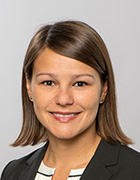
Dongwook Kim is affiliated with the Korea Advanced Institute of Science & Technology (KAIST) as a faculty member in the Department of Business and Technology Management under the College of Business. His research spans multiple domains including machine learning, robotics, signal processing, and biomedical engineering. Key contributions in Computer Vision (CNN-based semantic segmentation, 3D point cloud analysis) Significant work in Hardware Design (energy-efficient processors, neuromorphic computing) Interdisciplinary expertise in Medical Imaging (bone age assessment, retinal biomarkers) and Cybersecurity (attack detection, network analytics) Publications since 2015 demonstrate sustained innovation in AI applications , Signal Processing , and Smart City Governance . His work often integrates theoretical advances with practical implementations in real-world systems. No scientific awards or student mentorship details are explicitly documented in the provided records.
Prof. Laura Busse is a Professor at Ludwig Maximilian University of Munich (LMU), leading the Research Group in the Department of Biology II, Division Neurobiology. She holds roles as a Regular Member of MCN, Full Member of GSN, and Deputy Head of the GSN Examination Board. Her research focuses on cellular and systems neuroscience, particularly investigating how contextual information influences visual perception through neural circuits in mice. Key areas include feedback mechanisms, behavioral state effects, and thalamocortical interactions. Her work employs advanced techniques like high-density extracellular recordings and optogenetics to study active behavior in rodents. Current students include Simon Renner, Gregory Born, and others. Recent research highlights include studies on corticothalamic feedback effects, thalamic spatial integration, and the role of pupil dynamics in neural activity. She leads the Vision Circuits Lab (https://visioncircuitslab.org), exploring how sensory inputs and brain states shape visual processing. Her articles reveal trends in understanding thalamocortical communication, adaptive sensory systems, and the biological basis of neural network models. She coordinates the SPP2411 project on cortico-subcortical loops, emphasizing interdisciplinary neuroscience.
Ling Zhao is a distinguished Professor at the School of Management, Huazhong University of Science and Technology, China, with extensive research contributions spanning artificial intelligence, machine learning, information systems, and biomedical applications. With over 150 publications since 2008, Dr. Zhao has established herself as a leading researcher in multiple interdisciplinary domains, particularly in applying computational methods to solve complex real-world problems. Dr. Zhao's research interests encompass a broad spectrum of cutting-edge topics including artificial intelligence, machine learning, data mining, control systems, and information systems. Her work demonstrates exceptional versatility, bridging theoretical computer science with practical applications in healthcare, transportation, cybersecurity, and business management. Notably, she has made significant contributions to sentiment analysis, medical image processing, algorithmic management, and privacy-preserving data analysis. Her research methodology often combines deep learning approaches with domain-specific knowledge to develop innovative solutions. Analysis of Dr. Zhao's recent publications (2023-2025) reveals a strong focus on interdisciplinary applications of AI, with particular emphasis on healthcare informatics (medical image analysis, disease diagnosis), human-computer interaction (algorithmic management effects), and advanced machine learning techniques (graph neural networks, multimodal learning). Her work shows a consistent trend toward increasingly complex and integrated systems that address real-world challenges across multiple domains. Dr. Zhao has made substantial contributions to academic advising and research mentorship, though specific student names aren't detailed in the available publications. Her research has been supported by various grants enabling work in AI applications, biomedical engineering, and information systems. Dr. Zhao maintains active collaborations with researchers across China and internationally, as evidenced by her co-authorship patterns. While specific laboratory information isn't explicitly mentioned in the publication records, Dr. Zhao appears to lead or be significantly involved in research groups focusing on AI applications in management and healthcare. Her work on medical imaging, sentiment analysis, and control systems suggests involvement in multiple specialized research teams addressing different application domains through computational approaches.
Prof. Julijana Gjorgjieva is a tenured W3 Professor of Computational Neuroscience at the School of Life Sciences Weihenstephan, Technical University of Munich (TUM). She leads an independent research group at the Max Planck Institute for Brain Research and is affiliated with the Bernstein Center for Computational Neuroscience. Her research focuses on the principles governing neural circuit development, balancing learning plasticity with functional stability through computational and theoretical approaches. Key interests include synaptic organization, energy-efficient neural computation, and evolutionary optimality principles. Education & Career: B.Sc. Mathematics, Harvey Mudd College (2006) M.A.St. in Applied Mathematics, University of Cambridge (2007) Ph.D. Applied Mathematics, University of Cambridge (2011) Postdoctoral Fellowships: Harvard University (2011-2014), Brandeis University (2014-2016) Max Planck Research Group Leader (2016-2022) W2/W3 Professor at TUM since 2016 Research Interests: Computational neuroscience, theoretical modeling of neural circuits, synaptic plasticity mechanisms, homeostatic regulation, and the interplay of development and evolution in shaping brain architecture. She employs mathematical frameworks to study how circuits achieve robustness while enabling adaptive learning. Awards: Heinz Maier-Leibnitz Prize (2022) Eric Kandel Young Neuroscientist Prize (2021) ERC Starting Grant (2018) Multiple postdoctoral and early-career fellowships Grants & Funding: Includes DFG Collaborative Research Center on Neural Homeostasis, HFSP grants, and EU Horizon 2020 initiatives. Active in mentoring and promoting computational neuroscience through programs like Neuromatch Academy. Labs & Collaborations: Leads a multidisciplinary lab integrating experimental and theoretical approaches. Collaborates with institutions such as the Max Planck Society and international computational neuroscience networks.
Oliver Deussen is a Professor of Visual Computing at the University of Konstanz, recognized by the German Informatics Society (GSI) as a Fellow for his contributions to computer science. His research focuses on visualization, robotics, and environmental modeling, particularly in plant and landscape representation. He has pioneered methods in image manipulation and robotic painting, emphasizing digitalization's societal impacts. His work spans computational biology (e.g., schooling fish behavior) and AI-driven creative technologies. Research Interests: Visualization techniques, swarm behavior analysis, robotic creativity, and interdisciplinary applications of computer science. He explores how computational methods can model natural systems and enhance human-machine interaction. Awards: Fellow of the German Informatics Society (GSI) His research often bridges theory and practice, with contributions to SLAM frameworks, style transfer algorithms, and uncertainty visualization tools. Collaborations in robotics and biology reflect his commitment to applied computational research.
Siegrid Löwel is a Full Professor of Systems Neuroscience at the University of Göttingen, affiliated with the Department of Systems Neuroscience within the Johann-Friedrich-Blumenbach-Institute for Zoology and Anthropology. She is also a Board Member of the Göttingen Campus Institute for Dynamics of Biological Networks since 2021, highlighting her leadership in interdisciplinary neuroscience research. Her educational background includes a Dr. phil. nat. from the University of Frankfurt am Main, completed under Prof. Wolf Singer at the Max Planck Institute for Brain Research. Her career includes professorships at the University of Jena (2005–2010), a guest professorship at Magdeburg, and a research associate professorship at the University of California, San Francisco. Siegrid Löwel's research focuses on the development and plasticity of neuronal circuits in the mammalian cortex. Her lab employs optical and 2-photon imaging, electrophysiology, and viral gene knockdown to study how experience and learning shape neural networks. Her work has pivotal implications for brain regeneration and rehabilitation after injury or disease. She was among the first to demonstrate that correlated neural activity underlies long-range cortical circuit development—famously summarized as 'neurons that fire together, wire together.' The recent publications reflect a strong focus on structural and functional cortical plasticity, particularly in the visual system. Themes include silent synapses, critical period regulation, optogenetic interventions for blindness, and the impact of environmental enrichment and exercise on neural plasticity. These studies span molecular, cellular, and systems levels, contributing to both basic neuroscience and translational applications. Scientific awards and recognitions include: Hertie Excellence Program Scholarship in Neurosciences (2004–2005) Dorothea Erxleben Guest Professorship, University of Magdeburg (2003–2004) Löwel leads an active research group and is affiliated with the Göttingen Graduate Center for Neurosciences (GGNB) in multiple programs, including Systems Neuroscience and Sensory and Motor Neuroscience. She has secured long-term research support through institutional roles and collaborative networks. While specific grant details are not listed, her sustained publication record and leadership positions indicate robust funding and research activity. Her lab continues to explore mechanisms of neural plasticity with potential clinical applications in stroke recovery, amblyopia, and neurodegenerative conditions. She is associated with the research group homepage: http://systemsneuroscience.uni-goettingen.de .
Dr. Wolfgang Hübner is a Researcher at the Faculty of Physics at University of Bielefeld, Germany, affiliated with the Biomolecular Photonics Group. His work focuses on advanced optical imaging techniques applied to cellular and molecular structures. He maintains an active research program as evidenced by numerous publications from 2023-2025. His research interests center on photonics, biophotonics, optical microscopy, super-resolution imaging techniques, cellular biophysics, and molecular imaging. Dr. Hübner's work bridges physics and biology, developing and applying cutting-edge microscopy methods to address biological questions at the nanoscale level. His recent publications demonstrate a strong focus on super-resolution microscopy techniques, particularly structured illumination microscopy, fluorescence lifetime imaging, and correlative imaging approaches. His research investigates cellular structures like liver sinusoidal endothelial cells, dystroglycan mutants, and mitochondrial dynamics, revealing how advanced optical methods can visualize biological processes at unprecedented resolution. Dr. Hübner's research shows consistent development in both methodological advances in optical imaging and biological applications. His work spans from fundamental optical engineering to biomedical applications, demonstrating interdisciplinary expertise across physics, engineering, and cell biology.
Dr. Rosanne Rademaker is a Research Professor and Group Leader at the Rademaker Lab, part of the Ernst Strüngmann Institute (ESI) in Frankfurt, Germany, affiliated with Goethe University’s Department of Psychology. Her research focuses on understanding how sensation and cognition interact to shape human perception, particularly in visual working memory, attention, and physiological arousal states. Her lab employs behavioral, computational, and neuroimaging techniques (fMRI, M/EEG) to explore how the brain balances perceptual input with stored memories. In addition to foundational work on memory and attention, the lab investigates context effects on perception, motor-output impacts on visual processing, and computational neural principles. Rosanne emphasizes collaborative, fun science, fostering an inclusive environment through outreach and international collaborations. Key recent work includes studies on categorical representations in the visual hierarchy and neural dynamics during memory recall. Lab Members: Giuliana Giorjiani (PhD), Noa Noelle Krause (MSc), Amit Rawal (PhD), Maria Servetnik (PhD), Nursima Ünver Aydingül (PhD). Grants & Collaborations: Mishal Qubad’s “Junior Clinician Scientist” grant on schizophrenia visual maps, international collaborations with Toronto and the Max Planck School of Cognition. Teaching: Lectures on “Introduction to Cognitive Psychology” at Goethe University. Publications highlight her work in Nature Neuroscience , eLife , and Journal of Cognitive Neuroscience , with over 30 peer-reviewed articles. The lab actively engages in conferences (VSS, ECVP) and hosts annual retreats to promote scientific exchange.
Prof. Dr. Rainer Heintzmann serves as Head of the Microscopy Department at the Leibniz Institute of Photonic Technology (Leibniz-IPHT) in Jena, Germany. His research focuses on advancing optical microscopy techniques, particularly super-resolution methods that surpass the diffraction limit to visualize cellular structures at nanoscale resolution. His primary research interests center on structured illumination microscopy (SIM), point spread function modeling, and computational imaging techniques. He has made significant contributions to developing automated multicolor SIM systems, extreme ultraviolet microscopy approaches, and deep learning-enhanced image analysis methods. His work bridges optical physics, computational algorithms, and biomedical applications, with particular emphasis on making advanced microscopy techniques more accessible through open-source hardware and software solutions. Analysis of his recent publications reveals a strong focus on overcoming fundamental limitations in optical microscopy. His research spans from theoretical modeling of optical systems to practical implementations for biological imaging. Key trends include the development of more accurate point spread function calculations, expansion of super-resolution techniques to new wavelength regimes, and integration of machine learning for image analysis and segmentation. Prof. Heintzmann actively collaborates with researchers across multiple institutions, as evidenced by his co-authorship on numerous interdisciplinary publications. His work has appeared in high-impact journals including Nature Methods, Nature Reviews Molecular Cell Biology, and Optics Express, reflecting the significance of his contributions to advancing microscopy techniques. His laboratory at Leibniz-IPHT appears to focus on developing novel microscopy instrumentation, particularly open-source implementations of super-resolution techniques. Recent projects include the openSIMMO platform for automated multicolor structured illumination microscopy and work on extreme ultraviolet microscopy that could potentially extend super-resolution capabilities into the X-ray regime.
Prof. Dr. Sabine Begall is a Researcher at the Department of General Zoology , Faculty of Biology , University of Duisburg-Essen. With over 25 years of experience, she focuses on the sensory ecology of subterranean mammals, particularly Fukomys anselli , exploring magnetoreception , acoustic communication , visual adaptations , and physiological responses to underground environments . Key Research Areas: Subterranean mammal sensory ecology Thyroid hormone regulation in aging Magnetic field orientation mechanisms Comparative auditory and visual systems Domestication syndrome in rodents Evolutionary adaptations in burrowing species Recent Article Trends: 2025 study on retinal ganglion cell diversity in microphthalmic mammals 2024 thyroid hormone and hypoxia research in mole-rats 2023 comparative analyses of burrow acoustics and dental structures Scientific Awards: Honor for outstanding dissertation (2001), University of Essen Fritz Frank Prize (2001), German Society for Mammalogy She serves as a reviewer for journals including Journal of Morphology , Animal Behaviour , and Scientific Reports , and has contributed to major publications on subterranean rodent ecology.
Dr. Alexander Goettker is a postdoctoral researcher at Justus Liebig University Giessen's Department of Psychology and Sports Science, specializing in oculomotor behavior and sensorimotor integration. He contributes to the Collaborative Research Center "Cardinal Mechanisms of Perception" and the International Research Training Group "The Brain in Action". Ph.D. in Psychology (2020) with thesis on saccadic-pursuit eye movement interactions M.Sc. in Psychology (2016), including predoc program in visual neuroscience B.Sc. in Psychology (2014) Key research areas: Saccadic and pursuit eye movement coordination Integration of retinal and extra-retinal signals Eye-hand movement interactions Naturalistic visual processing in sports contexts Publication trends show focus on sensorimotor integration, visual processing during eye movements, and the interplay between perceptual judgments and motor control. His work spans journals like Current Biology , PNAS , and Scientific Reports .
Dr. Florian Merget is a senior researcher ( Oberingenieur ) at the Institut und Lehrstuhl für Integrierte Photonik at RWTH Aachen University since 2011. His research spans silicon photonics , photonic integrated circuits (PICs) , and their applications in biomedical imaging , quantum optics , and optical communication systems . Education : Diplom-Ingenieur and PhD in Electrical Engineering from RWTH Aachen University Research Areas : Photonic device design (grating couplers, modulators, external cavity lasers), optical packaging, quantum interfaces, and biomedical photonics His recent publications focus on silicon nitride components for biomedical and quantum applications, alignment-tolerant optical couplers , and nonlinear optical transmission systems . Collaborations include work with Jeremy Witzens, Alvaro Moscoso Martir, and other photonics experts. Key contributions involve photonic interposer technology , resonant modulator design , and spin qubit-photon interfaces . He has also filed patents related to optical alignment and photonic integration .
Wiktor Młynarski is a Professor and Research Group Leader at the Faculty of Biology, Ludwig-Maximilians-University Munich, where he directs computational neuroscience research focused on adaptive neural computations in sensory systems. His work bridges theoretical frameworks with experimental validation to uncover fundamental principles of biological information processing. His research centers on computational and theoretical neuroscience, leveraging information theory, statistics, and probabilistic machine learning to model how neural systems efficiently represent dynamic natural environments. Key interests include sensory coding adaptation across timescales, statistical structure of natural stimuli, and the development of normative frameworks applicable from synaptic to behavioral levels. This inherently collaborative approach integrates theoretical predictions with experimental neuroscience to identify universal processing rules. Analysis of Młynarski's publication trajectory (2014-2025) reveals consistent exploration of efficient coding principles across auditory and visual domains, with recent work emphasizing anticipatory processing during locomotion, time-constrained decision-making, and panoramic visual statistics. His research demonstrates how environmental dynamics shape neural representations, moving beyond static models to capture the brain's adaptive capabilities in real-world contexts. Professor Młynarski leads the Computational Neurobiology Research Group (https://compneurobio.org), fostering interdisciplinary collaborations to confront theoretical models with experimental data. The group's work aims to establish general rules for biological information processing by examining how sensory systems dynamically optimize computations in response to environmental regularities and changes.
Prof. Dr. Alexander Schütz is a faculty member at the Faculty of Psychology, Philipps-Universität Marburg , leading the Sensorimotor Learning research group. His work explores the interplay between eye movements and visual perception , focusing on trans-saccadic integration, dynamic signal integration, and perceptual stability. Academic Affiliation: Department of General and Biological Psychology Key Collaborators: Karl Gegenfurtner, David Souto, Miriam Spering Research Interests Integration of bottom-up salience and top-down value signals in eye movement control Trans-saccadic information calibration and perceptual adaptation Individual differences in multistable perception and motor learning His 2024-2025 publications reveal trends in: Visual processing in rod vision and occlusion Optical flow models for eye movement prediction Neural mechanisms of cost-benefit trade-offs in visual search Perceptual biases in autism-psychosis spectra Visuotactile integration during spatial judgments Grants ERC Starting Grant PERFORM (2015-2020): Calibration of peripheral and foveal vision ERC Consolidator Grant SENCES (2021-2025): Processing of inferred vs. sensory visual information Laboratory Equipment : EyeLink 1000+ eye trackers, ViewPixx stereoscope, ProPixx projector, and Vizard VR platform for behavioral studies.
Prof. Konstantin Kotliar is a Professor at Aachen University of Applied Sciences, specializing in Biomedical Engineering and Medical Statistics. He teaches courses in Mathematics, Advanced Medical Statistics, and Space Physiology. His research focuses on retinal vessel analysis to study microvascular dysfunction in diseases such as Fabry disease, diabetes, and Alzheimer’s. Kotliar’s work bridges ophthalmology, neuroscience, and cardiovascular science, with a particular interest in developing non-invasive diagnostic tools for early disease detection. His studies often involve collaborations with global health initiatives and clinical trials, such as the EndoAfrica-NWU Study. He has contributed to understanding neurovascular coupling mechanisms and their implications for neurological disorders. Research interests include retinal vessel dynamics, cardiovascular risk stratification, and the application of statistical methods in medical diagnostics. Kotliar’s methodologies span from biomechanical modeling to machine learning-driven image analysis, emphasizing translational research with clinical relevance. His work has implications for improving therapies and preventive measures in chronic diseases.