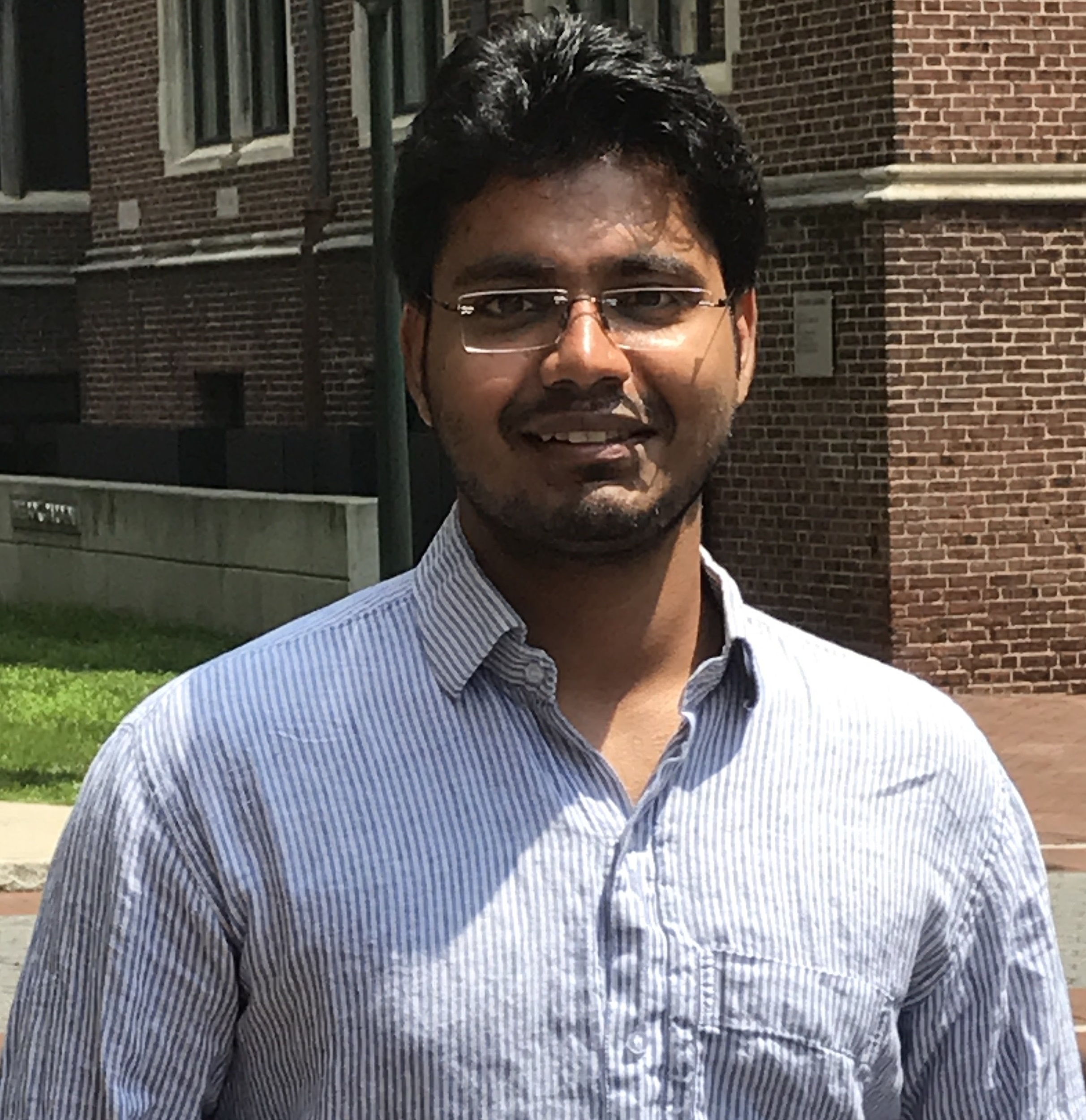
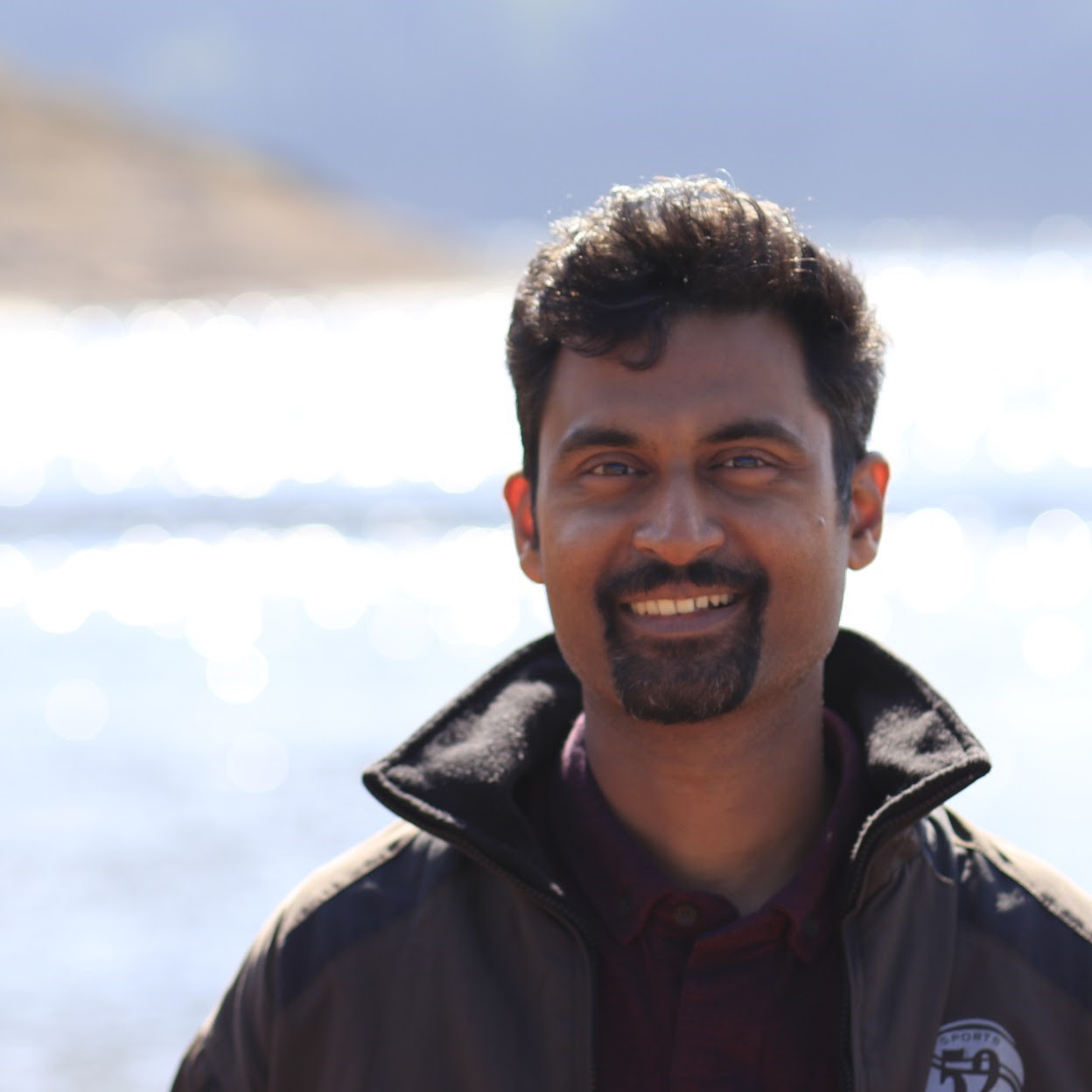
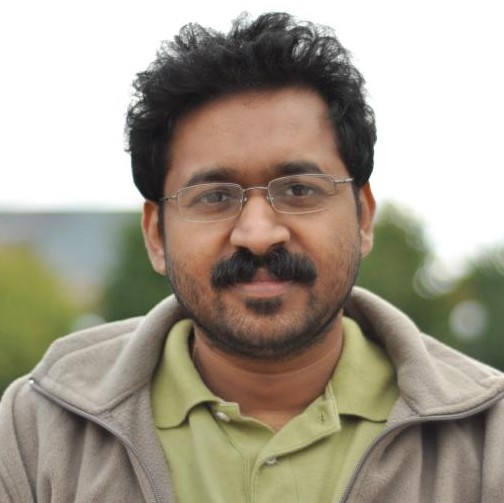
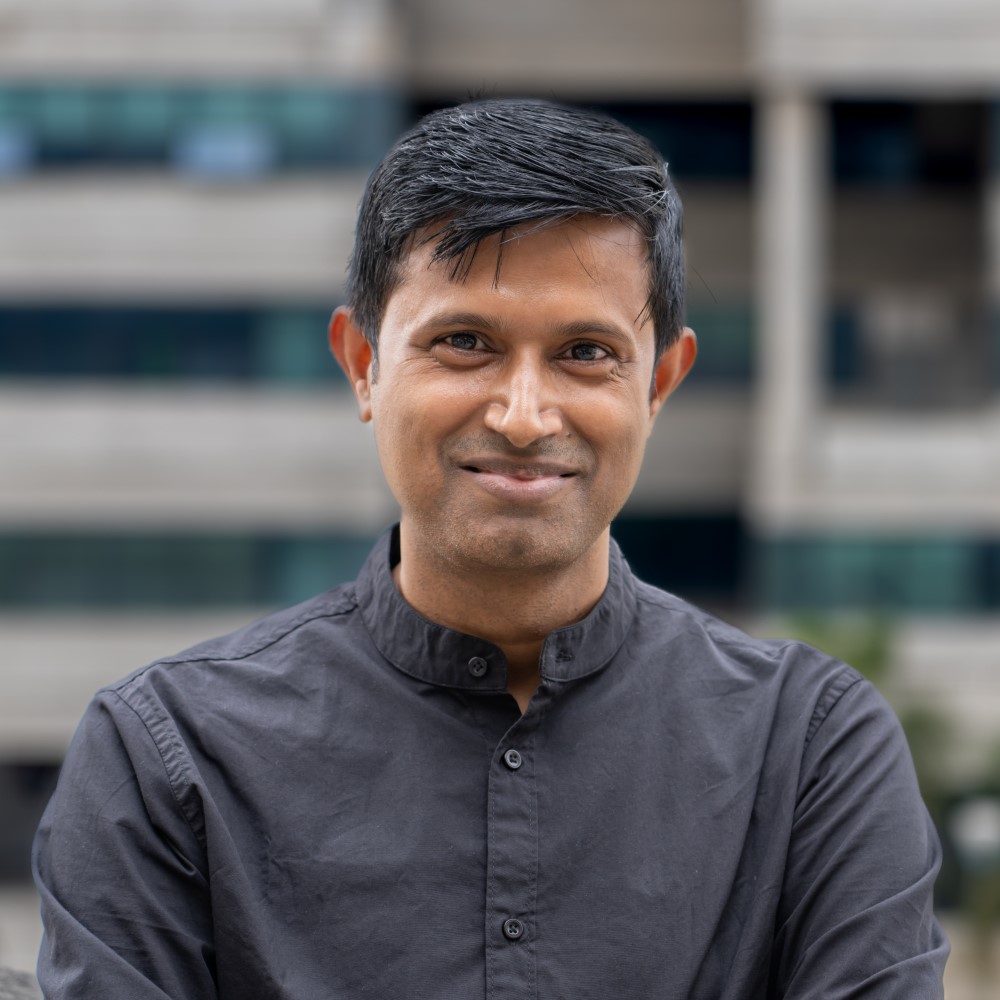
Dr. Balaraman Ravindran is a Professor and Head of the Department of Data Science and Artificial Intelligence (DSAI) at IIT Madras. He also leads the Robert Bosch Centre for Data Science & Artificial Intelligence (RBCDSAI) and the Centre for Responsible AI (CeRAI). His research focuses on reinforcement learning, geometric deep learning, and ethical AI deployment. Education includes a PhD from the University of Massachusetts Amherst (2004) and MSc from the Indian Institute of Science, Bangalore (1996). He holds prestigious fellowships from AAAI and INAE, and is an ACM Distinguished Member. Key contributions include work on class imbalance learning (e.g., TODUS algorithm) and applications in healthcare, transportation, and social networks. He has advised over 20 students and secured grants from Google, TCS Research, and others. Labs/Teams: Heads RBCDSAI and CeRAI, collaborates with TCS Research and Google.
Arpit Agarwal is an Assistant Professor in the Department of Computer Science & Engineering at the Indian Institute of Technology, Bombay. He previously held postdoctoral positions at FAIR Labs (Meta) working with Max Nickel and at the Data Science Institute at Columbia University hosted by Prof. Yash Kanoria and Prof. Tim Roughgarden. He completed his PhD from the Department of Computer & Information Science at the University of Pennsylvania under the guidance of Prof. Shivani Agarwal. His research focuses on the intersection of human behavior and machine learning systems, with particular interest in learning from implicit, strategic, and heterogeneous human feedback. His work spans multiple dimensions of human-AI interaction including understanding long-term dynamics between humans and AI systems, designing responsible AI, and studying misalignment between user preferences and system objectives. His research methodology often combines theoretical machine learning with practical applications in recommendation systems and social AI. His recent publications reveal a strong focus on bandit algorithms, preference learning, and recommendation systems, with increasing attention to responsible AI design and human-centered considerations. His work demonstrates expertise in theoretical machine learning with applications to real-world problems, particularly in understanding how humans interact with and are influenced by AI systems over time. Dr. Agarwal teaches advanced courses including CS767 Theoretical Machine Learning (Autumn 2025) and CS6103 Human-Centered AI: From Learning Models to Responsible Systems (Spring 2025), which covers topics such as AI alignment, learning from pairwise comparisons, crowdsourcing, human-in-the-loop decision making, recommendation systems, interpretability, privacy, fairness, causality, and AI governance.
Indian Institute of Technology Hyderabad (IITH)India
Dr. Srijith P.K. is an Associate Professor in the Department of Computer Science & Engineering at Indian Institute of Technology Hyderabad , where he leads research in probabilistic machine learning, Bayesian learning, and deep learning. He is affiliated with the BRAIN (Bayesian Reasoning And INtelligence) Lab , focusing on bridging human and machine learning through interdisciplinary applications in social networks, astrophysics, autonomous navigation, and sustainable cities. Research Interests : Probabilistic machine learning Bayesian learning Continual learning and causal learning Multi-modal learning and physics-informed neural networks Uncertainty quantification and generative modeling Scientific Awards : Sony Research Award 2021 Major Research Grants : Funding from AGC Inc, Japan, on Scientific Large Language Modeling Ministry of Education (MoE) funding for the Centre of Excellence in AI for Sustainable Cities Hyundai funding for Physics-Informed Neural Networks Sony Research India funding for Multimodal Learning JICA funding for Causal Learning in collaboration with RIKEN SERB and DST grants for projects on continual learning and astrophysical data analysis Advising : Supervises a team of students and researchers including Manisha Dubey, Rohan Tondulkar, Uddipta Bhattacharjee, Ayush Jain, Shamik Kundu, Posham Ramesh, Shikhar Sanjay, and Priyambada
Indian Institute of Technology Hyderabad (IITH)India
Renu John is a Professor in the Department of Biomedical Engineering at Indian Institute of Technology Hyderabad . He earned his Ph.D. in Physics (Optics) from IIT Delhi in 2006 and has held postdoctoral positions at Duke University and University of Illinois . He leads the Medical Optics and Sensors Laboratory (MOS) and co-founded the Center for Healthcare Entrepreneurship (CfHE) , focusing on affordable healthcare solutions for India. Research Interests : Biomedical Imaging, Optical Coherence Tomography (OCT), Digital Holography, AI/ML in Diagnostics, Microfluidic Biosensors, 3D Bioprinting, Nanoparticle-based Imaging, Optical Elastography. Awards : Best Paper & Poster Awards at international conferences (2018-2019), Samsung Innovation Award (2018) for smartphone-based oral cancer detection. Grants : Lead investigator for an ICMR Center of Excellence (15.2 Cr funding) in Medical Devices and Diagnostics. Students : Mentored over 20 researchers, including current and alumni Ph.D. candidates working on OCT, microfluidics, AI-driven imaging, and biosensor development. Labs & Innovations : The MOS Lab develops cutting-edge technologies like lensless microscopes, FF-OCT systems, and dual-modality biosensors. His team has filed 18 patents and published 117 international journal articles, with projects spanning from in vivo magnetomotive imaging to organ-on-chip platforms for disease modeling.
Professor Veena Bansal is a distinguished faculty member at the Department of Management Sciences, Indian Institute of Technology Kanpur. With a PhD from IIT Kanpur (1999), MS from University of Connecticut (1987), and BE from MNREC, University of Allahabad (1984), she has established herself as a leading academic in the fields of Data Science, Software Project Management, and Enterprise Resource Planning. Education: PhD, IIT Kanpur, 1999 M.S., University of Connecticut, USA, 1987 B.E., MNREC, University of Allahabad, 1984 Professor Bansal's research focuses on the intersection of data science and business management, with particular emphasis on enterprise resource planning systems, business process management, and big data analytics applications. Her work bridges theoretical frameworks with practical implementations in diverse sectors including healthcare and mobile commerce. She has made significant contributions to understanding technology adoption patterns in Indian business contexts and the ethical implications of artificial intelligence in enterprise settings. Her recent publications demonstrate a clear trajectory toward integrating machine learning techniques with traditional business management practices, with a growing emphasis on ethical considerations in AI applications. Her research spans both theoretical explorations of affordance theory in big data adoption and practical implementations of data analytics in healthcare and business environments. Awards and Recognition: Commended by the Senate of IIT Kanpur for being rated among the best instructors in Professional courses based on Student Reaction Survey for 2008-2009 First Semester Best paper award for 'Analysis of business process modelling techniques to model informational process perspective' at the 12th Annual International Conference of SOM, IIT Kanpur Professor Bansal has demonstrated excellence in both research and teaching at IIT Kanpur. Her work has received institutional recognition for pedagogical effectiveness while simultaneously contributing to scholarly discourse in management information systems. She continues to be an active researcher with publications spanning multiple high-impact journals and conference proceedings in her field.
Indian Institute of Technology Kharagpur (IIT-KGP)India
Dr. Abhijnan Chakraborty is an Assistant Professor in the Department of Computer Science and Engineering at IIT Kharagpur. His research focuses on Responsible Artificial Intelligence, fairness in algorithmic decision-making, and computational social science. He has been recognized with multiple awards including the INAE Young Engineer Award and Google India PhD Fellowship. His work examines bias mitigation in e-commerce platforms, fairness in gig economy systems, and AI applications for social good. Recent publications analyze algorithmic auditing in marketplaces and equitable resource allocation frameworks. He leads projects on fair food delivery systems and has developed methodologies to quantify and address biases in recommendation algorithms. His research has been covered in major Indian media outlets for its societal impact.
Indian Institute of Technology Hyderabad (IITH)India
Dr. Maunendra Sankar Desarkar is an Associate Professor at the Computer Science and Engineering Department of Indian Institute of Technology Hyderabad , India, with affiliations to the AI Department. His research spans Natural Language Processing , Information Retrieval , and Machine Learning , focusing on robust, responsible, and culturally-aware AI systems. Education: B.E. (University of Burdwan), M.Tech (IIT Kanpur), Ph.D. (IIT Kharagpur, 2014) Current work emphasizes zero-shot cross-lingual transfer , dialogue interpretability , and ethical NLP (non-toxicity, empathy). Recent articles explore large language model evaluation , hallucination detection , and tokenization for Indic languages . Collaborations include Microsoft and JICA-funded projects. Scientific contributions include: Microsoft India Ph.D. Fellowship Award Yahoo Key Scientific Challenges Honorable Mention (2012) Students include Suvodip Dey (Ph.D. in Dialogue Systems), Aishwarya Maheswaran , Debolena Basak , Kaushal Kumar Maurya , and Maharaj Brahma . Advises on projects involving disaster response systems , generative AI , and multilingual NLP .
Indian Institute of Technology Hyderabad (IITH)India
Vaskar Sarkar is a Professor in the Department of Electrical Engineering at the Indian Institute of Technology Hyderabad (IIT Hyderabad), where he has held academic positions since 2009, progressing from Visiting Assistant Professor to full Professor (since October 2023). His research focuses on power systems stability, renewable energy integration, photovoltaic systems optimization, and microgrid control. Education includes: B.E. from Bardhaman University (2002) M.E. from Bengal Engineering and Science University (2004) Ph.D. from IIT Bombay (2009) Research Interests: Dr. Sarkar's work spans flexible power point tracking in PV systems, grid integration of renewables, microgrid stability, power system optimization, and development of PV-based EV charging stations. His research emphasizes interdisciplinary solutions with theoretical development and experimental validation for real-world engineering problems. Publication Trends: His recent articles focus on renewable energy integration (especially photovoltaic systems), power market mechanisms, and advanced control strategies for grid stability. Emerging themes include AI-assisted PV optimization, wide-area monitoring systems, and HVDC grid integration. Awards: Excellence in Teaching Award from IIT Hyderabad (2021) Advising and Grants: Currently advises 4 PhD students and 1 M.Tech student. Secured research grants including: ₹33.79L from DST-SERB for PV power regulation under partial shading (2022-ongoing) Multiple projects from Hitachi India Limited (2012-2013, completed) Laboratory: Leads the SPARC Lab equipped with real-time simulators (eMEGASIM), solar PV emulators, power stacks (SEMIKRON), and control systems (CompactRIO, PXI) for power electronics and grid integration research.
Indian Institute of Technology Hyderabad (IITH)India
Professor Zafar Ali Khan Mohammed is affiliated with the Department of Electrical Engineering at Indian Institute of Technology Hyderabad . His research spans advanced wireless communications, cyber-physical systems, and commensal radar technologies. Ph.D. from Indian Institute of Science, Bengaluru Visiting Professor at UC Irvine (2014), University of Southampton (2015) His research interests focus on: 6G Communication Systems Cyber-Physical Systems (CPS) Security Commensal Radar Applications Dynamic Spectrum Allocation Scientific Awards include: INAE Young Engineer Award (2006) Visvesvarya Young Faculty Research Fellowship (2015-2017) IEEE COMSOC/SP Chapter Appreciation Award (2013-2014) His projects involve JICA-funded M2Smart and multiple DST/DeiTy-funded initiatives in cognitive radio and CPS security. Publications highlight innovations in massive MIMO detection , cooperative spectrum sensing , and communication infrastructure sensing .