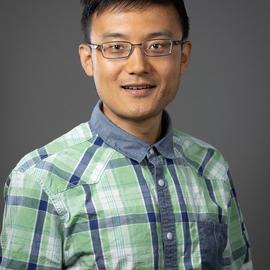
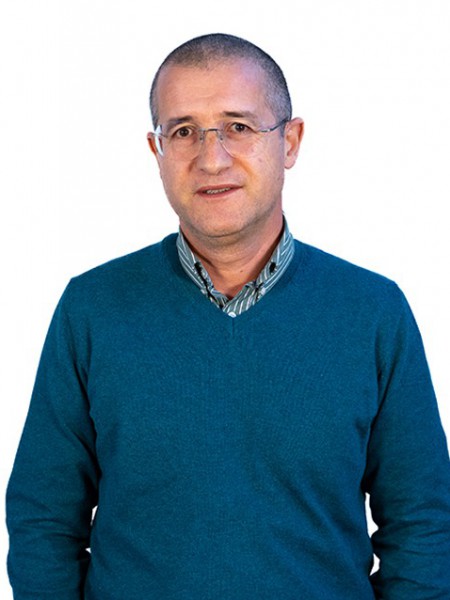
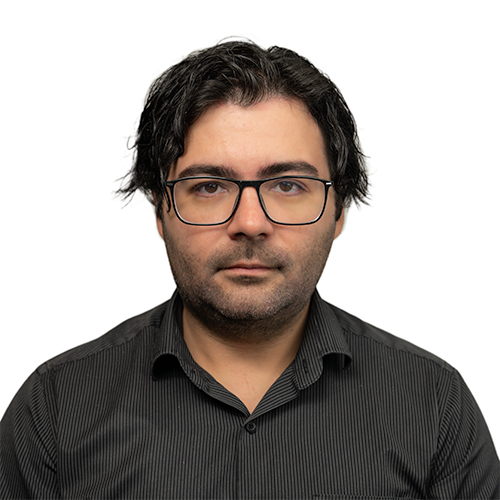
Fnu Suya is a tenure-track Assistant Professor in the Department of Electrical Engineering and Computer Science at the University of Tennessee, Knoxville. Prior to this, he served as an MC2 Postdoctoral Fellow at the University of Maryland, College Park (Oct 2023–Jul 2024), and completed his Ph.D. in Computer Science at the University of Virginia under Professors David Evans and Yuan Tian.
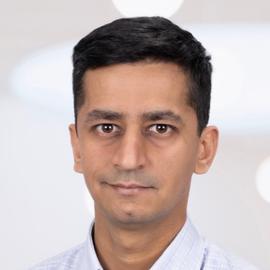
Anson Kahng is an Assistant Professor in the Department of Computer Science and the Goergen Institute of Data Science at the University of Rochester. He previously held postdoctoral positions at the University of Toronto and completed his PhD at Carnegie Mellon University under the supervision of Ariel Procaccia, focusing on computational social choice. PhD, Computer Science, Carnegie Mellon University Undergraduate degree, Computer Science, Harvard College His research explores the intersection of computer science and democracy, developing frameworks like virtual democracy and liquid democracy while analyzing fairness in participatory budgeting and voting systems. He combines theoretical analysis with empirical methods, emphasizing interdisciplinary collaboration. Recent work includes advancements in ranked choice voting optimization, fairness metrics for elections, and structural analysis in cryo-electron tomography. He has published in top venues such as IJCAI, AAAI, NeurIPS, and ACM Transactions on Economics and Computation. NeurIPS 2019 Spotlight Presentation (top 2.5% of submissions) Kahng advises PhD students Alina Chadwick and Joe Saber, and has mentored multiple undergraduate researchers. He teaches courses on algorithmic game theory and computational statistics at the University of Rochester.
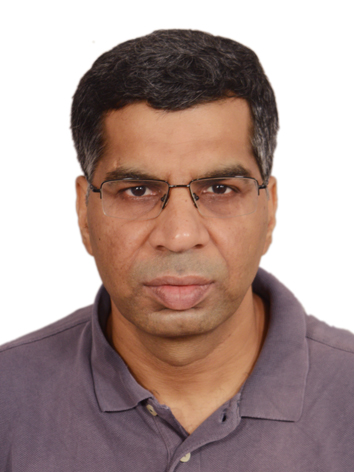
Anuj Pathania serves as an Assistant Professor in the Parallel Computing Systems (PCS) group within the Informatics Institute at the University of Amsterdam's Faculty of Science. His research pioneers sustainable computing systems operating under severe power, thermal, and reliability constraints, with significant contributions to energy-efficient hardware design and embedded systems. Education: PhD in Computer Science (2018), Karlsruhe Institute of Technology MSc in Computer Science (2012), National University of Singapore B.Tech in Computer Science (2009), Maharaja Agrasen Institute of Technology Pathania's research centers on low-power design and sustainable systems for constrained environments, with particular expertise in thermal management of 3D-stacked architectures and energy-efficient machine learning inference . His work bridges electronic design automation with real-world reliability challenges, developing novel power budgeting techniques like T-TSP that incorporate transient temperature effects ignored by conventional methods. Current projects include EU-funded initiatives on energy labeling for digital services, addressing ecological impacts through technological, behavioral, and legal frameworks. His publication trajectory reveals a strategic evolution toward zero-waste computing , with recent work (2023-2025) focusing on hardware-software co-design for edge AI, energy modeling across computing continua, and parameter-efficient neural adaptation. Key themes include thermal-aware scheduling for S-NUCA many-cores, cooperative processor utilization in heterogeneous systems, and sustainability metrics for digital services. Scientific Recognition: Best Paper Award Nomination at IEEE Computer Society Annual Symposium on VLSI 2023 for 3D-TTP power budgeting technique Pathania actively mentors 4 PhD students (Ehsan Aghapour, Saeedeh Baneshi, Sudam Wasala, Yixian Shen) and has successfully supervised 5 Master's theses (including Cum Laude defenses by Joris op ten Berg and Jurre Wolff). His research is supported by major grants including Energy Labels for Ecologically Sustainable Digital Services (2023-2024) and Towards Zero-Waste Computing (2021-2025), developing simulation frameworks like HotSniper and CoMeT for thermal analysis. The PCS group maintains strong industry collaborations with ARM and NVIDIA, particularly through tools like ARM-CO-UP for heterogeneous processor utilization.
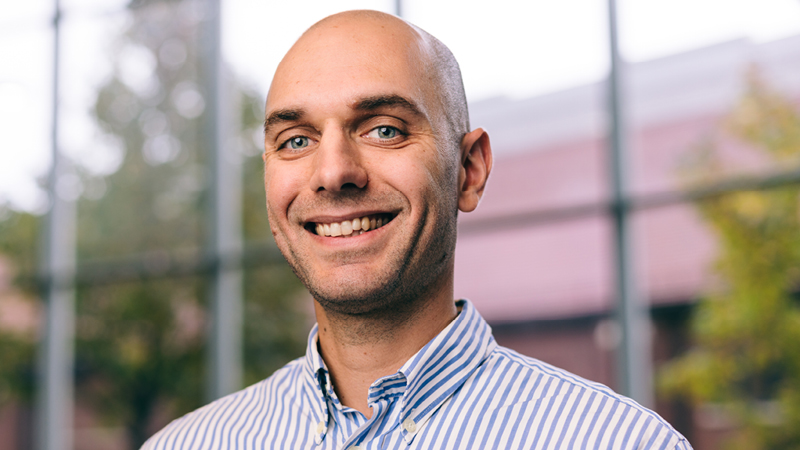
Om P. Damani is a Professor in the Department of Computer Science and Engineering at Indian Institute of Technology Bombay. He serves as Faculty In-Charge of the Sustainable Development unit of the Center for Policy Studies and is also associated with the Centre for Technology Alternatives for Rural Areas (CTARA). His work bridges computer science with social development challenges, focusing on practical applications for rural communities. Dr. Damani's research interests span Technology for Development of the bottom 80%, System Dynamics: Modeling and Simulation for Social Development, System Architecture, and Data Science. His work demonstrates how computational approaches can address complex development challenges through projects like GramDrishti (for detecting rural infrastructure in satellite images), JalTantra (for optimizing water distribution networks), and FAI (Farm Assessment Index for holistic farming practice evaluation). His publications reveal a consistent focus on applying computer science to solve real-world problems in water management, agricultural systems, and rural infrastructure. His research has been recognized with significant awards including the IIT Bombay Industrial Impact Award 2010, IIT Bombay Impactful Research Award 2019, and Best Poster Award at Agriculture Science Congress 2017. Dr. Damani has successfully translated theoretical research into practical tools that address development challenges, particularly in water resource management and agricultural systems. As an educator, he has mentored numerous PhD students including Chintan Tundia, Shreenivas Kunte, Nikhil Hooda, Sivamuthu Prakash Murugan, Dipak L. Chaudhari, Prateek Kapadia, and Manoj K. Chinnakotla. His teaching portfolio includes courses on System Dynamics: Modeling and Simulation for Development (CS 752), Program Derivation (CS 420), and ICT for Development. Dr. Damani's educational background includes a Ph.D. in Computer Sciences from the University of Texas at Austin (1994-1999), B.Tech. in Computer Science and Engineering from IIT Kanpur (1990-1994), and prior professional experience at IBM T J Watson Research Lab and Akamai Technologies.
Prof. Dr. Julia Rieck is a Full Professor of Business Administration at the University of Hildesheim , leading the Department of Business Administration and Operations Research within the Faculty of Mathematics, Natural Sciences, Economics and Computer Science. As Dean of the Faculty , she oversees academic programs, quality management, and research initiatives. Her roles include academic advising for the Business Information Systems (B.Sc./M.Sc.) programs and active participation in examination boards and quality committees. Education: PhD in Political Science (Dr. rer. pol.) with summa cum laude (2008), Habilitation at Clausthal University of Technology (2014), and studies in Business Mathematics (Diploma, University of Hamburg, 2003) and Mathematics (Georg-August-University Göttingen, 2000). Research: Focuses on Operations Research , Supply Chain Management , Project Planning , and Logistics . Her work integrates mathematical modeling , machine learning , and real-world applications , particularly in disaster response , dynamic transportation , and sustainable e-commerce . Projects: Leads third-party funded initiatives like "IT für die sorgende Gesellschaft" (AI in healthcare/social sectors) and contributes to the HULLS real-lab (AI in aging societies). Collaborates with regional companies (e.g., Youco, ADITUS) and institutions (HAWK, University of Hannover). Teaching: Emphasizes practical application through case studies, industry partnerships, and the IT-Speed Dating event for student-company connections. Her courses cover project resource planning , logistics , and digital transformation . Labs & Teams: Active in the Institute of Business Administration & Business Information Systems , contributing to the KET Kompetenzwerkstatt (entrepreneurship support) and interdisciplinary teams in AI and sustainability research.
Sonia A. Fahmy is a Professor of Computer Science and Associate Department Head at Purdue University's Department of Computer Science (College of Science). She holds a PhD from The Ohio State University (1999). Her research focuses on network architectures, protocols, and security, with over 100 refereed publications. Key areas include virtual reality networking, cellular network optimization, and network experimentation tools like NFV-VITAL and ENVI. Her work is supported by NSF, DHS, industry partners, and she leads Purdue's CERIAS cybersecurity initiatives. Education: PhD in Computer and Information Science from The Ohio State University (1999). Research Interests: Network security, distributed systems, wireless sensor networks, and network function virtualization. Notable contributions include the HEED clustering algorithm and Contain-ed latency management system. Awards: NSF CAREER Award (2003), IEEE Fellow. Grants: NSF, DHS, AT&T, Cisco, Juniper, and Meta-funded projects. Professional service includes leadership roles in IEEE ICNP, INFOCOM, and editorial roles in top journals. Advising: Mentored over 20 PhD students and postdocs. Current advisees include Umakant Kulkarni and Yufeng Chen. Research teams collaborate with industry partners like Hewlett-Packard and Sandia National Labs. Labs/Teams: Active in Purdue's CERIAS, leading projects on secure network protocols and experimentation frameworks. Tools developed include EMIST, Testbed Mapping, and iHEED for sensor networks.
Christos Alexandros Psomas is an Assistant Professor in the Department of Computer Science at Purdue University, affiliated with the College of Science. He holds a PhD from UC Berkeley (2017) and previously worked as a postdoctoral researcher at Carnegie Mellon University and a Visiting Researcher at Google Research. His research focuses on algorithmic economics, fair division, and AI for social good, with notable collaborations with organizations like the Indy Hunger Network. Education: PhD in Computer Science, UC Berkeley (2017) MSc in Logic, Algorithms & Computation, University of Athens (2012) BSc in Computer Science, Athens University of Economics and Business (2011) Research Interests: His work bridges computer science and economics, emphasizing fair resource allocation, dynamic mechanisms, and applications of AI to societal challenges like food insecurity. Recent projects include automating food distribution systems using algorithms that balance fairness and efficiency. Awards: NSF CAREER Award, Google AI for Social Good Award, and Best Student Paper at EAAMO 2024. His research is funded by grants from the Herbert Simon Family Foundation, Algorand Foundation, and others. Grants & Advising: Leads projects funded by NSF, Google, and Algorand. Advises on AI-driven solutions for non-profits. Active in teaching, including courses on algorithmic governance and discrete mathematics. Labs & Teams: Collaborates with the Indy Hunger Network on FoodDrop automation and contributes to interdisciplinary AI initiatives at Purdue through the DSAI (Data Science and AI) facility.
Dr. Ying He is a Senior Lecturer at the School of Electrical and Data Engineering, University of Technology Sydney (UTS). Her research focuses on wireless communication networks, particularly integrating machine learning with satellite and terrestrial systems. She holds a BEng from Beijing University of Posts and Telecommunications (2009) and a PhD from UTS (2017). Prior to her academic role, she worked on TD-LTE chip design at the Chinese Academy of Sciences. Affiliations : Faculty of Engineering and Information Technology Global Big Data Technologies Centre (GBDTC) Education : BEng in Telecommunications Engineering, Beijing University of Posts and Telecommunications (2009) PhD in Engineering (Telecommunications), UTS (2017) Her research interests include satellite communication (GEO-LEO integration), spectrum sharing, vehicular communication, and applying machine learning to physical layer algorithms. Notable contributions include optimizing beam design in LEO networks and developing secure IoT systems. She supervises PhD/Master’s students and teaches courses like CCNA and capstone projects. Funded projects span satellite networks, IoT security, and supply chain tracking. Recent grants include SmartSat CRC initiatives and collaborations with industry partners like Intel and Ericsson. Her work addresses challenges in 6G, UAV-enabled computing, and resilient quantum algorithms.
Evelyn Xiaoyue Gong is an Assistant Professor of Operations Management at the Tepper School of Business , Carnegie Mellon University . She holds a PhD in Operations Research from MIT (2023) and a BS in Honors Mathematics and Interactive Media Arts from New York University (2017) . Research Interests : Developing artificial intelligence solutions for supply chains and sustainability with provable performance guarantees. Online assortment optimization, pure exploration in reinforcement learning, and data-driven decision-making . Recent Work Trends : Her publications focus on applying reinforcement learning and optimization algorithms to supply chain sustainability, server deployment under uncertainty, and resource management. Key themes include AI-driven environmental impact reduction and theoretical advancements in online inventory models . Scientific Recognition : Best Dissertation Prize , Supply Chain Conference (2023) Accenture Fellowship (2022-2023) Bayer Women in Operations Research Scholarship (2021) Professional Service : Reviewer for Management Science , NeurIPS 2025 , and IPCO 2025 . Committee member for INFORMS Public Sector Operations Research Best Paper Award (2025).
Dr. Sie Teng Soh is an Associate Professor at Curtin University's School of Electrical Engineering, Computing and Mathematical Sciences. With qualifications including a PhD from Louisiana State University, he specializes in computer networks, wireless systems, and algorithm design. Research focuses on: Network topology optimization for UAV systems Energy-efficient IoT task scheduling Reliable wireless communication protocols Game-theoretic network management Green computing in software-defined networks Publication trends show advancing work in UAV network optimization, with recent articles addressing max-min rate optimization, energy harvesting in IIoT, and machine learning approaches for coverage prediction. His research consistently addresses practical challenges in wireless network deployment under real-world constraints. Teaching areas include advanced courses in network reliability and traffic engineering. Professional service includes editorial roles for IEEE Transactions on Parallel and Distributed Systems and program committee memberships for major conferences including FAST and EuroSys.
Prof. Dr. Sören Laue is a Professor of Machine Learning at the University of Hamburg's Department of Informatics. His research focuses on optimization algorithms, machine learning frameworks, and high-performance computing. He leads the Machine Learning research group and developed the GENO optimization framework and the Matrix Calculus toolset. His work emphasizes GPU acceleration, tensor operations, and scalable solutions for classical machine learning problems. Projects: GENO solver (Python-based optimization), Matrix Calculus (derivative computation), and SQL-based tensor operations. Key Research Themes: Optimization frameworks, GPU computing, neural network scalability, and algorithm design. Selected recent publications highlight contributions to tensor calculus benchmarks, GPU-optimized machine learning pipelines, and novel optimization methods. His work bridges theoretical foundations and practical software tools for the machine learning community.
Armando J. D. Silvestre is a Full Professor at the Department of Chemistry, University of Aveiro. He holds academic degrees including a Licenciatura in Chemistry (1990), PhD in Chemistry (1994), and Agregação in Chemistry (2008) from the University of Aveiro. His research focuses on renewable materials, circular economy, and functional biomaterials. Research interests include: Development of biopolymer-based functional materials Valorization of biological residues for value-added chemicals Novel polymeric materials from renewable resources Sustainable nanocomposites and coatings Professor Silvestre has supervised 18 MSc and 11 PhD students to completion and currently mentors 3 PhD and 3 MSc candidates. Research projects include EU-funded initiatives like AFORE (Forest Biorefineries) and national projects on membrane technology and biomass valorization. Scientific contributions include over 180 SCI journal publications and patents on extraction methods. He serves on editorial boards for Industrial Crops and Products and actively participates in academic activities including Erasmus coordination and Bologna process implementation.
Professor Kirk R. Pruhs is a full Professor in the Department of Computer Science at the University of Pittsburgh's School of Computing and Information. He holds editorial roles at journals such as the Journal of Scheduling and ACM Transactions on Algorithms. His research focuses on algorithmic problems in green computing, scheduling, online optimization, and resource management. Pruhs has advised numerous PhD students and has a strong publication record in top venues like SODA, STOC, and FOCS. His work often addresses energy-efficient algorithms and computational resource management. Notable contributions include studies on stochastic scheduling, energy-efficient routing, and competitive analysis of online algorithms. Education: BS in Mathematics and Computer Science from Iowa State University (1984), PhD in Computer Science from University of Wisconsin-Madison (1989). Research Interests: Algorithmic challenges in green computing, fair allocation mechanisms, scheduling under uncertainty, and online optimization techniques. He explores how computational methods can improve energy efficiency and resource allocation in distributed systems. Recent articles focus on robust scheduling strategies, stochastic systems, and algorithmic approaches to network design and resource optimization. His work bridges theoretical computer science with practical applications in sustainable computing. Students: Includes Jonathan Beaver (2006), Mohamed Aly (2008), Christine Chung (2009), Daniel Cole (2013), Neal Barcelo (2015), Michael Nugent (2015), and Alireza Samadian Zakaria (2021). Labs/Teams: Engaged in algorithm design and analysis within the Department of Computer Science, contributing to initiatives in computational sustainability and high-performance computing.
Aydin Aysu is an Associate Professor at the Department of Electrical and Computer Engineering, College of Engineering, North Carolina State University. His research focuses on hardware-based security , applied cryptography , and computer architecture , with an emphasis on secure systems to counter advanced cyber threats. Ph.D. in Computer Engineering, Virginia Tech (2016) M.S. in Electrical Engineering, Sabanci University, Turkey (2010) B.S. in Microelectronics Engineering, Sabanci University, Turkey (2008) Aysu’s work addresses hardware vulnerabilities through secure design automation, side-channel attack mitigation, and next-generation cryptographic systems. His research extends to AI/ML security , FPGA security , and quantum-resistant cryptography . Notable scientific awards include: NSF CAREER Award (2020) University Faculty Scholars (2024) Bennett Faculty Fellow Award (2020) Best Paper Awards at DATE Conference (2020), ACM GLSVLSI (2019), and others Aysu leads the Hardware Cybersecurity Research Lab (HECTOR) , focusing on pre-silicon security analysis, secure accelerator sharing, and societal impacts of cybersecurity. He actively mentors Ph.D. students and collaborates on funded research projects like the SATC: CORE: SMALL grant.
Lei Liu, PhD, is a Professor of Biostatistics, Medicine, and Statistics and Data Science at Washington University in St. Louis. He holds positions in the Roy and Diana Vagelos Division of Biology & Biomedical Sciences (DBBS), the Institute for Informatics, Data Science and Biostatistics (I2DB), and the Center for Biostatistics and Data Science (CBDS). His research focuses on biostatistical and data science methods, including survival analysis, longitudinal data modeling, and machine learning applications in healthcare. He collaborates with clinicians across disciplines like cardiology, ophthalmology, and addiction medicine. Dr. Liu’s work emphasizes high-dimensional omics data analysis, medical cost modeling, and joint multi-outcome models. He is an Associate Editor of Biometrics and a former member of the NIH Biostatistical Methods and Research Design Study Section. He mentors underrepresented minority researchers through the NHLBI PRIDE program.