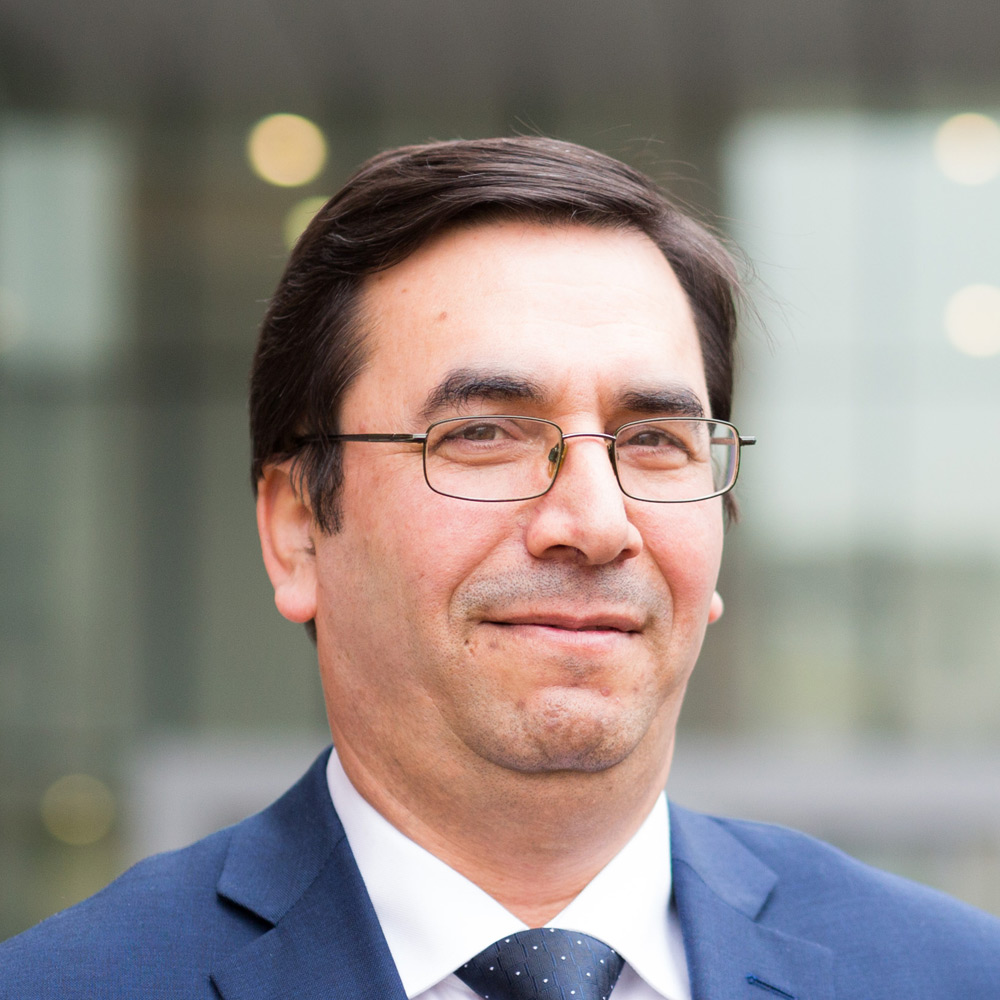
Dean B. Carson is a researcher at Umeå University , affiliated with the Faculty of Medicine, Department of Epidemiology and Global Health , and the Arctic Research Centre . His work focuses on rural health systems, social care workforce challenges, sustainable rural development, and community-based approaches to healthcare and food security. Rural Health : Explores capacity-building in rural health research and medical education reform. Public Health : Analyzes service delivery models and co-creation frameworks for elderly care. Geography : Investigates spatial dynamics in northern peripheries, including food production networks and micro-urbanization. Recent publications (2024-2025) examine topics such as rural health research capacity frameworks , hospital-to-home transfer systems , and non-commercial food distribution networks . His studies often integrate theoretical models like Rural Nursing Theory and Beyond Periphery while emphasizing stakeholder engagement and policy translation. Grants and Collaborations : Funded by the Swedish Research Council Formas, American National Science Foundation (NSF), and Riksbankens Jubileumsfond. Collaborates with Arctic-FROST networks and Lifestyle Migration Hub researchers.
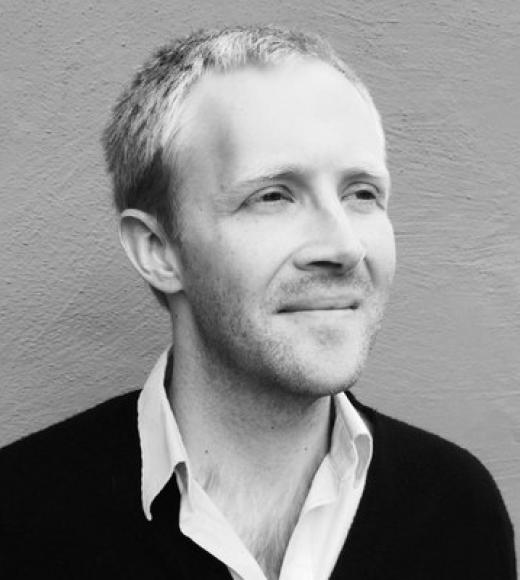
Timo Kaartinen serves as Professor of Social and Cultural Anthropology and Vice Dean for Research and Doctoral Education at the University of Helsinki 's Faculty of Political Science . Since 1992, he has conducted extensive research in Southeast Asia with a focus on Indonesia, exploring communicative practices, narratives, and cultural responses to uncertainty. His teaching spans social change in bachelor's, master's, and doctoral programs, covering environmental anthropology, political anthropology, cosmologies, religions, and linguistic anthropology. PhD in Anthropology, University of Chicago (2001) Docent (Adjunct Professor), University of Helsinki (2011) Research interests center on ethical discourse in Indonesian Islamic universities, resource politics in oil palm estates, and linguistic anthropology with emphasis on storytelling, folk poetry, and minority language revitalization. His work combines ethnographic focus on Southeast Asia with theoretical contributions to frontier studies and postcolonial anthropology. Recent publications examine frontier temporalities (2020-2025), Islamic transformations (2019), and oral narrative structures (2017-2013). Key projects include ARCTIC Research Centre (2025-2029), Diversity in Society and Life (DIVSOL) (2025-2030), and Religious Movements in Ethical Life (2019-2023). Grants from the Academy of Finland and University Profiling Funding support these initiatives. Academic activities include keynote speeches at international conferences (e.g., Empowering Local Wisdom 2014, Labor Migration in Asia-Pacific 2013) and editorial roles. He has conducted fieldwork in Indonesia since 1992, focusing on Bandanese cultural heritage and Maluku religious dynamics . His methodological approach combines ethnographic fieldwork with historical document analysis .
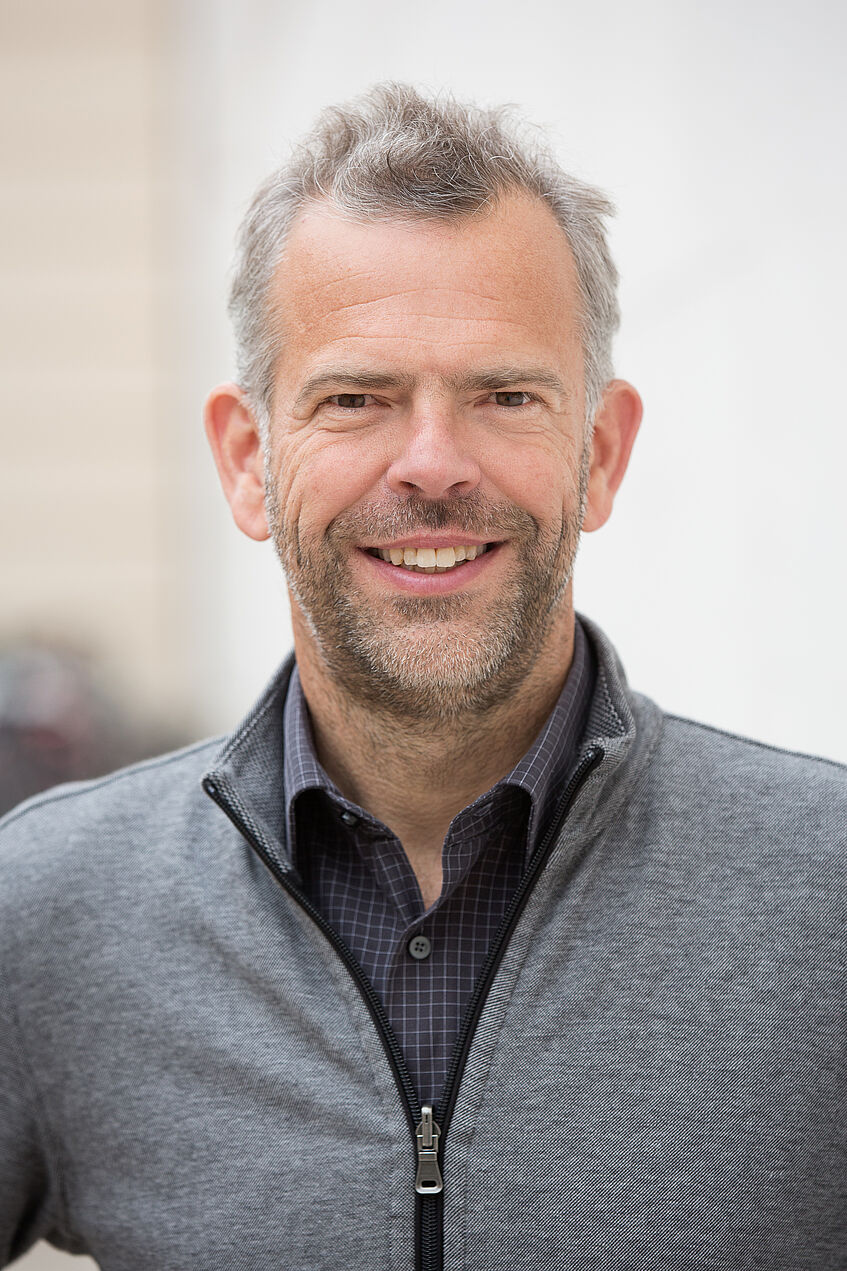
Judit Bodnar is a Professor in the Department of Sociology and Social Anthropology at Central European University (CEU), affiliated with the Doctoral School of History. Her research spans urban theory, political economy of globalization, public space, and the cultural dimensions of capitalism. She actively contributes to academic discourse through publications and editorial roles. Research Interests: Urban theory and history Modernity and capitalism (comparative and historical) Uneven development Public space and public art Political economy and culture of globalization Sharing economy and digital platforms Food and politics Her recent work focuses on the transformation of public and private boundaries in the context of digital platforms like Airbnb and home restaurants, as well as the racial and spatial segregation of Roma communities in urban Europe. She critically examines the legacies of 1968 as a global moment and the gentrification of urban spaces such as Chicago’s Cabrini Green. The publication trends reflect a deep engagement with urban sociology, political economy, and cultural critique, especially in the context of neoliberalism, digital transformation, and global inequality. Her work bridges historical analysis with contemporary urban challenges. Editorial Role: Co-editor, Critical Historical Studies , University of Chicago Press Academic Events: Privacy Goes Public: Airbnb, Home Restaurant and the Reconfiguring of Public and Private in the Sharing Economy (November 24, 2021) Racial Cities: The Segregation of Roma in Urban Europe (October 5, 2017) She advises doctoral students in the Doctoral School of History and supervises research on urban and historical sociology. Her work is supported by interdisciplinary collaborations and engagement with global scholarly networks. She is involved in critical urban research, often linking theory with social justice concerns. Labs and Research Groups: Active participant in urban sociology and globalization research clusters at CEU Contributor to transnational dialogues on the right to the city and urban commons
Susan Smith-Peter is a Professor of History at the College of Staten Island, City University of New York, specializing in Russian history beyond Moscow and St. Petersburg. Her research focuses on regional identity, civil society development, and imperial governance in 19th-century Russia, with particular attention to Siberia and provincial dynamics. She holds a Ph.D. from the University of Illinois at Urbana-Champaign and a B.A. from Ohio University. Her work analyzes how Tsarist administrative frameworks fostered subnational identities through statistical bureaus, agricultural societies, and provincial newspapers. Notable contributions include *Imagining Russian Regions* (2018), which argues that autocracy’s civil society initiatives inadvertently fueled revolutionary movements. Her research has been supported by grants from the Fulbright Program, American Historical Association, and IREX. Professor Smith-Peter’s publications span journals like *Slavic Review* and *Kritika*, exploring topics from sugar beet industries to colonial Alaska. She has translated key texts into Russian and edited historical documents such as *The Great Republic Tested by the Touch of Truth*. She serves on campus committees and previously chaired Columbia University’s Seminar on Slavic History and Culture. Key Awards: Fulbright Fellowship, American Historical Association Grant, IREX Grant Grants: Fulbright-Hays Fellowship, University of Illinois Grant, CUNY Grant Her interdisciplinary approach bridges economic, cultural, and political history, emphasizing regional agency within imperial contexts. Ongoing projects explore Siberian historiography and the legacy of 19th-century provincial activism.
Professor Jonathan Goodhand is a distinguished academic in the Department of Development Studies at SOAS University of London, where he has established himself as a leading expert on conflict, peacebuilding, and political economy in fragile and post-conflict states. His work focuses on the complex interplay between illicit economies, borderland dynamics, and political settlements in South and Central Asia, with particular expertise in Nepal, Sri Lanka, and Afghanistan. As a prolific researcher and supervisor, he has shaped the field through both theoretical contributions and empirical studies grounded in extensive fieldwork. Professor Goodhand's research interests span several interconnected domains: Conflict and peacebuilding dynamics in post-war contexts Political settlements and statebuilding processes Borderland and frontier studies, particularly the role of brokers Illicit economies, especially drug economies and their relationship to conflict The intersection of development and security in fragile states Humanitarian action and its political implications in conflict zones His recent publications reveal a sophisticated analytical framework that connects spatial dimensions of conflict with political economy approaches. Goodhand has pioneered research on "frontier brokers" who operate in the margins between state and non-state authority, examining how these figures shape post-war transitions. His work on the "drugs-development-peacebuilding trilemma" has gained significant traction in policy circles, challenging conventional approaches to drug policy in conflict-affected regions. The Drugs & (dis)order research project, which he leads, represents a major contribution to understanding how illicit economies can be transformed into peace economies. Professor Goodhand has supervised numerous doctoral students whose work extends his research agenda into new contexts including Afghanistan, Colombia, South Sudan, and Myanmar. His influence extends beyond academia through policy engagement with international organizations working on conflict resolution and development.
Shannon Bell is a Professor in Political Science at York University, working as a performance philosopher who integrates digital video technology with political theory. Her research examines intersections of cyberpolitics, aesthetics, and power through projects like 'Shooting Theory', which visualizes philosophical concepts through film. She has authored books including 'Fast Feminism' and 'Reading, Writing and Rewriting the Prostitute Body'. Current SSHRC-funded projects explore bioart and robotic art extremes, with residencies at Symbiotica (UWA) and international exhibitions. She teaches courses on modern political thought, technopolitics, and aesthetics. Educational background includes a PhD in Political Science from York University. Professional leadership includes directing the Resource Centre for Public Sociology.
Professor Joseph Amankwah-Amoah is a leading academic in International Business and Strategy at Durham University Business School, UK. He holds additional roles as Distinguished Visiting Professor at Coal City University (Nigeria) and Adjunct Professor at Kwame Nkrumah University of Science and Technology (Ghana). His research focuses on business failure dynamics in emerging economies, sustainability, institutional voids, and digital transformation. He has authored over 160 peer-reviewed articles in top-tier journals like Journal of International Business Studies and International Business Review , with over 7,000 Google Scholar citations. His awards include four consecutive years on Stanford's World Top 2% Scientists list (2020–2023) and the 2021 AIB Insight Outstanding Article Award. He serves as an international expert for the UN Office of the Special Adviser on Africa and has guest-edited over 10 special journal issues. His work bridges academic theory with real-world challenges in global business, sustainability, and institutional development. Key research themes include leveraging business failure for innovation, green industrial policies, and the impact of digital technologies on emerging markets. He actively contributes to policy discussions on Africa's economic development and has collaborated with institutions across Europe, Africa, and Asia.
Professor Mehmet Demirbag serves as Deputy Dean of Essex Business School and Professor of International Business at the University of Essex. Previously, he held significant leadership roles including Vice Dean (Internationalisation) and Head of Department of Strategy and Organisation at Strathclyde Business School, and Chair in International Business at the University of Sheffield Management School. His extensive academic career spans over a decade in UK higher education institutions with specialized expertise in international business strategy. Dr. Demirbag completed his Master's degree in Business Analysis at the University of Leicester and earned his PhD at the University of Bradford Management School. His educational background established the foundation for his research focus on international business phenomena, particularly regarding emerging economies and multinational enterprises. His research interests center around internationalisation of R&D activities, offshore R&D, FDI location choice, product and regional diversification strategies of MNEs, multinationals from emerging countries, international mergers and acquisitions, and reverse knowledge transfer by emerging country MNEs. These interconnected research streams examine how firms navigate global markets, particularly focusing on the strategic behavior of emerging market multinationals and their interactions with developed economies. Analysis of his recent publications reveals consistent thematic patterns across international business, strategic management, and human resource management domains. His work demonstrates particular emphasis on emerging market multinationals, cross-border knowledge transfer mechanisms, international strategic decision-making in uncertain environments, and the institutional contexts shaping multinational enterprise behavior. The interdisciplinary nature of his research bridges theoretical frameworks from international business, strategic management, and organizational studies. Professor Demirbag maintains active editorial roles as consulting editor of the Journal of International Management and advisory editor of Eurasian Business Review. He has co-guest edited special issues for numerous prestigious journals including British Journal of Management, Human Resource Management, Journal of World Business, and International Business Review, among others. His editorial contributions span research areas related to emerging market MNEs, MNEs in emerging markets, transitional periphery contexts, and human resource management in uncertain environments. As an educator, Professor Demirbag teaches International Business and International Strategic Management at undergraduate, postgraduate, and executive levels. His supervision portfolio includes doctoral candidates such as Selman Alisan Gemuhluoglu and previously guided Koushik Das Sarma to completion of their PhD in Business Administration. His research has received funding from various sources including the European Commission, and his work on FDI and SMEs has contributed to REF impact cases at both the University of Bradford and the University of Sheffield.
Ian Campbell is an Associate Professor in the Department of History at the University of California, Davis. He holds a Ph.D. (2011) and B.A. (2005) in History from the University of Michigan, followed by a postdoctoral fellowship at Harvard University's Davis Center for Russian and Eurasian Studies. His research focuses on pre-Revolutionary Russia, particularly the dynamics between non-Russian territories and imperial governance. Campbell’s work emphasizes colonialism, military history, and environmental transformations in the Russian Empire. His first book, Knowledge and the Ends of Empire , explores tsarist policies toward the Kazakh steppe, analyzing bureaucratic knowledge systems and local intermediaries. Current projects include The Bleeding Edges , studying counterinsurgency across Russian borderlands, and Sowing Russianness? , reframing Kazakhstan through settler colonialism frameworks. His research has been supported by prestigious grants such as the Fulbright-Hays Doctoral Dissertation Award and the American Councils Title VIII Fellowship. Campbell teaches courses on European history, Russian history, and military history at both undergraduate and graduate levels. His publications span journals like The Russian Review and Ab Imperio , with a focus on violence, colonialism, and environmental adaptation in imperial contexts. Awards include the Fondiler Dissertation Prize for outstanding doctoral work (2011).
Professor Vlad Mykhnenko is Professor of Geography and Political Economy in the University of Oxford Department for Continuing Education, and a Research Fellow in Sustainable Urban Development at St. Peter's College, Oxford. He serves as Academic Director for Social Sciences at Oxford Lifelong Learning and has been with the Department since January 2017, initially taking up an Associate Professorship in Sustainable Urban Development. His academic career spans multiple institutions including the University of Birmingham, Al-Farabi Kazakh National University, the University of Nottingham, the University of Glasgow, and the Central European University. Professor Mykhnenko's educational background includes: PhD in Political Economy from Darwin College, the University of Cambridge (2005) MA in International Relations and European Studies from the Central European University (1999) MA (1998) and BA (1996) in International Relations from Taras Shevchenko National University of Kyiv As an economic geographer specializing in geographical political economy, Professor Mykhnenko challenges conventional wisdom about urban and regional development. His research initially focused on transition economies of Eastern Europe (particularly Polish Upper Silesia and the Ukrainian Donbas) before expanding to cities and regions worldwide. He has produced over 140 research outputs and secured £16 million in external research funding, with £2 million as Principal Investigator. His current research initiatives focus on green steel - rebuilding Ukraine's iron and steel sector post-war without fossil fuels - and sustainable urban development in Kazakhstan. His publication record demonstrates significant scholarly impact across diverse areas including urban shrinkage, post-war reconstruction, geopolitical analysis, and future trends in technology and governance. The breadth of his research interests spans from analyzing spatial economic patterns in African cities to examining the implications of the metaverse for future business practices. Professor Mykhnenko has substantial policy impact, with research quoted in at least 79 policy documents by 49 organizations across 21 countries. His work contributes to UN Sustainable Development Goals, with 30% directly attributed to SDG11: Sustainable Cities and Communities. He has advised governments, intergovernmental organizations, and multinational enterprises, including serving on a UN expert group to shape the New Urban Agenda and providing expert evidence to the UK House of Commons on Ukraine's recovery. In early 2025, he was appointed a commissioner for the Lancet Commission on Ukraine. Professor Mykhnenko has taught over 3,100 students across various institutions and currently contributes to Oxford's MSc in Sustainable Urban Development program. He has supervised numerous doctoral students and received recognition for his teaching excellence, including Fellow of the Higher Education Academy status and a Postgraduate Certificate in Academic Practice. His commitment to research-led teaching has resulted in innovative pedagogical approaches documented in peer-reviewed academic publications.
ao. Univ.-Prof. Dr. Martin Heintel is an Associate Professor at the Department of Geography and Regional Research, University of Vienna. With over 30 years of experience, he focuses on regional development, cross-border cooperation, and sustainable urban-rural linkages. His work spans Europe, Southeast Asia, and North America, emphasizing participatory governance and evidence-based policy. International guest professorships: University of New Orleans, Hebrew University, German University of Technology in Oman Recipient of Marshall Plan Chair and bm:bwk research grants Keynote speaker at conferences in Austria, Germany, Croatia, and Japan Research interests include collaborative governance, regional disparities, and transformative planning in megacities. His recent publications explore EU cohesion policy, cross-sectoral cooperation, and urban resilience frameworks. He has advised regional governments on demographic shifts and sustainable development. Notable trends in his 293+ publications: 100% focus on regional development, 75% sustainable practices, 60% cross-border governance, and 45% urbanization in the Global South. His work bridges academic theory with practical policy interventions. Scientific engagement: Editorial Advisory Board, Europa Regional (2008-2023) Speaker at 243+ international events Media coverage in Der Standard , Österreichische Medien , and public debates Leadership roles include co-founding the Austrian Association for Applied Geography (ÖVAG) and coordinating the IGEN EU project (2011-2013). He mentors young researchers through conference sessions and regional workshops.
Maria Fritsche is a full professor at NTNU’s Department of Modern History and Society, specializing in 20th-century history with a focus on WWII occupations, military justice, and gender studies. She leads the Nordic-funded project 'Cinema, War and Citizenship at the Periphery' exploring Nordic cinema during WWII. Her research examines social dynamics under German occupation, SS court operations, and Holocaust histories. Education: PhD in Film History (University of Portsmouth), postdoctoral fellowships at Southampton, German Historical Institute Washington D.C., and NTNU. Visiting fellowships included the ZZF Potsdam, FZH Hamburg, IfZ Munich, and NIOD Amsterdam. Research interests span film history, military occupations, propaganda, and Austrian postwar cinema. Notable publications include NS-Verfolgung und Militärjustiz in Wien (2025) and The American Marshall Plan Film Campaign and the Europeans (2018). She co-edits L'Homme , a feminist history journal. Teaching focuses on modern international history, film studies, and cultural diplomacy at NTNU since 2006. Current projects investigate Wehrmacht justice systems and cinema’s role in citizenship during wartime.
Ben Collier is an Assistant Teaching Professor of Business Analytics at the Tepper School of Business , Carnegie Mellon University. He holds a PhD in Information Systems and Organizational Behavior from Carnegie Mellon and has extensive experience in data science leadership roles in industry. PhD, Information Systems and Organizational Behavior (2012), Carnegie Mellon University MS, Information Systems and Organizational Behavior (2009), Carnegie Mellon University MBA, Information Systems (2007), University of Wisconsin-Madison BBA, Management Computer Systems and Mathematics (2004), University of Wisconsin-Whitewater His research focuses on data mining for business , data visualization , and large-scale experimental design , with applications in healthcare analytics, online community dynamics, and gender equity in technology. His recent work includes monetization data science for Duolingo's $6.5 billion IPO and developing UPMC's CognitiveRx analytics engine. Ben's publications span topics including gender gaps in Wikipedia , leadership in open collaboration communities , and conflict resolution in crowdsourced platforms . He has served on CMU committees for curriculum review and summer summit planning, and actively advises MSBA capstone projects.
Jennifer L. Smith is a Professor and Associate Chair in the Department of Linguistics at the University of North Carolina, Chapel Hill. Her research focuses on phonology, particularly the interplay between phonological constraints, morphosyntactic categories, and experimental methods. Key areas include lexical-category effects (e.g., noun/verb phonological privilege), loanword adaptation, blend phonology, and intonation patterns in Fukuoka Japanese. She has pioneered experimental approaches using artificial-language learning and surfeit-of-the-stimulus experiments to test hypotheses about constraint interaction and phonological universals. Smith’s work bridges formal phonology and phonetics, addressing questions like how phonetic naturalness influences phonological constraints and whether category-specific phonology reflects innate biases. Recent projects include investigating positional effects in phonology (e.g., salient positions) and the role of core-periphery structures in loanword nativization. She has collaborated extensively with researchers like Elliott Moreton and Katya Pertsova on blend phonology and experimental phonology. Her teaching includes foundational courses like Linguistics 60: How Reading Works , emphasizing interdisciplinary connections between language, cognition, and literacy. Smith maintains key resources for the field, including a widely referenced Phonetics resources page with curated materials for teaching and research. Her office is located in Smith Building 309, and she holds regular office hours via Zoom.
Lorenzo d'Alfonso is a Professor of Western Asian Archaeology and History at the Institute for the Study of the Ancient World (ISAW) at New York University. He holds an MA from the University of Pavia (1997) and a PhD from the University of Florence (2002). His research focuses on the social, juridical, and political history of Syria and Anatolia under the Hittite Empire (16th–7th centuries BCE). He has directed archaeological surveys in Southern Cappadocia since 2006 and excavations at Kinik Höyük (Turkey) since 2010, investigating post-Hittite cultural transitions and urban development. His work includes monographs, over 30 articles, and co-edited volumes, alongside digital projects like the Emar Online Database. Key projects include the long-term Kinik Höyük excavation (since 2010), analyzing Iron Age Anatolia’s material culture, settlement patterns, and political landscapes. His research integrates textual sources (e.g., Hittite legal procedures) with archaeological data, exploring themes like local leadership, state administration, and cultural memory. Recent work emphasizes post-Hittite socio-political reorganization and the interplay between empires and local communities. Publications highlight diverse topics: Hittite judicial systems, Achaemenid-era rituals, Iron Age pottery circulation, and architectural continuity in sacred spaces. His excavations at Kinik Höyük have revealed insights into urban resilience during periods of political fragmentation. Collaborative efforts include geoarchaeological surveys and paleographic studies of Anatolian hieroglyphic scripts. Research grants and fellowships have supported his work across institutions, including the Universities of Mainz, Konstanz, and Pavia. His fieldwork emphasizes interdisciplinary methods, combining archaeology with conservation science to address ancient building techniques and material preservation challenges.