Samiran (Shomu) Banerjee is a Teaching Professor in the Department of Economics at Emory University. He holds a PhD in Economics from the University of Minnesota, an MA from Delhi School of Economics, and a BA in Commerce from Shri Ram College of Commerce, University of Delhi. His research interests focus on Applied Microeconomic Theory , Industrial Organization , Experimental Economics , and Environmental Economics . He has authored the textbook Intermediate Microeconomics: A Tool-Building Approach (2nd ed., Routledge, 2021), which emphasizes constrained optimization and learning-by-doing methodologies. His work bridges theoretical rigor with practical applications in economics education. Notable contributions include studies on net neutrality regulation, healthcare resilience strategies, and optimization in power distribution systems. His interdisciplinary approach spans economics, policy analysis, and computational methods. His book has garnered acclaim for its pedagogical clarity, with praise from MIT’s David Autor and Cornell’s Kaushik Basu. Banerjee’s research also extends to medical imaging technology and oncology case studies, reflecting his diverse academic engagement.
Christian Hilbe is a Professor of Game Theory and Evolutionary Dynamics at the Interdisciplinary Transformation University (Linz, Austria) and former Max Planck Research Group Leader at the Max Planck Institute for Evolutionary Biology (Plön, Germany). His work focuses on modeling social behavior, cooperation mechanisms, and evolutionary game theory. He holds a PhD in Mathematics from the University of Vienna, with postdoctoral research at Harvard University, IST Austria, and the Max Planck Institute. Research interests include the evolution of cooperative strategies, direct/indirect reciprocity, and the impact of environmental change on social learning. His studies combine mathematics, computer simulations, and behavioral experiments to analyze how strategic behaviors spread in populations. Recent publications (2024-2025) explore topics such as collective intelligence, memory-driven cooperation, and the co-evolution of social norms. His work emphasizes the role of memory capacity, payoff structures, and population dynamics in sustaining cooperation across diverse social dilemmas. Notable collaborations include projects on asymmetric interactions, opinion synchronization effects, and the computational evolution of norms in structured populations. His research bridges theoretical frameworks with empirical observations to address fundamental questions in evolutionary social science.
Yaron Azrieli is a Professor in the Department of Economics at The Ohio State University within the College of Arts and Sciences. His work focuses on game theory, microeconomic theory, and mathematical economics, with applications to contests, incentives, and mechanism design. Ph.D. in Economics, Tel Aviv University (2008) M.Sc. in Economics, Tel Aviv University (2004) B.Sc. in Economics, Tel Aviv University (2001) His research explores strategic behavior in contests, incentive structures in experiments, constrained decision-making, and cooperative game theory. Recent studies examine large contests, repeated games, and information asymmetry in delegation frameworks. Key trends in his publications include game-theoretic modeling of competitive and cooperative settings, mechanism design for preference elicitation, and behavioral economics applications to voting and resource allocation. No scientific awards or student advising details are explicitly mentioned in the provided data.
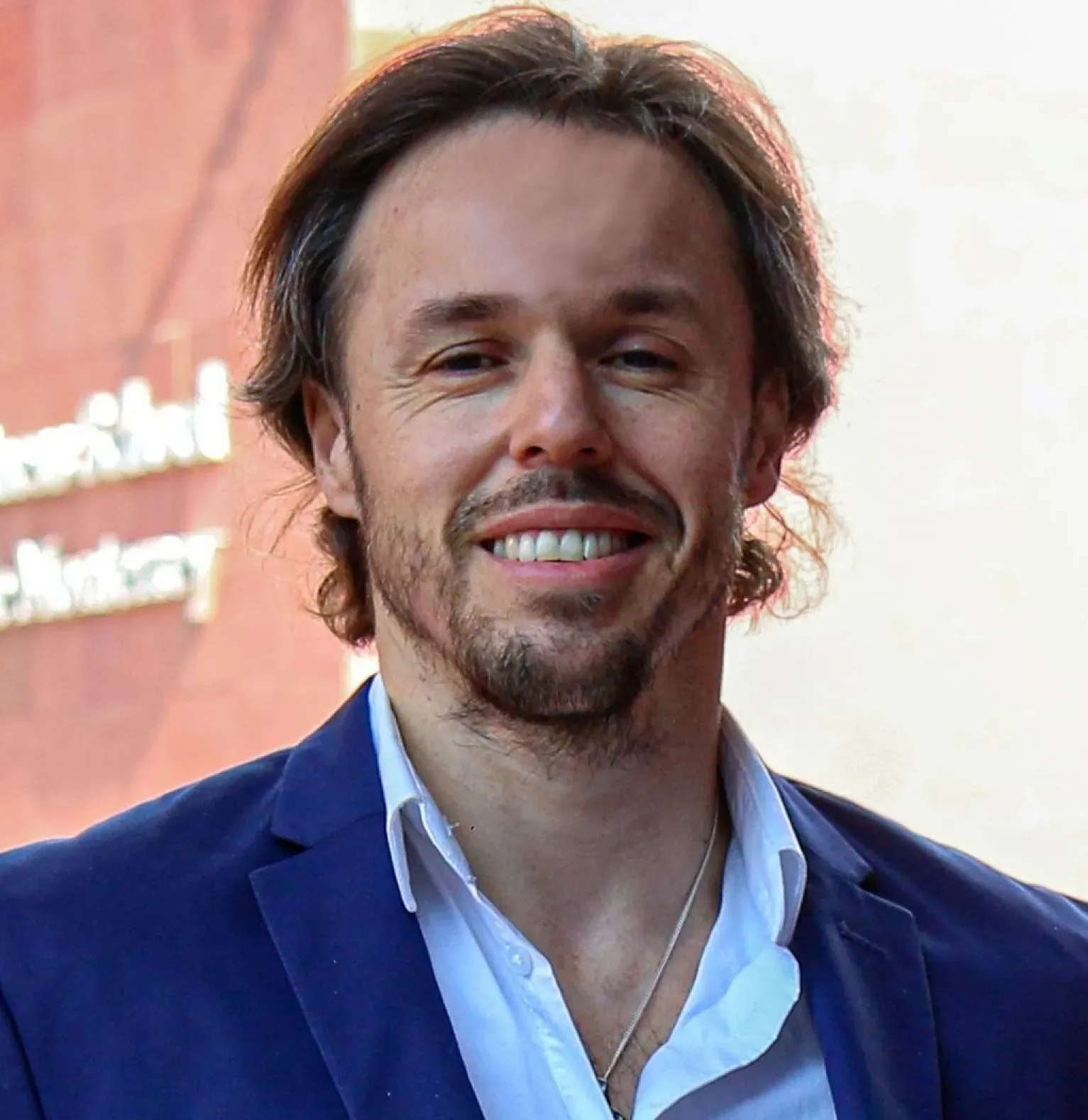
Felipe Symmes serves as Professor in the Department of Entrepreneurship and Technological Innovation at EGADE Business School, Tecnológico de Monterrey, specializing in social entrepreneurship, sustainability strategy, and frugal innovation. His international academic profile bridges Latin American business contexts with global research frameworks. His educational credentials include: Ph.D. in Organizational Studies and Theory of Culture, University of St. Gallen Master in Études du développement, Université Paris I Panthéon Sorbonne Commercial Engineer, Pontificia Universidad Católica de Chile (with UCLA exchange in MBA/Social Sciences) Symmes investigates sustainable futures through the lens of visceral imagination, informal markets, and resource-constrained innovation. His work examines how social entrepreneurs navigate institutional voids using frugal principles and creative adaptation, particularly in emerging economies. He integrates literary analysis (notably Roberto Bolaño's narratives) to explore entrepreneurial cognition beyond rational frameworks. His 2020-2025 publications reveal three dominant trajectories: scaling social enterprises through market mechanisms, formalization strategies for microenterprises in institutional voids, and the visceral dimensions of entrepreneurial creativity. These works consistently apply interdisciplinary approaches—merging management theory with cultural studies—to address sustainability challenges in Latin America and beyond. Professional recognition includes: Impact Scholar Community Mentorship Mentee (2023-2024 Cohort) As editorial board member of Entrepreneurship Education & Pedagogy, Symmes shapes scholarly discourse in entrepreneurial pedagogy. While specific student advising details aren't public, his book publications and journal articles indicate active mentorship in social entrepreneurship research. His literary work—including Penguin Random House-recognized fiction—complements academic contributions through narrative exploration of human creativity. Research aligns with EGADE's Emprendimiento e Innovación con Impacto group, though no dedicated laboratory is specified. Current projects likely extend his 2024-2025 work on visceral imagination and frugal innovation applications in sustainability contexts.
Nezih Altay serves as Professor and Director of the MS in Supply Chain Management Program within the Department of Management & Entrepreneurship at DePaul University's Driehaus College of Business. He maintains international research affiliations as a Resilience Research Fellow at Delft University of Technology and research partner at Kühne Logistics University's Research Institute on Leadership and Operations in Humanitarian Aid, while continuing his relationship with Hanken School of Economics as a HumLog Institute Research Affiliate. His academic credentials include: PhD in Operations Management, Texas A&M University (2001) MBA, University of Texas Pan American (1996) BS in Chemical Engineering, Bogazici University, Turkey (1993) Altay's research centers on humanitarian supply chains, disruption management, and after-sale service operations, addressing critical challenges in disaster response systems and vulnerable population support. His work bridges theoretical operations management with practical humanitarian applications, emphasizing resilience building and ethical considerations in crisis contexts through frameworks like coping strategies and ambidextrous organization design. Recent publications (2022-2025) show intensified focus on pandemic resilience, migrant flow logistics, and generative AI applications for social good, while maintaining core themes in disruption management and humanitarian innovation. His research increasingly integrates advanced analytics with field-based evidence from crises in Turkey, Greece, Kenya, and Ethiopia. Major recognitions include: Academic/Research Accomplishment Award from American Logistics Aid Network (ALAN) (2019) Fulbright-Hanken Chair in Business and Economics (2021) Altay has directed DePaul's MS in Supply Chain Management program while teaching executives, MBA, and undergraduate students since 1999. His Fulbright Grant enabled significant collaboration with HumLog Institute, and editorial leadership includes co-editor-in-chief of the Journal of Humanitarian Logistics & Supply Chain Management and senior editor of Production and Operations Management. International research partnerships drive his work through Delft University's resilience initiatives, Kühne Logistics University's leadership institute, and Hanken's HumLog Institute, creating a global network for humanitarian operations research with field studies across multiple continents.
Thanh H. Nguyen is an active Assistant Professor in the Department of Computer Science within the College of Arts and Sciences at the University of Oregon. She teaches courses including Introduction to Artificial Intelligence (CS 471/571) and Multi-Agent Systems (CS 410/510), with office hours held in Deschutes Hall. Her educational background includes a Ph.D. from the University of Southern California (2016), a postdoctoral position at the University of Michigan (2016-2018), and a B.Sc. from Hanoi University of Science and Technology. Her research bridges theoretical AI with practical applications addressing real-world societal challenges. Dr. Nguyen's work focuses on Artificial Intelligence applications for societal benefit, particularly in Public Safety and Security (urban crime prevention, counterterrorism), Cybersecurity (protection from stealthy botnets), Sustainability (wildlife and fish protection), and Public Health (diabetes prevention). Her research integrates techniques from Multi-Agent Systems, Game Theory, Machine Learning, and Optimization with insights from Psychology and Conservation Biology. Her recent publications demonstrate strong trends in security games, adversarial learning, and health applications, with significant focus on strategic deception, robust decision-making under uncertainty, and real-world deployment of AI systems. The work shows increasing interdisciplinary collaboration and practical implementation of theoretical models. Deployed Application Award (IAAI 2016) for PAWS wildlife protection system Runner-up Best Innovative Application Paper Award (AAMAS 2016) WiSE Merit Fellowship from University of Southern California (2015) Runner-Up Best Paper Award at Recourse-21 Workshop (ICML 2021) Army Research Office Grant (~$343K) for Adversarial Reasoning (2020-2023) Dr. Nguyen actively advises PhD students including Sarah Kinsey and Michael Dushkoff (co-advised with Prof. Allen D. Malony), along with numerous master's and undergraduate students. Her research has received significant grant funding, including an Army Research Office grant for developing methods to tackle sequential and coordinated attacks in security domains with real-time information. Her work on the PAWS (Protection Assistant for Wildlife Security) system has been deployed by NGOs like Panthera and the Wildlife Conversation Society in conservation areas in Malaysia and Uganda. She leads the AI Lab at the University of Oregon, which focuses on multiple research projects including AI for Public Health, Deception in Security Games, Security in Data-based Decision Making, Information Leakage and Exploration, and Game Theory for Cybersecurity. The lab maintains strong industry and NGO partnerships for real-world application of research findings.
Prof. Dr. Erwin Amann serves as Chair of Microeconomics at the Faculty of Business and Economics, University of Duisburg-Essen. His office is located at Universitätsstraße 12, 45117 Essen (Space: R12 R06 A39), with consultation hours available by email pre-registration. He holds significant administrative roles including Dean of the Faculty of Economics and Head of the Economics program. His research spans Game Theory , Auction Theory , and Evolutionary Game Theory , with recent extensions into Health Economics (medical kickbacks), Environmental Economics (wastewater standardization), and Education Economics (blended learning incentives). His methodological approaches integrate experimental economics, theoretical modeling, and applied policy analysis. Analysis of his 15 most recent publications reveals dominant trends in strategic decision-making under incomplete information , behavioral responses to economic shocks , and institutional design for public goods provision . Key interdisciplinary connections appear between evolutionary game theory and healthcare markets, while recent work increasingly incorporates field experiments in educational settings. Prof. Amann has authored monographs including Decision Theory - Individual, Strategic, and Collective Decisions (Springer, 2019) and Game Theory For Dummies (Wiley-VCH, 2012). His publications appear in journals such as German Economic Review , Mathematical Social Sciences , and Journal of Economic Behavior and Organization . Administratively, he serves as Capacity Officer for Economics and oversees the Master's degree program in Economics. His teaching portfolio includes Microeconomics, Game Theory, and Information Economics courses. Current research focuses on incentive structures in blended learning environments and evolutionary stability of cooperative behavior in medical markets.
Dean Dudley is an Associate Professor in the Department of Social Sciences at the U.S. Military Academy at West Point, where he has taught since 1993. He also serves as an Adjunct Professor at Mount St. Mary’s College. Educational background includes a Ph.D. in Economics from Indiana University and a B.A. in Economics from Eastern Washington University. His research focuses on applying economic theories to military contexts, including game theory , non-linear optimization , and rational political extremism . He explores whether extreme political acts can emerge from constrained optimization of rational preferences through spatial models. Recent publications span military economics, personal financial planning for armed forces, and foreign policy analysis. Key themes include defense policy modeling, trade agreements, and household financial management under military constraints. His work bridges academic rigor with practical applications for military personnel, covering credit management, tax compliance, healthcare financing, and strategic defense planning.
Carlos Alós-Ferrer is a Professor of Microeconomics at the University of Konstanz (Germany), having previously held positions as Assistant and Associate Professor at the University of Vienna (Austria), Associate Professor at the University of Salamanca (Spain), and earned a Ph.D. in Economics from the University of Alicante (Spain) in 1998. His research spans Behavioral Economics , Decision Theory , Game Theory , and Experimental Economics , focusing on topics such as Bayesian Updating , Risk Analysis , and Behavioral Heterogeneity . His recent publications explore belief dynamics, ethical protocols in resource allocation, and time-pressured decision-making. He serves as an Associate Editor for Decision Neuroscience (Frontiers in Neuroscience) and contributes to editorial boards at Frontiers in Psychology . Collaborations with researchers at institutions like the University of Zurich highlight his network in experimental and behavioral economics.
Daniel Bienstock is the Liu Family Professor of Industrial Engineering and Operations Research and Professor of Applied Physics and Applied Mathematics at Columbia University's Fu Foundation School of Engineering and Applied Science. He has been at Columbia since 1989 and previously held roles at Bell Communications Research and Carnegie Mellon University. His research focuses on optimization, particularly discrete and nonconvex optimization, with applications to power grid vulnerability, epidemic modeling, and energy systems. Education: Ph.D. in Operations Research from MIT (1985). Research interests include optimization theory and algorithms, cascading failures in power grids, and the social impact of epidemics. His work integrates mathematical programming with real-world challenges in energy, infrastructure, and public health. Recent studies address risk-aware power system operations, robust optimization under uncertainty, and machine learning for energy markets. Major awards include the 1990 Presidential Young Investigator Award. He has contributed to significant conferences such as the SIAM Conference on Optimization (2005 plenary speaker) and the International Symposium on Mathematical Programming (2006 semi-plenary speaker). Affiliated with Columbia's Foundations of Data Science, Smart Cities, and Financial and Business Analytics centers. His work emphasizes translating theoretical advancements into practical solutions for critical infrastructure resilience and sustainable resource management.
Fan Ma is a Research Fellow in Biomedical Informatics & Data Science at Yale School of Medicine . His research spans Public Health Epidemiology Global Health Infectious Disease Modeling Biomedical Data Science Health Equity with a focus on SARS-CoV-2 transmission dynamics, vaccine efficacy in marginalized populations, and structural determinants of health disparities. His recent publications highlight trends in epidemiological modeling , vaccine impact analysis , and structural interventions for urban slum settings. Key sub_fields include household transmission, hybrid immunity, social determinants of vaccine uptake, and decolonization of global health practices. Scientific awards and grants are not explicitly mentioned in the provided text. He has no listed advisees, and his work is affiliated with the Ma Lab at Yale School of Medicine.
Zoé Christoff is an Assistant Professor in Cognitive Artificial Intelligence and Rosalind Franklin Fellow at the Bernoulli Institute for Mathematics, Computer Science and Artificial Intelligence of the University of Groningen. She joined the university in September 2020 and is a member of the Multi-Agent Systems Group. Her interdisciplinary work bridges humanities and sciences, focusing on formal models of social phenomena. Christoff earned her PhD at the University of Amsterdam under the supervision of Johan van Benthem and Sonja Smets at the Institute for Logic, Language and Computation (ILLC). Prior to that, she completed her MA at the University of Geneva under Pascal Engel, Fabrice Correia and Kevin Mulligan. Her academic journey includes postdoctoral positions at the University of Bayreuth (Germany) and the University of Liverpool. Her research centers on collective intelligence, exploring how groups of agents can act smart or dumb together. She investigates opinion formation, collective decision-making, and social influence using formal tools from logic, artificial intelligence, social network theory, social epistemology, and social choice theory. Her work examines how social networks distort information and how logical tools can model social network dynamics, including similarity-based processes like social influence and link changes. Christoff is particularly interested in understanding patterns and laws governing information dynamics and social network phenomena, with applications to democratic institutions and misinformation. Her recent publications reveal a strong focus on the intersection of logic, network theory, and social phenomena. Key trends include investigating majority illusions in social networks, modeling opinion diffusion in similarity-driven networks, analyzing voting systems, and developing dynamic logics for network changes. Her work consistently applies formal mathematical approaches to understand complex social dynamics, with particular attention to how network structures constrain information flow and collective behavior. NWO VENI grant for research project 'Democracy on Social Networks' Rosalind Franklin Fellow Christoff leads research on collective intelligence and has established a collaborative working environment that values work-life balance. Her NWO VENI grant supports her research on democracy in the context of social networks. She emphasizes the importance of interdisciplinary approaches that don't force a choice between humanities and sciences, maintaining that the most interesting questions often lie at their intersection. As a member of the Multi-Agent Systems Group at the Bernoulli Institute, Christoff contributes to a research environment focused on formal models of social phenomena. Her work on information dynamics in social networks has implications for understanding collective intelligence, democratic processes, and the impact of social media on society.
Rohan Dutta is an Associate Professor in the Department of Economics at McGill University. He holds a PhD from Washington University in St. Louis. His research focuses on Microeconomics and Mathematical Economics, with emphasis on social norms, bargaining dynamics, and institutional design. Education: PhD in Economics from Washington University in St. Louis. Research interests include game theory applications to social norms, public goods provision, and strategic interactions. His work explores themes like leadership in collective decision-making, punishment mechanisms, and the persistence of institutional failures. Recent publications analyze topics such as consensus formation, strategic evidence disclosure, and collusion constrained equilibria. His articles highlight recurring themes in behavioral economics, decision theory, and the interplay between institutional structures and human behavior. Despite prolific output, no scientific awards are explicitly mentioned. Advising and grants sections remain unspecified. No lab affiliations or team collaborations are noted in available texts.
Dr. Kurt G. Holzhausen is a Professor of Psychology at the University of Maine Fort Kent (UMFK), where he has served for over 25 years. He holds a Ph.D. in Social Psychology from Texas Tech University (1993) and dual B.A. degrees in Psychology and Biology from Hope College (1987, Magna Cum Laude, Phi Beta Kappa). His research focuses on social influence, small group processes, and collective induction, exploring how groups generate hypotheses and make decisions through evidence-based collaboration. He has co-authored influential papers in journals like Group Dynamics and Journal of Experimental and Social Psychology , and contributed educational materials for social psychology textbooks. His work challenges traditional conformity theories, revealing how majority influence persists even when irrational. Beyond academia, he enjoys woodworking and hiking. Research highlights include demonstrating that groups constrained by evidence outperform individuals in hypothesis generation and showcasing how delayed conformity to incorrect majority opinions persists despite rationality. His presentations at conferences like the Southwestern Psychological Association and Maine Psychological Association further underscore his contributions to understanding group behavior and social dynamics. Education: Ph.D., Social Psychology, Texas Tech University, 1993 B.A., Psychology & Biology, Hope College, 1987 (Magna Cum Laude, Phi Beta Kappa) Awards: Phi Beta Kappa Member Professional Activities: Co-authored textbooks and supplementary materials for social psychology courses Presented at national and regional psychological associations
Daniel Jarne Ornia is a Researcher at the University of Oxford's Department of Computer Science, located in Room 213 of the Wolfson Building on Parks Road, Oxford. His work focuses on artificial intelligence, multi-agent systems, and reinforcement learning, with particular emphasis on risk-aware decision-making, robust learning algorithms, and autonomous agent coordination. Research interests include developing methods for efficient and reliable coordination in multi-agent environments, exploring bounded rationality in resource-constrained systems, and advancing techniques for predictable reinforcement learning dynamics. His recent publications address topics such as contingency planning with multi-modal predictions, entropy rate minimization in learning systems, and navigation strategies for robotic swarms. No academic awards or grants are explicitly mentioned in the provided information. Daniel’s research often intersects with robotics, distributed control systems, and theoretical foundations of autonomous decision-making.