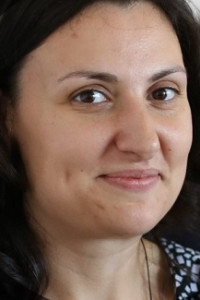
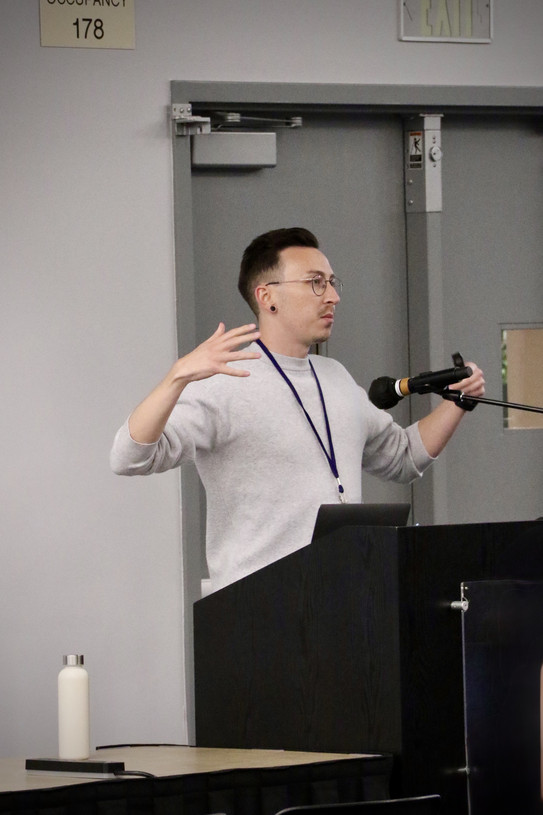
Cristina Stângaciu is a Lecturer at the Department of Computer and Information Technology, Politehnica University of Timisoara. Her research focuses on embedded systems, real-time systems, IoT, and energy-efficient computing. She has contributed to mixed criticality task scheduling and wireless sensor networks. PhD in Real-Time Systems (2015) Scientific Secretary of Department Involvement in projects: Bright Cityscapes - Synthia, CloudPUTing, TEEFIOS Her research interests span real-time task scheduling, embedded operating systems, and smart sensing systems. Recent work explores IoT security and multicore scheduling techniques. Key article trends include real-time scheduling frameworks, IoT protocol optimization, and energy-efficient embedded systems. Topics like lightweight cryptography and CAN FD improvements are prominent in her 2024-2025 publications. Merit Diplomas (2021, 2022) Merit Awards 2025 As advisor to PhD students, she contributes to advancements in real-time systems through grants and collaborative projects like SCMUPT 2025. Her work integrates practical and theoretical aspects of sensor networks and cloud platforms.
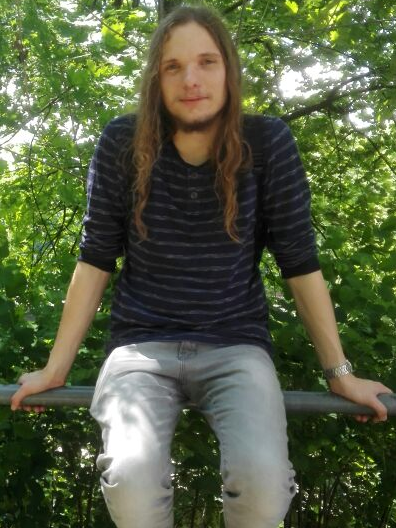
Dominik Walter is a Researcher at the Department of Computer Science 12 (Hardware-Software Co-Design) at the University of Erlangen-Nuremberg (FAU), where he has been working since 2019. His research focuses on innovative approaches to hardware-software integration, particularly in the domain of processor array architectures and embedded systems design. Walter completed his educational journey at the University of Augsburg, earning a B.Sc. in Computer Science and Multimedia (2013-2016) followed by an M.Sc. in Computer Science (2016-2019). This strong foundation in both theoretical and applied computer science has informed his current research direction. His primary research interests center around Hardware-Software Co-Design, with particular expertise in Tightly Coupled Processor Arrays and Invasive Computing paradigms. Walter's work explores how to optimize resource allocation in parallel computing environments, improve energy efficiency in embedded systems, and develop novel approaches for real-time data processing. His research bridges theoretical computer architecture concepts with practical implementation challenges. Walter's publication record from 2020-2025 reveals a consistent research trajectory focused on processor array architectures and their applications. His work spans both theoretical foundations and practical implementations, with contributions to sustainable computing, real-time systems, and hardware acceleration techniques. A notable pattern in his research is the application of invasive computing principles to solve complex parallel processing challenges across various domains. As a researcher at FAU's Department of Computer Science 12, Walter is part of a vibrant research community focused on cutting-edge hardware-software integration problems. His work contributes to the department's reputation in processor architecture and embedded systems design, with potential applications in high-performance computing, embedded AI, and energy-efficient computing systems.
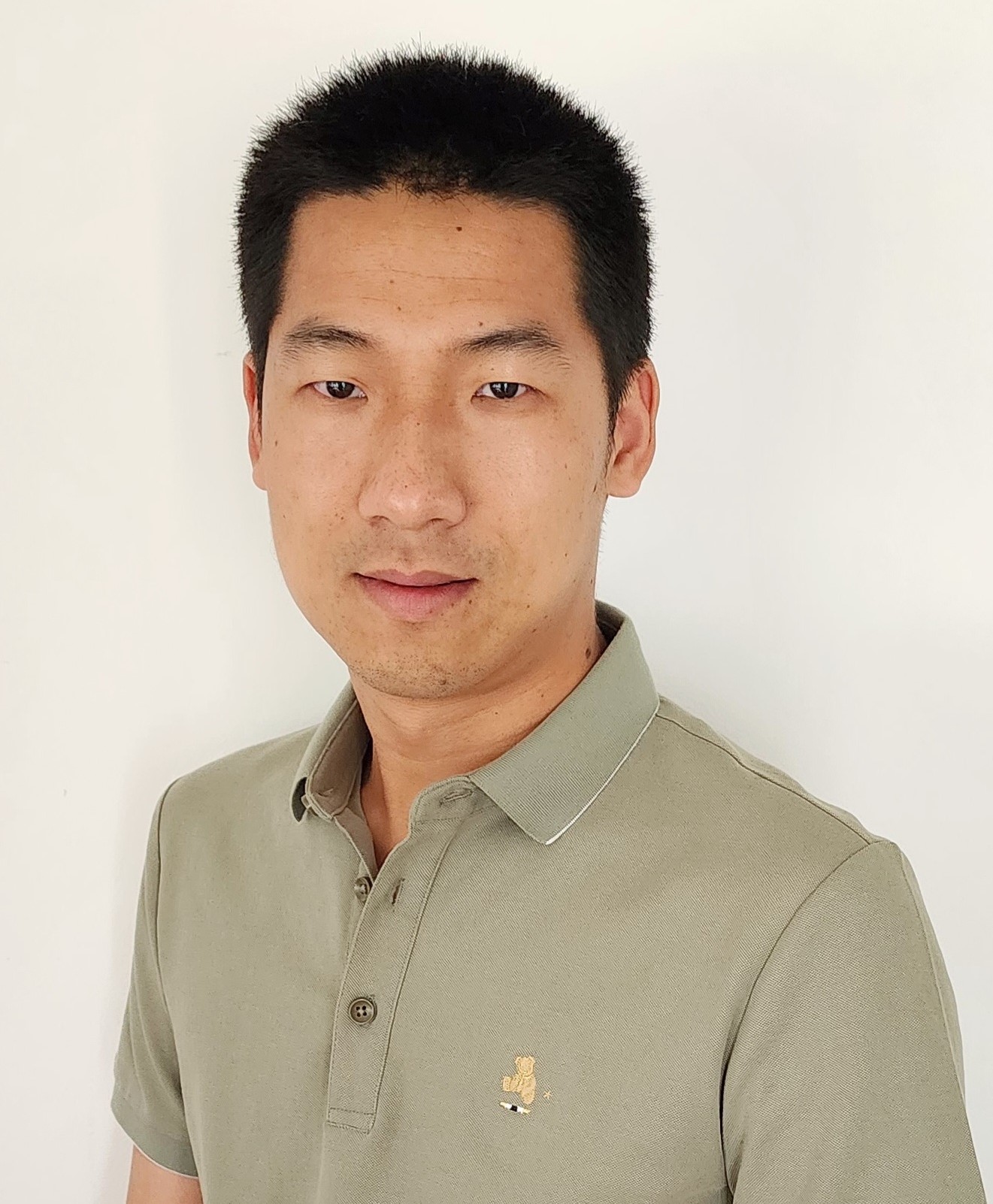
Dr. Yong Deng is an Assistant Professor in the Software Engineering department at Lakehead University , Canada. He holds a Ph.D. in Electrical and Computer Engineering from Ontario Tech University and a Postdoctoral Fellowship from University of Toronto . His research focuses on Coded Caching, Distributed Computing, Wireless Networks, Algorithmic Mechanism Design, and Network Security . B.Eng., Wuhan University of Technology, China Ph.D., Electrical and Computer Engineering, Ontario Tech University, Canada Postdoc, University of Toronto, Canada Deng's recent work investigates memory-rate tradeoffs in caching systems, novel coded delivery strategies, and decentralized caching under nonuniform file popularity. His contributions span IEEE/ACM Transactions on Networking , IEEE Communication Letters , and IEEE Transactions on Information Theory , focusing on optimizing network efficiency and resource allocation. He actively recruits Master's students and has published extensively on caching algorithms, vehicular cloud security, and distributed computing challenges.
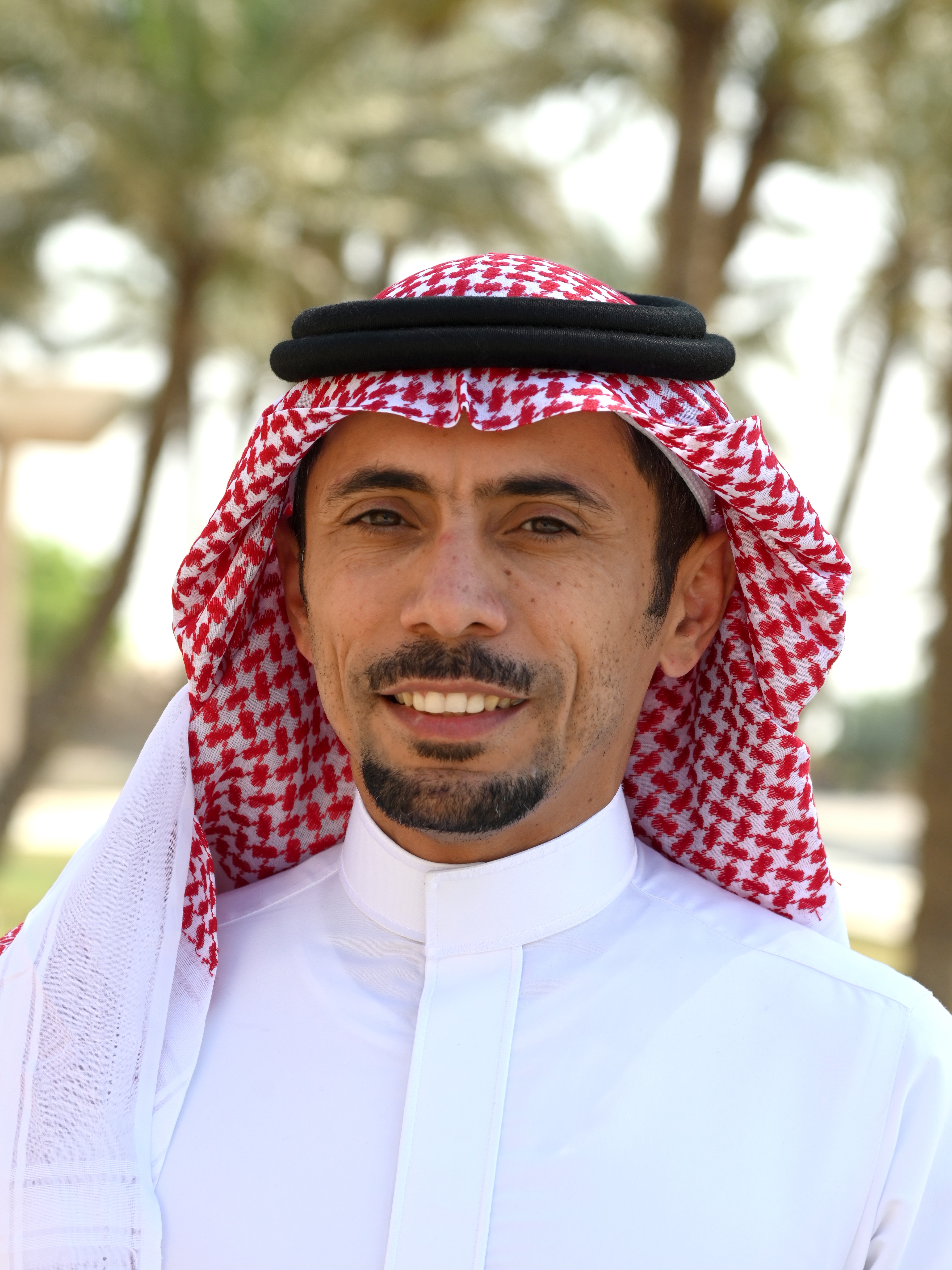
Mohammad Zubair is a Professor in the Department of Computer Science at Old Dominion University's College of Sciences, specializing in high performance computing, digital libraries, autonomic computing, and peer-to-peer networks. His work bridges scientific computing and information systems with significant federal and industry collaborations. Education: Ph.D. in Computer Science, Indian Institute of Technology Delhi (1987) B.S. in Electrical & Electronics Engineering, University of Delhi (1981) Research Interests: Dr. Zubair's expertise centers on high performance computing for scientific applications and large scale data analytics. He develops scalable algorithms for scientific simulations (e.g., particle physics, structural health monitoring) and advances digital library systems through autonomic computing, collaborative classification, and metadata extraction. His work integrates parallel computing with domain-specific challenges in finance, physics, and digital preservation. Publication Trends: His recent publications (2017-2008) show strong focus on GPU-accelerated scientific computing (particle colliders, structural monitoring) and computational finance (binomial option pricing), while maintaining digital library research in collaborative classification and metadata extraction. The work increasingly addresses energy efficiency in cloud systems and leverages parallel architectures from multicore CPUs to GPUs. Scientific Awards: IBM Faculty Award (2006) IBM Faculty Award (2005) Grants and Funding: Dr. Zubair has secured over $800,000 in research funding since 2004, including projects like 'Design AMD Impl Scalable Opt Kernels for Lrg Sc Simu USN Fund3d On Emer' ($24,890, 2017-2018), 'Graduate Research Award Program On Public Sector Aviation Issues' ($35,519, 2016-2018), and foundational digital library work with the Library of Congress and NASA. He frequently collaborates with K. J. Maly and R. Mukkamala on autonomic systems and metadata extraction. Labs and Teams: His research integrates with ODU's high performance computing initiatives and digital library projects, particularly through collaborations with federal agencies (NASA, Library of Congress) and industry partners like IBM. Current work focuses on GPU-accelerated scientific simulations and energy-efficient cloud management systems.
Chara Podimata is an Assistant Professor of Operations Research and Statistics at the MIT Sloan School of Management and a Lead Researcher at Archimedes/Athena RC. She holds the Class of 1942 Career Development Professorship and focuses on the intersection of Theoretical Computer Science, Economics, and Machine Learning, particularly in incentive-aware machine learning, social computing, online learning, and mechanism design. PhD in Computer Science from Harvard FODSI Postdoctoral Fellow at UC Berkeley Diploma from National Technical University of Athens Her research explores the social aspects of computing, including how humans adapt to machine learning algorithms used in consequential decision-making. Recent work investigates policy questions related to AI and recommendation systems, adversarial robustness, and fairness in revenue management. She has received funding from Amazon, MacArthur Foundation, Google, and MIT GenAI Consortium. Key trends in her publications include strategic classification, contextual search, multi-armed bandits with evolving preferences, and incentive-compatible mechanism design. These works bridge theoretical foundations with practical applications in responsible AI and user behavior modeling. Amazon Research Award (2023) Google Research Scholar Award (2025) MacArthur x-grant Microsoft Dissertation Grant Siebel Scholarship As an advisor, Podimata collaborates with PhD students at MIT ORC, EECS, and MBAn capstone students. She is affiliated with the MIT Operations Research Center and previously worked with Microsoft Research and Google. Her personal page details her advising philosophy and research collaborations.
Dr. Hassan M. Baaqeel is an Assistant Professor and Dean of the College of Chemicals and Materials at King Fahd University of Petroleum & Minerals (KFUPM), with a focus on integrating sustainability, reliability, and safety in chemical process design using advanced tools like process integration, simulation, and optimization. Ph.D., Texas A&M University, USA (2018) MSc., Chemical Engineering, University of Manchester, UK (2010) BSc., Chemical Engineering, University of Alabama (2001) His research spans desalination, process intensification, and the water-energy-food nexus, contributing to Saudi Arabia’s sustainable development goals. Recent articles highlight solar-assisted desalination, gas hydrate modeling, and hybrid desalination systems. Dr. Baaqeel leads projects in sustainable process design and collaborates with interdisciplinary centers at KFUPM.
Gilles Savard is a Full Professor in the Department of Mathematics and Industrial Engineering at Polytechnique Montréal. He serves as Director General of the Institute for Data Valorization (IVADO), a position he held until July 2021 when Luc Vinet succeeded him. He is also a member of the Research Group in Decision Analysis (GERAD) and the Interuniversity Research Center on Enterprise Networks, Logistics and Transportation (CIRRELT). In October 2021, he was appointed Acting President of Polytechnique Montréal. His research spans operations research, revenue management, and mathematical optimization with applications in transportation networks, energy systems, and logistics. He has made significant contributions to bilevel programming, network pricing, demand forecasting, and combinatorial optimization. His work bridges theoretical advances in mathematical programming with practical applications in revenue management systems across transportation and energy sectors. Analysis of his recent publications reveals a strong focus on integrating machine learning techniques with traditional optimization methods for revenue management problems. His work increasingly addresses smart grid optimization and energy market applications while maintaining core expertise in transportation revenue systems. The publications demonstrate sophisticated use of bilevel programming frameworks to model complex decision hierarchies in pricing problems. Order of Academic Palms from the French Ministry of National Education (2018) Innovation Personality Award from ADRIQ (2017) Professor Savard has supervised 23 PhD students and 28 Master's students throughout his career, with research spanning revenue management, transportation optimization, bilevel programming, and energy systems. His students have addressed problems in airline revenue management, railway demand forecasting, media placement optimization, and inventory management. He has participated in numerous research projects related to transportation networks, smart grid systems, and revenue optimization frameworks. Professor Savard has been instrumental in establishing Montreal as a hub for artificial intelligence research through his leadership at IVADO.
Dr. Richard F. Deckro is a Distinguished Professor of Operations Research and Director of the Future Operations Investigation Laboratory (FOIL) at the Air Force Institute of Technology (AFIT), Wright-Patterson Air Force Base, Ohio. As a Fellow of the Military Operations Research Society and current Chair of the NATO Science and Technology Organization's System Analysis and Studies (SAS) Panel, Dr. Deckro has established himself as a leading expert in military applications of operations research. Dr. Deckro earned his Doctor of Business Administration (D.B.A.) in Decision Sciences from Kent State University in 1976, following an M.B.A. in Decision Sciences (1973) and a B.S. in Industrial Engineering from SUNY at Buffalo (1972). His research spans multiple domains within operations research, with particular emphasis on social network analysis, game theory applications to military operations, and network science. Dr. Deckro's work has significantly advanced methodologies for analyzing complex networks, particularly in military and security contexts. His research has evolved from traditional project management and decision analysis to cutting-edge applications in social network analysis, network interdiction, and military operations modeling. Dr. Deckro's publications demonstrate consistent contributions across several decades, with recent work focusing on advanced network characterization techniques, behavioral game theory applications, and sophisticated modeling of adversarial interactions. His research has increasingly incorporated complex network theory, social network analysis, and game-theoretic approaches to address contemporary military challenges. 2017 J. Steinhardt Prize, INFORMS Military Applications Society 2016 1st Editor Emeritus, Military Operations Research 2015 Distinguished Professor, Air Force Institute of Technology 2009 Elected Fellow in the Military Operations Research Society 2009 Clayton J. Thomas Award, Military Operations Research Society 2009 Air Force Analyst Lifetime Achievement Award 2008 Koopman Prize (with colleagues) 2008, 2001 General Bernard A. Shriver Award 1972 Senior Industrial Engineer of the Year, SUNY at Buffalo As Director of the Future Operations Investigation Laboratory (FOIL), Dr. Deckro leads research initiatives that bridge theoretical operations research with practical military applications. His work has influenced how military planners approach network analysis, decision making under uncertainty, and strategic operations planning. Through his leadership roles in professional societies and editorial positions, he has shaped the direction of military operations research as a discipline.
Professor Balázs Adam Kulcsár is a faculty member in the Automatic Control research group at the School of Electrical Engineering and Computer Science, Chalmers University of Technology. With 104 publications and involvement in 34 research projects, he is a prominent researcher in intelligent transportation systems. His work spans multiple domains within transportation engineering and control theory, with significant contributions to traffic flow modeling, electric vehicle routing, and advanced control systems. Professor Kulcsár's research primarily focuses on intelligent transportation systems design, traffic flow modeling for control, Linear Parameter Varying systems, and failure diagnostics. His work demonstrates a strong integration of control theory with practical transportation challenges, particularly in the context of electric mobility and sustainable transportation. Recent research shows a growing emphasis on machine learning applications for transportation optimization, electric vehicle infrastructure, and urban traffic management. Analysis of his recent publications reveals a clear trajectory toward sustainable transportation solutions, with electric vehicle charging infrastructure, fleet management, and public transit optimization as dominant themes. His work increasingly incorporates machine learning techniques, particularly graph neural networks and reinforcement learning, to address complex transportation challenges. The research demonstrates strong interdisciplinary collaboration across engineering disciplines, with a focus on practical implementation of theoretical advances. Professor Kulcsár leads and participates in numerous research projects focused on future transportation systems, including projects on electric mobility, traffic optimization, and intelligent transportation infrastructure. His research group collaborates extensively with industry partners like Volvo and Heart Aerospace, as well as with other academic institutions. Current projects include Rethinking the Sustainability of V2G, Quantum computing for future mobility solutions, and Digital Twin for Energy Prediction. His research group maintains strong connections with transportation industry stakeholders and contributes to major initiatives such as the Transport Area on Advance project, which aims to achieve leading competence in future green, safe, and efficient transport systems. The team operates at the intersection of theoretical control systems and practical transportation applications, with particular expertise in modeling complex traffic phenomena and developing implementable control solutions.
Douglas M. Blough is a Professor at the Georgia Institute of Technology's School of Electrical and Computer Engineering, where he has served since 1999. He previously held faculty positions at the University of California at Irvine from 1988 to 1999. Dr. Blough directs the Critical Networking Laboratory and has served as the School's associate chair for faculty development since January 2018, including a five-month term as Interim Steve W. Chaddick School Chair in 2021. Dr. Blough's research focuses on wireless networks, distributed computer systems, and computer systems security. His specific interests include healthcare security, mobile and wireless communications, telecommunications, and computer systems and software. He has led 37 federally-funded or industry-sponsored research projects with over $8 million in funding, including current NSF grants for next-generation wireless networks exploring design challenges for networks operating in the millimeter-wave bands. His recent scholarly work demonstrates a strong emphasis on millimeter-wave communications, intelligent reflecting surfaces, and next-generation wireless LAN technologies. His publications reveal a progression from foundational work in dependable computing systems to cutting-edge research in wireless networking, with a particular focus on mmWave technology and intelligent surfaces in recent years. His research group has produced numerous award-winning papers, including multiple Best Paper Awards in 2021-2022. Professional Distinctions: Best Paper Award, IEEE International Symposium on Local and Metropolitan Area Networks, 2022 Best Paper Award, IEEE Consumer Communications and Networking Conference, 2021 Associate Editor, IEEE Transactions on Wireless Communications (2020-present) Associate Editor, IEEE Transactions on Cloud Computing (2020-present) Japan Society for the Promotion of Science (JSPS) Faculty Fellow, 1996 NASA/ASEE Faculty Fellow, 1993 Dr. Blough has advised numerous PhD students who now hold positions at leading technology companies including Microsoft, Google, Amazon, Intel, and Huawei. His research has resulted in over 160 archival publications and 10 patents related to wireless communications, bioinformatics, verifiable health records, and identity management. He has held significant leadership roles within his department, including chairing technical interest groups and serving on key committees for faculty development and honors.
Mario Günzel is a Researcher at the Department of Computer Science, Faculty of Computer Science at Technical University of Dortmund, where he works in the Design Automation for Embedded Systems research group under Prof. Dr. Jian-Jia Chen. Having completed his PhD in 2024 with a dissertation on property-based timing analysis of distributed real-time systems, he has established himself as a leading researcher in real-time systems with over 30 publications and multiple prestigious awards including Best Paper Awards at ECRTS 2023 and EMSOFT 2024, as well as an Outstanding Paper Award at RTSS 2024. PhD in Computer Science, Technical University of Dortmund (2024) M.Sc. in Mathematics, University of Duisburg-Essen (2019) B.Sc. in Mathematics, University of Duisburg-Essen (2017) Günzel's research focuses on the theoretical and practical aspects of real-time systems, particularly in self-suspending tasks and end-to-end latency analysis of cause-effect chains. His work bridges formal methods with practical applications in embedded systems, automotive systems, and robotics. He has developed evaluation frameworks like SSSEvaluation and E2EEvaluation that have become important tools in the real-time systems community. His research demonstrates exceptional depth in both theoretical foundations and practical implementations, with significant contributions to scheduling algorithms, timing analysis, and real-time operating systems. The recent publication trend shows Günzel's expanding research scope from core real-time scheduling problems to applications in automotive systems, electric vehicle scheduling, and ROS 2 integration. His work consistently addresses fundamental challenges in real-time systems while developing practical solutions with real-world applicability. The publications reveal a strong focus on eliminating timing anomalies, optimizing priority assignments, and developing distribution-agnostic analysis methods that advance the theoretical foundations of real-time systems. Outstanding Paper Award at IEEE RTSS (2024) Best Paper Award at ACM EMSOFT (2024) Best Paper Award at ECRTS (2023) Outstanding Bachelor Thesis Award (2017) UDE Scholarship (2014-2019) Günzel actively supervises bachelor's and master's theses, with recent completed works including 'Odometry and IMU Fusion for Pose Estimation' and 'Evaluation Framework for End-to-End Analysis'. He has served in various organizational roles for major conferences including Publicity Co-Chair for RTSS 2025 and Publicity Chair for ECRTS 2025. His service to the community extends to editorial roles for journals including Real-Time Systems Journal and ACM Transactions on Embedded Computing Systems. Under Günzel's supervision, the research group maintains important open-source tools including SSSEvaluation (Evaluation Framework for Schedulability of Self-Suspending Tasks) and E2EEvaluation (Evaluation Framework for End-to-End Latency of Cause-Effect Chains), which have been adopted by researchers worldwide. He is also involved in collaborative projects with institutions including Scuola Superiore Sant'Anna in Pisa (planned research stay Feb-Apr 2025) and Eindhoven University of Technology.
Mauricio ITURRALDE serves as a Teacher-researcher at CESI La Rochelle Campus, France, within the Engineering and Digital Tools Research Team. His expertise bridges telecommunications engineering and cybersecurity, with significant contributions to mobile network optimization and security protocols. His academic credentials include: Doctorate in Networks, Telecom, Systems and Architecture from National Polytechnic Institute of Toulouse and ENSEEIHT (2012) Master's Degree in Computer Systems Security from Télécom SudParis and Paris EST University (2009) ITURRALDE's research centers on 5G/LTE networks, quality of service optimization, digital twin implementation for Industry 5.0, and cyber security solutions. His work addresses critical challenges in resource allocation using game theory, energy-efficient network design, and security mechanisms for mobile communications and transportation systems. Analysis of his 15 publications (2011-2020) reveals a consistent focus on mobile network performance, with evolving emphasis from LTE resource allocation (2011-2013) to 5G sleep strategies (2019) and transportation applications (2020). His methodologies frequently integrate machine learning and game theory to solve real-world network optimization problems. No scientific awards are documented in the provided materials. Information regarding student advising and research grants is unavailable in the source text. He actively contributes to the Engineering and Digital Tools Research Team at CESI La Rochelle, which develops digital innovation solutions for engineering contexts with particular focus on network technologies and security applications.
Apurva Jain is an Associate Professor of Operations Management at the School of Business, University of Washington , where they have been since 1999. Their work focuses on supply chain redesign, inventory management, and analytical modeling. PhD, Purdue University (1999) MS, National Institute for Training in Industrial Engineering (1989) BS, Indian Institute of Technology, Roorkee (1988) Research spans supply chain variability reduction , information exchange optimization , and dynamic scheduling . They explore how retailers can buffer uncertainties while leveraging e-commerce opportunities. Key publication themes include multi-channel distribution , priority scheduling , inventory coordination , and capacity pooling . Their work frequently addresses fixed ordering costs , subscription-based rental models , and demand variability . Evert McCabe Endowed Fellow in Private Enterprise MBA Core Professor of the Quarter (Winter 2009) Teaches courses on operations management and supply chain systems , and consults for Motorola and Molex India on process planning. NSF-funded research highlights their industry impact.
Rainer Kolisch is a Professor of Operations Management at the TUM School of Management, Technical University of Munich , where he has held a chair since 2002. He currently serves as Head of the Operations & Technology Department (since 2024) and previously as Dean of the QTEM Masters Network (2016–present) and Vice Dean of International Affairs (2007–2020). His career includes academic roles at Technical Universities of Dresden (Full Professor, 2002) and Darmstadt (Associate Professor, 1999–2002). Affiliations: TUM School of Management, Technical University of Munich Editorial Roles: Editor-in-Chief of OR Spectrum (2014–2020), Member of editorial boards for journals like International Journal of Production Research Research Interests focus on Airport Operations Management , Health Care Operations Management , Project Management and Scheduling , and Engineer-to-Order Manufacturing . His work addresses dynamic scheduling, resource allocation, and robust optimization in transportation and healthcare systems, with recent studies on electric vehicle charging networks and agile project management. Scientific Awards include: Best Teaching Award (2022) Excellence in Reviewing (2022) OMEGA Best Paper Award (2021) Handelsblatt Research Recognition (2005) DFG Habilitation Fellowship Advising spans numerous PhD and Master’s students , including Christopher Bersch, Robert Brachmann, and Giacomo Dall'Olio. His grants likely include DFG funding, though specifics are not detailed here.
Carla Fabiana Chiasserini is a Full Professor and Deputy Director at the Department of Electronics and Telecommunications (DET) at the Polytechnic University of Turin. She serves as a Component of the CARS@PoliTO Interdepartmental Center - Center for Automotive Research and Sustainable Mobility and acts as a Spoke leader for research and innovation activities. Her academic career spans multiple prestigious institutions and she maintains active collaborations worldwide. Professor Chiasserini's research interests span algorithm design and analysis, cellular networks, connected cars, edge computing, heterogeneous wireless networks, Internet of Things, machine learning, mobile networks, mobile services, and performance evaluation. Her work bridges theoretical algorithm development with practical applications in next-generation telecommunications systems. She leads the TNG research group at DET and focuses on Machine Learning for Networking, with specific research lines in Network Slicing in 5G, Connected autonomous cars, and Opinion dynamics in social networks. Her research aligns with Sustainable Development Goals including Industry, Innovation and Infrastructure; Sustainable Cities and Communities; and Climate Action. Her recent publications demonstrate a strong trend toward integrating machine learning with edge computing, 5G/6G systems, and automotive applications. The research spans from theoretical algorithm development to practical implementations for XR offloading, distributed service provisioning, reliability assessment of AI-based automotive systems, and satellite networking. Her work shows increasing focus on practical implementations with industry applications, particularly in the automotive sector and next-generation telecom infrastructure. Best Paper Award - Wireless Telecommunications Symposium (WTS) 2018 Best Paper Award - IEEE WoWMoM 2016 Best Paper Award Runner-up at ACM MSWiM 2016 Top Paper Award at the ACM CoNEXT 2016 Cloud-Assisted Networking (CAN) Workshop Best Paper Award at SPACOMM 2014 Best Paper Award at AD HOC NOW 2014 2010 Editor of the Year Award for the Ad Hoc Networks journal (Elsevier) IEEE Fellow (2018-) ACM Fellow (2024-) Professor Chiasserini actively advises numerous PhD students working on cutting-edge topics in network systems, with recent graduates focusing on edge services in 5G networks, resource-aware learning in mobile networks, and deployment of microservices at the network edge. She leads multiple significant research grants including O-RAN (2024-2027), CSI-Future (2023-2025), RESTART - Spoke 4 (2023-2025), PREDICT-6G (2023-2025), and several others funded by PNRR, EU Horizon programs, and industry partnerships. Her work has substantial practical impact through numerous patents including OffloaDNN and SEM-O-RAN. She leads the TNG research group within the Department of Electronics and Telecommunications and participates in the CARS@PoliTO Interdepartmental Center for Automotive Research and Sustainable Mobility. Her laboratory work focuses on practical implementations of theoretical concepts, particularly in the areas of connected vehicles, edge computing, and 5G/6G systems. She maintains strong industry connections through projects with Intel Corporation and other technology partners, ensuring her research has direct real-world applications.