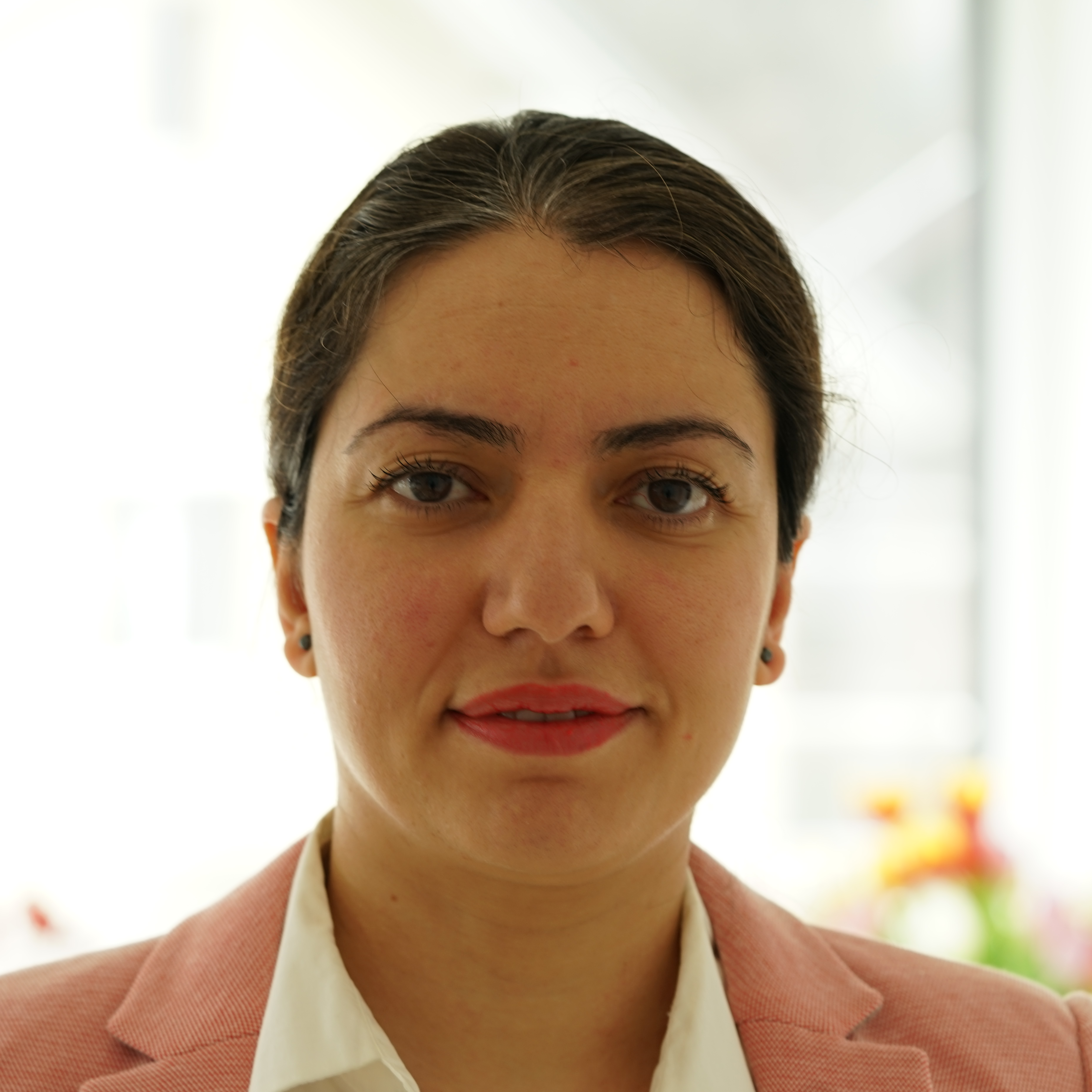
Masoumeh Ebrahimi is an Associate Professor at KTH Royal Institute of Technology, Division of Electronics and Embedded Systems, and holds an Adjunct Professor position at the University of Turku, Finland. She leads research in hardware acceleration, neural architecture search, and fault-tolerant systems. Her work bridges machine learning, embedded systems, and network-on-chip (NoC) design. Research Interests: Hardware-Accelerated Machine Learning 6G Network Architectures Fault-Tolerant Computing High-Performance GPU Systems Network-on-Chip (NoC) Design Federated Learning Key Projects: Co-supervisor of Hui Chen’s postdoc project Generalizing hardware acceleration for nonlinear functions . Active in Digital Futures, a cross-disciplinary center focusing on societal challenges using digital tech. Collaborates on edge computing, 6G networks, and resilient embedded systems. Labs & Teams: Core member of KTH’s Digital Futures initiative, advancing AI accelerators and next-gen communication systems. Engaged in EU-funded projects on NoC reliability and federated learning frameworks.
Roles & Affiliations: Full Professor at the Department of Computer Science, University of Pisa. Served as Vice Director of the Department (2020–2024). Active in editorial roles for journals like Networks and Computers & Operations Research . Education: Laurea in Information Science (University of Pisa, 1985, cum laude), PhD in Computer Science (University of Pisa, 1990). Qualified as Full Professor in Operations Research (2013). Research Focus: Specializes in Combinatorial Optimization, Robust Optimization, Network Design, and Logistics. Key contributions include green wireless networks, home care optimization, and vehicle routing. Awarded the Best Paper in Omega (2018) and recognized for seminal work in Discrete Applied Mathematics (1998). Teaching: Teaches courses in Operations Research, Logistics, and Network Optimization at both undergraduate and graduate levels, including international programs. Grants & Projects: Led national and international projects, including PNRR initiatives on sustainable mobility and IREAD-4.0 for warehouse optimization. Collaborated with industries like Softec S.r.l. and Siemens. Professional Activities: Organized major conferences (e.g., INOC 2009). Served on editorial boards and scientific committees for AIRO, INOC, and other networks. Active in mentoring doctoral students and fostering academic-industrial partnerships.
Juan Bazerque Giusto is a Visiting Assistant Professor at the Department of Electrical and Computer Engineering, University of Pittsburgh, within the Swanson School of Engineering. He holds a B.Sc. in Electrical Engineering from Universidad de la República (Uruguay), and M.Sc. and Ph.D. degrees from the University of Minnesota. His research focuses on machine learning, stochastic optimization, and networked systems, with emphasis on reinforcement learning, swarm robotics, and power systems optimization. Education: B.Sc., Electrical Engineering, Universidad de la República, 2003 M.Sc., Electrical and Computer Engineering, University of Minnesota, 2010 Ph.D., Electrical and Computer Engineering, University of Minnesota, 2013 His work bridges theoretical advancements in optimization and signal processing with practical applications in robotics, energy systems, and wireless networks. Notable contributions include multiagent systems for mobile infrastructure, safe reinforcement learning algorithms, and sparse kernel-based methods for signal recovery. Publications: Over 15 peer-reviewed articles in IEEE Transactions and top conferences, emphasizing interdisciplinary research in reinforcement learning, distributed optimization, and cognitive networks. Recent work explores networked robotics and energy-efficient datacenter management. Awards: University of Minnesota Master Thesis Award (2009-2010) Best Paper Award at ICCRON 2007 Professional Experience: Previously served as Assistant Professor at Universidad de la República (Uruguay) before relocating to the U.S. in 2022.
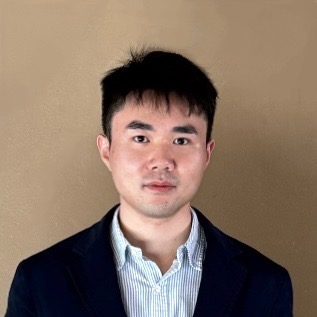
Kaisong Huang is a Researcher at the University of Calgary , where he leads the Data Systems and Infrastructure Lab (DSIL) . His work bridges database systems with modern hardware innovations, focusing on performance optimization and storage technologies. PhD, Computer Science, Simon Fraser University (Sep 2020 - May 2025) MMath, Computer Science, University of Waterloo (Sep 2018 - Aug 2020) BEng, Software Engineering, Nanjing University (Sep 2014 - Jun 2018) Huang's research spans database engines , transaction processing , data storage management , resource disaggregation , and AI/LLM-driven database systems . His work includes optimizing latency in database systems, leveraging non-volatile memory, and addressing cross-engine transaction consistency. Recent publications highlight trends in hardware-aware DBMS design, persistent memory indexing, and SSD performance trade-offs. Huang has received prestigious recognitions, including: ACM SIGMOD Best Paper Award (2025) ACM SIGMOD Student Travel Award (2025) ACM SIGMOD Research Highlight Award (2023) Simon Fraser University (SFU) Graduate Fellowship (2020-2024) SFU Computing Science Travel Awards (2022, 2025) SFU Professional Development Grant (2025) He actively contributes to academic service as: PC member for SIGMOD 2026, ICDE 2026, CIKM 2023-2025, VLDBJ 2025-2026 Reviewer for SIGMOD 2022 and the Journal of Systems Architecture Committee member for the SIGMOD Availability Committee
Patrick Eugster is a full professor at the Università della Svizzera italiana (USI) and leads the Software Systems (SWYSTEMS) group within the Computer Systems Institute . He has held academic positions at Purdue University, TU Darmstadt, and MIT as a visiting faculty. His research focuses on distributed software systems , addressing challenges in consistency, efficiency, and security in decentralized environments. Current affiliation: USI Faculty of Informatics Prior affiliations: Purdue University (2005-2016), TU Darmstadt (2014-2017), MIT (2012/2013) Research Interests Distributed Systems : Investigating reliable failure detection, deterministic data paths for 6G, and hybrid synchronous/asynchronous architectures. Network Innovation : Optimizing TCAM encoding, analyzing microbursts, and developing quantum network protocols. Security & Verification : Creating confidentiality-preserving mechanisms and formal verification approaches for distributed software. Scientific Contributions 2025: Best paper at TACAS on Horn clause validation 2025: IFIP Jean-Claude Laprie Award for dependable computing 2024: Key papers at IEEE Network, ACM PLDI, and IEEE INFOCOM Funding & Collaborations Swiss National Science Foundation grants #200021_197353 and #200021_192121 EU Horizon Europe MSCA staff exchange project CloudStars Industry partners: Cisco, Amazon AWS, Facebook Research, SAP, Northrop Grumman Cybersecurity Research Consortium Labs & Teams Directs the SWYSTEMS group, which includes postdocs like Sina Darabi and Shamiek Mangipudi, PhD students such as Anita Buckley and Jérôme Graf, and alumni who have become faculty at institutions like Télécom Paris and University of Southern California.
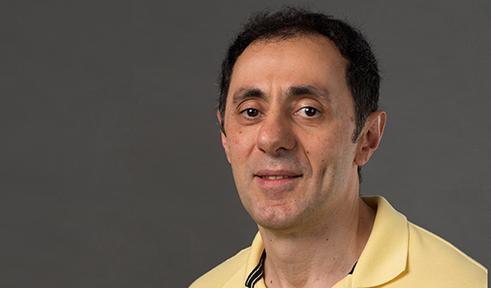
Ioannis Milis is a Professor at the Department of Informatics, Athens University of Economics and Business (AUEB), part of the School of Information Sciences and Technology. He holds a BS in Electrical Engineering from Democritus University of Thrace (1983) and a PhD in Computer Science from AUEB (1989). His research focuses on algorithms, computational complexity, and optimization for computer/communication networks, combinatorial optimization, graph theory, and game theory. He has conducted postdoctoral research at LRI (1992-94), INRIA-Sophia Antipolis (1994-95), and NTUA as a Marie Curie fellow (1995-96). His teaching includes courses on Algorithms, Advanced Algorithms, and Topics in Algorithms at both undergraduate and graduate levels. He co-authored a textbook on Distributed Systems with Java (2005). His conference involvement includes organizing the Athens Colloquium on Algorithms and Complexity (ACAC) since 2006, the Euro-Par 2012 conference, and the ISCO 2012 symposium. His research has addressed scheduling algorithms, energy-efficient computing, and combinatorial optimization problems in networks.
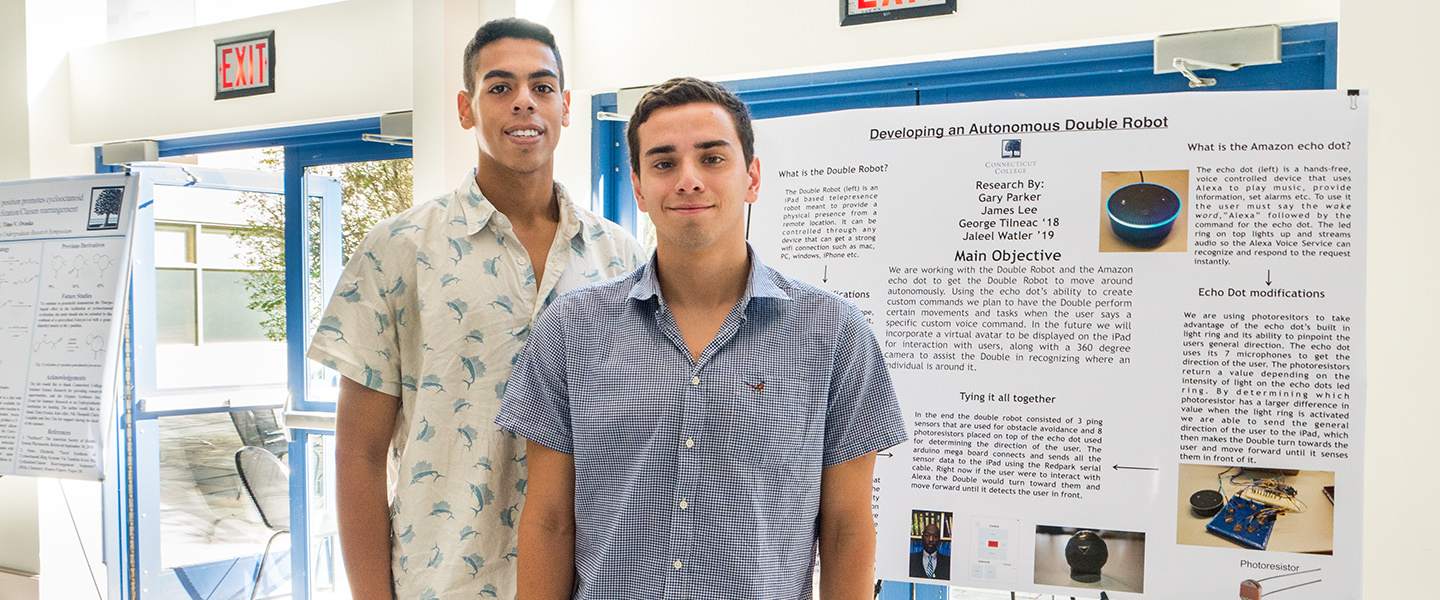
Christine Chung is an Associate Professor and co-Chair of the Department of Computer Science at Connecticut College. She holds degrees from Cornell University (B.A., M.Eng.), Teachers College Columbia University (M.A.), and the University of Pittsburgh (Ph.D.). Her research focuses on algorithm design and analysis, particularly online and approximation algorithms (e.g., scheduling, matching, transportation) and algorithmic game theory (e.g., social choice, auction mechanisms). She has received the John S. King Excellence in Teaching Award for her commitment to student development both inside and outside the classroom. Chung teaches core CS courses like COM110 (Intro to CS and Problem Solving), advanced courses such as COM313 (Algorithmic Game Theory), and supervises undergraduate research through COM495/496 seminars. She advises student organizations including Women in STEM and Conn College Ultimate. Her office is located in New London Hall 220, and she can be reached via email at cchung@conncoll.edu. Education History: B.A., M.Eng., Cornell University M.A., Teachers College, Columbia University Ph.D., University of Pittsburgh Research Interests: Chung's work spans algorithm design for combinatorial optimization problems, with emphasis on dial-a-ride systems, scheduling, and approximation algorithms. In game theory, she explores inefficiency of equilibria, voting mechanisms, and auction design. Her research emphasizes practical applications of theoretical algorithms. Teaching & Advising: Besides course instruction, Chung oversees undergraduate research projects in CS, emphasizing cross-disciplinary collaboration. She has taught over a dozen courses including COM496 Research Seminar, which focuses on independent research methodologies. Her teaching philosophy integrates hands-on projects and real-world problem-solving. Awards: The John S. King Award (2025) recognizes her transformative impact on student learning and mentorship. This rare award is given only when a faculty member demonstrates exceptional dedication to student growth. Labs/Teams: Active in the CS research community at Connecticut College, she collaborates with peers like Timothy Becker (genomics) and James Lee (visual computing). Her lab focuses on theoretical algorithm development with practical implementations.
José Herrera Sanz is an Assistant Professor at the Department of Automation, University of Alcalá (Spain). He holds a Doctorate from Universidad Complutense de Madrid (2008) with a thesis titled Modelo de programación para infraestructuras Grid computacionales , supervised by Dr. Rubén Manuel Santiago Montero and Dr. Ignacio Martín Llorente. His research focuses on Grid computing, distributed systems, and sustainability in programming models. He is affiliated with the PROGRESSUS research group (Programming & Sustainability), exploring topics like distributed task scheduling, grid middleware, and high-performance computing applications. His work spans over 15 peer-reviewed articles since 2003, addressing challenges in virtual machine placement, genetic algorithms, and bioinformatics grid benchmarking. Key contributions include the GridWay DRMAA implementation, optimization of fusion physics workflows, and distributed loop execution frameworks. His research emphasizes sustainable computing practices and scalability in grid environments.
Elena Katia Leal Algara is an Associate Professor at Universidad Rey Juan Carlos, affiliated with the Department of Telematic and Computing Systems. She holds a PhD from Universidad Complutense de Madrid (2010) with a thesis on federated grid scheduling. Her research focuses on Grid Computing, Ubiquitous/Pervasive Systems, and Distributed Scheduling. She contributed to projects like Plan B OS, a middleware-free environment for pervasive computing. Notable research groups include PROGRESSUS (Programming & Sustainability) and PMI (Intelligent Mobile Platforms). Her work emphasizes energy-efficient resource allocation, adaptive scheduling in federated grids, and security protocols in ubiquitous environments. Key achievements include proposals for self-adjusting resource sharing policies and reallocation strategies in dynamic systems. Over 20 peer-reviewed articles span scheduling algorithms, grid infrastructure optimization, and pervasive computing design. Leal Algara's academic career involves advancing decentralized scheduling frameworks and exploring middleware alternatives for distributed systems. Current research interests include sustainable computing and autonomous resource management in federated environments.
Rachee Singh is an Assistant Professor of Computer Science at Cornell University, leading the sysphotonics group which focuses on photonic interconnects and distributed machine learning systems. She is also an Amazon Scholar in the SageMaker Hyperpod team, specializing in large-scale ML infrastructure. Her research spans photonic fabrics for cloud workloads, WAN optimization, and secure networking. Key research interests include photonic interconnects for multi-accelerator servers, automated reasoning in network systems, and sustainability in cloud infrastructure. She has pioneered solutions like Aqua for memory offloading in LLMs and PipSwitch for programmable photonics-based circuit switching. Major grants include a 2024 NSF grant ($1M) for chip-to-chip photonic fabrics and DARPA/SRC funding via the JUMP 2.0 program. Notable awards include the 2025 Cisco Research Award and 2024 Amazon Research Award. Her work has been featured in top venues like ASPLOS, SIGCOMM, and NSDI. Rachee advises students such as Abhishek Vijaya Kumar (distributed ML) and Zhiying Xu (WAN optimization). Her sysphotonics group collaborates with industry partners like Amazon and Cisco, addressing challenges in photonic connectivity and planet-scale cloud systems.
Dr. Fehmi Tanrısever is an Associate Professor at Bilkent University's Faculty of Business Administration. He specializes in Operations Management and Finance, with research focusing on commodity risk management, start-up operations, and the interface between operational and financial decisions. He previously served at Eindhoven University of Technology until 2013 and holds a PhD from the University of Texas at Austin. Education: PhD in Supply Chain and Operations Management, McCombs School of Business, University of Texas at Austin (2009) Research Interests: Commodity Risk Management Operations-Finance Interface Start-up Operations Supply Chain Finance Fintech Energy Operations His work bridges operational decisions with financial implications, particularly in energy markets and pandemic scenarios. Publications Trends: Recent work emphasizes pandemic management strategies, energy market optimization, and financial hedging mechanisms. Papers often combine stochastic modeling with real-world applications in supply chain resilience and policy design. He is a Senior Editor for Production and Operations Management and has advised on energy market reforms like the Turkish Day-Ahead Electricity Market. No formal student advisees are listed in the provided materials.
Prof. Lars Petersen is a Professor and Chair of Production and Service Management at the Department of Economics, Alanus University. Since April 2007, he has held the academic chair, focusing on production and service management. From 2009 to 2012, he served as Head of the Department of Business at Alanus University. His academic credentials include a Dr. rer. oec. (1997) and Habilitation (2006) from Saarland University. Education: J.L. Kellogg Graduate School of Management (MBA, 1989) Ecole des Hautes Etudes Commerciales Paris (Management, 1989) Wissenschaftliche Hochschule für Unternehmensführung Koblenz (Diplom-Kaufmann, 1991) Research Focus: Prof. Petersen’s work centers on production systems, capacity planning, service operations, and sustainability in business processes. His recent studies include analyzing consumer behavior in sustainable clothing and optimizing capacity management under uncertainty. He has co-authored influential papers in journals like Journal of Cleaner Production and OR Spectrum . Key Contributions: He co-edited Waldorf-Eltern in Deutschland (2018) and published monographs on contractual coordination in distribution systems and capacity-oriented order planning. His lectures at international conferences address high-flexibility environments and service process design.
Vardges Melkonian is an Associate Professor in the Department of Mathematics at Ohio University, part of the College of Arts and Sciences. His academic work bridges theoretical and applied mathematics, with a strong emphasis on optimization and algorithmic problem-solving. Research Interests: Dr. Melkonian specializes in combinatorial optimization, network design, approximation algorithms, and applications of operations research. His research integrates mathematical programming and discrete modeling to solve complex real-world scheduling and allocation problems. These interests are reflected in his extensive publication record spanning sports leagues, hybrid work, exercise routines, and social partitioning. Publication Trends: Over the past decade, his scholarly output has consistently focused on developing integer programming and optimization models for diverse domains—from recreational puzzles like KenKen to large-scale logistical challenges in manufacturing and public policy. His work demonstrates a unifying theme: transforming practical problems into formal mathematical frameworks for efficient solution. Scientific Awards: No awards are mentioned in the provided text. Advising and Grants: The available information does not list any students or grant funding. However, his research contributions suggest active engagement in academic mentorship and potential involvement in funded projects, though specifics are not disclosed. Labs and Research Teams: There is no mention of specific labs, research groups, or collaborative teams associated with Dr. Melkonian in the provided content.
Gianluca Aloi serves as an Associate Professor in Telecommunications (IINF-03/A) at the Department of Computer Engineering, Modeling, Electronics and Systems (DIMES) of the University of Calabria, Italy. He holds the position of scientific director for the Telecommunications and Information Theory for Advanced Networking Laboratory (TITAN Lab.). Dr. Aloi earned his PhD in Systems Engineering and Computer Science from the University of Calabria in 2003 and became a University Researcher in Telecommunications (ING-INF/03) in 2004 before advancing to his current academic rank. His research expertise spans wireless networks, cellular networks, sensor networks, Internet of Things systems and their interoperability, management of resources and services in the Cloud/Edge and IoT (CEI) Continuum, and management and orchestration of network resources using Artificial Intelligence. His work particularly focuses on UAV-assisted IoT systems for industrial applications, geological hazard monitoring, and maritime environments. Analysis of Dr. Aloi's recent publications (2023-2025) reveals a strong emphasis on applying reinforcement learning and deep learning techniques to solve complex networking challenges. His research shows a clear trajectory toward developing intelligent network architectures that optimize data collection, improve system resilience, and enhance resource management across the edge-to-cloud continuum. Key application areas include smart factories, disaster monitoring, and urban vehicular systems. Dr. Aloi teaches courses including Fundamentals of Telecommunications Networks and Telecommunications Networks for both Electronic Engineering and Computer Engineering programs. He maintains regular reception hours every Tuesday from 9am to 11am or by appointment via email. As scientific director of TITAN Lab, Dr. Aloi leads research initiatives focused on advanced networking technologies, with particular emphasis on developing solutions for next-generation communication systems that integrate artificial intelligence with traditional networking paradigms to address real-world challenges in telecommunications and IoT applications.
Kamesh Munagala is an Associate Professor of Computer Science at Duke University, where he has been employed since 2004. His research spans theoretical computer science with applications in e-commerce, databases, data analysis, and networks. He serves as an Area Editor for PeerJ Computer Science and has held leadership roles including Director of Graduate Studies for the Duke CS department from 2012 to 2015. Education: PhD in Computer Science from Stanford University (2003) BTech from IIT Bombay (1998) Munagala's research focuses on algorithm design and discrete optimization, particularly in scenarios with uncertain inputs. His work encompasses approximation algorithms, online algorithms, and algorithmic game theory. Recent research has concentrated on two main themes: (1) Persuading optimizers or learners toward certain objectives through information revelation and pricing, and (2) Ensuring fairness to groups based on proportionality and stability in resource allocation and societal decision making contexts. His theoretical work has practical applications in designing data networks, facility location, data center scheduling, ad slot allocation, ride-share scheduling, and civic budgeting. Analysis of Munagala's recent publications reveals a strong trend toward interdisciplinary research at the intersection of computer science, economics, and social choice theory. His work shows increasing sophistication in handling fairness constraints across multiple dimensions, particularly in societal decision-making contexts like school assignment, participatory budgeting, and redistricting. There is also a notable expansion into the emerging area of large language models for combinatorial optimization, reflecting the field's evolution toward AI-assisted algorithmic solutions. His research consistently bridges theoretical foundations with real-world applications requiring nuanced approaches to resource allocation under uncertainty. Scientific Awards: NSF CAREER Award (2008) Alfred P. Sloan Research Fellowship (2009) Best paper award at WWW 2009 conference Munagala has served as Director of Graduate Studies for the Duke CS department from 2012 to 2015 and was a Visiting Research Professor at Twitter in 2012. His research has been supported by prestigious grants including the NSF CAREER award. He actively mentors students, with many of his publications featuring student co-authors across his two main research thrusts. His work addresses fundamental challenges in computing efficient solutions under uncertainty, designing pricing and incentive mechanisms for selfish agents, and developing fairness-preserving algorithms for societal decision making. Munagala leads research projects in two broad categories: proportionality in resource allocation and societal decision making, and asymmetric information and persuasion in learning and optimization. His work on proportionality explores fairness concepts like proportionality or core-stability across various societal contexts, while his research on asymmetric information addresses how parties with incomplete information collaborate or compete to achieve optimization objectives through strategic information revelation.