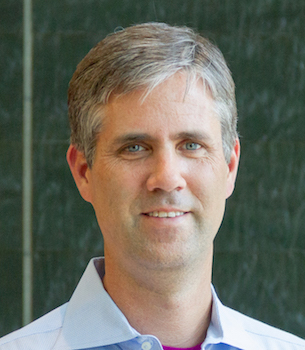
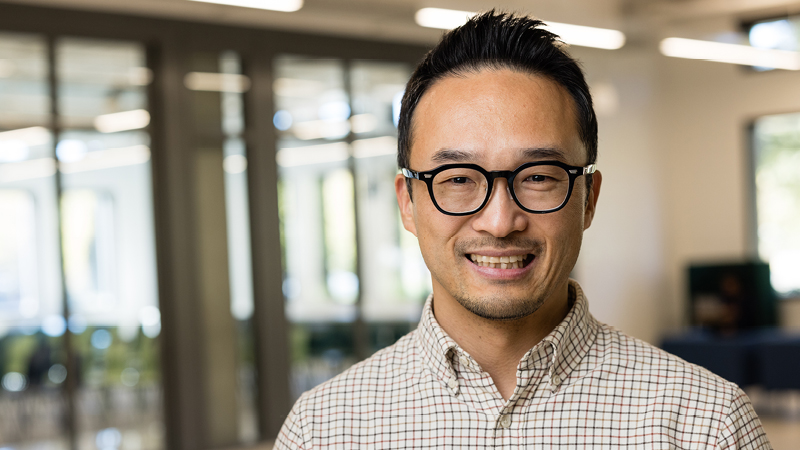
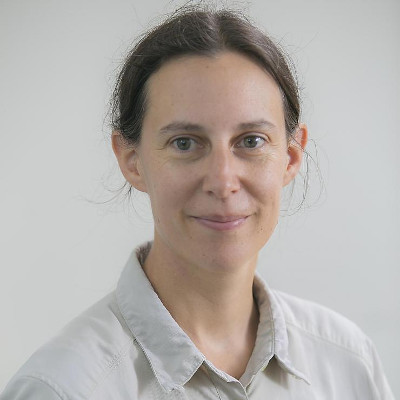
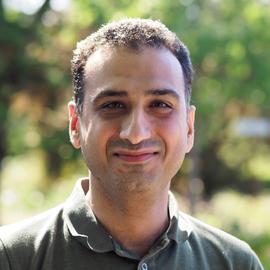
Michael Swift is Professor of Computer Sciences at the University of Wisconsin-Madison within the College of Letters and Sciences. He leads the Sonar research group and co-leads the Multifacet architecture group with Mark Hill, while contributing to the Wisconsin Institute on Software-defined Datacenters (WISDoM). His research centers on operating system/hardware interaction, with seminal work in device driver reliability (Nooks, Shadow Drivers), memory systems (storage-class memory integration), and cloud security. Projects like Microdrivers and Carburizer address driver complexity and fault tolerance, while recent work explores learned OS policies and heterogeneous processor support. Analysis of his 2023-2025 publications reveals intensifying focus on memory tiering, security in cloud environments, and hardware-accelerated systems, with growing integration of machine learning for system optimization. Key awards include: Best paper award at OSDI 2004 Best paper award at SOSP 2003 Best paper award at the 3rd Asia-Pacific Workshop on Networking (2019) Professor Swift mentors numerous PhD students (current and past) and secures research funding through NSF grants CNS-0915363 and CNS-0745517 plus Google support. He serves as Instructional Program Director and chairs both the Space committee and Diversity, Equity, and Inclusion committee. The Sonar group drives innovation in system support for emerging hardware technologies, while Multifacet focuses on computer architecture advancements, particularly in heterogeneous computing and memory systems.
Keivan Navaie is a Professor of Intelligent Networks at Lancaster University’s School of Computing and Communications. He serves as a member of the Independent Scientific Advisory Committee at the Alan Turing Institute, overseeing the £100 million BridgeAI programme, and previously as Principal AI Technology Advisor to the UK Information Commissioner’s Office (ICO). He is recognized with Fellowships from the Institution of Engineering and Technology (IET), Chartered Engineer status in the UK, Senior Fellowship of the Higher Education Academy (HEA), and the IEEE Young Investigator Award. Research Focus: Wireless communications, mathematics, artificial intelligence, 6G networks, blockchain technology, edge computing, cognitive radio networks, and non-orthogonal multiple access (NOMA). Supervision: Actively supervises PhD students in areas like wireless communications and mathematical modeling. Projects: Involved in distributed learning, blockchain integration, 6G research, and spectrum sharing systems. Awards: IEEE Young Investigator Award, Fellow of IET, Chartered Engineer, Senior Fellow of HEA.
Kathrin Hanauer is an Assistant Professor at the University of Vienna, where she is affiliated with the Research Group Theory and Applications of Algorithms and the Research Network Data Science. She conducts research in the design, analysis, and experimental evaluation of fast algorithms, with a focus on Algorithm Engineering connecting theoretical foundations with practical implementations. Her research interests include: Algorithm Engineering for practical algorithm implementation Dynamic algorithms for efficiently handling changing data Graph algorithms and network analysis Reachability problems on directed graphs Ranking problems, particularly the NP-hard Feedback Arc Set problem Network analysis, motif search, and subgraph counting Dr. Hanauer's recent publications demonstrate a strong focus on dynamic graph algorithms, with significant contributions to reachability queries, subgraph counting, and datacenter network optimization. Her work spans both theoretical algorithm design and practical implementation, often with C++ software projects. Notable contributions include the O'Reach algorithm for faster reachability queries in large graphs and several dynamic algorithms for subgraph counting and network analysis. Her scientific contributions: O'Reach: A novel approach to reachability queries in large graphs that outperforms previous methods Dynamic algorithms for four-vertex subgraph counting with efficient update operations Work on demand-aware link scheduling for reconfigurable datacenters Interdisciplinary research on normative reasoning with Aristotelian diagrams Dr. Hanauer actively supervises student research, with numerous completed theses focusing on dynamic graph algorithms, geometric algorithms, and reachability problems. Her lab maintains several software projects related to graph algorithms, including a modular algorithms library for dynamic graphs written in C++ and specialized implementations for reachability queries and subgraph counting.
Changhee Jung is the Samuel D. Conte Associate Professor of Computer Science at Purdue University, Department of Computer Science. His research focuses on compilers and computer architecture with an emphasis on performance, reliability, and security. He joined Purdue in Fall 2019 after serving as an Assistant Professor at Virginia Tech (2013–2019). Prior academic roles include a post at ETRI (2005–2008) and internships at Google (2010–2012). Education: PhD in Computer Science from Georgia Institute of Technology (2013) under Prof. Santosh Pande. His work spans compiler-architecture co-design for intermittent computing, nonvolatile memory systems, and security frameworks like PeX for Linux kernel permission checks. Notable recognitions include the NSF CAREER Award (2018) and induction into the MICRO Hall of Fame (2021). Research interests include energy-efficient computing, fault resilience, and compiler-driven hardware optimizations. His lab, CompArch, emphasizes cross-layer solutions for performance, reliability, and security challenges. Recent projects include IPEX (ISCA 2025), Write-Light Cache (ISCA 2023), and DevFuzz (Oakland 2023). Awards: NSF CAREER, MICRO Hall of Fame, Memorable Paper Finalist (NVMW 2024), Best Student Paper Finalist (SC 2016), and multiple industry awards. Active in service roles, including program chair for LCTES 2020 and editorial roles for ACM journals. Teaching: Courses include CS 352 (Compilers), CS 502 (Compiling Systems), and advanced special topics. Supervised over 15 graduate students and postdocs, with alumni in academia and industry (e.g., Samsung, Intel, Xilinx).
Anne BENOIT is an Associate Professor of Computer Science at École normale supérieure de Lyon (ENS de Lyon), affiliated with the Parallel Computation Laboratory (LIP) and the ROMA project. She holds leadership roles, including Chair of the IEEE Technical Community on Parallel Processing (2020–2024) and IUF Senior Membership (2023–2028). Her research focuses on multi-criteria scheduling algorithms for HPC, addressing performance, cost, energy, and reliability challenges. She earned a PhD in Systems and Communications from INPG Grenoble (2003) and an HDR (2009). Research Interests : Her work integrates scheduling optimization, fault tolerance, and energy efficiency in HPC systems. She designs resilient protocols to manage failures and uncertainties, particularly in heterogeneous environments. Key topics include checkpointing strategies, workflow scheduling on edge platforms, and balancing conflicting optimization criteria. Awards & Roles : Senior Member of the Institut Universitaire de France (2023) Guest Professor at Georgia Tech (2017–2018) Associate Editor-in-Chief of Elsevier JPDC and ParCo IEEE Senior Member Professional Contributions : Chair of major conferences like IPDPS and HiPC. Authored A Guide to Algorithm Design (CRC Press, 2013). Leads the Computer Science Department at ENS Lyon since 2022. Labs & Projects : Active in the ROMA project (Resource Optimization) and the LIP laboratory, focusing on parallel computation and algorithmic efficiency.
Dr. Mike Katchabaw is an Associate Professor in the Department of Computer Science at The University of Western Ontario. His research focuses on game design and development, including adaptive game systems, believable agents, algorithmic music composition, and networked game optimization. He holds a Ph.D. from Western (2002) and has been with the department since 2002. Teaching responsibilities include courses on open-source projects, software maintenance, game development, and game design. He is affiliated with the Digital Recreation, Entertainment, Art, and Media (DREAM) Group. Key research areas include psychosocial behavior modeling in NPCs, automated difficulty adjustment, and latency management in multiplayer games. Publications span over 30 refereed journal/conference papers, book chapters, and technical reports. Notable achievements include the Best Paper Award at GameOn 2011 and a patent for a flexible music composition engine. He has contributed to commercial games like 'To The Moon' and 'Animal Planet Vet Life' as a consultant/lead programmer.
Prof. Dr. Stefan Voß is a Professor at the Institute of Information Systems within the Hamburg Business School (HBS) at the University of Hamburg. He serves on the HBS Dean's Office and focuses on logistics optimization, metaheuristics, and sustainable port operations. His work integrates AI, machine learning, and operations research to address challenges in transportation, supply chain management, and public infrastructure. Research Interests: Dr. Voß specializes in: Metaheuristic algorithms (e.g., fixed set search, GRASP, VNS) Optimization of port and maritime logistics (berth allocation, quay crane scheduling) AI applications in transportation (predictive analytics, emotion recognition) Sustainable operations (green port infrastructure, EV charging networks) Public transport efficiency (bus scheduling, delay prediction) Publications: Recent work emphasizes AI-driven logistics, robust optimization under uncertainty, and digital twin applications in ports. His 2025 studies explore domain-generalized emotion recognition and dynamic seaport automation. 2024 articles highlight multi-objective scheduling, EV fleet optimization, and sustainable container storage. Labs/Teams: Leads research at the Institute of Information Systems, collaborating on port sustainability projects (e.g., Port of Hamburg) and digital innovation in logistics systems.
Samee U. Khan is a Professor in the Department of Electrical & Computer Engineering at Mississippi State University (MSU), affiliated with the Bagley College of Engineering. He holds a Ph.D. from the University of Texas (2007) and a B.S. from GIK Institute of Engineering & Technology (1999). His research focuses on optimization, robustness, and security of computer systems, with recent emphasis on quantum computing, edge/fog computing, and machine learning applications in neuroscience and cybersecurity. Key research interests include quantum algorithm development, edge computing architectures, and neuro-inspired systems. His work integrates quantum computing with traditional machine learning to address challenges in visual perception modeling and medical imaging analysis. He also explores fog computing frameworks for IoT and distributed systems, emphasizing security and efficiency in heterogeneous environments. Publications highlight advancements in quantum noise mitigation, hybrid quantum optimization, and brain-computer interface models. His contributions span simulation toolkits like iFogSim and frameworks for vehicular networks and blockchain-based resource management. Khan’s research bridges theoretical computer science with practical applications in smart homes, healthcare, and autonomous systems.
Dr. Kevin M. Taaffe serves as the Harriet and Jerry Dempsey Professor and Department Chair of Industrial Engineering at Clemson University's College of Engineering, Computing and Applied Sciences. He is also a Fellow of the Institute of Industrial and Systems Engineers (IISE). With expertise spanning healthcare logistics, transportation and inventory management, Dr. Taaffe leads research initiatives that integrate optimization and simulation modeling to solve complex systems problems across healthcare, manufacturing, and emergency response domains. Dr. Taaffe's educational background includes: BS in Industrial Engineering (with honors) from University of Illinois at Urbana-Champaign (1988) MS in Industrial Engineering from University of Illinois at Urbana-Champaign (1990) PhD in Industrial and Systems Engineering from University of Florida (2004) Dr. Taaffe's research program focuses on complex decision-making systems where uncertainty plays a critical role. His work spans four primary domains: healthcare logistics (particularly perioperative services), inventory management, evacuation planning, and transportation and logistics. He approaches these areas through the lens of operations research, developing models that account for system interdependencies and human factors. His research is characterized by strong industry partnerships and practical applications that address real-world challenges in hospital operations, supply chain management, and emergency response planning. Dr. Taaffe's recent publications reveal a strong emphasis on healthcare systems engineering, particularly in operating room optimization, surgical scheduling, and physician workflow analysis. His work consistently applies operations research methodologies to improve efficiency and safety in healthcare delivery. The research shows progression from theoretical modeling toward implementation-focused studies that incorporate mobile technology, data analytics, and behavioral considerations to create sustainable improvements in complex healthcare systems. Among Dr. Taaffe's notable recognitions: Harriet and Jerry Dempsey Professor (endowed chair position) Fellow of the Institute of Industrial and Systems Engineers (IISE) Dr. Taaffe has been deeply involved in student mentorship throughout his career. He served as the IISE faculty advisor for 12 years and has led Creative Inquiry student research groups since 2005. His research has been supported by multiple funding sources including the National Science Foundation (NSF), South Carolina state agencies, and industry partners such as Greenville Hospital System and Medical University of South Carolina. He maintains strong industry connections through Clemson's Industrial Engineering Department membership in the Center for Excellence in Logistics and Distribution (CELDi), an NSF-sponsored Industry/University Cooperative Research Center. Dr. Taaffe leads research teams focused on healthcare logistics, inventory management, evacuation planning, and transportation systems. His lab work involves developing simulation models, optimization algorithms, and mobile applications to improve decision-making in complex systems. Current projects include creating learning systems using mobile technology in perioperative services, which integrates artificial intelligence, data analytics, and staff training to enhance communication and coordination across hospital departments.
Mary Elizabeth Kurz is an Associate Professor in the Department of Industrial Engineering at Clemson University's College of Engineering, Computing and Applied Sciences. Her research focuses on scheduling optimization, metaheuristics, and assembly line balancing for complex manufacturing systems. Education: B.S., Systems Engineering, University of Arizona (1995) M.S., Systems Engineering, University of Arizona (1997) Ph.D., Systems and Industrial Engineering, University of Arizona (2001) Research interests include: Development of heuristics and metaheuristics for scheduling Assembly line balancing with ergonomic constraints Flexible flowline scheduling with sequence-dependent setups Application of genetic algorithms and particle swarm optimization Recent work trends show applications in opioid crisis modeling, photolithography scheduling, and automotive configuration management. She has presented at INFORMS and IISE conferences, with special emphasis on multi-objective optimization and real-world industrial constraints. Scientific awards: Third Place Best Paper, ASME Manufacturing Engineering Division (2014) As an INFORMS member and Institute of Industrial Engineers Senior member, she has taught courses in operations research, decision support systems, and metaheuristics. Her work spans both theoretical and applied domains, with a strong focus on manufacturing system efficiency.
Prof. Dr.-Ing. Guillermo Payá Vayá leads the Chair for Chip Design for Embedded Computing at Technical University of Braunschweig's Faculty of Electrical Engineering, Information Technology, and Physics. His research focuses on processor architecture design, FPGA/ASIC implementations, and optimization techniques for embedded systems, particularly in high-performance, low-power, and radiation-hardened computing domains. Primary research interests include: Application-Specific Instruction Set Processors (ASIPs) and compiler co-design Radiation effects characterization and fault-tolerant hardware Ultra-low-power processor architectures for embedded AI Hardware acceleration of neural networks and computer vision algorithms Memory subsystem optimization and parallel computing techniques Recent publications demonstrate strong emphasis on radiation-hardened electronics (35% of recent works), AI accelerator design (27%), and ultra-low-power systems (20%), with growing interest in biomedical applications. Experimental validation through FPGA prototyping and semiconductor testing is a consistent methodology across research domains. Leads research team investigating: Radiation-tolerant FPGA architectures (Trumann, Weide-Zaage) Vector processor optimization (Gesper, Thieu) Nano-scale controller design (Weißbrich) AI-hardware co-design (Kautz, Beyer)
Yan Zhao is an Associate Professor in the Department of Computer Science at Aalborg University, Denmark, affiliated with The Technical Faculty of IT and Design. His research focuses on data engineering, science, and systems, with a particular emphasis on anomaly detection, machine learning, and spatio-temporal data analysis. He holds a Ph.D. in Computer Science (specific education details not explicitly provided). Research Interests: Dr. Zhao's work spans anomaly detection, autoencoders, attention mechanisms, preference learning, multivariate time series, and computational efficiency. His research often integrates machine learning with real-world applications in spatial crowdsourcing, trajectory analysis, and data privacy. Publications: With 72+ publications, his recent work emphasizes spatio-temporal prediction frameworks, federated learning, and efficient time series analysis. Notable contributions include frameworks for continuous learning on streaming data and privacy-preserving clustering in spatial crowdsourcing. Grants & Supervision: He has supervised one Ph.D. student and actively contributes to research grants focusing on data engineering and smart systems. His work bridges theoretical advancements with practical applications in transportation, social networks, and IoT.
Dr. Zhu Han is the John and Rebecca Moores Professor at the University of Houston's Cullen College of Engineering, Department of Electrical and Computer Engineering. His research focuses on game theory, wireless networking, security, data analysis, and smart grid applications. He holds doctoral and master's degrees from the University of Maryland and a bachelor's from Tsinghua University. Research interests span: Next-generation wireless systems (6G/7G) AI/ML integration in communications Reconfigurable intelligent surfaces Quantum machine learning applications Secure and efficient network architectures His recent publications demonstrate strong focus on generative AI integration in wireless systems, quantum networking, semantic communications, and security frameworks for future networks. Awards and honors include: IEEE/ACM/AAAS Fellow status IEEE Kiyo Tomiyasu Award (2021) Highly Cited Researcher since 2017 IEEE Distinguished Lecturer (2015-2018) Dr. Han leads research in wireless communications and networking, with extensive industry collaboration. His lab focuses on developing theoretical foundations and practical implementations for next-generation communication systems.
Reza Salkhordeh is a Lecturer and Postdoctoral Researcher at Johannes Gutenberg University Mainz, Germany, where he leads the Efficient Computing and Storage Group. He holds a Ph.D. in Computer Engineering from Sharif University of Technology (2018) and has been affiliated with Ferdowsi University of Mashhad and Sharif University of Technology. His research focuses on operating systems, storage systems, and non-volatile memory technologies, with a particular emphasis on high-performance computing and I/O optimization. He has taught courses such as Storage Systems and Advanced Topics in Operating Systems since 2020. His academic journey includes a B.Sc. from Ferdowsi University (2011), M.Sc. and Ph.D. from Sharif University (2013, 2018). He has held roles such as Technical Lead for the High-Performance Data Storage System (HPDS) project in Tehran, Iran, and has mentored 4 M.Sc. and 6 B.Sc. students. His work spans patented technologies like Reconfigurable Cache Architectures and Load Balancers for I/O caching systems. Research interests include heterogeneous memory management, storage system design, and optimizing I/O performance in distributed environments. His recent publications address challenges in NVMM utilization, garbage collection in SSDs, and I/O tracing for HPC systems. He is actively involved in conference committees (e.g., FAST, ARCS, SC) and has reviewed for top journals like IEEE TPDS and ACM Transactions on Storage. Notable recognitions include membership in Iran’s National Elites Foundation (2012–2015) and top rankings in national exams (3rd in PhD, 35th in MSc). His contributions to storage systems have advanced enterprise-grade architectures and decentralized file systems, with a focus on practical implementations for modern computing challenges.
Qing 'Charles' Cao is an Associate Professor in the Min H. Kao Department of Electrical Engineering and Computer Science at the University of Tennessee, Knoxville, part of the Tickle College of Engineering. His research focuses on AI-driven Cyber-Physical Systems, Networking, and Cyber Security, with applications in IoT, Edge Computing, and Smart Agriculture. He holds a PhD from the University of Illinois at Urbana-Champaign, an MS from the University of Virginia, and a BS from Fudan University, China. Education: PhD in Computer Science, University of Illinois at Urbana-Champaign, 2008 MS in Computer Science, University of Virginia, 2005 BS in Computer Science, Fudan University, Shanghai, China, 2002 Research Interests: His work emphasizes interdisciplinary solutions at the intersection of AI, networking, and security. Key areas include: - Blockchain-based security mechanisms for edge devices - LLM applications in public policy and climate decision-making - IoT-driven precision agriculture and livestock health monitoring - Probabilistic error reasoning and fault tolerance in distributed systems Grants & Awards: No awards explicitly listed, but his research has been supported by grants in areas like smart agriculture and edge computing infrastructure. Advising & Labs: While specific advisees are not listed, his research group focuses on collaborative projects involving students in cybersecurity, IoT, and AI systems. He has contributed to lab initiatives related to environmental computing and distributed sensor networks. Professional Activities: Active in conferences like AAAI, IEEE IPCCC, and ACM/IEEE Edge Computing Symposiums, presenting on topics ranging from LLM-assisted governance to secure edge architectures.