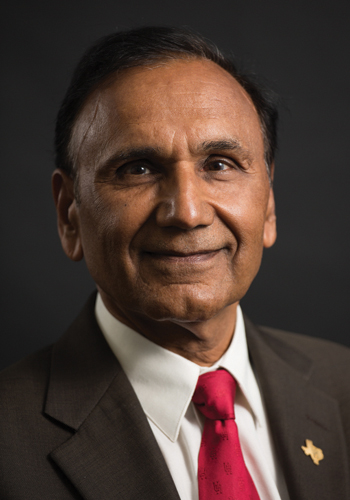
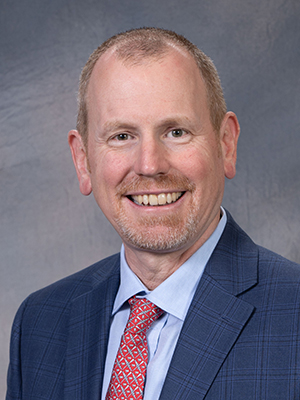
Suresh Khator is a Professor and Senior Associate Dean for Graduate Programs and Computing Facilities at the University of Houston's Cullen College of Engineering, Department of Industrial and Systems Engineering. He holds a Ph.D. in Industrial Engineering from Purdue University and has extensive experience in academia, industry, and administrative roles. His research focuses on modeling energy, healthcare, and manufacturing systems, facilities design, production planning, and project management. He has supervised 10 PhD dissertations and 37 Master's theses, and his work has been published in top-tier journals and conferences. Khator has received numerous awards, including the Fellow of IISE and multiple teaching excellence awards. His administrative roles include Director of Engineering Computing and Interim Associate Dean at the University of South Florida. He has also contributed to community initiatives, such as science fairs and outreach programs. His articles span power systems resilience, renewable energy integration, and manufacturing automation. He has led over 30 grants and contracts, including projects with the Florida Department of Transportation and utility companies.
Hala O. Altamimi is an Assistant Professor at the School of Public Affairs and Administration (SPAA), University of Kansas. Her research focuses on public and nonprofit management, emphasizing organizational behavior, decision-making, and performance measurement systems. She holds a notable grant from the Institute of Humane Studies for her dissertation and has earned prestigious awards including the Best Doctoral Student Award at AYSPS, Emerging Scholar Award (ARNOVA), and Equity and Inclusion Award (APPAM). Her work examines the interplay between organizational structures, financial practices, and operational outcomes in nonprofits and public sectors. Key themes include overhead spending norms, performance auditing effectiveness, and flexible labor arrangements' impacts on organizational resilience. Altamimi's research challenges conventional donor assumptions while advancing accountability frameworks in public institutions. Altamimi's academic contributions span scholarly articles addressing centralization-decentralization dynamics, nonprofit starvation cycles, and budget cut resilience. Her awards reflect recognition for both scholarly excellence and commitment to diversity/inclusion in academic and professional communities.
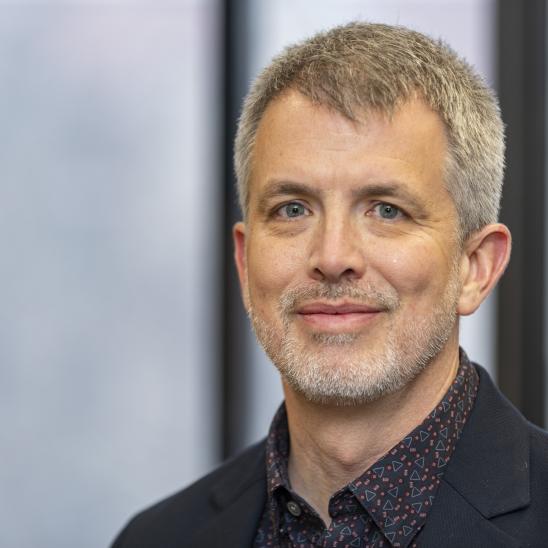
Jason Sowell is an Associate Professor and Director of Graduate Studies in the Department of Architecture at the University at Buffalo’s School of Architecture and Planning. He holds a Bachelor of Architecture from the University of Tennessee and a Master of Landscape Architecture from Harvard University. His research focuses on climate change adaptation, particularly how landscape-oriented infrastructures guide urban resilience through housing and management practices. Sowell has been recognized for his work with awards from institutions like the CELA (2010), Cleveland’s Urban Design Collaborative (2007), and the Texas Society of Architects (2020). He previously directed the Master of Landscape Architecture Program at The University of Texas at Austin and co-founded SSAU, a design studio exploring socially-oriented interactions between landscape and architecture. Education: Bachelor of Architecture, University of Tennessee Master of Landscape Architecture, Harvard University Research Highlights: Urban adaptation to climate change via flood mitigation and resilient infrastructures Landscape technologies for housing and energy systems Exhibitions at Venice Biennale and Pan American Biennale Awards & Honors: 2010 CELA Teaching Award 2007 Irishtown Bend Proposal Award 2016 Sobradinho Housing Competition Award 2020 Brownie Neighborhood Park Award Professional Contributions: Directed MLA program at UT Austin Principal of SSAU studio (projects include Farm Lot Health-Centered Development)
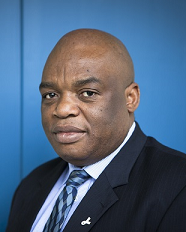
George K. Danns is a Professor of Sociology in the Department of Sociology and Human Services at the University of North Georgia, Gainesville Campus. Holding a PhD from SUNY Stony Brook, he has received prestigious awards including the Ford Foundation Fellowship and Complete College Georgia Champion Award. His leadership roles include Chair of UNG Faculty Senate (2015-2016), former Dean of Social Sciences at the University of Guyana, and Senior Fulbright Fellow at the University of Michigan. Ph.D. in Sociology, State University of New York at Stony Brook M.A. in Sociology, State University of New York at Stony Brook B. Soc. Sc. in Social Sciences (Distinction), University of Guyana Dr. Danns specializes in Caribbean socio-political dynamics with emphasis on Guyana, examining race/ethnic relations, political leadership, national security, and community development. His research explores intersections of identity, class, and power in postcolonial contexts, addressing critical issues like environmental disasters, homicide patterns, youth vulnerability, and gender disparities. His fieldwork combines theoretical rigor with practical applications for policy development. His 15 most recent publications (2014-2020) reveal three dominant thematic clusters: Caribbean political economy (35%), diaspora/identity studies (30%), and entrepreneurship/financial literacy (35%). The work demonstrates consistent focus on Guyana while expanding to broader Latin American and Caribbean contexts, with increasing attention to youth entrepreneurship and financial inclusion in developing economies since 2017. Ford Foundation Fellowship for Doctoral Research in Latin America and the Caribbean Complete College Georgia Champion Award (2016) Senior Fulbright Fellowship Dr. Danns has mentored students through diverse sociology courses while securing consultancy grants from major international organizations including UNICEF, UNFPA, USAID, IADB, OAS, and PAHO. His funded research focuses on social policy development, with particular emphasis on youth programs, gender initiatives, and national security frameworks for Caribbean governments. As former Director of the Center for Economic & Social Research & Action (CESRA) at the University of Guyana, he led multidisciplinary teams conducting critical studies on suicide prevention, military roles in national security, and environmental disaster response. His current UNG affiliation involves collaborative research networks addressing regional social challenges through the Sociology and Human Services department.
Prof. Emmanuel Kabengele Mpinga is a Professor at the Institute of Global Health (ISG) within the Faculty of Medicine at the University of Geneva. He leads the Division of Health and Human Rights, focusing on four core research areas: identifying rights violations impacting public health, clarifying the epistemology of health-human rights links, developing global surveillance indicators for health rights implementation, and designing intervention strategies. His work is part of an international network led by Harvard University and collaborates with institutions like Geneva University Hospitals (HUG). Education & Roles: Holds a Doctorate in Health Systems Policies, Masters in Public Health, and certifications in Health Administration and Human Rights. He has held an Swiss School of Public Health+ assistant professorship (2008-2012) and advises UN agencies, governments, and NGOs on human rights and public health. His research spans over two decades, addressing topics like Noma disease, economic costs of torture, and female genital mutilation. Research Interests: Interdisciplinary projects include the SNIS-funded Noma research initiative (2019-2021) to globalize Noma as a neglected disease, costing models for health rights violations, and human rights frameworks in AI-driven healthcare. His work emphasizes socio-economic impacts of health inequities and policy advocacy. Grants & Collaborations: Active in projects funded by Swiss Network for International Studies (SNIS), Northumbria University, and Danish Institute against Torture (Dignity). Collaborates with WHO, UN agencies, and global health networks. Leads training programs in health and human rights across Francophone Africa through e-learning platforms. Labs/Teams: Heads the Health and Human Rights Division at ISG, coordinating international research networks. Supervises PhD students (e.g., Krystel Ouaijan on malnutrition, Joshua Galjour on HIV/AIDS and political instability).
Dr. Darren Scott is a Professor in the School of Earth, Environment & Society at McMaster University, specializing in Geographic Information Science (GIScience) and teaching courses such as GIS Programming and Data Processing Using Python. He previously served as an Assistant Professor at the University of Louisville’s Department of Geography and Geosciences (1999–2002) and held a Visiting Research Professor position at the Swiss Federal Institute of Technology (Zurich) in 2008. His academic background includes a BA (Honors and Co-op) in Geography from Saint Mary’s University (1991), an MA from the University of Western Ontario (1994), and a PhD from McMaster University (2000). Dr. Scott’s research focuses on transportation systems, aging populations, GIScience innovations, and sustainable infrastructure. He has pioneered work in route choice modeling, transportation demand analysis, and the impact of demographic changes on mobility. In 2008, he established TransLAB, a research lab within his school, which explores advanced transportation topics using GPS and geospatial tools. His projects have been funded by major agencies like NSF, SSHRC, and NSERC, addressing issues ranging from electric vehicle adoption to flood resilience in emergency services. His teaching emphasizes Python programming and advanced GIS applications, reflecting his expertise in geospatial technologies. He has contributed to policy debates on urban sustainability, particularly regarding Canada’s Greenbelt legislation and telework trends during the pandemic. Despite no explicitly mentioned scientific awards, his extensive grant history and scholarly output highlight his impactful contributions to the field. Dr. Scott’s advising and grant activities center on interdisciplinary studies, including the McMaster Monitoring My Mobility Study (MacM3), which tracks mobility patterns of older adults. His work bridges transportation engineering, urban planning, and public health, often leveraging big data and GIS tools to analyze real-world scenarios in cities like Hamilton and Calgary.
Scott Gehlbach is the Elise and Jack Lipsey Professor of Political Science and Public Policy at the University of Chicago, affiliated with the Harris School of Public Policy, the Department of Political Science, and the College. He specializes in authoritarian and post-authoritarian regimes, with a focus on Russia and Ukraine. His research examines institutional dynamics, political reform, and historical political economy, drawing on formal models and empirical analysis of historical events. Gehlbach holds a PhD from the University of California-Berkeley (2003) and previously taught at the University of Wisconsin-Madison. He currently directs the joint Political Economy PhD Program between the Harris School and Political Science Department. Research interests include the interplay between reform and rebellion in autocracies, the impact of political connections on economic outcomes, and the historical experiences of late Imperial Russia and post-Soviet transitions. His work bridges formal political theory with empirical case studies, emphasizing institutional design and comparative analysis. Gehlbach has led initiatives such as the Ph.D. Program in Political Economy and organized conferences like the Summer Workshop in the Economic History of Eurasia. Professional service includes roles as president of the Society for Institutional and Organizational Economics, associate editor of the Quarterly Journal of Political Science, and co-editor of the Broadstreet Blog. His research has been published in leading journals such as the American Journal of Political Science and the American Political Science Review, with notable books like *Formal Models of Domestic Politics* and *Reform and Rebellion in Weak States*.
Richard K. Norton is a Professor at the University of Michigan’s Taubman College of Architecture and Urban Planning, with a joint appointment in the Program in the Environment (PitE) under the College of Literature, Science, and the Arts. He holds a Ph.D. in City and Regional Planning and a J.D. from the University of North Carolina at Chapel Hill, along with master’s degrees in Public Policy and Environmental Management from Duke University. His research focuses on sustainable development, land use planning, planning law, and coastal management, particularly along the Laurentian Great Lakes. He actively contributes to the Michigan Association of Planning (MAP), leading legislative reforms for planning and zoning laws, including successful amendments in 2006 and 2008. He has authored amicus curiae briefs for the Michigan Supreme Court and U.S. Court of Appeals on planning disputes. Teaching areas include Climate Adaptation Planning , Planning Law , and Environmental Planning . Recent publications emphasize coastal resilience, legal frameworks for shoreline management, and citizen perceptions of environmental policies. He leads projects like the Resilient Great Lakes Coast initiative and has secured grants, including a $5M NSF award for transboundary water research. Notable awards include the 2024 ACSP Top Reviewer Award. His work bridges academia, policy, and community engagement, addressing challenges in climate adaptation, coastal governance, and sustainable urban development.
Emilia Vann Yaroson is a Lecturer in Operations and Supply Chain Management at the Sheffield University Management School (The University of Sheffield). She holds a PhD in Operations and Information Management from the University of Bradford, an MSc in Business and Financial Economics from the University of Greenwich, and a PgCHE (Postgraduate Certificate in Higher Education). Her research focuses on leveraging emerging technologies (AI, blockchain, cloud computing, digital twins) to enhance supply chain resilience and sustainability, particularly aligned with UN SDGs related to healthcare access, environmental protection, and poverty reduction. Research Interests Pharmaceutical supply chains and resilience strategies Circular economy integration in supply chains Impact of Industry 4.0/5.0 technologies on sustainable operations Healthcare operations and quality improvement Artificial intelligence-driven decision-making in supply chains Teaching She teaches operations management, supply chain analytics, and related modules across undergraduate and postgraduate programs, including executive education. Her teaching aligns with the school’s Triple Crown accreditation, positioning it among global elite management schools. Research Group She is part of the Operations Management and Decision Sciences group, contributing to interdisciplinary projects on supply chain innovation and sustainability. Her work bridges theoretical frameworks (e.g., Complex Adaptive Systems) with practical applications in healthcare and manufacturing sectors.
Negin Alemazkoor is an Assistant Professor at the University of Virginia's School of Engineering and Applied Science, specializing in interdisciplinary research on infrastructure resilience. Her work focuses on developing AI-driven methodologies for analyzing interconnected systems like power grids, urban flood models, and transportation networks under uncertainty. Key areas include enhancing grid reliability through multi-fidelity modeling, hurricane evacuation equity analysis, and precision-compression techniques for large-scale data. She co-leads a NSF-funded initiative to democratize AI education in high schools. Her research integrates graph neural networks, physics-informed models, and machine learning to address challenges in energy systems, environmental monitoring, and disaster response. Notable projects include hurricane-induced power outage risk analysis under climate change and precision guarantees for smart-meter data analytics. She emphasizes computational efficiency and multi-fidelity approaches to balance accuracy with resource constraints. Recent contributions span AI applications in flood forecasting, renewable energy integration, and infrastructure cybersecurity. Her NSF grant aims to create inclusive AI curricula, reflecting her commitment to education and societal impact. She is affiliated with UVA Engineering’s research initiatives on resilient systems and data-driven decision-making.
Akin Oyawale is an Assistant Professor in International Security at the University of Warwick, serving as Course Director for the MA in International Relations and Module Convener for PO926: Theories and Issues in International Relations. He holds a PhD from the University of East Anglia (UEA), alongside degrees from the University of Ibadan and University of Sussex. A recipient of multiple teaching excellence awards including the ISA's Deborah Gerner Award (2025) and BISA Early Career Prize (2024), his pedagogical approach emphasizes inclusivity through the 'Nobody Left Behind' philosophy, prioritizing student agency and diverse lived experiences. Education: B.A. Politics/Psychology (University of Ibadan), M.A. International Security (University of Sussex), PhD Politics (UEA) Research focuses on critical interrogations of International Relations theory, particularly its raced/gendered dimensions, and examines security from 'bottom-up' perspectives. Key areas include Boko Haram's impact on Nigerian citizens, counterterrorism policies, vernacular security frameworks, and postcolonial critiques of security governance. His monograph project analyzes the state-Boko Haram interaction in Northeast Nigeria. Active in PhD supervision on topics relating to security, extremism, and critical approaches. Awards reflect both pedagogical innovation and scholarly contributions, including the Warwick Teaching Excellence Award (2023) and Nigeria's President's NYSC Award (2012). Public engagement includes organizing Abuja's Gender/Insecurity Policy Roundtable and co-editing Special Issues on Vernacular Security Studies for Security Dialogue (2025). Teaching and research are underpinned by commitments to decolonizing knowledge production, intersectional analysis, and amplifying Global South perspectives in IR. Current projects explore racial biopolitics in Sahel resilience policies and the political economy of counterterrorism in Nigeria.
Miguel Castillo is an Associate Professor in the Crop and Soil Sciences Department at North Carolina State University (NC State), leading the Forage & Grassland Program and serving as Grassland Science Specialist. He holds a Ph.D. in Agronomy from the University of Florida and an MBA from NC State. His work focuses on improving ecosystem services in agricultural and pasture-based livestock systems through integration of silvopasture, agroforestry, and advanced technologies like near infrared spectroscopy (NIRS) for management decisions. Dr. Castillo's education includes a B.S. in Plant and Animal Sciences from Zamorano University (2006), followed by M.S. and Ph.D. in Agronomy from the University of Florida (2009, 2013). His research spans international collaborations in tropical/sub-tropical environments, with expertise in forage crop management, bioenergy grasses, and sustainable livestock systems. He is fluent in Spanish and Portuguese. Research Interests: Forage-Livestock Systems Optimization Silvopasture Development Bioenergy Crop Production NIRS Applications in Agriculture Pasture-Based Livestock Management Climate Resilient Forage Crops Recent work emphasizes NIRS for rapid forage quality analysis, evaluating new bermudagrass cultivars, and advancing silvopasture systems in the southeastern U.S. and Peruvian Amazon. His publications address topics like poultry litter impacts, switchgrass management post-freeze, and frost-seeding clover into tall fescue pastures. Grant-supported research includes USDA-funded projects on forage conservation techniques and bioenergy crop development. He advises graduate students on forage systems and collaborates with industry partners on applied agronomic solutions. Labs/Teams: Directs the Forage & Grassland Program at NC State, collaborating with USDA and international research networks. Active in extension programs, publishing guides on forage management, hay production, and silvopasture implementation.
Dr. Anne-Marie Nicol is an Associate Professor of Professional Practice in Health Sciences at Simon Fraser University. Her multidisciplinary research spans health communication, toxicology, social marketing, risk perception, and risk assessment, with emphasis on environmental and occupational health exposures. She leads CAREX Canada, a national carcinogen surveillance program, and has developed public health campaigns including Wash with Care and Tick Talk. Her work focuses on translating scientific information about carcinogens to policymakers and cancer prevention stakeholders. She teaches Human Health Risk Assessment, Toxicology for Public Health, and Health Communication. Her research has been funded by CIHR, Michael Smith Foundation, and Canadian Cancer Society. Current projects include studies on radon exposure, infodemic communication strategies, and community resilience to wildfire smoke. She holds a BA from SFU, MES from York University, and PhD from UBC.
Dr. Helen Lewis is an Associate Professor in Education and Childhood Studies at Swansea University's School of Social Sciences. She serves as the School Education Lead and Programme Director for the Primary Postgraduate Certificate in Education (PGCE). Her work bridges teacher education, metacognitive development in children, and innovative uses of animal-assisted interventions in schools. Her research focuses on two pillars: 1) fostering children's thinking skills and metacognition through pedagogical frameworks like Project Zero's VSRD methodology, and 2) exploring how school dogs enhance pupil well-being, learning, and resilience. Recent projects include an ESRC-funded initiative creating best practice guidelines for canine-assisted education. Professionally, she holds certifications in animal-assisted play therapy and canine intervention strategies. She actively contributes to academic governance as an External Examiner at institutions like University College London and serves on national committees such as the National School Dog Alliance and Let's Think Forum. Her career highlights include leadership roles in program development (BA Education Studies, MA Education), peer review for academic journals, and governance as a primary school inspector for Estyn. She balances rigorous scholarship with practical advocacy for evidence-based educational practices.
Daniel A. McAdams is the Robert H. Fletcher Professor in Mechanical Engineering at Texas A&M University and serves as the NSF Program Director of Convergent Activities. His research develops design theory and methodology with focus on functional modeling, bio-inspired design, and technology evolution. Educational Background: PhD in Mechanical Engineering from University of Texas at Austin MS in Mechanical Engineering from California Institute of Technology BS in Mechanical Engineering from University of Texas at Austin His research investigates innovation in concept synthesis through computational methods, bio-inspired design approaches, and technology evolution applied to product development. Current projects include function-sharing principles in biological systems, digital twin architectures, and patent mining for technology forecasting. Recent publications explore applications of speculative fiction in design ideation, graph-theoretic approaches for digital twins, and automated assessment in engineering education, demonstrating cross-disciplinary innovation across design science. Awards and Honors: ASME Design Theory and Methodology Award Distinguished Achievement Award for Student Relations Multiple Faculty Fellow awards Design Studies Best Paper Award Outstanding Faculty Mentor Award He leads the Product Synthesis Engineering Lab, advancing design methodologies for complex engineered systems through computational approaches and biological analogies.