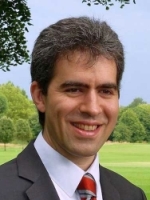
Florian Zettelmeyer is the Nancy L. Ertle Professor of Marketing at Northwestern University's Kellogg School of Management and Faculty Director of the Program on Data Analytics at Kellogg. He also serves as a senior science leader at Amazon, leading the Advertising Economics organization. His research focuses on marketing analytics, digital advertising, and the economic implications of artificial intelligence in business. PhD in Management Science from MIT (1996) Vordiplom in Business Engineering from University of Karlsruhe (1992) MS in Economics from University of Warwick (1991) Professor Zettelmeyer specializes in analyzing how analytics and AI transform firms, with notable work on advertising measurement, pricing strategies, and consumer decision-making in automotive markets. His publications span journals like Marketing Science, Management Science, and American Economic Review, emphasizing empirical validation through field experiments. He has received prestigious awards including the John D.C. Little Award (twice), Sales SIG Excellence in Research Award, and multiple teaching honors such as the Sidney J. Levy Teaching Award and L. G. Lavengood Outstanding Professor of the Year Award. His research frequently appears in top-tier journals and working paper series.
Christian List is Professor of Philosophy and Decision Theory at Ludwig Maximilian University of Munich, where he serves as Co-Director of the Munich Center for Mathematical Philosophy (MCMP). Previously, he was Professor of Philosophy and Political Science at the London School of Economics until 2020. His work bridges philosophy, economics, and political science with a particular focus on individual and collective decision-making and the nature of intentional agency. Professor List's research spans multiple interconnected domains: theories of individual and collective choice (particularly social choice theory and judgment aggregation), free will and consciousness, the philosophy of mind and action, and the foundations of the social sciences. His work on group agency, developed in his influential book Group Agency with Philip Pettit, has reshaped debates about corporate entities and collective intentionality. His more recent work on free will, culminating in his book Why Free Will is Real , presents a scientifically grounded defense of free will against reductionist skepticism. His recent publications reveal a sophisticated integration of formal methods with deep philosophical questions, particularly regarding consciousness, probability aggregation, and the relationship between different levels of explanation. List's work consistently demonstrates how mathematical precision can illuminate fundamental philosophical problems while maintaining relevance to broader social and scientific contexts. Scientific Awards and Recognition: Elected Fellow of the British Academy (2014) Member of Academia Europaea (2023) Member of the Bavarian Academy of Sciences and Humanities (2022) Joseph B. Gittler Award from the American Philosophical Association (2020) Philip Leverhulme Prize in Philosophy (2007) 5th Social Choice and Welfare Prize (2010) List has supervised numerous PhD students and early-career researchers, many of whom have gone on to prominent positions in philosophy and related fields. His collaborative work with Franz Dietrich on judgment aggregation has been particularly influential. As Co-Director of the Munich Center for Mathematical Philosophy, he has secured substantial research funding and established MCMP as a leading international hub for formal and mathematical approaches to philosophical problems. Through the Munich Center for Mathematical Philosophy, List leads a vibrant research community that brings together philosophers, economists, political scientists, and mathematicians to tackle foundational questions using rigorous formal methods. The center hosts regular workshops, seminars, and visiting scholars, creating a dynamic intellectual environment that bridges disciplinary boundaries.
Alessia Ferrari is a fixed-term researcher in the Department of Engineering and Architecture at the University of Parma, Italy. She lectures on Hydrology within the Bachelor’s degree programme in Civil and Environmental Engineering and serves as the reference teacher for the same programme across multiple academic years (2020/2021 – 2025/2026). Research Focus Ferrari’s research integrates advanced numerical modelling with real-world flood-risk management. Key themes include: High-resolution 2-D shallow-water simulations using GPU-parallel codes. Porosity-based approaches for large-scale urban flood modelling. Levee-breach hydraulics and emergency-action planning. Calibration of hydraulic models using tools such as PEST. Integration of machine-learning techniques with physics-based flood forecasting. Publication Trends Across more than 25 peer-reviewed works (2015-2025), Ferrari has concentrated on computational hydraulics applied to extreme flood events in Northern Italy (e.g., Parma 2014, Lamone 2024). Her papers consistently advance numerical schemes (ADER, HLLEM Riemann solvers) and GPU acceleration while validating models against field data, thereby bridging theoretical development and practical flood-mitigation strategies. Contact & Office E-mail: alessia.ferrari@unipr.it Office: Science and Technology Campus – Pavilion 10, Engineering Scientific Headquarters, Parco Area delle Scienze 181/A, 43124 Parma, Italy.
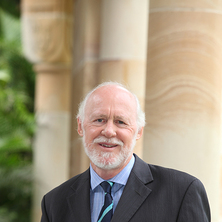
Professor David R. Clarke is the inaugural Extended Tarr Family Professor of Materials at Harvard School of Engineering and Applied Sciences. He is a Senior Fellow of the Hong Kong Institute for Advanced Study (HKIAS) and member of the US National Academy of Engineering. PhD in Physics (University of Cambridge) B.Sc. in Applied Sciences (Sussex University) ScD (University of Cambridge) His research spans fundamentals and applications of ceramics, metals, semiconductors, and polymers, focusing on mechanical properties, thermal barrier coatings, dielectric elastomers, oxidation fundamentals, and microelectronics reliability. Recent work explores electro-adhesive forces and nanopore evolution in yttria-stabilized zirconia. With over 500 publications in journals like Nature and Advanced Materials, Clarke's work has been cited >50,000 times (h-index 107). He holds 13 patents and has advised students across MIT, UC Berkeley, and Harvard. 2008 Japanese NIMS Award 1993 Humboldt Senior Scientist Award Distinguished Life Member, American Ceramic Society Teaching includes undergraduate courses on heat transfer and materials design, plus graduate courses on dislocations and composites. His lab recently worked on quantum dot displays and fatigue crack sensing technologies.
Professor Victor Callan AM is Professor of Leadership and Organisational Change at the University of Queensland Business School within the Faculty of Business, Economics and Law. With over 300 publications to his name, including 179 journal articles, 60 conference publications, and 17 books, he is one of Australia's most recognized researchers in organizational change, leadership performance, and employee training. His influential work has shaped public policy in workforce development, vocational education, and organizational change management. Education: Bachelor (Honours) of Arts, University of New South Wales Doctor of Philosophy, Australian National University Professor Callan's research focuses on two primary areas: organizational change and leadership, with special interest in employees' and leaders' experiences with large-scale change; and employee skills, capabilities and training, examining effective responses to skills development and shortages. His work explores adaptation levels, personal capabilities, communication dynamics, and team processes during organizational transitions. He has pioneered research on maverickism in organizations, investigating how positively deviant change agents drive radical organizational transformations. His recent publications reveal a strong trend toward gender equality research, Indigenous knowledge integration, and maverick leadership. These works span multiple disciplines including organizational behavior, human resource management, vocational education, and leadership studies. His research on workplace gender inequality employs wicked problems frameworks, while his work on Indigenous knowledge holders emphasizes co-creation and positioning as expert researchers. Major Awards and Recognition: Fellow of the Academy of Social Sciences in Australia Fellow of the Queensland Academy of Arts and Sciences Fellow of the Australian Institute of Company Directors Member (AM) of the Order of Australia for significant service to higher education University's Award for Excellence in Higher Degree Research Supervision Two UQ Excellence in Leadership Awards Professor Callan has supervised numerous PhD students across diverse topics including leadership ascension, maverickism, CEO appointments, and organizational change. He has secured substantial research funding, including his 14th Australian Research Council project in 2025 focusing on Indigenous women environmental rangers. His advisory work spans over 100 projects for government departments and international organizations across South Africa, Ghana, Tanzania, Indonesia, Bhutan, Brunei, New Zealand, PNG, and South Pacific countries, addressing employee skills, vocational education, industry closures, and workforce development. He actively contributes to executive education for senior managers globally and has developed strong research, consulting, and industry partnerships. His current teaching focuses on MBA programs and the Bachelor of Advanced Business Honours program at UQ.
Robert M. Weikle, II is a Professor in the Charles L. Brown Department of Electrical and Computer Engineering at the University of Virginia, with a courtesy appointment in the Department of Physics. He earned his B.S. from Rice University (1986), M.S. (1987), and Ph.D. (1992) in Electrical Engineering from Caltech, followed by postdoctoral work at Chalmers University of Technology (1992). His research focuses on millimeter-wave and terahertz electronics , applied electromagnetics, integrated antennas, low-noise sensors, and heterogeneous integration of compound semiconductors. His work bridges electronics and photonics for spectrum access, with applications in astronomy, spectroscopy, and metrology. He has published extensively on micromachined silicon substrates, superconducting materials, and emerging technologies. Scientific Awards: IEEE Microwave Prize (1993) David A. Harrison III Award (1999) University of Virginia All-University Outstanding Teaching Award (2000) Edlich-Henderson Innovator of the Year (2016) Fulbright Scholar (2001) As Chief Technology Officer and co-founder of Dominion Microprobes, Inc., he commercializes micromachined wafer probes for high-frequency metrology. His lab, located in E220 Thornton Hall and the Jesse W. Beams Physics Building, has produced 15+ recent publications on submillimeter-wave devices, THz probes, and calibration techniques.
Jong-Yeon Lee is an Assistant Professor in the Department of Physics at the University of Illinois Urbana-Champaign, where he joined in 2023 after completing postdoctoral research at the Kavli Institute for Theoretical Physics. His work bridges condensed matter physics and quantum information science through investigations of quantum many-body phenomena. His educational background includes: B.S. in Physics and Mathematics from California Institute of Technology (2015) Ph.D. in Physics from Harvard University (2020) Professor Lee's research focuses on exotic quantum phenomena where information theory intersects condensed matter systems. He develops frameworks for understanding decoherence in topological phases, quantum criticality in open systems, and non-equilibrium dynamics using advanced numerical methods. His work on "decohered" quantum systems reveals how information-theoretic transitions relate to boundary quantum criticality, with implications for quantum computing robustness. His publication record shows consistent innovation in quantum information preservation under decoherence, topological phase characterization, and computational studies of correlated electron systems like twisted bilayer graphene. Recent work emphasizes decoding protocols for topological order recovery and information capacity under environmental entanglement. He was awarded the Richard P. Feynman Prize in Theoretical Physics during undergraduate studies at Caltech. Professor Lee actively recruits graduate students and postdoctoral researchers, teaching graduate courses including PHYS 598 Special Topics in Physics. His group focuses on quantum simulation platforms and theoretical frameworks for noisy quantum systems. At Illinois, he contributes to the theoretical condensed matter and quantum information research ecosystem, developing collaborations across physics and engineering disciplines.
Yu Xia is a Post Doc at the Department of Chemistry, Stockholm University, Sweden. He is affiliated with the Tom Willhammar Research Group, focusing on advanced electron microscopy and diffraction techniques for structural characterization of materials. PhD (2019–2023) from a joint program between the University of Birmingham (UK) and the Southern University of Science and Technology (China). Research emphasizes fabrication of metallic nanoparticles with non-equilibrium structures and shapes using gas-phase condensation and thermal shock methods. Specializes in scanning transmission electron microscopy (STEM), in-situ heating experiments, and electron energy loss spectroscopy (EELS) for nanoparticle analysis. Current work prioritizes 4DSTEM imaging for electron beam-sensitive materials and Python-based post-processing of electron microscopy datasets. Yu Xia's research spans Materials Science , Nanotechnology , and Electrocatalysis , with applications in photocatalytic hydrogen evolution , graphene composites , and advanced electron microscopy techniques . His work often integrates computational image processing with structural characterization to optimize material properties. Publications highlight innovations in heterostructure engineering , metallic alloy catalysts , and electron beam-sensitive material imaging . No scientific awards are explicitly mentioned in the provided text. Yu Xia's technical expertise includes Python scripting for image analysis, in-situ electron microscopy , and multifunctional graphene-based materials .
Steven F. Son is the Alfred J. McAllister Professor of Mechanical Engineering at Purdue University, affiliated with the College of Engineering. He holds joint appointments in Aeronautics and Astronautics, Materials Engineering, and Mechanical Engineering. His research focuses on energetic materials, combustion science, and propulsion systems, with emphasis on detonation physics, additive manufacturing of explosives, and novel propellant designs. Key projects include developing throttleable solid propellants, studying material-filled void effects on detonation waves, and optimizing nanomaterials for enhanced reactivity. Dr. Son’s work integrates experimental and computational methods, such as laser absorption spectroscopy and machine learning, to advance understanding of high-energy materials. His contributions span from fundamental material characterization to applied systems like Martian perchlorate-based propellants. He leads research at the Maurice J. Zucrow Laboratories, Purdue’s premier facility for propulsion and energetic materials research. His recent studies explore flexoelectricity in fluoropolymer/aluminum composites, laser ignition systems for solid propellants, and thermal decomposition mechanisms of novel energetic formulations. While no awards are explicitly listed, his prolific publication record and interdisciplinary approach highlight his influence in the field.
James D. Long is a Professor of Political Science at the University of Washington and co-founder of the Political Economy Forum. He holds affiliations with multiple institutions including the Center for Statistics and the Social Sciences (CSSS) and the Technology and Social Change Group (TASCHA). His research focuses on electoral integrity, political violence, and ICT applications in development, particularly in sub-Saharan Africa and South Asia. He has observed elections in over a dozen countries and led field experiments on voter behavior and anti-corruption strategies. Long’s work is funded by USAID, NSF, and others. Education: PhD in Political Science, UC San Diego (2012) MSc in African Politics (Merit), SOAS, University of London (2004) BA in International Relations & History, College of William & Mary (2003) Research Interests: Elections in developing democracies, electoral fraud, technology for governance, insurgency impacts, and poverty reduction. His methods combine field experiments, ethnography, and election forensics. Recent Work: Examines ICT-driven citizen engagement platforms to improve governance and service delivery in developing nations. His 2020 ACM award-winning research addresses wildlife conservancy community relations via technology. Awards: ACM Best Paper Award (2020) Fulbright Scholar (2008-2009) Harvard Academy Fellowship (2012-2016) Advising & Grants: Supervises PhD students in comparative politics and development. Secured grants totaling over $1.5M for projects on electoral integrity and anti-corruption. Hosts the podcast 'Neither Free Nor Fair?' on global election security. Teaching: Courses include Global Crime/Corruption, African Political Economy, and Comparative Politics. Served as Associate Chair of the Department of Political Science.
Lauren K. Williams is the Dwight Parker Robinson Professor of Mathematics at Harvard University and the Sally Starling Seaver Professor at the Radcliffe Institute. Her research focuses on algebraic combinatorics, cluster algebras, and mathematical physics, with notable contributions to the study of the positive Grassmannian, amplituhedron geometry, and integrable systems. She holds affiliations with Harvard’s Department of Mathematics and the Radcliffe Institute for Advanced Study. Her work bridges combinatorics, algebraic geometry, and physics, particularly in understanding geometric structures like the amplituhedron, which encode scattering amplitudes in quantum field theory. Key areas include cluster algebras, Schubert varieties, and applications of combinatorial methods to stochastic processes such as the asymmetric exclusion process (ASEP). Recent activities include organizing conferences on combinatorics, mathematical physics, and the legacy of mathematicians like Richard P. Stanley. Her research often explores connections between discrete structures and continuous systems, with a focus on positivity and geometric positivity principles. Awards and grants are not explicitly listed in the provided texts, but her contributions have been recognized through invitations to major international conferences and leadership in the field. She actively mentors students and postdocs in combinatorics and algebraic geometry.
Dr. Jason Rights is an Associate Professor in the Department of Psychology within the Faculty of Arts at the University of British Columbia. His office is located in Kenny Room 2017 at 2136 West Mall, Vancouver, BC. He leads The Rights Lab, a quantitative methods research group dedicated to improving statistical practice in scientific research. His educational background includes: B.S. in Psychology and Mathematics from the University of North Carolina at Chapel Hill (2011) M.S. in Psychology (Quantitative Methods) from Vanderbilt University (2015) Ph.D. in Psychology (Quantitative Methods) from Vanderbilt University (2019) Dr. Rights' research focuses on addressing methodological complexities in multilevel/hierarchical data contexts where observations are nested (e.g., patients within clinicians, students within schools). His work spans several interconnected programs including developing R-squared measures for multilevel models, addressing issues with level-specific effects, exploring connections between multilevel and mixture models, and advancing latent variable model selection techniques. Analysis of his publication record reveals a consistent focus on methodological innovations in quantitative psychology, with particular emphasis on improving statistical techniques for hierarchical data structures. His work bridges theoretical statistical development with practical applications across psychology and related fields. Dr. Rights actively develops open-source software in R to implement his methodological contributions, making advanced statistical techniques accessible to researchers. The Rights Lab serves as the hub for his ongoing research program in quantitative methods development.
Gita Steiner-Khamsi is the William Heard Kilpatrick Professor of Comparative Education at Teachers College, Columbia University, where she chairs the Department of International and Transcultural Studies. She also holds a UNESCO Chair in Comparative Education Policy at the Geneva Graduate Institute of International and Development Studies. Her career spans over three decades with significant contributions to understanding how educational policies travel across national borders and are adapted in local contexts. Her educational background includes a Ph.D. in Social Psychology from the University of Zürich (1983) and an honorary doctoral degree from Mongolian State University of Education (2004). Prior to joining Columbia, she worked for ten years on multicultural and anti-racist education policies at the Ministry of Education in Zurich, Switzerland. Steiner-Khamsi's research focuses on policy borrowing and lending, globalization studies, comparative policy analysis, school reform, and teacher policy. She has pioneered system-theoretical approaches to understanding externalization, reception, and translation of educational policies across borders. Her work examines how international organizations govern education in the absence of coercive measures and how governments respond to global norm-setting. Her publication record shows consistent scholarly output with increasing focus on knowledge brokerage as a global governance tool, soft governance through international comparison, and transnational accreditation of public schools. Her most recent book (2025) explores the seven temporalities of global school reform, demonstrating her continued evolution in examining the time dimensions of policy transfer. William Heard Kilpatrick Professor of Comparative Education UNESCO Chair in Comparative Education Policy Dr. h.c. from Mongolian State University of Education Steiner-Khamsi has supervised over 60 doctoral students (PhDs and EdDs) and has led significant international projects including the USAID Teacher Education Project in Pakistan, which she describes as giving "ownership to Pakistanis" rather than having donors dictate implementation. Her research has been supported by various international organizations including UNICEF, where she investigated teacher shortages in Eastern Europe and Central Asia. She maintains active research projects examining public-private partnerships in education, global governance mechanisms, and transnational accreditation systems, continuing to shape the field of comparative education policy through both theoretical contributions and practical applications in diverse international contexts.
Sabine Süsstrunk is a Full Professor and Director of the Images and Visual Representation Laboratory (IVRL) at EPFL's School of Computer and Communication Sciences. She holds a BS in Scientific Photography from ETH Zürich, MS from Rochester Institute of Technology, and PhD from University of East Anglia. Her career includes positions at Hewlett-Packard Labs and Corbis Corporation. Her research explores computational imaging, computational photography, color processing, computer vision, and image quality. Key interests include near-infrared applications, multispectral imaging, and computational aesthetics. Her work bridges hardware and software solutions for imaging challenges. Publications demonstrate consistent focus on advancing generative models (diffusion models, neural cellular automata), 3D reconstruction (NeRF variants), and media integrity (DeepFake detection). Recent trends show increased emphasis on 3D vision, robustness in generative AI, and video analysis. Awards & Honors: IS&T/SPIE Electronic Imaging Scientist of the Year (2013) Raymond C. Bowman Teaching Award (2018) EPFL AGEPoly IC Polysphere Award (2020) 8 Best Paper/Demo Awards Fellowships: IEEE, IS&T, ELLIS, AIIA She leads the IVRL lab and advises PhD candidates while serving as President of the Swiss Science Council. Research is supported through competitive grants and industry collaborations.
Yukun Li is an Associate Professor in the Department of Mathematics at the University of Central Florida (UCF), part of the College of Sciences. His research focuses on numerical analysis, stochastic partial differential equations, and computational finance. He holds a Ph.D. in Mathematics from the University of Tennessee, Knoxville (2010-2015), followed by postdoctoral roles at Penn State (2015-2016) and The Ohio State University (2016-2019). He has secured grants including NSF REU funding (2023-2026) and led an NSF-funded project on stochastic phase field models (2021-2025). Research interests include: Continuous/Discontinuous Finite Element Methods Numerical Solutions of Stochastic ODEs/PDEs Adaptive Algorithms and Fast Solvers Computational Finance Models Recent publications emphasize stochastic wave equations, phase field models, and financial mathematics. His work spans theoretical analysis and numerical methods for complex systems. Notable recognition includes the 2015 Achievement Award from the University of Tennessee's Mathematics Department. Teaching highlights include advanced graduate courses like Computational Methods for Financial Mathematics and Numerical Linear Algebra, alongside contributions to undergraduate mathematics education. He is proficient in computational tools including MATLAB, Python, FEniCS, and MPI.