Margherita Gerolimetto is a Full Professor at Ca' Foscari University of Venice's Department of Economics, where she holds multiple leadership roles including Department Committee Member, Communications Delegate, and Third Mission Activities Delegate. Her research centers on advanced statistical methodologies applied to economic systems, with particular focus on time series analysis and regional economic dynamics. Research Focus: Professor Gerolimetto's work integrates econometric innovation with regional economic analysis: Development of bootstrap methods for economic time series Spatial analysis of regional economic convergence Urban institutional structure and performance metrics Statistical modeling of migration and labor markets Publication Trends: Her recent scholarship demonstrates: Innovations in bootstrap methodologies for forecasting Applications to environmental and health economics Analysis of urban governance structures Spatio-temporal modeling of economic phenomena
Bee Leng Lee is a Professor in the Department of Mathematics and Statistics at San José State University. She holds a Ph.D. and M.S. in Statistics from the University of Wisconsin-Madison and a B.Soc.Sci. in Statistics from the National University of Singapore. Her research focuses on probability, statistics, and biostatistics, with a strong emphasis on Bayesian methods, clinical trial design, and survival analysis. She has contributed to high-impact works such as dose-finding algorithms for phase I trials and applications of statistical methods in resolving legal disputes. Dr. Lee teaches a wide range of courses including Applied Probability and Statistics, Bayesian Data Analysis, Survival Analysis, and Computational Statistics. She has advised numerous student projects, including studies on stepwise variable selection limitations, generalized linear mixed models for categorical data, and Monte Carlo methods for financial derivatives. Her teaching also extends to foundational courses like Calculus I and Finite Mathematics. Her research projects include collaborations with industry sponsors like IBM (Almaden Research Center) on simulations and metamodeling. She actively publishes in top journals, with recent focus on balancing effective sample sizes in Bayesian designs and resolving contract disputes via statistical experimental design. Her work bridges theoretical statistics with practical applications in medicine, engineering, and public policy. Dr. Lee's contributions to statistical education and clinical trial methodology have positioned her as a key figure in advancing data-driven solutions at both academic and applied levels. She mentors students in cutting-edge statistical programming (R) and oversees special study projects that tackle real-world data challenges.
Soumendra Lahiri is a Professor and Stanley A. Sawyer Professor in Mathematics and Statistics at Washington University in St. Louis's Department of Statistics and Data Science. He earned his PhD from Michigan State University in 1989 and has held faculty positions at Iowa State University, Texas A&M University, and North Carolina State University before joining WashU in 2019. His research spans theoretical and applied statistics with cross-disciplinary impact. Lahiri's research integrates higher-order asymptotic theory , resampling methods , and high-dimensional inference . He develops novel statistical methodologies for complex data structures in neuroscience, astrophysics, and econometrics. His recent work focuses on bootstrap techniques for modern data challenges like network analysis and machine learning model uncertainty. His publication portfolio shows a consistent focus on: Advancing resampling methods for dependent and high-dimensional data Developing theoretical guarantees for machine learning algorithms Creating inference tools for spatial, temporal, and network-structured data Bridging statistical theory with applications in natural and social sciences Honors include the endowed Stanley A. Sawyer Professorship. He maintains an active research program with recent publications in statistical methodology and interdisciplinary applications, particularly in electoral modeling, network analysis, and extreme value theory.
Robert Lunde is an Assistant Professor in the Department of Mathematics and Statistics at Washington University in St. Louis. He holds a PhD in Statistics and Data Science from Carnegie Mellon University and completed postdoctoral research at the University of Michigan and University of Texas. Lunde's research focuses on statistical inference for complex data structures including networks and time series. His expertise encompasses resampling methods, distribution-free inference, and high-dimensional statistics. Specific interests include conformal prediction for network data, validity of jackknife methods for graphs, and bootstrap techniques for streaming algorithms. His recent publications explore subsampling sparse graphons, bootstrap error analysis for Oja's algorithm, and theoretical foundations for network-assisted regression. Lunde teaches courses in mathematical statistics and probability theory, employing his research expertise in statistical learning and inference methods.
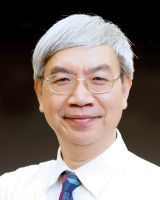
Henry Horng-Shing Lu is a Distinguished Professor at the Institute of Statistics, National Yang Ming Chiao Tung University (NYCU), Taiwan. He holds adjunct roles at Cornell University and Taipei Veterans General Hospital. His research spans statistics, bioinformatics, medical imaging, and machine learning, with a focus on interdisciplinary applications in healthcare and engineering. Education: PhD in Statistics (Cornell University, 1994), M.S. Statistics (Cornell, 1990), B.S. Electrical Engineering (National Taiwan University, 1986). Research Interests: Statistical methods in medical imaging (e.g., MRI, PET), bioinformatics (gene networks, protein interactions), and machine learning for precision medicine. He develops algorithms for image segmentation, disease classification, and genomic data analysis. Awards: Elected ISI Member (2011), PFHEA (2020), Outstanding Research Award (2022), IEEE Senior Member (2022). He has served as Dean of Academic Affairs at NYCU and led initiatives in big data and AI. Labs: Director of the Lu Lab at NYCU, focusing on medical AI, statistical bioinformatics, and secure random number generation. Collaborates with Taipei Veterans Hospital on clinical imaging systems.
Azeem M. Shaikh is the Ralph and Mary Otis Isham Professor of Economics at the University of Chicago's Kenneth C. Griffin Department of Economics and serves as Department Chair. He also holds the Thornber Research Fellowship and co-directs the Becker Friedman Institute’s Big Data Initiative. His research focuses on econometric theory, including multiple testing, resampling methods (e.g., bootstrap), and partially identified models. He has contributed to applications in policy evaluation and causal inference, with notable work on randomized experiments and imperfect compliance. Educated at Duke University (B.S. in Mathematics) and Stanford University (Ph.D. in Economics), Shaikh has been affiliated with the University of Chicago since 2007. His research has received NSF funding and prestigious awards such as the Dennis J. Aigner Award for Applied Econometrics and Alfred P. Sloan Fellowship. He is an elected fellow of the Econometric Society and International Association for Applied Econometrics, and serves on editorial boards of the Econometrics Journal and Journal of Econometrics . Shaikh’s work bridges theoretical econometrics with practical policy challenges, emphasizing methodological rigor in addressing real-world problems like education program evaluation and health survey biases. His recent studies explore nonrepresentative sampling in population health research and novel variance estimators for stratified experiments. Awards: Hoover Fellowship, Sloan Fellowship, Econometric Society Fellowship Grants: NSF support for econometric methods in clustered data and covariate-adaptive randomization Key Contributions: Randomization inference frameworks, multiple testing adjustments, and causal effect identification under monotonicity
Fang Han is Adjunct Associate Professor of Economics at the University of Washington, with joint affiliation in Statistics. He holds a PhD in Biostatistics from Johns Hopkins University and served as Google PhD Fellow during his doctoral studies. His methodological research develops novel statistical tools for dependence measurement, high-dimensional inference, and time series analysis. Research contributions include: Rank-based correlation measures for complex data structures Bootstrap methods for dependence testing Manifold-adaptive statistical techniques Semiparametric regression methods Han serves as Associate Editor for Bernoulli and editorial board member for Dependence Modeling. His NSF-funded work advances statistical learning theory with applications in econometrics and biostatistics.
Suojin Wang is a Professor in the Department of Statistics at Texas A&M University, affiliated with the College of Arts & Sciences. His research focuses on biostatistical methodologies, including missing data modeling, nonparametric and semi-parametric techniques, and survey sampling. His work addresses challenges in variance analysis, resampling methods, and small sample asymptotics. Key research areas include developing robust statistical frameworks for handling non-ignorable missing responses, creating efficient estimation methods for functional data, and applying machine learning to healthcare and environmental problems. Recent studies examine opioid treatment program effectiveness, public transit impacts on aging populations, and shale gas reservoir predictions using clustering algorithms. Wang has contributed to over 80 peer-reviewed articles since 2010, focusing on methodological advancements in statistics with applications in health sciences, environmental studies, and energy research. He holds a leadership role in the Texas A&M Department of Statistics, guiding academic and research initiatives.
Charisios Grivas is an Assistant Professor in the Department of Mathematical Sciences at the Faculty of Engineering and Science, Aalborg University, Denmark. His research lies at the intersection of econometrics, statistics, and environmental modeling, with a strong emphasis on methodological rigor and robust inference. His primary research interests include Econometrics , Statistical Methods , Non-parametric Econometrics , Resampling , Robust Estimation , and Measurement Error Models . He develops and applies advanced statistical techniques to address challenges in linear and time-varying models, particularly in the presence of data imperfections such as measurement errors. The recent articles demonstrate a consistent focus on improving inference in econometric models—especially through automated bandwidth selection, testing for nonlinear dependence, and robust estimation under measurement error. These works span applications in both theoretical econometrics and environmental research, notably in estimating the carbon dioxide airborne fraction. Scientific Awards: No scientific awards mentioned in the provided text. Charisios Grivas actively collaborates with researchers such as Z. Psaradakis and J.E. Vera-Valdés. While no formal advisees are listed, his publications and ongoing research output suggest active supervision and mentorship. There is no mention of specific grants, but his work on measurement error and environmental statistics may be supported by external funding. His research contributes to methodological advancements with practical implications in climate science and economics.
Omer Bobrowski is a Professor in Mathematical Data Science at Queen Mary University of London, affiliated with the School of Mathematical Sciences. His research focuses on stochastic topology, topological data analysis (TDA), and their applications in signal processing and natural language processing. He explores theoretical aspects like phase transitions in stochastic topology and noise distribution in TDA tools, while developing statistical methods for practical applications. His work has been supported by grants from the EPSRC (£396,018, 2024–2027) and the Leverhulme Trust (£330,778, 2024–2027). Collaborators include Primoz Skraba and others in the Centre for Probability, Statistics, and Data Science. Research Interests include: Random Topology, Applied Topology, Stochastic Geometry, and Probability Theory. His lab includes Research Staff Dr. Shu Kanazawa, Dr. Uzu Lim, and Dr. Duncan Parker. Bobrowski’s publications span foundational TDA theory and applied methodologies across diverse datasets.
Ciprian Crainiceanu is a Professor in the Department of Biostatistics at the Bloomberg School of Public Health, Johns Hopkins University. His research spans biostatistical methodology and applications in public health, with a focus on high-dimensional data from wearable devices and medical imaging. Education: PhD, Cornell University, 2003 MS, University of Bucharest, 1998 His research interests include functional data analysis, measurement error, longitudinal modeling, Bayesian inference, and nonparametric statistics, with applications in sleep, aging, multiple sclerosis, Alzheimer’s disease, and cancer. He develops statistical tools tailored to complex data from accelerometers, neuroimaging (MRI, CT, SPECT), and surgical monitoring. His recent work involves dynamic prediction models, step-counting algorithms for NHANES and ARIC data, and methods for high-dimensional functional and imaging data. The most recent publications highlight advancements in wearable data analysis, medical imaging platforms like Neuroconductor, and novel resampling methods such as the upstrap. His work integrates statistical theory, software development, and interdisciplinary collaboration. Scientific Awards: Fellow of the American Statistical Association (ASA) Chair, Statistics in Imaging Section of ASA (two terms) Chair, Biostatistics Methods and Research Design (BMRD) NIH review section Crainiceanu is actively involved in mentoring, teaching, and collaborative research. He co-founded the SMART (Statistical Methods and Applications for Research in Technology) research group and Neuroconductor, fostering interdisciplinary innovation. His work emphasizes scalable, software-backed methods and close collaboration with domain scientists. He has led methodological developments in variance components testing, functional regression, population value decomposition, and dynamic prediction, applied to real-world health challenges. Labs and Research Groups: Co-founder, SMART (Statistical Methods and Applications for Research in Technology) Co-founder, Neuroconductor (open-source platform for medical imaging in R) Wearable and Implantable Technology (WIT) group MAGIC (Methods and Applications Group for Imaging in the Clinic)
David Ruppert is the Andrew Schultz Jr. Professor of Engineering at Cornell University's School of Operations Research and Information Engineering, and Professor of Statistics and Data Science. He holds dual appointments and has been a faculty member since 1987. His education includes a B.A. in Mathematics from Cornell University (1970), M.A. in Mathematics from the University of Vermont (1973), and Ph.D. in Statistics and Probability from Michigan State University (1977). Research Interests: His work spans functional data analysis, astrostatistics, neuroimaging (fMRI/ICA), environmental statistics, and semiparametric regression. He has pioneered methods in measurement error models, splines, and Bayesian statistics. His research has been continuously funded by NSF, NIH, and EPA since 1978. Publications: Over 130 refereed articles and 5 books, including foundational texts like Measurement Error in Nonlinear Models and Statistics and Data Analysis for Financial Engineering . Recent work includes astrostatistical modeling of galaxy spectral energy distributions and neuroimaging analysis. Awards/Honors: Wilcoxon Prize (1986), ASA/IMS Fellowships, Highly Cited Researcher (ISI), and Distinguished Alumni Award (2014). Teaching: Courses include Financial Engineering, Bayesian Statistics, and Functional Data Analysis. He co-developed four graduate/undergraduate courses at Cornell. Service: Editor of Journal of the American Statistical Association , Director of the MPS Program in Data Science and Statistics (DSS). Impact: 29 PhD students trained, many now leading researchers in academia and industry.
Cosma Shalizi is an Associate Professor in the Statistics Department and Machine Learning Department at Carnegie Mellon University, and an External Professor at the Santa Fe Institute. His work bridges statistics, machine learning, and complex systems theory, with applications spanning neuroscience, statistical mechanics, and social networks. Shalizi's research focuses on nonparametric prediction of time series, learning theory, information theory, and causal inference. He has made significant contributions to computational mechanics, developing algorithms like CSSR (Causal State Splitting Reconstruction) for identifying optimal predictive states in complex systems. His work extends to heavy-tailed distributions, network analysis, and the statistical foundations of complex systems. He has pioneered methods for quantifying self-organization and developing nonparametric approaches to spatio-temporal prediction. His recent publications reveal a trend toward increasingly interdisciplinary work, connecting network science with causal inference, statistical learning theory with macroeconomic forecasting, and information theory with biomedical applications. His work consistently emphasizes rigorous statistical methodology applied to complex, dependent data structures across diverse scientific domains. Winner of the Best Student Paper and Best Poster awards Shalizi has advised students including Georg Goerg, who extended spatio-temporal prediction techniques to continuous-valued fields, and George Montañez, who developed fast approximate algorithms for prediction and explored information-theoretic explanations for machine learning. His collaborative network spans statistics, physics, neuroscience, and social sciences, reflecting his interdisciplinary approach to complex systems. His work with collaborators has led to significant contributions in network analysis, causal inference in social networks, and the development of nonparametric methods for complex data structures. He maintains active research programs in statistical network modeling, time series analysis, and the application of information-theoretic approaches to diverse scientific problems.
Thorsten-Ingo Dickhaus is a Professor of Mathematical Statistics at the Institute for Statistics , Faculty of Mathematics, University of Bremen. He holds a PhD in Natural Sciences (Mathematics) from Heinrich-Heine-University Düsseldorf (2008) and has held academic positions at Humboldt-University Berlin, Technische Universität Berlin, and the Weierstrass Institute for Applied Analysis and Stochastics. Education: Diploma in Technomathematics (FH Aachen, 2003), Master of Science (Heinrich-Heine-University Düsseldorf, 2005), Dr. rer. nat. (Düsseldorf, 2008) His research focuses on multiple testing methodologies, particularly false discovery rate control and resampling techniques, with applications in life sciences. He also investigates asymptotic statistics , nonparametric test theory , and computational statistics . Key application areas include statistical genetics, neuroeconomics, and biomedical data analysis. He has been awarded multiple research grants from the German Research Foundation (DFG) for projects on multi-stage studies, behavioral genetics, and dependency structures in multiple hypothesis testing. His editorial roles include Executive Editor for the Journal of Statistical Planning and Inference and Associate Editor for the Biometrical Journal and Annals of the Institute of Statistical Mathematics . Thorsten Dickhaus has organized conferences like the 12th International Conference on Multiple Comparison Procedures (MCP 2022 Bremen) and the Spring School 2014 of Research Unit FOR 1735 . He is involved in professional societies including the Bernoulli Society and the Institute of Mathematical Statistics.
Professor Andrew Wood is a faculty member at the Research School of Finance, Actuarial Studies and Statistics, Australian National University. His research spans non-Euclidean statistics, theoretical statistics, computational methods, and applied statistics in sciences and medicine. Research Interests : Non-Euclidean statistics, directional statistics, statistical shape analysis, asymptotic theory, computational statistics, stochastic differential equations, and applications in science/medicine. Grants : Funded by Engineering and Physical Sciences Research Council (UK), Biotechnology and Biological Sciences Research Council (UK), and Australian Research Council Discovery Projects. Editorial Roles : Former Joint Editor of Journal of the Royal Statistical Society, Series B and current Associate Editor of Biometrika . Research Trends : Recent publications focus on robust statistical methods for non-Euclidean data, computational approaches for complex distributions, principal component analysis for high-dimensional datasets, and geometric inference on manifolds. Applications include microbiome analysis, surface fractal dimension estimation, and spherical regression models. Supervision & Collaboration : Registered as a supervisor at ANU, with collaborations across disciplines including molecular biology, environmental science, and computational mathematics.