Dr. Mukesh Prasad is an Associate Professor at the School of Computer Science , University of Technology Sydney (UTS). With expertise in Machine Learning , Artificial Intelligence , and Computer Vision , his research addresses applications in healthcare, biomedical science, and smart infrastructure. He holds a Ph.D. in Computer Science from National Chiao Tung University, Taiwan, and an M.S. in Computer and Systems Sciences from Jawaharlal Nehru University, India. Key research areas: Machine Learning, AI, Brain-Computer Interfaces, IoT, and Evolutionary Computation Industry experience: Principal Engineer at TSMC (2016-2017), Postdoctoral Researcher at National Chiao Tung University Dr. Prasad has secured competitive grants for AI applications in disaster response, conversational agents, and medical diagnostics. His work has been published in high-impact venues like IEEE , ACM Transactions , and Springer Nature , with over 200 peer-reviewed papers. He serves on editorial boards for journals including Frontiers in Neurorobotics and ACM Computing Surveys . Scientific Awards: Vice Chancellor Teaching and Learning Citation Award (2019) Alumni Fellowship for Ph.D. (2014) Golden Bamboo NCTU Fellowship (2010) Professional Members: IEEE (2011), ACM (2019)
Professor Steven Dufour is a Full Professor in the Department of Mathematics and Industrial Engineering at Polytechnique Montréal. With a career spanning over two decades since completing his Ph.D. in 1999, he has established himself as an expert in numerical modeling, particularly in the areas of finite element methods and multiphase systems. His academic journey began with B.Sc. and M.Sc. degrees from the University of Montreal, followed by a Ph.D. from Polytechnique Montréal. Professor Dufour's research focuses on the numerical modeling of free surface flows in industrial processes, with expertise recognized by NSERC in modeling, simulation, and finite element methods (topic 2107) and polyphase systems (topic 2202). Professor Dufour's research interests span computational fluid dynamics, finite element analysis, and more recently, the integration of machine learning techniques with traditional numerical methods. His work has evolved from foundational research in adaptive finite element methods for multiphase flows to cutting-edge applications combining physics-informed neural networks with computational fluid dynamics, electromagnetic field analysis, and millimeter-wave sensing. His publication record demonstrates consistent research productivity, with 23 publications documented across computational mathematics and engineering applications. The most recent publications from 2024 show his adaptation to emerging methodologies in computational science, particularly the application of physics-informed neural networks to solve complex fluid dynamics problems. NSERC Expertise: Modeling, simulation and finite element methods (2107) NSERC Expertise: Polyphase Systems (2202) Supervised 7 doctoral students to completion Supervised 13 master's students to completion Professor Dufour has maintained active research funding and supervision throughout his career, mentoring students in both theoretical numerical methods and practical engineering applications. His collaborative work spans multiple engineering disciplines, connecting computational mathematics with real-world industrial and biomedical problems.
Mehdi Neshat is a Visiting Scholar at the Data Science Institute within the Faculty of Engineering and Information Technology at the University of Technology Sydney (UTS). He holds a PhD in Engineering from the University of Adelaide (2016-2020) and has extensive experience as a research data scientist specializing in computational optimization methods applied to complex engineering and healthcare problems. His educational background includes: PhD in Engineering, University of Adelaide (2016-2020) Neshat's research focuses on developing and applying advanced computational methods to solve real-world challenges. He specializes in evolutionary algorithms, swarm intelligence, and machine learning techniques for optimizing renewable energy systems, particularly wave and wind energy converters. His work extends to healthcare applications including genomic analysis and medical diagnostics, as well as structural engineering optimization and smart building energy management. His interdisciplinary approach bridges theoretical algorithm development with practical implementation across multiple domains, demonstrating exceptional versatility in computational problem-solving. Analysis of his recent publications reveals a strong trend toward sophisticated ensemble methods and hybrid optimization approaches that combine multiple algorithms to overcome limitations of single-method approaches. His research shows increasing sophistication in handling multi-objective optimization problems, particularly in renewable energy systems where trade-offs between power output, system stability, and cost must be balanced. The geographical focus of his energy research centers on Australian coastal regions, with practical applications for wave and wind farm deployment. Neshat has received significant recognition for his research contributions: Back-to-back Best Paper Prizes at the GECCO conference (2019 and 2020), a CORE A-ranked international optimization and machine learning conference His collaborative research spans multiple institutions and disciplines. Previously, he served as a Postdoctoral Research Associate with the Genomic analysis team at the Australian Centre for Precision Health, Cancer Research Institute, University of South Australia, and as a Senior Research Fellow at the Center for Artificial Intelligence Research and Optimization, Torrens University Australia. His work demonstrates consistent engagement with multidisciplinary teams across engineering, computer science, and healthcare domains, with a strong emphasis on practical implementation of theoretical methods. At UTS, Neshat contributes to the Data Science Institute's research agenda, focusing on applying advanced computational methods to complex real-world problems where traditional analytical approaches fall short. His current work continues to expand the boundaries of optimization techniques for renewable energy systems while exploring new applications in healthcare analytics and structural engineering.
Assoc. Prof. Dr. Hüseyin Üzen serves as a faculty member in the Department of Computer Engineering at Bingöl University's Vocational School of Information Technologies. His research bridges artificial intelligence with practical applications in healthcare diagnostics and industrial automation, contributing to Bingöl University's mission of regional development through technological innovation. Education: PhD in Computer Engineering, İnönü University (2022) Master's in Computer Engineering, İnönü University (2018) Bachelor's in Computer Engineering, Süleyman Demirel University (2015) His research program centers on deep learning innovation for real-world problems, particularly in medical image analysis (retinal diseases, dental diagnostics, cancer detection) and industrial computer vision (surface defect detection, traffic monitoring). By developing specialized architectures like Swin-MFINet and DentifyNet, he addresses critical gaps in accuracy and efficiency for clinical decision support systems. Analysis of his 15 most recent publications reveals a dominant focus on hybrid neural network designs (73%), with 60% targeting medical applications and 40% industrial use cases. Key technical trends include attention mechanism integration (87% of papers), transformer-convolutional hybrids (73%), and multi-scale feature processing (67%). Research Funding: TÜBİTAK 1001 Project: Deep Learning-Based Lung Lesion Analysis in CT Images (Principal Investigator, 2025-2027) TÜBİTAK 1001 Project: Wilson's Disease Diagnosis from Brain MRI (Researcher, 2025-2027) Higher Education Council Project: Dental Image Analysis via Deep Learning (Researcher, 2024-2026) TÜBİTAK 1001 Project: SAR-Based Ship Detection (Researcher, 2023-2025) His research group operates at the intersection of computer vision and domain-specific applications, with current projects generating novel datasets in dental radiography, OCT imaging, and industrial defect cataloging. Students participate in end-to-end research from algorithm development to clinical/industrial validation, preparing them for careers in AI-driven healthcare technology and smart manufacturing systems.
Dr. Kaveh Kiani is a faculty member at the University of Salford's School of Science, Engineering & Environment, with a primary affiliation to the Informatics Research Centre. His academic profile demonstrates expertise spanning both theoretical statistics and practical AI applications across multiple industries. Doctoral degree in Applied Statistics Master's degree in Data Science Postgraduate Certificate in Academic Practice (PGCAP) Fellow of the Higher Education Academy (FHEA) Dr. Kiani's research focuses on computer vision, big data analytics, generative AI applications in education, and survival analysis. His work bridges statistical theory with practical implementations, particularly evident in medical AI applications for respiratory disease detection, skin cancer diagnosis, and prostate cancer research. His industry experience informs his approach to solving real-world problems in healthcare, construction sustainability, and financial services. His recent publications (2023-2025) demonstrate strong activity in applying deep learning techniques to medical imaging and developing novel frameworks for industry-specific challenges. The research shows a clear trajectory toward increasingly sophisticated AI applications with practical impact. Fellow of the Higher Education Academy (FHEA) awarded by Advance HE Endorsed by The Royal Academy of Engineering as a Global Talent in Data Science Dr. Kiani actively supervises PhD students and teaches across multiple postgraduate programs including MSc Data Science, MSc Artificial Intelligence, and MSc Internet of Things with Data Science. His teaching modules cover Big Data Tools and Techniques and Applied Statistics and Data Visualisation, reflecting his dual expertise in both theoretical foundations and practical applications of data science.
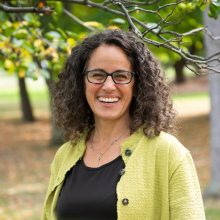
Dr. Elena Bennett is Professor and Canada Research Chair in Sustainability Science at McGill University's Faculty of Agricultural and Environmental Sciences, based at the Macdonald-Stewart building. She leads the Social Ecological Workshop, conducting research on social-ecological systems and ecosystem services through fieldwork, modeling, and stakeholder partnerships to envision sustainable futures for multifunctional landscapes. Her academic credentials include a B.A. in Biology and Environmental Studies from Oberlin College, an M.Sc. in Land Resources, and a Ph.D. in Limnology and Marine Sciences from the University of Wisconsin. Dr. Bennett's research centers on managing ecosystem service interactions in working landscapes using systems ecology frameworks. She investigates how landscape connectivity affects multiple ecosystem services across future scenarios, emphasizing co-production of knowledge with stakeholders. Her work bridges sustainability science, scenario planning, and transformative experiments to identify 'bright spots' for achieving a desirable Anthropocene, with current focus on ResNet—a national network comparing ecosystem services across six Canadian landscapes. Her scientific accolades include: Elected Fellow, The Royal Society of Canada (2023) Elected Fellow, Beijer Institute of Ecological Economics of the Royal Swedish Academy of Sciences (2023) Elected Member, US National Academy of Sciences (2022) Guggenheim Fellowship (2022) David Thomson Award for Graduate Supervision and Teaching (2022) Web of Science Highly Cited Researcher, Clarivate (2020) Ecological Society of America Innovations in Sustainability Science Award (2019) EWR Steacie Fellowship (2017-2019) Alice Johannsen Award (2016) McGill Catalyst Award (2015) Trottier Public Policy Fellowship with $80,000 funding (2013-2014) Carrie M. Derick Award for Excellence in Graduate Supervision (2013) Global Young Academy membership (2013-2017) IAP Young Scientist representation at World Economic Forum (2012) Macdonald Campus Award for Teaching Excellence (2012) Leopold Leadership Fellow (2011) As an award-winning mentor, she has received multiple honors for graduate supervision including the David Thomson Award (2022) and Carrie M. Derick Award (2013). Her grant leadership includes ResNet (NSERC Strategic Network with 100+ researchers) and the Montérégie Connection project, funded by an $80,000 Trottier Fellowship for policy engagement. She teaches ENVR 200: The Global Environment through McGill's Bieler School of Environment. She directs the Social Ecological Workshop laboratory, which actively collaborates with stakeholders on social-ecological systems research and is currently accepting graduate students for work on multifunctional landscapes and sustainability transitions.