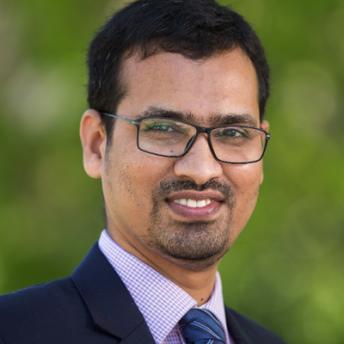
Zuzana Juhászová is an Associate Professor at the Department of Accounting and Auditing within the Faculty of Economic Informatics at the University of Economics in Bratislava. She holds a PhD and has served in various leadership roles including vice dean for education (2007-2011, 2011-2015) and vice rector for education (2015-2019, 2019-2023) at her university. Education: PhD in Accounting (2003), habilitation in Accounting (2009), all from University of Economics in Bratislava Leadership: Former vice dean/rector roles focused on education Expertise: Auditing oversight since 2008 Research Focus spans accounting standards (IFRS 16 adoption), bankruptcy prediction modeling, XBRL technology applications, sustainability in business (including transport sector greening), and cryptocurrency networks for economic crime prevention. She has led multiple VEGA and APVV grants since 2007, including projects on financial decision-making in unstable markets and audit quality assessment. International Engagement includes Erasmus+ staff training at universities in Turkey, Poland, and Spain. Her academic output includes 33 publications in WoS/Scopus databases with 152 citations, focusing on audit regulation, financial reporting innovations, and integrated sustainability frameworks. Teaching Impact : Supervised 57 bachelor's theses, 150 master's theses, and 7 doctoral dissertations. She has also contributed to professional audit examination commissions.
Ipek Koparan is an Assistant Professor of Strategy in the Department of Management at Bentley University. She holds a Ph.D. in Management from Kent State University (2020), a Master of International Business from Tufts University (2010), and a Bachelor of Business Administration from Middle East Technical University. Her teaching interests include Business and Corporate Strategy, International Business, and Management. Prior to joining Bentley, she served as a Visiting Assistant Professor at Oklahoma State University (2019-2020) and worked in various roles at the Turkish Government (2004-2015), including Chief of Department and Foreign Trade Specialist. Ph.D., Management, Kent State University Master of International Business, Tufts University Bachelor of Business Administration, Middle East Technical University Her research focuses on the psychology and physiology of decision-making under uncertainty, strategic factor markets, dynamic capabilities, and entrepreneurial opportunity recognition. Recent work explores applications of AI in strategic decision-making, environmental sustainability in multinational enterprises, and the pricing of unique resources in decentralized finance (DAOs). She has published in the Journal of International Business Studies and Academy of Management Review , with findings presented at the Academy of Management and Strategic Management Society conferences. Ipek’s publications demonstrate a strong emphasis on risk, uncertainty, and resource valuation. Her 2021 distinguished paper award from the Academy of Management’s Strategy Division highlights her contributions to understanding dynamic capabilities and strategic factor markets. Current research trends include integrating artificial intelligence into strategic analysis, advancing sustainable practices in global firms, and examining behavioral dimensions of resource pricing. Distinguished Paper Award, Academy of Management Strategy Division (STR), 2021
Olga Bruyaka is Professor and Department Chair of Management at West Virginia University . Her research examines value creation mechanisms in organizations, focusing on knowledge search strategies , inter-firm collaboration , and ambidextrous internationalization across emerging and knowledge-driven industries. Ph.D. in Management (EM Lyon Business School, France) M.S. in Strategy and Management (EM Lyon Business School, France) M.S. in Economics (Kiev National Taras Shevchenko University, Ukraine) B.S. in Management (Kiev National Taras Shevchenko University, Ukraine) Her work investigates how firms' strategies affect innovation outcomes , economic performance , and longevity , with empirical contexts spanning biopharmaceuticals, fiber optics, and high-speed train industries. Recent publications analyze dynamic capabilities , coopetition networks , and status effects on reputation signaling . Scientific Awards : French government study grant Her teaching portfolio includes Strategic Management , Global Business Communications , and International Business Education . Prior to WVU, she served as Assistant Professor at Virginia Tech, USA.
Peter Winkler serves as a University Professor in the Department of Communication Science at Paris Lodron University Salzburg. His academic profile demonstrates extensive engagement with contemporary communication challenges, particularly focusing on digital transformation's impact on strategic and organizational communication systems. With continuous scholarly output from 2008 through projected 2025 publications, he maintains active research leadership in the field. Professor Winkler's research interests center on strategic communication in digital environments, with particular expertise in organizational communication, public relations evolution, and digital media strategies. His work critically examines the political dimensions of integrated communication systems, exploring how micro-political dynamics and ideological frameworks shape corporate communication practices. He investigates the paradoxical nature of digital transformation in public relations, analyzing tensions between control demands and flexibility requirements in contemporary communication strategies. His recent publication trajectory reveals a pronounced focus on digitalization challenges in strategic communication, with increasing attention to political dimensions of corporate communication and organizational emergence through communication processes. The VUCA framework appears as a significant conceptual tool in his latest work, reflecting adaptation to volatile, uncertain, complex, and ambiguous communication environments. Dissertationspreis der DGPuK Fachgruppe Public Relations und Organisationskommunikation (2015) EUPPRERA Best Paper Award (2016, 2020, 2022, 2023) Professor Winkler actively contributes to academic discourse through substantial peer review activities for journals including Journal of Communication Management, Business & Society, and Journal of Business Ethics. He serves as project manager for multiple significant research initiatives, notably DigInfluAd Austria and the DIGISKILLS series examining digital competencies in Austria. His advisory activities include participation in habilitation committees and expert assessments, demonstrating institutional leadership beyond direct research contributions.
Jane Cleland-Huang serves as the Frank M. Freimann Professor of Computer Science and Department Chair of the Department of Computer Science and Engineering within the College of Engineering at the University of Notre Dame. Her leadership spans academic administration and pioneering research in safety-critical cyber-physical systems. Her educational foundation includes a Ph.D. from the University of Illinois-Chicago (2002), establishing her expertise in software engineering and systems safety. This background directly informs her current research trajectory. Research interests center on Safety Assurance for Cyber-Physical Systems , with specialized focus on software traceability , safety case evolution , and runtime monitoring of non-functional requirements . Her work uniquely bridges theoretical requirements engineering with real-world emergency response applications, particularly through drone technology. Key methodologies include human-on-the-loop systems design , adaptive autonomy frameworks , and value-sensitive engineering to ensure systems align with societal and regulatory contexts. Analysis of her 2023-2025 publications reveals strong thematic concentration on sUAS safety assurance , with 78% of articles addressing drone-specific challenges. Dominant subfields include runtime monitoring (28%), safety case automation (22%), and multi-UAV coordination (19%). Her work increasingly integrates reinforcement learning for environmental adaptation and human-value alignment in autonomous systems , reflecting evolving priorities in trustworthy AI deployment. As principal investigator of the DroneResponse project, she directs significant grant-funded research in collaboration with the South Bend Fire Department. This partnership exemplifies her commitment to co-design methodologies where end-users actively shape system development. Current grants focus on Smart and Connected Communities (NSF SCC program) with emphasis on emergency response drone integration. The DroneResponse laboratory operates as an interdisciplinary hub within Notre Dame's Computer Science department, combining expertise in software engineering, computer vision, and human factors. Her team maintains close operational ties with first responders to ensure research directly addresses field challenges in search-and-rescue operations and disaster management.
Christian Hofer serves as a Professor in the Supply Chain Management department at the Walton College of Business, University of Arkansas. His teaching portfolio includes forecasting and inventory management courses in the Executive MBA program, undergraduate instruction, and a doctoral seminar on empirical supply chain research methodology. Education Ph.D. from Robert H. Smith School of Business, University of Maryland BA with Honors in General and International Business from European School of Business (Reutlingen, Germany) and Reims Management School (France) Research Focus : Dr. Hofer's primary research examines competitive dynamics within supply chain networks and inventory management systems. His work investigates how cultural factors, board-level supply chain representation, and competitive actions influence firm performance and procurement decisions. He employs archival empirical methods to bridge theoretical frameworks with practical supply chain challenges, publishing in top-tier journals including Journal of Operations Management and Journal of Supply Chain Management. Publication Trends : Recent publications (2019-2024) demonstrate consistent exploration of strategic supply chain interfaces with corporate governance, sustainability, and competitive behavior. Key themes include board-supply chain linkages, cultural impacts on inventory practices, greenwashing consequences, and innovation diffusion through supplier networks. His work increasingly integrates sustainability considerations with traditional operational metrics while maintaining strong methodological rigor in archival analysis. Awards No specific awards documented in provided materials Advising and Professional Background : Dr. Hofer mentors doctoral students through his empirical research seminar and brings practical industry perspective from his pre-academic career as a management consultant at Booz & Company in Munich. His research trajectory suggests sustained engagement with both theoretical development and practitioner-oriented supply chain challenges, though specific grant funding details are not disclosed in available materials.
Oğuz DOĞAN is an Associate Professor at the Faculty of Tourism , Antalya Bilim University , specializing in Tourism Management and Gastronomy. He completed his bachelor’s, master’s, and doctoral degrees at Akdeniz University and currently leads the Department of Gastronomy and Culinary Arts. Research Interests: His work focuses on destination management, alternative tourism, gastronomy, medical tourism, hospitality management, and tourism clusters. He explores digital transformations in tourism, visitor satisfaction, and sustainable practices. Recent Publications highlight trends in smart tourism destinations, digital detox, marine tourism, and cultural heritage applications. His studies span interdisciplinary themes connecting technology, sustainability, and consumer behavior in tourism contexts.
George J. Siomkos is Professor of Marketing and Dean of the School of Business at Athens University of Economics & Business (AUEB). He also serves as Director of the MSc Program in Services Management (MSM) and Director of 'Agora' (Market Analysis & Consumer Behavior Laboratory). Previously, he has held significant leadership positions including Chairman of AUEB's Business Administration Department, Deputy Chair and Chair of the University of Macedonia's Business Administration Department, and Vice President of the University of Peloponnese's Management Committee. Athens University of Economics & Business (Current): Professor of Marketing, Dean of School of Business University of Macedonia: Former Chair of Business Administration Department University of Peloponnese: Former Vice President of Management Committee Dr. Siomkos holds an impressive academic background with a B.Sc. (cum laude) in Marketing and Management, M.B.A. in Finance, M.Sc. in Statistics & Operations Research, M.Phil. in Marketing, and Ph.D. in Marketing and Corporate Strategy, all from Stern School of Business, New York University. His research focuses on consumer behavior and analysis, marketing research, services marketing (particularly tourism, sports, media, and entertainment), strategic marketing and planning, brand management, and product-harm crisis management. He has authored 10 textbooks in marketing and published over 80 articles in prestigious journals including Journal of Retailing, European Journal of Marketing, and Journal of Consumer Behaviour. Analysis of his recent publications (2007-2010) reveals a strong emphasis on crisis management, particularly product-harm crises, with numerous studies examining consumer responses, recovery strategies, and competitive implications. Simultaneously, he maintains significant research in digital marketing environments, exploring online store atmospherics, layout, and consumer behavior in e-commerce contexts, particularly within the travel industry. Doctoral Consortium Fellow - American Marketing Association (1988) Multiple teaching excellence awards Citations exceeding 200 in international academic journals including Journal of Marketing and Journal of Marketing Research Professor Siomkos has extensive teaching experience across multiple institutions including Stern School of Business (NYU), Long Island University, ALBA, University of Piraeus, University of Macedonia, and Hellenic Open University. He has served on editorial boards of various scientific journals and as a member of organizing committees for international conferences. His laboratory 'Agora' focuses on market analysis and consumer behavior research, providing valuable insights into Greek and international markets.
Francesca Grippa serves as Professor of Business Strategy and Associate Dean of Research at Northeastern University's College of Professional Studies, where she directs the EDA University Center 'Inclusive Entrepreneurship Lab'. She maintains dual research affiliations as a Research Affiliate at MIT Media Lab's Human Dynamics group and collaborator with the MIT Center for Collective Intelligence. Education PhD from University of Salento (2007) Her research program centers on Innovation Management, Organizational Behavior, and Social Network Analysis, with emphasis on collaborative innovation networks and digital transformation. She investigates how communication patterns and virtual mirroring impact organizational performance, team dynamics, and customer satisfaction across healthcare, aerospace, and business sectors. Her methodological approach integrates semantic network analysis, AI-driven behavioral metrics, and organizational network analysis to decode complex human systems. Recent publications reveal a strategic shift toward interdisciplinary AI applications, examining ethical business practices through natural language processing, brand intelligence analytics for political and market forecasting, and semantic analysis of consumer confidence. This evolution demonstrates consistent integration of computational social science with practical business strategy, extending her foundational work on collaborative innovation networks into emerging domains of social computing and ethical AI. Dr. Grippa actively translates research into practice through organizational collaborations with Cincinnati Children's Hospital Medical Center, Mount Sinai Hospital, and Leonardo S.p.A. (aerospace/defense), implementing network analysis to optimize team communication and innovation capacity. She serves as Program Chair for the International Conference on Collaborative Innovation Networks and previously contributed to the European GEDII project's Team Science Advisory Board focused on gender diversity in research. Her laboratory initiatives include the 'Inclusive Entrepreneurship Lab' which develops frameworks for equitable innovation ecosystems, and ongoing work with MIT's Human Dynamics group exploring collective intelligence systems. Current projects investigate AI-enabled real-time collaboration feedback, virtual mirroring applications, and semantic analysis of organizational communication patterns.
Cecily D Cooper serves as a Professor and Ph.D. Program Coordinator in Organizational Behavior at the Miami Herbert Business School, University of Miami, where she is affiliated with the Management department. Her academic career focuses on the complex dynamics of interpersonal relationships and leadership within organizational contexts. Dr. Cooper's research program centers on organizational humor, with particular emphasis on how humor functions as a leadership tool across multiple organizational levels. She has developed significant theoretical contributions including the MOHM model (Model of Organizational Humor Motives) to address conceptual ambiguities in existing humor frameworks. Her work spans CEO humor effects, trust dynamics following leadership transgressions, and the intersection of humor with contemporary workplace issues like gender dynamics in the #MeToo era. She employs diverse methodological approaches including multi-wave surveys, cross-lagged studies, and mixed-methods experiments with substantial sample sizes. Through her extensive publication record in top management journals, Dr. Cooper has established herself as a leading scholar who bridges theoretical rigor with practical relevance. Her research demonstrates how humor serves as both a managerial communication tool and a complex interpersonal phenomenon with significant implications for organizational culture, leadership effectiveness, and employee well-being. Dr. Cooper's scholarly impact is evident through widespread attention to her work, with publications referenced in Wikipedia pages, covered by multiple news outlets, and garnering substantial academic readership across platforms like Mendeley. Her 2024 Annual Review paper on organizational humor has been particularly influential, establishing foundational frameworks for future research in this growing field. As Ph.D. Program Coordinator in Organizational Behavior, Dr. Cooper plays a vital role in mentoring the next generation of organizational scholars, though specific student information is not detailed in the available materials. Her ongoing research productivity, with multiple publications extending into 2025, demonstrates her continued scholarly relevance and active contribution to the field of organizational behavior.
Jonathan San Diego serves as a Reader in Technology and Health Informatics Education at the Centre for Dental Education, King's College London. His academic work bridges dental education, health informatics, and technology-enhanced learning methodologies. With over 348 citations and 111 research outputs, he has established himself as a leading researcher in the application of digital technologies in dental education. Dr. San Diego's research interests center on the integration of advanced technologies into dental education, with particular focus on haptic simulation systems, virtual reality applications, and blended learning methodologies. His work explores how technology can enhance clinical skills acquisition, improve educational outcomes, and address challenges in dental professional development. He investigates social dimensions of technology use, including social bias interventions related to visible facial differences and digital professionalism in healthcare contexts. His fingerprint analysis reveals strong expertise in Undergraduate Student Computer Science (100%), Workstation Computer Science (85%), Teaching and Learning Computer Science (79%), Dental Education (76%), Digital Media (61%), London-based research (60%), learning design (53%), and Motor Skills (51%). His recent publications demonstrate a clear trajectory toward increasingly sophisticated applications of technology in dental education, with growing emphasis on competency-based learning design and the social implications of digital media in healthcare education. The research output shows evolution from early work on haptic simulation systems to current investigations of blended learning transitions, social bias interventions, and comprehensive risk analyses of digital media in dental professions. British Education Training and Technology Award (2012) Economic and Social Science Research Council Research Award (2012) KingsCAT: Capture and Analysis Tool for Social Media Research (2024) Medical Futures Award Best Innovation in Dentistry (2011) Medical Futures Award Best Innovation in Health Care (2011) As Principal or Co-Investigator on eight major research projects, Dr. San Diego has secured funding from prestigious organizations including NIHR National Institute For Health & Care Research, Innovate UK, Technology Strategy Board, and the European Commission. Current projects include INCLUSIVE: Improving knowledge, skills, attitudes, and behaviours for LGBTQ+ maternity care (2025-2028), where he serves as Co-Investigator. His earlier projects include FundamentalVR (2018-2019), where he was Primary Investigator developing a surgery simulation platform using haptic feedback, and iPostureSense (2014-2015), a wearable sensor system for musculoskeletal disease prevention. Dr. San Diego's work extends to laboratory development and team leadership, particularly through his involvement with KingsCAT (Capture and Analysis Tool for Social Media Research), which supports interdisciplinary social media research at King's College London. His research teams span multiple disciplines including computer science, dental education, psychology, and health informatics, reflecting his commitment to interdisciplinary approaches in solving complex educational challenges.
Armando Cirrincione is a Lecturer in the Department of Marketing at Bocconi University. He has collaborated with SDA Bocconi since 2004, directing workshops and research projects for public and private institutions. Education: Bocconi University (PhD in Business Economics and Management), Università degli Studi di Trento (Business Economics degree) Research interests include technology-driven competitive strategies, AI/ML applications in marketing, emerging business models, corporate reputation metrics (IoT, deep learning), and sustainability strategies through marketing's ESG lens. He authored the book Mind the Change (2017) on IoT-based business models and developed the Marketing for Sustainability online course (2023). Publication trends show expertise in urban mobility, cultural organizations, and technology's impact on marketing. His work spans academic journals, professional publications, and book chapters. Scientific Honors: Teaching Award, Graduate School, Università Commerciale Luigi Bocconi (2022) Professional roles include serving as a reviewer for international journals, Visiting Scholar at HEC Montreal and Solvay University Brussels, and leading a 10-year Ministry of Economy research project on Italian SMEs in the service industry. He also serves on corporate boards.
Barbara Ryan is a Senior Lecturer at the University of Southern Queensland , specializing in Disaster Communications , Community Engagement , and Public Relations . With over 35 years of experience in PR practice and teaching, she is a Fellow of the Public Relations Institute of Australia (PRIA) and Chair of Emergency Media and Public Affairs . Her research focuses on disaster information seeking, crisis communication, and building community resilience through participative engagement models. Education: PhD (RMIT University) Master of Professional Communication (University of Southern Queensland) Graduate Certificate in Tertiary Teaching and Learning (University of Southern Queensland) BA (Mitchell College of Advanced Education) Her recent work includes the 2022 Community Experiences of Eastern Australia Floods project funded by Natural Hazards Research Australia , building on earlier research like the 2020 Bushfire Preparedness Study and the 2018 National Community Engagement Model . She teaches courses in Disaster Communication , Crisis Communication , and Campaign Development , with a focus on digital media analytics. Scientific Awards: Fellow of the Public Relations Institute of Australia (PRIA) Founding Member and Chair, Emergency Media and Public Affairs Coordinator, USQ/ANU Fulbright Scholarship (2013) As a practitioner, she combines academic work with real-world consulting in emergency communications , local government reputation management , and community-driven climate action . Her research supervision spans Communication and Media Studies , Disaster and Emergency Management , and Strategic Communication .
Vinogradov Vadim Aleksandrovich is a prominent legal scholar serving as Dean of the Faculty of Law at the National Research University Higher School of Economics (HSE) since June 2020, while also heading the Department of Public Law. With a distinguished career spanning over 25 years since joining HSE in 1998, he has established himself as a leading expert in constitutional law, administrative law, and public law. His academic leadership extends to serving as Academic Director of the Public Law educational program and as a Member of the Academic Council of HSE University. 2008 - Academic title: Professor 2005 - Doctor of Law from Russian Academy of Public Administration under the President of the Russian Federation 2003 - Academic title: Associate Professor 2000 - Candidate of Law from Lomonosov Moscow State University 1997 - Specialty 'Jurisprudence', qualification 'Lawyer' from Lomonosov Moscow State University Professor Vinogradov's research focuses on constitutional law, administrative law, legislative process, digital law, and human rights. His scholarly work examines the intersection of traditional legal frameworks with emerging digital challenges, including constitutional liability in the digital age, AI regulation, and the legal aspects of deepfake technology. His recent publications demonstrate a sophisticated understanding of how constitutional principles must adapt to contemporary technological realities while maintaining core democratic values. His extensive publication record reveals a consistent scholarly trajectory from traditional constitutional law toward increasingly complex digital governance issues. The trend shows a remarkable evolution from foundational constitutional studies to cutting-edge research on digital sovereignty, AI regulation, and the legal challenges posed by new media technologies. His work bridges theoretical constitutional scholarship with practical legal application in rapidly evolving technological contexts. Honored Lawyer of the Russian Federation (March 2025) Anatoly Koni Medal (November 2023) HSE University Honorary Diploma (March 2023) Best Academic Supervisor awards in multiple categories (2023) Gratitude from the President of the Russian Federation (April 2017) As an academic supervisor, Professor Vinogradov has mentored numerous doctoral candidates whose research spans critical contemporary legal issues including digital transformation of education, constitutional limitations on rights for state security, political freedom, and digital sovereignty. His leadership extends to directing major research initiatives and serving on editorial boards of prominent legal journals such as 'Municipal Property: Economics, Law, Management' and 'International Public and Private Law.' His administrative roles include chairing significant working groups on regulatory reform and serving as a trusted advisor to governmental bodies on constitutional and legislative matters.
Mohammad Ali is an Assistant Professor in the Department of Communication at the University of North Dakota. He holds dual PhDs in Information Studies from the University of Maryland, College Park, and Mass Communications from Syracuse University's S.I. Newhouse School of Public Communications. His research focuses on computational journalism, strategic communication, and trustworthy artificial intelligence with applications in natural language processing and media studies. Key research areas include: Computational Framing Analysis Fake News Detection Crisis Communication Visual Media Analysis Social Media Dynamics Recent publications demonstrate expertise in algorithmic approaches to media bias detection, strategic communication frameworks, and cross-cultural social media analysis. His work bridges technical NLP methods with practical communication theory applications. Collaborations span institutions including University of Maryland, Syracuse University, and Go Culture. Current projects involve large language models for misinformation identification and extended situational crisis communication theory incorporating visual elements.





.jpeg)