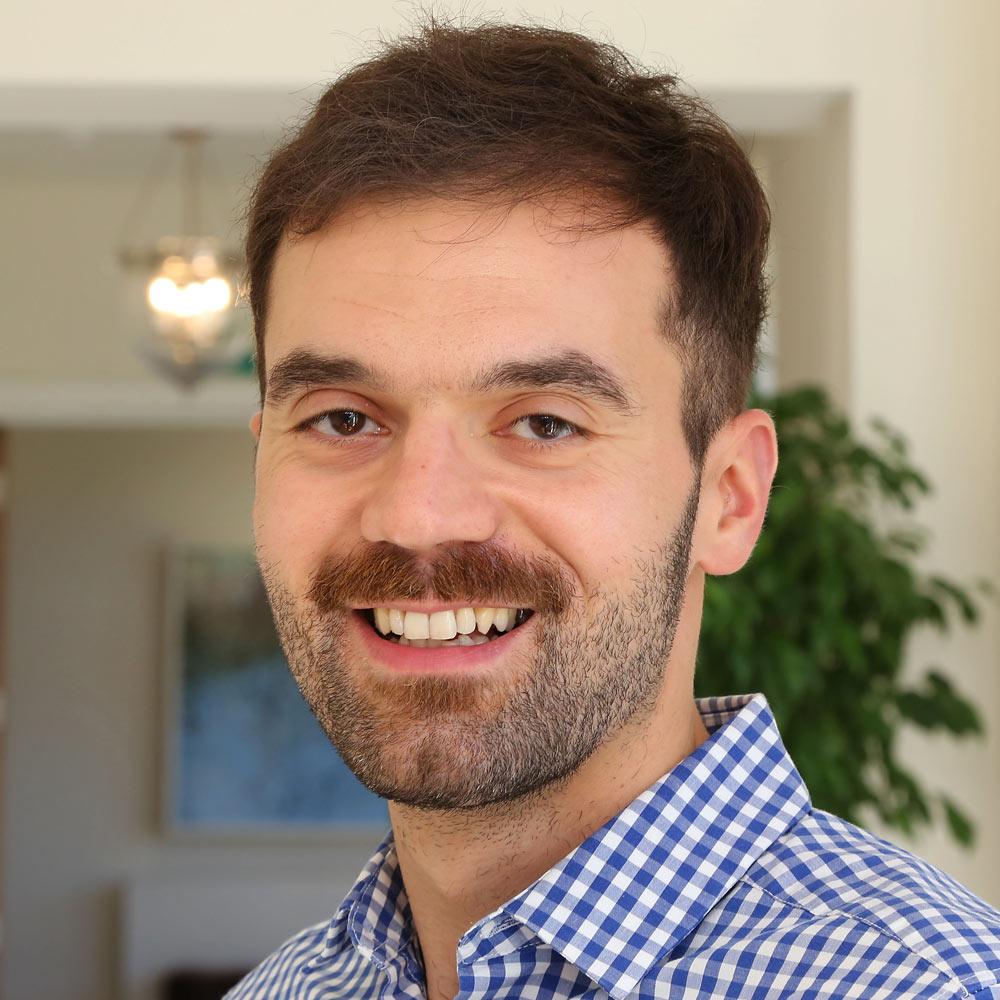
Max MassiView profile
Professor
Professor Max Massi is a distinguished academic at Curtin University, where he serves as a Professor in the Department of Chemistry within the School of Molecular and Life Sciences, Faculty of Science and Engineering. His research focuses on transition metal and lanthanoid coordination chemistry, with particular emphasis on photophysical properties and applications of luminescent compounds in materials and life sciences. Professor Massi leads an active research group that bridges fundamental chemistry with practical applications in biomedical imaging and materials development. Professor Massi's educational background includes: 2001: Laurea (equivalent to M.Sc.) in Industrial Chemistry, University of Bologna 2005: Ph.D. in Chemistry, University of Bologna His research program centers on developing novel luminescent compounds with applications spanning materials science and biomedical imaging. Professor Massi's group investigates transition metal and lanthanoid coordination chemistry, focusing on the photophysical and photochemical properties of these complexes. A significant portion of his work involves creating molecular probes for bioimaging applications, particularly for lipid visualization and cellular processes. His research bridges fundamental chemistry with practical applications in medical diagnostics and materials development, with strong emphasis on iridium, rhenium, and lanthanoid complexes. Analysis of Professor Massi's recent publications reveals a strong focus on $$\text{Ir(III)}$$ and $$\text{Re(I)}$$ complexes, lanthanoid-based materials, and their applications in bioimaging, OLED technology, and medical diagnostics. His work demonstrates interdisciplinary collaboration across chemistry, materials science, and biomedical research, with particular emphasis on the photophysical properties and practical applications of luminescent compounds. The research spans from fundamental coordination chemistry to applied medical imaging and materials science. Professor Massi's scientific achievements have been recognized through prestigious fellowships and memberships: ARC Future Fellowship (2013-2017) Advanced Spectroscopy in Chemistry Visiting Scholar Fellowship (2013) ARC Postdoctoral Research Fellowship (2009-2012) Member of the Royal Australian Chemical Institute (RACI) Member of the Royal Society of Chemistry (RSC) Professor Massi has successfully mentored numerous students and early-career researchers, as evidenced by the many publications featuring junior researchers as first authors. His research group has secured significant funding including BioSA Research Project ($175,000), ITEK Catalyst Grant ($105,000), ARC Future Fellowship ($705,120), and ARC Linkage Infrastructure ($170,000). His collaborative approach is evident in the diverse range of research projects spanning bioimaging, materials science, and medical applications, with strong connections to industry and clinical partners. The Massi Research Group operates as a dynamic interdisciplinary team focused on developing luminescent compounds for practical applications. Their work integrates synthetic chemistry, photophysical characterization, and biological testing to create novel materials with real-world utility. The group maintains strong collaborations with researchers across Australia and internationally, contributing to its reputation as a leading center for coordination chemistry research. Current research directions include developing molecular probes for lipid imaging, creating novel materials for OLED applications, and investigating therapeutic potential of metal complexes.