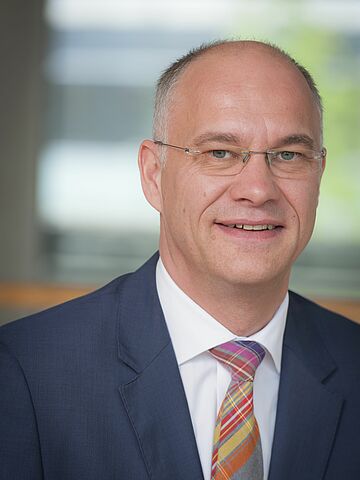
Julia Morse is an Associate Professor in the Department of Political Science at the University of California, Santa Barbara, specializing in global governance, international organizations, and security cooperation. She is a scholar of international relations with a focus on reputation, compliance, and market-driven enforcement in global regimes. Education: PhD, Princeton School of Public and International Affairs (2017) MPA, Princeton School of Public and International Affairs AB in Public Policy Studies and Political Science, Duke University Her research explores the politics of information, monitoring, and compliance in international institutions, including work on AI governance, financial enforcement against illicit activities, and multilateral dynamics. She has authored the book The Bankers’ Blacklist (Cornell University Press, 2022), shortlisted for the BISA IPEG book prize. Research Trends: Her recent publications span global governance challenges (2025–2022), with subfields including strategic noncompliance, norm transgression, UN General Assembly behavior, and financial enforcement mechanisms. Earlier work (2020–2016) examines institutional spillovers, anti-globalization resistance, and counter-multilateralism. Scientific Awards: Shortlisted for BISA IPEG 2023 Book Prize APSA Best Article Award (2023) Robert A. Belfer International Affairs Fellowship (Council on Foreign Relations) She previously served as a postdoctoral fellow at the University of Pennsylvania's Browne Center for International Politics, worked as an intelligence analyst at the FBI, and held roles at the State Department. Her policy writing appears in The Washington Post and The Atlantic , and she consults on global governance issues.
Joshua Plotkin is a Professor of Biology and holds the Walter H. and Leonore C. Annenberg Professorship of Natural Sciences at the University of Pennsylvania. He is a core member of the University’s Center for Mathematical Biology, which focuses on interdisciplinary research at the intersection of mathematics, biology, and ecology. His work integrates evolutionary theory, game theory, and computational models to study topics such as cooperation evolution, population dynamics, and the evolution of social norms. Plotkin’s research interests span evolutionary biology and ecology, with a particular emphasis on mathematical approaches to understanding biological systems. He leads initiatives in the Center for Mathematical Biology, including organizing seminar series and mentoring postdoctoral fellows funded by the Simons Foundation. These fellows are typically advised by mentors from both the Department of Mathematics and the Department of Biology, reflecting the Center’s interdisciplinary mission. His recent work explores topics like the evolution of cooperation, the dynamics of social learning, and the impact of network structures on strategic interactions. Plotkin’s publications frequently address game-theoretic models of human and microbial behavior, including studies on indirect reciprocity, reputation systems, and the evolutionary consequences of environmental feedbacks. His research also examines historical constraints on biological systems, such as the evolution of color naming in human cultures. Plotkin advises graduate students in the Department of Biology and collaborates with researchers across disciplines. He is actively involved in initiatives to model the spread of diseases, such as the multi-strain analysis of the SARS-CoV-2 pandemic, and has contributed to theoretical frameworks explaining evolutionary rescue and the role of phenotypic plasticity in adaptation. No scientific awards are explicitly mentioned in the provided texts, but his contributions to mathematical biology and evolutionary theory are widely recognized. The Center for Mathematical Biology, under his leadership, serves as a hub for collaborative research and training, fostering innovation in quantitative biological sciences.
Prof Noah Lim is a behavioral economist and Provost's Chair Professor at the NUS Business School , where he serves as Head of the Department of Marketing and Director of the NUS Global Asia Institute . Previously, he held the John P. Morgridge Distinguished Chair at the University of Wisconsin-Madison and maintains editorial roles at top journals like Management Science and Marketing Science . He earned his PhD in Marketing from the University of Pennsylvania's Wharton School and holds a first-class honours B.A. in Economics and Political Science from National University of Singapore . His research bridges economics, psychology, and marketing to study decision-making in sales incentives, pricing strategy, and behavioral change for health and sustainability , including leading the $17m NUS Initiative to Improve Health in Asia (NIHA) . His 15 most recent publications span behavioral economics experiments on topics like gender performance disparities , climate policy design , health incentive effectiveness , and team-based sales dynamics . Key journals include Nature Communications , Management Science , and Marketing Science , with methodological innovations in causal inference and experimental design . 2009 Marketing Science Institute Young Scholar 2011 William O'Dell Award Finalist Editorial Board: Management Science (Associate Editor), Production & Operations Management (Senior Editor) He teaches pricing strategy and marketing models , having received teaching awards at Wharton, Houston, and Wisconsin. As Fellow of Wisconsin's Teaching Academy and piano performer with Royal Schools of Music qualifications, he exemplifies interdisciplinary excellence.
Dr. Damiano Spina is a Senior Lecturer in the School of Computing Technologies at RMIT University, Melbourne, Australia. He serves as an Associate Investigator at the ARC Centre of Excellence for Automated Decision-Making and Society (ADM+S), the RMIT Research Lead at the Australian Internet Observatory (AIO), and a member of the International Panel on the Information Environment (IPIE). In June 2025, he began a 3-year appointment as an ACM Distinguished Speaker, recognizing his significant contributions to the computing field. Dr. Spina received his PhD in Computer Science from UNED (Spain) in 2014. His academic journey has established him as a leading researcher in information access systems and human-computer interaction. His educational background reflects a strong foundation in computer science with a focus on information retrieval systems. Dr. Spina's research focuses on Information Retrieval (IR), Text Analytics, and Human-AI interaction, with particular emphasis on interactive IR (including conversational assistants) and the evaluation of information access systems. His work bridges theoretical research with practical applications, addressing critical issues such as fairness-aware evaluation, bias detection, and the impact of generative AI on information access. He has developed innovative methodologies that incorporate physiological and cognitive data to better understand user interactions with information systems. His approach often integrates perspectives from cognitive science, behavioral analysis, and ethical considerations to create more effective and equitable information access solutions. His recent publications demonstrate a clear trajectory toward increasingly interdisciplinary research, combining traditional information retrieval with neurophysiological approaches, ethical frameworks, and societal impact assessments. The articles show growing attention to real-world applications, particularly in addressing misinformation, bias in search systems, and accessibility challenges for diverse user groups. His work increasingly incorporates multimodal data and human-centered evaluation methodologies that go beyond traditional relevance metrics. SIGIR 2025 LiveRAG Challenge - First Place Walert - Outstanding Achievement in the 2024 EIP-RACE Demonstrator Competition Award for Excellence in Reviewing ACM SIGIR 2024 Best Presentation Award NTCIR-17 (2023) Best Poster Award Ubicomp-ISWC 2023 RMIT Award for Research Impact (Technology) (2021) ARC Discovery Early Career Researcher Award (DECRA) (2020-2023) Best Short Paper Award ECIR 2020 Best Evaluation Paper Award ECIR 2019 Top Reviewer Award Information Processing & Management (2018) Dr. Spina has supervised numerous PhD and Master's students across diverse research areas including neurophysiological approaches to information retrieval, trust perception in social media, fairness-aware question answering, and sexism identification in social networks. His research has been supported by significant grants including the ARC DECRA award for 'Fair and Transparent Information Access in Spoken Conversational Assistants' (2020-2023) and ongoing projects through the ADM+S Centre. He has also received the 2021 RMIT Award for Research Impact (Technology) for his work's practical applications. Dr. Spina is actively involved with the Australian Internet Observatory (AIO), a national research infrastructure initiative developing tools to analyze digital social data across disciplines. He co-leads the EXIST project series on sexism identification in social networks and has contributed to the Cortana Intelligence Institute (2018-2020) which advanced knowledge on digital assistants. His work often bridges academia and practical applications, particularly in the areas of misinformation management, fairness in information access, and human-AI cooperation.
Matteo Cavaliere is an Associate Professor at the Department of Physical, Computer and Mathematical Sciences, University of Modena and Reggio Emilia. His research bridges Evolutionary Game Theory , Membrane Computing , and Computational Biology , focusing on cooperation dynamics in structured populations, algorithmic modeling of biological processes, and network resilience mechanisms. Key Research Themes: Strategic cooperation in social/biological systems, information-driven network dynamics, and synthetic biology applications. Teaching Responsibilities: Courses in Algorithms and Problem Solving , Game Theory , and Digital Communication Tools at graduate and undergraduate levels. His recent publications emphasize evolutionary stability through network rankings, cyber-physical cooperation frameworks , and multi-scale biological modeling using agent-based simulations. Collaborative work spans interdisciplinary domains including epidemiology, tissue morphogenesis, and distributed cellular computing, with no scientific awards explicitly mentioned in the provided texts.
Emanuel Regnath is a Tutor at the Chair of Embedded Systems and Internet of Things under Prof. Dr. Sebastian Steinhorst at the Technische Universität München . His work spans research, teaching, and supervision of student theses. Research focuses on Secure Decentralization Methodologies for the Internet of Things Teaching includes courses like Software Architecture for Distributed Embedded Systems and IoT Security His research interests include: Consensus Protocols for Cyber-Physical Systems synchronization Blockchain applications in resource-constrained devices Lightweight Message Authentication using hash-based signatures Key publication trends span: Decentralized vehicle coordination (2019-2021) Blockchain verification for IoT (2015-2020) Security architectures for autonomous systems (2017-2021) Supervised student work includes: Tariro Chingosho: "Designing a Notation System for Consensus Algorithms" (2021) Donát Nagy: "Reputation Framework to Increase Reputation Accuracy" (2021) Markus Moskopp: "Implementation and Evaluation of Consensus Protocols for IoT Systems" (2021) ...and 12 other theses from 2015-2021.
Hege Bentzen is an Associate Professor at Oslo Metropolitan University (OsloMet) in the Faculty of Health Sciences, Department of Rehabilitation Science and Health Technology. She is affiliated with the Postgraduate Studies Research groups focusing on Ageing, health and welfare. Her primary research focuses on geriatric rehabilitation, particularly physical fitness assessment and intervention in elderly populations with conditions such as osteoporosis, vertebral fractures, and cognitive impairment. Dr. Bentzen's research interests center on improving physical function and quality of life in elderly populations. Her work particularly examines the effects of resistance and balance exercise programs for older women with osteoporosis and vertebral fractures, assessment of physical fitness in individuals with cognitive impairment, and fall prevention strategies in nursing home settings. She has conducted numerous randomized controlled trials to evaluate the efficacy of various rehabilitation interventions for elderly patients. Analysis of her publication record reveals a strong focus on geriatric rehabilitation with emphasis on osteoporosis management, cognitive impairment in elderly populations, and fall prevention. Her research consistently employs rigorous clinical trial methodologies, often focusing on women's health issues in aging. The publications demonstrate a progression from assessment methodologies to intervention studies, with increasing sophistication in study designs over time. Dr. Bentzen has been actively involved in research collaborations with colleagues including Astrid Bergland, Brita Stanghelle, Karin Hesseberg, and Lisa Forsen. Her work has been published in reputable journals such as BMC Musculoskeletal Disorders, Osteoporosis International, BMC Geriatrics, and Journal of Aging and Physical Activity, reflecting the interdisciplinary nature of her research spanning geriatrics, rehabilitation science, and bone health.
İbrahim Güran Yumuşak is a distinguished Professor at Istanbul Sabahattin Zaim University's Faculty of Economics and Administrative Sciences, specializing in the Department of Islamic Economics and Finance. With an active research career spanning from 2017 to the present, his work has significantly contributed to the fields of Islamic finance, knowledge economy, and digital transformation in financial systems. His research interests focus primarily on Islamic Finance, Knowledge Economy, Digital Finance, Economic Policy, Central Banking, and Trade Economics. Yumuşak's scholarly work demonstrates a consistent engagement with contemporary economic challenges, particularly in developing interest-free financial models and analyzing Turkey's position within the Organization of Islamic Cooperation member states. His research methodology often combines theoretical frameworks with empirical analysis, as evidenced by his use of gravity models and multivariate GARCH approaches in trade and finance studies. Yumuşak has published extensively on the application of AI technologies to interest-free finance, with his 2022 work on 'the benefit sharing model' representing a significant contribution to fintech solutions in Islamic banking. His 2024 publications demonstrate continued relevance, addressing contemporary issues such as central bank independence and green transition in the energy sector. The interdisciplinary nature of his work is evident in publications spanning from purely economic analyses to cultural studies, as seen in his 2017 work on the Gallipoli Campaign. His scholarly output shows a clear trajectory from foundational work in Islamic finance toward more complex integrations with digital technologies and contemporary economic challenges. While specific award information isn't available in the provided materials, his consistent publication record in reputable venues indicates recognition within his academic community. Professor Yumuşak's work demonstrates strong connections between theoretical economic frameworks and practical applications, particularly in developing alternative financial models that address contemporary economic challenges while adhering to Islamic principles. His collaborations with researchers across different institutions highlight the interdisciplinary nature of his scholarly contributions.
Lolita Buka is a Lecturer at the Department of International and European Law, Faculty of Law, University of Latvia. Her expertise spans human rights systems in Europe, European Union Charter rights, media law, and freedom of expression. University: University of Latvia Department: Department of International and European Law Academic Rank: Lecturer Email: lolita.buka@lu.lv Her research focuses on: Human rights protection mechanisms in EU and international contexts Application of the Charter of Fundamental Rights of the European Union Freedom of expression and media rights in digital environments Judicial challenges in implementing EU directives in Latvia Key publication trends include: Analysis of asylum limitations at the Latvia-Belarus border Comparative studies on the right to be forgotten vs. free speech Regulatory frameworks for online media in Latvia Judicial practices in EU law implementation She serves as a Senior Researcher at the Baltic Human Rights Society and contributes to academic proceedings through Routledge, LU Academic Press, and Eleven Journals.
Dr. Slobodan Tomic is Senior Lecturer in Public Policy and Public Management at University of York, specializing in regulatory governance and bureaucratic accountability. His research examines institutional design of integrity bodies and oversight mechanisms in OECD and developing countries. Research focuses on anti-corruption agencies, regulatory inspection systems, and transnational governance networks. He directs the Masters of Public Administration (MPA) programme and teaches public management, organizational change, and strategic planning courses. Publications include analyses of regulatory reforms in post-COVID governance and comparative studies of accountability institutions. Current projects investigate political culture's impact on horizontal accountability and e-petition systems under democratic backsliding.
Alberto Antonioni is an Associate Professor in the Department of Mathematics at Carlos III University of Madrid. His research focuses on complex systems, game theory, and behavioral science, with applications to social cooperation, climate policy acceptance, and network dynamics. His work integrates theoretical modeling with experimental approaches to study how individual behaviors aggregate into collective phenomena. Key research areas include the evolution of cooperation in social dilemmas, public acceptance of environmental policies, and AI-mediated social interactions. Dr. Antonioni's publications demonstrate methodological diversity, employing agent-based models, network science, and behavioral experiments to address societally relevant challenges like pandemic responses and ecological transitions.
Doug Bosse is a Professor of Strategic Management and the David Meade White Jr. Chair in Business at the Robins School of Business, University of Richmond. He holds a Ph.D. from The Ohio State University's Fisher College of Business and has over a decade of corporate strategy consulting experience. His leadership roles include serving as Associate Dean for International Business Programs, past Chair of the Stakeholder Strategy Interest Group at the Strategic Management Society, and Past-President of Richmond’s Faculty Senate. Education : B.S. and M.B.A. from Miami University, Ph.D. from The Ohio State University. Research Focus : Stakeholder management, corporate governance, innovation, and value creation in entrepreneurial and small firms. Publications : Articles in Academy of Management Review , Strategic Management Journal , Entrepreneurship Theory & Practice , and other top-tier journals, emphasizing stakeholder reciprocity, AI ethics, and alliance dynamics. Dr. Bosse has received multiple honors, including two International Association for Business and Society Best Paper Awards and recognition as a University Distinguished Scholar and Educator. He actively engages with executive teams on strategic planning and leadership alignment.
Brad LeVeck is an Associate Professor in the Department of Political Science at the University of California, Merced, within the School of Social Sciences, Humanities and Arts. His research lies at the intersection of political behavior, psychology, and game theory, focusing on how individuals reason and learn in strategic environments where outcomes depend on the choices of others. His research interests include: Political Behavior and Psychology Behavioral Game Theory Experimental Methodology Strategic Decision-Making Cognitive Learning in Social Contexts LeVeck's work employs experimental methods and game-theoretic models to understand human behavior in political settings. His publications appear in leading journals such as American Political Science Review , Journal of Politics , International Organization , and Proceedings of the National Academy of Sciences . The body of his research demonstrates a consistent focus on the psychological underpinnings of strategic interaction, with themes spanning cooperation, learning, belief formation, and social preferences in political contexts. He has not listed any scientific awards in the provided text. Brad LeVeck advises students in political science, particularly those interested in experimental and behavioral approaches to political inquiry, though specific student names are not listed. He has secured research funding to support experimental work and publication in top journals, as evidenced by his high-impact publications. His research program likely involves collaboration with interdisciplinary teams and possibly lab-based experiments on decision-making. He is affiliated with the Political Science Lab at UC Merced, contributing to experimental research and training students in behavioral methods.
Olaf Streuer is a Professor of Business Administration at Wismar University of Applied Sciences, serving as Head of the Entrepreneurship program in Master's education. Based in House 19, Room 214, he is actively involved in teaching and research related to financial communication and investor relations. His academic focus spans corporate finance, SME financing, and sustainable financial practices. His research emphasizes investor relations frameworks and financial communication strategies, with extensive collaborations across academic and industry networks including: Center for Research in Financial Communication (CRiFC), Leipzig DIRK – German Investor Relations Association Helmut Schmidt University, Hamburg University of Rostock Streuer's publications cover diverse topics in financial communication, including sustainability risk integration, SME capital structures, and investor relations fundamentals. He has presented at numerous conferences and symposia, including DIRK events and NØRD Digital Convention, addressing topics like KI implications in finance and sustainability reporting standards. Teaching activities include courses across multiple programs: Bachelor's: Investment and Financing, SME Financing, Financial Management in SMEs Master's: Entrepreneurial Finance, Business Plan Development, Sustainable Finance International Management: Financial Management
Samantha Sim is an Assistant Professor at Nova School of Business and Economics , specializing in the Management and Organizations department. Her research focuses on workplace compassion, mindfulness, organizational justice, and cross-cultural differences. Ph.D. in Business (Organizational Behavior & Human Resources) – Singapore Management University (2017) Research Master in Social Sciences (Social Psychology) – Tilburg University (2012) Bachelor of Social Science (Psychology) – Singapore Management University (2009) Her work explores mindfulness applications in organizational settings, social thermoregulation, and the impact of cultural differences on behavioral dynamics. Recent publications examine algorithmic risk assessments, cross-national climate-behavior relationships, and measurement invariance in psychological scales. She co-directs the Nova Behavioral Lab and contributes to the Leadership for Impact Knowledge Centre , focusing on organizational behavior and human resource studies. Her research has appeared in top journals like Organisational Behaviour and Human Decision Processes , Journal of Applied Psychology , and Academy of Management Journal .