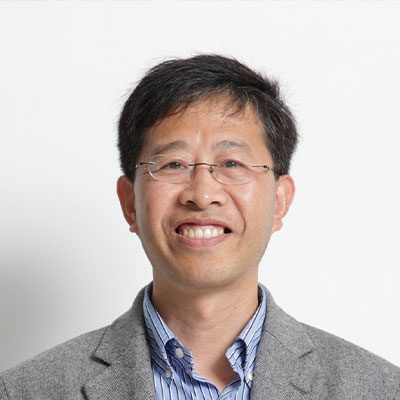
André Beckershoff is a Postdoctoral Research Fellow at the European Research Center on Contemporary Taiwan (ERCCT) at the University of Tübingen's Faculty of Economics and Social Sciences . His research spans political economy , social movements , migration/labor studies , and Cross-Strait relations , with a focus on Taiwan's role in global semiconductor supply chains and transnational political dynamics . He received his PhD from the University of Tübingen and previously studied in Münster and Toulouse.
Dr. Ryszard Nosalski is an Honorary Research Fellow at the School of Cardiovascular & Metabolic Health, University of Glasgow. His research focuses on understanding immune mechanisms underlying hypertension, vascular inflammation, and cardiovascular disease progression. He collaborates extensively with the British Heart Foundation (BHF) Cardiovascular Research Centre. Key research interests include vascular inflammation pathways, T-cell-mediated fibrosis in hypertension, and therapeutic targeting of oxidative stress (e.g., NOX enzymes). His work bridges basic science and translational medicine, addressing clinical challenges such as chemotherapy-induced hypertension and periodontitis-hypertension associations. Recipient of a 2022-2023 grant from Tenovus Scotland for studying the IL-15/IL-15Ra axis in cardiac damage during hypertension. Published over 20 peer-reviewed articles in high-impact journals like Nature Reviews Cardiology , Hypertension , and Circulation Research . His recent work highlights novel therapeutic strategies for vascular inflammation and demonstrates how immune responses contribute to hypertension pathophysiology. Ongoing projects investigate neuroimmune interfaces in atherosclerosis and the role of microRNAs in fibrosis.
Ishita Chatterjee is a Senior Lecturer in the Economics Program at the UWA Business School, University of Western Australia (UWA), since 2010. She holds a PhD from Monash University and has expertise in applied microeconomics, focusing on industrial organization, development economics, and gender issues. She serves on key committees including the UWA Coursework Scholarships Committee (2023–2025), and previously on the UWA Business School Research Committee (2014–2018). Her research addresses topics like human capital development, corruption, public school policies, and wellbeing of women and children. She has supervised numerous PhD, Honours, and Masters students and has received grants including the UWA Futures Fund and UWA Research Collaboration Award. Education: PhD, Competition, Commercial Piracy and Innovation, Monash University (2010) MPhil, Indira Gandhi Institute of Development Research (2006) MA, Jawaharlal Nehru University (2002) BSc, Presidency University, Kolkata (2000) Research Interests: Her work spans applied microeconomics, industrial organization, development economics, and gender-focused issues. Current projects include studies on crime/corruption, public school investments in India, and the impact of air pollution on altruistic behavior in China/India. She collaborates internationally with institutions like Saint Mary’s University (Canada) and the Central University of Finance and Economics (China). Recent Research Trends: Her publications analyze policy impacts on education, gender dynamics in family decision-making, and environmental influences on social behavior. Recent work highlights the role of institutions in addressing corruption and the effects of public policy on educational access and outcomes. Awards: UWA Business School & BHP Billiton Distinguished Research Awards (2017) Ahern Early Career Researcher Application Incentive Award (2015) Multiple UWA Research Development Awards (2014, 2011) Supervision & Grants: Supervised 5 PhD completions and numerous Honours/Masters students. Secured grants including UWA Futures Fund Small Grants (2022, 2021) and the UWA Research Collaboration Award (2022). Her work contributes to UN SDGs related to quality education and gender equality. Labs/Teams: Collaborates with the Australia-India Institute as an Honorary Fellow and co-leads projects with global partners on corruption, education, and demographic economics.
Jeffrey Harvey is an Endowed Professor in the Department of Ecology & Evolution at the Faculty of Science, Vrije Universiteit Amsterdam. His research focuses on parasitoid biology, hyperparasitoid interactions, and climate change impacts on insect communities. He contributes to UN Sustainable Development Goals related to sustainable agriculture and food security. Recent work explores spider life history strategies, pest management under climate change, and hyperparasitoid development dynamics. Education details are not explicitly provided, but his extensive publications (107 articles) and datasets (23) indicate advanced academic training in entomology and ecological sciences. Research collaborations span international institutions, with active projects investigating climate warming effects on trophic level interactions. His work has been cited across platforms like Mendeley and Bluesky, reflecting significant academic impact. Supervised four PhD theses, though specific student names aren't listed here. Key research themes include parasitoid wasp ecology, insect pest management, and behavioral adaptations under environmental stressors.
Professor Amanda Lee is a Chair in Medical Statistics at the University of Aberdeen, affiliated with the School of Medicine, Medical Sciences and Nutrition. She holds the title of Professor since 2006 and has served as Director of the Institute of Applied Health Sciences (IAHS) from 2018 to 2023. Her research focuses on applied medical statistics, epidemiology of vascular diseases, and healthcare equity. She has led the University Medical Statistics Team since 2005 and currently heads the Biostatistics and Health Data Science group. Lee is active in Equality, Diversity, and Inclusion (EDI), co-founding the Women's Development Network in 2020 and serving as IAHS EDI Lead since 2024. Education: MSc in Medical Statistics from Newcastle University (1987), PhD (details unspecified), and extensive postdoctoral experience at the University of Dundee and University of Edinburgh. Her career includes roles as a senior research fellow, Reader, and academic leadership positions. Research Interests: Her work spans biostatistics, vascular disease epidemiology, and health services research. She has contributed to studies on COPD management, surgical training equity, and quality of life in chronic conditions. Notable projects include the BICS RCT on bisoprolol for COPD and analyses of differential attainment in medical examinations. Publications and Grants: Over 250 publications, with recent work on COPD, medical education equity, and surgical training. She has secured £12 million in grants across 84 projects. Teaching includes online courses in research methods and statistics for health professionals. Leadership and Service: Member of numerous university committees, including EDI networks, promotions panels, and policy groups. External roles include statistical editorships, data monitoring committees, and grant review panels.
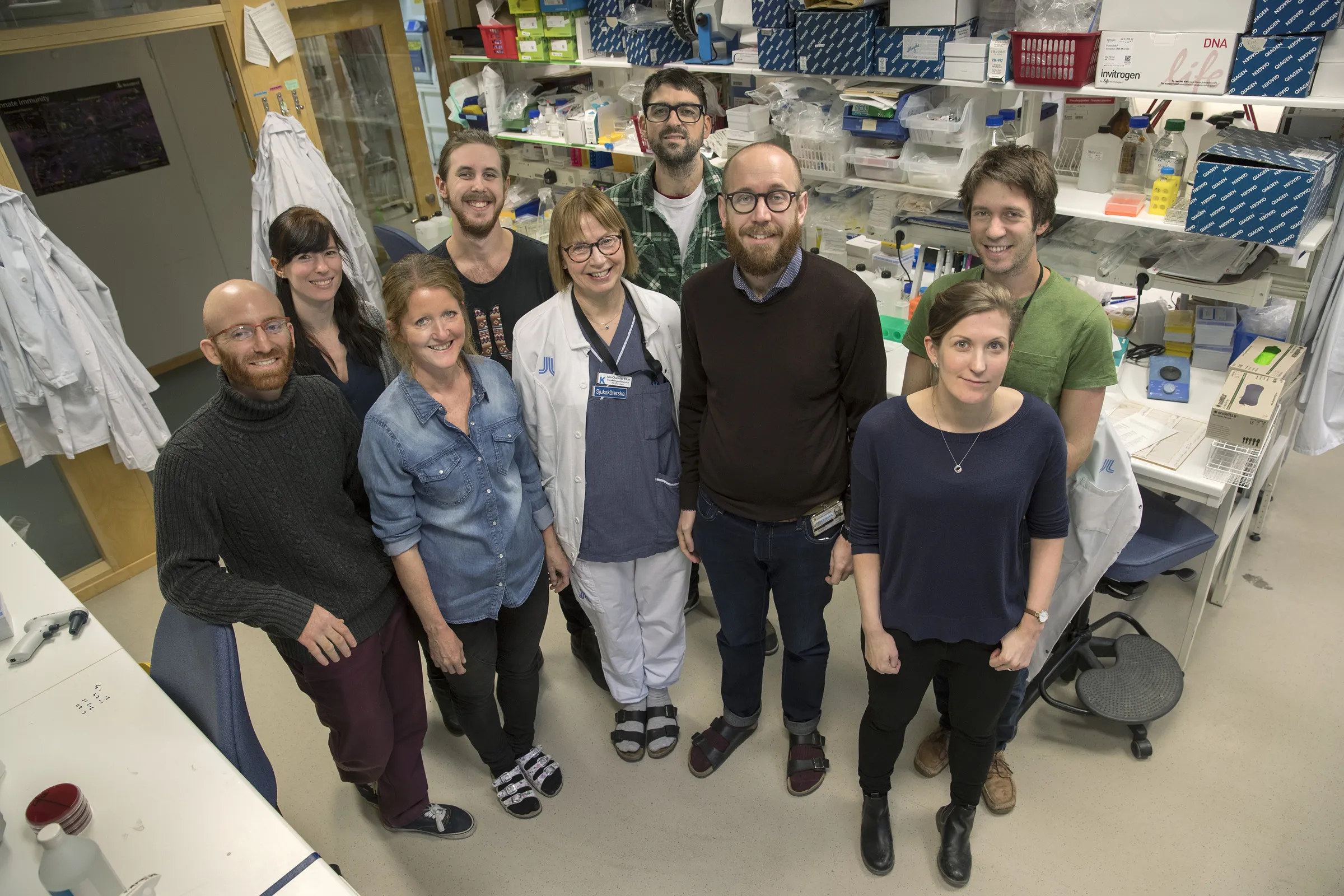
Niklas Björkström is a Professor/Specialist Physician at Karolinska Institutet (KI) in Sweden, affiliated with the Department of Medicine, Huddinge. He leads the Human tissue-resident NK cells research group and is based at the Center for Infectious Medicine (CIM). His dual role combines academic leadership with clinical work at Karolinska University Hospital's Clinical Microbiology department. Education: Björkström earned his MD (2010) and PhD (2011) in Immunology from KI. He completed postdoctoral training at the National Institutes of Health (NIH), USA, before returning to KI as a Principal Investigator in 2014 and becoming a Professor in 2023. He holds an Associate Professor title (2016). Research Interests: His laboratory focuses on understanding human tissue-resident lymphocytes, particularly natural killer (NK) cells, in the liver, uterus, and other organs. Key areas include NK cell biology in liver diseases (e.g., PSC, NASH, hepatitis viruses) and pregnancy immunology. Techniques used include high-dimensional flow cytometry, CyTOF, microscopy, and computational tools (e.g., SPADE, SNE). The group collaborates with Hannover Medical School and the International PSC Study Group. Awards: Björkström has received prestigious honors such as the ERC Starting Grant (2020), Anders Jahre Award (2020), and NovoNordisk Foundation Emerging Investigator (2021). He is also a Wallenberg Academy Fellow (2017–2021). Grants & Advising: He oversees grants like the Swedish Cancer Foundation (2021–2023) and Karolinska Institutet's KID and Assistant Professor Tenure Track grants. Advised students include Christine Zimmer (PhD), Lena Berglin, and others now in postdoc roles or industry positions. Labs & Teams: The Björkström group is part of KI's Department of Medicine, Huddinge, and maintains close ties with clinical units at Karolinska University Hospital. They have open postdoctoral positions and collaborate internationally on liver and pregnancy immunology projects.
James T Carter is an Assistant Professor of Organizational Behavior at Cornell University's ILR School. His research focuses on diversity, discrimination, and inclusion in organizations, examining psychological and contextual factors that influence these dynamics. He holds a PhD from Columbia Business School and an undergraduate degree from Rice University in English & Psychology. Education: B.A. in English & Psychology, Rice University PhD in Business, Columbia University Research Interests: Dr. Carter explores language of diversity (e.g., allyship, racial labels), status processes in organizations, and barriers faced by Black entrepreneurs. His work integrates multi-method approaches to address systemic inequalities and design effective DEI strategies. Consulting & Impact: Provides anti-racism training, DEI strategy development, and organizational assessments for clients like American Physiological Society and XPO Logistics. Specializes in bias training and diversity management consulting.
Dr. Anna Hartman is a Lecturer in Marketing at The Australian National University's Research School of Management. She holds a PhD in Marketing from the University of Melbourne, along with advanced degrees in Marketing Communications and a background in Clinical Nutrition. Her research focuses on consumer culture theory, institutional dynamics, and market legitimacy, particularly in contested markets like reproductive care and aesthetic services. PhD: Marketing, University of Melbourne (2022) MCom: Marketing, University of Melbourne (2017) MSc: Integrated Marketing Communications, Golden Gate University (2011) B.A.: Culture, Ecology & Sustainable Community (2005) DipHlthSci: Clinical Nutrition (2003) Research Interests: Dr. Hartman examines how social evaluations (legitimacy, stigma, authenticity) shape markets, with a focus on cultural consumption and institutional microfoundations. Her work bridges consumer research, organizational studies, and strategic communications, addressing ethical dilemmas in markets such as donor-assisted conception and aesthetic services. Her recent projects explore passionate publics in online reviews, gender equity in academia, and the dynamics of cross-border reproductive care marketing. She currently leads a project on social evaluations in sustainable food systems. Registered to supervise postgraduate students Research grants: Capturing Social Evaluations on Sustainable Food Systems (2024–2025) Labs/Teams: Active in interdisciplinary research teams focusing on market legitimacy and healthcare marketing ethics.
Genhong Cheng is a Professor in the Department of Microbiology, Immunology, and Molecular Genetics (MIMG) at the University of California Los Angeles (UCLA). His research focuses on understanding the molecular mechanisms of host-pathogen interactions, particularly in viral infections such as Zika virus, SARS-CoV-2, and influenza. Dr. Cheng has made significant contributions to the field of innate immunity, especially in interferon signaling pathways and NF-kappaB regulation. Dr. Cheng's research interests span across virology, immunology, and molecular biology. He has extensively studied how viruses interact with host immune responses, with a particular focus on interferon signaling pathways. His work has revealed critical mechanisms by which viruses evade host defenses and how host cells mount effective antiviral responses. Key areas of investigation include: NF-kappaB signaling in immune responses Interferon-stimulated gene functions Host metabolic changes during viral infection Mechanisms of viral replication and evasion Development of broad-spectrum antiviral strategies Analysis of Dr. Cheng's recent publications reveals a strong focus on emerging viral threats, including SARS-CoV-2 and monkeypox virus. His research consistently explores how host metabolic pathways intersect with immune responses to viral infection. A notable theme is the identification of host factors that can be targeted for broad-spectrum antiviral therapies, particularly those involving lipid metabolism and interferon-stimulated genes. Recent work has emphasized translational applications of basic discoveries in viral pathogenesis. Dr. Cheng's laboratory has been instrumental in advancing our understanding of host-pathogen interactions at the molecular level. His team employs a multidisciplinary approach combining virology, immunology, molecular biology, and systems biology to unravel complex host-virus relationships. Current research directions include exploring novel antiviral strategies targeting host factors that are essential for viral replication.
Dr. Hemangini Gupta is a Lecturer in Gender and Global Politics at the University of Edinburgh's School of Social and Political Science. She holds a PhD in Women's Gender and Sexuality Studies from Emory University. Her research focuses on transnational feminisms, capitalist spaces, labor under startup capitalism in India, and the intersections of technology, urbanism, and decolonial theory. Her notable works include the book Experimental Time: Startup Capitalism and Feminist Futures in India , an ethnography of Bengaluru's tech-driven urban economy, and the co-edited textbook Feminist Studies: An Introductory Reader , which bridges foundational and contemporary feminist scholarship. She is also editing an anthology on Bangalore's urban dynamics with Smriti Srinivas. Her current research explores social reproduction under entrepreneurial capitalism and ecological costs of data projects. She is on sabbatical in Spring 2025 and part of the Gender Politics and International Political Economy Research Groups. Her work engages with postcolonial theory, queer activism, and global South urbanization.
Professor Grant Montgomery is a leading academic at the University of Queensland (UQ), serving as Director of the UQ Genome Innovation Hub and Group Leader of the Genomics of Reproductive Disorders at the Institute for Molecular Bioscience (IMB). His primary focus is on understanding the genetic and epigenetic basis of reproductive disorders, particularly endometriosis, through large-scale genomic studies and functional analyses. His work integrates multi-omics data to identify disease mechanisms and develop translational solutions. Research Interests: Genetic and epigenetic regulation of endometrial function Systems genetics approaches to study complex diseases Functional validation of genomic risk variants Development of clinical tools like eQTL/mQTL browsers Multi-omics integration for disease biomarker discovery Recent Articles: Highlighting endometriosis genetics, comorbidity mechanisms, and novel diagnostic approaches. Key themes include genetic risk stratification, epigenetic dysregulation, and translational applications of genomic data. Collaborations: Active partnerships with institutions globally, including University of California, San Francisco, Oxford Endometriosis CaRe Centre, and Monash University. Major consortia include International Endometriosis Genetics Consortium and Reprogen Consortium. Advising & Training: Supervises PhD students focusing on endometrial cell biology, epigenetic regulation, and computational genomics. Provides training opportunities in functional genomics and systems biology. Labs/Teams: Leads a multidisciplinary team with expertise in molecular biology, bioinformatics, and clinical research. Maintains cell culture facilities and single-cell sequencing capabilities.
Dr. Kevin Dillon is an Associate Professor at the University of Southern Mississippi (USM) in the Division of Coastal Sciences within the School of Ocean Science and Engineering. His primary affiliation is at the Gulf Coast Research Laboratory in Ocean Springs, Mississippi. He holds a PhD in Groundwater Hydrology from Florida State University (2003), an MS in Chemical Oceanography from the same institution (1998), and a BS from the University of West Florida (1991). Dr. Dillon's research focuses on marine biogeochemistry, food web dynamics, and groundwater hydrology. He specializes in using stable isotopes to investigate nutrient cycling, trophic interactions in coastal ecosystems, and the impact of human activities such as nutrient pollution and artificial reefs. His work includes studies on restored wetlands, Sargassum communities, and the effects of riverine inputs on coastal acidification and nutrient dynamics. He teaches courses such as Coastal Processes I, Stable Isotope Ecology, Water Quality, and Microbial Oceanography. His recent publications (2019–2025) emphasize trophic dynamics in Gulf of Mexico ecosystems, artificial reef impacts, and biogeochemical responses to altered freshwater flows. Notable studies include assessments of red snapper ecology, sargassum-associated juvenile fish trophic interactions, and the role of stable isotopes in quantifying ecosystem processes. No scientific awards are explicitly mentioned in the provided texts. His advising and grants are not detailed here, but his research has received support from institutions like the Mississippi Water Resources Research Institute and USGS. He is actively involved in coastal conservation and restoration projects, though specific lab affiliations are not listed.
Matthew Sommer is the Bowman Family Professor of History and holds a courtesy appointment in East Asian Languages and Cultures at Stanford University. He specializes in Chinese legal and gender history, with a focus on the Qing Dynasty. His research explores topics such as law, sexuality, and social norms in imperial China. Education: Ph.D., University of California, Los Angeles (History, 1994) M.A., University of Washington (International Studies: China, 1987) B.A., Swarthmore College (Political Science, 1983) Research Interests: Chinese Legal History, Gender Studies, Qing Dynasty, Sexuality in Imperial China, and East Asian Studies. Recent Articles: His work includes studies on transgender histories in late imperial China, legal understandings of violence, and the role of print media in disseminating legal knowledge. Recent publications span 2024 to 1996, with a focus on gender, law, and social dynamics. Honors & Awards: Recipient of the Yalom and Litt Awards (2006), Ellen Andrews Wright Faculty Fellow (2006-2007), and multiple fellowships including the National Resource Fellowship (Chinese, 1990-1991). Advising & Grants: Advises doctoral students in gender and legal history. Served on numerous academic committees at Stanford, including the History Department’s honors program and library initiatives. Labs/Teams: Collaborates with interdisciplinary teams on projects related to East Asian history and gender studies.
Andrea Boggio serves as Professor of Legal Studies in Bryant University's College of Arts and Sciences, Department of History and Social Sciences, teaching graduate and undergraduate courses in business law, health law, and international law. He is currently on sabbatical for 2025-26 as Fulbright-Lund University Distinguished Scholar in Public International Law at Sweden's Lund University, fostering US-Sweden human rights research collaboration. His academic credentials include: JSD, Stanford Law School JSM, Stanford Law School LLD, Università Cattolica del Sacro Cuore, Italy Professor Boggio's research pioneers the human right to science framework, examining legal-ethical dimensions of biosciences through lenses of science diplomacy, innovation policy, and global health governance. His seminal 2024 Oxford University Press book The Human Right to Science: History, Development and Normative Content establishes foundational principles for applying human rights law to emerging technologies. Current work investigates gene editing regulation, biobank governance, and scientific freedom during global health emergencies, emphasizing transnational policy coherence and equitable benefit-sharing mechanisms. Analysis of his recent publications reveals a critical trajectory connecting international human rights instruments with contemporary scientific challenges, particularly in biotechnology regulation where he advocates for human rights-based approaches over purely ethical frameworks. His scholarship demonstrates increasing focus on operationalizing the right to science through indicator development and model legislation. Key recognitions include: Santander Faculty Research Collaboration Award (2017) Fulbright-Lund University Distinguished Scholar (2025-26) Multiple MERIT Awards (2009-2015) Summer Research Stipends (2013-2015) As Associate Editor of Human Reproduction (European Society of Human Reproduction publication) and Journal of Legal Studies Education , he shapes scholarly discourse while serving on the Massachusetts Science & Technology Policy Fellowship Advisory Board, College Board's CLEP Business Law Committee, and as GESDA Foundation consultant. A New York Bar member, he maintains active legal practice alongside academia. His Faculty Fellowship at Bryant's Center for Health and Behavioral Sciences drives interdisciplinary integration of legal perspectives into health sciences research, particularly through science diplomacy initiatives examining how human rights frameworks can guide international scientific collaboration during geopolitical tensions.
Bruce Wiggins is an Associate Professor in Audio Engineering at the College of Science and Engineering. His research focuses on spatial audio technologies, including Ambisonics, binaural auralization, and 3D audio systems. Notable projects include the GASP guitar system and WHAM webcam-based head-tracked audio solutions. He has contributed to advancements in microphone array calibration, speaker array modeling, and virtual reality audio integration. His work bridges theory with practical applications in music technology and acoustic engineering. Education: PhD in Audio Engineering (2004). Research Interests: Ambisonics, spatial audio capture and reproduction, 3D audio for virtual reality, binaural rendering, and innovative musical instrument design. His work emphasizes practical implementations such as the GASP guitar system and calibration tools for low-cost microphone arrays. Article Trends: Recent publications address virtual stereo microphone techniques (2024), dynamic electrical systems (2024), and browser-based 3D audio (2023). Earlier work explores head-tracking algorithms (2016–2020) and acoustic modeling for domestic environments (2017). Grants/Advising: No explicit grants listed. Advising details unavailable but has collaborated with numerous researchers on projects like WHAM and GASP. Labs/Teams: Active in interdisciplinary teams developing spatial audio tools and instruments, including collaborations on virtual reality auralization and ambisonic guitar systems.