Daylon J JamesView profile
Associate Professor
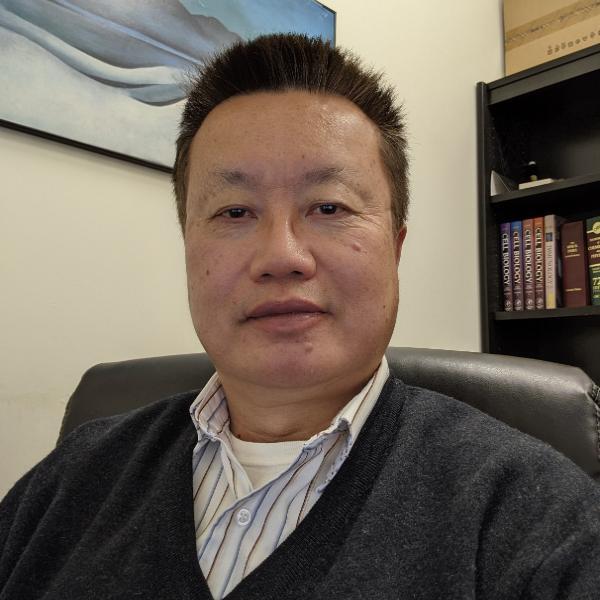
Daylon J James, PhD is an Associate Professor at Weill Cornell Medical College, holding concurrent appointments since 2022 in Obstetrics and Gynecology , Genetic Medicine , and Reproductive Medicine . His laboratory integrates stem-cell biology, vascular engineering, and reproductive endocrinology to address fundamental questions in ovarian biology and fertility preservation. Education Ph.D., The Rockefeller University (2006) B.S., Duke University (1999) Research Focus Dr James’s research centers on three interlocking themes: (1) deriving and manipulating human pluripotent stem cells to create vascular networks and specialized endothelial subtypes, (2) deciphering the molecular cues that govern ovarian follicle development, aging, and depletion, and (3) translating these insights into strategies that protect or restore ovarian reserve in patients facing gonadotoxic therapies. His work exploits biomaterial platforms, xenograft models, and single-cell ‘omics’ to bridge bench discoveries with clinical fertility preservation. Publication Trends Across more than 50 peer-reviewed papers since 2005, two dominant arcs emerge: early foundational studies on endothelial differentiation and vascular niche engineering, followed by a translational pivot toward ovarian biology, AMH-based therapeutics, and chemotherapy-induced ovarian damage. Recent high-impact contributions (2022-2025) emphasize AMH modulation, IGF-1 signaling, and lipid-mediated regulation of genomic stability in both ESCs and human ovarian tissue. Funding & Grants NICHD R01 “Anti-Mullerian hormone for preserving ovarian function …” (Principal Investigator, 2023-2028) NICHD Co-Investigator Award (2021-2024) Laboratory & Affiliations Dr James directs active research programs within the Ansary Stem Cell Institute and the Institute for Reproductive Medicine at Weill Cornell. His group maintains collaborative pipelines with clinical IVF units, enabling rapid translation of engineered endothelial co-transplantation strategies and modified-RNA therapeutics into first-in-human ovarian tissue graft trials.