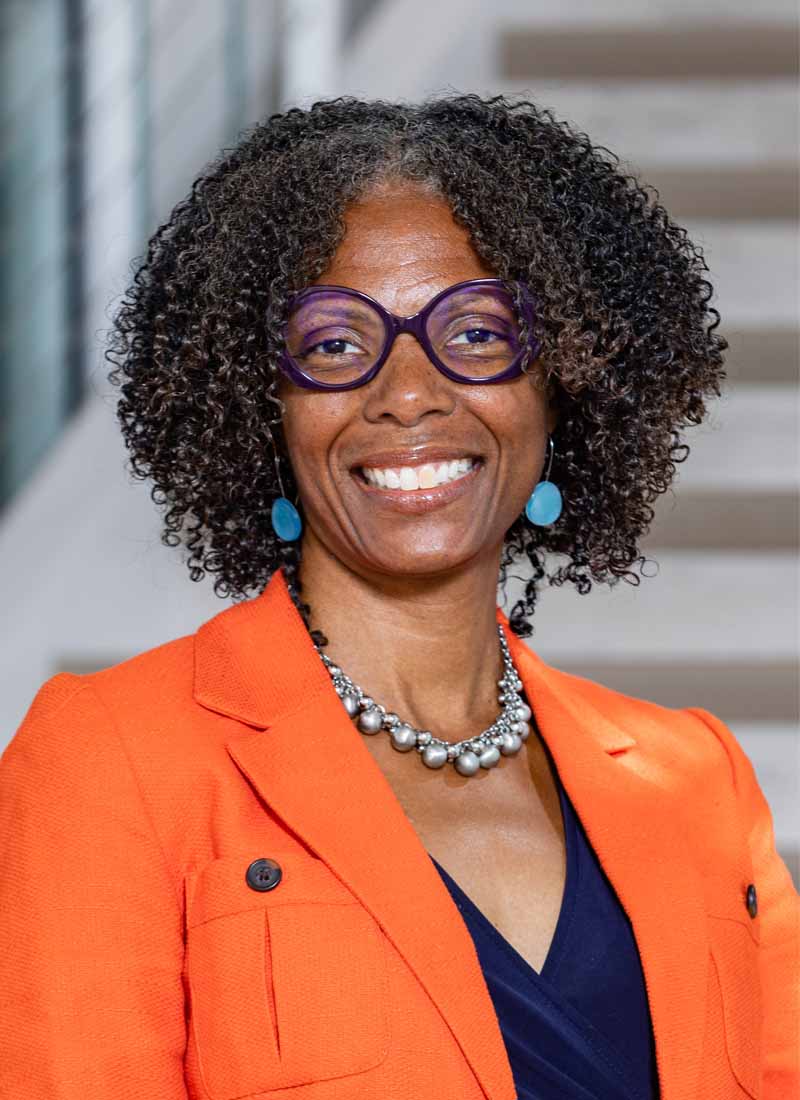
Jacqueline Woerner is Associate Professor in Sociology and Psychology at the University of Central Florida, where she directs the Social Theory, Relationships, and Interpersonal Violence Exposure (STRIVE) Lab. Her research examines the intersection of gender-based violence, substance use, and health risk behaviors. Education includes: PhD in Social Psychology from Wayne State University BS in Psychology from Appalachian State University Her NIH-funded research investigates how violence victimization relates to health behaviors through motivational frameworks. Current projects examine technology-facilitated sexual violence on dating apps and alcohol's role in intimate partner cyber abuse. She employs diverse methods including surveys, experiments, and daily diaries. As member of the Violence Against Women Faculty Cluster, she develops prevention strategies addressing sexual violence and health disparities. Funded projects include NIJ grants examining transitional housing models for domestic violence survivors. Honors include Rising Star Award for undergraduate mentoring and multiple teaching awards. She serves on editorial boards for Psychology of Violence and leads NIH-funded projects on dating app-facilitated violence.
Dr Marcin Smietana is a Research Fellow at the University of Cambridge , affiliated with the Department of Sociology and the Reproductive Sociology Research Group (ReproSoc) . His work focuses on LGBTQ+ family formation , transnational surrogacy , and reproductive justice , funded by grants including a Marie Curie Fellowship and Wellcome Trust support. He teaches courses on Sociology of Gender , Health and Illness , and MPhil in Health, Medicine & Society . PhD in Sociology (University of Barcelona/AFIN) Postdoctoral work at UC Berkeley and Cambridge His research explores queer resistance to authoritarianism , racial dynamics in ART (assisted reproductive technologies), and reproductive decision-making among gay men. He co-edited the landmark volume Making Families: Transnational Surrogacy, Queer Kinship and Reproductive Justice (2018), which bridges reproductive anthropology with queer theory . Current projects examine queer ecologies and critical animal studies . Key contributions include: Identifying repro-regional moral frameworks in cross-cultural surrogacy studies (USA, India, Russia) Documenting the intersections of race and queer reproduction in international surrogacy markets Deconstructing emotional economies in U.S. commercial surrogacy He supervises dissertations on transnational surrogacy , queer kinship , and species relationships in reproduction , with publications spanning Reproductive BioMedicine & Society Online , Sociological Research Online , and edited volumes. His upcoming book examines gay men’s reproductive decision-making in transnational contexts.
Professor Jonathan Herring serves at the Faculty of Law, University of Oxford with a focus on Medical Law and Ethics, Family Law, Criminal Law, and Vulnerability Theory . His work bridges feminist ethics of care with legal frameworks, challenging traditional individualistic approaches. DM Wolfe-Clarendon Fellow, Exeter College Editorial Board: Child and Family Law Quarterly Research Interests He investigates law's interaction with human relationships , emphasizing areas like domestic abuse as human rights violation , pregnancy regulation , mental capacity ethics , and dementia-related legal reforms . His Law Through the Life Course (2021) examines age-based legal assumptions. Publication Trends Recent works focus on obstetric violence (with Pickles), fragile X syndrome ethics (with Johnson), and revising sexual offense consent models . Articles span 2017-2025 , showing sustained engagement with vulnerability theory and relational legal philosophy . Teaching Contributions He instructs Criminal Law , Family Law , and Medical Law and Ethics for Oxford's BA Jurisprudence, plus Medical and Family Law BCL courses. Supervises DPhil topics across domestic abuse , obstetric violence , and trans parenthood .
Giorgio Maniaci is an Associate Professor of Jurisprudence at the University of Palermo . He teaches courses such as Human Rights and Logic and Legal Methodology , and offers office hours for student consultation. Current academic rank: Associate Professor Teaching subjects: Human Rights, Logic and Legal Methodology Email: giorgio.maniaci@unipa.it His research focuses on Legal Philosophy , Human Rights Law , and Bioethics , with a particular emphasis on autonomy, legal paternalism, and moral realism. His work intersects Liberalism with interdisciplinary perspectives from economics, psychology, and feminist theory. The 15 most recent publications reflect his engagement with topics such as personal identity, surrogacy ethics, liberal democratic theory, and the harm principle. These works span Monographs , Magazine Articles , and Book Chapters , demonstrating a commitment to both theoretical and applied legal discourse.
Kamila A. Alexander, PhD, RN, is an Associate Professor and Director of the PhD, DNP/PhD, and Postdoctoral Programs at the Johns Hopkins School of Nursing. She holds the endowed Natalie and Wes Bush Rising Professorship. Her research integrates health equity and social justice frameworks to examine socio-structural determinants of trauma, violence, and sexual/reproductive health outcomes among marginalized youth, with emphasis on intimate partner violence, HIV resilience, and economic opportunity. Education Dr. Alexander earned: B.S. in Exercise Science (Howard University) BSN and MSN/MPH (Johns Hopkins School of Nursing) PhD in Nursing Science (University of Pennsylvania) Research Focus Her work spans: Socio-structural drivers of health disparities Intersections of violence, trauma, and sexual/reproductive health Community-engaged interventions to promote HIV resilience Policy impacts on health equity for Black and Latino communities Publication Trends Recent articles (2019–2024) cluster around reproductive coercion, intimate partner violence, and HIV/STI prevention, employing mixed-methods approaches. Key themes include gender-based power dynamics, structural barriers in healthcare, and culturally responsive intervention strategies. Awards & Honors Notable recognitions: Betty Irene Moore Fellowship for Nurse Leaders (2020) Dean’s Award for Outstanding Nurse Researcher (2020) Johns Hopkins Catalyst Award (2018) New Nurse Faculty Fellowship (2015) Leadership & Affiliations She directs NIH-funded training programs and chairs key initiatives including: Nursing Initiative, Mid-Atlantic CFAR Consortium Violence Working Group, Johns Hopkins Center for Injury Research NIH T32 Training Program in Trauma and Violence She is affiliated with six Hopkins research centers focused on global health equity, adolescent health, and infectious diseases.
Mimi (Paulomi) Bhatt, PhD, MPH, CNM, is an Assistant Professor at NYU Rory Meyers College of Nursing. She is a certified nurse-midwife, researcher, educator, and theorist whose work centers on birth equity, reproductive justice, and the integration of midwifery care in public health systems. She actively provides clinical care within NYC Health + Hospitals and contributes to national and global maternal health policy. PhD in Nursing Theory, NYU Meyers College of Nursing MSN, Frontier Nursing University MPH in Global Health Leadership, NYU Global Institute of Public Health BSN, NYU Steinhardt School of Education BA in Comparative Literature and English Education, NYU College of Arts & Science Dr. Bhatt’s research is grounded in critical feminist theory and qualitative methodologies. Her work investigates how midwifery models can advance health equity, particularly for Black, Indigenous, and other minoritized communities. She explores themes such as autonomy in childbirth, respectful maternity care, perinatal mental health, and systemic barriers faced by midwives of color. Her scholarship emphasizes anti-oppression frameworks and community-based participatory research. Her recent publications analyze experiential outcomes in maternity care, revealing that midwife-led care—especially in community settings—leads to higher autonomy, respect, and lower mistreatment. She has also published on the experiences of sexual and gender-diverse parents, cervical cancer screening in the Dominican Republic, and midwifery integration in India. Her work consistently highlights structural inequities and advocates for transformative change in maternal health systems. Scientific awards and honors include: NYU University-wide Dissertation Award – Allied Health & Social Services (2020) Jonas Nurse Leaders Scholar Award (multiple years) Johnson & Johnson Minority Faculty Nurse Scholar Award (multiple years) Herman Biggs Health Policy Fellow Women’s Leadership Initiative at NYU Dr. Bhatt mentors future nurse-midwives and contributes to policy through service on the NYC Maternal Mortality and Morbidity Review Committee and the International Confederation of Midwives’ Americas Regional Committee. She received postdoctoral training at the Birth Place Lab, University of British Columbia, and as a Provost Postdoctoral Fellow at NYU. Her clinical and academic work is deeply informed by her identity as a first-generation immigrant and her mother’s legacy as a nurse-midwife in India. She is affiliated with the Birth Place Lab and collaborates with multidisciplinary teams focused on respectful maternity care, midwifery practice climate, and global maternal health capacity building.
Dr. Lianne Bakkum is an Assistant Professor at the Vrije Universiteit Amsterdam within the Faculty of Behavioural and Movement Sciences, holding affiliations in Clinical Child and Family Studies, APH - Mental Health, and LEARN! - Child rearing. She earned her PhD in Public Health and Primary Care from the University of Cambridge (2017–2021), focusing on attachment and trauma in the Adult Attachment Interview. Her research explores intellectual disability, child protection systems, mental health interventions, and the impact of digital social contact during crises like the COVID-19 pandemic. Her work contributes to UN Sustainable Development Goals related to quality education, good health, and reduced inequalities. Key projects include reducing involuntary care in intellectual disability settings and analyzing the effectiveness of EMDR therapy for PTSD in adults with intellectual disabilities. She teaches courses on family studies, child-rearing practices, and scientific reasoning rooted in attachment theory. Bakkum’s publications emphasize interdisciplinary approaches to disability care, trauma resolution, and policy evaluation. She leads and collaborates on projects funded by academic institutions, focusing on improving outcomes for vulnerable populations through evidence-based strategies.
Johanna Lenne-Cornuez is a Lecturer in Moral Philosophy and Applied Ethics at the Faculty of Philosophy , University Jean Moulin Lyon 3 , with affiliations to the Institut de Recherches Philosophiques de Lyon (IRPhiL) and Sciences, Normes, Démocratie research group. She serves as Dean's Assessor (from 2025) and educational manager for the Bachelor's degree in Philosophy and L1 first year , while also acting as Equality and Anti-Discrimination Representative . Doctorate from Sorbonne Université Her research focuses on consent theories , women's rights , feminist critiques of impunity , and Rousseau studies . Recent work analyzes legal rape definitions , environmental ethics , and gender solidarity in Enlightenment thinkers like Staël and Charrière. She explores tensions between natural law and human rights , particularly in revolutionary contexts. Key article trends include: Critical analysis of rape legislation models Feminist re-evaluation of consent frameworks Intersection of environmental ethics and political philosophy Historical Enlightenment feminism studies Subversive pedagogical theories in Rousseau Philosophical genealogies of freedom She contributes to book reviews and interdisciplinary conferences , particularly addressing sexual violence , reproductive rights , and democratic justice . Her work bridges historical philosophy with contemporary legal and ecological challenges .
Karen Peterson-Iyer is an Associate Professor in the Department of Religious Studies at Santa Clara University. Her work bridges Christian ethics, feminist theory, and contemporary social issues. Education: B.A. in Political Science from Stanford University; M.Div. from Graduate Theological Union; M.A., M.Phil., and Ph.D. in Ethics (Religious Studies) from Yale University. Her research focuses on labor ethics , sexual ethics , bioethics , and human trafficking , using frameworks like human personhood and justice to analyze modern dilemmas. Recent publications include a feminist reimagining of sexual ethics and analyses of agricultural labor coercion. She has contributed to discussions on U.S. Catholic economic ethics, reproductive technologies, and gender equity in academia. Her teaching includes courses on Christian ethics, medical ethics, and human trafficking.
Kavot Zillén is an Associate Professor and University Lecturer in Public Law at Stockholm University's Department of Law. With a focus on Medical Law and Human Rights in Healthcare, their work explores the intersection of freedom of religion and conscience , right to health , and non-discrimination . Previously a lawyer at Swedish healthcare regulatory bodies, they now lead research at the Children's Rights Centre and teach Public Law Social Law Medical Law . Research Interests include Religious Freedom in Secular Healthcare and Education Children's Right to Health and Welfare Legal Frameworks for Migrant and EU Citizens . Their work often addresses ethical dilemmas in medical decision-making and legal responses to pandemics like COVID-19 . Recent Publications focus on coercion in healthcare , rights of migrant children , and religious freedom in public institutions . These span journals like Nordisk socialrättslig tidskrift and edited volumes on Medical Law and Children's Rights . Awards include Yale University Interdisciplinary Center for Bioethics – Excellence in Teaching Diploma (2018) . They also received significant research funding from the Swedish Research Council and Stockholm University's cross-disciplinary initiative on Children, Migration, and Integration . Collaborations involve IMPACT (Uppsala University), Lund's Health Law environment, and international networks in Biomedical Law. Media appearances include SVT and Läkartidningen on topics like abortion access and conscientious refusals in healthcare .
Maxwell J. Smith is an Assistant Professor at the School of Health Studies within the Faculty of Health Sciences at Western University . He holds multiple appointments across the Department of Philosophy , Schulich Interfaculty Program in Public Health , Department of Epidemiology and Biostatistics , and other research centers. As the Western Research Chair in Public Health Ethics , his work bridges bioethics, public health policy, and social justice. Research Domains: Public health ethics, infectious disease ethics, health equity, moral philosophy Collaborations: Social epidemiologists, global health organizations, interdisciplinary ethics institutes Key Focus: Ethical frameworks for pandemic response, health equity in policy-making His recent publications explore the intersection of ethics and epidemiology in health equity modeling, pandemic treaties, workplace vaccination mandates, and resource allocation during crises. He has contributed to high-impact journals like New England Journal of Medicine and The Lancet Infectious Diseases . Notable contributions include: Developing empirical ethics studies for public health policy Advocating for intersectoral action on health inequities Addressing systems thinking in ethical frameworks Global governance of pandemics Equity-focused vaccine monitoring strategies Dr. Smith’s work emphasizes translating philosophical ethics into practical public health solutions, with a strong commitment to social justice and interdisciplinary collaboration.
Dr. Shannon Wood is an Assistant Professor in the Department of Population, Family and Reproductive Health at the Johns Hopkins Bloomberg School of Public Health. She is affiliated with the William H. Gates Sr. Institute for Population and Reproductive Health, Johns Hopkins Center for Women's Health, Sex, and Gender Research, and Johns Hopkins Center for Global Women's Health and Gender Equity. Dr. Wood earned her PhD from the Johns Hopkins School of Public Health in 2020, an MSc from the London School of Hygiene and Tropical Medicine in 2012, and a BA from Baylor University in 2011. As a Senior Technical Advisor for PMA and PMA-Ethiopia, she leads research surrounding reproductive coercion, intimate partner violence, and partner dynamics. Dr. Wood's research focuses on the intersection between social determinants of women's health, most notably gender-based violence, and adverse reproductive and sexual health outcomes. Her work particularly emphasizes mixed-methods research to improve measurement surrounding sensitive topics and the development and evaluation of community-based interventions. She aims to enhance safety and improve reproductive and sexual health outcomes for vulnerable populations in low-resource settings across sub-Saharan Africa, with particular focus on Kenya and Ethiopia. Her extensive publication record shows consistent trends examining reproductive coercion, intimate partner violence, contraceptive use dynamics, and the impact of global crises like the COVID-19 pandemic on sexual and reproductive health. Her work employs both quantitative and qualitative methodologies to address complex issues in women's health, with strong emphasis on developing practical measurement tools and interventions. Endowed Fellowship in Family Planning, Johns Hopkins Bloomberg School of Public Health (May 2019) Dr. Michael Koenig Memorial Fund, Johns Hopkins Bloomberg School of Public Health (May 2018) Endowed Fellowship in Family Planning, Johns Hopkins Bloomberg School of Public Health (May 2017) Dr. Wood has secured significant funding for projects including Performance Monitoring for Action (PMA), PMA Plus, and PMA Ethiopia. She leads research teams working in urban informal settlements in Nairobi, Kenya, focusing on safety planning for intimate partner violence survivors and examining the complex dynamics of reproductive coercion. Her work includes developing and validating measurement tools for women's empowerment in sexual and reproductive health contexts, with particular attention to the Women's and Girls' Empowerment in Sexual and Reproductive Health (WGE-SRH) Index.
Eric Scarffe is an Assistant Professor in the Department of Philosophy at Florida International University (FIU), with a PhD from Boston University (2020). He is actively engaged in teaching, research, and academic service, including serving as President and lead negotiator of the United Faculty of Florida's FIU chapter from 2022 to 2024. Areas of Specialization: Philosophy of Law Social and Political Philosophy Biomedical Ethics International Law Value Theory His research explores human rights, particularly gay and abortion rights, dignity in law and ethics, the philosophy of biology, and the conceptual foundations of disease in medicine. He critically engages with legal theory, constitutional interpretation, and the role of values in science and healthcare. His recent publications span journals such as Journal of Medical Ethics , American Journal of Bioethics , Journal of Applied Philosophy , and Philosophy of Science . Themes across his work include the moral and institutional dimensions of law, the critique of quantification in higher education, and the epistemology of social knowledge as seen in pop culture. His scholarship demonstrates a strong interdisciplinary orientation, bridging philosophy, law, and social justice. Selected Scientific Contributions: Critical analysis of Justice Kennedy’s jurisprudence of dignity Development of a dignity-based account of international law Amended hybrid theory of disease in medicine (with Russell Powell) Exploration of collective bargaining and the rule of law in academia Eric has also contributed to public discourse through articles on liberal arts education and philosophical interpretations of cultural phenomena. He has no listed scientific awards or formal advisees in the provided texts. He is affiliated with the College of Arts, Sciences & Education at FIU and continues to publish on pressing ethical and philosophical issues in contemporary society.
Maria Giuseppina Pacilli is a Professor in the Department of Political Science at the University of Perugia, Italy. She specializes in teaching and researching Social Psychology, Digital Media Psychology, and Ethics of Organizations. She leads courses in Political Science, Communication Studies, Social Work, and Public Policy. Her research focuses on social psychology of digital media, gender-based violence, moral judgments in victimization cases, and organizational ethics. Recent work examines sextortion victim perceptions, gender roles in corruption, and pandemic-related scapegoating. She has published over 50 peer-reviewed articles since 2018, addressing topics like LGBTQ+ stigma, bystander intervention in intimate partner violence, and cultural variations in collective action intentions for gender equality. Her teaching responsibilities include: Psychology and Ethics of Organizations (LM45/LM47) Digital Media Psychology (LM95) Social Policy Planning (LM47) Communication Studies (L146) Notable research themes include: Cross-cultural moral judgments about gendered victimization Psychological mechanisms behind victim-blaming Digital media's impact on social norms Political communication strategies in public policy Her work combines experimental social psychology methods with qualitative analyses of policy impacts, contributing to both academic and applied knowledge in organizational ethics and gender studies.
Helena Addison, PhD, RN, is a Research Fellow in the Department of Internal Medicine at Yale School of Medicine. She holds a PhD in Nursing Science from the University of Pennsylvania (2024), a Master of Science in Nursing from Johns Hopkins School of Nursing (2019), and a BA in Psychology from the University of Maryland, Baltimore County. Her research focuses on mental health outcomes in marginalized populations, particularly formerly incarcerated Black men, veterans with criminal-legal involvement, and individuals affected by intimate partner violence. Her work integrates qualitative and quantitative methods to address systemic inequities and inform healthcare interventions. Her articles explore themes such as the lasting mental health impacts of incarceration, the intersection of criminal justice involvement and veteran health, and the development of health promotion programs targeting vulnerable communities. Notable contributions include studies on racial disparities in mental health access and the moderating roles of trauma in substance use behaviors. Addison's expertise extends to cultural humility frameworks in nursing education, aiming to prepare practitioners for diverse patient populations. She is affiliated with the NCSP (likely a research program or initiative at Yale).