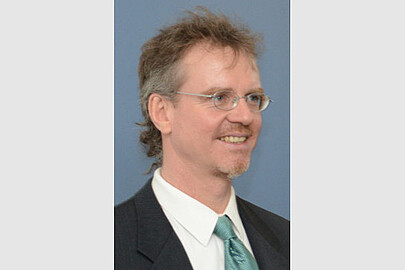
Matthias Becker is a Professor at the Institute for Practical Computer Science within the Faculty of Electrical Engineering and Computer Science at Leibniz University Hannover, where he has been a core member of the Human-Computer Interaction group since 2019. He serves as Internship Coordinator for Computer Science and Computer Engineering and holds key roles in the Computer Science Examination Board and Selection Committee, actively shaping academic governance and student development. His academic journey began with PhD studies at the University of Bremen (1996-2000) supported by a DFG grant, followed by a postdoctoral permanent position at Leibniz University Hannover (2000-2019), an Associated Assistant Professor role at École des Mines de Nantes (2000), and a Habilitation in Computer Science in 2013. This foundation enabled his transition to a full professorship in 2019. Becker's research spans Human-Computer Interaction, Simulation and Modeling, and Bio-inspired Computing, with applications in agriculture, renewable energy, and manufacturing. His work integrates distributed systems, optimization algorithms, and wireless sensor networks to solve complex real-world problems, such as greenhouse monitoring, wind farm logistics, and tire noise reduction. Recent publications reveal a strategic focus on practical validation of simulation models and cross-domain applications of nature-inspired algorithms. His 15 most recent publications (2018-2024) demonstrate consistent innovation in applying simulation techniques to offshore wind farm installation, agricultural pest management, and sports science. These works emphasize real-world validation, collaborative problem-solving, and the development of domain-specific optimization frameworks that bridge theoretical algorithms and industrial implementation. As Internship Coordinator, Becker facilitates critical industry-academia connections for students, while his examination board responsibilities ensure rigorous academic standards. His leadership in the Human-Computer Interaction group drives research on interactive systems for agriculture, energy, and health, with particular emphasis on user-centered design in complex operational environments like wind farm logistics and greenhouse automation.
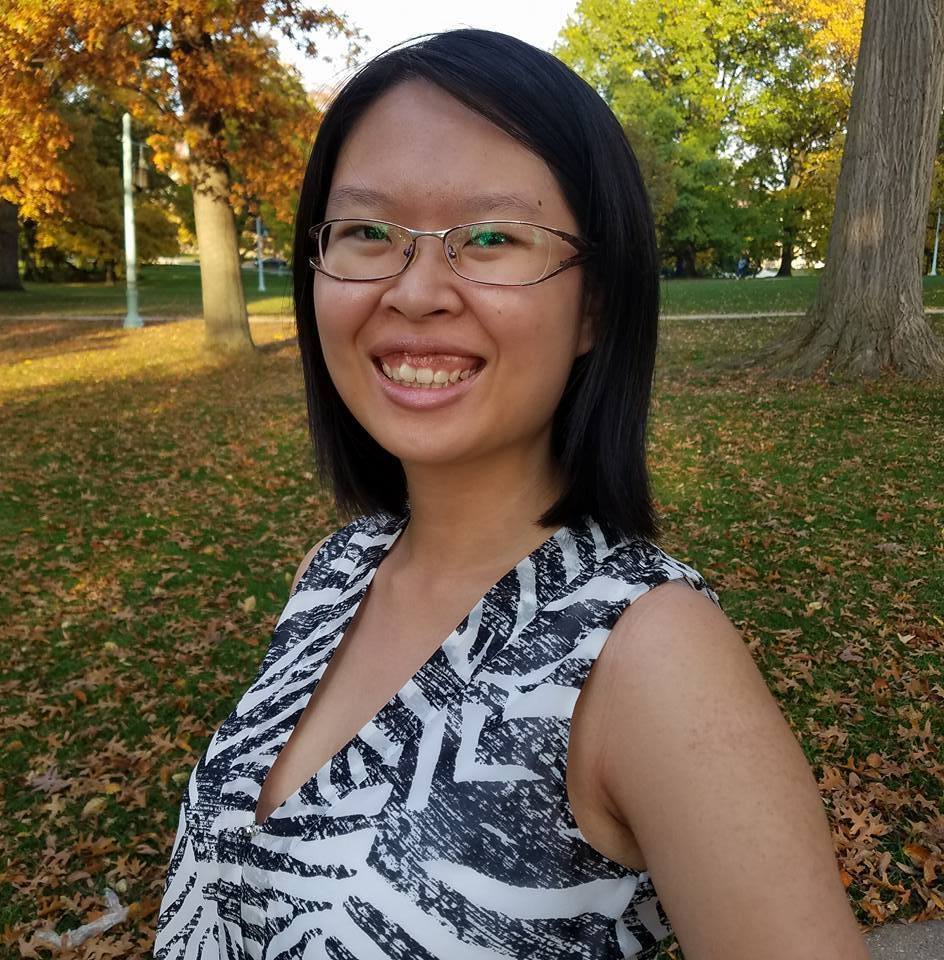
Dr. Yi Ting Chua is a Research Fellow at the University of Cambridge's Department of Computer Science and Technology, affiliated with the Cambridge Cybercrime Centre. She holds a PhD in Criminal Justice from Michigan State University (2019), with prior collaborative work under Dr. T. Holt and Dr. O. Smirnova. Current research bridges computer science, criminology, and gender studies in cybercrime contexts Key methodological approach: Social network analysis of online communities Her article trends ( 2013-2020 ) show interdisciplinary focus on: Cybercrime market economics (price analysis, revenue estimation) Radicalization dynamics in far-right forums Gender roles in online criminal subcultures Framework development for unintended cybersecurity consequences Notable scientific contributions include: 2020 Best Paper (STAST) for cybersecurity framework research 2019 Best Paper (APWG eCrime) for unintended harms analysis Active in stakeholder engagement projects related to: Intimate partner abuse victim support Far-right forum monitoring Cybercrime dataset standardization
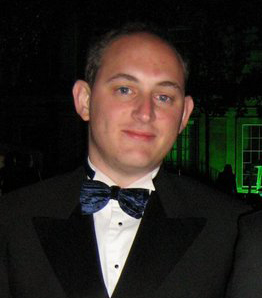
Dr. Alastair Kay is a Lecturer in the Department of Mathematics at Royal Holloway, University of London. His research focuses on theoretical quantum computation, quantum information theory, and quantum cryptography, particularly addressing challenges in quantum state transfer, error correction, and networked quantum systems. He holds a PhD from the University of Cambridge under Prof. Artur Ekert and a physics degree from Keble College, University of Oxford. His research spans topics such as Quantum state transfer protocols using engineered Hamiltonians Quantum error correction mechanisms for experimental systems Entanglement properties in graph states and spin networks Applications of quantum computing in cryptography and information theory The articles listed reflect his work in quantum information science, computational physics, and theoretical cryptography. Key trends include advancements in fault-tolerant quantum communication, optimization of spin chain dynamics, and foundational studies in quantum correlations and nonlocality. Alastair actively develops software tools like quantikz for quantum circuit diagrams and ConTeXi for LaTeX equation integration in Microsoft Office. He also emphasizes open science principles and reproducibility in quantum research through personal commentary and collaboration with his fiancée, a Panton Fellow in open research practices.
Christos Ouzounis is a Professor of Bioinformatics at the Department of Informatics, Aristotle University of Thessaloniki , with a career spanning institutions including the European Bioinformatics Institute , King's College London , and University of Toronto . His work bridges Computational Biology , Digital Biology , and Metagenomics , focusing on large-scale data analysis, machine learning applications, and functional annotation of proteins. Education : BSc in Biological Sciences (1986), MSc in Biological Computation (1987), and DPhil in Computational Chemistry (1993) Key Roles : Director of the Bioinformatics Centre at King's College London (2007-2010), Research Director at IDEP-EKETA (2014-2020) His research interests include low-complexity protein sequences , Covid-19 seasonality patterns linked to UV radiation, and metagenomic analysis of urban microbiomes in cultural heritage sites. Current projects involve machine learning models for microbial coexistence networks, ontological classification of biomedical literature, and bioinformatics tool development . Publications highlight trends in archaeal genomics , functional dark matter in metagenomics, and epidemiological modelling . Notable collaborations include work on BioTextQuest v2.0 for concept discovery and MjCyc for metabolic pathway analysis.
Sarah Neuwirth is a tenured Professor for Computer Science at Johannes Gutenberg University Mainz (JGU) and a Visiting Researcher at the Jülich Supercomputing Centre. She manages JGU's High Performance Computing (HPC) division, coordinates regional/national HPC activities, and represents JGU in NHR, Gauss-Allianz, and HPC committees. Education : PhD (Dr. rer. nat.) in Computer Science (2018), Heidelberg University Diplom in Computer Science (2012), University of Mannheim Bachelor of Science in Computer Science (2010), University of Mannheim Research Interests : Parallel File and Storage Systems Modular Supercomputing (resource disaggregation/virtualization) Performance Engineering High Performance Computing Networking Reproducible Benchmarking Parallel I/O Publications Trends : Her work focuses on HPC performance modeling, parallel I/O optimization, modular supercomputing, network characterization, and reproducible benchmarks. Key themes include resource disaggregation, automated workflows, and data-intensive distributed applications. Scientific Awards : 2023 PRACE Ada Lovelace Award for HPC ZONTA Science Award 2019 Grants & Leadership : She leads the High Performance Computing division at JGU, participated in European DEEP projects, and serves on SC conference committees.
Associate Professor Kai-Hsiang Chuang is a Principal Research Fellow at the School of Biomedical Sciences within the Faculty of Health, Medicine and Behavioural Sciences at the University of Queensland. He is also affiliated with the Queensland Brain Institute and the Centre for Advanced Imaging. His research focuses on understanding brain networks, developing advanced imaging techniques, and translating these findings to improve diagnosis and intervention for neurological disorders. Dr. Chuang received his Ph.D. in electrical and biomedical engineering from the National Taiwan University, Taiwan, in 2001. His doctoral research focused on improving the detection of brain activity using functional magnetic resonance imaging (fMRI). Ph.D. in Electrical and Biomedical Engineering, National Taiwan University (2001) Dr. Chuang's research spans multiple areas of brain imaging and neuroscience. His primary focus is on functional brain mapping , where he develops in vivo imaging techniques including functional MRI and multimodal integration with optogenetics, calcium imaging, and electrophysiology. He applies these techniques in both humans and animal models to improve understanding and intervention of brain function, disease processes, and treatment effects. Another key area is brain networks in learning, memory, and dementia . His work explores how brain network wiring and activity underpin cognition and behavior, with particular focus on understanding the causal relationship between brain network activity and memory formation. He develops techniques to modulate behavior by manipulating brain network activity. More recently, Dr. Chuang has expanded into brain waste clearance research, studying the brain's fluid drainage system that clears waste and toxic molecules like amyloid plaques. His lab is developing imaging techniques to track this system's function and understand its regulatory mechanisms, which could provide new treatment targets for dementia. Analysis of Dr. Chuang's recent publications reveals a strong focus on advancing functional MRI techniques for brain network analysis, particularly in rodent models. His work consistently bridges basic neuroscience with clinical applications, especially in understanding memory formation and dementia. A notable trend is the development of multimodal approaches that combine fMRI with optogenetics, calcium imaging, and electrophysiology to establish causal relationships in brain networks. His research increasingly addresses the translation of preclinical findings to human applications, with growing emphasis on Alzheimer's disease mechanisms and potential interventions. Dr. Chuang serves on the editorial boards of multiple prestigious journals including Frontiers in Neuroscience: Brain Imaging Methods , Imaging Neuroscience , and Scientific Reports , reflecting his standing in the field. Editorial Board Member, Frontiers in Neuroscience: Brain Imaging Methods Editorial Board Member, Imaging Neuroscience Editorial Board Member, Scientific Reports Dr. Chuang is actively involved in research supervision, currently serving as Principal Advisor for one PhD student working on "Developing imaging and neuro-technologies for decoding memory formation" and Associate Advisor for two other PhD projects. He has successfully completed supervision of three PhD students on topics related to resting-state networks, memory consolidation, and functional MRI. ARC Discovery Projects (2024-2028): "Decoding the brain network of memory formation" ARC Training Centre for Innovation in Biomedical Imaging Technology (2017-2024) NHMRC-NIH BRAIN Initiative Collaborative Research Grants (2016-2023) Universities Australia - Germany Joint Research Co-operation Scheme (2017-2018) Mater Medical Research Institute Limited grant for mindfulness-based cognitive therapy research (2017-2020) Dr. Chuang leads the Functional and Molecular Neuroimaging Group at the Queensland Brain Institute. His laboratory focuses on understanding the functional connectome of the brain and developing functional and molecular imaging techniques to study brain connectivity associated with behavior. The group has developed various MRI techniques to track neuronal connections, map large-scale brain synchrony, and quantify cerebral blood flow and metabolism in vivo. His research team collaborates extensively with other experts at UQ and internationally, including collaborations with Associate Professor Darryl Eyles, Professor Jürgen Götz, Professor Tianzi Jiang, Dr. Fatima Nasrallah, Professor Linda J. Richards, Professor Pankaj Sah, Professor Elizabeth Coulson, Dr. Patricio Opazo, Professor Feng Liu, and Professor Markus Barth.
Benjamin Sturm is a postdoctoral researcher at the Chair of Information Infrastructures at the Technical University of Munich . His work focuses on Distributed Ledger Technology (DLT) , blockchain systems , and design science research . He has contributed to projects like COOLedger (DLT configuration analysis) and BISE Student (open access thesis platform using blockchain). Sturm’s research investigates security vulnerabilities in DLT , autonomous agent collaboration , and systematic information retrieval frameworks . His work on DLT design principles and configuration trade-offs has been published in top conferences like ICIS and HICSS . He has developed tools for transparent academic publishing using the bloxberg blockchain and IPFS for decentralized storage. Key publication trends include DLT security , blockchain configuration challenges , and methodological innovations in design science research . He collaborates with Prof. Ali Sunyaev and researchers like Niclas Kannengießer on DLT applications in cloud computing, autonomous driving, and academic infrastructure. Current projects focus on decentralized knowledge management and robustness in open multi-agent systems .
Dr. Matthew Barclay is a Principal Research Fellow (Statistician) in Cancer Healthcare Epidemiology at University College London's Behavioural Science and Health department. With expertise spanning medical statistics, epidemiology, and health services research, his work focuses on analyzing cancer registry data, primary care electronic health records, and healthcare claims data to improve understanding of cancer diagnosis and treatment pathways. Dr. Barclay's educational background includes: PhD in "The design of composite indicators of healthcare quality: a multi-method analysis" from University of Cambridge (2021) MSc in Statistics with Medical Applications from University of Sheffield (2015) MMath in Mathematics from Durham University (2011) Dr. Barclay's research spans the entire cancer diagnostic and management pathway, with particular focus on risk of cancer in primary care patients, cancer characteristics at diagnosis (including socio-demographic variations in staging), treatment patterns, and short-term outcomes. His methodological expertise lies in applied statistics, particularly in cohort design within electronic health record datasets and developing consistent data resources for research. His work frequently employs cancer registry data, primary care records, and healthcare claims to address critical questions in cancer epidemiology and healthcare quality. Analysis of Dr. Barclay's recent publications reveals a strong focus on cancer diagnosis pathways, particularly how symptoms present in primary care lead to cancer diagnosis. His work spans multiple cancer types but has particular emphasis on lung, colorectal, and breast cancers. Methodologically, his research combines epidemiological approaches with advanced statistical techniques applied to large-scale datasets including UK Biobank, cancer registries, and primary care records. International comparative studies through the International Cancer Benchmarking Partnership represent another significant strand of his recent work. Dr. Barclay advises postgraduate and PhD students on topics related to his research interests in cancer epidemiology and health services research. His collaborative network spans multiple institutions and countries, reflecting the international nature of his research on cancer diagnosis and treatment pathways.
Dr. Susan M. Sereika is a Professor in the Department of Health and Community Systems at the University of Pittsburgh School of Nursing . She holds secondary appointments in the Department of Biostatistics and Health Data Science and the Department of Epidemiology in the School of Public Health, as well as affiliations with the Clinical and Translational Science Institute and UPMC Hillman Cancer Center's Biostatistical Facility. Associate Dean for Computing and Information Technology (School of Nursing) Faculty Statistician (Office of Research Scholarship) Active in Senate Computing & IT Committee (Pitt, 1992-present) Her statistical expertise focuses on: Longitudinal data analysis for intensive monitoring (Aardex MEMS, Fitbit, actigraphy) Latent variable methods (group-based trajectory, dual/multi-trajectory analyses) Dyadic analysis Model assessment She collaborates on weight loss, lifestyle self-management, symptom management, and regimen adherence research. Academic Contributions include: PhD-level courses: Advanced Quantitative Methods Seminar (NUR 3290) Independent study supervision (NUR 3060) Statistical mentorship for honors/masters/doctoral committees Consulting for NIH reviews and journal editorial boards
Jacob T. Bradt is an Assistant Professor of Business, Government and Society at The University of Texas at Austin's McCombs School of Business, with a courtesy appointment in the Department of Economics. His research applies insights and methods from industrial organization and public economics to environmental, energy, and climate policy questions. Dr. Bradt maintains an active research agenda focusing on policy evaluation, market dynamics, and economic impacts of environmental interventions. Dr. Bradt's research interests center on environmental and energy economics with particular focus on climate policy mechanisms, flood risk assessment, and technology adoption. His work often employs structural economic modeling and empirical analysis to evaluate policy effectiveness. He investigates how market structures, consumer behavior, and government interventions interact in environmental contexts, with recent work examining solar industry dynamics, flood protection infrastructure, and behavioral interventions in insurance markets. His research bridges theoretical economic frameworks with practical policy applications. Analysis of Dr. Bradt's publications reveals consistent focus on environmental economics with increasing emphasis on climate adaptation and energy policy. His recent work (2024-2025) demonstrates sophisticated methodological approaches to policy evaluation, particularly in technology subsidies and climate resilience infrastructure. The research shows progression from theoretical frameworks to increasingly policy-relevant applications, with strong emphasis on empirical validation of economic models. His work consistently addresses real-world policy questions with rigorous economic analysis. Dr. Bradt has maintained productive research collaborations, particularly evident in his co-authored work with scholars like Joseph E. Aldy and Frank Pinter. His GitHub activity shows regular updates to research code and replication materials, indicating commitment to research transparency and reproducibility. His work spans multiple domains within environmental economics while maintaining methodological rigor and policy relevance.
Danica M Ommen is an Associate Professor at Iowa State University, specializing in forensic statistics and computational methodologies. Her research bridges machine learning, handwriting analysis, and source identification frameworks. Education: Ph.D. in Computational Science and Statistics (2017), M.S. in Mathematics (2014), B.S. in Mathematics (2012), all from South Dakota State University. Affiliations: Chair of the OSAC Statistics Task Group; Vice-Chair of the ASA Advisory Committee on Forensic Science. Her work focuses on statistical modeling for forensic evidence , particularly in handwriting identification, aluminum powder analysis, and digital device forensics. Recent publications explore interpretable deep learning, synthetic data anchoring, and ensemble methods for likelihood ratios. The 15 most recent articles (2023–2025) span forensic machine learning, handwriting kinematics, multi-camera smartphone identification, and Bayesian frameworks. Keywords include Forensic Science , Machine Learning , and Computational Statistics , with subfields like Score-Based Likelihood Ratios and Smartphone Forensics .
Stefan Winter is a postdoctoral researcher and software engineer at LMU Munich, Germany, with a Ph.D. (Dr.-Ing.) in computer science from TU Darmstadt. He focuses on software dependability, particularly addressing non-deterministic behavior in software systems, such as flaky tests and reproducibility challenges in experimental research. Education: Ph.D. (Dr.-Ing.) in Computer Science from TU Darmstadt under Prof. Neeraj Suri. Current Role: Researcher at LMU Munich in Dirk Beyer’s group. His research spans test automation, robustness testing, fault injection, and operating systems, with a recent emphasis on mitigating flaky tests and ensuring deterministic software behavior. His work has been published in venues like ASE, ESEC/FSE, and ICSE. Stefan actively contributes to the academic community as a committee member, artifact evaluation co-chair, and session chair across conferences such as ECOOP, ISSTA, and SPLASH. He maintains expertise in reproducibility, experimental validity, and software testing frameworks.
Dr David Walker is a Senior Lecturer in Computer Science at the University of Exeter and a member of the Institute for Data Science and Artificial Intelligence . He also contributes to the Environmental Intelligence @Exeter research network. Education: PhD in Computer Science, University of Exeter (2008–2013) BSc (Hons) in Computer Science, University of Exeter (2004–2007) Research Interests Dr Walker’s work sits at the intersection of multi-objective optimisation , evolutionary computation , explainable AI and hyper-heuristics . He develops algorithms and visual analytics that help engineers and scientists understand complex optimisation landscapes, with recent emphasis on renewable-energy planning (especially offshore wind farms) and trustworthy AI systems. Publication Trends Between 2022 and 2025 he produced a prolific stream of articles on explainable optimisation , many-objective wind-farm design and visual analytics for evolutionary algorithms . These works combine rigorous algorithmic innovation with real-world case studies, demonstrating a clear trajectory toward transparent, human-centred AI for engineering decision-making. Scientific Awards No specific awards or fellowships are mentioned in the provided material. Advising & Funding No explicit list of PhD students, post-docs or grant awards is supplied. Laboratory & Teams Dr Walker is affiliated with the Institute for Data Science and Artificial Intelligence and the Environmental Intelligence @Exeter network, indicating collaborative, interdisciplinary research environments.
Brennan Bean is an Assistant Professor in the Mathematics and Statistics Department at Utah State University's College of Arts & Sciences. His work focuses on geospatial modeling, statistical methods for extreme weather analysis, and machine learning applications in structural and environmental engineering. Recent publications highlight expertise in snow load prediction, Bayesian entropy, and interdisciplinary data science. Notable contributions include optimizing design methods for insulated concrete wall panels and addressing deployment challenges for ML models in engineering contexts. Research trends span geospatial data integration, climate change impact assessments, and educational interventions in STEM. Key subfields include ground snow load mapping, extreme value statistics, climate downscaling, and high-dimensional ecological modeling.
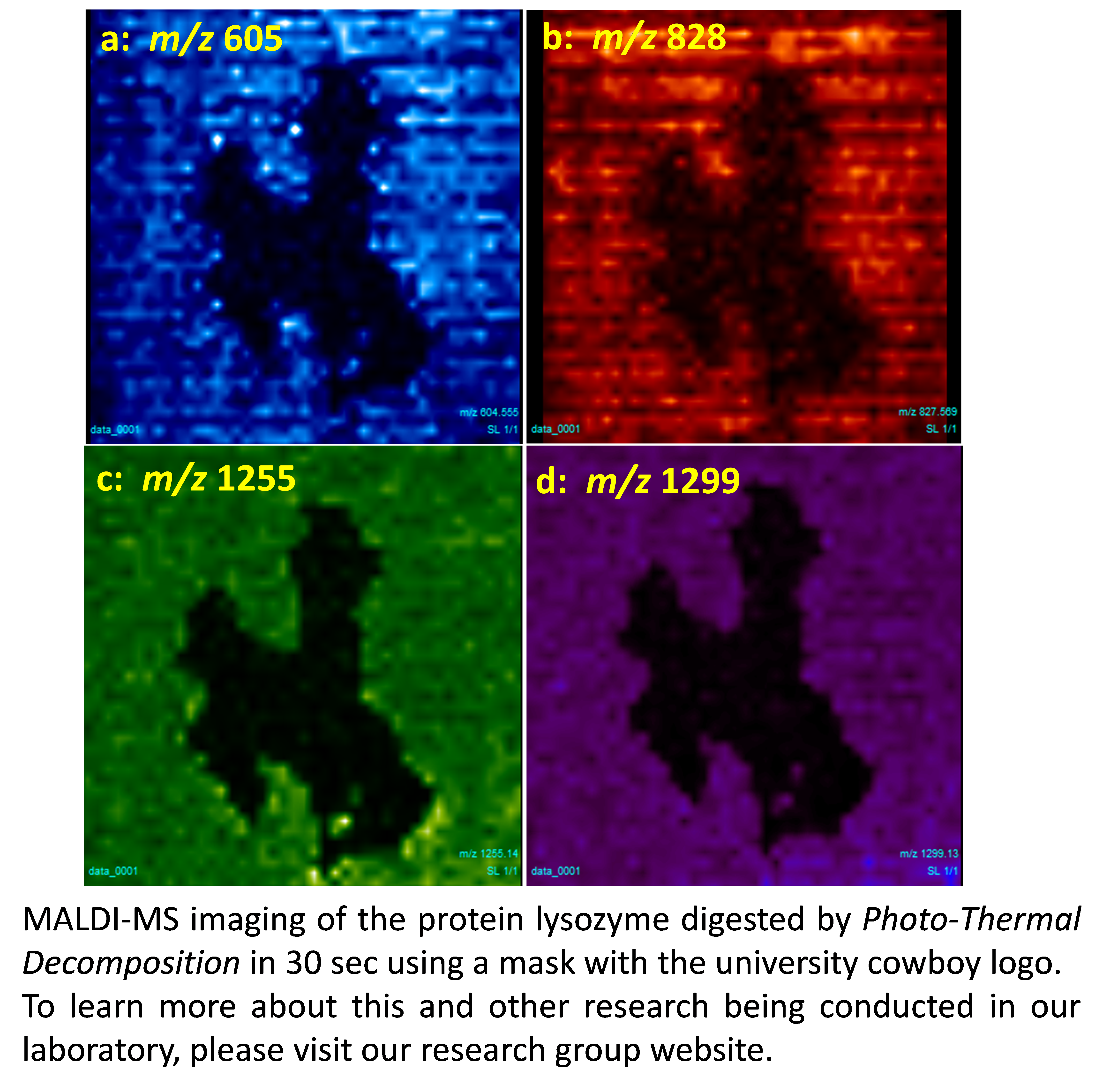
Franco Basile is a Professor in the Department of Chemistry at the University of Wyoming, specializing in Analytical Chemistry and Bioanalytical Mass Spectrometry . His research focuses on developing rapid, non-enzymatic sample preparation techniques for proteomics and metabolomics of biological and environmental samples, including microorganisms, bees, plants, and coal deposits. Education: B.S. in Chemistry (University of Wisconsin-Eau Claire, 1985), Ph.D. in Analytical Chemistry (Purdue University, 1992) Research Interests include: Analytical Mass Spectrometry : Pioneering thermal/microwave digestion for on-tissue proteomics and imaging-MS Metabolomics and Lipidomics : Analyzing root exudates, invasive grasses, and insect cold tolerance Microbial Ecology : Investigating sterol synthesis in bacteria and soil metaproteomics Article Trends span from 2025 to 2012 , emphasizing MALDI- and ESI-MS applications in proteomics, metabolomics, and environmental analysis. Recent work includes non-intrusive laser techniques for protein denaturation monitoring and sterol gene studies in planctomycetes. Scientific Awards : NSF CAREER Award R&D 100 Award ACS Outstanding Professor Award Lindbergh Foundation Research Award Funding sources include NSF, NIH, USDA, and DTRA for projects on insect cryobiology , microbial methane production , and field-portable biodetection systems . The Biodetection and Mass Spectrometry Laboratory houses advanced instrumentation like Q-Exactive HF-X Orbitrap and MALDI-ToF/ToF-MS, supporting interdisciplinary collaborations across ecology, geology, and biomedical sciences.