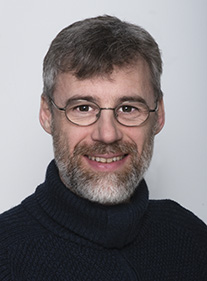
Jean-Luc Boulland is an Associate Professor at the University of Oslo's Institute of Basic Medical Sciences (Division of Physiology). His research focuses on spinal cord injury recovery mechanisms, functional electrical stimulation, and translational medical technologies. He leads projects on spinal trauma models in large animals and has affiliations with the NERD (NEurotrauma, Repair and Development) research group. His work integrates biomechanical injury models, sensor technologies, and stem cell tracking methods. Key contributions include developing MEMS-based pressure sensors and multimodal spinal injury apparatuses. Articles highlight innovations in sensor systems, locomotor circuitry repair, and cell-based therapies. Boulland's collaborations span neurobiology, biomedical engineering, and regenerative medicine. His lab explores tissue regeneration pathways and clinical validation of novel treatments, aiming to bridge basic science with clinical applications.
Rob van der Goot is an Associate Professor in Data Science at the IT University of Copenhagen. His affiliations include the NLPnorth group and the Pattern Recognition Revisited lab . His research focuses on Natural Language Processing (NLP), with emphasis on language modeling, lexical normalization, and computational job market analysis. Key contributions include the development of the EEVEE annotation tool, studies on language model biases, and cross-lingual parsing techniques. He has received prestigious awards such as the Best Paper Award at W-NUT 2022 and the Outstanding Paper Award at EACL 2021 . His work spans projects like the Pioneer Centre for Artificial Intelligence (funded by the Danish National Research Foundation) and Multi-Task Sequence Labeling Under Adverse Conditions (funded by Amazon). His research also intersects with societal impacts, addressing bias in AI systems and improving NLP tools for under-resourced languages. Media engagements include discussions on AI adoption in Danish municipalities and business applications. His publications (48+) span topics from domain adaptation to large language model evaluation, emphasizing practical NLP solutions and reproducible research practices.
Dr. Daniel Cox is a Senior Lecturer in Cognitive Neuroscience and Neuroimaging at the University of Manchester's Division of Neuroscience and Experimental Psychology. He specializes in investigating healthy ageing's impact on cognitive and neuroanatomical changes, with a focus on quantitative MRI and computational neuroanatomy. He serves as Deputy Director for the MSc in Neuroimaging for Clinical and Cognitive Neuroscience, teaching advanced neuroimaging techniques and supervising students across multiple programs. Cox holds professional certifications including Chartered Psychologist (British Psychological Society) and Senior Fellow of the Higher Education Academy. Education: PhD in Cognitive Neuroscience, University of Manchester (2013) MRes in Psychological Research Methods (Cognitive Neuroscience), Aston University (2008) BSc in Psychological Science (Hons), University of Hertfordshire (2006) Research Interests: His work explores MRI-based neuroanatomical changes in ageing, sleep disorders (e.g., obstructive sleep apnea), and recognition memory. Notable methods include multi-modal MRI analysis, stereological measurements, and neuroimaging experimental design. Recent studies investigate hypoxia effects in sleep apnea patients and white-matter structural alterations in paediatric populations. Publications: Recent articles focus on cortical thinning in sleep apnea, reproducible scholarship pedagogy, and grey matter changes. Key themes include neuroimaging biomarkers for age-related decline, sleep disorder pathophysiology, and open science practices. Awards: Experimental Psychology Society Grindley Grant (2012) Guarantors of Brain Travel Grant (2010, 2018) ISMRM Educational Stipend (2016) Collaborations: Active partnerships with researchers including Prof. Daniela Montaldi (Manchester), Prof. Geoff Parker (UCL), and Dr. Alex Kafkas. His work contributes to UN Sustainable Development Goals related to health and well-being.
Constantine Lignos is an Assistant Professor of Computational Linguistics at Brandeis University, affiliated with the Michtom School of Computer Science and the Computational Linguistics Program. His research focuses on broadening human language technology for understudied and low-resource languages. He directs the Broadening Linguistic Technologies Lab and has held postdoctoral and industry roles at The Children's Hospital of Philadelphia, BBN Technologies, and USC Information Sciences Institute. Education : Ph.D. in Computer Science, University of Pennsylvania (2013) M.S. in Computer Science, University of Pennsylvania B.A. in Computer Science, Yale University Research Interests : Low-resource language technology Machine translation and multilingual NLP Named entity recognition and entity linking Corpus creation (e.g., LR-Sum, ParaNames) Ethical considerations in NLP resource development Key Contributions : Developed SeqScore for reproducible NER evaluation Coded the QueryNER e-commerce query segmentation dataset Created the multilingual MOT corpus Awards : 2021: Honorable mention for Best Paper Award (Eval4NLP Workshop) Labs & Teams : Broadening Linguistic Technologies Lab at Brandeis
Sagnik Ray Choudhury serves as an Assistant Professor in the Department of Computer Science and Engineering at the University of North Texas, with his office located in Discovery Park F264. He maintains regular office hours on Wednesdays from 11:00 am to 1:00 pm and can be contacted via Sagnik.Choudhury@unt.edu. His research centers on Natural Language Processing with emphases on bias analysis in language models, scholarly communication systems, and reproducible research methodologies. Key interests include quantifying gender bias in cross-lingual political contexts, developing retrieval-augmented LLMs for scholarly impact prediction, and creating frameworks for automated limitation extraction from academic texts (BAGELS project). He also investigates model generalizability across NLI and MRC tasks while advancing NLP applications for social good through ethical deployment strategies. Recent publications reveal a strong trajectory in leveraging LLMs for academic writing automation, including Futuregen for future work generation and scholarly impact forecasting. His work consistently bridges computational linguistics with real-world challenges in research transparency, educational technology, and AI ethics—particularly evident in studies on political ideology navigation and gender bias quantification. No scientific awards were documented in the source material. Information regarding student advising, grant funding, laboratory facilities, or research teams was not provided in the available texts.
Jens-Michalis Papaioannou is a prominent Researcher in clinical natural language processing (NLP) and medical informatics, with extensive publications in top-tier venues like ACL, LREC, and EMNLP. His work focuses on improving clinical decision support systems through advanced machine learning techniques. 2024 : Revisiting clinical outcome prediction for MIMIC-IV with biomedical transformers 2023 : Developing MEDBERT.de for German medical NLP and MedAlpaca conversational AI 2022 : Introducing ProtoPatient for interpretable diagnosis prediction 2021 : Creating self-supervised knowledge integration frameworks for admission note analysis His research spans seven major themes : Clinical outcome prediction from admission notes Cross-lingual knowledge transfer in medical NLP Prototypical network applications Data drift analysis in longitudinal datasets Knowledge integration techniques Model optimization for healthcare LLM interpretability frameworks He has collaborated with Wolfgang Nejdl, Alexander Löser, and Betty van Aken on 13+ publications , with over 445 citations. Notable contributions include: Novel patient similarity modeling approaches ICD code hierarchy integration methods Multilingual clinical model strategies Adversarial robustness analysis Medical conversational AI frameworks
Zachary Neal is a Professor in the Department of Psychology at Michigan State University , affiliated with the Social-Personality program. He is an active researcher in network science, with interdisciplinary work spanning psychology, sociology, education, and geography. He serves as editor of Global Networks and promotes open science through initiatives like the Recommendations for Sharing Network Data and Materials. Position: Professor Institution: Michigan State University Department: Psychology School: College of Social Science Email: zpneal@msu.edu Website: www.zacharyneal.com Bluesky: @zpneal.bsky.social His research focuses on networks , particularly ego networks, two-mode networks, and cognitive social structures. He emphasizes methodological rigor, open data practices, and the use of R for network analysis. He is also known for his work on childfree identity and public scholarship. The most recent publications reflect a strong commitment to open science, data sharing standards, network pedagogy, and interdisciplinary collaboration . Themes include network visualization (e.g., 'nutrition labels'), higher-order networks, and the social dynamics of research communities. His work bridges theoretical network science with practical applications in health, education, and policy. Scientific Recognition: SIPS 2025 Commendation for Recommendations for Sharing Network Data and Materials Editor, Global Networks Organizer of teaching initiatives in network science Zachary Neal is actively involved in mentoring students, promoting best practices in research, and securing collaborative grants related to network science and open scholarship. He contributes to the academic community through conference organization (e.g., Sunbelt), editorial work, and public engagement on social media. He leads research initiatives that often involve cross-institutional teams and open-source tools. He is associated with research groups and labs focused on computational social science, network analysis, and open research practices . His work on the Moral Minds Lab (via affiliation) and independent projects indicates leadership in teams that study social cognition and behavior through network lenses. Future work is likely to expand on data sharing frameworks, network teaching tools, and the social implications of network structures in diverse contexts.
Haixu Tang is a Professor of Informatics and Computing and Director of Data Science Academic Programs at the Luddy School of Informatics, Computing, and Engineering, Indiana University, with an adjunct appointment in Biology. He received his Ph.D. in Biochemistry from Shanghai Institute of Biochemistry, Chinese Academy of Sciences and B.S. in Physics from Nanjing University. His research focuses on algorithmic and statistical challenges in bioinformatics, including computational mass spectrometry, genome privacy, mobile genetic elements, and bacterial metagenomics. Key methodologies involve machine learning, LC-MS/MS data analysis, and genomic data security frameworks. Recent publications (2013-2015) emphasize glycoproteomics, genome privacy algorithms, and metagenomic tools, with consistent applications in disease biomarker discovery and epigenetic mechanisms. Awards and Honors: NSF CAREER Award (2007) IU Outstanding Junior Faculty Award (2009) Privacy Enhancing Technology Award (2011) RECOMB Test-of-Time Award (2013) He directs the Computational Omics Lab (COL) and has taught graduate courses including Biological Sequence Analysis, Computational Genomics, and Bioinformatics Capstone projects.
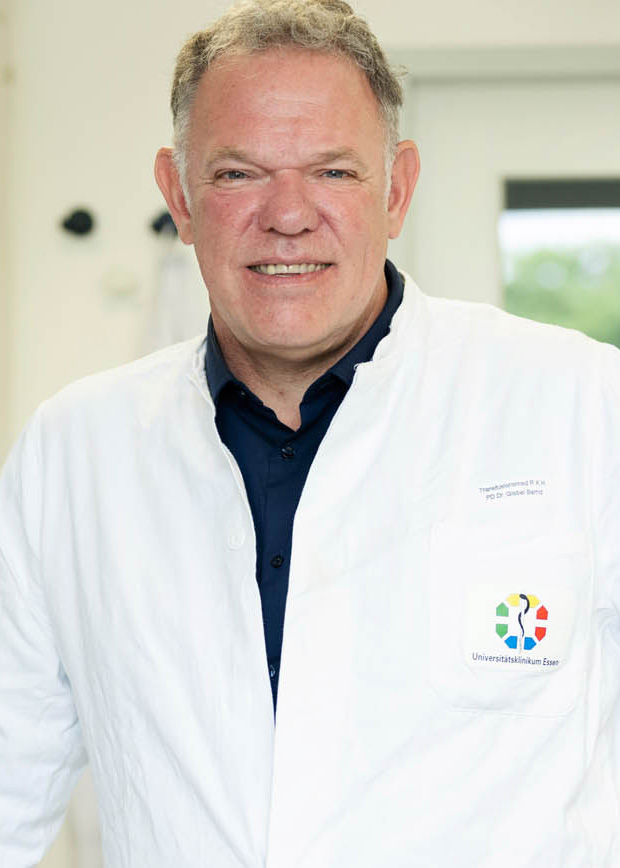
Prof. Dr. Bernd Giebel is a leading faculty member at the Institute for Transfusion Medicine, University Hospital Essen, University of Duisburg-Essen. He leads the Giebel Lab, which is dedicated to advancing the understanding and clinical application of extracellular vesicles (EVs), particularly those derived from mesenchymal stromal cells (MSCs). His research spans hematopoietic progenitor biology and EV-based therapeutics for inflammatory and neurological conditions. His research focuses on elucidating the therapeutic potential of MSC-derived EVs, having demonstrated efficacy in treating graft-versus-host disease and ischemic brain injury. His lab pioneers methods for EV isolation and characterization, including free-flow electrophoresis and imaging flow cytometry. He is deeply involved in standardizing EV research through initiatives like MISEV and EV-TRACK. The recent publications highlight a strong trend toward clinical translation, with work on optimizing EV manufacturing, functional assays, and biomarker discovery. His team investigates EVs in stroke, neuroprotection, immunomodulation, and cancer immunotherapy, often using advanced preclinical models and multi-omics approaches. Founding President, German Society of Extracellular Vesicles (2017–2023) Chair, Exosome Committee, International Society for Cell & Gene Therapy (ISCT) Co-initiator, Mobility for Vesicles in Europe (MOVE) Active member, International Society for Extracellular Vesicles (ISEV) Bernd Giebel mentors several PhD students and postdoctoral researchers, fostering the next generation of EV scientists. His lab collaborates extensively with national and international experts, contributing to influential white papers and consensus guidelines. The research is supported by ongoing projects and publications in top-tier journals, indicating sustained funding and academic leadership. The Giebel Lab operates within the Institute for Transfusion Medicine and is part of the broader research ecosystem at University Hospital Essen, focusing on translational medicine and regenerative therapies.
Assoc. Prof. Dejan Lavbič is an Associate Professor at the University of Ljubljana, Faculty of Computer and Information Science with 15+ years of academic experience. His research focuses on intelligent agents, multi-agent systems, ontologies, and blockchain-based smart contracts , particularly in semantic web technologies, AI services ecosystems, and information quality assessment . Doctor of Philosophy in Computer Science, University of Ljubljana (2010) Bachelor of Science in Computer Systems and Informatics, University of Ljubljana (2004) His scientific contributions span semantic web frameworks, blockchain applications, and machine learning systems, with 20+ peer-reviewed publications. Recent works include: Smart contract classification with AI Cardano blockchain identity systems Information quality metrics with gamification Awards include Cambridge CAE certification and multiple industry certifications. He mentors students in decentralized applications, AI development, and smart city ecosystems , having guided 6+ diploma/master theses on topics like automated essay grading and air quality data collection.
Ramya Korlakai Vinayak is the Dugald C. Jackson Assistant Professor in the Department of Electrical and Computer Engineering at the University of Wisconsin-Madison's College of Engineering. Her research bridges theoretical machine learning with human-centered AI applications. Education: Postdoctoral Researcher, Paul G. Allen School of Computer Science and Engineering, University of Washington Ph.D. and M.S. in Electrical Engineering, California Institute of Technology (Caltech) B.Tech. in Electrical Engineering, Indian Institute of Technology Madras (IIT M) Research Focus: Her work centers on machine learning foundations with emphasis on statistical inference, crowdsourcing, and human-AI collaboration. Key themes include modeling heterogeneous human preferences, developing robust out-of-distribution detection systems, and creating culturally-aware generative models. She pioneers methods for pluralistic alignment where AI systems accommodate diverse human values through ideal point modeling and adaptive feedback mechanisms. Publication Trends: Recent publications (2023-2025) reveal three converging trajectories: (1) Human-in-the-loop frameworks for reducing false positives in safety-critical systems, (2) Metric learning innovations using limited preference data, and (3) Critical examinations of cultural limitations in generative AI. Her work consistently addresses real-world challenges like cognitive overload in crowdsourcing and biases in face generation systems. Research Infrastructure: She leads an active research group with a dedicated lab website (https://ramyakv.github.io/) focusing on developing theoretically-grounded yet practically-deployable AI systems that respect human plurality.
Klim Zaporojets is a Marie Skłodowska-Curie Postdoctoral Fellow in the Department of Computer Science at Aarhus University, where he conducts research within the Data-Intensive Systems Group. His work bridges theoretical advancements and practical applications in natural language understanding. His research focuses on information extraction systems that connect textual content with structured knowledge bases. His methodology emphasizes leveraging external knowledge sources to enhance information extraction performance, particularly in document-level contexts where entities evolve over time. His work spans temporal relation extraction, entity linking, and biomedical text mining applications. The publication record reveals a strong focus on document-level information extraction with increasing emphasis on temporal aspects and knowledge integration. Recent work explores large language model applications for graph learning and calibration challenges in LLMs, showing evolution from traditional NLP tasks to cutting-edge foundation model research. His publications appear in top-tier venues including ACL, EMNLP, CIKM, and NeurIPS. His scientific recognition includes the prestigious Marie Skłodowska-Curie Postdoctoral Fellowship, supporting his research at Aarhus University. His work has produced several influential datasets including DWIE, TempEL, and BioDEX that have become benchmarks in document-level information extraction. Zaporojets maintains active collaborations with researchers at Ghent University (evidenced by his ugent.be email address) and has contributed to multiple interdisciplinary projects spanning computational linguistics, healthcare informatics, and knowledge representation. His technical contributions include open-source implementations of his research, demonstrating commitment to reproducible science.
Dr. Ljiljana (Lili) Paša-Tolić is a distinguished Lab Fellow and Lead Scientist for Visual Proteomics at Pacific Northwest National Laboratory (PNNL), where she works within the Environmental Molecular Sciences Division and the Environmental Molecular Sciences Laboratory (EMSL) user program. She brings world-leading expertise in native-state and top-down proteomics, mass spectrometry, and the Biomolecular Pathways Integrated Research Platform, combining these with Functional Bioimaging and Cell Signaling platforms to develop transformational capabilities for dynamic spatio-temporally resolved proteomic imaging in cells. Shipley Capturing Federal Business Course (2013) Emerging Leader Program (2012) Management Skills Development Program (2003) Postdoc, National High Magnetic Field Laboratory (1995–1997) Postdoc, PNNL (1993–1995) PhD in Chemistry, University of Zagreb (1992) MS in Theoretical and Physical-Organic Chemistry, University of Zagreb (1989) BS in Chemistry, University of Zagreb (1986) Dr. Paša-Tolić specializes in developing sophisticated analytical methods with emphasis on Fourier transform mass spectrometry and micro-separations. Her research focuses on applying these techniques to accurately quantify spatiotemporal changes in protein (metabolite) abundance, identity, and activity. Her work bridges the gap between advanced instrumentation development and biological applications, particularly in environmental systems, microbial communities, and plant-microbe interactions. She has pioneered approaches for single-cell metabolomics, top-down proteomics, and mass spectrometry imaging that have transformed how researchers study complex biological systems at unprecedented resolution. The trend in Dr. Paša-Tolić's recent publications demonstrates her leadership in advancing mass spectrometry technologies while applying them to increasingly complex biological questions. Her work spans environmental science, microbiology, plant biology, and immunology, showing how fundamental advances in analytical methodology can be leveraged across diverse research domains. Key themes include single-cell analysis, interlaboratory standardization, top-down proteomics, and the development of novel instrumentation approaches that push the boundaries of detection sensitivity and spatial resolution. The Analytical Scientist Power List (2019) Spectrometry Global Impact Award (2015) Director's Award, EMSL (2010) Systems Biology Fellows Mentor Award (2007) Outstanding Merit Award, International Immunology (2007) Key Contributor Award, PNNL (2002, 2003) Outstanding Performance Award, PNNL (1998, 1999, 2000) International Institute of Quantum Chemistry and Solid-State Theory Award (1988) As a leader in her field, Dr. Paša-Tolić has served in numerous professional capacities including Treasurer of the American Society for Mass Spectrometry (2020–2022), Editorial Board Member for the Journal of the American Society for Mass Spectrometry (2017–Present), and Member at Large on the Board of Directors for the Consortium for Top-Down Proteomics (2012–Present). She has organized and lectured at the 'Mass Spectrometry in Biology and Medicine' summer school in Dubrovnik, Croatia since 2007, demonstrating her commitment to training the next generation of scientists. Her research has been supported by multiple federal agencies including the Department of Energy, National Institutes of Health, and National Science Foundation. Dr. Paša-Tolić leads a dynamic research team at PNNL focused on visual proteomics, which combines advanced mass spectrometry with imaging techniques to study biological systems at unprecedented resolution. Her group works at the intersection of the Functional and Systems Biology group, the Biomolecular Pathways Integrated Research Platform, and the Functional Bioimaging platform, creating a synergistic environment for innovation. The team has developed novel capabilities for single-cell analysis, top-down proteomics, and mass spectrometry imaging that are being applied to diverse research areas from environmental systems to human health.
Michael Pradel is a full professor in the Computer Science Department at the University of Stuttgart and faculty member at CISPA Helmholtz Center for Information Security (effective September 2025), where he leads the Software Lab. He is also affiliated with the International Max Planck Research School for Intelligent Systems and the Stuttgart ELLIS Unit, reflecting his interdisciplinary research approach. His research interests focus on software engineering, particularly program analysis, bug detection, and the application of machine learning to developer tools. Pradel's recent work increasingly explores LLM-based approaches for program repair, code analysis, and automated software development, as evidenced by projects like RepairAgent and ExecutionAgent. Pradel's publication record shows a clear trend toward integrating AI techniques with traditional software engineering methods, with recent papers focusing on LLM applications for program repair, change validation, and quantum software analysis. His work bridges theoretical foundations with practical tool development, as seen in frameworks like DyLin for Python analysis and LintQ for quantum programs. Ernst-Denert Software Engineering Award Emmy Noether grant (1.3 million Euro) by the DFG ERC Starting Grant (1.5 million Euro) Multiple ACM SIGSOFT Distinguished Paper Awards ACM Distinguished Member recognition Pradel actively mentors PhD students, with recent graduates including Matteo (specializing in quantum software) and Luca (focusing on software evolution). His group has received significant funding and maintains strong industry connections, including past sabbaticals at Facebook. He serves in leadership roles for major conferences, including PC co-chair for FSE 2027, demonstrating his standing in the software engineering community. The Software Lab maintains active collaborations with institutions worldwide, including CMU, Google, KAIST, and several European universities.